

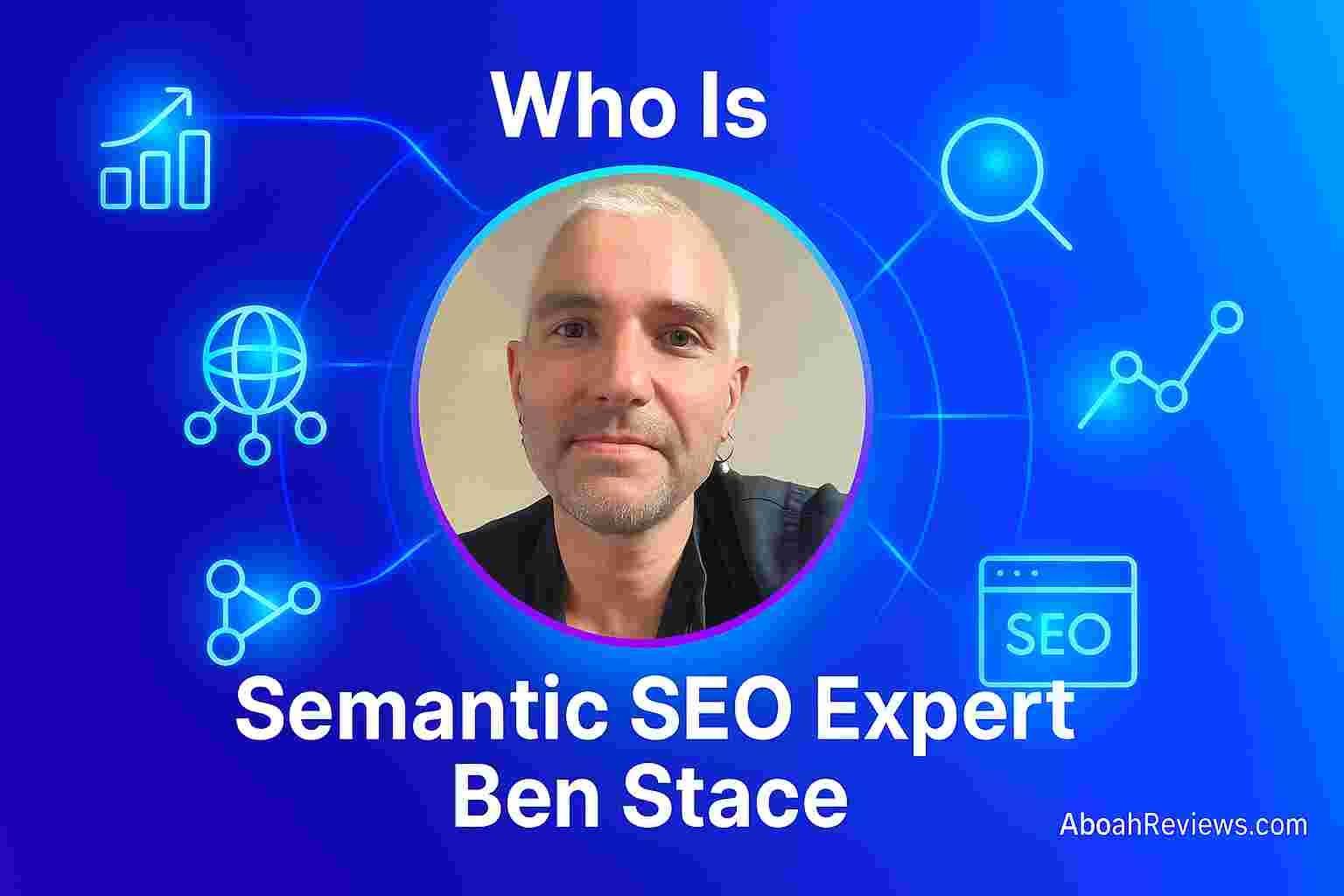
Who is semantic SEO expert Ben Stace? He’s a recognized authority in semantic SEO who has dedicated his career to understanding how search engines interpret meaning and context.
When I first discovered Ben Stace’s work, I was shocked by how he approaches SEO differently from traditional keyword-focused strategists.
In fact, the old style of SEO is rapidly becoming obsolete as search engines have replaced simple keyword matching with emphasis on context, meaning, and relevancy.
Rather than stuffing exact-match keywords into content, semantic SEO focuses on entities, relationships, and search intent.
This shift represents how Google’s algorithms now use AI and machine learning to better understand the context behind searches, incorporating techniques like pragmatic semantic analysis and neural network approaches.
What makes Ben Stace semantic SEO consultant particularly noteworthy is his impressive results. After applying his entity-first optimization approach to an e-commerce brand, they jumped to the top 3 results with 22 commercial keywords.
Additionally, a health and wellness site using his topical mapping framework experienced a stunning 187% increase in organic traffic in just 90 days.
These results aren’t accidental; they come from Ben Stace’s deep understanding of semantic content networks and entity-based SEO strategies.
Throughout this guide, I’ll share everything you need to know about Ben Stace’s semantic SEO expertise, his strategies for optimizing content based on meaning and context, and how his techniques can help you adapt to the evolving world of search.
Are you ready to move beyond outdated keyword stuffing and embrace a more advanced approach to SEO that actually works in 2026?
Key Takeaways About Who Is Semantic SEO Expert Ben Stace?
Ben Stace represents the evolution from traditional keyword-focused SEO to semantic optimization that aligns with how modern search engines actually understand content and user intent.
- Semantic SEO focuses on meaning over keywords: Build topic clusters and entity relationships instead of stuffing exact-match keywords into content.
- Create comprehensive content networks: Develop 15-25 interconnected subtopics around core themes to demonstrate topical authority to search engines.
- Align content with search intent: Categorize all content by informational, navigational, commercial, or transactional intent for better user alignment.
- Use structured data strategically: Implement schema markup to enhance visibility through rich snippets and help search engines understand content context.
- Results prove the approach works: Clients achieve 85% organic traffic increases and top 3 rankings by applying entity-based optimization strategies.
Ben Stace’s methodology isn’t just about adapting to current algorithms; it’s about future-proofing your SEO strategy as search engines become increasingly advanced at understanding natural language (NL) and user context.
Who is Semantic SEO Expert Ben Stace?
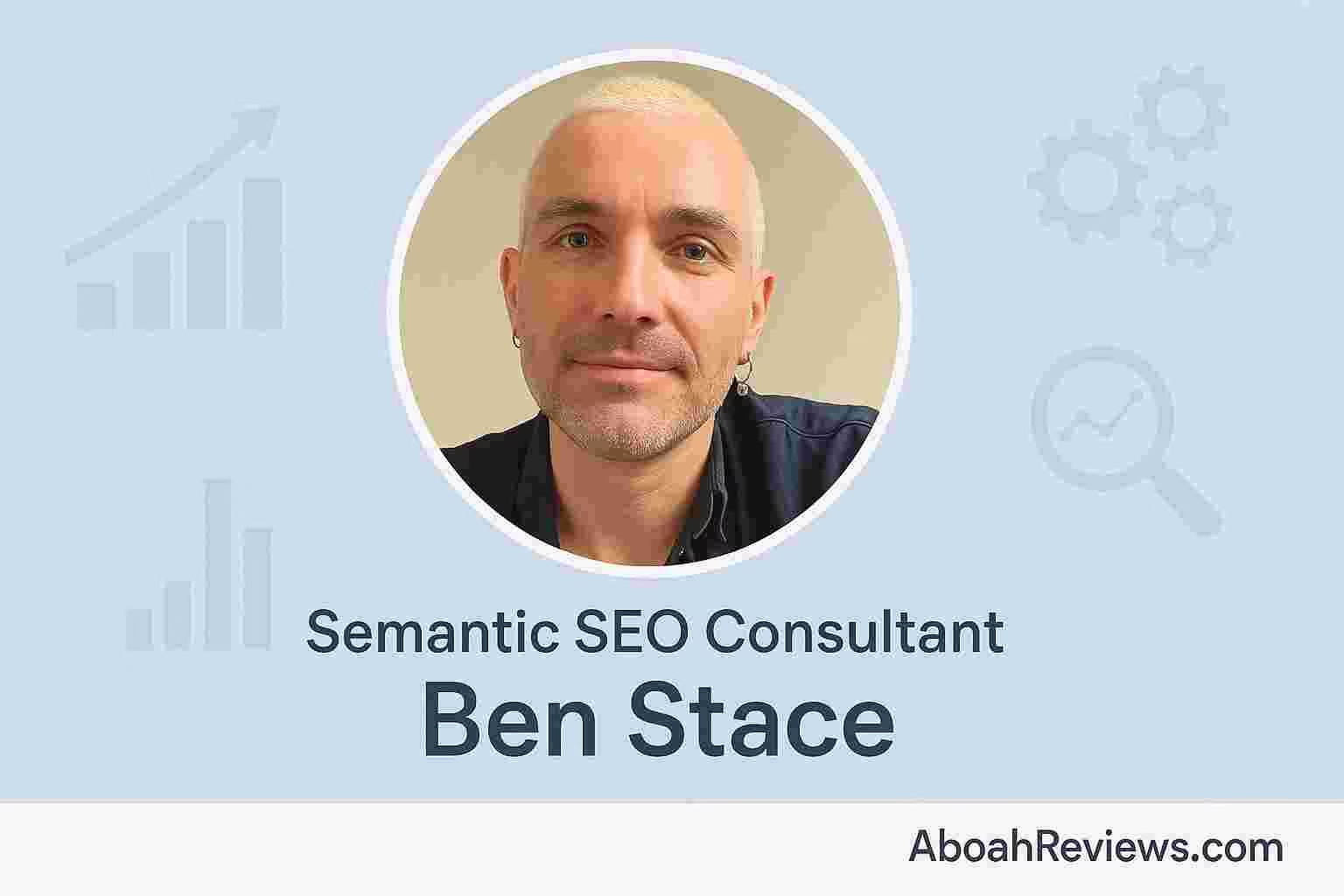
When people ask who is semantic SEO expert Ben Stace, they’re looking at someone who has fundamentally changed how we approach search engine optimization.
As the founder of Ben Stace SEO and the full-stack semantic SEO agency Eleven Bananas, Ben Stace brings a technical perspective to content optimization that goes beyond traditional keyword-focused strategies.
From traditional SEO to semantic search: Ben Stace’s journey
Ben Stace’s journey into the world of semantic SEO in 2020 and was one of the first people who got to be trained by Koray Tuğberk GÜBÜR.
“I have been building semantic SEO sites for over 3 years and was one the the first people in the world to be trained by Koray Tuğberk GÜBÜR.” – Ben Stace, 2023 via YouTube.
Unlike traditional SEO experts who primarily focus on keywords and technical factors, Ben noticed that these keyword-focused strategies were becoming less effective as search engines evolved.
His background in linguistics and computer science formed the foundation for his semantic approach.
Through years of research and experimentation across diverse industries, he developed methodologies that infuse semantic structures into content creation.
What fascinates me about Ben Stace’s evolution is how he recognized early that search engines were becoming better at understanding context and user intent, leading him to explore compositional semantic analysis and lexical semantic analysis techniques.
Why Ben Stace’s semantic SEO approach stands out in 2026
Ben Stace semantic SEO consultant stands out because it combines technical understanding with practical application. Instead of simple keyword optimization, he focuses on:
- Topic mapping and content clusters
- Entity-based SEO and entity recognition
- Structured data and schema markup
- Building semantic content networks
- Contextual internal links
His deep understanding of language structures and search engine algorithms has earned him recognition in the SEO community, when he joined Semantic SEO Course for Topical Authority by Koray Tuğberk GÜBÜR.
Furthermore, he developed a proprietary semantic SEO tool that identifies semantic gaps, suggests structured topic clusters, and enhances entity optimization across content.
How Ben Stace became a trusted SEO consultant
Ben Stace has worked with numerous businesses from small startups to large corporations, helping them create content strategies aligned with how modern search engines actually work.
His clients consistently report significant improvements in content visibility, organic traffic, and SERP rankings, often seeing substantial increases in click-through rates.
Moreover, Ben has shared his expertise at key international SEO conferences, including CMSEO Conference in Chiang Mai (2024), Kuşadası SEO & Business Mastermind (2024), and Ubud SEO and Business in Bali (2025).
Have you ever wondered what makes someone a true authority in their field? For Ben Stace, it’s not just his technical expertise but his ability to adapt to the evolving market of search.
His approach isn’t focused on short-term tricks but on building sustainable topical authority that aligns with how search engines interpret meaning and context.
Throughout his career, Ben Stace has emphasized that semantic SEO isn’t just about keywords but about creating a comprehensive content network that effectively communicates authority to search engines.
This focus on topic authority development has set him apart as a topical map expert in the industry.
What is Semantic SEO and Why Does It Matter Today?
As someone who has studied who is semantic SEO expert Ben Stace for years, I’ve learned that semantic SEO fundamentally reshapes how we optimize content.
Essentially, semantic SEO is the process of building more meaning into web content, focusing on topics instead of just keywords. It involves understanding semantic relevance and contextual relationships between concepts.
Here is how semantic SEO works:
Understanding semantic content and user intent
Search engines have evolved to understand what users truly want. Every search query falls into one of four intent categories:
- Informational: Learning something (“how to bake a cake”)
- Navigational: Finding a specific website (“login to LinkedIn”)
- Transactional: Making a purchase (“buy running shoes”)
- Commercial investigation: Comparing options (“best DSLR cameras”)
Understanding these intents helps align your content strategy with what users actually seek.
Previously, I struggled with keyword stuffing until realizing content must solve the problem users have.
This shift towards search intent alignment has become important in modern SEO practices, especially when creating conversational content for voice search optimization.
How search engines use structured data and knowledge graphs
The knowledge graph, Google’s database of billions of facts about people, places, and things – allows search engines to answer factual questions directly.
Through schema markup, you help search engines understand your content’s context, possibly earning rich snippets that increase visibility and click-through rate.
Implementing FAQ schema and HowTo schema can significantly enhance your content’s appearance in search results.
The shift from keyword stuffing to topic depth
Gone are the days when repeating keywords worked.
After updates like Hummingbird (2013), BERT (2019), and MUM (2021), algorithms now analyze contextual relevance, not just keyword density.
Subsequently, creating comprehensive topic clusters proves more effective than targeting individual phrases.
This approach aligns with the principles of latent semantic indexing (LSI) and the use of semantic keywords to create more semantically rich content.
Why Old SEO Tactics Don’t Work Anymore

I’ve spent years watching SEO tactics evolve, especially studying who is semantic SEO expert Ben Stace and his methodologies.
Looking back at my early SEO days, I remember obsessively counting keyword appearances in content – a practice now completely outdated.
Keyword density vs. semantic relationships
Remember when SEO success meant hitting specific keyword density percentages? I certainly do!
Those days have vanished as search engines now prioritize semantic relationships between words over keyword frequency.
Nowadays, Google’s advanced algorithms understand that “apple pie recipe” and “how to bake an apple pie” share the same topic cluster despite different phrasing.
This shift from keyword research focused on density toward topical authority represents a fundamental evolution in search engine optimization.
How search algorithms evolved with NLP and AI
The transformation began with Google’s Hummingbird update in 2013, which introduced semantic search capabilities. Then came:
- BERT (2019) – Enhanced understanding of natural language processing
- MUM (2021) – Improved multi-modal understanding across languages
- SGE (2023) – Search generative experience prioritizing semantic content networks
These updates significantly improved search visibility by focusing on entity recognition rather than keyword matching.
Consequently, content structure and topical mapping gained importance over traditional competitor analysis techniques.
The integration of neural network approaches and pragmatic semantic analysis has further refined search engines’ ability to understand context and user intent.
The rise of long-tail keywords and user intent
Perhaps the most profound change involves understanding search intent.
Throughout my content creation journey, I’ve learned that optimizing for four-word phrases that match specific questions yields better results than targeting high-volume generic terms.
Have you noticed how featured snippets almost always answer specific questions? This happens because search algorithms now prioritize user intent alignment over simple keyword matching.
Tools like Answer the Public have become invaluable for identifying question-focused content opportunities that align with user intent.
Additionally, voice search optimization has become increasingly important, as it often involves more conversational and long-tail queries.
Inside Ben Stace Semantic SEO Strategy
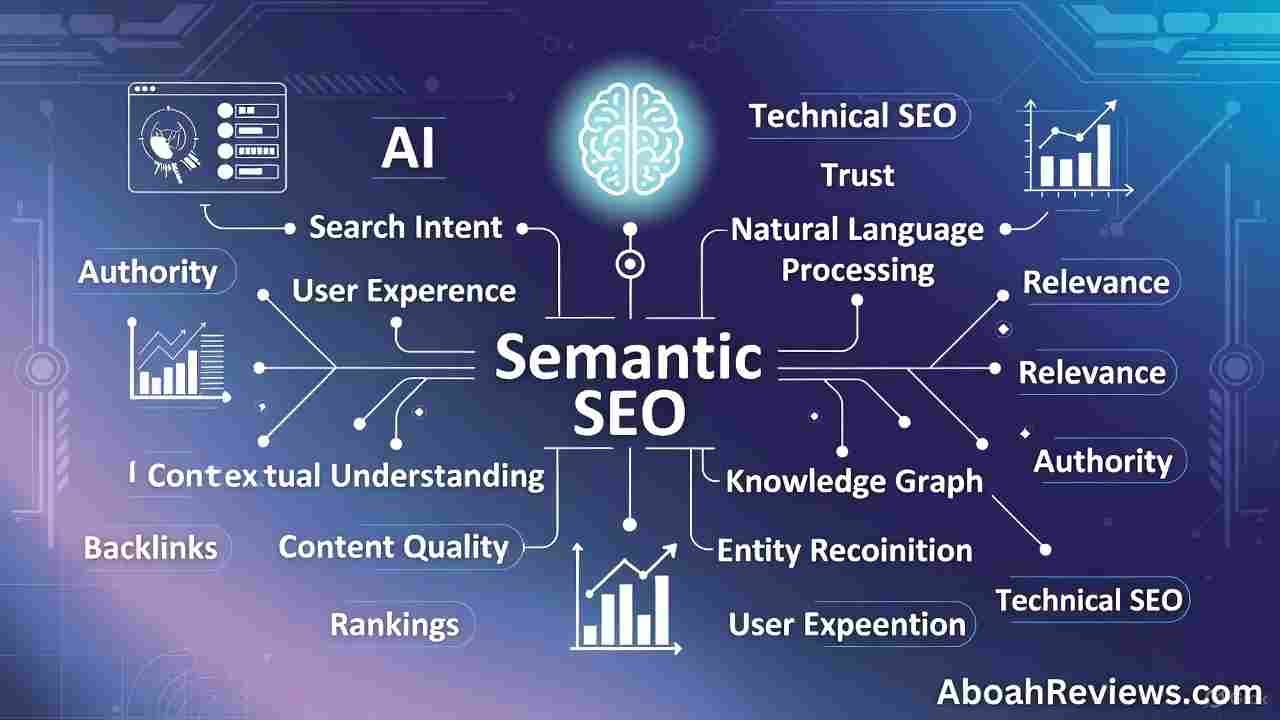
Looking closely at who is semantic SEO expert Ben Stace’s methodology reveals why his approach works so well in today’s search market.
Through my conversations with industry professionals who’ve implemented his strategies, I’ve gathered insights into his unique framework.
1. Topical mapping and content clusters
Ben’s approach to topical mapping starts with identifying core topics and creating interconnected content clusters.
He typically maps at least 15-25 subtopics around each primary topic, building comprehensive content networks that demonstrate expertise. His process involves:
- Creating pillar pages that serve as hubs for topic clusters
- Developing supporting content that addresses specific aspects of the main topic
- Ensuring content depth exceeds what competitors offer
This strategy aligns closely with the concept of content architecture, creating a logical topic hierarchy that search engines can easily understand and navigate.
2. Entity-based SEO and entity recognition
What sets Ben apart is his focus on entity optimization rather than just keywords. His strategy prioritizes:
- Identifying and optimizing for named entities (people, places, concepts)
- Creating connections between entities to build topical authority
- Using entity analysis tools to identify semantic relationships
Ben’s approach to entity-based SEO strategies often involves leveraging the Google Knowledge Graph and implementing knowledge graph optimization techniques to enhance content visibility and authority.
3. Aligning content with search intent
Ben categorizes all content by search intent types:
- Informational: Educational content answering specific questions
- Navigational: Content helping users find specific resources
- Commercial: Content supporting purchase decisions
- Transactional: Content facilitating immediate actions
This categorization helps in creating more targeted, user-centric content that aligns with specific search intents, improving overall user engagement signals.
4. Using schema markup and structured data
Ben implements schema markup strategically to:
- Enhance visibility through rich snippets
- Clarify content relationships for search engines
- Target specific schema types based on content purpose and intent
He often recommends implementing Article schema for blog posts and news articles, and HowTo schema for instructional content. This can significantly improve search visibility and click-through rates.
5. Building semantic content networks
The most innovative aspect of Ben’s approach involves creating interconnected content networks where:
- Each piece reinforces topic authority
- Content connects through semantic relationships, not just keywords
- Topic coverage demonstrates comprehensive expertise
This approach to semantic content writing ensures that each piece of content contributes to the overall topical authority of the website.
6. Contextual internal linking recommendations
Finally, Ben’s internal linking strategy focuses on:
- Creating contextual internal links between related content
- Building semantic bridges between topics
- Using anchor text that reinforces semantic relationships
- Developing strategic content pathways that guide users through topic clusters
Have you noticed how these six elements work together as a cohesive system rather than isolated tactics?
Real-World Results and Tools Ben Stace Recommends

After implementing Ben Stace’s semantic SEO approach myself, I’ve witnessed remarkable transformations across various websites.
Let me share some specific results and the tools that make who is semantic SEO expert Ben Stace so effective in practice.
Ben Stace Semantic SEO Case studies: From 0 to top 3 rankings
The proof is in the results.
- In one project, an e-commerce brand implemented structured data for products and related guides, resulting in rich snippets and higher click-through rates.
- Another standout example is a SaaS company that was struggling with 50+ keyword-limited articles. Through Ben Stace’s content gap analysis and creation of pillar pages with interlinked clusters, they achieved an 85% increase in organic traffic within approximately six months.
- Similarly, a local dental business created a semantic hub around oral health, implemented FAQ and LocalBusiness schema, and optimized their internal structure. This strategic approach generated 58-62% more traffic and a substantial increase in leads.
For an eco-products store, Ben’s semantic clustering and content silos doubled impressions and increased conversions by 40%.
Ben Stace semantic SEO writing tool: What it does

Ben developed the world’s first advanced Semantic SEO Writer, a tool I now use regularly.
This platform doesn’t just look at keywords; it understands how words relate to each other.
The system analyzes top-performing articles, identifies their semantic structure, and compares that data to your writing.
It highlights structure, tone, and subtopics top performers include, helping you build more comprehensive articles.
Furthermore, it provides guidance on related terms to include, subheading structure, and questions your content should answer.
Tools for topic modeling and content planning
Beyond his proprietary tools, Ben Stace recommends several semantic search tools and topic modeling platforms for comprehensive semantic SEO.
The Search Atlas suite offers multiple specialized tools:
- Topical Maps Tool: Generates topic clusters based on semantic connections and identifies related subtopics and questions
- Content Genius Tool: Analyzes top-performing content to extract important keywords, questions, and topics
- Keyword Magic Tool: Shows what type of content ranks for your target keywords to help determine user intent
- On-Page Audit Tool: Finds relevant questions and topical terms relating to your existing content
Additionally, Ben utilizes MarketMuse for analyzing content inventories and identifying high-value topic clusters, alongside InLinks for mapping semantic relationships.
He also recommends Surfer SEO for content optimization and WordLift for enhancing content with structured data.
These semantic SEO tools and topic explorer tools are important for implementing Ben Stace’s semantic SEO strategies effectively.
How Ben measures content performance and search visibility
For tracking results, Ben relies on tools like Google Analytics and SEMrush for comprehensive data on organic traffic, user behavior, and conversion rates.
He schedules regular content audits to add new facts, remove outdated information, improve readability, and add new questions or sections.
This ongoing optimization keeps content relevant and competitive over time.
What shocked me most about Ben’s measurement approach is how he focuses on entity-aware metrics beyond just keyword rankings.
His framework consistently shows that structured, entity-aware content enhances topical authority, user engagement, featured snippets, and long-tail rankings.
He pays close attention to “People Also Ask” sections in search results to identify new content opportunities and refine existing content.
Ben also emphasizes the importance of tracking topic authority metrics and search visibility improvements to gauge the effectiveness of semantic SEO strategies.
Final Thoughts On Semantic SEO Expert Ben Stace
Semantic SEO represents the future of search optimization, and who is semantic SEO expert Ben Stace if not the pioneer guiding us through this evolution?
Throughout my journey implementing his methodologies, I’ve witnessed firsthand how his approach transforms content performance and search visibility.
The days of keyword stuffing and density calculations are undeniably behind us.
Instead, building comprehensive topic clusters with proper content structure creates the topical authority search engines now prioritize.
What impressed me most about Ben Stace’s strategy is how it aligns perfectly with how modern search algorithms actually work.
His focus on entity recognition, semantic relationships, and contextual internal links creates content networks that demonstrate genuine expertise to both users and search engines.
After all, the most effective SEO doesn’t feel like SEO at all; it feels like naturally comprehensive content that thoroughly addresses user intent.
The real-world results speak for themselves.
From substantial organic traffic increases to higher rankings for commercial keywords, Ben Stace’s semantic content approach consistently outperforms traditional keyword research methods.
Additionally, his semantic SEO writing tool provides actionable guidance for content creation that goes beyond superficial optimization.
Whether you’re struggling with content planning or looking to improve your search engine rankings, Ben Stace’s semantic strategies offer a proven path forward.
Have you considered how your content strategy might benefit from topical mapping and entity-based SEO?
Perhaps it’s time to move beyond outdated techniques and embrace the semantic approach that’s reshaping digital marketing.
As search engines continue evolving toward more advanced understanding of natural language processing, the gap will only widen between those using outdated keyword-focused tactics and those building semantic content networks that demonstrate true topic expertise.
Therefore, understanding and applying Ben Stace’s semantic SEO framework isn’t just useful for today’s rankings; it’s essential preparation for the future of search.
Frequently Asked Questions About Who Is Semantic SEO Expert Ben Stace
1. What is semantic SEO and how does it differ from traditional SEO?
Semantic SEO focuses on optimizing content for meaning and context rather than just keywords. It involves creating comprehensive topic clusters, using structured data, and aligning content with user intent to demonstrate expertise to search engines.
2. How has Ben Stace contributed to the field of semantic SEO?
Ben Stace has developed innovative strategies for semantic SEO, including topical mapping, entity-based optimization, and building semantic content networks. He’s also created tools like the Semantic SEO Writer to help content creators align with modern search algorithms.
3. What are some key components of Ben Stace semantic SEO strategy?
Key components include topical mapping, entity recognition, aligning content with search intent, using schema markup, building semantic content networks, and implementing contextual internal linking.
4. Can you provide examples of real-world results from Ben Stace’s semantic SEO approach?
Clients using Ben’s strategies have seen significant improvements, such as an 85% increase in organic traffic within six months for a SaaS company and a 40% increase in conversions for an eco-products store.
5. What tools does Ben Stace recommend for implementing semantic SEO?
Ben recommends his proprietary Semantic SEO Writer, as well as tools like Search Atlas for topic modeling and content planning, MarketMuse for content inventory analysis, and InLinks for mapping semantic relationships.
Here are concise answers to those “People also ask” questions:
6. Who is the best SEO expert in the world?
There isn’t one universally recognized “best” SEO expert. It depends on your goals and industry. However, some of the most respected names in SEO include:
- Rand Fishkin (founder of Moz and SparkToro)
- Neil Patel (Ubersuggest, marketing influencer)
- Brian Dean (Backlinko, SEO training)
- Danny Sullivan (now with Google’s Search team)
- Aleyda Solis (international SEO consultant)
These experts are known for pioneering SEO strategies, tools, and thought leadership.
7. What is semantic SEO?
Semantic SEO is the practice of optimizing content for meaning and intent, not just keywords. It focuses on understanding context, related topics, and user intent so search engines can better match your content to queries.
Key elements include:
- Using topic clusters and entities instead of keyword stuffing
- Creating in-depth, interconnected content
- Using structured data (schema markup) to help search engines interpret meaning
8. Who is higher, CEO or SEO?
The CEO (Chief Executive Officer) is higher.
- The CEO runs the entire company and makes executive decisions.
- The SEO (Search Engine Optimization specialist/expert) handles strategies to improve online visibility.
So, an SEO expert typically works under the marketing department, not in the executive hierarchy like a CEO.
9. What are the 4 pillars of SEO?
The four pillars of SEO commonly recognized are:
- Technical SEO – Site structure, speed, mobile optimization, indexing
- On-Page SEO – Content quality, keywords, meta tags, internal links
- Off-Page SEO – Backlinks, digital PR, brand mentions, social signals
- Content – Valuable, relevant, and well-structured information that satisfies search intent

His in-depth reviews have been featured on Hubpages, Vocal.Media and Hackernoon, where he helps businesses and content creators choose affordable, high-performing solutions for SEO, lead generation, and growth.
Aboah’s analyses emphasize accuracy, usability, and ROI, making his insights trusted by small business owners, marketers, and professionals looking to scale their online presence with data-driven strategies.
- White Label SEO Report 2026: Templates, Examples + Best Tools - December 25, 2025
- Best White Label SEO Tools for Agencies in 2026: Boost Branding & Client Trust - December 16, 2025
- 20 Etsy SEO Tools That Doubled My Clients’ Shop Sales (Seller‑Tested) - December 8, 2025