


Tired of your clients seeing third-party logos on their SEO reports? Scaling your agency requires technology that works invisibly under your brand. I tested and compared the best white label SEO tools to find which ones truly deliver on their promise of seamless rebranding, powerful features, and scalable client management.
A white label SEO tool is a software platform that can be rebranded, allowing digital marketing agencies and in-house teams to offer SEO services under their own brand. These platforms serve as the technology behind agencies who want to provide professional SEO analysis, reporting, and optimization without revealing the software provider.
Why are white label SEO tools important?

White label SEO platforms are more than just tools for rebranding. They are important for agencies competing in crowded markets, as they change the way value is delivered to clients.
Instead of spending time and money creating their own technology, agencies can use advanced SEO software for agencies that offers features like rank tracking, keyword research, site audits, and competitor analysis – all presented through custom-branded interfaces.
Meeting client expectations with white label SEO tools
The demand for white label SEO reporting tools has increased because clients now expect clear and data-driven insights into their search performance.
Agencies working with multiple clients need solutions that can scale and maintain brand consistency across all interactions.
Whether it’s managing local SEO campaigns for small businesses or implementing strategies for large enterprises, the best white label SEO tools enable teams to automate repetitive reporting tasks while upholding professional standards.
Benefits for in-house marketing teams
These platforms also offer similar benefits for in-house marketing teams:
- Consolidated data visualization
- Streamlined workflows
- The ability to present SEO performance metrics to stakeholders using internally branded materials that enhance departmental credibility
What is a White Label SEO Tool?
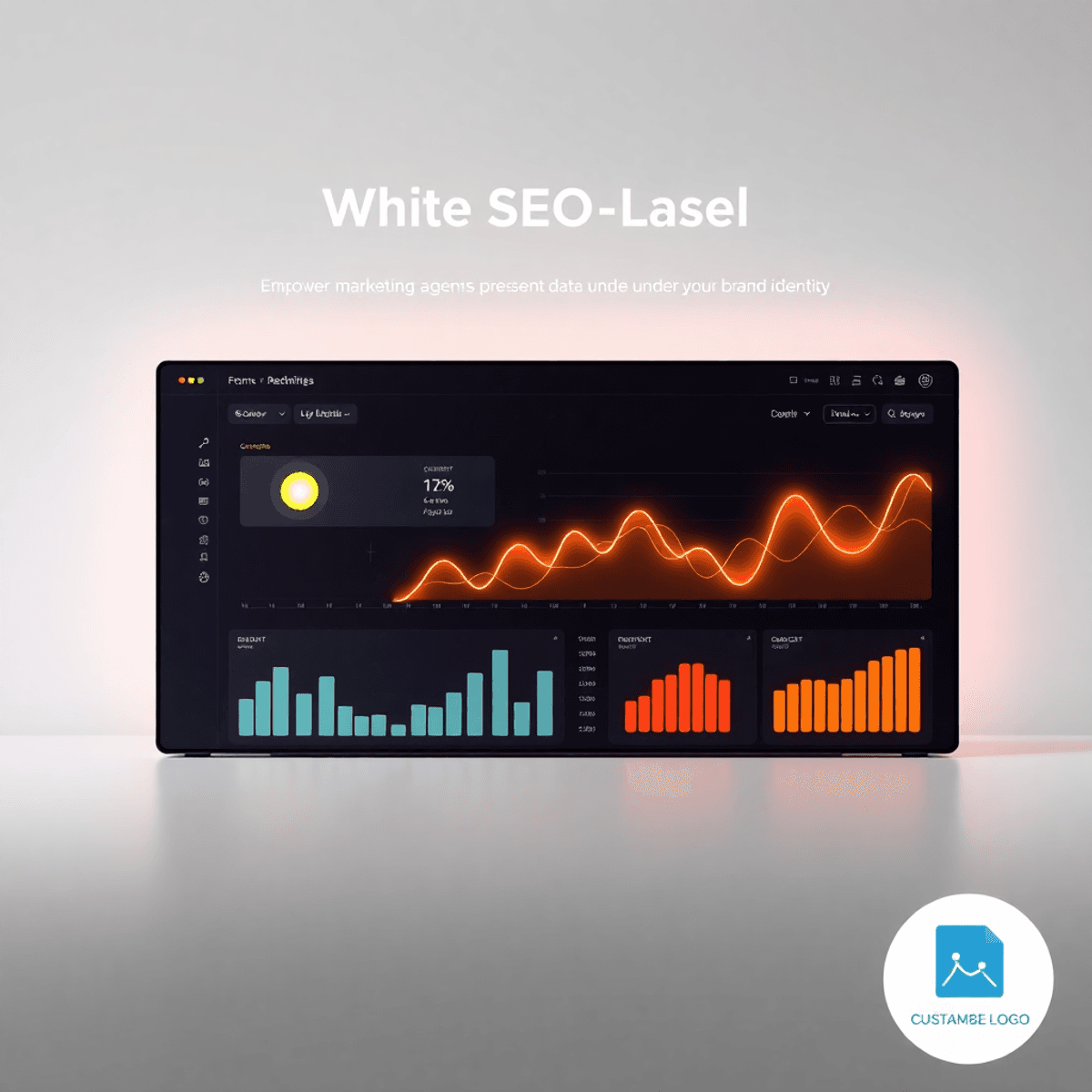
A white label SEO tool is a platform that can be rebranded, allowing digital marketing agencies to offer SEO services under their own brand. These tools remove the original provider’s branding, enabling agencies to present the software as their own.
When clients view reports or analytics through a white label SEO reporting tool, they only see the agency’s logo and colors, creating a consistent brand experience.
Key Differences Between White Label SEO Software and Traditional SEO Platforms
The main difference between white label SEO software and regular SEO tools is how much customization is possible and how the business model works.
Regular SEO tools like Moz or Ahrefs prominently display their own branding on the user interface. Users access these platforms directly and know they are using third-party services.
On the other hand, white label SEO providers work behind the scenes, providing the infrastructure without being visible to end clients.
Benefits of White Label Services for Agencies
- Agency as Technology Owner: With white label services, agencies are seen as the owners of the technology instead of just middlemen. This strengthens client relationships and justifies higher pricing.
- Native Brand Experience: A white label SEO report generated through these platforms looks completely like it belongs to the agency’s brand ecosystem, with custom domains and personalized messaging.
Customization Options in White Label SEO Reporting
The ability to rebrand goes beyond just placing logos. White label SEO reporting offers customizable templates, adjustable metrics displays, and configurable data visualization options. Agencies can tailor every element that their clients see to match their unique value proposition and communication style.
Multi-Client Management with Traditional SEO White Label Solutions
Traditional SEO white label solutions also allow agencies to manage multiple clients from one dashboard. This makes it easier for agencies to scale their operations without needing to pay for multiple software subscriptions.
The software architecture can accommodate different sizes of agencies, from small consultancies managing five clients to large enterprises serving hundreds of accounts at once.
Key Features of White Label SEO Tools

White label SEO platforms offer a wide range of features that are designed to meet all aspects of search engine optimization. By understanding these key features, agencies can choose tools that align with their services and meet their clients’ needs.
Essential SEO Functionalities in White Label SEO Tools
1. Keyword Research
Keyword research, the foundation of any successful SEO campaign, is simplified by these tools. They provide access to extensive keyword databases, revealing search volumes, difficulty scores, and related term suggestions.
Agencies can identify opportunities their clients’ competitors might be missing while tracking seasonal trends and emerging search patterns.
For a deeper understanding of how to effectively conduct keyword research, refer to this comprehensive keyword research guide.
2. Rank Tracking
Rank tracking monitors keyword positions across search engines, delivering precise data on how websites perform for target terms.
Modern platforms track rankings at local, national, and international levels, accounting for geographic variations and device-specific results.
This granular tracking enables agencies to demonstrate tangible progress to clients through position improvements over time.
3. Backlink Monitoring
Backlink monitoring analyzes a website’s link profile, identifying new links, lost connections, and potentially harmful associations.
These systems evaluate link quality through metrics like domain authority and relevance, helping agencies build stronger link-building strategies while protecting clients from negative SEO attacks.
4. Website Audit
The website audit capabilities of white label seo tools scan sites for technical issues that impact search performance. These automated audits detect broken links, slow-loading pages, duplicate content, and mobile usability problems.
The tools generate prioritized action lists based on the audit findings making it easier for agencies to address critical issues first.
For more insights into website auditing processes, you can explore this detailed website audit guide.
Advanced Analysis and Planning Tools
1. Competitor Analysis
Competitor analysis features reveal what strategies rival websites employ successfully. Agencies can examine competitors’ top-performing keywords, backlink sources, and content gaps.
This intelligence informs strategic decisions about where to focus optimization efforts for maximum impact.
2. Content Planning and Optimization
Content planning and optimization features guide the creation of search-friendly material. These tools analyze top-ranking pages for target keywords, suggesting optimal content length, semantic keywords to include, and structural elements that improve relevance.
Some platforms offer readability scores and SEO content grading to ensure quality standards.
Data Integration and Visualization
Integration with Google Analytics and Google Search Console transforms raw data into actionable insights.
By connecting these platforms, white label seo tools consolidate metrics from multiple sources into unified dashboards. Agencies access organic traffic patterns, user behavior data, and search performance metrics without switching between interfaces.
Moreover, data visualization transforms complex SEO metrics into digestible charts, graphs, and heatmaps which can significantly enhance understanding of the data trends (source).
Benefits of Using White Label SEO Tools for Agencies

Digital marketing agencies face constant pressure to demonstrate value while maintaining operational efficiency. A white label SEO tool addresses these challenges by transforming how agencies deliver services and manage client relationships.
1. Strengthening Brand Identity Through Custom Branding
Custom-branded dashboards and white label reports become powerful extensions of an agency’s brand identity.
When clients access their SEO data through a portal featuring the agency’s logo, color scheme, and domain name, they perceive the service as a proprietary solution rather than a third-party tool. This perception elevates the agency’s position from a service provider to a technology partner.
Agencies can configure custom domains that point directly to client portals, ensuring every touchpoint reinforces their brand presence.
The ability to white-label every element – from email notifications to PDF reports – creates a cohesive brand experience that builds client trust and loyalty.
2. Transforming Client Communication and Experience
Personalized reporting capabilities revolutionize how agencies communicate progress and results.
Instead of generic templates, agencies can tailor reports to highlight metrics that matter most to each client’s business objectives.
A local business might receive detailed keyword rankings for geographic-specific searches, while an e-commerce client sees comprehensive data on organic traffic conversion rates.
Client portals provide 24/7 access to real-time data, reducing the volume of status update requests and freeing agency teams to focus on strategy rather than administrative tasks.
This transparency strengthens client relationships by demonstrating ongoing value and maintaining engagement between formal review meetings.
3. Automating Time-Consuming Processes
Report generation and scheduling automation eliminates hours of manual work each week.
Agencies can configure automated reports to deliver weekly keyword rankings updates, monthly link building progress summaries, or quarterly comprehensive performance reviews.
The time saved on repetitive tasks allows teams to redirect energy toward strategic activities like lead generation campaigns and advanced SEO implementations.
Automated alerts notify teams when critical metrics change, enabling proactive client communication before issues escalate.
4. Centralizing Multi-Client Management
Managing dozens or hundreds of clients becomes manageable through unified dashboards that aggregate data across all accounts.
Agency teams can monitor performance trends, identify accounts requiring attention, and allocate resources efficiently.
These multi-client dashboards provide bird’s-eye views of agency-wide metrics, supporting data-driven decisions about service offerings and resource allocation.
Popular White Label SEO Software Platforms

The market offers several robust white label SEO software for agencies that cater to different business needs and budgets. Each platform brings unique strengths to help agencies deliver comprehensive SEO services while maintaining their brand identity.
1. SE Ranking
SE Ranking stands out as a versatile solution that combines affordability with extensive functionality.
The platform provides comprehensive keyword tracking capabilities, SERP analysis, and website auditing tools.
Agencies appreciate its intuitive interface and flexible pricing structure, which scales based on the number of keywords tracked and reports generated.
The white label reporting feature allows complete customization, from adding agency logos to configuring custom domains for client portals.
2. Semrush
Semrush represents the enterprise-grade option among white label providers. Known for its extensive database covering over 20 billion keywords, this platform excels in competitive intelligence and content optimization.
The white label solution includes branded PDF reports, customizable templates, and advanced SERP tracking features.
Agencies managing multiple clients benefit from Semrush’s ability to handle large-scale campaigns while maintaining detailed analytics across various search engines and geographic locations.
3. WebCEO
WebCEO positions itself as a dedicated white label platform built specifically for agencies and resellers. The software emphasizes automation, offering scheduled report delivery and comprehensive SEO strategy tools.
Its client management system supports unlimited projects and users, making it particularly attractive for growing agencies.
WebCEO’s white label capabilities extend beyond basic branding – agencies can create fully customized client portals with their own domain names and visual identity.
Each platform addresses different agency priorities:
- SE Ranking appeals to cost-conscious agencies seeking comprehensive features.
- Semrush attracts agencies requiring deep competitive analysis and enterprise-level data.
- WebCEO serves agencies prioritizing automation and client management efficiency.
The best white label SEO software ultimately depends on specific agency requirements, client base size, and budget constraints.
Pricing Models and Scalability Considerations

White label SEO platforms typically structure their pricing based on feature access, client limits, and usage metrics.
Small agencies can expect entry-level plans starting around $150-$200 per month, which generally include essential features like keyword tracking, basic website audits, and the ability to generate branded reports for a limited number of clients.
These base packages often support 5-10 client accounts and provide access to PDF reports and HTML reports with custom branding elements.
Mid-tier pricing models, ranging from $300-$600 monthly, expand capabilities significantly. These plans accommodate 20-50 client accounts and unlock advanced features such as comprehensive competitor analysis, automated scheduling for report delivery, and white label domains.
The scalability at this level allows growing agencies to maintain brand consistency across an expanding client portfolio without manual intervention for each reporting cycle.
Enterprise-level solutions command premium pricing – often $1,000+ per month, but deliver unlimited or high-volume client management capabilities. These packages include:
- Unrestricted API access for custom integrations
- Dedicated account management and priority support
- Advanced data visualization tools for executive-level presentations
- Custom development options for specialized reporting needs
- White-glove onboarding and training resources
Usage-based pricing components add flexibility but require careful monitoring. Many platforms charge additional fees for:
- Rank tracking queries beyond included limits (typically $0.10-$0.50 per keyword)
- Backlink analysis credits
- Extra user seats for team collaboration
- Premium data sources and market intelligence
The scalability factor extends beyond simple client counts. Agencies transitioning from startup to established firms benefit from platforms that allow seamless plan upgrades without data migration headaches.
The ability to maintain consistent branded reports and automated scheduling workflows while scaling prevents disruptions in client service delivery and preserves the professional image agencies work hard to establish.
Customization and Branding Options in White Label SEO Tools
Custom domain configuration is one of the most powerful branding features in white label SEO platforms. Agencies can point their own URLs (such as seo.youragency.com) to the white label platform, creating a seamless experience where clients access reports and dashboards without ever seeing third-party branding.
This approach strengthens brand identity and positions the agency as a comprehensive solution provider rather than a middleman.
Custom branding goes beyond domain names and includes visual identity elements. Agencies can incorporate their logos, color schemes, typography, and branded headers across all client-facing materials.
The client dashboard becomes a fully branded environment that reflects the agency’s professional image, building trust and reinforcing the relationship at every interaction.
Report customization capabilities allow agencies to tailor content presentation to match client preferences and needs. White label SEO tools typically offer:
- Drag-and-drop report builders for flexible layout design
- Selective metric inclusion to highlight relevant KPIs
- Branded PDF exports with custom cover pages and footers
- Automated scheduling for consistent client communication
Multi-client management features enable agencies to maintain distinct branding profiles for different clients or service tiers.
Some platforms support white-labeling at the sub-agency level, allowing larger organizations to provide branded tools to their own reseller partners.
This flexibility transforms the client experience from generic software access into a personalized service that aligns with each client’s expectations and the agency’s positioning strategy.
Integration Capabilities with Other Digital Marketing Tools

Modern white label SEO tools thrive on their ability to connect with the broader digital marketing ecosystem.
API integration serves as the backbone for these connections, allowing agencies to pull data from multiple sources into unified marketing reports that tell a complete story about client performance.
Essential Integrations for Digital Marketing Agencies
Google Analytics and Google Search Console represent essential integrations for any digital marketing agency. These connections enable automated data synchronization, eliminating manual exports and reducing the risk of human error.
When a white label platform connects directly to Google Analytics, agencies gain access to:
- User behavior metrics and conversion tracking data
- Traffic source breakdowns that complement organic search performance
- Engagement metrics that validate SEO strategy effectiveness
- Goal completion rates tied to specific keywords or landing pages
The Importance of Google Search Console Integration
Google Search Console integration adds another critical layer by providing official search performance data, including impressions, clicks, and average positions for specific queries. This first-party data from Google validates the accuracy of third-party rank tracking tools.
Expanding Integrations Beyond Google
Beyond Google’s ecosystem, leading white label platforms offer connections to social media management tools, PPC platforms, and CRM systems.
These integrations transform standalone SEO reports into comprehensive digital marketing tools that demonstrate how organic search fits within the client’s entire marketing strategy.
Agencies can showcase cross-channel attribution, proving SEO’s contribution to leads generated through multiple touchpoints.
How White Label SEO Tools Support Comprehensive SEO Strategies

White label SEO platforms serve as command centers for executing multi-faceted optimization campaigns. These tools combine technical SEO diagnostics with on-page SEO analysis, creating a unified workspace where agencies can identify and resolve critical issues affecting search visibility.
1. Streamlining Technical Audits
Technical audits become systematic processes rather than manual investigations. The platforms crawl websites to detect broken links, duplicate content, missing meta tags, slow page load times, and mobile responsiveness problems.
An SEO dashboard presents these findings through visual representations: color-coded alerts, severity ratings, and prioritized action lists, enabling teams to address high-impact issues first.
2. Enhancing On-Page Optimization
On-page optimization receives equal attention through content analysis modules. These features evaluate keyword density, heading structure, internal linking patterns, and image optimization.
The SEO data generated reveals opportunities to strengthen existing pages or identify content gaps competitors have exploited.
3. Real-World Applications
Real-world applications demonstrate the value: an agency managing 30 e-commerce clients can schedule automated weekly technical scans, receiving instant notifications when critical errors emerge.
The SEO metrics tracked – crawl errors, indexation status, Core Web Vitals scores – feed directly into client reports without manual data compilation.
4. Informing Strategic Decisions
The SEO insights extracted from these audits inform strategic decisions.
When a website experiences sudden ranking drops, the historical data within the platform helps agencies pinpoint whether technical issues, algorithm updates, or competitive pressure caused the decline.
Reporting Features That Drive Agency Growth

1. Real-time Dashboards for Instant SEO Insights
Real-time dashboards transform how agencies demonstrate value to clients by providing instant visibility into SEO performance metrics.
A white SEO tool equipped with live monitoring capabilities allows agency partners to track organic traffic fluctuations, keyword ranking movements, and site performance indicators without manual data compilation.
This immediacy builds client confidence and positions agencies as proactive rather than reactive.
2. Automated Reporting for Time Efficiency
Automated reporting eliminates the time-consuming task of manually assembling monthly or weekly reports.
Agencies can schedule professional reporting deliveries that automatically pull fresh data, format it according to brand guidelines, and distribute it to clients at predetermined intervals.
This automation frees up valuable hours that teams can redirect toward strategic SEO activities.
3. Agency Dashboard for Comprehensive Client Oversight
The agency dashboard serves as a centralized command center where multiple client accounts display side-by-side performance comparisons.
This bird’s-eye view enables account managers to quickly identify which clients need immediate attention and which campaigns are exceeding expectations.
The ability to drill down from high-level metrics to granular data points within seconds accelerates decision-making.
4. Customizable Report Templates for Tailored Communication
Customizable report templates allow agencies to highlight the performance metrics most relevant to each client’s business objectives.
Whether focusing on local search visibility, e-commerce conversions, or content engagement, agencies can tailor their professional reporting to speak directly to client priorities while maintaining consistent branding across all deliverables.
Enhancing Team Collaboration Within Agencies Using White Label SEO Tools
Centralized dashboards transform how SEO teams work together by creating a single source of truth for all campaign data.
Team collaboration becomes seamless when multiple specialists – content creators, link builders, technical SEO experts, and account managers – access the same platform to view client progress, share insights, and coordinate their efforts.
1. Role-Based Access Controls for Structured Collaboration
White label SEO platforms typically include role-based access controls that allow agencies to assign specific permissions to different team members.
Junior analysts might receive view-only access to reports, while senior strategists can modify campaigns and generate custom analyses. This structured approach prevents data silos and ensures everyone stays aligned on client objectives.
2. Efficient Communication Through Internal Notes
The ability to leave internal notes and annotations directly within client dashboards helps teams communicate context without endless email threads.
When a technical SEO specialist identifies crawl errors during a website audit, they can flag these issues for the development team with specific instructions, creating an auditable trail of actions and decisions.
3. Quality Control Processes in Multi-User Environments
Multi-user environments also support quality control processes. Before client-facing reports go out, team leaders can review the data, verify accuracy, and approve final deliverables – all within the same platform.
This collaborative workflow reduces errors and maintains consistency across all client communications, strengthening the agency’s professional reputation while improving operational efficiency.
Challenges When Choosing a White Label SEO Tool for Your Agency

Selecting the right SEO reporting tool requires careful evaluation of multiple factors that directly impact agency growth. The decision becomes particularly complex when balancing feature richness against practical usability.
1. Ease of Use
Ease of use stands as a primary concern, especially when onboarding team members with varying technical expertise.
An intuitive interface reduces training time and allows non-expert users to generate client reports without constant supervision.
Agencies often discover that sophisticated platforms with steep learning curves slow down operations rather than accelerate them, creating bottlenecks in report delivery and client communication.
2. Budget Constraints
Budget constraints present another significant hurdle. While comprehensive platforms promise extensive capabilities, their pricing structures may include hidden costs tied to usage metrics like rank queries or backlink checks.
Agencies must calculate true operational costs rather than base subscription fees alone.
3. Scalability Issues
The agency growth kit concept: where tools scale seamlessly from startup to enterprise needs sounds appealing but requires scrutiny. Some platforms claim scalability yet impose restrictive limits on client accounts or data volume at lower tiers, forcing expensive upgrades as the client roster expands.
4. Integration Challenges
Integration capabilities demand thorough testing before commitment. A tool that fails to connect smoothly with existing workflows, CRM systems, or essential platforms like Google Analytics creates data silos that undermine efficiency.
Trial periods become essential for validating these connections under real-world conditions rather than relying on vendor promises.
Future Trends in White Label SEO Tools and Agency Solutions to Watch Out For

The world of white label solutions is constantly changing, mainly because of artificial intelligence and machine learning technologies. These tools have the potential to completely transform how agencies provide SEO services.
1. Automated Reporting Advancements
Automated reporting advancements now use natural language generation to turn raw data into easy-to-understand stories, saving agencies a lot of time and effort. This means agencies can take on more clients without having to hire more employees.
2. Predictive Analytics
Another area that’s gaining popularity in white SEO tool platforms is predictive analytics.
Advanced algorithms look at past performance data, search trends, and algorithm updates to predict potential ranking changes and traffic fluctuations before they happen.
This proactive strategy allows agencies to make adjustments in their plans instead of just reacting when they see a drop in organic visibility.
3. Expanding API Integration Capabilities
API integration capabilities are expanding beyond traditional connections with Google Analytics and Search Console. Modern agency solutions now facilitate seamless data exchange with:
- CRM platforms for unified client relationship management
- Project management tools for workflow automation
- Social media analytics for comprehensive digital presence tracking
- Content management systems for direct optimization implementation
4. Voice Search Optimization Features
As conversational queries become more common in search behavior, voice search optimization features are now becoming standard inclusions in SEO tools.
These tools offer specialized keyword research modules that focus on identifying question-based phrases and long-tail variations that align with how users speak rather than type.
5. Real-Time Collaboration Features
With the rise of remote work environments, real-time collaboration features are also being introduced in SEO platforms. This allows multiple team members to access client dashboards, make comments on reports, and assign tasks within the platform at the same time, creating a centralized hub for all SEO activities.
6. Specialized Local SEO Modules
The increasing demand for location-based optimization has led to the development of specialized local SEO modules. These features combine Google Business Profile monitoring, citation tracking, and review management all in one place, making it easier for agencies to handle both traditional organic search optimization and local SEO efforts for businesses with physical locations or service areas.
Final Thoughts On White Label SEO Tools
The evolution of white label SEO tools has fundamentally transformed how digital marketing agencies deliver value to their clients.
These platforms provide the technical infrastructure needed to execute sophisticated SEO strategies while maintaining complete brand consistency through customizable dashboards, reports, and client portals.
Agencies that leverage a white SEO tool gain significant competitive advantages:
- Operational efficiency through automated reporting and rank tracking
- Enhanced credibility via professionally branded deliverables
- Scalable growth without proportional increases in overhead costs
- Improved client retention through transparent, real-time performance monitoring
The decision to adopt white label SEO software represents a strategic investment in your agency’s future. Whether you’re a startup looking to establish market presence or an established firm seeking to streamline operations, these platforms offer flexible solutions that grow alongside your business.
The integration capabilities with Google Analytics, Google Search Console, and other essential marketing tools create a unified ecosystem for comprehensive campaign management.
Success with white label SEO reporting tools requires careful evaluation of your specific needs – from keyword research depth to technical SEO audit capabilities. The platforms discussed throughout this article provide robust foundations for agencies committed to delivering measurable results under their own brand identity.
As automation and artificial intelligence continue advancing, agencies equipped with sophisticated white label SEO platforms will be positioned to capitalize on emerging opportunities while maintaining the personalized service that distinguishes exceptional digital marketing partnerships from transactional vendor relationships.
Frequently Asked Questions About White Label SEO Tools for 2026
1. What is a white label SEO tool and how does it benefit digital marketing agencies?
A white label SEO tool is a rebrandable platform that allows agencies to provide comprehensive SEO services under their own brand. It differentiates from traditional SEO software by enabling agencies to customize dashboards and reports, enhancing brand identity and improving client communication through personalized reporting.
2. What key features should I look for in the best white label SEO software?
Top white label SEO tools offer core functionalities such as keyword research, rank tracking, backlink monitoring, website audits, and competitor analysis. They also provide content planning and optimization features along with integration capabilities with Google Analytics and Google Search Console for enriched data insights.
3. How do white label SEO tools enhance agency branding and client experience?
White label SEO tools enhance agency branding by allowing custom-branded dashboards and reports, ensuring consistent brand identity. They improve client experience through personalized reporting, automated report generation and scheduling, and streamlined client management via multi-client dashboards and portals.
4. What are popular white label SEO platforms available for agencies today?
Leading white label SEO software platforms include SE Ranking, Semrush, and WebCEO. These platforms support comprehensive SEO strategies including SERP tracking, keyword tracking, content optimization, and provide scalable solutions suitable for agencies of various sizes.
5. How do pricing models and scalability affect the choice of a white label SEO tool for my agency?
Typical pricing for small agencies ranges between $150-$200 per month. Scalable pricing models support agency growth from startups to enterprise-level clients by offering features like automated scheduling, branded PDF or HTML reports, and multi-client management to maintain brand consistency as your client base expands.
6. Can white label SEO tools integrate with other digital marketing platforms?
Yes, integration capabilities are crucial. White label SEO tools commonly integrate with popular platforms such as Google Analytics and Google Search Console via API integration. This enables enriched marketing reports and seamless data synchronization across your digital marketing ecosystem.

His in-depth reviews have been featured on Hubpages, Vocal.Media and Hackernoon, where he helps businesses and content creators choose affordable, high-performing solutions for SEO, lead generation, and growth.
Aboah’s analyses emphasize accuracy, usability, and ROI, making his insights trusted by small business owners, marketers, and professionals looking to scale their online presence with data-driven strategies.
- White Label SEO Report 2026: Templates, Examples + Best Tools - December 25, 2025
- Best White Label SEO Tools for Agencies in 2026: Boost Branding & Client Trust - December 16, 2025
- 20 Etsy SEO Tools That Doubled My Clients’ Shop Sales (Seller‑Tested) - December 8, 2025