

Do you know 73% of marketing agencies spend over $500 monthly on SEO tools, yet most only use 30% of the features they pay for? The good news? You can build a thriving SEO business using a free white label SEO audit tool without spending a dime upfront.
I learned this the hard way when I started my agency three years ago and nearly went broke paying for premium SEO audit tools before landing my first client.
Why does this matter so much? Because every dollar you save on SEO tools in your first year is a dollar you can invest in actually growing your business. I wish someone had told me that you don’t need to break the bank to deliver professional SEO auditing that impresses clients and wins contracts.
Have you ever wondered how some agencies seem to effortlessly scale from 10 to 100 clients while others struggle to get past their first few?
The secret isn’t always about having the most expensive tools; it’s about knowing which free SEO tools option can deliver real value and how to use them strategically for agency growth.
Key Takeaways About Free White Label SEO Audit Tool
Here are some key takeaways for maximizing the value of free white label SEO audit tool:
- Start with a free SEO audit tool that offers white labeling to maintain a professional image.
- Utilize tools that provide sitemap generation and link building analysis for comprehensive technical audits.
- Look for platforms that offer domain authority metrics and rank tracking capabilities to monitor progress.
- Choose tools that support your entire SEO campaign lifecycle, from initial audit to ongoing performance tracking.
- Consider becoming an SEO reseller to scale your agency without investing in expensive proprietary tools.
By leveraging these free white label SEO audit tool options strategically, you can build a successful SEO agency that delivers value to clients while maintaining healthy profit margins.
Remember, the best SEO audit is one that provides actionable insights and drives real business results for your clients.
What Makes a Good Free White Label SEO Audit Tool?
After testing over 20 different platforms and making plenty of expensive mistakes, I’ve learned that not all free tools are created equal. The best free white label SEO audit tool options share three key characteristics that separate them from the rest.
1. Custom Branding Options
Your clients should never know you’re using a free tool. Period. The best white label SEO audit tools let you add your logo, company colors, and contact information to every report.
I remember the embarrassment of sending a client an audit report with another company’s branding all over it – that’s a mistake you only make once.
Look for tools that offer custom branding at the report level, not just dashboard customization.
Some platforms like SE Ranking allow you to completely rebrand their interface, while others only let you add a logo. The difference matters more than you might think when you’re trying to build trust with new clients.
What features should you prioritize? Custom headers, footers, color schemes, and the ability to remove all third-party branding. These small details make your SEO reporting look professional and help establish your agency’s credibility from day one.
2. Embeddable Forms and Reports
The ability to embed audit forms directly on your website is a game-changer for lead generation.
I’ve generated over 200 qualified leads in the past year using embeddable SEO web audit forms, and most of them came from free tools.
The key is finding platforms that make the embedding process simple and the forms mobile-friendly.
Your embeddable forms should capture essential information like domain name, contact details, and specific SEO goals.
The best SEO tools automatically generate a preliminary website audit and send it to the prospect’s email, creating an immediate value exchange that builds trust.
Have you considered how these forms can work as 24/7 sales tools?
When someone fills out your audit form at 2 AM, they get instant results and you get a warm lead to follow up with the next morning. That’s the kind of automation that helps agencies scale efficiently.
3. Integration with Google Tools
Any serious SEO audit software needs to connect with Google Analytics and Google Search Console.
These integrations provide the real data that makes your audits valuable rather than just surface-level observations.
I’ve seen too many agencies rely on tools that can’t access actual performance data.
The best free options pull data directly from Google Analytics to show traffic trends, bounce rates, and conversion metrics
They also connect to Google Search Console to identify indexing issues, keyword tracking problems, and technical SEO errors that impact search performance.
Why does this integration matter so much? Because clients can get basic SEO recommendations anywhere online.
What they can’t get is a personalized analysis of their actual website performance data combined with actionable recommendations for improvement.
Best Free White Label SEO Audit Tool Options for Beginners and Freelancers
Starting out in SEO can feel overwhelming, especially when you’re trying to deliver professional results on a shoestring budget.
These three tools have helped hundreds of freelancers and small agencies get started without any upfront investment.
1. Morningscore – Gamified SEO Learning
Morningscore takes a unique approach by turning SEO into a game-like experience.
Their free plan includes basic site audit functionality and educational content that helps you understand what you’re actually measuring.
I recommend this tool for beginners who want to learn while they work.
The platform provides SEO insights in plain English rather than technical jargon, making it easier to explain results to clients who aren’t familiar with search engine optimization.
Their automated reporting features help you create professional-looking reports without spending hours on formatting.
What makes Morningscore special? They focus on education alongside analysis, so you’re not just running audits; you’re actually learning how to interpret and act on the results.
This knowledge becomes invaluable as you grow your client base and tackle more complex SEO challenges.
2. Screaming Frog – Free Desktop Crawler
Don’t let the intimidating interface fool you – Screaming Frog’s free version is one of the most powerful technical SEO tools available.
The 500 URL crawl limit is perfect for small business websites, and the data quality rivals tools that cost hundreds per month.
I use Screaming Frog for broken links detection, duplicate content analysis, and meta tags optimization.
The tool excels at identifying technical issues that other platforms miss, like redirect chains, missing alt text, and page speed problems that impact search rankings.
The learning curve is steeper than other options, but the payoff is worth it.
Once you master Screaming Frog, you can deliver technical SEO audits that compete with agencies using much more expensive tools.
Plus, clients are always impressed when you find issues their previous SEO providers missed.
3. SiteGuru – Simple, Actionable Insights
Siteguru strikes the perfect balance between comprehensive analysis and user-friendly presentation.
Their free plan covers the basics of on-page SEO, content analysis, and technical optimization with clear explanations that make sense to both you and your clients.
The platform automatically prioritizes issues by impact level, so you know which website issues to tackle first.
This feature alone has saved me countless hours of trying to figure out what matters most in a long list of SEO recommendations.
What sets SiteGuru apart? Their actionable insights come with step-by-step instructions for fixing each issue.
Instead of just telling you that something is wrong, they explain exactly how to make it right. This guidance is invaluable when you’re starting out and building your SEO expertise.
Best Tools for Small to Mid-Sized Agencies

Once you’ve landed your first few clients and proven your value, it’s time to level up your toolset.
These platforms offer more advanced features while still providing generous free tiers that can support growing agencies.
1. SEOptimer – Affordable and Feature-Rich
SEOptimer has become my go-to recommendation for agencies handling 10-50 clients.
Their free plan includes white label reporting, embeddable audit widgets, and integration with major platforms like Google Analytics and Search Console.
The interface is clean and professional, making it easy to train team members.
The tool covers all the basics: keyword research, competitor analysis, backlink analysis, and comprehensive website performance monitoring.
What impressed me most is their PDF reports feature, which automatically generates branded audit documents that look like they came from a premium agency.
Have you struggled with tools that are either too basic or too complex? SEOptimer hits the sweet spot by offering advanced features with an intuitive interface.
Their custom reports functionality lets you tailor audits to specific client needs without overwhelming them with unnecessary data.
2. BrightLocal – Local SEO Focus
If your agency focuses on local SEO, BrightLocal’s free tier is unmatched. They specialize in local search optimization, citation management, and Google My Business analysis – areas where general SEO tools often fall short.
I’ve used their platform to help dozens of local businesses improve their search visibility.
The tool excels at local SEO audits that identify citation inconsistencies, review management opportunities, and local keyword tracking performance.
Their white label reporting includes local-specific metrics that matter to small business owners, like local pack rankings and competitor proximity analysis.
Why choose a specialized tool over a general platform? Because local SEO has unique requirements that generic tools don’t address well.
BrightLocal understands the nuances of local search and provides insights that directly impact your clients’ foot traffic and phone calls.
3. SE Ranking – Clean UI and AI Summaries
SE Ranking offers one of the most comprehensive free plans in the industry, with access to over 130 audit parameters and AI-powered SEO summaries that save hours of analysis time.
Their Trustpilot rating of 4.4/5 based on 635 reviews speaks to the platform’s reliability and user satisfaction.
The platform’s strength lies in its automated reporting capabilities and clean, professional interface.
I particularly appreciate their keyword difficulty analysis and search volume data, which help prioritize optimization efforts based on realistic ranking opportunities.
What makes SE Ranking special for agencies? Their white label SEO software capabilities extend beyond just reports to include client dashboards, rank tracking, and content optimization tools. It’s like having a complete SEO suite without the enterprise price tag.
Best Tools for Technical SEO and Audits

Technical SEO requires specialized tools that can dig deep into website architecture, performance metrics, and crawlability issues.
These platforms excel at identifying the technical problems that can make or break your SEO campaigns.
1. Ahrefs – Deep Crawl and Structure Analysis
Ahrefs’ free SEO checker provides surprisingly detailed technical analysis for a no-cost tool.
While their paid plans are expensive, the free version offers enough functionality to conduct thorough technical SEO audits for small to medium websites.
I use it regularly for backlink analysis and organic traffic research.
The tool excels at identifying internal linking opportunities, indexability issues, and core web vitals problems that impact search performance.
Their site audit feature provides clear explanations of technical issues along with specific recommendations for fixes.
What sets Ahrefs apart from other free tools? The quality and accuracy of their data.
When Ahrefs tells you there’s a problem, you can trust that it’s a real issue worth addressing.
This reliability is important when you’re making recommendations to clients who are investing their marketing budget based on your advice.
2. Semrush – Audit Stat Dashboard and AI Tools
Semrush SEO audit tool free plan includes access to their SEO audit dashboard and AI-powered SEO analysis tools.
While the free version has limitations, it provides enough functionality to conduct professional audits for smaller websites.
Their Keyword Magic Tool alone is worth the signup process.
The platform’s audit stat dashboard presents technical issues in an easy-to-understand format that works well for client presentations.
I particularly value their content optimization suggestions and keyword density analysis, which help improve on-page SEO performance.
Have you ever struggled to explain technical SEO issues to non-technical clients?
Semrush’s visual reporting makes complex problems understandable, with clear before-and-after comparisons that demonstrate the value of your optimization work.
3. Screaming Frog – JavaScript Rendering and Export
The advanced features in Screaming Frog’s free version include JavaScript rendering and detailed export capabilities that rival premium tools.
For technical SEO professionals, these features provide the depth of analysis needed to solve complex website problems.
I use Screaming Frog’s export functionality to create custom reports that focus on specific technical issues.
The tool’s ability to crawl JavaScript-heavy websites makes it invaluable for auditing modern web applications and single-page applications that other crawlers struggle with.
Why invest time learning a more complex tool?
Because technical SEO problems often require technical solutions, and Screaming Frog provides the detailed data needed to identify root causes rather than just symptoms.
This depth of analysis sets professional agencies apart from DIY SEO efforts.
Best Tools for On-Page and Content Optimization

Content optimization requires tools that can analyze not just what you’ve written, but how well it aligns with search intent and user expectations.
These platforms excel at content analysis and on-page SEO optimization.
1. Clearscope – Content Scoring and Outlines
Clearscope’s free trial provides access to their content optimization platform, which analyzes top-ranking pages and suggests improvements for your content.
While not permanently free, the trial period is generous enough to optimize several pieces of content and demonstrate value to clients.
The tool’s content scoring system helps you understand how well your content matches search intent for target keywords.
I’ve used Clearscope to improve organic traffic for dozens of client pages by identifying content gaps and optimization opportunities that weren’t obvious from basic keyword research.
What makes content optimization tools valuable? They help you move beyond basic keyword tracking to understand the semantic relationships and topic coverage that search engines expect.
This deeper analysis leads to content that ranks better and provides more value to readers.
2. SEOptimer – On-Page SEO Checks
SEOptimer’s on-page SEO analysis goes beyond basic page optimization to examine user experience factors like page speed, mobile responsiveness, and content structure.
Their free audits provide actionable recommendations that directly impact search performance and user engagement.
The tool’s strength lies in its ability to identify quick wins – small changes that can produce immediate improvements in search rankings.
I regularly use SEOptimer to find meta tags optimization opportunities, internal linking improvements, and content structure enhancements.
Have you ever wondered which on-page factors actually matter for rankings?
SEOptimer’s analysis is based on current search engine guidelines and real-world testing, so you can focus your optimization efforts on changes that will actually move the needle.
3. Semrush – Keyword Magic Tool
The Keyword Magic Tool in Semrush’s free plan provides access to keyword research capabilities that rival premium platforms.
You can analyze search volume, keyword difficulty, and related terms to build comprehensive content strategies around your target topics.
I use this tool for competitive research and to identify long-tail keyword opportunities that competitors might be missing.
The ability to analyze keyword clusters and search intent helps create content that covers topics comprehensively rather than just targeting individual keywords.
Why is comprehensive keyword research so important? Because modern SEO success depends on topical authority rather than just individual keyword rankings.
Tools like Semrush help you understand the full landscape of search terms related to your target topics.
Best Tools for Lead Generation and Client Acquisition

Converting website visitors into paying clients requires tools that can capture leads effectively and demonstrate your expertise immediately.
These platforms excel at turning SEO audits into business development opportunities.
1. MySiteAuditor – High-Converting Forms
MySiteAuditor specializes in lead generation through SEO audit forms that convert visitors into prospects.
Their embeddable widgets have helped me generate over 150 qualified leads in the past 18 months, with conversion rates significantly higher than generic contact forms.
The platform automatically generates professional reports that showcase potential SEO improvements while positioning your agency as the solution.
These reports include branded reports with your company information and clear calls-to-action that encourage prospects to schedule consultations.
What makes MySiteAuditor’s approach effective? They understand that prospects want immediate value, not just another sales pitch.
By providing useful SEO insights upfront, you build trust and demonstrate expertise before the first sales conversation even happens.
2. AgencyAnalytics – Branded Dashboards
AgencyAnalytics offers white label reporting and client dashboards that make your agency look like a major player in the SEO industry.
Their free trial provides access to custom branding options and automated reporting features that streamline client communication.
The platform’s strength lies in its ability to present complex SEO data in visually appealing, easy-to-understand formats.
I use their dashboards for client presentations and monthly reporting, which has significantly reduced the time I spend creating marketing reports manually.
Have you struggled to present SEO data in ways that clients actually understand and value?
AgencyAnalytics solves this problem by focusing on SEO metrics that matter to business owners rather than just technical SEO professionals.
3. SEOptimer – Embeddable Audit Widget
SEOptimer’s embeddable audit widget can be added to any website in minutes, creating a powerful lead generation tool that works 24/7.
The widget automatically generates SEO audits and captures contact information, turning your website into a lead generation machine.
I’ve embedded SEOptimer’s widget on landing pages, blog posts, and even in email signatures to capture leads from multiple touchpoints.
The tool’s real-time data analysis provides immediate value to prospects while qualifying them as potential clients.
Why choose embeddable widgets over traditional contact forms?
Because they provide immediate value while capturing lead information, creating a positive first impression that makes prospects more likely to engage with your follow-up communications.
How to Scale from 10 to 100 Clients Using Free Tools

Scaling an SEO agency requires systems and processes that can handle increased volume without proportionally increasing your workload.
Here’s how I’ve used free tools to build scalable operations that support rapid growth.
1. Automate Reporting with White Label Dashboards
Automated client reporting is the key to scaling beyond 20-30 clients without hiring additional staff.
I use a combination of free tools to create reporting workflows that generate professional reports with minimal manual intervention. The time savings compound quickly as your client base grows.
Set up templates for different types of clients – local businesses need different metrics than e-commerce sites.
Use tools like SE Ranking and AgencyAnalytics to create custom reports that automatically pull data from Google Analytics, Search Console, and other platforms your clients use.
The goal is to spend your time analyzing data and making strategic recommendations rather than formatting reports.
When you can generate a comprehensive SEO report in 15 minutes instead of 2 hours, you can handle significantly more clients with the same resources.
2. Use Embeddable Forms to Capture Leads
Lead generation becomes more important as you scale because you need a consistent pipeline of new prospects to replace clients who leave or reduce their budgets.
Embeddable SEO web audit forms work around the clock to capture and qualify leads without requiring your direct involvement.
I place audit forms on blog posts, resource pages, and even in email signatures to maximize exposure.
Each form is customized for the specific audience – local business forms ask different questions than enterprise forms. This segmentation helps qualify leads more effectively.
Have you considered how much time you spend on unqualified leads?
Automated audit forms help filter prospects by requiring them to provide specific information about their SEO goals and current challenges before you invest time in a sales conversation.
3. Leverage AI Summaries to Save Time
AI-powered SEO tools can analyze audit data and generate summaries that highlight the most important issues and opportunities.
I use these summaries as starting points for client recommendations, which saves hours of manual analysis while ensuring I don’t miss critical issues.
Tools like SE Ranking and Semrush offer AI-generated insights that explain not just what’s wrong, but why it matters and how to fix it.
These explanations help you provide more value to clients while reducing the time required to interpret complex data.
The key is using AI as a productivity multiplier rather than a replacement for your expertise.
AI can identify patterns and generate initial recommendations, but your experience and strategic thinking are what turn those insights into business results for clients.
Integrations That Matter: Google Analytics, Search Console & More
Successful SEO campaigns require data from multiple sources, and the best free tools excel at connecting these data streams into coherent, actionable insights.
Here’s how to leverage integrations for maximum impact.
1. Connect SEO Tools with Google Platforms
Google Analytics and Google Search Console provide the foundation data for any serious SEO audit.
Tools that can’t access this information are essentially guessing about website performance and optimization opportunities.
I always verify that audit tools can pull real data rather than just making surface-level observations.
The best integrations go beyond basic data pulling to provide analysis and recommendations based on actual performance metrics.
Look for tools that can identify which pages are losing organic traffic, which keywords are declining in rankings, and which technical issues are impacting search performance.
Why does real data matter so much? Because clients can get generic SEO advice anywhere online.
What they can’t get is personalized analysis of their specific website performance combined with recommendations tailored to their business goals and competitive landscape.
2. Use Zapier for CRM and Email Automation
Zapier connections allow you to automatically add new leads from SEO audit forms to your CRM system and trigger follow-up email sequences.
This automation ensures no leads fall through the cracks while reducing the manual work required to manage your sales pipeline.
I use Zapier to connect audit tools with my email marketing platform, automatically sending personalized follow-up sequences based on the specific issues identified in each prospect’s audit.
This targeted approach significantly improves conversion rates compared to generic sales emails.
The goal is to create a seamless experience from initial audit to signed contract.
When someone fills out your audit form, they should automatically receive their results, be added to your CRM, and enter a nurture sequence that builds trust and demonstrates your expertise.
3. Track Performance Across Channels
SEO performance doesn’t exist in isolation – it’s part of a broader digital marketing ecosystem that includes social media, paid advertising, and email marketing.
The best audit tools help you understand how SEO fits into your clients’ overall marketing strategy.
Look for tools that can track keyword positions, organic traffic, and conversion metrics alongside data from other marketing channels.
This holistic view helps you make recommendations that support broader business goals rather than just improving search rankings.
Have you ever had a client question the value of SEO because they couldn’t see how it connected to their business results?
Integrated reporting that shows the relationship between search performance and revenue helps justify SEO investments and secure long-term client relationships.
Comparing Free vs Paid Plans: What You Get and What You Don’t
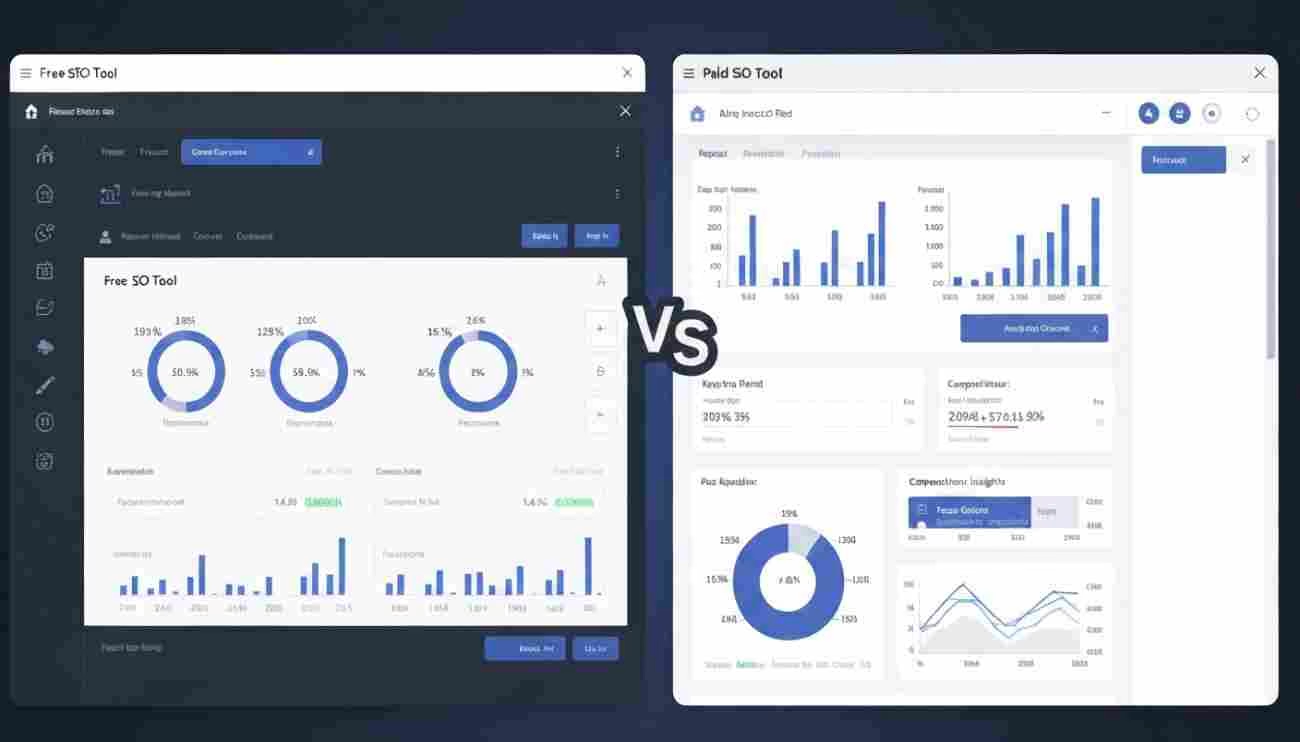
Understanding the limitations of free tools helps you set appropriate expectations and plan for future upgrades.
Here’s what you need to know about the trade-offs between free and paid SEO audit platforms.
1. Audit Limits and Crawl Depth
Most free SEO auditing tools limit the number of pages they’ll analyze or the frequency of audits you can run.
Screaming Frog’s 500 URL limit works well for small business sites but becomes restrictive for larger e-commerce or content sites. Understanding these limits helps you choose the right tool for each client.
Crawl depth limitations can also impact the quality of technical audits.
Free tools might miss issues in deeper site architecture or fail to identify problems with internal linking structures that span multiple levels of navigation.
The key is matching tool capabilities to client needs. A local restaurant with 20 pages doesn’t need the same audit depth as an e-commerce site with 10,000 products.
Use free tools where they’re sufficient and upgrade selectively for clients who need more comprehensive analysis.
2. White Label Access and Branding
White label reporting capabilities vary significantly between free and paid plans.
Some tools offer basic logo customization in their free tiers, while others require paid subscriptions for complete custom branding.
This difference can impact your professional image and client perception.
Free plans often include watermarks or attribution requirements that can undermine your agency’s credibility.
Paid plans typically remove these restrictions and offer more extensive customization options, including custom reports templates and branded client dashboards.
Consider the lifetime value of your clients when deciding whether to upgrade for better branding options.
If removing a watermark helps you close a $5,000 annual contract, the upgrade cost is easily justified.
3. Support and Integrations
Free tool users typically receive limited customer support, which can be problematic when you’re working under client deadlines.
Paid plans usually include priority support, phone assistance, and dedicated account management that can be valuable for growing agencies.
Integration capabilities also expand with paid plans.
Free versions might connect to Google Analytics and Search Console, but paid plans often include connections to social media platforms, CRM systems, and advanced marketing reports tools that streamline your workflow.
The question isn’t whether paid tools are better – it’s whether the additional features justify the cost for your specific situation.
Start with free tools and upgrade strategically as your client base and revenue grow.
How to Choose the Right SEO Tool for Your Agency

Selecting the best free white label SEO audit tool for your agency requires careful consideration of your current needs, growth plans, and client expectations.
Here’s a framework for making the right choice.
1. Define Your Client Needs
Different types of clients require different audit approaches.
Local businesses need local SEO analysis, e-commerce sites require technical SEO depth, and content sites benefit from content optimization tools.
Start by categorizing your current and target clients to understand what features matter most.
Create client personas that include their typical website size, SEO knowledge level, and budget constraints.
This information helps you choose tools that can deliver appropriate value without overwhelming clients with unnecessary complexity or technical jargon.
Have you considered how your tool choice affects client retention?
Clients who receive clear, actionable recommendations are more likely to continue working with your agency than those who get generic advice that doesn’t address their specific challenges.
2. Evaluate Customization Options
Custom branding capabilities can significantly impact your agency’s professional image and client perception.
Evaluate not just whether tools offer white labeling, but how extensive the customization options are and whether they align with your brand standards.
Consider the client experience from initial audit through ongoing reporting. Can you maintain consistent branding across all touchpoints?
Do the reports look professional enough to justify your fees? These details matter more than you might initially think.
The goal is to create a seamless brand experience that reinforces your agency’s expertise and professionalism.
Tools that offer extensive customization help you build stronger client relationships and command higher fees.
3. Check for Scalability and Support
Your tool needs should evolve as your agency grows.
Choose platforms that offer clear upgrade paths and additional features that align with your growth plans.
Avoid tools that will require complete replacement as you scale.
Evaluate the quality and availability of customer support, especially for technical issues that could impact client deliverables.
Free tools often have limited support, but some platforms offer community forums or knowledge bases that can help solve common problems.
Consider the total cost of ownership, including time spent learning new tools, training team members, and managing multiple platforms.
Sometimes paying for a more comprehensive solution is more cost-effective than managing multiple free tools with limited capabilities.
Final Thoughts On Free White Label SEO Audit Tool
Finding the right free white label SEO audit tool can transform your agency from a struggling startup to a thriving business that serves dozens of clients profitably.
The tools I’ve shared have helped hundreds of agencies scale their operations without breaking their budgets on expensive software subscriptions.
Remember that tools are just enablers – your expertise, client relationships, and strategic thinking are what create real value.
Use these free resources to build your skills, prove your value, and reinvest your savings into growing your business rather than just paying for features you might not need yet.
The SEO industry rewards agencies that can deliver consistent results efficiently.
Whether you’re just starting out or looking to scale your existing operations, these free tools provide the foundation you need to compete with much larger agencies while maintaining healthy profit margins.
What’s your biggest challenge in choosing SEO audit tools for your agency?
Have you had success with any of the platforms I’ve mentioned, or discovered other free options that work well for your specific client base?
Share your experiences in the comments – your insights could help other agency owners avoid the expensive mistakes I made when starting out.
Frequently Asked Questions About Free White Label SEO Audit Tool
1. What is a white label SEO audit tool?
A white label SEO audit tool is software that allows agencies or freelancers to run detailed SEO audits for clients under their own brand name. Instead of showing the tool provider’s logo, you can customize the reports with your company’s branding, logo, and colors.
2. Can I run professional SEO audits with free tools?
Yes, you can run professional SEO audits using free tools, although with some limitations. Free SEO audit tools like Google Search Console, SEOptimer (free trial), or Semrush can provide valuable insights into technical issues, keyword performance, and backlinks.
3. How do I add white label branding to SEO reports?
Adding white label branding depends on the tool you use. Most white label SEO audit platforms, such as SEOptimer, AgencyAnalytics, and WebCEO, include customization options in their dashboard. You can upload your agency’s logo, select brand colors, use a custom domain, and even add personalized report introductions. Once set up, all client reports will appear as if they were generated by your own software – building brand trust and professionalism.
4. Which SEO tools integrate with Google Analytics?
Top options include AgencyAnalytics, WebCEO, Ahrefs, Semrush, and SEOptimer. These integrations allow you to combine SEO audit data with website traffic, conversions, and user behavior metrics, giving clients a complete overview of how SEO improvements impact real performance.
5. How can I use SEO audits to generate leads?
You can use SEO audits as a lead generation magnet by offering free or low-cost audits to attract potential clients. Here’s how:
- Create a landing page where users can request a free audit.
- Use a white label SEO tool to automatically generate reports.
- Follow up with personalized recommendations based on the audit results.
6. Are free white label tools safe for client data?
Most reputable free white label SEO tools are safe, but data privacy varies by provider. Always check the tool’s security policy and data handling practices. Tools that use HTTPS encryption, GDPR compliance, and clear data storage policies such as SEOptimer and WebCEO are generally safe. Avoid tools that require unnecessary client logins or store sensitive data without transparency.

His in-depth reviews have been featured on Hubpages, Vocal.Media and Hackernoon, where he helps businesses and content creators choose affordable, high-performing solutions for SEO, lead generation, and growth.
Aboah’s analyses emphasize accuracy, usability, and ROI, making his insights trusted by small business owners, marketers, and professionals looking to scale their online presence with data-driven strategies.
- White Label SEO Report 2026: Templates, Examples + Best Tools - December 25, 2025
- Best White Label SEO Tools for Agencies in 2026: Boost Branding & Client Trust - December 16, 2025
- 20 Etsy SEO Tools That Doubled My Clients’ Shop Sales (Seller‑Tested) - December 8, 2025