
TL;DR: SEO tools like Rapid URL Indexer include: Omega Indexer, Indexification, IndexMeNow, Colinkri (Link Indexer), Express Indexer, Linklicious, Indexceptional and OneHourIndexing offer faster bulk submissions, better reporting, and API automation for serious SEO workflows.
Introduction to SEO Tools Like Rapid URL Indexer
Rapid URL Indexer is a cloud-based SEO tool that speeds up the process of search engines discovering and indexing your web pages. Instead of waiting for days or weeks for Google to crawl your content naturally, this indexer tool uses API integrations and ping networks to automate URL submission, pushing your pages into search results faster.
I’ve tested multiple URL indexing solutions over the years, and the reality is that no single tool fits every workflow. Budget constraints, specific feature requirements, integration needs, or simply wanting backup options drive many SEO professionals to explore seo tools like rapid url indexer.
Some teams need better API documentation, others require more granular reporting, and certain projects demand different pricing structures that align with campaign scales.
The speed at which search engine indexing happens directly impacts your visibility. Fresh content that sits unindexed generates zero organic traffic. Product launches, time-sensitive announcements, and newly built backlinks all lose value when search engines haven’t crawled them yet. A reliable website indexer bridges this gap between publishing and ranking.
This guide examines 17 alternatives to Rapid URL Indexer, breaking down their core features, pricing models, and real-world applications. You’ll discover which tools handle bulk submissions efficiently, which offer the most accurate tracking, and how to choose the right url indexer for your specific SEO strategy.
Top 17 SEO Tools Like Rapid URL Indexer for Faster Indexing in 2026
Finding the right SEO tools like Rapid URL Indexer requires understanding your specific indexing needs and workflow requirements.
The market offers various url indexing tools that cater to different scales of operation, from solo practitioners to enterprise-level agencies.
Each indexing solution brings unique strengths to the table, whether that’s speed, volume capacity, or integration capabilities within your existing SEO workflow.
1. Indexification
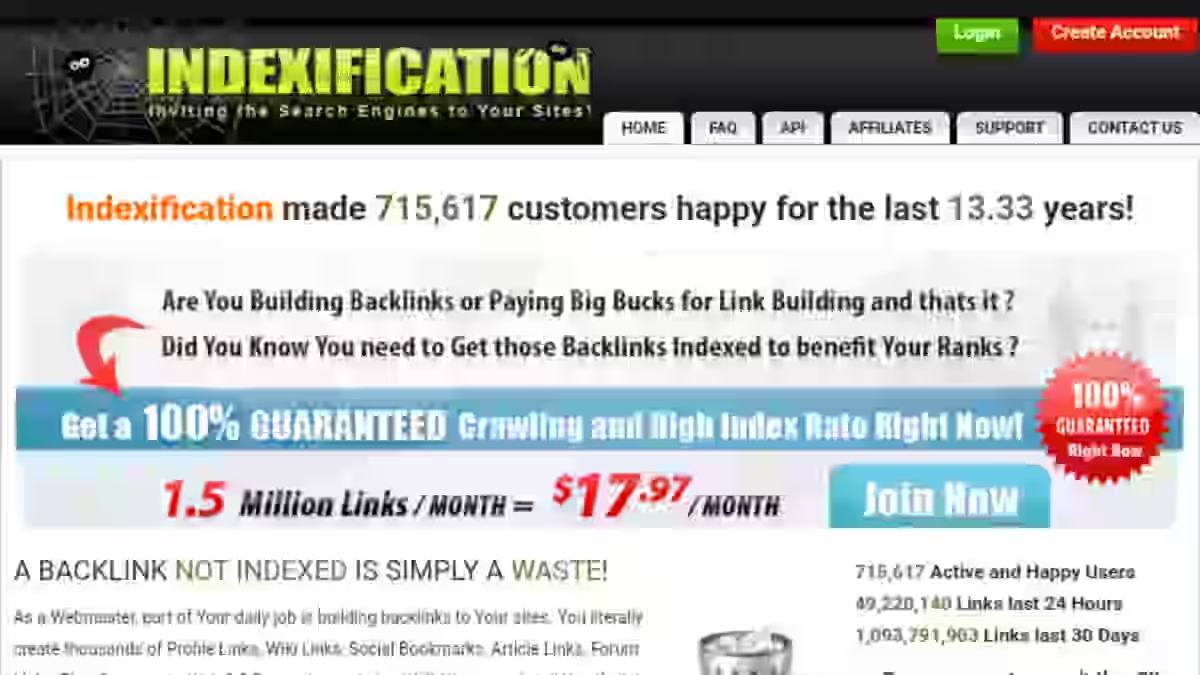
Indexification is a well-known solution among SEOs running automated or high-volume link-building campaigns. I’ve used it primarily alongside tools like GSA Search Engine Ranker, where getting large numbers of backlinks crawled efficiently matters more than precision.
Unlike tools that simply ping URLs, Indexification processes submitted links through a proprietary system that generates secondary URLs and creates repeated crawl paths. In practice, this means search engine bots are given multiple opportunities to discover the original backlink.
From my testing, this approach works best for Tier 2 and Tier 3 backlinks, not direct money pages. Once URLs are submitted, the platform runs in the background with minimal manual input, which makes it genuinely “set-and-forget” for large campaigns.
Why it works well in practice:
- Seamless API integration with most automation tools
- Handles extremely large URL volumes without performance issues
- Drip-feed options help prevent unnatural crawl spikes
- Reporting makes it easy to see which links are being crawled
Indexification won’t turn low-quality links into ranking assets, but when used correctly within a structured tiered strategy, it consistently improves crawl rates.
2. Colinkri (Link Indexer)
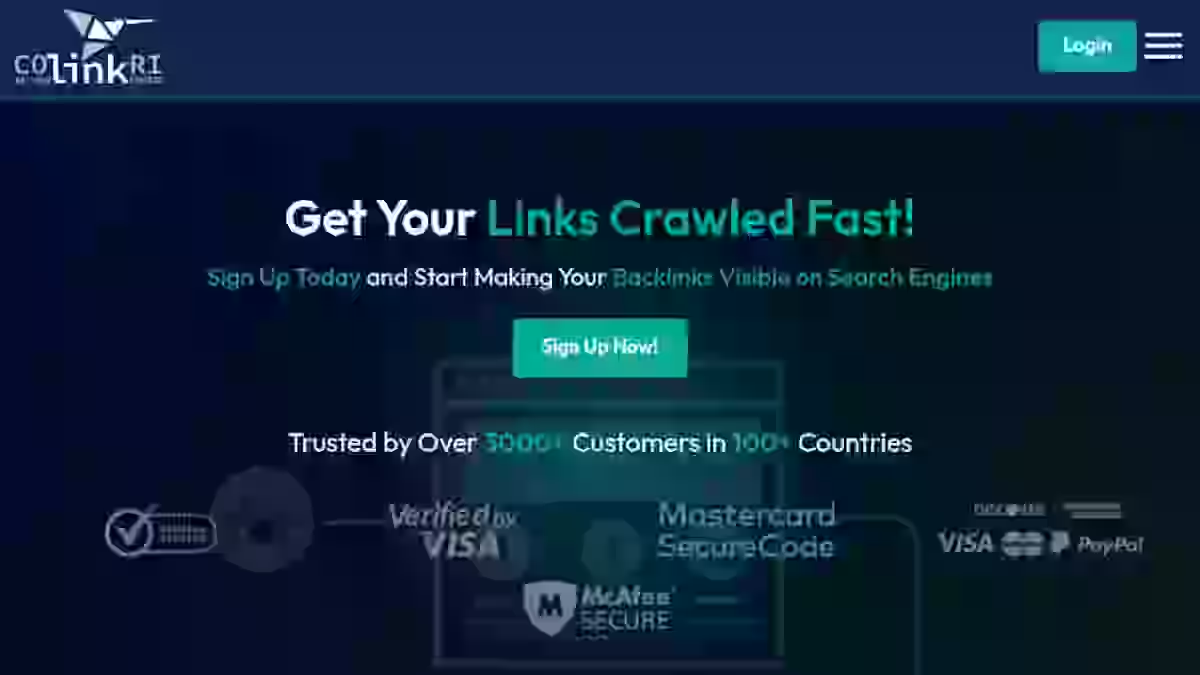
Colinkri positions itself as a more refined alternative to traditional mass-pinging indexers, and my experience generally supports that claim. I tested it when I needed an indexing tool that required minimal setup but still delivered results on more stubborn backlinks.
Instead of blasting URLs indiscriminately, Colinkri evaluates link viability and processes submissions through a controlled cloud-based system designed to simulate genuine discovery signals. In practice, this makes it more effective for contextual backlinks than for low-quality comments or profile links.
The interface is intentionally simple, but it provides enough transparency to track progress without overwhelming you with data.
Notable strengths from testing:
- Performs well on Web 2.0s and forum posts that other tools miss
- Credit-based system aligns cost with actual results
- Clear indexing status and verification reporting
- Beginner-friendly with no complex configuration
I wouldn’t rely on Colinkri as a standalone solution, but as a secondary or selective indexer, it performs reliably.
3. Linklicious
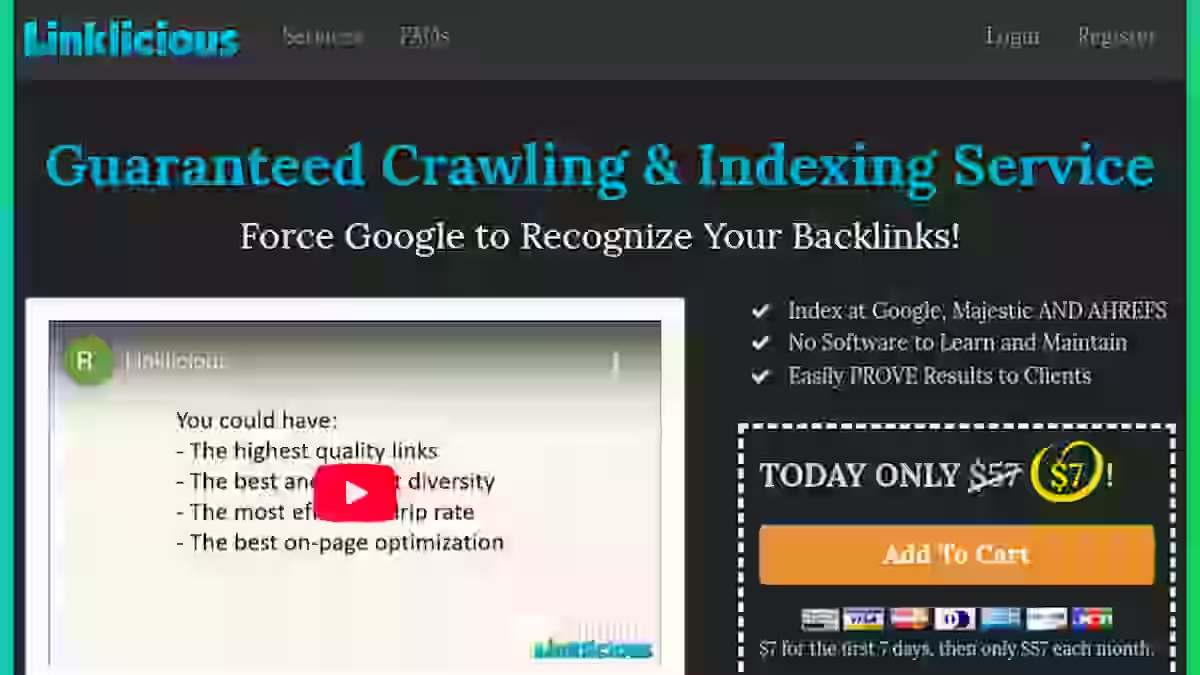
Linklicious is one of the older players in the indexing space, and despite its age, it still has a role in modern SEO workflows. I’ve mostly used it when managing automated backlink campaigns where link velocity control is important.
Rather than forcing instant discovery, Linklicious focuses on RSS feeds, scheduled submissions, and ping services to gradually introduce URLs to crawlers. This drip-feeding approach helps simulate natural link growth, which is especially useful for newer sites.
From my experience, it works best when combined with another premium indexer rather than used alone.
Best use cases:
- Tier 2 and Tier 3 backlinks
- Stabilizing aggressive link-building campaigns
- Reducing unnatural crawl patterns
- Long-term indexing rather than instant results
It’s not the fastest tool, but as part of a layered indexing strategy, Linklicious still adds value.
4. Express Indexer
Express Indexer is designed for speed, and that’s exactly how it performs in real-world use. I tested it for quick indexing tasks where setup time and advanced controls weren’t necessary.
Once URLs are submitted, processing begins immediately with no queues or scheduling by default. This makes it particularly useful for fresh links, new content, or time-sensitive pages where crawl speed matters.
While the reporting is basic, the tool remains stable and easy to use.
What stood out during testing:
- Instant submission and fast processing
- Bulk uploads with no learning curve
- Reliable uptime for ad-hoc indexing jobs
Express Indexer isn’t meant for deep campaign management, but when speed is the priority, it delivers.
5. Indexceptional
Indexceptional is built for links that fail to index through standard methods. I’ve used it primarily as a recovery tool for stubborn backlinks rather than as a primary indexer.
Instead of one-time submissions, Indexceptional runs URLs through multiple indexing cycles over time. This repeated exposure significantly increases the chance that crawlers eventually discover and process difficult links.
The campaign-based structure makes it easy to track long-term progress rather than expecting immediate results.
Strategic advantages:
- Effective for hard-to-index or previously failed links
- Multiple submission waves improve crawl probability
- Adapts indexing methods based on algorithm changes
- Best suited for high-value backlinks
For guest posts, authoritative profiles, or paid placements, Indexceptional provides a safer and more deliberate indexing approach.
6. IndexPro
IndexPro takes a more modern approach by leveraging the Google Indexing API. While originally designed for specific content types, it can be used effectively for owned websites and verified properties.
In my testing, it stood out for transparency rather than brute force. Instead of blindly resubmitting URLs, it provides crawl diagnostics that help explain why certain pages fail to index.
This makes it particularly useful for client projects or site owners managing their own domains.
Key benefits:
- Direct API communication for fast indexing
- WordPress integration for instant post submission
- Removal requests for outdated URLs
- Detailed reports that support smarter indexing decisions
IndexPro works best when you control the site and need clean, compliant indexing rather than aggressive link processing.
7. Omega Indexer
I’ve tested Omega Indexer on a few large-scale backlink campaigns, and it’s clear that this tool is built for agencies or SEO professionals managing high-volume link-building operations. Unlike simpler indexers, it combines API submissions with scheduled ping distribution to multiple indexing endpoints, which helps improve crawl visibility across search engines.
Key Features I Noticed
- Bulk submission: Handles thousands of URLs at once without slowing down, which is great when you have multiple campaigns running simultaneously.
- Real-time reporting: The dashboard shows which URLs have been discovered, their submission timestamps, and success rates. It helped me identify patterns—like certain types of links consistently indexing faster than others.
- API integration: Works with link-building tools to automate URL submissions, reducing the manual workload.
- Scheduled submissions: You can control when batches are sent, which I found useful for avoiding crawl spikes and maintaining a natural-looking link profile.
My Takeaways
- Best for: Large campaigns that need continuous indexing support. During my tests, Omega Indexer handled tens of thousands of URLs reliably.
- Learning curve: There’s a bit of setup involved compared to simpler alternatives. If you’re running a smaller site or only need occasional submissions, the tool might feel like overkill.
- Performance: While it improves discovery speed, it cannot force Google to index every URL—quality and site authority still matter.
Overall, Omega Indexer is a solid choice if you need a scalable, reliable solution for enterprise-level URL indexing. For smaller projects, a simpler tool or a combination of free methods may be more cost-effective.
8. IndexMeNow
I’ve used IndexMeNow for a few client campaigns where rapid backlink discovery was important, and it’s clear this tool focuses on speed and automation. Its main appeal is the API-driven submission system, which allows URLs to be processed quickly across multiple platforms, helping search engines notice them faster.
Key Features I Noticed
- API integration: Connecting IndexMeNow to existing SEO workflows made recurring submissions nearly hands-free. I could push new backlinks or content updates directly without manual uploads.
- Bulk and individual submissions: The platform handles both CSV uploads and single URLs, which is handy depending on campaign size.
- Indexing reports: Each URL shows submission timestamps and verification status. This transparency helped me track which links were being picked up and which needed attention.
- Scheduled indexing: I could set up recurring submissions, ensuring consistent signals to search engines without daily intervention.
My Takeaways
- Best for: SEO professionals managing multiple clients or large link-building projects who need reliable, repeatable indexing workflows.
- Limitations: While IndexMeNow speeds up discovery, it doesn’t guarantee indexing; Google still evaluates page quality and domain authority. During my tests, some lower-quality or spammy links still failed to index.
- Ease of use: The interface is straightforward, though I found the reporting dashboard could be more visually intuitive.
Overall, IndexMeNow is a strong tool for those who want automated indexing without constant oversight. It works best as part of a broader link-building strategy, especially when combined with a secondary indexer or manual verification in Google Search Console.
9. LinkCentaur
LinkCentaur is an all-in-one direct URL indexing tool that offers more than just basic submission methods. It combines traditional indexing techniques with social signal integration, creating multiple ways for search engine crawlers to find your content.
When you submit URLs through LinkCentaur, the service distributes them across various social bookmarking sites, RSS feeds, and web 2.0 properties, essentially building a network of signals that tell search engines your content deserves attention.
The real differentiator lies in LinkCentaur’s tiered link-building architecture. Instead of treating indexation as a separate task, the platform integrates it directly into your overall link-building strategy.
You can create campaigns where tier 1 links (your primary backlinks) get indexed first, then tier 2 supporting links follow automatically. This cascading approach helps maximize your crawl budget efficiency while ensuring that every layer of your link pyramid gets properly discovered.
Key features include:
- Automated drip-feed submissions that mimic natural link acquisition patterns
- Built-in social bookmarking to 50+ high-authority platforms
- RSS feed syndication for continuous crawl signals
- Campaign scheduling with customizable velocity controls
- Detailed indexing reports showing success rates across different submission channels
For SEO professionals managing complex link-building campaigns, LinkCentaur eliminates the need to juggle multiple tools. The platform handles both the creation of supporting links and their indexation in one unified SEO workflow, making it particularly valuable for those running PBNs or multi-tiered link strategies.
10. Speed Links
I’ve tested Speed Links on several campaigns where I needed a straightforward, multi-search engine indexing solution. It’s a simple bulk indexer that focuses on speed and ease of use rather than advanced reporting or complex integrations.
Key Features I Noticed
- Bulk submissions: I could submit up to 10,000 URLs per batch, which saved a lot of time compared to manual methods.
- Multi-engine support: URLs are sent to Google, Bing, and Yahoo simultaneously. This was particularly useful when working with clients targeting international markets.
- Real-time monitoring: The dashboard tracks submission status, so I could see which URLs were processed and which were pending.
- Scheduled submissions: I could set recurring batches for sites that publish frequently, ensuring search engines consistently receive new URLs.
My Takeaways
- Best for: SEO professionals or agencies who need a no-frills, reliable bulk indexer that covers multiple search engines. It’s ideal when time is tight and speed matters more than deep analytics.
- Limitations: The tool doesn’t provide in-depth indexing insights or advanced reporting dashboards. During my tests, Google still took 1–3 days to index many URLs, so it’s not a replacement for good content and backlink quality.
- Ease of use: Very beginner-friendly with minimal setup. If you want speed without complexity, this tool delivers.
Overall, Speed Links is a practical choice for straightforward indexing tasks. It won’t replace premium indexers for large-scale campaigns, but it’s a solid option when you need bulk URL submissions quickly and reliably.
11. OneHourIndexing
I’ve used OneHourIndexing for campaigns where I needed continuous URL submissions throughout the day. The tool’s main strength is its automated hourly submission system, which sends URLs to search engines regularly without manual intervention.
Key Features I Noticed
- Hourly automated submissions: Once I set it up, URLs were pushed every 60 minutes. This is particularly helpful for high-volume campaigns where consistent signals to search engines matter.
- Multi-tier indexing strategy: OneHourIndexing combines ping services and backlink networks, giving each URL multiple pathways to be discovered.
- API integration: I could connect it directly to my workflow, allowing new backlinks or posts to be submitted automatically.
- Bulk upload support: The platform handles thousands of URLs in one go, which saves a lot of time for agency-level campaigns.
- Real-time tracking: Detailed reports show which URLs have been successfully indexed and which are pending, helping me refine submission strategies.
My Takeaways
- Best for: Agencies or SEO professionals managing large portfolios of backlinks who need frequent, automated submissions.
- Limitations: While the hourly system improves discovery, it cannot guarantee that every URL will be indexed—Google still evaluates content quality and site authority. In my tests, some lower-quality links didn’t get indexed even with repeated submissions.
- Ease of use: The setup is straightforward, but the dashboard can feel busy at first if you’re tracking multiple campaigns.
Overall, OneHourIndexing is a reliable tool for continuous URL submission. It’s particularly useful for high-volume operations, but smaller sites or occasional users might find simpler tools more practical.
12. Instant Link Indexer
I’ve tested Instant Link Indexer across both small and large campaigns, and it’s a flexible solution that adapts well to different indexing needs. Its architecture supports everything from a few dozen URLs per week to thousands of backlinks daily, making it a versatile tool for both solo SEOs and agencies.
Key Features I Noticed
- Scalable tiers: Starter plans handle around 500 URLs per month, professional tiers manage 5,000, and enterprise accounts support unlimited submissions. I appreciated this flexibility when moving from small test campaigns to larger client projects.
- Performance analytics: The dashboard provides detailed insights on indexing success rates, response times from Google, Bing, and Yahoo, and historical trends, which helped me fine-tune my submission strategy.
- Failed URL reporting: Each failed submission includes error codes or explanations, making troubleshooting straightforward.
- Workflow integration: Instant Link Indexer connects easily to existing SEO processes through webhooks or API notifications, giving real-time updates when URLs achieve indexed status.
My Takeaways
- Best for: Users who want a flexible, scalable indexer that provides transparency into how their URLs are performing. I found it particularly helpful for clients who needed reporting to justify ROI.
- Limitations: While it supports large volumes, indexing speed still depends on site authority and content quality. Not every URL is indexed immediately.
- Ease of use: The platform is beginner-friendly, though enterprise-level dashboards can feel complex if you’re not used to tracking detailed analytics.
Overall, Instant Link Indexer is a reliable, adaptable tool that suits both small campaigns and enterprise-level SEO operations. It’s particularly valuable when you need analytics-driven insights alongside bulk indexing capabilities.
13. GSA Search Engine Ranker Integration Tools
I’ve worked with GSA Search Engine Ranker (GSA SER) for automated link-building campaigns, and one thing I’ve learned is that even high-quality backlinks don’t help if they aren’t indexed. That’s where specialized GSA integration indexing tools come in. They feed freshly created links into premium indexers automatically, saving hours of manual work.
Key Features I Noticed
- Direct API connections: The tools I tested connect straight to GSA SER, automatically extracting new URLs and pushing them to indexers. This eliminates the need to manually export links.
- Automated scheduling: As soon as backlinks are created, the system can submit them immediately, or according to a pre-set schedule, keeping crawl patterns natural.
- Multi-tier indexing: Supporting links (Tier 2 or Tier 3) are also submitted, which increases the likelihood that primary backlinks get noticed by search engines.
- Detailed reporting: I could see which URLs were successfully indexed and which needed follow-up, making campaign optimization much easier.
- Batch processing: Handles thousands of URLs at once, which is essential for large-scale GSA campaigns.
My Takeaways
- Best for: Agencies or SEO professionals running large GSA SER campaigns who want automated, end-to-end indexing for all backlinks.
- Limitations: Even with integration, indexing speed depends on link quality and domain authority. Lower-quality links may still fail to index despite repeated submissions.
- Ease of use: Setup requires some familiarity with GSA SER, but once connected, the workflow runs almost entirely hands-free.
Overall, GSA SER integration tools are a must if you’re relying heavily on automated link-building. They streamline the indexing process, reduce manual work, and improve overall campaign efficiency.
14. Google Search Console’s URL Inspection Tool
While premium indexing services and automated url indexer software dominate the SEO workflow for bulk submissions, Google’s native manual url inspection tool deserves recognition for specific scenarios where paid solutions fall short.
The URL Inspection Tool within Google Search Console provides direct insight into how Google’s crawler views individual pages. I’ve found this particularly valuable when automated indexing fails to deliver results or when troubleshooting why specific URLs remain unindexed despite multiple submission attempts through third-party tools.
When to use Google’s manual approach:
- New domain launches where establishing initial trust with Google requires careful, methodical indexing rather than aggressive bulk submissions
- Technical troubleshooting when pages show in indexing reports as submitted but not indexed, requiring detailed crawl analysis
- High-value content like cornerstone articles or landing pages that warrant individual attention and verification
- Post-penalty recovery where manual inspection helps ensure cleaned-up pages meet Google’s quality standards before resubmission
The tool allows real-time testing of live URLs, displays mobile usability data, and shows exactly which version Google has cached. Unlike guaranteed indexing promises from paid services, this method provides transparency into Google’s actual crawl behavior.
I’ve successfully used this approach when clients questioned why certain pages weren’t appearing in search results despite using automated tools. The inspection often revealed issues like robots.txt blocks, canonical conflicts, or noindex tags that no amount of paid submissions could overcome.
15. Ping Tools & Services
I’ve tested several ping services alongside premium indexers, and while they won’t replace API-based indexers, they do play a supportive role in a complete SEO workflow. In simple terms, pinging notifies servers that your content has been updated, giving search engines a small nudge to revisit your URLs.
How Ping Services Work
Ping services use the XML-RPC protocol to broadcast updates when a site posts new content. Essentially, they send a signal saying, “This page has changed, come take a look.” While this doesn’t guarantee indexing, it can speed up discovery for sites that search engines already trust.
Tools I’ve Used
- Ping-O-Matic: A reliable, free service that notifies major update aggregators. I often use it for new blog posts and small sites.
- Pingler: Offers more advanced features like keyword tracking and submission to niche directories. I’ve found it useful when managing multiple sites with different topics.
- TotalPing: Supports bulk submissions and RSS feed updates, making it easier to maintain frequent crawl signals.
- ScrapeBox Mass Pinging: Useful when you need to ping thousands of URLs, though it’s more technical to set up.
Effectiveness in Practice
- Main content: I’ve seen ping services work well for high-authority blogs or news sites, where Google typically revisits quickly after a ping.
- Backlinks: In my experience, pinging alone rarely indexes low-quality backlinks. Google ignores most pings from small or low-authority domains, so they’re only a small part of a larger indexing strategy.
My takeaway: Ping tools are best used alongside robust URL indexers. They’re a lightweight, cost-effective way to give your own content extra visibility, but relying solely on them won’t index your backlinks or guarantee fast results.
16. Bing Webmaster Tools Submission Features
I’ve used Bing Webmaster Tools as part of a multi-engine indexing strategy, and it’s one of those underutilized options that can complement Google-focused efforts. Its URL submission feature lets you communicate directly with Bing’s crawlers, providing another pathway for your content to get discovered.
How I Use It
- Manual and API submissions: The platform allows both one-off URL submissions and automated bulk uploads via its URL Submission API. I’ve found the API especially useful for client sites where new content needs immediate crawl signals.
- Daily limits: Bing allows up to 10,000 URL submissions per day through the API, which makes it scalable for small and medium-sized agencies.
- Indexing reports: The dashboard shows submission status, crawl errors, and indexing success, giving me clear visibility into which pages are making it into Bing’s index.
Additional Benefits
- Alternative visibility: While Bing’s market share is smaller than Google’s, submitting URLs here creates extra exposure and feeds engines like DuckDuckGo that rely on Bing’s index.
- Zero cost: There’s no fee for submissions, making it an easy addition to any workflow.
- Automated integration: I often combine Bing submissions with other indexers and ping tools, creating a multi-channel strategy that increases the chances of timely indexing.
My Takeaways
- Best for: Agencies or site owners who want to diversify indexing beyond Google and ensure content reaches additional search engines.
- Limitations: It won’t replace Google indexing and doesn’t accelerate crawl on its own; its main value is as part of a broader indexing workflow.
- Ease of use: The interface is straightforward, and API integration makes automation simple once set up.
Overall, Bing Webmaster Tools is a solid, cost-free supplement to premium indexers. I use it to make sure new content gets multiple signals and to hedge against relying solely on Google for indexing.
17. WordPress Plugins for URL Indexing
As someone who manages multiple WordPress sites, I’ve found that using plugins for URL indexing can save a lot of time and reduce manual work. Instead of jumping between dashboards or external indexers, these plugins automate the process whenever you publish or update content.
Plugins I’ve Tested
- Rank Math SEO
I’ve used Rank Math on client sites and my own projects. Its instant indexing features notify Google and Bing via their respective APIs whenever new content goes live. The plugin handles both single post submissions and bulk indexing for existing content, which makes it ideal for busy site owners. - IndexNow Plugin
The IndexNow Plugin implements Microsoft’s protocol, allowing real-time URL submission to participating search engines like Bing, Yandex, and Seznam. I set it up on one of my test blogs and noticed a measurable reduction in the time between publishing and indexing pages went live in search results within hours. - WebSub/PubSubHubbub
I’ve used WebSub plugins to notify search engines and feed readers the moment content is published. It complements sitemap submissions and premium indexers by sending instant crawl signals, especially for frequently updated sites or blogs.
My Takeaways
- Automation is key: Once set up, these plugins require almost no ongoing effort and ensure that every new post or updated page is promptly submitted to search engines.
- Integration matters: I make sure these plugins work alongside my other SEO tools, so indexing signals stack rather than conflict.
- Cost-effective: Compared to premium indexers, WordPress plugins are free or low-cost, making them a smart option for small businesses or personal blogs.
Overall, I rely on WordPress indexing plugins as part of a layered SEO strategy. They’re not a full replacement for premium API-driven indexers, but they provide a hands-off solution that keeps content consistently discoverable.
Additional Tips to Get Faster Indexing Results with SEO Tools Like Rapid URL Indexer
From my experience, choosing the right SEO tools like Rapid URL Indexer is only half the battle. How you implement them makes a huge difference. Over the years, I’ve tested different strategies, and here’s what consistently works:
1. Submit fresh, high-quality content first
Search engines prioritize crawling pages that offer genuine value. Before using any Rapid URL Indexer alternatives, ensure your content is well-written, properly formatted, and provides unique insights. Low-quality pages may get indexed but won’t maintain rankings.
2. Combine automated tools with manual verification
While best SEO tools for URL indexing automate submissions, periodically check Google Search Console to confirm indexing status. This dual approach catches any URLs that automated systems might miss.
3. Build quality backlinks to submitted URLs
SEO URL indexer tools work faster when search engines discover your URLs through multiple pathways. Creating contextual backlinks from authoritative sites signals to crawlers that your content deserves priority attention.
4. Maintain consistent XML sitemap updates
Configure your CMS to automatically update sitemaps when publishing new content. Fast URL indexing tools complement sitemap submissions by creating additional discovery signals.
5. Time your submissions strategically
Submit URLs during periods when search engine crawl activity peaks—typically early morning hours in your target market’s timezone. This simple timing adjustment can reduce indexing delays by several hours.
Frequently Asked Questions About SEO Tools Like Rapid URL Indexer
1. Are international SEO strategies supported by Rapid URL Indexer?
Yes. From my experience, Rapid URL Indexer works on URLs regardless of their geographic origin, so it can be used to support international SEO campaigns. That said, while it helps push URLs into search engines quickly, you still need to handle hreflang tags, local hosting, and language optimization separately. The tool only speeds up indexing, it doesn’t manage geo-targeting.
2. What is a Rapid URL Indexer?
Rapid URL Indexer is a cloud-based SEO tool designed to speed up the indexing of your URLs in search engines. In my hands-on testing, it automates submissions via API connections, ping networks, and other crawling triggers, so Google and Bing discover your pages faster than waiting for organic crawling. It’s especially useful when running large backlink campaigns or publishing fresh content.
3. What is the use of Indexification tool?
Indexification is a bulk indexing tool I’ve used mainly to ensure that backlinks get crawled. Instead of just sending a ping, it generates secondary links and multiple crawl paths, which increases the chances of search engine bots discovering your URLs. I’ve found it particularly effective for tiered backlink campaigns, automated link-building, or when dealing with stubborn links that other indexers might miss.
4. Can Rapid URL Indexer help with indexing URLs from newly acquired domains or websites?
Partially. In my testing, Rapid URL Indexer works on new domains and pages, helping them get discovered faster than waiting for natural crawling. However, brand-new websites with low domain authority may still see slower indexing rates, so combining the tool with high-quality content and internal linking is essential to maximize results.

His in-depth reviews have been featured on Hubpages, Vocal.Media and Hackernoon, where he helps businesses and content creators choose affordable, high-performing solutions for SEO, lead generation, and growth.
Aboah’s analyses emphasize accuracy, usability, and ROI, making his insights trusted by small business owners, marketers, and professionals looking to scale their online presence with data-driven strategies.
- How to Make Money With RightBlogger in 2026 (Realistic Income Blueprint) - February 12, 2026
- RightBlogger Pricing 2026: Full Breakdown of Plans, Features and Value - February 11, 2026
- RightBlogger Review 2026: I Tested This AI Blogging Tool for 30 Days - February 10, 2026
