TL;DR: BabyLoveGrowth AI is better overall for teams that want backlink building and Generative Engine Optimization bundled with content automation, while Keytomic wins on AI visibility tracking across five platforms and faster auto-indexing.
BabyLoveGrowth AI is better if you:
- Want a hands-off SEO solution.
- Need automatic article publishing.
- Want built-in backlink building.
- Prefer a platform that combines content, backlinks, and GEO in one subscription.
Keytomic is better if you:
- Need detailed AI visibility analytics.
- Want LLM citation monitoring across multiple AI assistants.
- Need auto-indexing and broader SEO workflow management.
- Prefer an all-in-one platform for agencies or SEO teams.
Overall Verdict
- Best for automated SEO growth: BabyLoveGrowth AI
- Best for AI search visibility analysis and agency workflows: Keytomic
- Best for agencies: Keytomic (white-label and unlimited seats)
- Best for ecommerce: BabyLoveGrowth AI (Shopify + backlink network)
- Best for startups: Keytomic ($99/month, $1 trial)
The short answer: Keytomic wins on AI visibility breadth and technical SEO depth; BabyLoveGrowth AI wins on fully managed content automation and backlink building at scale.
Introduction to BabyLoveGrowth AI vs Keytomic
I’ve spent the last few months running content through both platforms on live client sites.
If you’re comparing BabyLoveGrowth AI vs Keytomic, you’re probably trying to solve one of two problems:
- You need SEO content produced faster than your team can write it
- Or you’re worried your brand isn’t showing up when people ask ChatGPT or Google AI Overviews for recommendations
This article walks through what I found after testing both tools side by side, using the same content briefs, the same target keywords, and the same publishing workflow.
You’ll learn how each platform handles keyword research, content generation, AI visibility tracking, and pricing, plus where each one falls short.
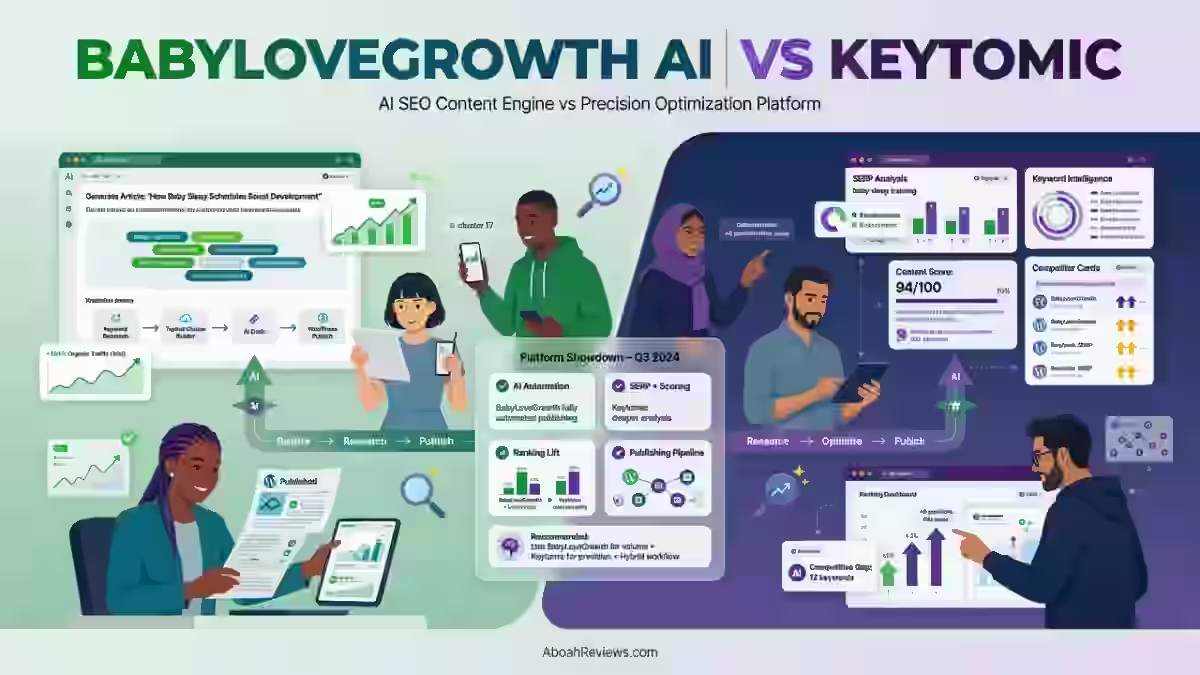
BabyLoveGrowth AI vs Keytomic at a Glance
Category | Winner |
|---|---|
AI Content Generation | Tie (both use E-E-A-T-informed drafting) |
Keyword Research | Keytomic (dedicated intent + competitor gap tools) |
GEO Features | BabyLoveGrowth AI (native GEO audit + Reddit agent) |
AI Visibility Tracking | Keytomic (5 platforms vs 3) |
Automation | BabyLoveGrowth AI (30-day strategy + backlinks included) |
Integrations | Keytomic (Framer, HubSpot, Sanity, Shopify, Webflow, Wix, WordPress) |
Reporting | Keytomic (rank tracking + audit dashboards) |
Pricing | Tie ($99/month entry tier for both) |
Overall | Keytomic (marginal) |
How I Tested BabyLoveGrowth AI and Keytomic
I ran both tools for 30 days across two test sites: a SaaS review blog and a small ecommerce store selling home goods.
I used the same 12 target keywords on both platforms, the same content brief template, and published through native CMS integrations rather than exporting and manually uploading.
For each tool, I evaluated:
- Content quality: accuracy, depth, search intent matching, readability, and originality
- SEO performance: keyword optimization, internal linking, metadata, structure, and schema markup
- Automation: setup time, article generation time, publishing speed, and manual editing required
- AI search performance: Google AI Overviews readiness, ChatGPT visibility factors, entity optimization, and citation potential
I checked indexing speed through Google Search Console for both sites, comparing time-to-index for auto-published posts against my manually published control group.
I also tracked keyword difficulty and search volume changes using a third-party rank tracker so the comparison wasn’t just based on the platforms’ own dashboards.
Neither BabyLoveGrowth AI nor Keytomic should be run on pure autopilot if you care about long-term organic visibility.
I edited a sample of articles from both tools before publishing to keep the comparison fair to real-world usage.
If you’re newer to this category, my list on best autoblogging software covers more tools in detail.
What Is BabyLoveGrowth AI?
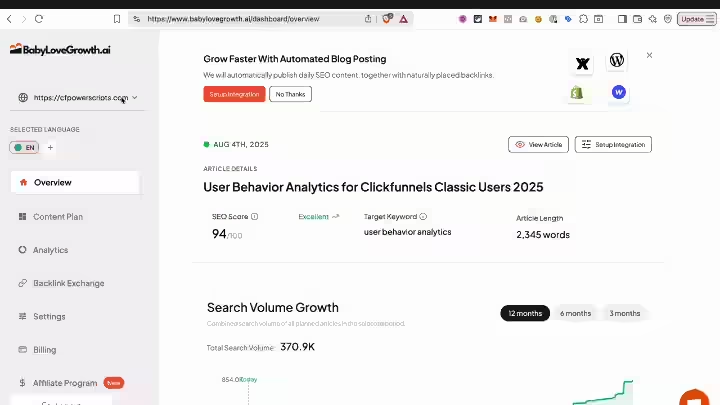
BabyLoveGrowth AI is an AI-powered SEO and Generative Engine Optimization (GEO) platform built to grow visibility across both Google Search and AI-powered search engines like ChatGPT and Perplexity.
Instead of functioning as a research tool, it automates the full content marketing workflow, from keyword research and content planning through article generation, publishing, backlink building, and AI visibility tracking.
The platform targets businesses that want to scale organic traffic without hiring a full in-house SEO team.
It integrates with popular CMS platforms including WordPress, Webflow, Wix, Shopify, and others via API, enabling automatic content publishing.
Key Features
- A 30-day content plan that develops a monthly content strategy featuring various article types, optimized to maximize references from large language models
- Quality backlinks built by naturally linking blogs within a network of other clients, enhancing domain authority and search engine rankings
- A technical GEO audit that conducts website audits to identify and rectify issues such as schema errors, meta tags, broken links, alt text, and sitemaps
- A Reddit AI agent that identifies relevant conversations to boost brand visibility in discussions that LLMs reference
- AI visibility dashboard covering ChatGPT, Perplexity, and Gemini with prompt-level brand citation tracking
- Automated JSON-LD structured data generation, including FAQ, HowTo, and Article schema types
- Multilingual content generation across 20+ languages
Pros
- Combines SEO and GEO in a single platform rather than requiring separate tools
- Backlink building is included, not sold as a separate add-on
- Native CMS integrations reduce manual publishing steps
- 90-day money-back guarantee if organic traffic doesn’t increase
Cons
- Premium pricing compared to standalone AI writing tools
- Advanced features are locked behind the Scale and Agency tiers
- AI visibility tracking currently covers ChatGPT and Perplexity more thoroughly than Google AI Overviews
- The backlink network operates automatically, so you can’t hand-pick placement sites
Pricing
Plan | Monthly Price | Best For |
|---|---|---|
Grow | $99/month | Solo founders and startups |
Scale | $299/month | Small and medium-sized businesses |
Agency | Custom pricing | Agencies managing multiple client sites |
Both plans include a 3-day free trial, and at $99/month starting price, it targets businesses wanting hands-off organic growth with a 90-day money-back guarantee.
Best For: small businesses, SaaS companies, ecommerce brands, marketing teams, agencies, and founders who want SEO automation without managing a content calendar manually.
If you’re deciding whether this platform fits your budget, my breakdown of BabyLoveGrowth AI pricing plans has the full tier comparison.
What Is Keytomic?
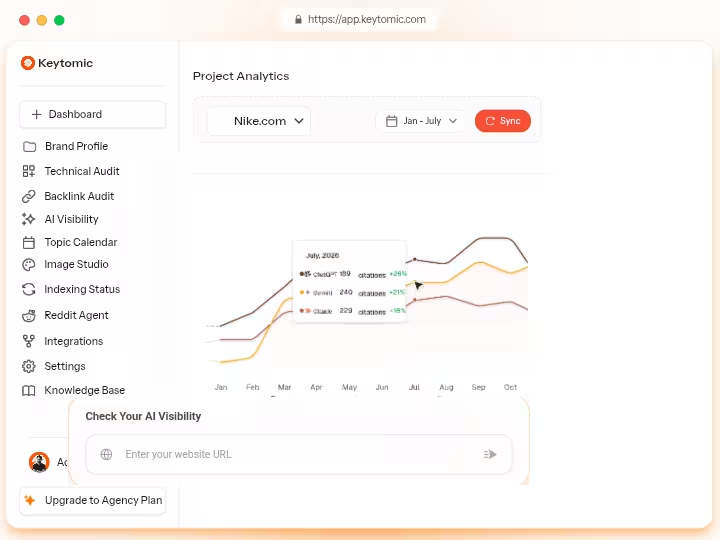
Keytomic is an all-in-one AI SEO platform that combines traditional SEO execution with AI search visibility monitoring across five major AI platforms.
It is an AI-powered SEO automation platform that helps brands plan, create, optimize and publish content at scale.
Keytomic automates a 30-day content calendar, generates on-brand images with alt text and publishes on autopilot to WordPress, Shopify or preferred CMS systems, while indexing every new page using its built-in indexing system for Google, Bing, ChatGPT and other search engines.
The platform brings keyword research, technical SEO, content planning, publishing, and AI visibility monitoring into a single workflow, which is why it shows up frequently in agency-focused comparisons.
Key Features
- Identification of high-intent, low-competition keyword opportunities that ensure content aligns with user search intent, plus E-E-A-T-driven content creation that improves rankings on Google and AI platforms
- The Auto-Pilot Plan, priced at $99/month, covering 30 SEO-ready articles per month, auto-publishing, keyword research, AI visibility tracking, technical audits, auto-indexing, branded image generation, and unlimited users
- Native connections to Framer, HubSpot CRM, Sanity, Shopify, Webflow, Wix, and WordPress
- AI visibility tracking spanning ChatGPT, Gemini, Claude, Perplexity, and Google AI Overviews
- Rank tracking and backlink monitoring dashboards
- Auto-indexing designed to get new pages discovered faster than standard crawl cycles
Pros
- Comprehensive workflow integration covering keyword research, calendar automation, content generation, publishing, indexing, and AI citation tracking in a single platform
- A low configuration barrier and approachable dashboard
- Transparent, single-tier pricing with no per-seat fees
- Covers more AI platforms for visibility tracking than most competitors at this price
Cons
- Trust and credibility score is lower than more established tools like Ahrefs, Semrush, or Surfer SEO, given it’s a newer platform without the same volume of independent reviews
- Backlink exchange feature is still in development, so it’s not a fit if link building is your core growth strategy right now
- Fewer CMS integrations publicly documented compared to some content automation competitors
Pricing
Plan | Monthly Price | Best For |
|---|---|---|
All-in-One (Auto-Pilot) | $99/month ($79/month billed annually) | Individuals, businesses, and agencies |
Additional terms: a $1 three-day trial, a 14-day money-back guarantee and a 20% discount on annual billing.
Best For: SEO professionals, digital marketing agencies, SaaS companies, and content marketing teams that want technical SEO audits, rank tracking, and AI visibility tracking in one dashboard.
For a deeper walkthrough, see my full Keytomic review.
BabyLoveGrowth AI vs Keytomic: Feature Comparison
Feature | BabyLoveGrowth AI | Keytomic |
|---|---|---|
AI article generation | Yes, 30/month on Grow plan | Yes, 30/month on Auto-Pilot plan |
Keyword research | Automated, tied to content strategy | Dedicated intent + gap analysis |
Content planning | 30-day content strategy | 30-day content calendar, up to 60 topics |
Topical authority tools | Yes, via content clusters | Yes, via calendar planning |
Internal linking | Automated | Automated |
AI visibility tracking | ChatGPT, Perplexity, Gemini | ChatGPT, Gemini, Claude, Perplexity, AI Overviews |
AI citation tracking | Yes, prompt-level | Yes |
GEO audit | Yes, technical GEO audit included | Planned/expanding feature set |
Technical SEO audit | Yes | Yes, dedicated audits |
Backlinks | Included, 4,000+ site network | In development |
Auto publishing | Yes, multiple CMS | Yes, up to 10 blogs/day |
Auto-indexing | Not a standalone feature | Yes, built-in |
Team collaboration | Available on Scale/Agency | Unlimited users on single plan |
White-label | Yes, Agency plan | Limited |
Reporting | AI visibility dashboard | Rank tracking + audit dashboards |
Customer support | Priority support on Scale | Standard support |
Free trial | 3 days, credit card required | 3 days for $1 |
Entry pricing | $99/month | $99/month |
1. AI Content Generation
Both platforms produce comparable output quality, so this category is closer to a tie than a clear win.
BabyLoveGrowth AI leans on citations, internal linking, and branded infographics per article, while Keytomic emphasizes E-E-A-T-driven drafting and real-time SEO scoring during generation.
In my test, factual accuracy was solid on both for straightforward topics but weaker on technical, niche-specific queries, which matches what I’ve seen across most AI content generation tools.
Human editing was still necessary on roughly one in three articles from each platform before I’d publish them, mostly to fix generic phrasing and add first-hand examples.
Neither tool eliminates the need for an editor, and that’s consistent with Google’s own stance that content should demonstrate genuine expertise, not just keyword coverage.
Winner: Tie, with a slight edge to whichever platform’s brief matches your niche better.
2. Keyword Research
Keytomic wins keyword research because its intent detection and competitor gap analysis are built as standalone steps rather than folded entirely into content generation.
The platform identifies high-intent, low-competition keyword opportunities and ensures content aligns with user search intent.
BabyLoveGrowth AI does automated keyword research too, but it’s less exposed as a separate tool you can dig into before committing to a content plan.
If keyword clustering and search volume analysis are your priority before you write a single article, Keytomic’s workflow gives you more visibility into the “why” behind each topic suggestion.
Winner: Keytomic
3. AI Visibility Tracking
Keytomic tracks more AI platforms than BabyLoveGrowth AI does, covering ChatGPT, Gemini, Claude, Perplexity, and Google AI Overviews, while BabyLoveGrowth AI focuses primarily on ChatGPT, Perplexity, and Gemini.
This matters more than it sounds like on paper.
Google’s own documentation confirms that the same foundational SEO best practices apply for AI features as for Google Search overall, focusing on helpful, reliable, people-first content.
However, each AI platform still has its own citation behavior worth monitoring separately.
Ahrefs data cited in a research shows that Google AI Overviews have cut clicks to top-ranking content by up to 58%.
This is exactly why AI visibility audit features matter more in 2026 than they did two years ago.
If you’re only tracking Google, you’re missing where a large chunk of your prospective traffic is going instead.
Winner: Keytomic
4. GEO (Generative Engine Optimization)
BabyLoveGrowth AI wins GEO because it bundles a technical GEO audit and a Reddit visibility agent directly into every plan, not as a future roadmap item.
Its technical GEO audit conducts thorough website audits to identify and rectify issues such as schema errors, meta tags, broken links, alt text, and sitemaps.
Keytomic’s more advanced GEO tooling, including a dedicated technical crawler, is still rolling out.
Entity optimization and structured citation formatting are exactly what BabyLoveGrowth AI’s audit checks for out of the box.
Winner: BabyLoveGrowth AI
5. SEO Automation
BabyLoveGrowth AI wins automation depth because it folds backlink building into the same subscription as content generation, something Keytomic doesn’t yet do reliably.
This is where my earlier autoblogging mistake is worth repeating: I lost an affiliate site’s rankings after publishing 42 auto-generated posts without internal linking or keyword filtering, and the content cannibalized itself.
Both platforms now handle internal linking automatically, which is the exact gap that caused that failure, but I still manually reviewed link placement on both tools during testing rather than trusting it blind.
Keytomic automates publishing up to 10 blogs per day plus auto-indexing, which is faster raw output.
However, speed without a link strategy is how cannibalization happens in the first place.
For anyone who has made this mistake before, my article on common autoblogging mistakes covers the exact pattern to avoid.
Winner: BabyLoveGrowth AI
6. Content Calendar
Keytomic’s content calendar wins on flexibility because it lets you queue up to 60 topics at once, giving you a longer runway to plan around seasonal content or product launches.
BabyLoveGrowth AI’s 30-day content strategy is tighter and more prescriptive, which some founders prefer if they don’t want to manage topic selection themselves.
For teams practicing structured content calendar management across multiple writers or freelancers, Keytomic’s topic ceiling gives more room to build topical authority clusters before publishing starts.
Winner: Keytomic
7. Backlink Features
BabyLoveGrowth AI wins backlinks outright because Keytomic’s backlink exchange feature is still in development.
Primarily needing link building as your core growth strategy is a reason to look elsewhere from Keytomic right now, since the backlink exchange feature is still in development.
BabyLoveGrowth AI’s network spans 4,000+ partner sites and builds contextual placements as part of the base subscription.
If backlink analysis and referring domains growth matter to your strategy this quarter, not next year, this category isn’t close.
Winner: BabyLoveGrowth AI
8. CMS Integrations
Keytomic wins on documented CMS breadth, connecting natively to Framer, HubSpot CRM, Sanity, Shopify, Webflow, Wix, and WordPress.
BabyLoveGrowth AI supports WordPress, Webflow, Shopify, Wix, Ghost, Duda, BigCommerce, and Snapps, plus a custom API/webhook option, which is comparable in practice even if the marketing pages emphasize it less.
For Shopify SEO specifically, both tools publish directly to product and blog pages, so the difference here comes down to which secondary platforms (like Framer or HubSpot) your team already uses.
Winner: Keytomic, narrowly
9. Reporting & Analytics
Keytomic wins reporting because it separates rank tracking, backlink monitoring and AI visibility into distinct dashboards rather than one combined view.
This gives you cleaner content ROI signals when you need to show a client or manager exactly which keywords moved and why.
BabyLoveGrowth AI’s reporting is centered more around its AI visibility dashboard and less around classic rank monitoring.
It works fine if AI search performance is your main KPI but less well if you still report primarily on Google rankings.
Winner: Keytomic
10. Ease of Use
Both platforms are built for non-technical users, so this category comes down to onboarding speed rather than depth.
BabyLoveGrowth AI advertises onboarding in under 5 minutes with guided setup, and Keytomic’s dashboard has a comparably low configuration barrier according to independent reviews.
Neither requires coding knowledge, and both handle JSON-LD structured data and article schema generation without manual input.
Winner: Tie
Pricing Comparison
BabyLoveGrowth AI Pricing
- Grow Plan: $99/month, 30 articles, backlinks, GEO audit
- Scale Plan: $299/month, adds strategy calls, priority support, and additional languages
- Agency Plan: custom pricing, white-label reselling
- 3-day free trial (card required)
- 90-day money-back guarantee if organic traffic doesn’t increase
Keytomic Pricing
- Auto-Pilot Plan: $99/month, or $79/month on annual billing (20% discount)
- $1 three-day trial
- 14-day money-back guarantee, cancel anytime
- Unlimited users included at no extra cost
Both tools sit at the same $99/month entry point for their core plan, which makes the decision less about affordability and more about which feature set (backlinks vs. deeper AI visibility tracking) matches your immediate goal.
If you want a side-by-side of BabyLoveGrowth AI against a different competitor, my BabyLoveGrowth AI vs Outrank.so comparison covers that matchup in detail.
Best for Different Users
- Bloggers: BabyLoveGrowth AI, for the bundled backlink network
- Affiliate marketers: Keytomic, for keyword clustering and intent matching
- Agencies: Keytomic, for unlimited seats on one plan; BabyLoveGrowth AI, for white-label reselling
- SaaS: Either, depending on whether AI visibility or backlinks matter more
- Ecommerce: BabyLoveGrowth AI, for Shopify SEO plus domain authority growth through backlinks
- Local businesses: Neither is purpose-built for local SEO; both work better for broader market targeting
- Marketing teams: Keytomic, for centralized reporting across rank tracking and AI visibility
- Enterprise: Neither replaces a full enterprise SEO stack; both work as a mid-market solution
BabyLoveGrowth AI and Keytomic Alternatives
If neither platform fits, a few adjacent options are worth a look:
1. Soro SEO
An AI-powered SEO platform designed to automate content creation, optimization, publishing, and search visibility workflows.
Compared with Keytomic and BabyLoveGrowth AI, Soro SEO focuses on a simpler content automation process with features such as AI article generation, keyword targeting, brand voice training, and automated publishing.
Why choose Soro SEO:
Users who want a straightforward AI SEO workflow with less setup and an easier publishing process may prefer Soro SEO.
Best for: Bloggers, affiliate marketers, and small businesses looking for AI-assisted SEO content automation.
2. Outrank.so
It’s an AI SEO content platform built for creating optimized articles at scale. It focuses on keyword research, SERP analysis, content briefs, and AI-generated articles designed around search intent.
Why choose Outrank.so
Outrank.so is better suited for agencies and publishers that need to produce large volumes of SEO content across multiple websites.
Best for: SEO agencies, content teams, and businesses running high-volume content campaigns.
3. Emplibot
An AI autoblogging platform that automates keyword discovery, content creation, internal linking, and WordPress publishing.
It provides a more hands-off approach for website owners who want an automated blogging system.
Why choose Emplibot
Emplibot is a stronger choice for users who want end-to-end WordPress automation, including publishing and content management.
Best for: Bloggers, niche site owners, and publishers building content-driven websites.
4. Byword AI
specializes in AI-generated SEO content and programmatic SEO campaigns. It allows businesses to create large numbers of landing pages and articles targeting specific search queries.
Why choose Byword AI
Byword AI is better for companies that need to scale thousands of SEO pages rather than manage traditional blog publishing workflows.
Best for: SaaS companies, marketplaces, and businesses running programmatic SEO strategies.
5. BlogSEO.io
It helps bloggers and marketers research, write, and optimize SEO articles using AI. It focuses more on improving individual blog content rather than full SEO automation.
Why choose BlogSEO.io
BlogSEO.ai is a good option for users who want more control over the writing and editing process instead of a fully automated SEO workflow.
Best for: Bloggers, content writers, and marketers creating SEO-focused articles.
6. Distribb
Focuses on content distribution and online visibility rather than complete AI SEO automation. It helps businesses promote existing content and improve reach through distribution workflows.
Why choose Distribb
Distribb is better suited for businesses that already have quality content but need help increasing exposure and traffic.
Best for: Brands, publishers, and marketing teams focused on content amplification.
For a broader list, my BabyLoveGrowth AI alternatives guide covers more options in one place.
Final Verdict on Babylovegrowth AI vs Keytomic
- Best Overall: BabyLoveGrowth AI, for combining content, backlinks, and GEO in one subscription
- Best for AI Visibility: Keytomic, for tracking five AI platforms instead of three
- Best for SEO Automation: BabyLoveGrowth AI, for bundled backlink building
- Best for Content Marketing: Keytomic, for the 60-topic content calendar
- Best for Agencies: Keytomic, for unlimited seats; BabyLoveGrowth AI, for white-label
- Best for Ecommerce: BabyLoveGrowth AI, for Shopify SEO and domain authority growth
- Best Budget Option: Keytomic, for the 1 trial and 79/month annual rate
- Best Long-Term Investment: Keytomic for businesses building long-term SEO strategies
Neither tool replaces editorial judgment.
Both work best when someone on your team reviews drafts before they go live, checks internal links for cannibalization, and tracks performance in Google Search Console alongside whatever the platform’s own dashboard shows you.
Frequently Asked Questions About BabyLoveGrowth AI vs Keytomic
1. Is BabyLoveGrowth AI better than Keytomic?
BabyLoveGrowth AI is better if you want backlink building and GEO audits included in your base plan, while Keytomic is better if AI visibility tracking across more platforms and a longer content calendar matter more. Neither is universally “better,” it depends on whether your bottleneck is content production or brand visibility monitoring.
2. Which platform is better for AI SEO?
Keytomic is stronger for AI SEO tracking because it monitors ChatGPT, Gemini, Claude, Perplexity, and Google AI Overviews in one dashboard. BabyLoveGrowth AI covers three of those five platforms but adds a technical GEO audit that Keytomic is still building out.
3. Which has better AI visibility tracking?
Keytomic has better AI visibility tracking because it covers five major AI platforms compared to BabyLoveGrowth AI’s three. Both provide brand citation data, but Keytomic’s broader platform coverage gives a fuller picture of where you’re being mentioned or missed.
4. Which is better for Google AI Overviews?
Neither tool has a documented advantage specific to Google AI Overviews, since meeting all requirements and best practices doesn’t guarantee Google will crawl, index, or serve your content in AI features. Both platforms generate structured content and schema that support eligibility, but citation ultimately depends on Google’s own ranking systems.
5. Can these tools replace Ahrefs or Semrush?
No, these tools don’t replace Ahrefs or Semrush because those platforms are research and analytics tools, while BabyLoveGrowth AI and Keytomic are execution platforms that create and publish content. You’ll likely still want a dedicated research tool for deep competitor analysis and backlink analysis even if you use one of these for automation.
6. Is AI-generated content safe for Google?
AI-generated content is safe for Google as long as it’s helpful, accurate, and reviewed by a human before publishing, since Google doesn’t penalize content simply for being AI-assisted. Google’s quality guidance consistently emphasizes people-first content over how the content was produced, but thin, unedited AI output still risks the same penalties as any other low-quality content.
7. Which tool offers the best automation?
BabyLoveGrowth AI offers the more complete automation because it includes backlink building alongside content generation and publishing in the same subscription. Keytomic automates more of the technical side, including auto-indexing and up to 10 posts per day, but its link-building automation isn’t fully built yet.

- Generative Engine Optimization (GEO): The Complete Guide to Winning AI Search in 2026 - August 14, 2026
- 10 Best AI Autoblogging Tools I Tested for 2026 - August 12, 2026
- How to Automate Blog Content Posting to Social Media With RSS Feeds (2026) - August 11, 2026