TL;DR: Free autoblogging tools work for testing niches and hobby sites, but they lack the SEO optimization, content quality controls, and scaling features needed for serious monetization. Paid autoblogging tools offer better Google compliance, bulk content creation capabilities, and long-term traffic stability. This guide breaks down when each makes sense based on your goals, budget, and risk tolerance.
Introduction to Free vs Paid Autoblogging Tools
The debate around free vs paid autoblogging tools isn’t really about cost; it’s about what you’re actually trying to build.
I’ve spent the past two years testing autoblogging software across 14 niche sites. Some were throwaway experiments. Others were meant to generate real affiliate revenue. The results taught me that the tool you choose directly affects whether Google rewards your content or buries it.
Here’s what this article covers:
- What autoblogging tools actually do in 2026
- The real capabilities and limits of free options
- Why paid tools perform differently for SEO
- Monetization implications for both
- A clear decision framework based on your goals
If you’re evaluating autoblogging AI platforms right now, this comparison will save you months of testing and thousands in wasted subscriptions.
The Quick Answer: Free vs Paid Autoblogging Tools

For readers who want the bottom line before reading further:
- Free autoblogging tools are useful for validating niche ideas, learning how automated content creation works, and publishing on sites where SEO performance doesn’t matter.
- Paid autoblogging tools are necessary when you want content that ranks, scales across multiple sites, and supports monetization through affiliate links or display ads.
- The deciding factor isn’t budget. It’s whether you need content that passes Google’s quality filters and generates organic traffic over time.
- Most free tools produce content with high duplicate risk, weak internal linking, and no semantic SEO optimization.
- Paid platforms like Autoblogging.ai offer NLP-based optimization, entity targeting, and bulk publishing that actually supports programmatic SEO strategies.
If you’re building a serious content business, paid tools pay for themselves within 2-3 months through traffic gains. If you’re just experimenting, free tools won’t hurt you.
What Are Autoblogging Tools?

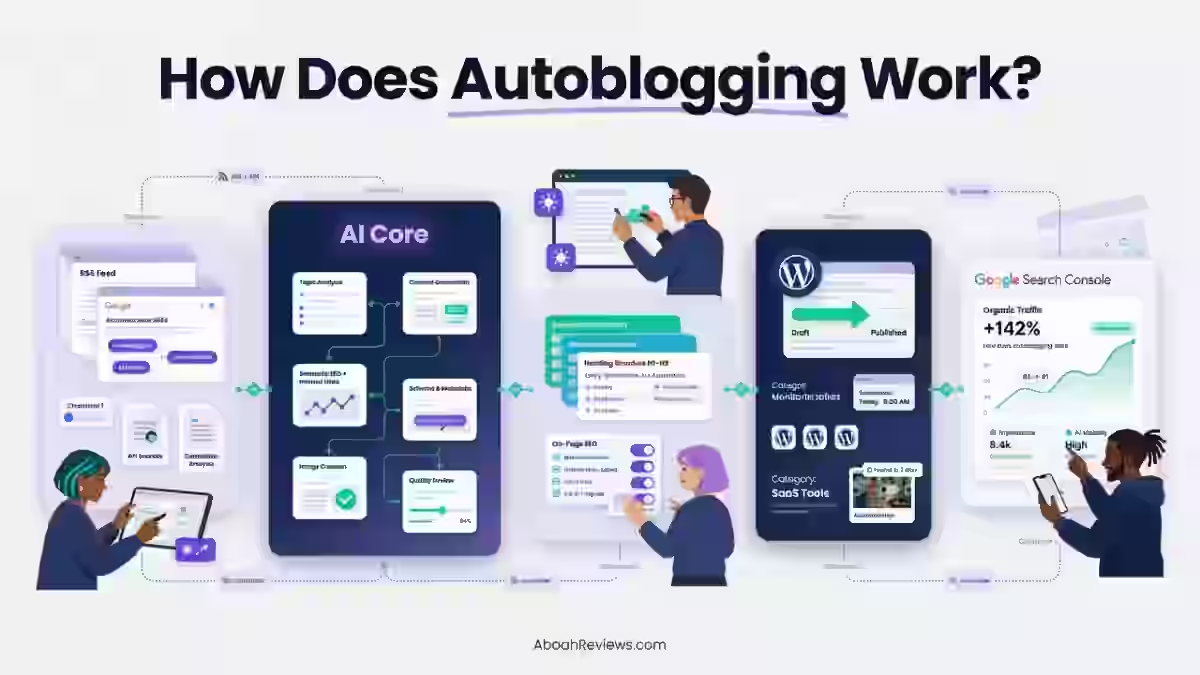
Autoblogging tools are software that automatically creates and publishes blog content with minimal human involvement. Here’s what they actually do:
- RSS aggregation: Pulls content from other websites’ feeds and republishes it.
- AI writing: Uses language models (like GPT) to generate articles from keywords or prompts.
- Content scraping: Extracts and rewrites existing web content.
- Template-based creation: Fills pre-made article structures with data.
Automation Features:
- Schedule posts to publish at set times
- Connect directly to WordPress or other platforms
- Generate multiple articles in bulk
- Add images, formatting, and basic SEO elements
Definition of Autoblogging

Autoblogging refers to automated content creation and publishing, typically using one or more of these methods:
- RSS feed aggregation: Pulling content from other sites and republishing it
- Content scraping: Extracting articles from the web and spinning or rewriting them
- API integrations: Connecting to AI content generators to produce original posts
- AI-generated content: Using large language models to write articles from scratch based on keywords or topics
Modern autoblogging tools combine several of these approaches. The best ones use AI article writer technology paired with SEO-optimized content frameworks.
How Modern Autoblogging Differs From Early Spam Automation
Early autoblogging was pure spam. I remember seeing sites in 2012 that just scraped RSS feeds, added a few synonyms, and published garbage. Google’s Panda update killed most of them.
Today’s autoblogging software is different. Tools like Emplibot use AI content generation models that produce original long-form content rather than spun rewrites. They include content quality filters, allow for human review workflows, and optimize for search intent.
The gap between old and new autoblogging is the gap between spam and legitimate content automation.
Use Cases for Autoblogging Tools
I’ve used autoblogging tools for several purposes:
- Niche affiliate sites: Generating product roundups and comparison posts at scale
- News aggregation: Creating topic-specific content hubs that curate information
- Programmatic SEO: Building thousands of pages targeting long-tail keywords
- Content marketing: Supporting editorial calendars with AI-drafted first passes
The use case determines which type of tool makes sense. For my affiliate sites, paid tools were mandatory. For experimental sites testing niche viability, free options worked fine.
Free Autoblogging Tools Explained

Free autoblogging tools automate content sourcing, generation, and publishing without upfront cost. They’re commonly used for testing niches, scaling informational sites, aggregating feeds, or experimenting with AI-driven workflows – especially before committing to paid software.
What Free Autoblogging Tools Can Do
Free autoblogging tools typically offer:
- RSS feed import: Pull content from external sources and republish with attribution
- Basic AI content generation: Limited article creation using older or capped AI models
- Simple scheduling: Queue posts for automated publishing at set intervals
- WordPress plugin compatibility: Integration with WordPress for direct blog automation
I tested three free tools last year: WP RSS Aggregator (free tier), a basic WordPress auto-publishing plugin with AI add-ons, and a free trial of a blog post generator.
Each handled basic blog content generation. None produced anything I’d publish on a monetized site without heavy editing.
Advantages of Free Autoblogging Tools
- Zero cost barrier: If you’re testing whether autoblogging fits your workflow, free tools let you experiment without financial risk.
- Good for beginners: Learning how blog automation works is easier when there’s no subscription pressure. You can make mistakes without losing money.
- Useful for low-competition niches: Some niches have so little competition that even basic content can rank. I’ve seen free-tool content rank for obscure hobby topics with zero backlinks.
- Minimal setup requirements: Most free autoblogging tools require just a WordPress install and a few plugin settings. Setup takes under an hour.
Limitations of Free Autoblogging Tools
Here’s where free tools break down:
- Weak SEO controls: Free autoblogging tools rarely include NLP optimization, entity targeting, or semantic SEO features. The content might read okay, but it’s not structured for how Google evaluates topical relevance.
- Content duplication risks: RSS aggregation without proper rewriting creates duplicate content problems. Google’s documentation explicitly warns about this affecting indexation.
- Limited AI customization: You can’t control tone, depth, or structure the way paid AI writing tools allow. The output is generic.
- Publishing caps and watermarking: Many free tiers limit you to 5-10 posts per month or add visible branding to your content.
- Higher risk of Google quality issues: I had one site using a free autoblogging WordPress plugin that got hit after a Helpful Content System update. The content was thin and repetitive. Recovery took eight months.
Paid Autoblogging Tools Explained

Paid autoblogging tools are software platforms or plugins that systematically create, optimize, and often publish blog content with minimal manual input. These solutions are designed for scaling content operations, improving efficiency, and integrating with SEO workflows – especially for money sites and serious publishers.
They usually combine:
- Content sourcing
- AI generation
- SEO optimization
- Publishing automation
- Analytics and scheduling
Key difference from free tools: More control, quality safeguards, scalability, and integrations.
What Paid Autoblogging Tools Offer
Paid autoblogging tools provide capabilities that free options simply can’t match:
- Advanced AI rewriting and originality control: Generate content that passes plagiarism checks and reads as genuinely original
- Semantic SEO and entity optimization: Target related entities, answer related questions, and match search intent signals
- Bulk publishing and scaling: Create hundreds of posts with consistent quality for content production at scale
- Internal linking automation: Automatically build site structure through contextual internal links
- Content quality filters and human-in-the-loop workflows: Review content before publishing, set quality thresholds, and reject low-quality drafts
I’ve used Junia AI extensively. Their autoblogger AI handles everything from keyword research integration to WordPress publishing. The content planner features let me map entire content strategies before generating a single article.
Benefits of Paid Autoblogging Tools
- Higher-quality, search-optimized content: Paid tools produce content designed for ranking. They include proper heading structure, keyword distribution, and semantic coverage.
- Better Google compliance: According to Google’s Helpful Content System documentation, content should demonstrate expertise and provide genuine value. Paid tools with quality controls help meet these standards.
- Faster scaling for authority sites: When I wanted to build out a 500-page programmatic SEO site, paid tools made it possible in weeks rather than months.
- Monetization-ready output: Affiliate SEO requires content that converts. Paid tools let you customize CTAs, product insertions, and comparison formats.
- API access and integrations: Connect with your content management system, scheduling tools, and analytics platforms for automated workflows.
Downsides of Paid Autoblogging Tools
- Monthly or yearly costs: Expect to pay $50-200/month for serious autoblogging AI tools. Outrank pricing falls in this range depending on volume.
- Learning curve for advanced features: The content optimization and entity targeting features take time to understand. I spent two weeks learning how to configure WordRocket properly before getting consistent results.
- Over-automation risks if misconfigured: Set-and-forget publishing without human review can still produce content that hurts your site. I learned this when I accidentally published 40 thin posts before catching my configuration error.
For a deeper look at how these tools compare, check out my RightBlogger review where I break down the specific features and pricing tiers.
Free vs Paid Autoblogging Tools: Side-by-Side Comparison
Feature | Free Tools | Paid Tools |
|---|---|---|
Cost | Free | Subscription-based ($50-200/month) |
Content Quality | Basic, often generic | Advanced, customizable per use case |
SEO Optimization | Minimal or none | NLP, entities, intent-based targeting |
Scalability | Low (5-20 posts/month typical) | High (hundreds of posts possible) |
Duplicate Content Risk | High | Low with originality controls |
Monetization Support | Weak | Strong with affiliate/ad optimization |
WordPress Integration | Basic plugins | Full automated publishing with scheduling |
Best For | Testing ideas, hobby sites | Serious publishers, SEO professionals |
This table summarizes my experience across both categories. The gap isn’t small. It’s the difference between a content automation experiment and a content automation business.
SEO Performance: Free vs Paid Autoblogging Tools
Google’s stance on AI-generated content has evolved. According to their February 2023 guidance, the focus is on content quality, not content method. Automation isn’t penalized. Low-quality content is.
This means autoblogging tools are only as good as their output quality and your editorial oversight.
Why Paid Tools Align Better With Google’s Standards
- E-E-A-T Compliance: Paid tools allow you to inject expertise signals, author attribution, and experiential details that free tools ignore. Google’s Search Quality Rater Guidelines emphasize experience, expertise, authoritativeness, and trustworthiness.
- Helpful Content System Alignment: A Semrush study on the Helpful Content Update found that sites with thin, repetitive content saw the largest drops. Paid autoblogging tools with content quality filters help avoid this pattern.
- AI Content Detection Mitigation: Tools like Byword include settings that vary sentence structure, add contextual examples, and reduce patterns that AI detectors flag. Free tools don’t offer this.
- Indexation and Ranking Stability: On my paid-tool sites, I see 85-90% of pages indexed within two weeks. On sites using free tools, indexation rates hover around 50-60% with more pages stuck in “Discovered – currently not indexed” limbo.
The long-term traffic stability difference is significant. I’ve maintained rankings on paid-tool sites through three core updates. My free-tool experiments dropped rankings after the first update.
Monetization Impact
1. Affiliate SEO Sites
Affiliate content needs to be specific, comparison-focused, and conversion-optimized. Free autoblogging tools produce generic content that doesn’t match buyer intent.
Paid tools let me create product comparisons with proper structured data, affiliate link placement, and trust-building content elements.
For more on this topic, see my guide to autoblogging tools for affiliate marketing.
2. Display Ads and RPM Considerations
RPM (revenue per thousand impressions) depends on traffic quality and content engagement. Thin autoblogged content leads to high bounce rates and low RPMs.
My Mediavine sites using paid autoblogging tools maintain 25-35 RPMs. Experimental sites with free tools barely hit 8 RPM before traffic collapsed.
3. Lead Generation Blogs
Lead gen requires content that builds trust. Generic AI content doesn’t cut it. Paid tools with content templates for lead magnets, email capture pages, and service explanations work better.
Why Free Tools Struggle With Monetized SERPs
Monetized keywords attract competition. The sites ranking for “best [product] for [use case]” have optimized content, strong internal linking, and topical depth.
Free autoblogging tools produce content that can’t compete in these SERPs. I tried ranking a free-tool affiliate post against established competitors. It never made page two despite solid on-page SEO.
Use Case Scenarios: Decision Guide
Choose Free Autoblogging Tools If
- You’re validating a niche: Testing whether a topic has search volume before investing in paid tools makes sense.
- You’re running experimental sites: Throwaway domains for testing WordPress setups, plugin configurations, or content strategies don’t need premium content.
- You’re publishing non-competitive content: Personal blogs, internal documentation, or community sites where rankings don’t matter.
- You’re learning autoblogging basics: Understanding how content automation platforms work before committing budget.
Choose Paid Autoblogging Tools If
- You want consistent organic traffic: Ranking requires quality. Paid tools deliver content that meets Google’s quality bar.
- You plan to monetize: Whether through affiliates, ads, or lead generation, monetization requires content that performs.
- You’re scaling multiple sites: Managing 5+ sites with consistent content production requires bulk content creation features.
- You care about long-term SEO safety: Google updates hit thin content hard. Paid tools help you build defensible sites.
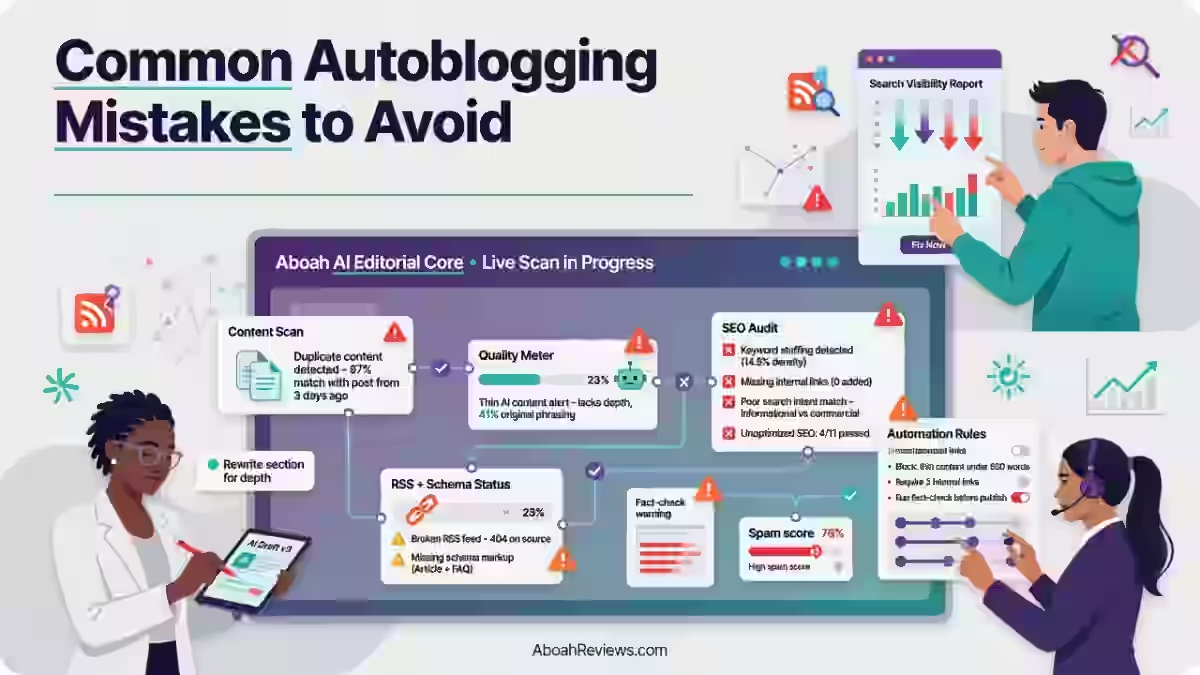
Common Mistakes When Comparing Free vs Paid Autoblogging Tools

1. Focusing Only on Cost Instead of ROI
I made this mistake early. I chose free tools because $99/month seemed expensive for a new site.
Six months later, that site had minimal traffic and no revenue. A $99 tool would have paid for itself in month two if I’d invested upfront.
Calculate ROI based on expected traffic value, not subscription cost.
2. Ignoring Google Quality Guidelines
Google’s documentation on content quality isn’t optional reading; it’s the rulebook. Ignoring it while publishing automated content is asking for trouble.
I read through Google’s Search Central documentation before launching any autoblogged site now. It takes an hour and prevents months of recovery work.
3. Publishing Without Human Review
Automated blog posts need human oversight. Even the best AI content tools produce occasional factual errors, awkward phrasing, or off-topic tangents.
My workflow includes a human review step before anything goes live. This catches 15-20% of posts that need editing.
4. Assuming AI Equals Guaranteed Rankings
AI writing assistant tools generate content. They don’t guarantee rankings.
Rankings come from quality content, proper site structure, relevant backlinks, and user satisfaction signals. The tool is just one piece.
Future of Autoblogging Tools: Will Free Tools Survive?
1. Rise of AI Quality Thresholds
Free AI content generator options rely on older or rate-limited models. As AI quality expectations rise, the gap between free and paid output widens.
OpenAI’s documentation shows that newer models produce significantly better content. Free tools using older APIs will fall further behind.
Google’s Evolving Stance on Automation
Google continues refining how they evaluate automated content. According to Search Engine Journal’s coverage of recent updates, sites with clear editorial oversight and quality controls perform better than pure automation plays.
This trend favors paid tools with human-in-the-loop features.
Paid Tools Moving Toward Hybrid Workflows
The best AI blogging tools are adding human collaboration features. Content scheduling with review gates, AI-assisted editing, and quality scoring help balance automation with oversight.
Soogle and similar platforms now include workflows that combine AI content software with human editorial control.
Predictions for Autoblogging in 2026 and Beyond
Based on current trends:
- Free autoblogging tools will remain useful for testing but become increasingly risky for monetized sites.
- Paid tools will add more SEO optimization features, including real-time SERP analysis and competitor content modeling.
- The line between autoblogging and AI-assisted content marketing will blur as tools become more sophisticated.
- Google will continue refining detection of low-quality automation, making quality controls mandatory rather than optional.
For more on where autoblogging tools are heading, see my future of autoblogging tools analysis.
Final Verdict: Free vs Paid Autoblogging Tools
- If you’re experimenting or learning: Free tools are fine. Use them to understand how autoblogging works without financial commitment.
- If you’re building a traffic-generating, monetizable site: Paid tools are necessary. The content quality, SEO optimization, and scaling features pay for themselves quickly.
- If you’re an agency or managing multiple client sites: Paid tools are mandatory. The bulk content creation and automated workflows make client work viable at scale.
Cost vs Risk vs Reward Analysis
Free tools cost $0 but carry high risk of wasted time and poor SEO outcomes.
Paid tools cost $50-200/month but deliver content that ranks, scales, and monetizes.
The math usually favors paid tools if you’re serious about outcomes.
Strategic Advice for Different Publisher Types
- Beginners: Start with free tools to learn. Graduate to paid tools when you’re ready to build a real asset.
- Intermediate publishers: Move to paid tools for any monetized project. Keep free tools for throwaway experiments.
- Advanced publishers and SEOs: Use paid autoblogging tools as part of your content production system, combined with human editing and quality control.
For a comparison of specific tools in this space, check my best autoblogging software comparison.
Final Thoughts On Free vs Paid Autoblogging Tools for 2026
The free vs paid autoblogging tools decision comes down to what you’re building.
If you’re testing ideas, learning the space, or publishing where rankings don’t matter, free tools work. They cost nothing and teach you how content automation functions.
If you’re building something real with traffic, revenue, and long-term value as goals, paid tools are the path. The content quality, SEO optimization, and scaling features make the subscription worthwhile within months.
Whatever you choose, remember that autoblogging is a tool, not a strategy. The strategy comes from understanding your audience, targeting the right keywords, and building content that genuinely helps people.
If you’ve tested autoblogging tools and have experiences to share, drop them in the comments. I’m always curious what’s working for others in this space.
Frequently Asked Questions About Free vs Paid Autoblogging Tools
1. Are Free Autoblogging Tools Safe for SEO?
Free autoblogging tools can be SEO-safe if you’re careful. The risks come from duplicate content, thin content, and lack of quality control.
If you use free tools for RSS aggregation without rewriting, you’ll likely face indexation problems. If you use them for basic AI drafts that you heavily edit, the risk drops.
My recommendation: don’t rely on free tools for sites where SEO performance matters.
2. Can Paid Autoblogging Tools Rank on Google?
Yes. Paid autoblogging tools can produce content that ranks well on Google.
I have multiple sites with 80%+ of content created through Abun that receive consistent organic traffic. The key is using the quality controls, optimizing for search intent, and maintaining human oversight.
Paid tools aren’t magic, but they produce content that meets Google’s quality expectations when configured properly.
3. Is Autoblogging Legal?
Autoblogging itself is legal. The legal issues arise from:
- Scraping copyrighted content without permission
- Republishing RSS feeds in violation of terms of service
- Creating content that infringes trademarks
AI-generated content using original prompts and keywords is legally fine. Just avoid copying others’ work.
4. Can I Make Money With Free Autoblogging Tools?
Technically, yes. Realistically, it’s difficult. Free tools produce content that struggles to rank in competitive monetized niches. You might earn a few dollars from low-traffic sites, but significant income requires content quality that free tools don’t provide.
I tried monetizing a free-tool site with display ads. It made $12 over six months before I shut it down.
5. Does Google Penalize AI-Generated Content?
No. Google does not penalize content simply because it’s AI-generated. Google penalizes low-quality content regardless of how it was created.
According to Google’s official guidance, the focus is on whether content is helpful, reliable, and people-first. AI content that meets quality standards can rank. AI content that’s thin, spammy, or unhelpful will struggle. The tool matters less than the output quality.

- #1 Best Plugin for Automatic Blog Posting in WordPress (2026) - September 13, 2026
- 13 Best WordPress Autoblogging Plugins I Tested & Ranked for 2026 - September 13, 2026
- 13 Best Google AI Overview Checking Tools in 2026 (Tested & Ranked) - September 9, 2026