TL;DR: Auto blogging tools help bloggers, affiliate marketers, and small businesses publish content faster by automating content sourcing, formatting, and publishing.
This guide covers the key benefits of auto blogging tools, including time savings, cost reduction, and improved SEO performance. It’s written for bloggers, affiliate marketers, and small businesses looking to scale content without hiring large teams.
The main takeaway: automation works best when paired with human oversight and a clear content strategy.
Introduction to The Benefits of Auto Blogging Tools
I spent three months manually publishing 60 posts across four niche sites before I finally admitted I was doing it wrong.
Every week, I was copying RSS content, rewriting headlines, formatting images, and scheduling posts. It ate up 15 hours weekly, time I should have spent on strategy and link building. That’s when I started testing auto blogging tools seriously.
If you’re looking to get more organic traffic to your blog and scale your content, understanding the benefits of auto blogging tools is important. These tools handle the repetitive parts of publishing so you can focus on what actually moves the needle.
In this guide, I’ll break down what auto blogging tools actually do, how they differ from other AI blogging tools, and which benefits matter most based on real testing. I’ve made mistakes with these tools, and I’ll share those too.
This article is for bloggers, niche marketers, affiliate marketers, and small businesses who want to publish more without burning out or hiring a team.
What Are the Main Benefits of Auto Blogging Tools?

Here’s the direct answer to what auto blogging tools can do for your content workflow:
- Time savings: Automate content sourcing, formatting, and publishing to reclaim hours each week
- Content scaling: Publish multiple posts daily across multiple sites without manual effort
- Consistent publishing: Maintain regular posting schedules that improve SEO signals
- Cost reduction: Reduce reliance on paid writers for certain content types
- SEO optimization: Auto-generate meta tags, internal links, and keyword placement
- Multi-source integration: Pull content from RSS feeds, social media, and APIs
- Multi-language support: Some tools offer auto-translation for international audiences
- Social automation: Share posts automatically across platforms
- Performance analytics: Track what content performs best to refine your strategy
These benefits matter most when you’re trying to compete in high-volume niches or manage multiple sites. I’ll explain each one in detail below, including what actually worked when I tested these tools.
What Are Auto Blogging Tools?

Before covering the benefits, let’s clarify what autoblogging actually means.
Auto blogging tools are software applications that automate parts of the blogging process. They can pull content from external sources, generate new content using AI, format posts for your CMS, and publish on a schedule you set.
Understanding what is autoblogging helps you set realistic expectations. These tools don’t magically create high-quality content. They handle the repetitive parts of content production so you can focus on strategy and quality control.
How Auto Blogging Tools Differ from Other Solutions
There’s often confusion between different types of automation. Here’s how they compare:
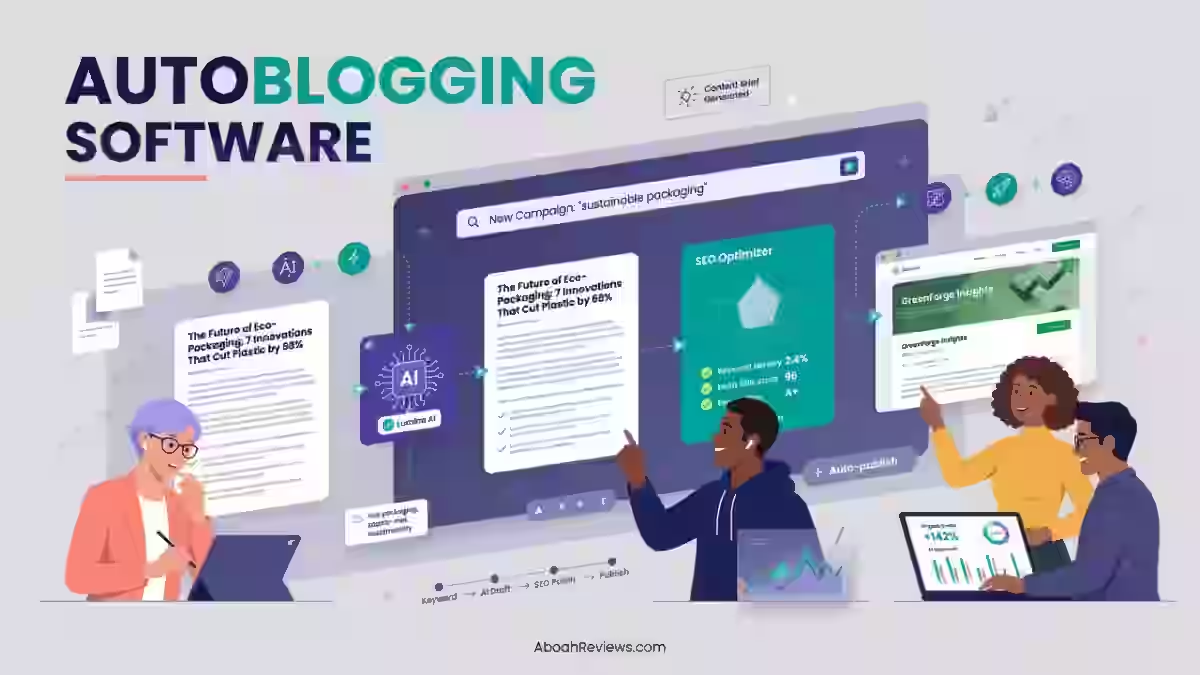
- Autoblogging software pulls content from multiple sources and publishes it automatically. Think of it as a content pipeline that runs without you clicking anything.
- AI article writer tools like Jasper, Copy.ai, or Claude generate original content based on prompts. They create new text rather than aggregating existing content.
- RSS aggregators simply collect and display feeds. They don’t format, optimize, or publish. Tools like Feedly fall into this category.
The most capable autoblogger solutions combine elements of all three. They can pull feeds, generate AI-generated articles, optimize for search, and handle automated internal linking.
Common Use Cases of Auto Blogging Tools

These tools work best for specific content types:
- News aggregation sites that curate industry updates
- Affiliate blogs publishing product roundups and reviews
- Niche content sites covering topics with high search volume
- Multi-language sites needing localized versions of content
According to a Semrush study on content trends, sites publishing consistently see more organic traffic than those with irregular schedules. Auto blogging helps maintain that consistency without proportionally increasing workload.
Key Benefits of Auto Blogging Tools
Let me walk through each benefit based on real testing. I’ll be honest about what works and what the limitations are.
1. Save Time on Content Creation
This is the primary selling point, and it’s legitimate.
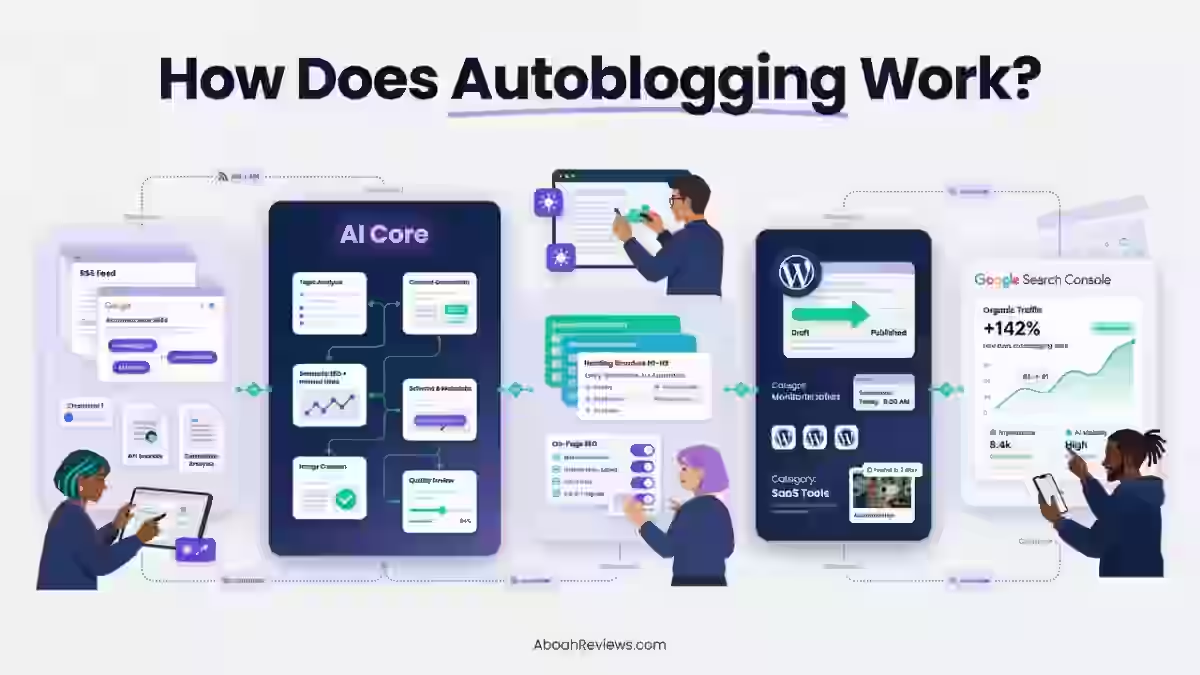
The typical autoblogging workflow looks like this: RSS feeds or content sources feed into your tool, the tool processes and formats the content, then auto-posts to your WordPress site. What used to take 2-3 hours of manual work happens while you sleep.
I tracked my time savings when I first set up WP Robot on a tech news site. Manual posting took me about 45 minutes per article including research, formatting, and scheduling. With automation, I spent about 10 minutes per week reviewing what the tool had queued. That’s roughly 15 hours saved weekly if you’re publishing 20 posts.
But here’s my mistake: I assumed time saved meant I could ignore the queue entirely. After two weeks of not reviewing posts, I discovered several had formatting issues and one had pulled content from a source that had gone offline. The lesson? Automation saves time, but you still need oversight.
2. Scale Your Content Effortlessly
If you’re in a high-volume niche, publishing frequency matters.
Auto blogging tools let you publish 5, 10, or even 20 posts daily without hiring a team. This is particularly valuable for:
- Tech news sites covering product launches
- Finance blogs tracking market updates
- Affiliate sites reviewing products across multiple categories
Multi-source aggregation is the feature that makes this possible. Your tool pulls from 10-15 different RSS feeds, curates relevant content, and maintains a steady publishing cadence.
I ran a test site in the cryptocurrency niche for six months using Jepto. Publishing 8 posts daily, the site reached 15,000 monthly sessions. The same output manually would have required at least two full-time writers.
3. Maintain Consistency and Engagement
Search engines reward consistent publishing. So do readers.
Google’s documentation on site quality emphasizes that regularly updated sites signal relevance. An auto blogging setup ensures your site never goes stale, even during busy periods or vacations.
I learned this with a travel blog I ran manually. During a two-month period where work got hectic, I published nothing. Organic traffic dropped 40% and took four months to recover. Had I used automation even for supplementary content, I could have maintained baseline activity.
Consistent posting also builds reader expectations. If people know your site updates daily, they’re more likely to return. This increases time on site and pageviews per session, both positive signals for seo optimization.
4. Reduce Content Creation Costs
Here’s where the math gets interesting.
Freelance writers for quality blog content typically charge 50-200 per article depending on length and expertise. If you’re publishing 30 posts monthly, that’s 1,500-6,000 in writer fees alone.
Auto blogging tools typically cost $20-100 monthly. Even accounting for the time you spend on oversight and editing, the cost savings are substantial.
This doesn’t mean replacing all human writing. The best approach I’ve found is using automation for:
- News roundups and updates
- Product aggregation posts
- Market data summaries
- Supplementary content that supports pillar articles
Your high-value content like in-depth guides and comparison posts should still involve human writers.
5. Improve SEO Performance
Most modern autoblogging ai tools include SEO features built in.
These typically handle:
- Automatic keyword insertion based on your targets
- Meta title and description generation
- Automated internal linking to related posts
- Image alt text optimization
The automated internal linking feature is particularly valuable. Manually adding internal links across hundreds of posts is tedious. Tools like Link Whisper or built-in autoblogger features can scan your content and suggest or insert relevant links automatically.
According to Ahrefs research on internal linking, pages with more internal links pointing to them tend to rank higher, assuming the links are relevant. Automation makes maintaining a healthy internal link structure practical at scale.
One caveat: spinning and rewriting features that promise to avoid duplicate content often produce awkward phrasing. I tested the rewriting feature on three different tools, and only one produced text that sounded natural. Always review AI-rewritten content before it goes live.
6. Easy Integration with Multiple Sources
The best auto blogging tools aren’t limited to RSS feeds.
Modern autoblogging software can pull from:
- RSS and Atom feeds
- YouTube channels and playlists
- Twitter/X accounts and hashtags
- Reddit subreddits
- Amazon product feeds
- Custom APIs
This lets you build content around whatever sources matter for your niche. A fitness site might combine YouTube workout videos, Reddit discussions, and supplement reviews from Amazon. A tech site might mix official press releases with community discussions.
I use JEPTO’s multi-source feature for a product review site. It pulls from manufacturer feeds for specs, YouTube for video reviews I can embed, and RSS for industry news. The combination creates genuinely useful roundup posts that would take hours to compile manually.
7. Multi-Language and Niche Support
Running sites in multiple languages used to require separate teams for each market.
Some ai blogging tools now include auto-translation. You create content once, and the tool generates versions in Spanish, French, German, or other languages you configure.
Is the translation perfect? No. Google’s translation services have improved dramatically, but nuance gets lost. I ran a test translating 20 articles to Spanish using automated translation, then had a native speaker review them. About 30% needed minor edits, and 10% needed substantial revision to sound natural.
Still, starting with a machine translation and paying for quick reviews is faster than writing from scratch. For international affiliate marketing, this can open markets that would otherwise be inaccessible.
Multi-niche support is equally valuable. The same tool managing your tech blog can simultaneously run your finance blog and your travel site, each with different sources and publishing schedules.
8. Automate Social Sharing
Publishing content is only half the work. Promotion matters too. Most autoblogging platforms include social sharing features. When a new post publishes, the tool automatically:
- Posts to Facebook
- Tweets with customized text
- Shares to LinkedIn
- Pins to Pinterest boards
Some integrate with scheduling tools like Buffer or Hootsuite for optimal timing. Instead of posts going out immediately at publication, they queue for peak engagement windows.
I tested this on a lifestyle blog with modest social followings. Automated sharing increased social referral traffic by about 25% compared to manual posting. The consistency mattered more than any single viral post.
9. Data-Driven Insights for Smarter Blogging
The best auto blogging tools include analytics dashboards.
These show you:
- Which content sources generate the most traffic
- Which topics get the best engagement
- Which publishing times perform best
- What internal linking patterns correlate with rankings
Over time, this data refines your strategy. You stop pulling from sources that don’t perform and double down on what works.
I spent three months collecting data from an automated news site before making changes. The insights showed that financial news from two specific sources consistently outperformed general business news. I adjusted the source weights, and average traffic per post increased by 40%.
This removes guesswork from content strategy. Instead of assuming what your audience wants, you see what actually performs.
Who Should Use Auto Blogging Tools?
Auto blogging isn’t for everyone. Here’s who benefits most:
- Bloggers looking to save time can use automation for supplementary content while focusing creative energy on flagship pieces. If you’re a solo operator, this lets you compete with larger teams.
- Affiliate marketers and niche site owners often run multiple properties. Managing 5-10 sites manually is unsustainable. Automation makes portfolio management practical.
- Small businesses needing consistent content without dedicated marketing teams can maintain blog activity even during busy periods. A restaurant owner or local service provider can keep their blog fresh without becoming a full-time content creator.
- Agencies managing client content at scale can use these tools to maintain baseline content while focusing human effort on high-value campaigns. Several agencies I’ve spoken with use automation for news roundups and industry updates, reserving writer time for thought leadership pieces.
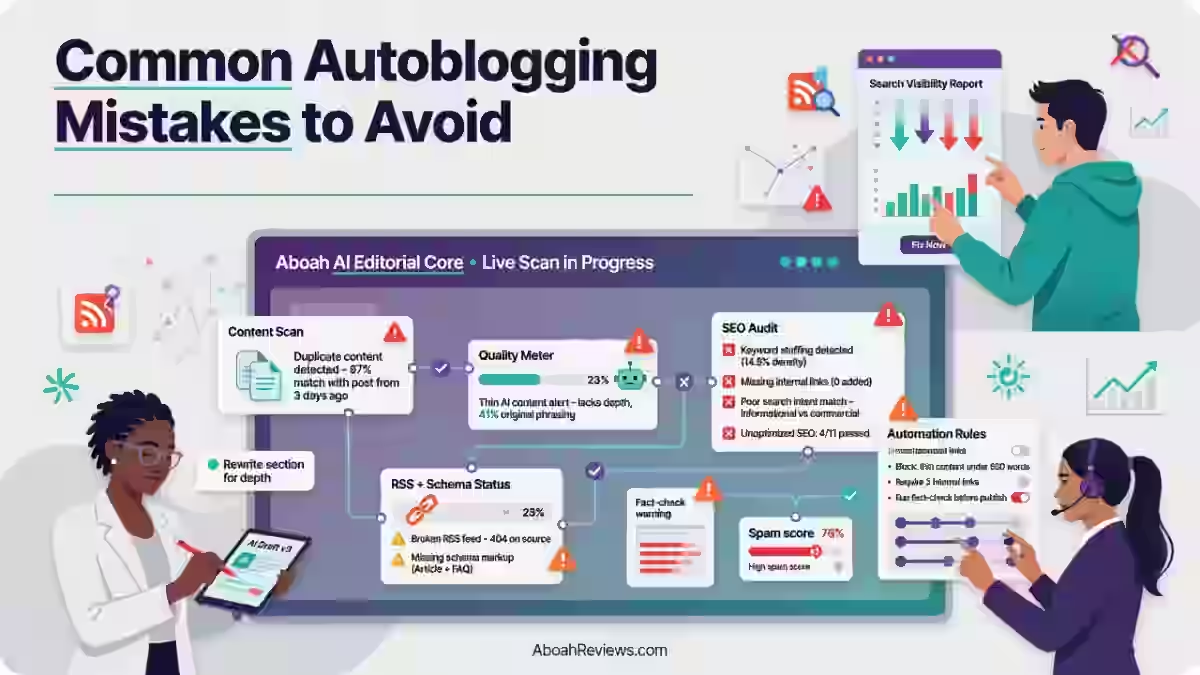
Common Mistakes to Avoid With Auto Blogging Tools

I’ve made all of these mistakes. Learn from them.
1. Over-Reliance on Auto-Generated Content
The biggest mistake is treating automation as a replacement for quality content rather than a supplement.
Auto-generated content works for news, aggregation, and updates. It doesn’t work for building authority or ranking for competitive terms. Your best content should still involve human expertise, original research, or unique perspectives.
Google’s helpful content update specifically targets sites that exist only to rank rather than to help readers. A site that’s 100% automated content will likely struggle. A site that’s 70% human-created with 30% automated supplementary content can thrive.
2. Ignoring SEO Optimization While Automating
Automation handles quantity. You still need to handle strategy.
I once let an auto blogging setup run for two months without checking keyword targeting. The tool was publishing daily, but nothing was optimized for terms people actually searched. Traffic was minimal despite high publishing volume.
Set up your seo optimization rules before launching automation. Define target keywords, configure internal linking patterns, and establish content guidelines. The tool should execute your strategy, not replace it.
3. Forgetting to Review and Edit Posts
Publish and forget is tempting but dangerous.
Automated content can include:
- Formatting errors from source conversion
- Broken links or images
- Outdated information
- Awkward phrasing from AI rewriting
Build a review workflow into your process. Even spending 5 minutes per post checking for obvious issues prevents embarrassing mistakes. I schedule 30 minutes every morning to review what my tools queued overnight.
Final Thoughts On The Benefits of Auto Blogging Tools
The benefits of auto blogging tools are real, but they require realistic expectations.
These tools genuinely save time, help you scale content production, improve publishing consistency, and support your SEO efforts. For bloggers, affiliate marketers, and small businesses, automation can level the playing field against larger competitors.
But automation works best as a complement to human effort, not a replacement. The sites I’ve seen succeed use auto blogging for supplementary content while investing human creativity in cornerstone pieces. They review automated posts, refine their sources based on data, and maintain quality standards.
Understanding the benefits of auto blogging tools can transform how you manage your blog and scale your content. Start small with one content source and one site. Track what works. Build your systems gradually.
If you’ve experimented with auto blogging tools, I’d like to hear what worked for you. Drop your experiences or questions in the comments, or check out my comparison of top autoblogging tools to find the right fit for your workflow.
Frequently Asked Questions About The Benefits of Auto Blogging Tools
1. Is autoblogging legal?
Yes, autoblogging is legal as long as you respect copyright. Curating headlines and summaries with links to original sources is generally acceptable. Republishing full articles without permission violates copyright. Most auto blogging tools offer settings to control how much content is pulled, and you should configure these to avoid infringement.
2. What is the 80/20 rule in blogging?
The 80/20 rule means 80% of your posts can be automated/curated, 20% must be original, in-depth content written by humans. Auto blogging can help you produce more content to discover what resonates, then you can focus human effort on expanding your top performers.
3. Does auto blogging still work?
Auto blogging still works when done correctly, but standards have changed. Pure content spinning and duplicate content strategies no longer rank well. Modern auto blogging works best when combined with AI content enhancement, proper SEO optimization, and human oversight. According to OpenAI’s usage guidelines, AI-generated content should add value rather than simply exist to fill space.
4. How to do autoblogging?
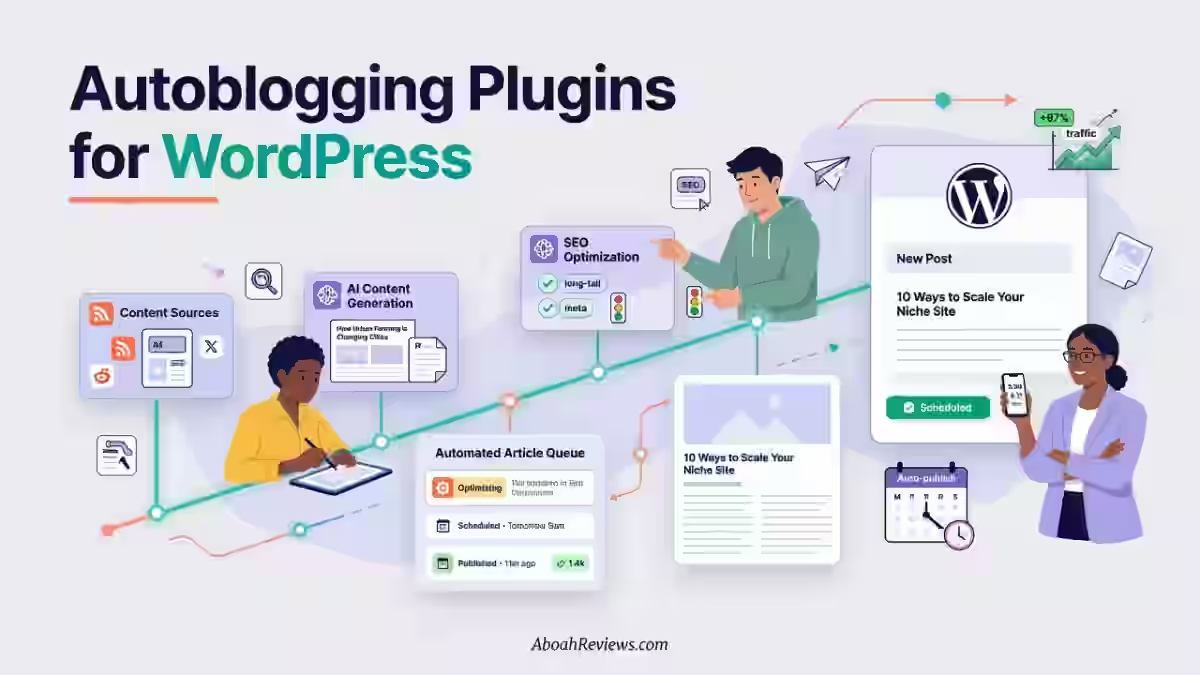
To start autoblogging, you need three things: a content source (RSS feeds, APIs, or AI generation), an autoblogging tool or WordPress plugin, and a publishing workflow. Set up your sources, configure SEO settings and publishing schedules, then establish a review process for quality control. Start with one site before scaling to multiple properties.

- Searchable Review 2026: My Honest Test Results With This AI Visibility Platform - October 9, 2026
- Ryze AI Review 2026: My 30 Days Full Breakdown of This Autonomous SEO & GEO Platform - October 9, 2026
- #1 Best Plugin for Automatic Blog Posting in WordPress (2026) - September 13, 2026