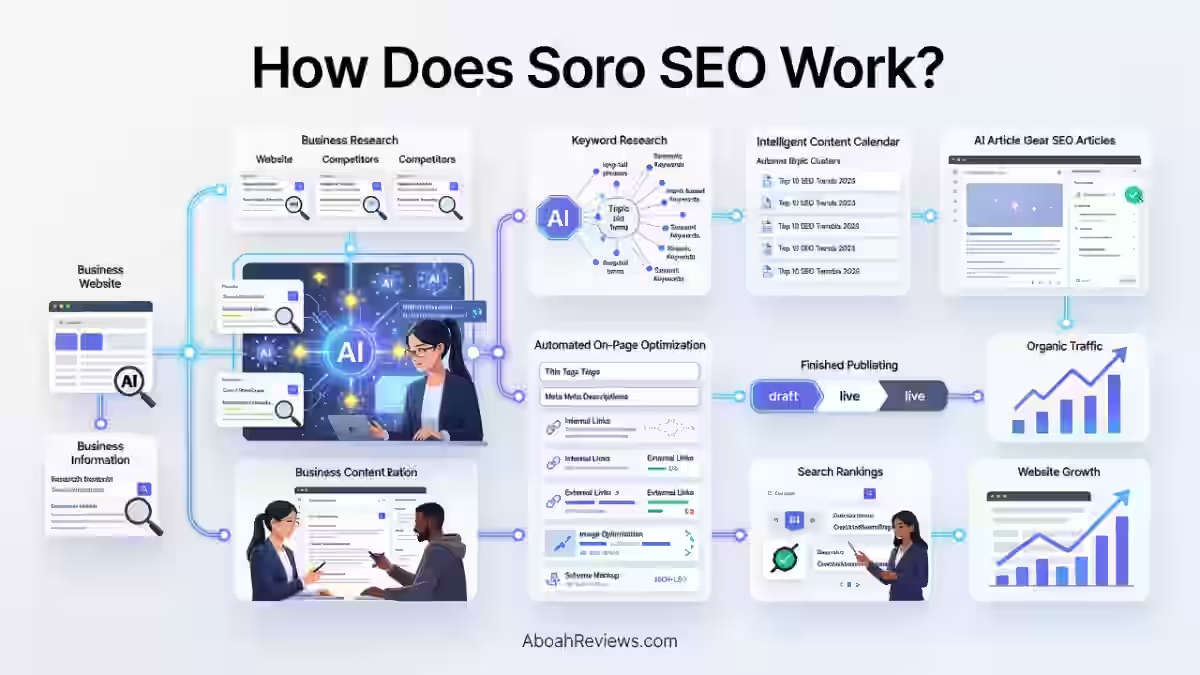
How does Soro SEO work? Soro SEO works by connecting to your website, analyzing your business, researching keywords, creating a content calendar, generating SEO-optimized articles, improving on-page SEO and helping you publish content at scale with significantly less manual effort.
How Soro SEO Works Step-by-Step
- Website Analysis: You connect your website (using platforms like WordPress, Shopify, Webflow, or HubSpot) via a simple integration. Soro deep-scans your existing pages to learn your brand’s unique tone and voice.
- AI Keyword Research: The tool automatically identifies high-value, low-competition, and long-tail keywords that your target audience is searching for.
- Content Generation: Soro uses large language models to write full-length, highly structured articles (usually 900–1,800 words) tailored to those keywords. It also automatically creates and sets featured images.
- On-Page Optimization: It handles the technicalities for you, automatically adding title tags, meta descriptions, schema markup, and internal/external links. It optimizes for both traditional search engines (Google) and AI-search platforms (ChatGPT, Perplexity).
- Automated Publishing: You can set the system to publish content live on a daily or weekly schedule or save the articles as drafts for manual human review first.
For a complete look at the platform’s features, dashboard and a step-by-step product walkthrough, see my 60 days test results with Soro SEO.
This guide is for SEO professionals, bloggers and small business owners who want to understand what Soro SEO actually does before committing $39/month.
What Is Soro SEO and How Does It Automate SEO?

Soro SEO is a hands-off SEO automation platform designed to save time by automatically researching keywords, generating AI articles and publishing directly to your website.
It is not just another AI writing tool; it automates production, not strategy or backlinks. The difference matters.
Most AI writing tools, like Jasper Al or ChatGPT, hand you a blank editor and expect you to run your own keyword research, create your own content brief and figure out where to publish.
Jasper Al is primarily an AI writing assistant rather than a full SEO automation platform. Users must conduct keyword research separately. Soro’s advantage lies in combining keyword research and publishing within a single ecosystem.
Unlike traditional SEO tools that only provide data and suggestions, Soro does the actual work for you. It researches, writes, optimizes and publishes content automatically, giving you a fully hands-off SEO solution.
That complete end-to-end loop is what separates an SEO automation platform from a standalone AI writing tool.
What SEO Problems Does Soro Solve?
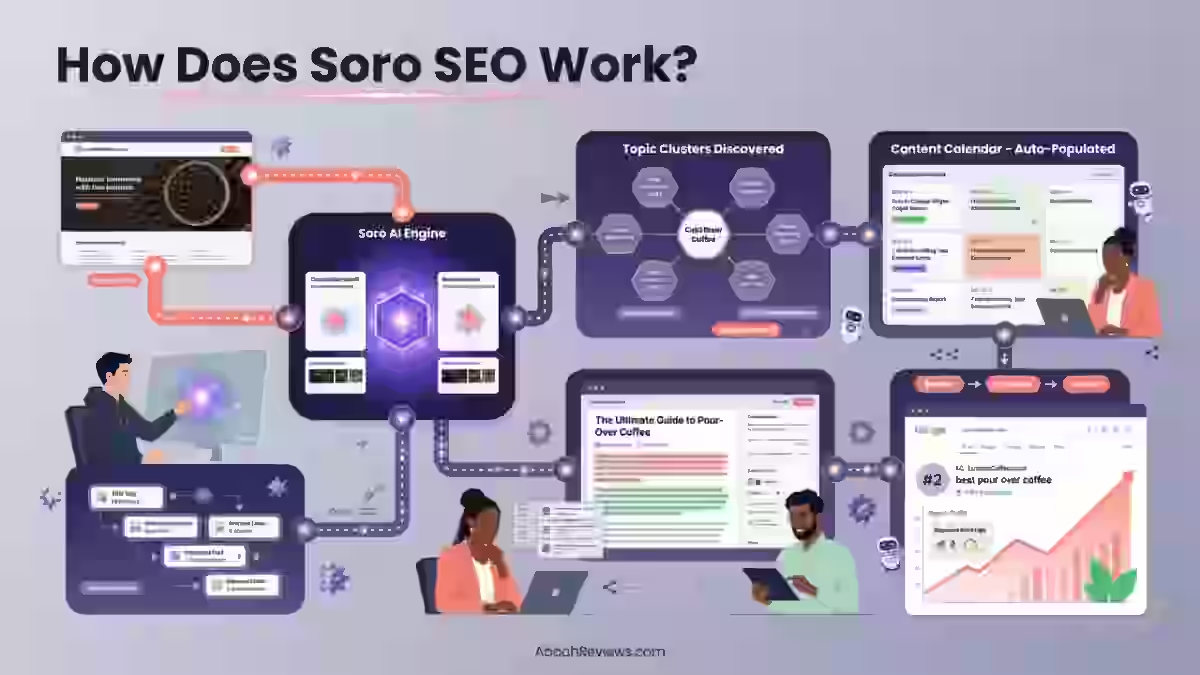
Soro is built to handle six common content and SEO execution problems that slow down small teams.
- Finding profitable keywords: Most site owners do not have time for weekly keyword research. Soro runs automated keyword research in the background based on your business category and existing content.
- Creating consistent content: Inconsistent publishing kills topical authority. It fully automates your blog SEO content strategy, identifies potential keywords, and writes daily articles to target them.
- Maintaining topical authority: Soro clusters content around your core topics, which helps you build depth on subject areas rather than publishing random one-off articles.
- Optimizing articles manually: This includes the kind of on-page SEO optimization work that takes 20 to 30 minutes per post when done manually.
- Managing internal linking: Soro works the entire workflow: internal linking, image generation and translation into 50 languages.
- Publishing at scale: Depending on your plan, you can generate anywhere from 30 to unlimited articles per month.
Who Is Soro SEO Built For & Who Should Skip?
Soro fits some teams well and fits others poorly. Here is an honest breakdown.
- Small Businesses: Small ecommerce and service sites benefit from steady content volume in their brand voice, published straight to their CMS, at a price well below hiring a writer. If you run a local service business with no in-house content team, Soro removes the friction of keeping a blog active.
- SEO Agencies: Soro provides a centralized workflow that agencies can use to manage content production across multiple websites from a single dashboard. That means less context-switching, less manual work per client, and more capacity to take on new accounts without hiring extra staff.
- SaaS Companies: SaaS teams benefit from Soro’s content calendar feature, which supports building topical authority through structured topic clusters. Educational content that captures buyer intent keywords at the top of the funnel is where the platform shines.
- Ecommerce Brands: The AI technology analyzes your store to learn your specific brand voice, ensuring every post sounds authentic and on brand. Product-led content strategies map well to Soro’s keyword targeting logic.
- Bloggers and Affiliate Marketers: If you have a site but no time to write, Soro runs the whole loop from keyword research to a published, optimized article every day. For informational content at scale, the workflow is designed for this use case.
Not Ideal For:
- Highly regulated industries (legal, medical, financial) where content accuracy requires professional review before any publishing
- Expert thought leadership that depends on original research, proprietary data, or strong E-E-A-T signals
- News publishers that require original reporting and real-time fact checking
- Research-heavy content that demands citations from primary sources
How Does Soro SEO Work? (Step-by-Step)
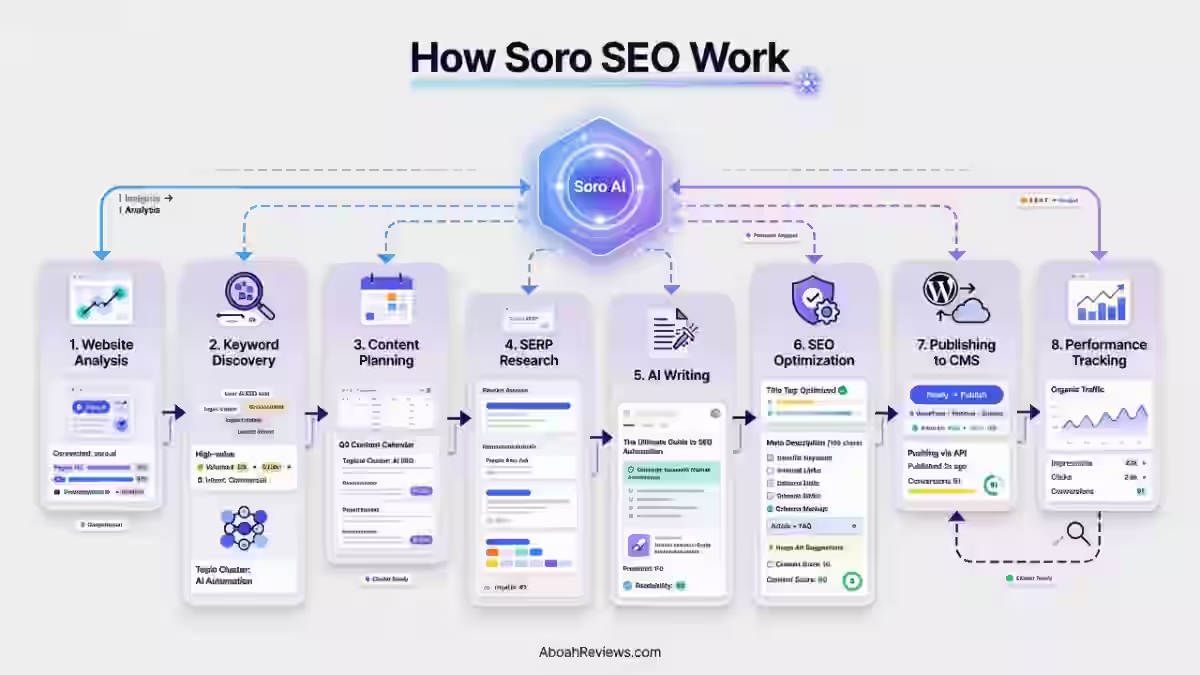
Here is the exact workflow Soro runs from the moment you connect your website to the moment an article goes live.
Step 1: Connect Your Website
Users start by connecting their website or CMS platform to Soro and allowing the system to analyze existing site content and branding. This is the foundation step and it takes about 3 minutes.
Setup takes approximately three minutes and requires no technical knowledge.
You drop in your website URL, answer a few questions about your business and audience, and Soro handles the rest.
What Information Soro Collects
Once connected, Soro scans your site to understand:
- Existing pages: what content you already have and what topics you cover
- Site structure: how your content is organized and linked
- Brand voice: the tone and writing style present in your existing pages
- Products and services: what you sell, what problems you solve
- Niche: your industry category and closest competitors
The WordPress plugin supports one-click setup: install the plugin, copy your API key, and you are connected. It works with Yoast SEO, Rank Math and All in One SEO.
Step 2: Soro Learns Your Business
Soro learns a company’s brand voice, audience, and niche to generate content tailored to the business. This is not just keyword matching.
The platform reads your existing content to build a style model before it writes a single new article.
Soro scans existing site content to learn the brand’s tone so new articles do not read like generic AI copy. In practice, this calibration improves over time.
Expect generic-sounding drafts for the first few weeks until it has enough existing content to learn your voice from. Publishing 5 to 8 manual posts first speeds this up considerably.
Step 3: AI Keyword Research
Soro identifies low-competition keywords described as the ones real customers search, focusing the calendar on traffic that converts.
This is automated keyword research with a buyer intent filter built in.
The platform focuses on:
- Long-tail keywords with lower competition and clearer search intent
- Buyer intent keywords that signal purchase readiness
- Content gap analysis; topics your competitors rank for that you do not yet cover
One honest caveat: it is useful for content-adjacent keyword discovery but has no backlink data, no historical trend data and no SERP feature filters.
Pair it with a dedicated research tool rather than replacing one. I use Ahrefs alongside Soro for keyword difficulty checks and search volume validation on any topic I am unsure about.
Step 4: Builds an SEO Content Calendar
Soro builds a content calendar from the keyword opportunities it identifies. This is where the platform creates publishing structure, not just random posts.
It fully automates your blog SEO content strategy, identifies potential keywords and writes daily articles to target them.
Topics are grouped into clusters, which means related articles link together and reinforce each other, building topical authority progressively.
The content calendar controls:
- Topic clustering: grouping related content under a central pillar
- Publishing schedule: daily or adjusted cadence depending on your plan
- Content prioritization: high-opportunity, low-competition topics publish first
If you want to understand how content calendars feed into a broader content production engine, the guide on how autoblogging work gives useful context on the mechanics behind this kind of automated scheduling.
Step 5: SERP Analysis Before Writing
Before writing any article, Soro analyzes the search results for the target keyword. This is where it determines what a competitive article needs to include.
The SERP analysis step covers:
- Competitor analysis, reviewing top-ranking pages for the same keyword
- Search intent detection, understanding whether the query wants a list, a how-to, or a product comparison
- Outline generation, building a heading structure based on what already ranks
- Topic coverage, identifying entities and subtopics that appear in competing pages
- Semantic relevance, matching keyword density and related terminology to what search engines reward
According to Google’s Search Quality Rater Guidelines, content quality is assessed on how well it serves the searcher’s actual need. SERP analysis before writing is what connects Soro’s output to real search intent, not just keyword matching.
Step 6: AI Writes the Article
Soro writes SEO-optimized articles with images, handles the technical bits like meta tags and internal links and publishes them to your CMS daily in your brand voice and in 50+ languages.
The articles are long-form, structured with heading hierarchies (H1, H2, H3), and written to cover entities and semantic concepts, not just stuff a single keyword into paragraphs.
Readability and entity coverage are part of the output logic.
Depending on your plan, you can generate anywhere from 30 to unlimited articles per month. Each article is fully optimized for SEO and tailored to your brand voice and style.
A few things to keep in mind from a production standpoint: the output quality is solid for informational topics but can sound flat on highly specialized or technical subjects.
I have seen this pattern across multiple AI writing tools. My comparison of Junia AI vs ChatGPT covers how output quality varies by topic type across different AI models, which applies to Soro’s generation quality as well.
Step 7: On-Page SEO Optimization
On-page optimization in Soro is automated, not manual. The platform handles:
- Title tags: written to match search intent and include the primary keyword
- Meta descriptions: generated per article to support click-through rates from search results
- Internal links: Soro adds links between your existing and new articles automatically
- External links: outbound links to authoritative sources added in context
- Featured image generation: the plugin automatically downloads and sets featured images
- Optional videos: some plans include video embedding alongside articles
Brand voice calibration means that, unlike generic AI writers, Soro SEO adapts output to your site’s existing tone, which reduces editing time.
The internal linking automation is particularly important because one of the most common errors in automated blogging is publishing dozens of posts with no internal linking structure, which creates content cannibalization risk.
I know this from experience. I lost an affiliate site’s rankings after publishing 42 auto-generated posts without internal linking or keyword filtering. The content cannibalized itself.
That mistake would have been partially mitigated if Soro’s automated internal linking had been running instead of my basic WordPress plugin setup at the time.
Soro SEO’s automated internal linking reduces this risk compared to a basic autoblogging setup, but it does not eliminate it.
If you are running Soro SEO on a new site, audit for content cannibalization at the 30-article mark.
Step 8: Automatic Publishing
Articles ship straight to WordPress, Shopify, Webflow, Wix, Ghost, Notion, HubSpot, Next.js and custom webhooks without a manual paste step.
Publishing modes give you control over what goes live automatically and what goes into a review queue:
- Draft mode: articles are created and held for your review before publishing
- Auto-publish: articles go live on schedule without manual approval
You can review drafts manually or enable auto-publishing to save time, while you sleep.
My honest recommendation: run draft mode for the first 30 articles on any new site.
The brand voice calibration takes time, and auto-publishing before you have reviewed enough output can send thin or off-target content live.
This is the same lesson covered in detail in common autoblogging mistakes, specifically around skipping editorial review.
What Happens After Publishing?
Publishing is not where the loop ends. What happens after an article is live matters just as much for organic traffic growth.
The built-in reporting connects to Google Search Console data and surfaces article-level impressions. It is not a replacement for a full SEO analytics platform, but it gives you enough visibility for a weekly check.
Over time, Soro continuously creates new content designed to improve rankings on Google and AI-powered search systems like ChatGPT.
For AI search optimization, consistent publishing cadence helps because AI models like ChatGPT and Perplexity tend to surface content from sites with strong topical authority and fresh publication dates.
Content updates are part of the platform’s ongoing workflow. As new content is added, Soro’s internal linking updates to connect related articles, reinforcing search visibility without manual re-editing.
For deeper context on whether autoblogging still produces results in the current Google environment, the data is nuanced and worth reading.
Soro SEO Workflow Explained: From Idea to Published Article
Here is the complete content production pipeline Soro SEO runs from initial business analysis to published article:
Business Analysis
       ↓
Keyword Discovery
       ↓
Content Planning (Calendar)
       ↓
SERP Research
       ↓
AI Writing
       ↓
SEO Optimization (Title Tags, Meta, Internal Links, Images)
       ↓
Publishing to CMS
       ↓
Performance Tracking (GSC Data / Article-Level Impressions)
Every step in this pipeline is automated. The only manual step you control is whether to review drafts before publishing.
Key Features That Make Soro SEO Different
Feature | What It Does |
|---|---|
AI Keyword Research | Finds buyer intent and low-competition content opportunities based on your niche |
SEO Content Planning | Builds a topic-clustered content calendar with a set publishing cadence |
Brand Voice Learning | Scans your existing content and adapts new articles to match your tone |
SERP Analysis | Studies competing pages before generating outlines |
AI Writing | Produces long-form articles with heading hierarchy and entity coverage |
On-Page Optimization | Automates title tags, meta descriptions, and keyword targeting per article |
Internal Linking Automation | Adds links between new and existing articles to reduce content cannibalization |
Featured Image Generation | Downloads and sets featured images automatically |
CMS Publishing | Publishes directly to WordPress, Shopify, Webflow, Ghost, HubSpot, Wix, Notion, Next.js |
Multilingual Content | Generates content in 50+ languages for international audiences |
Google Search Console Integration | Surfaces article-level impressions and search performance data |
Draft vs Auto-Publish | Gives users control over editorial review before anything goes live |
Pros and Cons of Using Soro SEO
Advantages of Soro SEO
- Faster content production: Soro published 7 articles a week without touching a keyboard and cut content production time by roughly 90%. For teams stretched thin across multiple responsibilities, that time return is real.
- Reduced SEO workload: It automates a lot of the SEO blog work, like finding keywords, writing posts, and publishing them, which saves a significant amount of time.
- Consistent publishing cadence: Consistent publishing supports topical authority building. Many smaller sites fail at SEO not because their content is bad but because publishing is irregular.
- Automated on-page optimization: Title tags, meta descriptions and internal links are handled without human input, removing the manual optimization checklist from every article.
- Scalability for small teams: Soro provides a centralized workflow that agencies can use to manage content production across multiple websites from a single dashboard, meaning less context-switching and less manual work per client.
- CMS integration breadth: Soro integrates with popular platforms like WordPress, Shopify, Webflow, Notion, HubSpot, Ghost, Wix, Next.js, and more. Most site owners will not hit a CMS compatibility problem.
Limitations of Soro SEO
- AI content requires editorial review: It can work, but supervise it. Daily auto-published AI content can drift in quality and read as generic, which risks your search performance and brand. Soro lets you edit content before it publishes, and you should keep that on until you trust the output in your niche.
- Struggles with highly specialized topics: One user reported that Soro helped generate traffic but felt the content was too generic and clearly AI-written for their bookstore’s audience. They believed the platform has potential but felt it needs more advanced personalization and content quality improvements before it can effectively replace human-written blog content.
- Cannot replace expert opinions or original reporting: Soro generates content based on what already exists in SERPs. It cannot produce original research, first-hand expertise, or proprietary data, which are exactly the E-E-A-T signals Google increasingly rewards.
- Rankings still depend on backlinks and authority: Soro is a content engine only. It does not do backlinks, technical site audits, rank tracking or AI-visibility tracking, so most users pair it with a separate tracker or SEO suite.
- Limited transparency on AI decision-making: The platform does not clearly document which AI models it uses for writing (whether Claude, ChatGPT, Gemini, or a combination), which makes it hard to evaluate quality consistency across article types.
- No public REST API: It connects to the major CMS platforms and offers webhooks for custom setups, but there is no public REST API and no MCP server. So, it cannot be driven programmatically by your own agents.
Is Soro SEO Better Than Traditional SEO?
The honest answer is that Soro replaces execution time, not strategy. Here is a direct comparison:
Factor | Manual SEO Workflow | Soro AI-Assisted SEO |
|---|---|---|
Keyword research | 2 to 4 hours/week, requires tools like Ahrefs or Semrush | Automated, built-in, runs in background |
Article production | 3 to 6 hours per article (research + writing + optimization) | ~1.30/article at 39/month entry tier |
On-page optimization | 20 to 30 minutes per post | Automated (title tags, meta, internal links) |
Publishing | Manual CMS upload per article | Direct API publish to 9+ CMS platforms |
Content calendar management | Weekly planning sessions | Auto-generated and maintained |
Scalability | Limited by team size | 30 to unlimited articles/month |
Human oversight required | Full control | Review recommended before auto-publish |
Backlink building | Part of off-page SEO workflow | Not included, must be handled separately |
Rank tracking | Supported via third-party tools | Basic GSC data only |
Cost at 30 articles/month | 2,000 to 4,500+ (freelance writing) | $39/month |
The cost comparison is significant.
At $39/month for 30 articles, the per-article cost works out to about $1.30 per post at the entry tier. That is well below what you would pay a freelance writer for an SEO-optimized article.
But Soro is not a complete SEO strategy. From an SEO strategy perspective, automation accelerates production but does not replace authority-building.
Search engines increasingly prioritize expertise, trustworthiness and helpful content signals.
If you want to understand how this compares to other formats, the autoblogging vs hybrid blogging breakdown is useful for thinking through where full automation makes sense and where a human-in-the-loop model produces better outcomes.
Does Soro SEO Actually Improve Google Rankings?
Soro can support rankings, but it cannot guarantee them. That distinction matters.
According to Google Search Central’s documentation on helpful content, ranking is determined by multiple interconnected signals.
Soro addresses some of these and not others.
Ranking factors Soro supports:
- Helpful content (informational articles targeting real queries)
- Search intent matching (SERP analysis before writing)
- Content quality (brand voice consistency, heading structure, entity coverage)
- On-page SEO (title tags, meta descriptions, keyword targeting)
- Internal linking (automated site structure improvement)
Ranking factors Soro does not address:
- Website authority and domain strength
- Off-page SEO and backlink building
- Technical SEO issues (site speed, crawlability, structured data)
- User experience signals (time on page, bounce rate, engagement)
- E-E-A-T signals that come from demonstrated expertise, not AI output
According to Ahrefs’ research on SEO, the majority of pages that rank in the top 10 have been live for over a year and have earned external backlinks.
Soro handles the content side. The authority side still requires human effort.
Long-term ranking success depends on strategic implementation, quality control, and integration within a broader SEO framework.
Used wisely, Soro can accelerate content workflows. Used passively, it may produce average results in increasingly competitive search environments.
The is Soro SEO legit page covers the credibility question in more depth, including trust signals, domain age and user verification.
Soro SEO vs Competitors
Before committing to Soro, it is worth knowing how it sits relative to alternatives in the same category.
For more depth on individual alternatives, the Soro SEO review on this site covers head-to-head performance data from 60 days of real testing.
Tool | Monthly Price | Articles/Month | CMS Integrations | Best For |
|---|---|---|---|---|
Soro SEO | $39 | 30 to unlimited | 9+ (WordPress, Shopify, Webflow, Ghost, Wix, HubSpot, Notion, Next.js) | Full-loop SEO automation for small teams |
Autoblogging.ai | From $9 | Varies by plan | WordPress, Shopify | Volume-focused article generation |
Junia AI | From $19 | Varies by plan | WordPress, Shopify, Webflow, Ghost, Wix, Medium, Reddit etc. | Long-form SEO content with human editing |
RightBlogger | From $59 | Unlimited articles (tool-based) | WordPress, Shopify | Bloggers and content marketers wanting tool flexibility |
Emplibot | From $67 | Up to 25 | WordPress, LinkedIn, X, Facebook, Instagram | Agencies wanting multi-channel publishing |
If you need deep on-page optimization scoring alongside your content workflow, Surfer SEO is a stronger choice for that specific task.
But if your goal is a complete content production engine from keyword to published article at $39/month, Soro is the most integrated option in this price range.
For a direct tool comparison, autoblogging vs AI blogging covers the differences between pure automation and AI-assisted content creation so you can decide which model fits your workflow.
Final Verdict on How Does Soro SEO Work
Soro SEO automates the full content workflow:
- Keyword research
- Article generation
- On-page optimization
- Internal linking
- Image generation
- Publishing directly to your website
The step process runs like this:
- Connect your website
- Let Soro learn your business and brand voice
- Run automated keyword research
- Build a content calendar
- Analyze SERPs
- Write the article
- Apply on-page optimization
- Publish to your CMS
Soro SEO’s mission is to make high-quality SEO accessible to small businesses and founders who lack the time or budget for traditional SEO agencies.
The service positions itself as a set-it-and-forget-it SEO solution that continuously publishes optimized content.
Where human expertise is still required: strategy, editorial review, off-page SEO, backlink building and any content that requires original research, expert opinion or first-person experience.
There is no free trial, but Soro SEO offers a 14-day money-back guarantee. You can use the tool risk-free for two weeks and request a full refund if it is not the right fit.
If you are building a content-first SEO strategy and want to understand the full category before committing to any single tool, the best autoblogging software guide covers the wider market with real data on what each tool actually produces.
Have you tested Soro SEO on your site? What publishing cadence are you running, and how is it performing in search? Drop your experience in the comments below.
If you are weighing Soro against other tools for your workflow, the how to choose the best autoblogging tool guide walks through the decision criteria worth applying before you subscribe to anything.
Frequently Asked Questions About How Soro SEO Works
1. What is Soro SEO?
Soro SEO is a hands-off SEO automation platform designed to save time by automatically researching keywords, generating AI articles, and publishing directly to your website. It costs $39 per month and works with platforms like WordPress, Shopify, Webflow, Wix, Ghost and more. It is not a standalone AI writer. It handles the full loop from keyword discovery to published article.
2. Is Soro SEO any good?
In an independent 60-day test, Soro SEO scores 7.7/10 as a content automation platform for keyword research, content generation, optimization and publishing. It delivers on its core promise of consistent automated publishing, but output quality requires editorial review, particularly on specialized topics. It is a solid tool for content volume but not a replacement for strategic SEO judgment.
3. What is the alternative to Soro SEO?
The closest alternatives are Autoblogging.ai for pure article volume, Junia AI for long-form SEO writing with more manual control and RightBlogger for bloggers who prefer a flexible toolset over a fully automated pipeline. Each tool sits at a different point on the automation-to-control spectrum.
4. How much does Soro SEO cost?
Soro uses a simple flat-rate pricing model at $39/month, with no free plan or usage-based tiers. On Shopify, there is also an annual option of $216/year, saving 54% compared to monthly billing. Higher-tier pricing for multi-site or higher-volume plans is not publicly listed and requires contacting support.
5. Is Soro SEO legit?
The domain was registered in December 2025, which means Soro SEO is a genuinely new platform. The early user data is encouraging, but multi-year performance benchmarks do not exist yet. Soro SEO uses 256-bit encrypted checkout with Stripe, which is the industry standard for secure online payments. It operates as a real, active SaaS product with a responsive support team and verified user reviews on Trustpilot and the Shopify App Store.
6. Does Soro SEO actually work?
Soro SEO delivers on its core promise of automated daily content publishing with built-in SEO optimization, but it still requires human editing before anything goes live. Rankings depend on more than content volume. Off-page SEO, technical SEO, and domain authority all factor into whether Soro-generated articles actually rank. The tool works for what it is designed to do. It does not work as a complete SEO strategy in isolation.
7. How do I cancel my Soro SEO subscription?
From your account, go to Settings, and follow the cancellation prompts. By email: write to info@trysoro.com from the email address registered on your account. If you subscribed through Shopify: cancel through your Shopify admin by navigating to Apps, then Soro. No penalty fees are charged for cancellation, and the 14-day money-back guarantee applies within the initial billing window.

- How Does Soro SEO Work? Full Breakdown After 60 Days Test - July 22, 2026
- Is Soro SEO Legit? My Honest Review + Real User Data (2026) - July 20, 2026
- What Is Soro SEO: Problems It Actually Solves After 60 Days Test (2026) - July 13, 2026