TL;DR: Autoblogging is the practice of automatically generating and publishing blog content using AI writing tools, APIs, RSS feeds or scripts with little to no manual input. It works through a three-stage pipeline:
- Input: A content source feeds the system (RSS feeds, keyword lists, YouTube transcripts or structured data)
- Generation: An AI model produces a draft article using prompts and templates
- Publishing: The draft is scheduled, formatted and pushed to a CMS like WordPress via plugin or API integration
Introduction to Autoblogging in 2026
If you have spent any time trying to scale a blog, you have probably wondered whether there is a faster way to publish content without writing every word yourself.
That question led me down the autoblogging path in 2023 and it taught me more about content quality, Google penalties and editorial discipline than anything else I have done in SEO.
This guide covers what autoblogging is, how it works, whether it still works after Google’s Helpful Content Updates, the tools I have tested and a step-by-step strategy for doing it right.
Here is what you will learn:
- How autoblogging works (the three-stage technical pipeline)
- The five types of autoblogging and when to use each one
- Whether autoblogging still works after Google’s Helpful Content Updates
- Legal and SEO safety considerations
- A step-by-step strategy on how to do autoblogging
- Real tool comparisons based on hands-on testing
- Common mistakes that destroy rankings
What Is Autoblogging?
Autoblogging is a content publishing method that uses RSS feeds, AI writing tools, APIs or scripts to automatically generate and publish blog posts with minimal manual input.
At its simplest, automated software pulls content from a source (like an RSS feed or keyword list), processes it through an AI content generation layer and publishes the result directly to your content management system.
The entire workflow, from topic selection to publishing, can run with little to no human involvement.
Autoblogging is not new. People have been doing this since the early 2000s using RSS scrapers and content spinners. But the tools, the risks and the results look completely different today.
In practice, autoblogging ranges from fully hands-off content farms (which usually get penalized) to semi-automated workflows where AI generates a first draft and a human polishes it before hitting publish.
The 3 Core Methods of Autoblogging
Autoblogging uses three different methods for content publishing. Here’s how:
- RSS feed aggregation pulls articles from external sources and republishes them, sometimes with AI rewriting
- AI content generation uses large language models like GPT-based tools or Claude to write original articles from keyword inputs or prompts
- Hybrid workflows combine AI drafts with human editing, internal linking and content optimization before publishing
Autoblogging vs Traditional Blogging
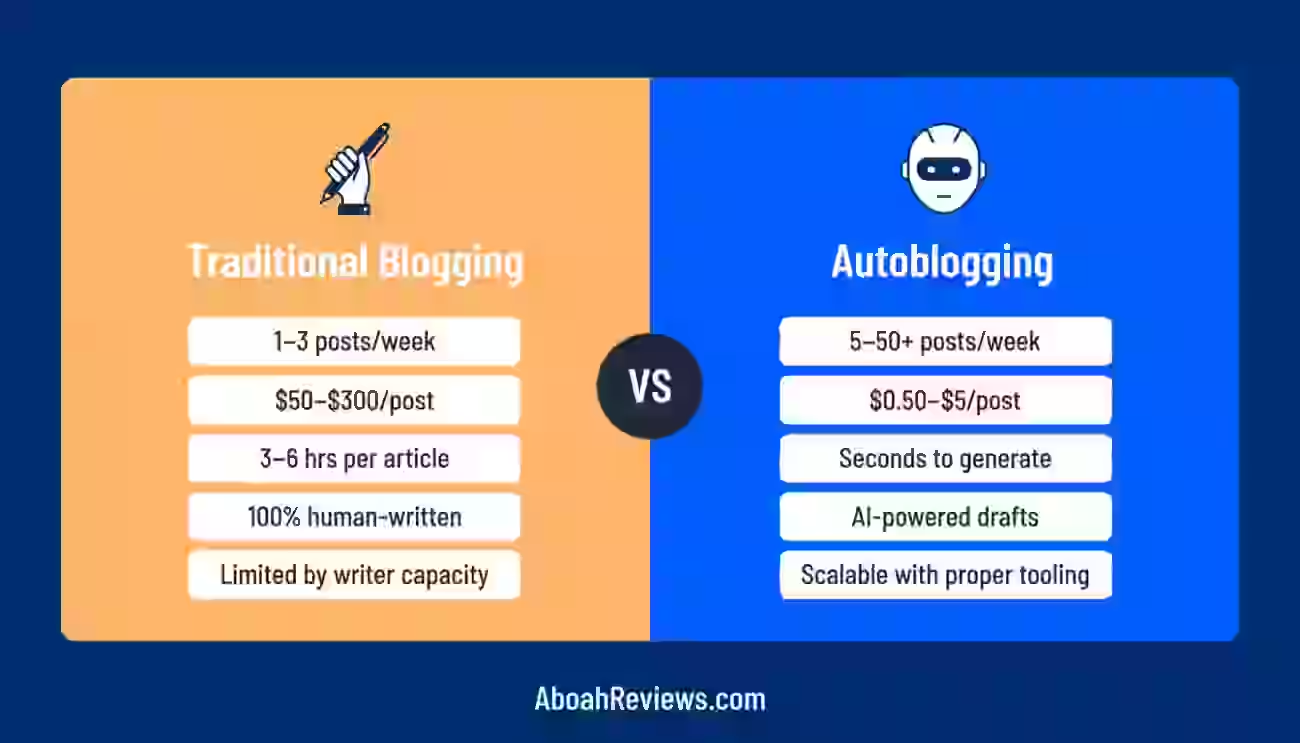
Traditional blogging involves a human writing, editing and publishing every post. Autoblogging automates most or all of those steps.
Factor | Traditional Blogging | Autoblogging |
|---|---|---|
Content creation | Fully manual | Automated drafts via AI or RSS |
Publishing speed | 1 to 3 posts per week typical | 5 to 50+ posts per week possible |
Human involvement | End-to-end | Editing and review layer |
Originality risk | Low | Higher without oversight |
Scalability | Limited by writer capacity | High with proper tooling |
Cost per post | 50 to 300 (freelance writer) | 0.50 to 5 (AI generation + editing time) |
Neither approach is universally better. The right choice depends on your goals, niche and available resources.
How Traditional Autoblogging Compares to Modern AI Autoblogging
Aspect | Traditional Autoblogging | Modern AI Autoblogging |
|---|---|---|
Primary source | RSS feeds, scraped content | AI models (ChatGPT, Claude, etc.), curated APIs |
Content quality | Often duplicate, low-quality, spun content | Unique, human-like, SEO-optimized drafts |
Goal | Quick rankings via keyword stuffing | Efficiency, scaling content marketing, traffic growth |
Risk | High (Google penalties, duplicate content) | Low to moderate (requires human oversight and editing) |
The key differences break down to three areas:
- Creation method: Traditional blogging means a person writes every word. Autoblogging uses software, whether that is an RSS aggregator pulling articles from other sites or an AI tool generating posts from keyword prompts.
- Time investment: A traditional blog post might take 3 to 6 hours. An autoblogged post can be generated in seconds, though editing adds time back.
- Scale: A solo blogger might publish 2 to 4 posts per week. An autoblog can push out dozens daily.
Autoblogging vs AI-Assisted Writing
AI-assisted writing uses AI as a drafting partner within a manual workflow. Autoblogging automates the full pipeline from topic selection through publishing.
With AI-assisted writing, you prompt the tool, review the draft, restructure it, add your insights and publish manually.
With autoblogging, the system selects topics, generates content, formats it and publishes it to your site on a schedule with minimal human intervention.
The distinction matters because Google does not penalize AI-generated content by default. It penalizes unhelpful content, regardless of how it was produced.
AI-assisted writing with human oversight is widely accepted. Fully automated publishing without review is where the risk lives.
When Should You Use Autoblogging?
Autoblogging works best when you have the editorial capacity to review output and a niche that supports high-volume content:
- Large-scale niche sites with repetitive content formats (product roundups, location pages, data-driven listings)
- Affiliate marketing and programmatic SEO plays where you need hundreds of long-tail keyword pages
- Teams with editing capacity to review AI output before publishing
When Is Traditional Blogging the Better Choice?
Traditional blogging is stronger when trust, voice and depth matter more than volume:
- Brand authority sites where your voice and reader trust are the product
- YMYL niches (health, finance, legal) where Google applies a higher E-E-A-T burden. According to Google’s Search Quality Rater Guidelines, content in these areas is held to stricter quality standards because it can impact a person’s health, financial stability or safety
- Early-stage sites building topical depth from scratch, where every post needs to establish credibility
Common Misconceptions About Autoblogging
- “It’s all spam:” Not anymore. Modern AI content generation can produce readable, informative articles. The quality depends entirely on the tool and the process around it.
- “It’s illegal:” It is not inherently illegal. But scraping and republishing copyrighted content without permission can create legal problems. I cover this in detail in the legal section below.
- “Google will always penalize it:” Google has actually softened its stance. Their guidelines now focus on content quality, not how the content was produced.
How Does Autoblogging Work?
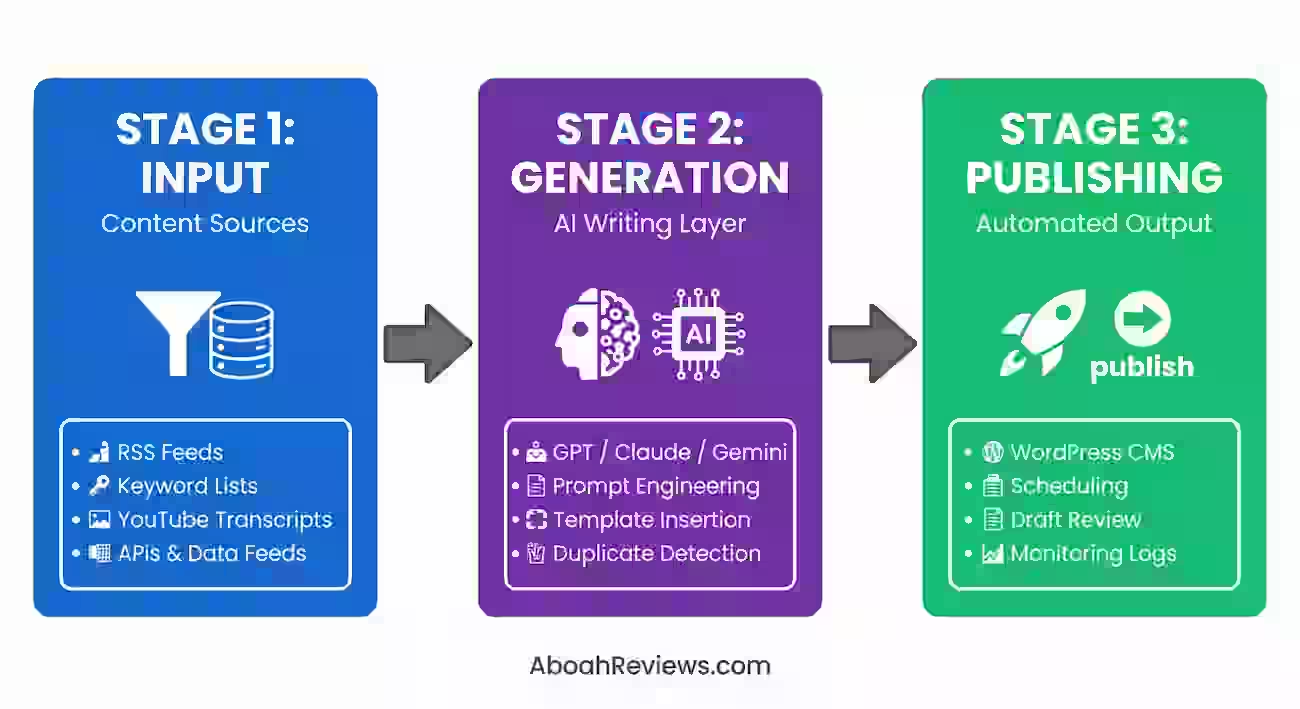
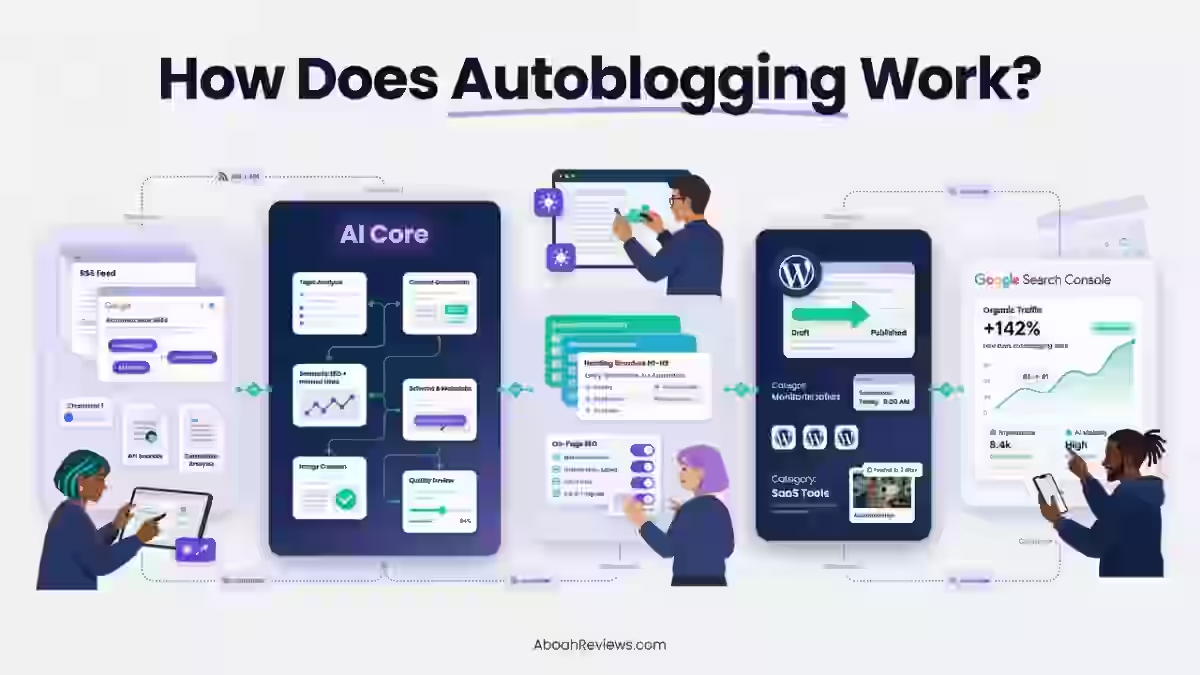
Every autoblogging system, regardless of the tool, follows a three-stage pipeline: Input, Generation and Output.
Stage 1: Input (Content Sources)
The input stage defines where your content comes from. This is the foundation of the pipeline.
- RSS feeds from niche-relevant publications. The autoblogging tool monitors these feeds and triggers content creation when new items appear.
- Keyword lists or datasets entered into an autoblogging engine. You provide the topics and the AI generates content around them.
- YouTube videos or podcast transcripts repurposed into written blog posts. Some tools convert video-to-text inputs automatically.
- APIs and structured data such as product databases, pricing feeds or public datasets used for programmatic SEO pages.
My experience: I set up my first autoblog in early 2023 using RSS feed aggregation and a WordPress plugin. Google flagged the site for thin content.
The mistake was publishing unedited, fully automated posts with no human review. The lesson: your input source matters, but what you do with it matters more.
Stage 2: Content Generation (The AI Layer)
The generation stage is where raw inputs become blog posts.
- AI models (GPT-based tools such as ChatGPT, Claude, Gemini and others) process the input and generate a draft article based on the topic, keywords and any custom instructions you provide.
- Prompt engineering for uniqueness: Better autoblogging tools let you customize prompts per article instead of running the same template with a different keyword swapped in.
- Content rewriting vs. original generation: Some tools rewrite existing content from RSS feeds. Others generate entirely new articles from scratch. Original generation carries less duplicate content risk.
- Duplicate detection systems compare new drafts against your existing content library to prevent near-identical posts and keyword cannibalization.
- Template insertion automatically adds disclaimers, internal links, affiliate disclosures, CTAs and formatting elements to every post.
For a deeper look at how the AI layer works across different platforms, see my breakdown of how autoblogging tools work.
Stage 3: Publishing and Automation (Output)
The output stage handles everything from formatting to going live.
- CMS integration: Most tools connect directly to WordPress via plugins or REST APIs. Some also support Shopify, Ghost, Webflow, Wix, Joomla and Duda.
- Scheduling and drip publishing: Instead of dumping 50 posts at once, you set a publishing schedule. Two to five posts per week is safer than ten per day. Rate limits protect your site performance and help avoid obvious automation footprints.
- Draft vs. auto-publish workflows: The safest approach is importing posts as Draft or Pending Review so a human edits them before anything goes live.
- Monitoring logs and errors: Good tools maintain import logs so you can track what was published, flag failures and catch misbehaving feeds.
The 5 Types of Autoblogging
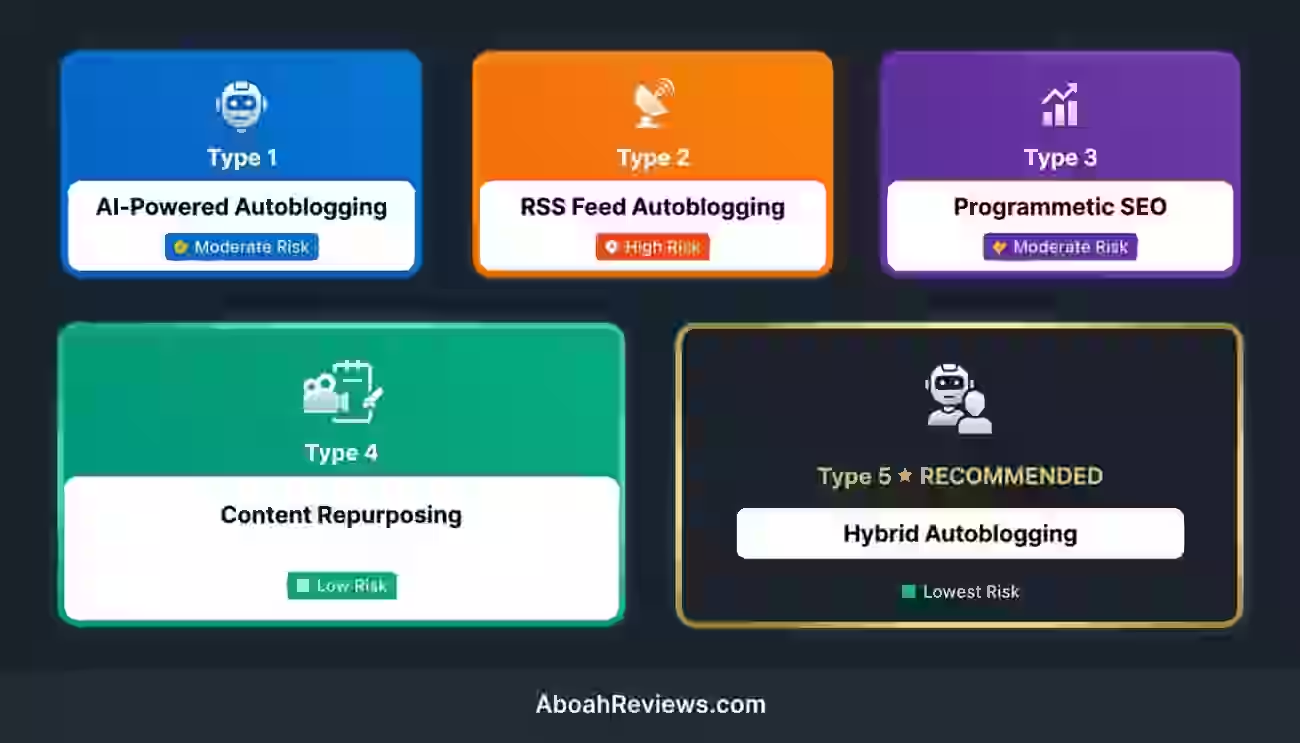
1. AI-Powered Autoblogging
AI-powered autoblogging uses large language models to generate fully original articles from keywords or topic prompts. You provide the inputs, and the AI writes the entire draft.
- Best for: Informational niches with high search volume long-tail keywords
- Risk level: Moderate (requires editing and fact-checking)
- Tools: Emplibot, Junia AI, Autoblogging.ai
2. RSS Feed Autoblogging
RSS feed autoblogging aggregates content from external publications and republishes it, sometimes with AI rewriting or summarization. This is the original form of autoblogging and it is still around.
Some setups publish the content as-is. Others excerpt the first paragraph and link back to the source. More aggressive setups republish full articles, which is where you run into copyright problems.
- Best for: News-style sites in growing industries
- Risk level: High (duplicate content and copyright concerns)
- Tools: Feedzy, WPAutoBlog, CyberSEO Pro
3. Programmatic SEO Autoblogging
Programmatic SEO autoblogging scales pages using structured data and templates. You build a page template and populate it with data from a database or API.
- Best for: Comparison pages, location-based pages, product listing pages
- Risk level: Moderate (thin content risk if template adds no real value)
- Tools: SEOmatic, Byword AI
4. Content Repurposing Autoblogging
Content repurposing autoblogging converts existing media (YouTube videos, podcasts, webinars) into written articles.
- Best for: Multi-platform creators who already produce video or audio content
- Risk level: Low (content is already original)
- Tools: Blogify, RightBlogger
5. Hybrid Autoblogging (Recommended)
Hybrid autoblogging combines AI-generated first drafts with human editing, original insights and content strategy.
This is the approach I recommend for anyone serious about building an autoblog that lasts.
It is the model I use on my own projects after losing a site to fully automated publishing.
- Best for: Long-term SEO performance, sustainable organic traffic growth
- Risk level: Low (with proper editorial workflow)
- Tools: RightBlogger, Frizerly
Why the hybrid approach is the most defensible method:
- The content starts as unique (not scraped or spun)
- Human editing adds the experience and expertise signals Google looks for
- You maintain editorial control over quality
- Instead of spending 4 hours writing a post from scratch, you spend 30 to 60 minutes editing an AI draft
My experience: I set up an AI autoblogging campaign on a health-adjacent niche site in early 2024. I used a popular AI writing tool to generate 40 articles and published them with minimal editing.
Within three months, Google’s helpful content system flagged the site and organic traffic dropped by about 70%.
The lesson: AI writing tools can produce decent raw drafts, but publishing them without human review is a recipe for trouble.
Workflow and Multi-Channel Automation
Beyond content creation, you can automate everything that happens after publishing: posting to social media, emailing subscribers, notifying your team.
- Automatically sharing new posts to Facebook, X and LinkedIn
- Triggering email notifications to subscribers when a post goes live
- Sending Slack alerts to your editorial team for review
Tools: No-code automation tools like Uncanny Automator (for WordPress) or Zapier handle this workflow layer. They do not create content; they move it through your publishing pipeline.
I use a simple Zapier workflow that pushes every published post to a Slack channel where my editor reviews it.
It is a small thing, but it prevents bad content from sitting live on the site for days before anyone notices.
Does Autoblogging Still Work in 2026?
Yes, autoblogging still works in 2026, but only when paired with quality control, a content strategy and at least one human review checkpoint before publishing. The days of mass publishing unedited AI content and ranking are over.
What Changed After Google’s Helpful Content Updates?
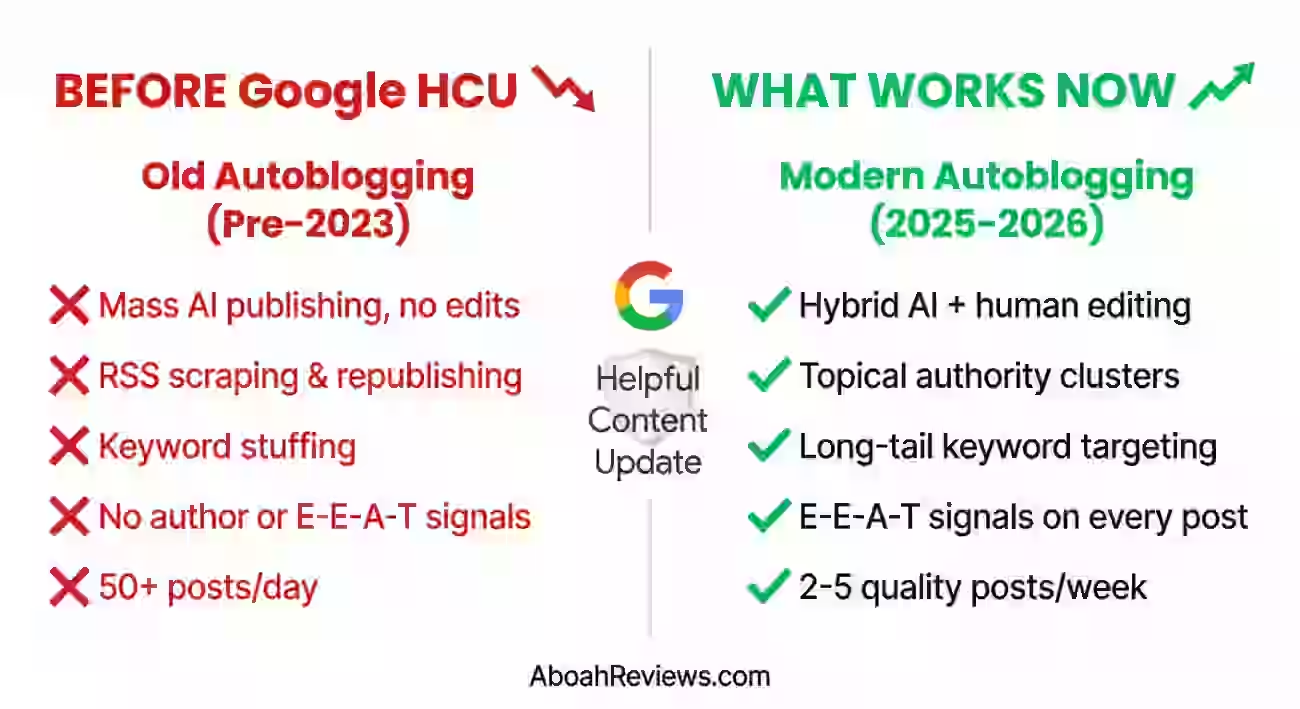
Google’s Helpful Content Updates specifically targeted thin, mass-produced content that exists primarily to manipulate rankings rather than help readers.
The key changes:
- Crackdown on thin AI content: Sites publishing hundreds of low-quality, unedited automated posts saw significant ranking drops.
- Emphasis on people-first content: Google’s systems now evaluate whether content demonstrates real experience, expertise and value to the reader.
- Site-wide quality signals: One section of your site filled with thin automated content can drag down the performance of your entire domain.
According to Google’s Search Central documentation, the helpful content system generates a site-wide signal used in ranking web pages. Sites with large amounts of unhelpful content are less likely to perform well in search.
What Autoblogging Approach Works Today?
The approaches that consistently produce results share three characteristics:
- Hybrid models combining AI drafts with human editing: I tested three autoblogging tools over 90 days (Emplibot, Junia AI and RightBlogger). The semi-automated approach (AI draft plus human editing) outperformed fully automated posts by roughly 3x in organic traffic after 6 months.
- Topical authority clusters: Publishing related articles in organized topic clusters rather than random isolated posts.
- Long-tail keyword targeting: Going after specific, lower-competition queries where automated content can genuinely be the best answer available.
Which Autoblogging Approaches No Longer Work?
These strategies will get your site flagged or buried:
- Mass publishing unedited AI content without any human review
- Duplicate RSS scraping and republishing content that already exists elsewhere
- Zero E-E-A-T signals on your site (no author bios, no About page, no source citations, no original insights)
- Keyword stuffing through AI, including tools that promote inserting 100+ keywords into articles
For a detailed look at what is coming next, read my analysis of the future of autoblogging tools.
Is Autoblogging Legal and Safe for SEO?
Autoblogging is legal and can be safe for SEO, but both depend entirely on how you execute it.
What Is Google’s Position on AI Content?
Google’s stance is not anti-AI. It is anti-unhelpful. The helpful content system evaluates whether content is people-first regardless of how it was produced.
Google has explicitly stated that using automation, including AI, to generate content is not against their guidelines, as long as the primary purpose is not to manipulate search rankings.
The issue is spam, not automation itself.
Spam vs. Helpful AI Content
The line between spam and helpful content comes down to intent, quality and human oversight.
Signal | Spam Content | Helpful Content |
|---|---|---|
Purpose | Manipulate rankings | Answer user queries |
Originality | Duplicate or near-duplicate | Original angle or synthesis |
Human review | None | Edited before publishing |
Depth | Thin, vague | Specific, substantive |
E-E-A-T signals | None | Author, sources, expertise shown |
Quality checklist I use before publishing any automated post:
- Originality: Does the article include unique insights beyond what AI can pull from training data?
- Expertise: Does the content demonstrate subject matter depth from human knowledge?
- Citations: Are there credible sources supporting key claims?
- User value: Does this solve a specific problem the reader has?
- Freshness: Is the information current with recent examples?
Quality thresholds to monitor: Track impressions and clicks weekly in Google Search Console. A 20%+ drop in impressions over two consecutive weeks is my trigger to pause publishing and audit recent posts.
E-E-A-T Requirements for Autoblogs
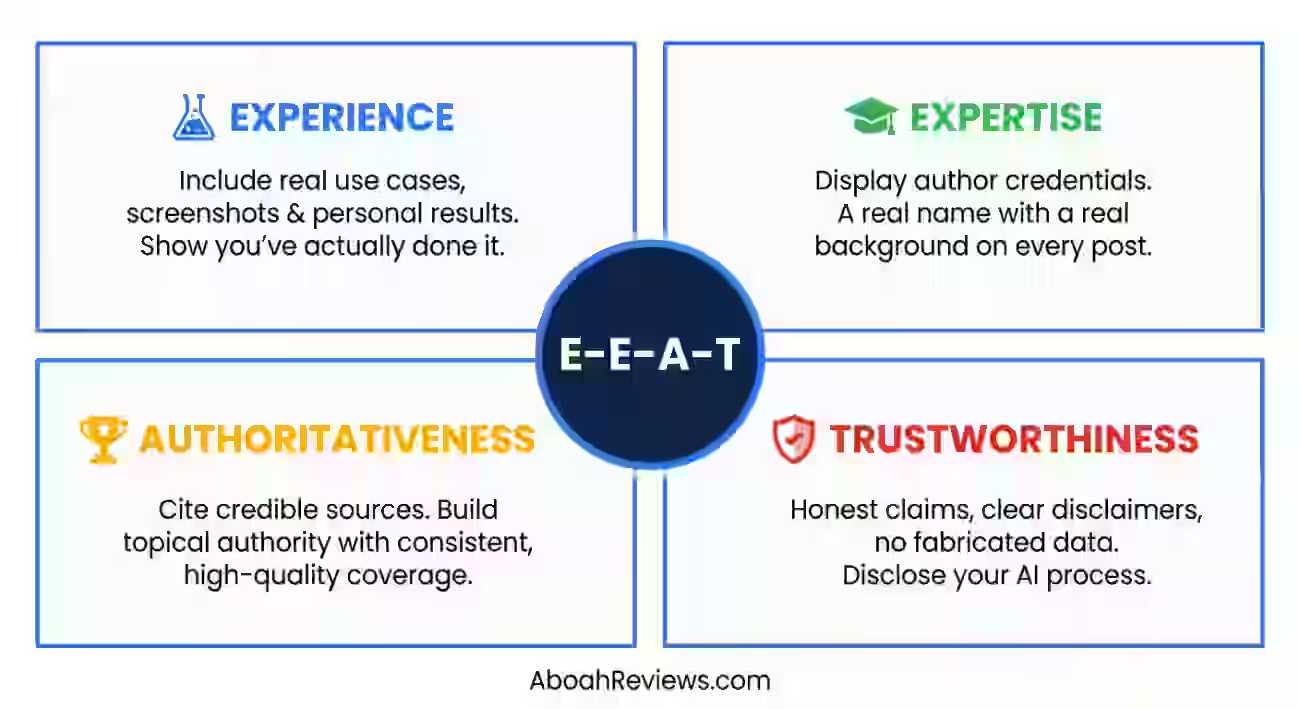
According to Google’s Search Quality Rater Guidelines, content quality assessment heavily weighs the reputation and expertise of content creators. Anonymous autoblogs with no author information start at a disadvantage.
- Experience: Include real use cases, screenshots and personal results. Show you have actually done the thing you are writing about.
- Expertise: Display author credentials or byline transparency. A real name with a real background.
- Authoritativeness: Cite credible sources and link to authoritative references. Building topical authority requires consistent, high-quality coverage within your niche.
- Trustworthiness: Honest claims, clear disclaimers, no fabricated data. If you are using AI to generate content, consider disclosing your editorial process.
Pros and Cons of Autoblogging
Advantages
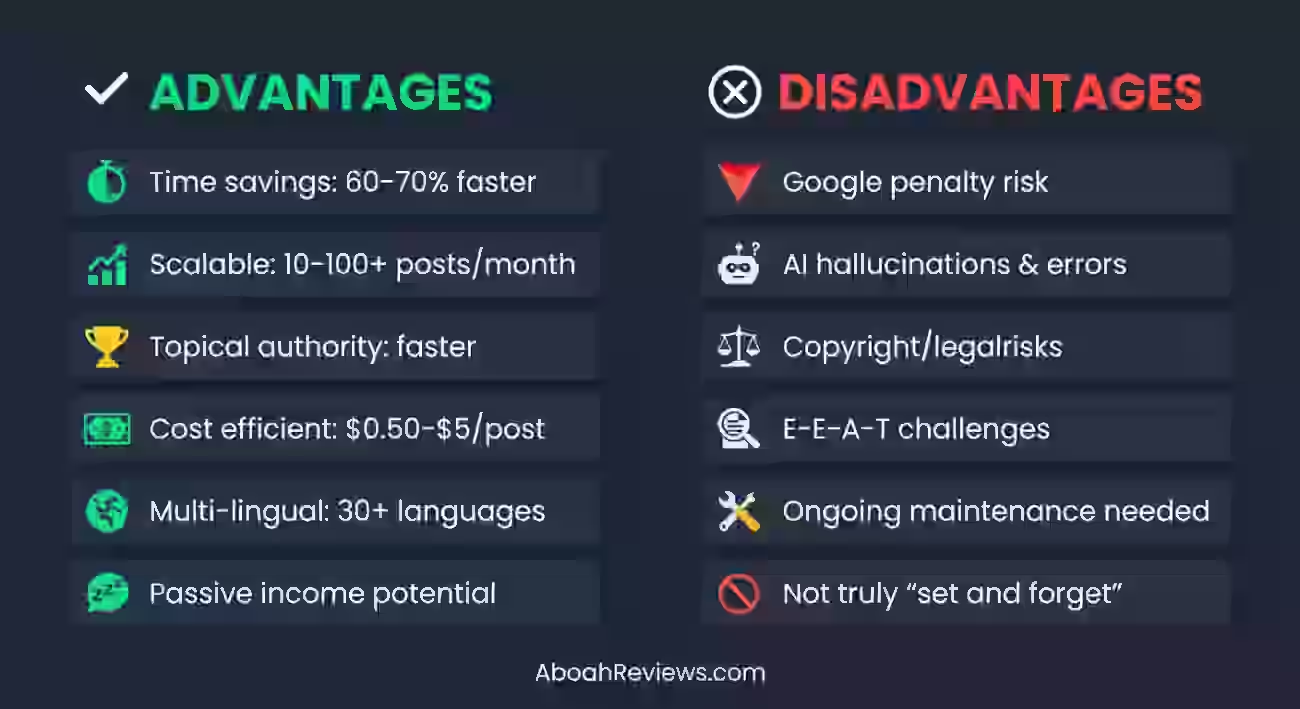
- Time savings: Even with the hybrid approach, you can cut content creation time by 60% to 70%. Publish 10 to 100+ posts monthly without manually writing each one.
- Scalable content production: With traditional blogging, you are limited by writer capacity. With autoblogging, you are limited by editing capacity, which is a much smaller hindrance.
- Faster topical authority: Volume plus topical clustering builds authority faster. You can cover an entire keyword cluster in a week instead of a quarter.
- Cost efficiency: A tool subscription might run 30 to 200 per month compared to 30 to 500 per article from a freelance writer.
- Passive income potential: With the right monetization strategy (ads, affiliate marketing), an autoblog can generate revenue with relatively low ongoing effort.
- Multi-lingual reach: Many AI tools support 30+ languages, making it possible to create content for international audiences without hiring translators.
Disadvantages
- Google penalty risk: Thin or duplicate content can trigger algorithmic devaluation. My tech niche autoblog lost most of its organic traffic after publishing 40+ minimally-edited AI articles.
- Content quality issues: AI-generated content frequently contains factual errors (hallucinations), generic advice and a monotonous tone. RSS republishing often lacks any originality. Both require human review.
- Ethical and legal concerns: Copyright infringement risk with RSS scraping. Reader trust issues when they realize they are reading bot-generated content with no real expertise behind it.
- SEO challenges: Google increasingly prioritizes E-E-A-T and originality. Automated content struggles to demonstrate firsthand experience, which is now a ranking factor.
- Maintenance requirements: Broken RSS feeds, formatting errors, outdated information, image issues and quality control all require ongoing attention. Autoblogging is not truly “set it and forget it” despite what some tools promise.
Best Autoblogging Software and Tools
I have tested most of these autoblogging tools personally. Here is my honest assessment.
For a more detailed comparison, see my roundup of the best autoblogging software.
AI Autoblogging Platforms
1. Emplibot
Emplibot positions itself as a fully automated blog management system. It handles everything from keyword research to article writing to WordPress publishing.
Pros:
- True end-to-end automation (research, write, optimize, publish)
- Includes internal linking and image sourcing
- Hands-off once configured
Cons:
- Limited control over individual article quality
- Expensive for what you get compared to DIY setups
- Content still needs human review for accuracy
Best for: People who want maximum automation and are willing to trade some quality control for convenience.
I wrote a full Emplibot review covering my testing experience if you want the detailed breakdown.
2. Rightblogger
Rightblogger is an AI blog writing suite with over 80 content tools. It’s not purely an autoblogging platform, but it has features that support automated blog posts when combined with its scheduling and bulk generation tools.
Pros:
- Large toolset beyond just article writing (social media, emails, outlines)
- Reasonable pricing
- Good for generating content briefs and drafts at scale
Cons:
- Not a full autoblogging solution on its own (although it has auto-publish to WordPress)
- Quality varies by topic complexity
- Needs a workflow tool to complete the automation chain
Best for: Bloggers and content marketers who want AI assistance but prefer to stay involved in the process.
Read my Rightblogger review for a full walkthrough. I’ve also written about Rightblogger pricing if budget is your main concern.
3. WordRocket AI
WordRocket AI focuses specifically on long-form SEO content. It analyzes top-ranking pages for your target keyword and generates articles designed to compete with them.
Pros:
- SERP-aware content generation
- Includes NLP optimization suggestions
- Fast output for long-form content
Cons:
- Articles can feel formulaic
- Limited customization of tone and style
Best for: SEO professionals who want data-driven AI drafts as a starting point.
Check my WordRocket AI review for the full test results.
4. Junia AI
Junia AI offers AI content generation with a focus on brand voice customization. It’s more polished than some competitors in terms of output readability.
Pros:
- Better-than-average writing quality
- Brand voice training capabilities
- Supports multiple content formats
Cons:
- Autoblogging features are limited compared to dedicated platforms
- Higher price point for full feature access
- Still requires editing for factual accuracy
Best for: Brands that care about consistent voice across automated content.
Full details in my Junia AI review.
5. Outrank.so
Outrank.so combines SEO analysis with AI writing. It’s designed to create content that targets specific keyword opportunities.
Pros:
- Strong keyword and SERP analysis
- Content optimization scoring
- Good integration with content strategy workflows
Cons:
- Not a plug-and-play autoblogging solution
- Requires understanding of SEO fundamentals to use effectively
- Smaller user community means fewer templates and guides
Best for: SEO-focused teams who want AI drafts tied to keyword research data.
I covered this in my Outrank.so review.
6. Autoblogging.ai
This is one of the most popular dedicated autoblogging platforms. It’s built specifically for generating and publishing articles at scale.
Pros:
- Purpose-built for autoblogging workflows
- Supports bulk generation
- Multiple AI model options
Cons:
- Quality inconsistency across topics
- Limited editorial controls
- Content can read as generic without customization
Best for: Users who want a straightforward, dedicated autoblogging tool.
7. Custom ChatGPT/Claude API Solutions
If you have technical skills, building your own autoblogging system using LLM APIs (OpenAI, Anthropic) gives you maximum control.
Pros:
- Complete customization of prompts, workflows, and output
- Lower per-article cost at scale
- Can integrate with any CMS or platform
Cons:
- Requires programming knowledge (Python, API integration)
- No built-in SEO optimization or publishing features
- You’re responsible for everything: prompt engineering, error handling, quality control
Best for: Developers and technically skilled SEO professionals who want full control.
WordPress Autoblogging Plugins
8. WP RSS Aggregator
The most popular RSS aggregation plugin for WordPress. It imports content from RSS feeds and displays it on your site.
Features:
- Feed management
- Content filtering
- Keyword-based feed selection
- Templates for display
Pros:
- User-friendly
- Good documentation
- Focused on content curation rather than full republishing
Cons:
- Limited rewriting capabilities
- You’re mostly displaying other people’s content, which creates duplicate content and copyright concerns.
Best for: Legitimate content curation sites that excerpt and link back to sources.
9. CyberSEO Pro
A more advanced feed processing plugin with built-in AI integration. CyberSEO Pro can pull from RSS, XML, JSON, and CSV feeds, then optionally rewrite content using AI.
- Best for: Experienced users who need complex feed processing and are scaling content operations across multiple sources.
- Key strength: Its ability to combine RSS aggregation with AI rewriting makes it a hybrid tool.
10. Autoblog (Plugin)
A straightforward RSS import and republishing plugin.
Limitations:
- Basic functionality
- Limited rewriting options
- High risk of duplicate content penalties
- I’d only recommend this for internal use cases (like aggregating content from your own network of sites).
For a full comparison of plugin options, see my guide to WordPress autoblogging plugins.
How to Do Autoblogging the Right Way
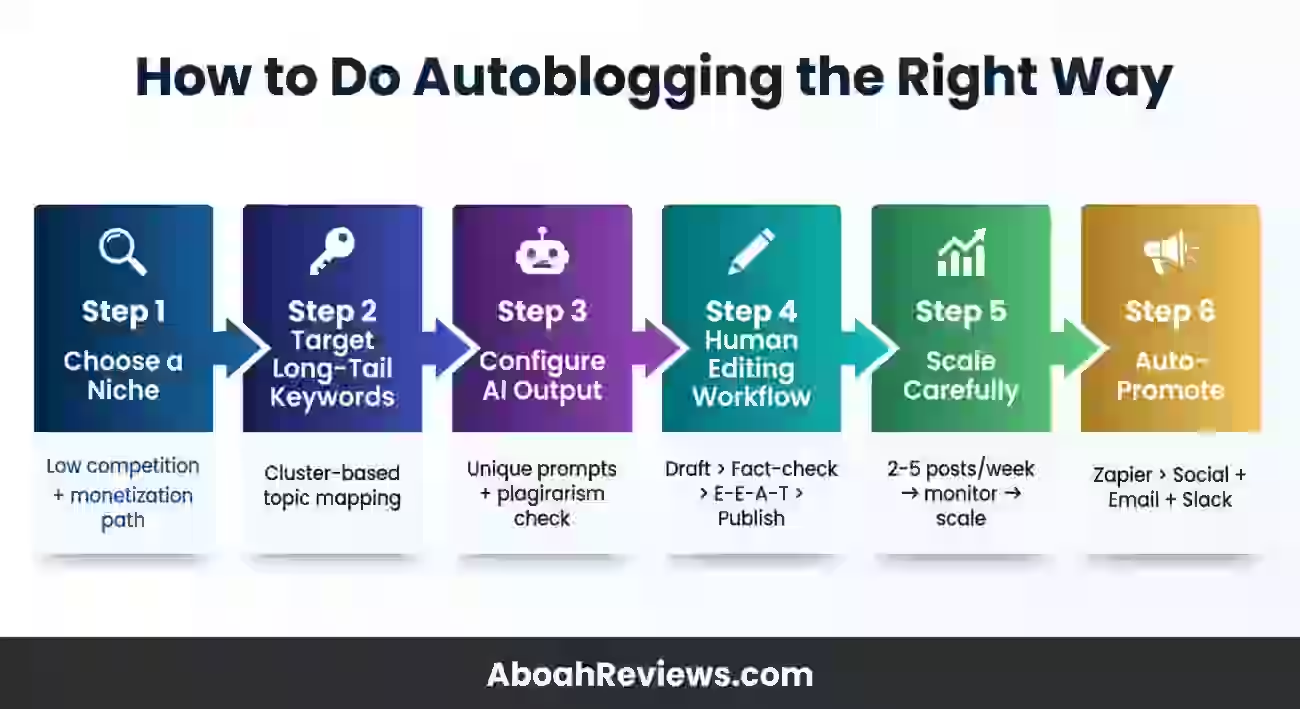
This is the strategy section. For a complete walkthrough, see my guide on how to do autoblogging.
Step 1: Choose a Profitable Niche with Low Competition
Pick a specific topic where there is proven search demand but the competition is not dominated by major publishers.
- Validate with keyword research tools like Ahrefs or Semrush. Look for keyword clusters where the top-ranking pages have low Domain Authority (under 30).
- Ensure monetization pathways exist: affiliate programs, ad networks (Mediavine, Raptive), digital products or services.
- Avoid YMYL niches unless you have real credentials in the field.
Step 2: Target Long-Tail Keywords in Clusters
Build topical authority by organizing your content around topic clusters, not random isolated keywords.
- Group related keywords into clusters. A cluster might be “autoblogging tools” with sub-topics covering individual tool reviews, comparisons and setup guides.
- Map each cluster to a pillar page and supporting articles.
- Use tools like Ahrefs Content Explorer or Semrush Topic Research to identify gaps.
Step 3: Configure AI for Unique Output
- Vary your prompts. Give the AI different instructions for tone, structure, depth and examples for each article.
- Include specific data points, product names or use cases in your prompts to force the AI toward more specific output.
- Run a plagiarism checker before publishing.
Step 4: Build a Human Editing Workflow
Set all auto-generated posts to Draft. Before publishing, complete this checklist:
- Check factual accuracy. Confirm dates, prices, product names and any claims.
- Add personal insights, real-world examples or original analysis.
- Verify E-E-A-T signals: author byline, source citations, relevant internal links.
- Add internal links to related content on your site.
- Run a final plagiarism check.
Step 5: Scale Without Getting Penalized
Start small. Generate 5 to 10 AI articles, edit them thoroughly, publish them and monitor performance in Google Search Console for 30 to 60 days before scaling.
- If impressions and clicks are stable or growing, gradually increase your publishing schedule.
- If performance drops, pause and audit your recent content before publishing more.
- A realistic starting cadence is 2 to 5 edited posts per week, not 10 per day.
Step 6: Promote Automatically
Once your reviewed content is published, use workflow tools like Postly to distribute it:
- Auto-share to social media channels
- Trigger email newsletter updates
- Push notifications to your editorial team
This is the workflow automation layer. It saves time without compromising quality because the content has already been reviewed.
Why Internal Linking Matters for Autoblogs
Internal linking is one of the most overlooked aspects of autoblogging. Without it, your posts exist in isolation and Google cannot understand how your content relates to itself.
Topic Clusters and Content Hubs
Topic clusters organize your content around a central pillar page with supporting articles that link back to it.
This structure signals to search engines that your site covers a topic comprehensively.
- Each cluster should have one pillar page (broad topic) and 5 to 15 supporting articles (specific subtopics).
- Supporting articles link to the pillar page and to each other where relevant.
Anchor Text Optimization
Use descriptive, keyword-rich anchor text that tells both readers and search engines what the linked page is about.
- Vary your anchor text. Do not use the exact same phrase every time you link to a page.
- Keep anchors natural. They should read like part of the sentence, not an insertion.
- Avoid generic anchors like “click here” or “read more.”
Can You Automate Internal Links Safely?
Yes. Modern autoblogging tools like Junia AI, Arvow and Emplibot include automated internal linking that analyzes your content library and inserts contextual links between related articles.
However, spot-check the results. Automated systems sometimes link to irrelevant pages or overload a single article with too many links.
How Much Does Autoblogging Cost?
The total cost depends on your publishing volume, tool choice and how much editing you do in-house.
- Tool subscriptions: Most autoblogging platforms charge between $9 to $99 per month depending on post volume and feature tier. Enterprise plans for agencies can run $200 to $500 per month.
- AI content generation via API: Approximately $0.01 to $0.05 per 1,000 tokens. A 2,000-word article uses roughly 3,000 to 4,000 tokens, putting the raw generation cost at $0.03 to $0.20 per article. Most autoblogging tools bundle this into their subscription price.
- Editing and QA: If you edit in-house, the cost is your time (15 to 30 minutes per article). If you outsource editing, expect $5 to $25 per article depending on depth and niche expertise.
- Hosting: $10 to $50 per month for shared or managed WordPress hosting. High-volume autoblogs may need $50 to $100 per month for better performance.
- Image generation: Some tools include AI-generated images. Standalone image generation (DALL-E, Midjourney) adds $10 to $30 per month.
Cost Category | Low End (10 posts/month) | Mid Range (50 posts/month) | High Volume (200+ posts/month) |
|---|---|---|---|
Tool subscription | $19/mo | $49/mo | 99 to 200/mo |
Editing (in-house) | 2.5 to 5 hrs/mo | 12.5 to 25 hrs/mo | 50 to 100 hrs/mo |
Hosting | $10/mo | $25/mo | 50 to 100/mo |
Total (excl. labor) | 29 to 50/mo | 74 to 100/mo | 149 to 300/mo |
For quick comparison, see my free vs paid autoblogging tools breakdown.
How to Monetize an Autoblog
1. Affiliate Marketing
Embed affiliate links (Amazon Associates, ClickBank, niche-specific networks) within relevant content.
This works well for product roundups, comparison posts and how-to guides that reference specific tools.
2. Display Ads
Google AdSense is the entry point, but approval can be challenging for autoblogs with thin content.
Google reviews content quality and a site full of unedited AI content will likely get rejected. Build up 20 to 30 quality posts before applying.
Once you reach traffic thresholds, programmatic ad networks like Mediavine (50,000+ sessions per month) or Raptive offer significantly higher RPMs.
3. Sponsored Posts and Partnerships
As your autoblog grows, brands in your niche may pay for sponsored content.
Build traffic first, then approach brands or sign up for platforms like Cooperatize or IZEA.
4. Email List Building
Even on an autoblog, building an email list gives you a direct audience channel that is not dependent on Google’s algorithms.
Tips for Maximizing ROI
- Focus on niches with high commercial intent keywords (finance, software, insurance)
- Track which content types generate the most affiliate clicks or ad revenue
- Reinvest early revenue into better tools and human editing
- Do not rely on a single monetization channel
For a real example of how this plays out, I documented my approach in how to make money with RightBlogger, which covers the actual workflow behind monetizing AI-assisted content.
Technical SEO for Autoblogs
Technical SEO matters even more for autoblogs because you are publishing at higher volume. Mistakes multiply.
- Canonical tags: If you are syndicating content across multiple sites, canonical tags tell Google which version is the original.
- Noindex on thin or duplicate content: If some of your automated posts do not meet quality standards, noindex them rather than deleting. Or better yet, do not publish them.
- Schema markup: Use Article schema and where appropriate, FAQPage schema. This helps search engines understand your content structure.
- Site speed optimization: Large autoblogs can get bloated fast. Optimize images, use caching and choose a quality host.
- Mobile responsiveness: Over 60% of searches happen on mobile. Mobile responsiveness should be your top technical SEO priority.
Best Practices for Autoblogging
After testing multiple approaches and losing one site to a Google update, here is the framework I follow:
1. Prioritize Quality Over Quantity
- Five well-edited AI posts per week will outperform 50 thin posts per day.
- Volume without quality just gives Google more reasons to flag your site.
2. Add Human Oversight
- Edit every auto-generated piece before it goes live.
- Add personal insights, real-world examples or original analysis.
- This is what separates viable autoblogs from spam.
3. Focus on Original AI Content
- Use AI to write from scratch based on unique prompts.
- Do not scrape or republish.
- Don’t use the same prompt template for every article.
4. Implement Strong E-E-A-T Signals
- Create detailed author bios with real credentials
- Cite sources and data throughout your content
- Update content regularly, especially in fast-moving niches
- Add an About page that explains who you are and why you cover this topic
5. Follow Google Guidelines
- Create helpful, people-first content
- Provide proper attribution when curating
- Do not use deceptive practices (cloaking, hidden text, doorway pages)
Alternatives to Autoblogging
If full autoblogging feels too risky, there are middle-ground approaches.
1. Semi-Automated Content Strategies
- AI-assisted writing: Use ChatGPT or Claude as a co-writer, not a replacement. Generate outlines, draft sections and brainstorm ideas, then write the final version yourself.
- Content briefs plus outsourced writers: Use AI to create detailed content briefs, then hire freelance writers to execute.
- Templated content with variable data: For sites that publish similar formats (city pages, product comparisons), create templates and use data feeds to populate the variables.
2. Content Curation Done Right
Content curation is different from content scraping. Done right, it adds value:
- Manual curation with commentary: Select the best articles in your niche, excerpt key points and add your own analysis.
- Weekly roundups: Publish a weekly summary of industry news with your take on each story.
- Link blogging with original insights: Share links to interesting content and explain why it matters.
3. AI Plus Human Hybrid Workflow
This is the approach I use now and recommend to most people:
- AI generates a complete first draft based on a detailed prompt
- A human editor reviews for accuracy, readability, tone and adds personal experience
- Add examples, data, visuals and internal links
Result: About 60% to 70% time savings compared to writing from scratch, with the quality you would expect from a human-written piece.
Autoblogging Case Studies
1. The Affiliate Autoblog That Succeeded
A colleague built a product review site using AI-generated content in the outdoor gear niche.
He published about 15 articles per week, all run through a strict editing process where he added personal product testing notes and original photos.
Results after 8 months:
- 45,000 monthly organic sessions
- $2,100 per month in Amazon Associates revenue
- No negative impact from Google updates
Why it worked: He treated the AI output as a rough draft, not a finished product. Every article included his real opinions and testing data.
2. The News Aggregator That Got Penalized
I ran a tech news aggregator using RSS feeds in 2023, publishing 20 to 30 posts per day.
Results:
- Initial spike to 15,000 monthly sessions
- Hit by a Google update in month 8
- Traffic dropped to under 500 sessions
- Site eventually deindexed
Why it failed: The content did not add anything beyond what the original sources provided. It was automated content creation without any unique value.
3. The Hybrid B2B Blog That Scaled
A small SaaS company used AI tools to draft articles about their industry, then had subject matter experts review and enhance each piece.
Results after 12 months:
- Published 8 articles per week (up from 2 with manual writing)
- 4x increase in organic traffic
- Several articles ranking in top 3 for competitive keywords
- No negative signals from Google
Why it worked: The AI handled research and drafting. The experts added real insights, proprietary data and genuine expertise.
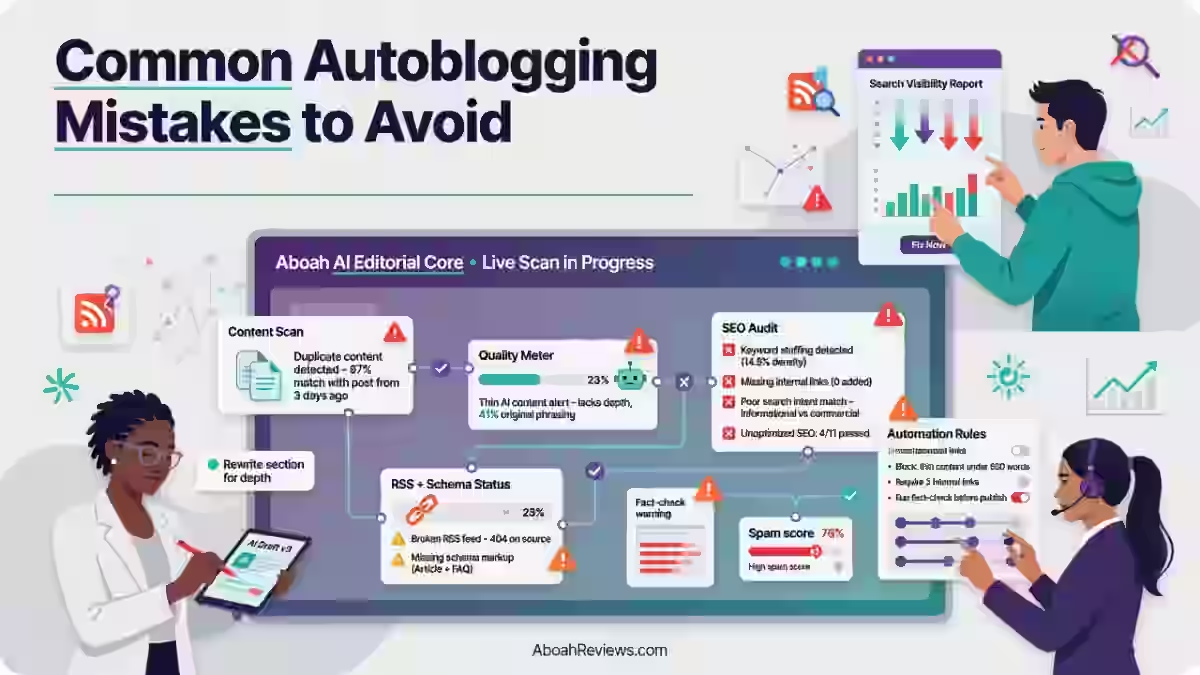
Common Autoblogging Mistakes and How to Avoid Them
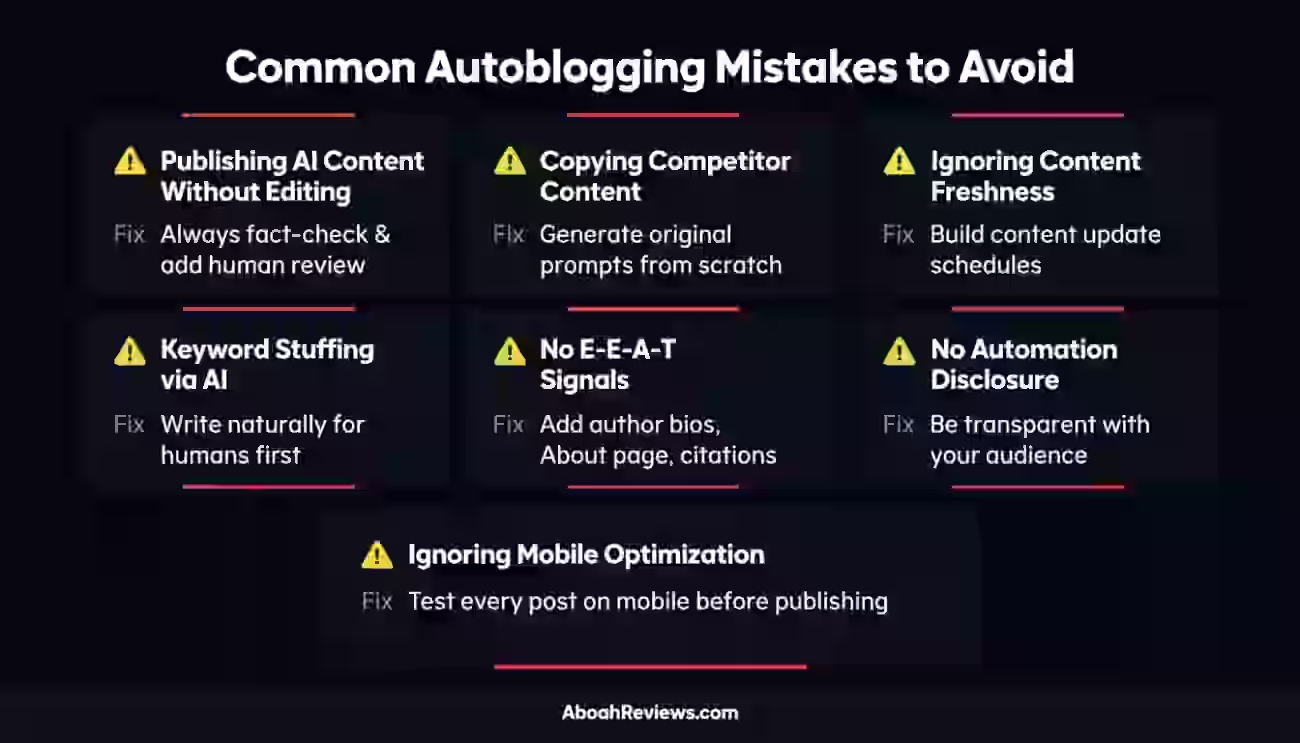
- Publishing AI content without editing: AI hallucinations are common. I have seen AI tools invent statistics, create fake product names and cite studies that do not exist. Always fact-check.
- Copying competitor content: Some autoblogging setups essentially scrape and rewrite competitor articles. Google’s algorithms are good at detecting this.
- Ignoring content freshness: Automated posts become outdated quickly. A “best AI writing tools for 2024” article sitting on your site in 2026 hurts credibility. Build content update schedules into your workflow.
- Over-optimization for keywords: Autoblogging combined with keyword stuffing is a fast track to a penalty. Write naturally.
- No disclosure of automation: While not legally required in most places, transparency about your content process builds trust with readers.
- Neglecting E-E-A-T signals: Missing About pages, no author bios, no cited sources. These are table stakes for any site that wants to rank. They matter even more for autoblogs because Google is already skeptical of high-volume automated content.
- Ignoring mobile optimization: Many autoblogging templates look fine on desktop but break on mobile. Test your automated posts on mobile devices regularly.
The Future of Autoblogging
AI models are getting better at producing factually accurate, well-structured content.
But Google’s detection systems are also improving.
The arms race between AI content generation and AI content detection will continue.
Blog automation is expanding beyond WordPress. Tools are starting to publish directly to LinkedIn articles, Medium, Substack and even video scripts for YouTube.
Predictions for 2026 to 2030
- Fully automated content that consistently ranks will become harder, not easier, as Google refines its quality signals
- The hybrid model (AI draft plus human editing) will become the standard for content marketing teams
- Tools will get better at incorporating E-E-A-T signals automatically (author data, citations, structured data)
- Regulation around AI-generated content disclosure may emerge in the EU and US
The autobloggers who will survive are those who use automation for efficiency, not as a replacement for quality.
For a deeper look at these trends, read my analysis of the future of autoblogging tools.
Should You Try Autoblogging?
Autoblogging is a legitimate content production method when paired with human oversight, a clear content strategy and genuine quality control.
When Autoblogging Makes Sense
Do autoblogging when you:
- Have the technical skills to configure AI tools and publishing workflows
- Are targeting news-driven or data-driven niches where timeliness matters
- Need supplementary content at scale to support a larger content strategy
- Are willing to invest in human editing for every piece
- Understand the risks and have a plan to manage them
When to Avoid Autoblogging
- You are building a personal brand where E-E-A-T is everything
- Your niche requires deep expertise that AI cannot replicate (medical, legal, financial advice)
- You cannot commit to quality control and editing
- You’re risk-averse about Google penalties
- You do not have a clear monetization strategy to justify the investment
My Recommendation for Autobloggers
- Start small. Generate 10 to 20 AI articles, edit them thoroughly, publish them and monitor performance in Google Search Console for 30 to 60 days.
- Prioritize reader value over publishing volume. One article that answers a question completely is worth more than ten that skim the surface.
- Watch your quality signals. If impressions and clicks drop, you have a content quality problem.
- Consider AI-assisted manual blogging as an alternative if you want maximum safety for long-term organic growth.
- The best practice today is AI-assisted, human-edited content. Use AI tools to draft.
- Use humans to refine, fact-check and add genuine expertise.
- Focus on creating content that is genuinely helpful to readers.
- Build trust through transparency and consistent quality.
- Do not chase volume at the expense of everything else.
Frequently Asked Questions About Autoblogging
1. Do I Need Coding Skills for Autoblogging?
No. Most modern autoblogging tools offer no-code setup through WordPress plugins, browser dashboards and API integrations. You can connect a tool like RightBlogger or Emplibot to your WordPress site in under 10 minutes without touching any code.
2. Can Autoblogging Work Alongside Manual Blogging?
Yes. A hybrid model combining original manually-written posts with automated content is the approach most practitioners recommend. This lets you build topical authority with pillar content you write yourself while scaling supporting articles through AI content generation.
3. How Long Before an Autoblog Starts Ranking?
Plan for a 30 to 60 day evaluation window after your first batch of edited posts goes live. Results depend on niche competition, content quality, domain authority and backlink strategy. Some long-tail queries can rank within 2 weeks. Competitive terms may take 3 to 6 months.
4. Is Autoblogging Profitable?
It can be, but profitability depends on niche selection, monetization strategy and content quality. Affiliate marketing and display ads are the most common revenue sources. A well-run autoblog targeting profitable keywords with edited content can generate 500 to 5,000+ per month in ad revenue, but there are no guarantees.
5. Can Autoblogging Get You Banned From Google?
Autoblogging itself will not get you banned. Publishing mass quantities of thin, unhelpful or duplicate content will. Google’s spam policies target manipulative behavior, not automation as a method. If you follow the hybrid model with human editing and real E-E-A-T signals, your risk is low.
6. Is Autoblogging Passive Income?
No. Autoblogging reduces active writing time, but it does not eliminate work. You still need to edit content, monitor rankings, update outdated posts, manage your publishing schedule and maintain content freshness. Think of it as reduced input, not zero input.
7. Is Autoblogging Legal?
Autoblogging itself is not illegal. However, scraping and republishing copyrighted content without permission can constitute copyright infringement. Generating original content with AI tools is legal. The key is to avoid using other people’s content without authorization and to follow the terms of service of any content sources you use.
8. What Is the 80/20 Rule in Blogging?
The 80/20 rule in blogging suggests that 80% of your blog’s traffic, engagement and revenue typically comes from about 20% of your content. For autobloggers, this means focusing editing effort and optimization on your highest-potential articles rather than spreading attention equally across every automated post.

- #1 Best Plugin for Automatic Blog Posting in WordPress (2026) - September 13, 2026
- 13 Best WordPress Autoblogging Plugins I Tested & Ranked for 2026 - September 13, 2026
- 13 Best Google AI Overview Checking Tools in 2026 (Tested & Ranked) - September 9, 2026