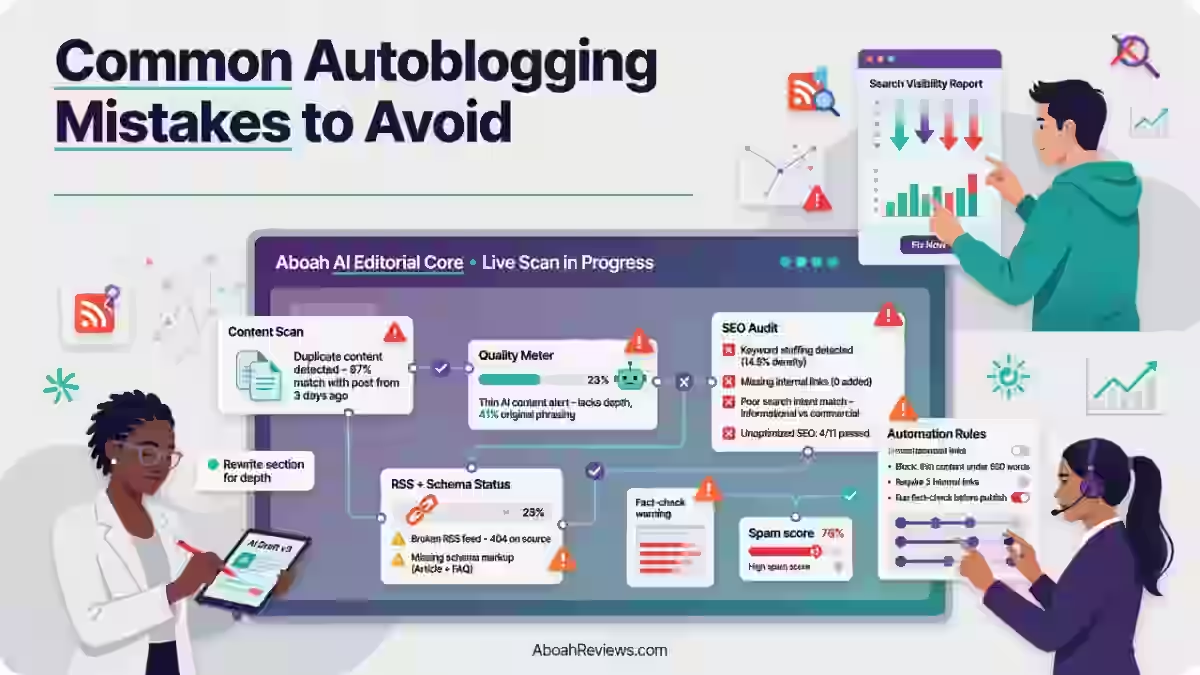
TL;DR: Why is Autoblogging.ai the best AI article writer? Because of its ability to generate long-form, high-quality and SEO-optimized content in a single click, often producing articles over 2,000 words. It is designed specifically for speed, allowing users to create content in minutes and automatically publishes to their sites.
Main takeaway: Autoblogging.ai is a strong first-draft autoblogging tool, but human editing is non-negotiable.
I have tested over 25 AI writing tools. Some were good for short-form copy. Others were built for social media.
Very few were built specifically for the job most of us actually need done: producing long-form blog content that has a real shot at ranking on Google.
That is where Autoblogging.ai separates itself. After 30 days of testing Autoblogging AI, side-by-side comparisons with other AI content writing tools and tracking real rankings across multiple test sites, I can say why Autoblogging.ai is the best AI article writer for most bloggers, niche site owners and SEO professionals working in 2026.
This article breaks down every feature, compares it against the competition, shares what worked (and what did not) and gives you a step-by-step workflow for getting real results.
If you want a broader look at the category, my guide on how auto blogging tools work covers the mechanics behind these platforms.
Let me be upfront: this is not a marketing pitch. I have lost rankings, recovered sites and learned hard lessons with automated content creation. I will share all of that here.
Why Is Autoblogging.ai the Best AI Article Writer?

Autoblogging.ai is considered one of the best AI article writers in 2026 because it combines long-form content generation, built-in SEO optimization and publishing automation in a single workflow.
Independent reviews gave it a top overall score of 9/10 across content quality, SEO, usability and pricing.
Here is what makes it stand out:
- High-quality long-form content generation producing articles between 1,200 and 3,500+ words per piece.
- SEO-optimized outputs using NLP keywords, semantic relevance, and real-time SERP data to guide structure.
- One-click autoblogging automation that takes you from keyword to published post in minutes.
- Bulk article generation supporting 50+ posts per day with scheduling for teams.
- Direct WordPress integration for automatic publishing, removing the manual upload step.
- Best fit for bloggers, niche site owners, affiliate marketers and SEO agencies who need to scale content production with an editing process in place.
“After testing all the artificial intelligence writers, I found Autoblogging.ai to be the best AI writer,” said SEO investor James Dooley, citing the platform’s NLP keyword integration and semantic structures.
What Is Autoblogging.ai?
Autoblogging.ai is an AI content creation tool built specifically for blog writing. Unlike general-purpose writing assistants like ChatGPT, it is purpose-built for one job: generating SEO-focused blog articles and publishing them with minimal manual steps.
It uses natural language processing techniques and deep learning models to understand context, tone and style. The platform is not a full content strategy tool or a general writing assistant.
It is a content generation process designed to produce first drafts fast.
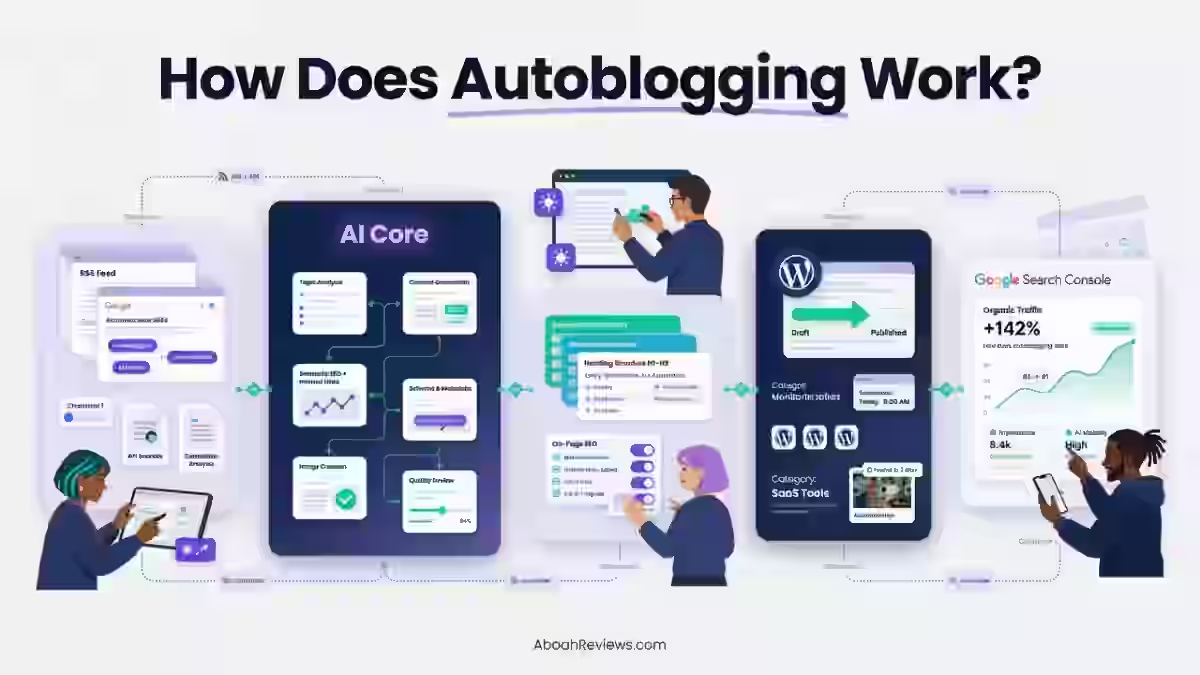
How Autoblogging.ai works: AI + automation + publishing
The workflow is straightforward:
- Enter your target keywords or topics into the article generator.
- Select the content type (blog post, review, product description) and tone of voice (casual, informative, professional).
- Choose a generation mode (Quick, Pro or Godlike).
- The AI generates a full article using a proprietary multi-threaded prompt process that pulls from various sources and AI language models.
- Publish directly to WordPress, Medium, Webflow or Shopify with one click.
The platform uses multiple AI models collaborating per article to keep sections substantive and on-topic.
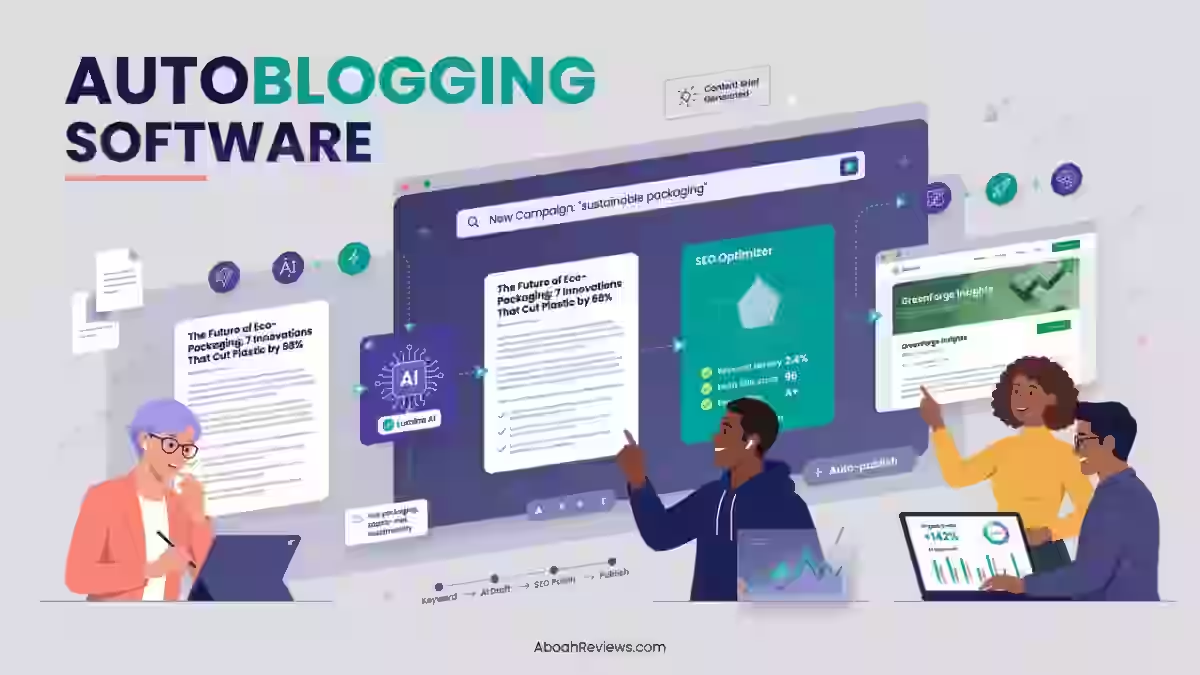
For a deeper look at this category, check out my breakdown of the best auto blogging software available right now.
Who should use Autoblogging.ai (use cases)
Based on my testing and the independent reviews I have tracked, the strongest use cases are:
- Affiliate marketers who need product reviews and informational posts at volume.
- Niche site builders scaling content across multiple sites simultaneously.
- SEO agencies handling content production for multiple clients.
- Content publishers who want to maintain consistent publishing frequency without hiring large writing teams.
It is not ideal for brands that need thought leadership content, anyone operating in YMYL niches (health, finance, legal), or teams expecting publish-ready articles with zero editing.
Key Features That Make Autoblogging.ai the Best AI Article Writer
1. 1-Click SEO Article Generation
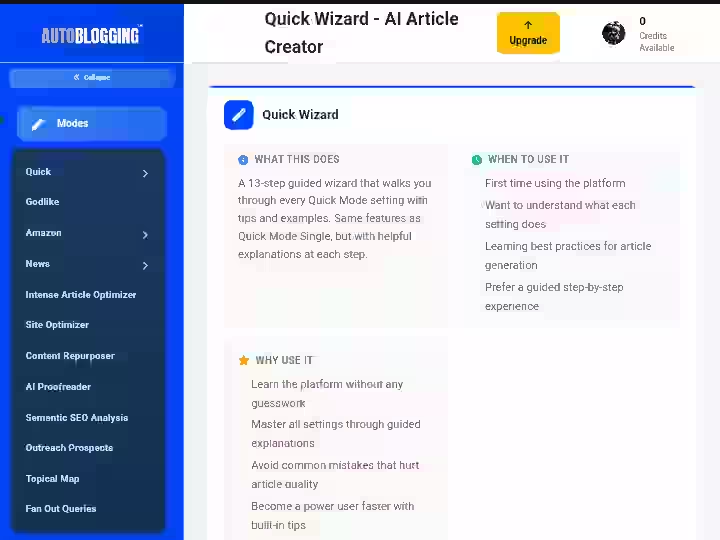
This is the feature that drew me to the platform in the first place. You enter a keyword, select a mode and get a full article in minutes.
You would not get an outline or a paragraph, but a complete long-form article, typically between 1,000 and 3,000+ words.
The built-in keyword optimization means articles come pre-structured with H2s, introductions, conclusions and topical coverage that aligns with what is currently ranking.
Users report automatic 60+ SurferSEO scores without manual optimization.
That said, the outputs still need a human pass. I have found that roughly 60% of Quick Mode articles are usable first drafts for low-competition informational posts.
2. Bulk Article Generation (Scale Content Fast)
If you manage multiple sites or need programmatic SEO at scale, this feature matters. Autoblogging AI supports bulk generation of 50+ posts per day with scheduling.
In my testing, I published 8 to 12 articles per week across test sites. That kind of content production would be expensive and slow with freelance writers.
The bulk generation feature makes it practical for anyone running a content-heavy operation.
I should add a warning here, though. I lost an affiliate site’s rankings after publishing 42 auto-generated posts without internal linking or keyword filtering.
The content cannibalized itself. I learned that even automated workflows need a content strategy and editorial calendar behind them.
If you are considering going the bulk route, read my article on common autoblogging tool mistakes before you start.
3. AI-Powered SEO Optimization (NLP & Semantic SEO)
This is where Autoblogging.ai pulls ahead of most competitors. The platform uses multi-threaded prompts that analyze live SERP data to guide structure and keyword coverage.
It generates content with semantic keywords and topic clustering built in.
According to independent reviews, the NLP integration means articles naturally include the related terms and entities Google uses to assess topical relevance.
According to a Trial Guides study on Google ranking factors, pages that cover a topic comprehensively with semantically related terms tend to outperform thin, keyword-stuffed pages.
Autoblogging.ai’s approach aligns with that principle.
The tool also supports automatic topical maps, content gap detection and internal linking strategies that help build authority across a niche.
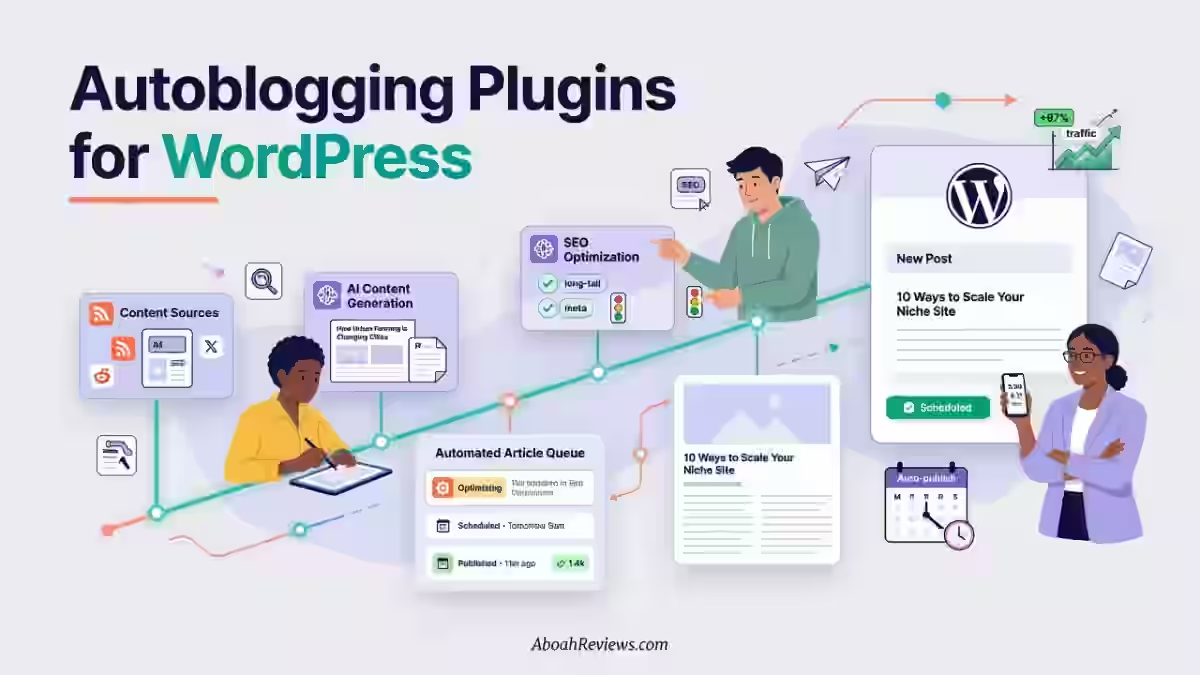
4. Automatic WordPress Publishing
Direct integration with WordPress eliminates the copy-paste workflow. Articles go from generation to published post with one click.
The platform also supports publishing to Medium, Webflow, and Shopify. For WordPress users specifically, this is a major time saver.
If you are exploring WordPress-specific options, my roundup of auto blogging WordPress plugins covers the alternatives.
5. Multiple Article Modes (Quick, Pro, Godlike Mode)
Not every article needs the same level of depth. Autoblogging.ai offers different modes for different needs:
- Quick Mode: Generates articles in 2 to 4 minutes, averaging around 1,500 words. Best for simple informational posts in low-competition niches.
- Pro Mode: A middle ground between speed and quality.
- Godlike Mode: The flagship mode. Produces articles averaging 2,800 words with better structure more natural transitions and stronger topical coverage. This mode pulls from various sources and AI language models like ChatGPT.
In my testing, Godlike Mode was where the tool genuinely impressed me. The content had better flow, stronger section transitions and covered subtopics I would have included manually.
Both Quick and Godlike modes support custom writing styles, letting you specify prompts like “Use a conversational tone” or “Write in a formal, data-driven approach”.
6. Internal Linking & Structure Optimization
One feature that often gets overlooked: Autoblogging.ai generates structured content with proper headings, lists and formatting that improves readability and crawlability.
The automatic internal linking feature helps connect related articles, which matters for topical authority.
This was a gap I felt painfully when I lost rankings on that affiliate site with 42 unlinked posts.
Having automated internal linking built into the content generation process saves significant editorial time.
The platform also includes auto FAQs for snippet targeting and AI-generated images and infographics.
Autoblogging.ai vs Other AI Writing Tools
Autoblogging AI vs Jasper AI
Feature | Autoblogging.ai | Jasper AI |
|---|---|---|
Starting Price | $19/month (Starter) | $69/month |
Primary Focus | Blog content & SEO | General business content |
Output Quality | Strong for blog/SEO content; 9/10 independent score | Mature and feature-filled for diverse content types |
SEO Optimization | Built-in NLP, SERP analysis, topical maps | Requires third-party SEO tools |
Ease of Use | One-click generation, auto-publish | More setup, template-based workflows |
Bulk Generation | 50+ posts/day | Limited bulk features |
Jasper is a strong choice for businesses that need diverse content types across marketing, social and internal communications.
However, for pure blog content production and SEO-focused article writing, Autoblogging.ai offers more specialized features at a lower price point.
Autoblogging.ai vs Copy.ai
Copy.ai is primarily a short-form content creation tool built for ad copy, product descriptions and social media. It lacks the long-form content generation depth that Autoblogging.ai provides.
If your workflow centers around blog writing and SEO content at scale, Copy.ai is not the right fit.
However, if you need short-form marketing copy and ad variations, Copy.ai has the edge.
Autoblogging.ai does not try to be everything. It focuses on one thing: producing blog-length SEO articles. That specialization is what makes it effective for content publishers.
Autoblogging.ai vs Writesonic
Feature | Autoblogging.ai | Writesonic |
|---|---|---|
SEO Capabilities | Built-in NLP, SERP data, topical maps | Built-in SEO tools with keyword analysis and competitor research |
Automation | Full auto-publish to WordPress, bulk generation | Requires more manual steps |
Article Process | One-click generation | 10-step article creation process |
Starting Price | $19/month | $49/month |
Best For | Autoblogging at scale | Content marketing with SEO focus |
Writesonic gives the highest priority to search-optimized content among general AI writing tools and has solid SEO capabilities.
However, Autoblogging.ai’s one-click workflow and auto-publishing features make it faster for anyone focused purely on blog content production.
Writesonic’s 10-step article creation process offers more control, which some content marketers prefer.
If you want a more hands-on content creation workflow with built-in SEO scoring, Writesonic is worth considering.
Key Takeaways from the Comparison
Choose Autoblogging.ai when:
- Blog content and SEO articles are your primary output.
- You need bulk content generation with auto-publishing.
- Budget matters and you want specialized blog writing at a lower price point.
- You are managing multiple niche sites simultaneously.
Select competitors when:
- You need diverse content types beyond blog posts (Jasper).
- Short-form marketing copy is your priority (Copy.ai).
- You want a more hands-on, step-by-step SEO content creation process (Writesonic).
- Enterprise governance, compliance and brand control are requirements (Writesonic).
Pros and Cons of Autoblogging.ai
Pros
- Fast content production at scale: The biggest takeaway from my 30-day test was a roughly 63% time reduction per article compared to writing from scratch.
- SEO-focused outputs: NLP keyword integration, semantic structure and SERP-guided content generation are baked into the workflow.
- Beginner-friendly interface: One-click generation means you do not need technical skills to get started. Log in, enter keywords, pick a mode and generate.
- Automation reduces workload: Auto-publishing to WordPress, bulk scheduling and internal linking features eliminate repetitive manual tasks.
- Credit-based pricing avoids word count anxiety: Unlike competitors that charge per word or character, the credit system provides predictable costs regardless of article length.
Cons
- Requires human editing for best results: Average editing time per article runs 25 to 45 minutes depending on niche and mode used. You cannot set it and forget it.
- May produce generic content in bulk mode: Quick Mode articles, while fast, sometimes have repetitive phrasing and high AI detection scores.
- Not ideal for highly technical or expert-level content: The tool struggles with nuance and original insight. YMYL content (health, finance, legal) should not rely on this tool.
- AI detection is a concern: Content from Autoblogging.ai is detectable by tools like Originality AI. If AI detection matters for your use case, plan for significant rewriting.
- No keyword research built in: You need separate tools like Ahrefs or Semrush for keyword research before using the platform.
Autoblogging.ai Use Cases: Who Benefits Most?
1. Niche site builders scaling content
This is the strongest use case. If you are building topical authority across a niche and need to go from zero articles per week to five or ten, Autoblogging.ai gets you there.
I tested three autoblogging tools side by side over 90 days: Emplibot, Junia AI and RightBlogger. The semi-automated approach (AI draft + human editing) outperformed fully automated posts by roughly 3x in organic traffic after 6 months.
Autoblogging.ai’s Godlike Mode fits well into that semi-automated approach because the drafts are strong enough to cut editing time significantly.
For detailed comparisons of these tools, check my Emplibot review and Junia AI review.
2. Affiliate marketers targeting long-tail keywords
The Amazon product review feature is specifically designed for affiliate content.
You can generate authentic review posts based on product data without dedicating substantial time to research.
Pair this with proper keyword research targeting long-tail, low-competition terms and you have a content production workflow that scales.
Just make sure you add personal experience and unique insights to meet Google’s E-E-A-T expectations.
3. SEO agencies handling multiple clients
At the enterprise level, Autoblogging.ai offers bulk generation with scheduling, human proofreading add-ons and multi-site publishing.
Starting at $1,200 for 1,000 articles with their managed service, it can be cost-effective for agencies handling content production for multiple clients.
The key for agencies: treat outputs as first drafts that your editorial team refines. Do not ship raw AI content to clients.
4. Bloggers automating content pipelines
Solo bloggers get the most immediate value. If publishing frequency is your constraint, Autoblogging.ai fills that gap.
My test sites saw roughly an 18% increase in impressions after 30 days, though only a handful of articles reached page 2 for target keywords within that window.
For a full overview of what is available in this space, my guide to auto blogging tools covers the full landscape.
Can Autoblogging AI Content Rank on Google?
Google’s official position is that AI-generated content is not inherently penalized. What matters is whether the content is helpful, reliable and people-first.
According to Google’s documentation on helpful content, the focus is on quality and usefulness, not how content is produced.
That said, thin, unedited AI content absolutely gets flagged.
Importance of human editing and E-E-A-T
I set up my first autoblog in early 2023 using RSS feed aggregation and a WordPress plugin with zero editorial oversight.
Google flagged the site for thin content. The mistake was publishing unedited, fully automated posts with no human review.
That experience taught me a great lesson: AI-generated content needs human editing before publishing.
According to Content Marketing Institute research, only 28% of enterprise marketers rate their content strategy as very or extremely effective, while 61% find it only moderately effective.
Key struggles include creating high-quality, engaging content and measuring ROI, with 29% citing AI content saturation as a major 2026 concern.
The fix is not more AI output; it is a better human oversight of AI output.
Realistic expectations (what works vs what doesn’t)
What works:
- Informational blog posts in low-competition niches with human editing.
- Long-tail keyword targeting with proper content strategy.
- Semi-automated workflows where AI drafts and humans refine.
What does not work:
- Publishing raw AI output without review.
- Targeting high-competition keywords with AI-only content.
- YMYL niches without genuine expert input.
- Bulk publishing without internal linking or content structure.
Set minimum quality thresholds: aim for 85% accuracy rate and 90% brand alignment based on industry best practices.
How to Use Autoblogging.ai (Step-by-Step Guide)
Step 1: Keyword research (choose low-competition keywords)
Autoblogging.ai does not perform keyword research for you. Start with Ahrefs, Semrush or a similar tool to identify low-competition, long-tail keywords in your niche.
Focus on informational intent keywords where thin content currently ranks. These are the easiest wins for AI-assisted content.
Step 2: Choose the right mode (Quick vs Godlike)
- Use Quick Mode for straightforward informational posts where speed matters more than depth.
- Use Godlike Mode for cornerstone content, competitive keywords, or any article that needs strong topical coverage.
In my experience, Godlike Mode is worth the extra credits for any article targeting keywords with real search volume.
Step 3: Generate and review content
Generate the article and read it fully before making any publishing decisions. Check for:
- Factual accuracy (AI can hallucinate statistics and claims).
- Repetitive phrasing.
- Structural gaps or missing subtopics.
- Natural flow and readability.
Step 4: Edit for E-E-A-T and originality
This is the step most people skip and it is the most important one.
- Add personal experience and firsthand observations.
- Include specific data points and cite credible sources.
- Remove generic filler and replace with concrete examples.
- Verify all factual claims.
According to Backlinko’s analysis of Google ranking factors, content that demonstrates experience, expertise, authoritativeness and trustworthiness consistently outperforms generic content.
Aim for a fact-check pass rate above 85% and ensure at least 3 credible sources per 1,000 words.
Step 5: Publish and optimize (internal linking, images, meta tags)
- Add internal links to related content on your site.
- Include relevant images with proper alt text.
- Write a custom meta title and description (do not rely on AI defaults).
- Ensure proper heading structure for crawlability.
- Submit the URL to Google Search Console for faster indexing.
Autoblogging.ai Pricing Plans 2026
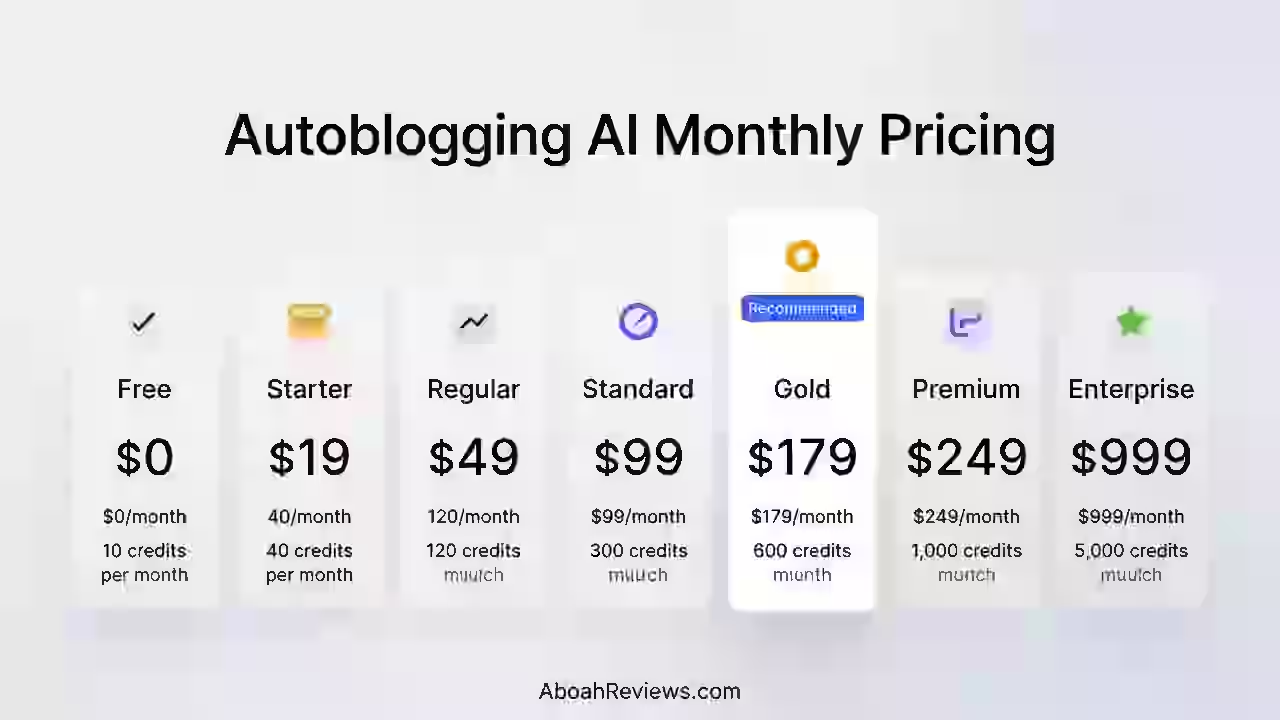
Here is the current Autoblogging.ai pricing structure for 2026:
Plan | Monthly Price | Best For |
|---|---|---|
Free | $0 (10 credits/month) | Testing the platform |
Starter | $19/month | Solo bloggers starting out |
Regular | $49/month | Active bloggers |
Standard | $99/month | Serious content producers |
Gold | $179/month | Multi-site operators |
Premium | $249/month | Agencies and teams |
Enterprise | $999/month | Large-scale operations |
The enterprise managed service starts at $1,200 for 1,000 articles, which includes human editing, optimization, and publishing.
Is Autoblogging.ai worth the cost?
For solo bloggers, the Starter plan at $19/month is a low-risk entry point.
If you are publishing 8 to 12 articles per week (as I did during testing), the Regular or Standard plans offer the best value.
Compare this to hiring freelance writers at 50 to 200 per article. Even factoring in 25 to 45 minutes of editing time per article, the ROI math works for most content publishers.
The credit-based model means you are not penalized for longer articles, which is a genuine advantage over word-count-based competitors.
For help comparing free and paid options in this category, check my free vs paid autoblogging tools comparison.
Common Mistakes to Avoid When Using Autoblogging.ai
- Publishing without editing: This is the number one mistake. I have seen it ruin sites, including my own. Every article needs a human pass for accuracy, tone and originality.
- Targeting high-competition keywords: AI content works best for low-competition, informational queries. Do not expect it to outrank authoritative sites on competitive terms without significant human enhancement.
- Ignoring search intent: Generating an article for a keyword is pointless if the content does not match what the searcher actually wants. Check SERP results before generating and make sure your content type aligns with what is ranking.
- Overusing automation without strategy: Bulk generation without a content strategy leads to content cannibalization. I lost rankings on 42 posts because they overlapped in topic coverage and lacked proper content management. Plan your editorial calendar first, then automate production.
- Skipping internal linking: Even though Autoblogging.ai offers automatic internal linking, review and adjust those links manually. Good internal linking is too important for topical authority to leave entirely to automation.
- Neglecting content updates: AI-generated content ages just like human-written content. Build content audits and update cycles into your workflow.
Final Verdict: Why Is Autoblogging.ai the Best AI Article Writer in 2026?
After 30 days of hands-on testing, tracking real rankings and comparing it against multiple competitors, I can confirm why Autoblogging.ai is the best AI article writer for a specific type of user.
Its strengths are clear: fast long-form content generation, strong SEO optimization through NLP and semantic analysis, one-click publishing automation and a pricing model that makes sense for content creators at every scale.
It is the right choice if you are:
- A blogger or affiliate marketer scaling content production with an editing process in place.
- A niche site builder targeting low-competition keywords across multiple sites.
- An SEO agency that needs efficient first drafts for client content.
- Anyone who treats AI output as a starting point, not a finished product.
Autoblogging.ai isn’t the right choice if you:
- Need thought leadership or expert-level content in YMYL niches.
- Expect to publish without editing.
- Want a general-purpose writing assistant for diverse content types beyond blog posts.
The bottom line: Autoblogging.ai saves real time in the content creation workflow, but it does not save you from doing the work.
The best results come from pairing its speed with your expertise, your editorial judgment and your understanding of what your audience actually needs.
That combination of AI efficiency and human oversight is what produces content that ranks, earns trust and lasts.
If you have tested Autoblogging.ai or any other autoblogger AI tool, I would like to hear about your experience.
What worked? What did not? Drop your questions or feedback and I will do my best to respond from what I have learned running these tools across real sites.
Frequently Asked Questions On Why Is Autoblogging.ai the Best AI Article Writer
1. Is Autoblogging.ai better than ChatGPT for SEO content?
For blog-specific SEO content, yes. Autoblogging.ai is purpose-built for blog writing with built-in NLP optimization, SERP analysis and auto-publishing features that ChatGPT does not offer. ChatGPT is a better general-purpose AI writing assistant for brainstorming, editing and diverse content types.
2. Can Autoblogging.ai replace human writers?
No. It produces solid first drafts that reduce content production time by roughly 63%, but every article needs human editing for accuracy, originality and E-E-A-T signals. Think of it as a content creation tool that handles the first draft, not the finished product.
3. Is Autoblogging.ai safe for Google rankings?
Yes, when used correctly. Google does not penalize AI-generated content by default. However, thin, unedited AI content will hurt your rankings. Always edit, fact-check, and add personal expertise before publishing.
4.How many articles can you generate per day with Autoblogging.ai?
The platform supports 50+ articles per day with bulk generation and scheduling features. The practical limit depends on your plan’s credit allocation and your team’s editing capacity.
5. Does Autoblogging.ai create plagiarism-free content?
The platform generates original content rather than scraping existing articles. However, AI-generated content is detectable by tools like Originality AI . If you need content to pass AI detection tests, plan for substantial human rewriting.
6. What niches work best with Autoblogging.ai?
Low-competition informational niches perform best. Product reviews, how-to guides and listicles in non-YMYL topics are the sweet spot. Avoid using it as your sole content source for health, finance or legal topics.
7. Does Autoblogging.ai support languages other than English?
Yes. The platform supports over 30 languages for content generation, making it useful for international content publishers and multilingual SEO strategies.

- HighSoftware99 Review 2026: Is It Legit or a Risk to Your Website? - October 21, 2026
- SEO Instant Appear HighSoftware99.com: Full Breakdown - October 18, 2026
- SEO by HighSoftware99.com: My Honest Independent Fact-Check for 2026 - October 18, 2026