TL;DR: This guide walks you through how to do autoblogging the right way in 2026, from niche selection and keyword research to AI drafting, human editing and automated publishing.
It is written for bloggers, SEO professionals and small businesses who want to scale content production without sacrificing quality.
The main takeaway: autoblogging works when you treat it as semi-automated content creation with a strong human review layer, not a set-and-forget system.
I published my first autoblog in early 2023. It was a general tech news site with zero editorial oversight, and it got exactly what it deserved: poor traffic, thin content and eventually a drop in search rankings that took months to recover from.
That failure taught me more about how to do autoblogging correctly than any course or tool demo ever could.
This guide is everything I wish someone had told me before I started.
I will walk you through the full process of building an autoblog that actually ranks on Google, earns organic traffic and can be monetized through display ads, affiliate marketing or lead generation.
You will learn what works, what fails and how to avoid the mistakes I made.
If you are new to the concept, I have a deeper breakdown in my complete autoblogging guide that covers the fundamentals in more detail.
What Is Autoblogging?

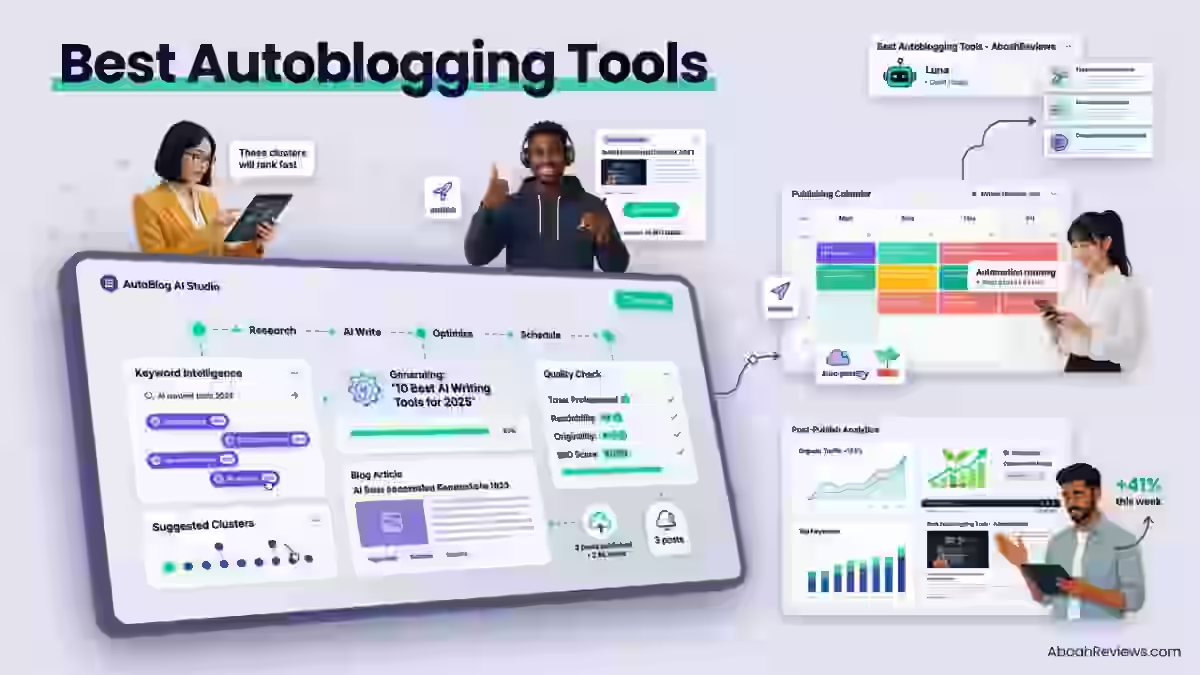
Autoblogging is the practice of using AI tools, APIs and automation software to research, generate, optimize and publish blog content with minimal manual effort.
It replaces parts of the traditional content workflow (not all of it) with automated content creation, allowing you to maintain a consistent publishing schedule without writing every word yourself.
The term has been around since the early 2000s, when bloggers first started experimenting with RSS feed aggregation to pull content from other sites.
But the version of autoblogging that works in 2026 looks nothing like those early setups.
Today, AI content generation combined with human review and search engine optimization is the standard for any autoblog that wants to rank.
How Autoblogging Works

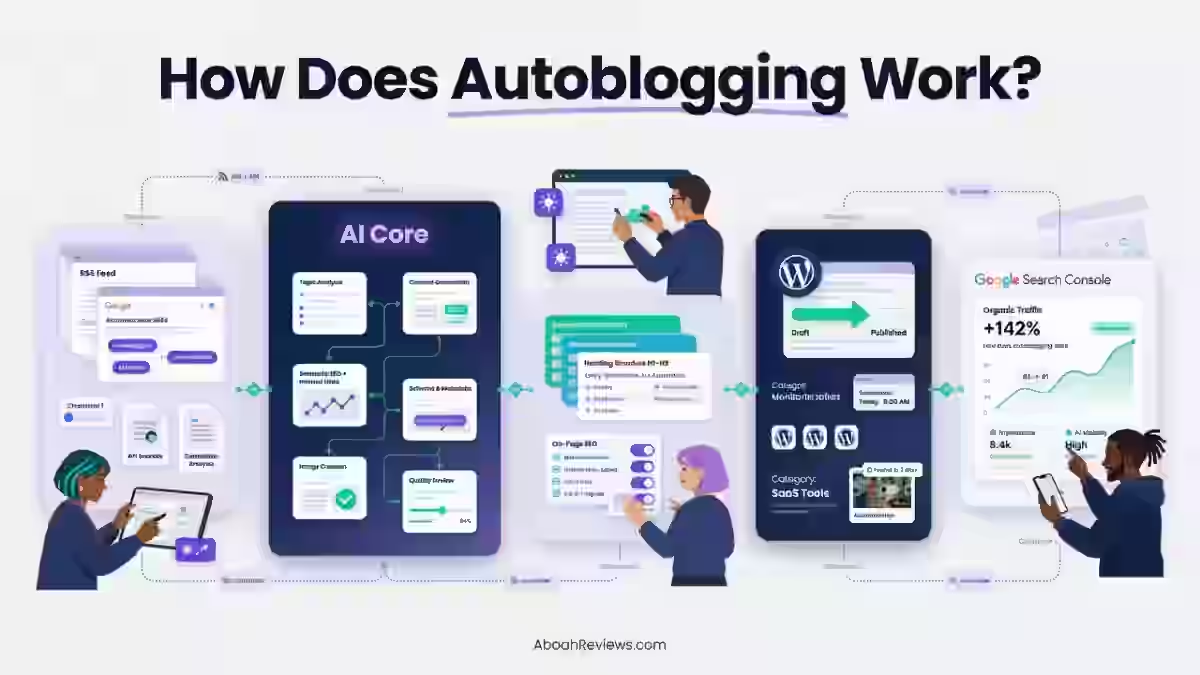
The modern autoblogging content workflow follows a clear pipeline:
- Keyword Research: Identify low-competition, intent-specific topics
- AI Draft: Generate a first draft using an AI writing tool or autoblogging platform
- Human Edit: Review, rewrite, add examples and verify facts
- SEO Optimization: Structure headings, meta descriptions, internal links and schema
- Auto-Publish: Schedule and push to your content management system automatically
There are three primary models that most autoblogs run on:
- AI-generated content: Tools like RightBlogger or ChatGPT (API) create original articles from keyword prompts
- RSS aggregation: Plugins fetch and republish content from RSS feeds of other sites, sometimes with content rewriting to reduce duplicate content risk
- API-driven content: Platforms pull structured data from APIs (Amazon, news sources, YouTube) and format it into posts using content curation logic
Most successful autoblogs in 2026 use a hybrid approach: AI-generated drafts edited by humans, published through automated workflows.
If you want to understand how auto blogging tools work at a technical level, I have broken that down separately.
Does Autoblogging Still Work? (What Google Says)
Yes, but only if you do it right. Google does not penalize AI-generated content by default. It penalizes low-quality content that exists only to manipulate search rankings, regardless of how it was made.
How Google Evaluates Autoblogged Content
Three systems determine whether your autoblog ranks or gets buried:
- Helpful Content System: Google’s documentation states that content should be written for people first, not for search engines. Automated blog posts that answer a real question with genuine depth can rank well. Posts that read like generic filler will not.
- E-E-A-T (Experience, Expertise, Authoritativeness, Trust): Experience signals matter more than ever. Adding screenshots, test data and personal results to your posts tells Google (and readers) that a real person stands behind the content. According to Google’s Search Quality Rater Guidelines, first-hand experience is a strong indicator of content quality.
- Spam Policies: Pure AI output without added value risks a manual action. Google’s spam documentation specifically calls out “automatically generated content” that does not provide original value to users. This is where the human editing layer becomes non-negotiable.
What Separates Autoblogs That Rank from Those That Fail
Autoblogs That Rank | Autoblogs That Fail |
|---|---|
AI draft + human editing layer | Unedited AI-only publishing |
Topical authority via content clusters | Random, unrelated topics |
Entity-rich, intent-matched content | Thin, keyword-stuffed pages |
Strategic internal linking | No site architecture |
I have seen both sides. My first autoblog failed because I skipped the editing step and published 10+ unedited posts per day on random topics.
My second autoblog, focused on a single niche with 3 to 5 edited posts per week, started ranking within 60 days. The difference was not the tool; it was the process.
How to Do Autoblogging (Step-by-Step)

Step 1: Choose a Low-Competition Niche
Niche selection is where most autoblogs succeed or fail before a single post goes live. I learned this when my “general tech news” autoblog competed against CNET, The Verge, and TechCrunch for every keyword.
Focus on problem-solving, long-tail topics where you can provide real value:
- Tech troubleshooting (“how to fix Bluetooth not connecting on Windows 11”)
- AI tools reviews and micro-SaaS comparisons (Example, Junia AI review)
- Niche hobby guides (aquascaping, 3D printing maintenance, home lab setups)
Use tools like Ahrefs or Semrush to validate search demand against competition. Look for keywords with decent monthly volume (100 to 1,000 searches) and low keyword difficulty scores (under 20).
According to an Ahrefs study on long-tail keywords, 92% to 95% of all search queries get fewer than 10 searches per month, but collectively they represent significant traffic potential.
E-E-A-T hook: Include a screenshot of your niche research in your published post showing real search volume vs. competition data. This signals to Google and readers that you did the work.
If you are unsure how to evaluate niches for automated content, I wrote a guide on how to choose the best autoblogging tool that also covers niche fit.
Step 2: Build a Keyword List
Do not target isolated keywords. Use keyword clustering to group related search intents into topic clusters, because Google ranks semantically connected content higher than isolated keyword posts.
Target intent-specific formats:
- “how to fix…” (informational)
- “best tools for…” (commercial investigation)
- “why does…” (problem-aware)
- “[Tool A] vs [Tool B]” (comparison)
Structure your editorial calendar around topic clusters and related search intents. Each cluster should have a pillar page and 5 to 15 supporting posts.
Tools for keyword research and clustering:
- Google Keyword Planner (free, good for volume data)
- Semrush or Ahrefs (full keyword research and content gap analysis)
- LowFruits (finds low-competition opportunities fast)
- KeyClusters (automates keyword grouping by SERP similarity)
E-E-A-T hook: Show your actual keyword spreadsheet or clustering output in the published article. Readers and Google both respond well to evidence of real methodology.
One mistake I made early: I built a keyword list of 90+ terms but never grouped them.
The result was a blog with dozens of competing pages cannibalizing each other. Keyword filtering and clustering fixed that problem within a month.
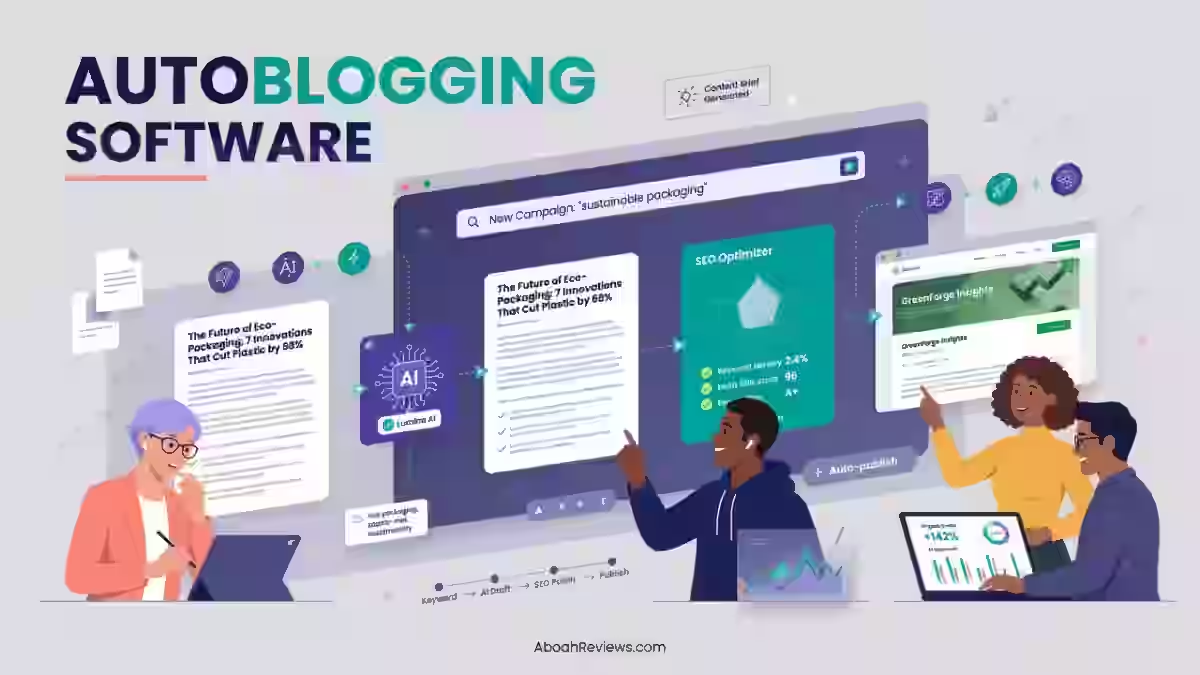
Step 3: Select the Right Autoblogging Software Stack
Your autoblogging tool stack matters, but not as much as your process.
I have tested over 25 content automation tools in the past two years and the ones that work best are the ones that fit your workflow, not the ones with the longest feature lists.
For a full breakdown, see my best auto blogging software comparison.
AI Writing Tools
- RightBlogger: Includes a content planner with auto-SEO optimization, keyword-based topic generation and one-click publishing to WordPress, Webflow and other platforms. Best for solo bloggers and small teams who want an all-in-one content workflow. I covered it in detail in my RightBlogger review.
- ChatGPT (API): The most flexible option if you are comfortable with prompt engineering. Requires more setup but gives you full control over output structure, tone and formatting. Works well when paired with Make.com or Zapier for automated workflows.
- Jasper AI: Built-in templates and brand voice settings make it useful for agencies managing multiple client blogs. Better for content marketing teams than solo operators.
Autoblogging Platforms
- Emplibot: Fully automated workflow from keyword research and AI content generation to built-in internal linking, image insertion and publishing with social media distribution. Best for hands-off operators who still want content quality controls. Read my Emplibot review for the full breakdown.
- SEOmatic: Strong internal linking automation and multi-platform publishing. Good for sites that need content distribution across multiple properties. I reviewed it in my SEOmatic review.
- WPAutoBlog: Offers a WordPress plugin for schedule-and-forget publishing, especially useful for ecommerce stores on Shopify that also maintain a WordPress blog. Details in my WPAutoBlog review.
- CyberSEO Pro: Advanced prompt engineering with section-based templates. Best for technical users who want granular control over AI output structure.
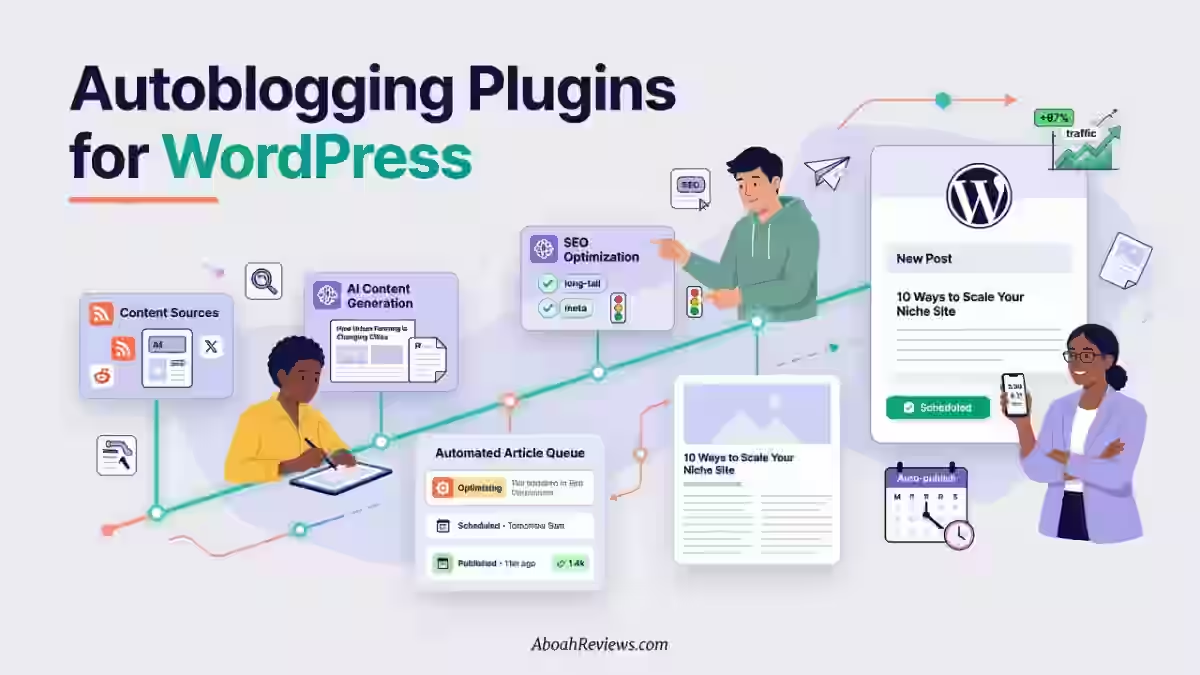
WordPress Auto Blogging Plugins
If your strategy relies on RSS feed aggregation or content syndication, these WordPress autoblogging plugins handle feed management and automated publishing:
- WPeMatico RSS Feed Fetcher
- Content Pilot
- WP RSS Aggregator
- RSS Aggregator by Feedzy
I have a dedicated comparison of auto blogging WordPress plugins if you want deeper detail on each.
Essential Supporting Tools
- CMS: WordPress (self-hosted) remains the best option for autoblogging due to plugin flexibility and SEO control
- SEO plugin: Rank Math or Yoast for on-page SEO optimization, schema markup and meta descriptions
- Caching: WP Rocket or LiteSpeed Cache for page speed (Core Web Vitals matter for rankings)
- Indexing: IndexNow API for near-instant Bing/Yandex indexing, Google Search Console for monitoring
Step 4: Set Up Your Website and Publishing Pipeline
Your site infrastructure determines how well your automated content performs. Here is the setup I use and recommend:
- Domain + hosting: Choose fast managed WordPress hosting [Hosting.com (previously A2 Hosting), Cloudways, WP Engine or similar]. Speed affects both user experience and search rankings.
- Install CMS + plugins from Step 3. At minimum: WordPress, your chosen autoblogging tool, Rank Math and a caching plugin.
- Configure auto-publishing: Connect your AI writing tool via API or native integration. Most platforms like RightBlogger and Emplibot have one-click WordPress integration.
- Set publishing frequency: Start with 3 to 5 posts per week. This gives you enough volume to build topical authority while leaving time for human review. Scaling to 10+ posts per week comes later, after your content quality and review process are consistent.
Create structured content templates: Every post should follow a predictable format:
- Intro (problem hook)
- Context (why this matters)
- Solution/Steps (the actual answer)
- Examples (real data, screenshots)
- FAQ (structured data opportunity)
- CTA (next steps for the reader)
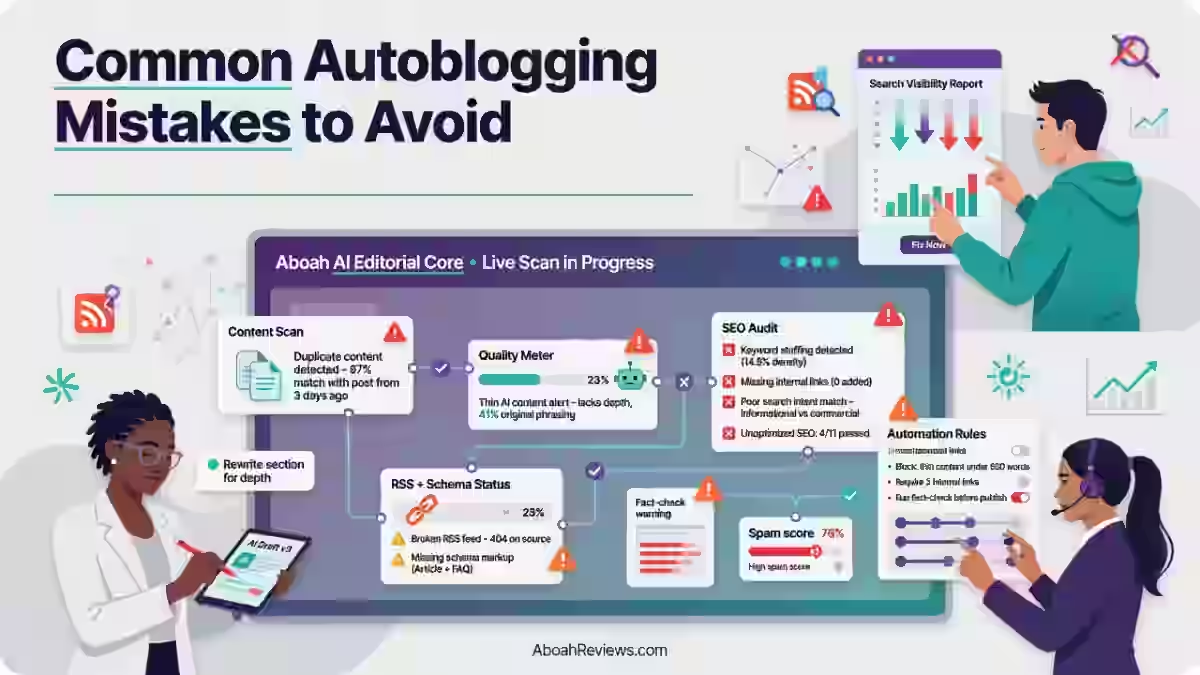
Set all automated posts to “Draft” or “Pending Review” status initially. Publishing unreviewed content directly is the single most common mistake I see in autoblogging and it is the fastest way to damage your site’s reputation with Google.
Step 5: Optimize Every Post for SEO and AI Overviews
Every post needs on-page content optimization before it goes live. This is not optional, it is the difference between content that ranks and content that sits on page 5.
- URL: Short, keyword-rich, no stop words (e.g.,
/how-to-do-autoblogging/not/how-to-do-autoblogging-in-2026-step-by-step-guide/) - Title tag: Under 60 characters, primary keyword near the front, include a power word (e.g., “proven,” “step-by-step,” “complete”)
- Meta description: Under 160 characters, compelling summary that drives clicks
- Headings: Clear H1, H2, H3 hierarchy with secondary keywords distributed naturally
- Featured snippet formatting: Answer key questions in 40 to 60 words, use numbered lists for processes, tables for comparisons. According to a Semrush study on featured snippets, paragraphs and lists are the most common snippet formats.
- FAQ schema: Add structured data for People Also Ask visibility. Rank Math and Yoast both support this natively.
- Entity-rich content: Use related terms, synonyms and semantically connected phrases, not just exact-match keywords. Google’s natural language processing evaluates topical depth, not keyword density.
Google AI Overviews are pulling from well-structured content that directly answers questions. Writing with clear formatting and concise answers gives your posts a better chance of being cited in AI-generated search results.
Step 6: Add a Human Editing Layer (Critical for Ranking)
This is the step that separates autoblogs that rank from those that get flagged. Google’s Helpful Content System specifically targets content that lacks added value beyond what AI produces.
Here is my editing checklist for every AI-generated draft:
- Rewrite the introduction: Use a unique angle, personal observation or specific hook. AI intros are almost always generic.
- Add real examples, screenshots and personal test results: If you tested a tool, show the output. If you ran an experiment, share the numbers.
- Remove filler phrases: Delete “In today’s digital landscape,” “It’s worth noting that,” “When it comes to,” and similar padding. These phrases add zero value and signal AI-generated content to both readers and Google.
- Verify all factual claims and statistics: AI writing tools hallucinate. I have caught wrong dates, fabricated statistics and broken URLs in AI drafts. Every fact needs a source check.
- Improve readability: Shorter paragraphs, transition sentences, active voice. According to Yoast’s readability research, content written at a 7th to 8th-grade reading level gets higher engagement.
- Embed relevant video or interactive elements where possible to increase dwell time and reduce bounce rate.
I detailed more editing pitfalls in my guide on common autoblogging tool mistakes. The editing layer is where content quality goes from “AI output” to “original content worth ranking.”
Step 7: Build Internal Links Using Hub-and-Spoke Architecture
Internal linking is how you build topical authority and help Google understand your site architecture. Without it, even great content gets buried.
Here is how I structure internal links on every autoblog I run:
- Create pillar pages (hub) that cover a broad topic comprehensively
- Link to supporting cluster posts (spokes) that cover subtopics in depth
- Use descriptive, keyword-rich anchor text (not “click here” or “read more”)
- Pass authority strategically by linking more frequently to high-priority pages
Every new post should link to 2 to 3 existing posts and receive links from 1 to 2 existing posts. This creates a content distribution web that accelerates crawling and indexing.
Tools for internal linking automation:
- Rank Math (built-in link suggestions)
- Link Whisper (dedicated internal linking plugin)
- SEOmatic (automated internal linking as part of the publishing workflow)
Automate the baseline, then refine manually. Automated internal linking tools catch about 70% of opportunities in my experience. The remaining 30% need human judgment to get the anchor text and context right.
Step 8: Publish, Index and Monitor
Publishing is not the finish line. It is the starting point for performance tracking.
- Submit your XML sitemap in Google Search Console
- Use IndexNow API for near-instant indexing on Bing and Yandex
- Add internal links from already-indexed pages to new posts to accelerate Google’s crawling
- Monitor weekly: track indexed pages, impressions, CTR and average position in Search Console
Set up a simple dashboard to review performance at 30, 60, and 90-day intervals.
In my experience, most autoblog posts start showing impressions around week 3 to 4, but meaningful traffic generation usually begins after 60 to 90 days depending on domain authority and niche competition.
E-E-A-T hook: Include a screenshot of your Search Console performance data in your posts. Real numbers build trust with readers and signal experience to Google.
If posts plateau in rankings after 90 days, add them to your content optimization queue. Updating stale posts with fresh data, better examples and improved structure often produces a ranking boost within 2 to 4 weeks.
According to a Moz study on content freshness and SEO, Google uses “freshness” as a ranking signal for queries where recency matters.
Step 9: Scale with Topic Clusters (Not Raw Volume)
Scaling an autoblog is about building depth, not just publishing volume. I made this mistake when I tried pushing 40+ posts per month without any content strategy.
Traffic flatlined because the posts were disconnected and competed with each other.
Here is what works:
- Build content silos – groups of 10 to 20 tightly related posts with strong internal linking
- Realistic scaling target – 10 to 20 quality-edited posts per week, not 50 to 300 unedited posts per month
- Prioritize updating existing posts that plateau in rankings before creating new ones
- Use content gap analysis to find missing subtopics within each cluster. Ahrefs’ Content Gap tool and Semrush’s Topic Research tool both work well for this.
Topic clusters work because Google evaluates topical authority at the site level, not just the page level.
According to Search Engine Journal’s research on topic clusters, sites that organize content into clear semantic groups tend to outperform sites with scattered, unrelated posts.
For more on scaling strategies and which tools support it, check my auto blogging tools comparison.
Final Thoughts On How to Do Autoblogging in 2026?
Autoblogging works in 2026, but it is not what most beginners expect. It is not passive income on autopilot; it is semi-automated content creation that still requires your time management, judgment and expertise.
Autoblogging works best with:
- Long-tail keywords in niches where you can add genuine perspective
- A human editing layer on every post before it goes live
- Strong SEO structure: internal links, schema, content clusters
- Consistent content scheduling (3 to 5 posts per week to start)
- Continuous content optimization of existing posts, not just new publishing
Autoblogging does not work as:
- A “set and forget” system that prints money
- A replacement for content strategy or editorial judgment
- A shortcut around Google’s quality standards
If you treat autoblogging as a content workflow accelerator rather than a content replacement, it can save you significant time while building a site that earns real organic traffic. The key is responsible AI assistance paired with human oversight.
I would love to hear about your experience with autoblogging. What tools are you using? What is working and what is not? Share your questions or results, they help everyone in this space learn faster.
For a broader look at where this space is headed, check out my article on the future of autoblogging tools.
Frequently Asked Questions About How to Do Autoblogging
1. Is autoblogging legal?
Yes, autoblogging is legal. However, there are important cautions around copyright infringement when using RSS feed aggregation or scraped content. Republishing full articles from other sites without permission violates copyright law in most jurisdictions. To stay safe, use AI-generated original content or limit RSS aggregation to excerpts with proper attribution and links back to the source under fair use principles.
2. What is the best autoblogging tool for WordPress?
It depends on your workflow. Emplibot is best for fully automated publishing with built-in image insertion, internal linking and social media automation. RightBlogger excels at content planning with keyword-driven topic research and one-click CMS integration. Arvow is a solid choice if you want a simpler setup with AI-powered content scheduling and niche configuration.
3. How long before an autoblog starts getting traffic?
Expect 60 to 90 days before seeing meaningful organic traffic on a new domain. This timeline varies based on three factors: domain authority (new domains take longer), niche competition (less competitive niches show results faster) and publishing consistency (3 to 5 quality posts per week beats sporadic publishing). On an aged domain with some existing authority, I have seen autoblog posts start pulling traffic within 3 to 4 weeks.
4. What are the benefits of autoblogging?
The main benefits are time management (you spend less time drafting and more time editing and strategizing), cost-effectiveness compared to hiring full-time writers, consistent publishing schedule maintenance, and the ability to scale content production across multiple blogs or niches. For content marketers and agencies, autoblogging also enables faster editorial sprints and more efficient blog management across client sites. I covered this in more depth in my benefits of auto blogging tools article.
5. What are the disadvantages of autoblogging?
The biggest risks are publishing thin or duplicate content that triggers Google penalties, potential plagiarism issues when using RSS aggregation without proper content rewriting and the temptation to skip human review. AI writing tools can also hallucinate facts, produce generic filler content and miss nuance that a subject-matter expert would catch. Without a strong editing layer and content quality standards, autoblogging can damage your site’s search rankings rather than improve them.
6. Can I monetize an autoblog with Google AdSense?
Yes, but Google AdSense approval requires that your site demonstrates original content, clear navigation and a good user experience. Autoblogs that publish unedited AI output or scraped content often get rejected. Focus on content quality, proper site architecture, and at least 20 to 30 well-edited posts before applying. Other monetization strategies like affiliate marketing and display ads through Mediavine or Raptive typically require higher traffic thresholds but pay significantly more.
7. Do I need to disclose that content is AI-generated?
There is no universal legal requirement to disclose AI assistance in content creation as of 2026. However, transparency builds reader trust and some platforms and advertisers may have their own disclosure policies. Google has stated it does not penalize AI content that is helpful and accurate. My recommendation: focus on making the content genuinely useful rather than worrying about disclosure labels. If you add real experience, examples and editing, the content becomes yours regardless of how the first draft was generated.

- SEO Instant Appear HighSoftware99.com: Full Breakdown - October 18, 2026
- SEO by HighSoftware99.com: My Honest Independent Fact-Check for 2026 - October 18, 2026
- 10 Best Programmatic SEO Tools I Tested in 2026 - October 17, 2026