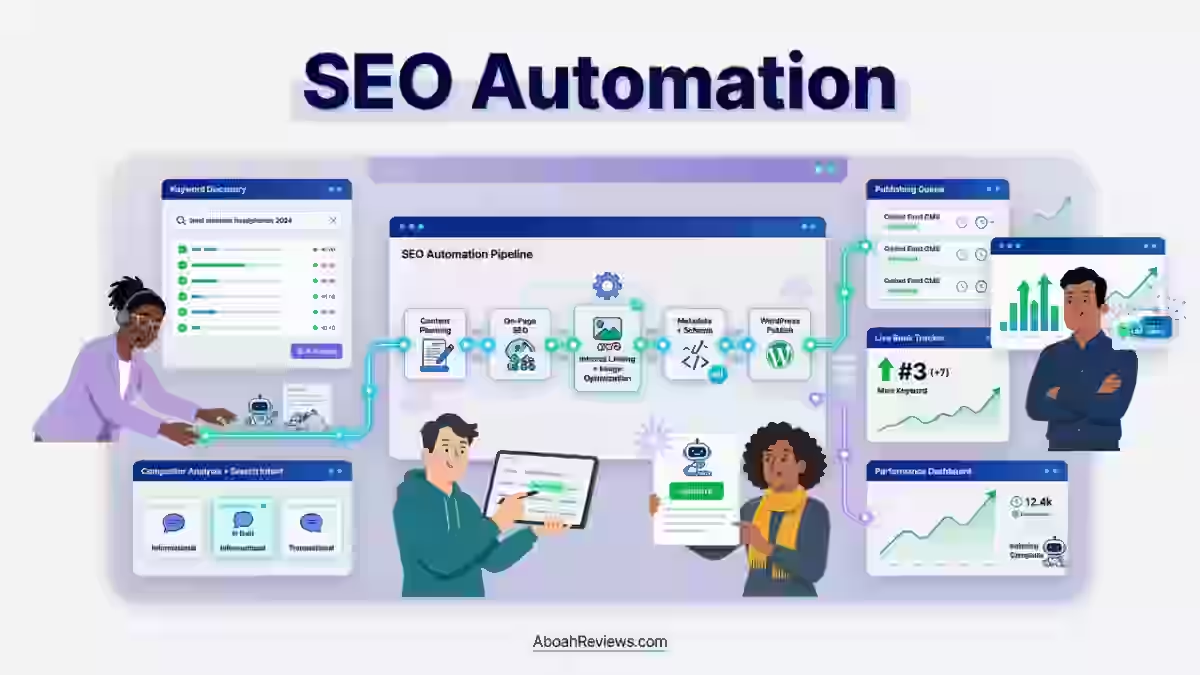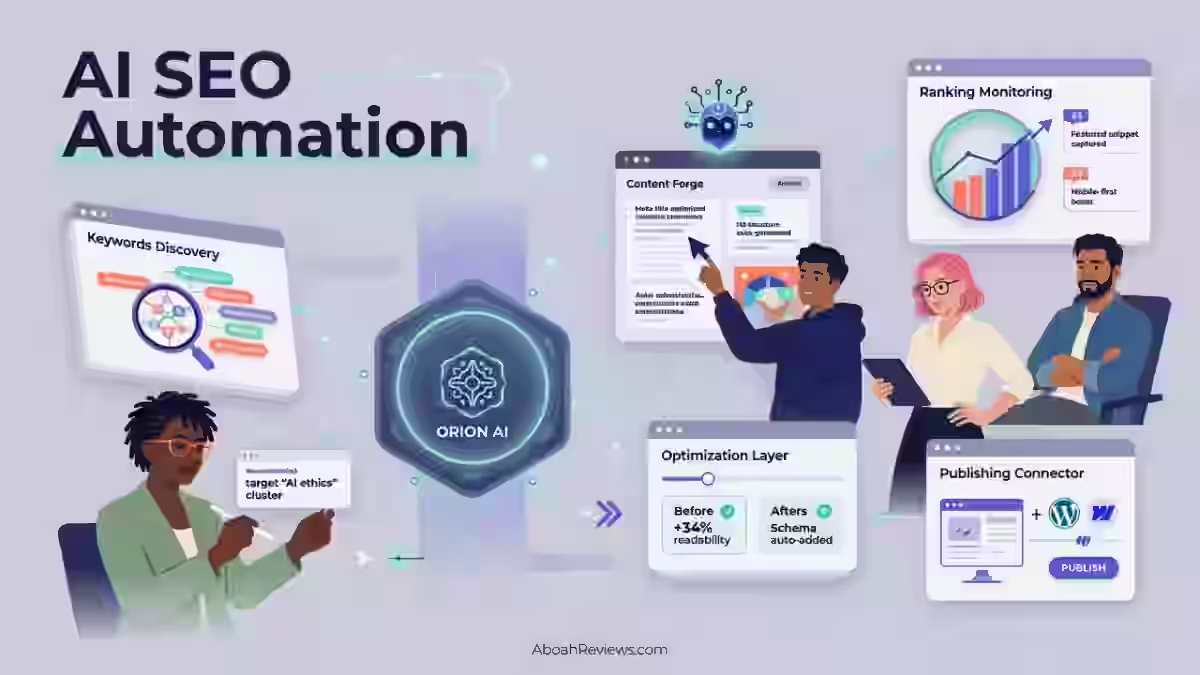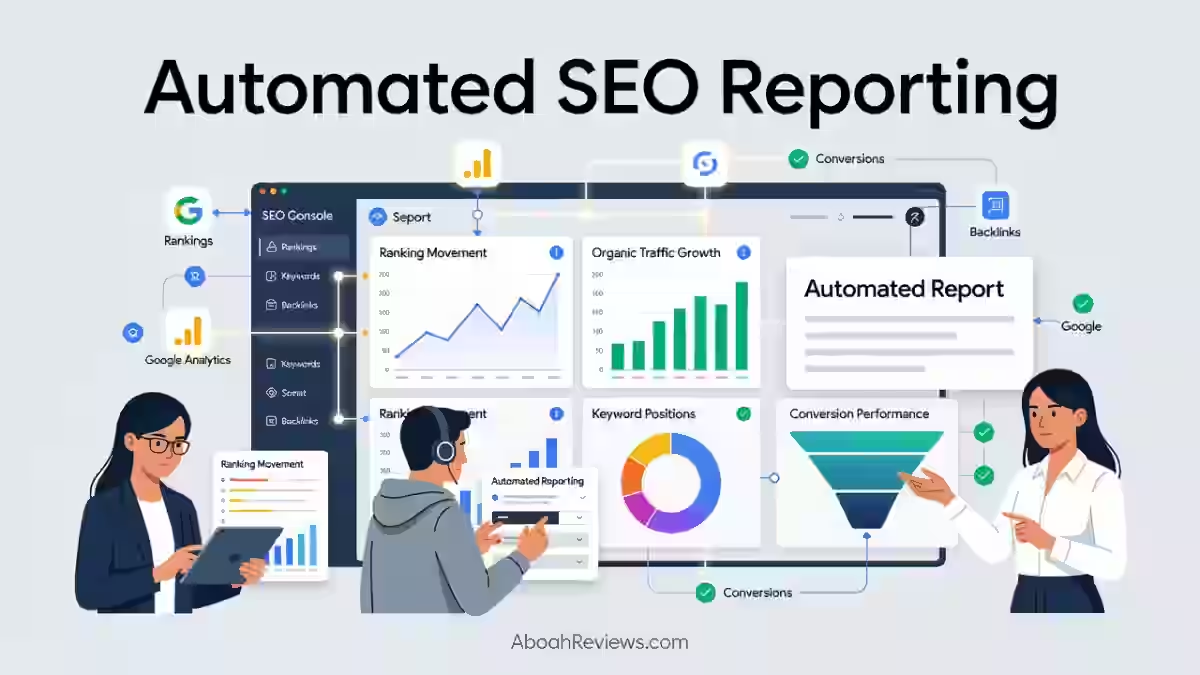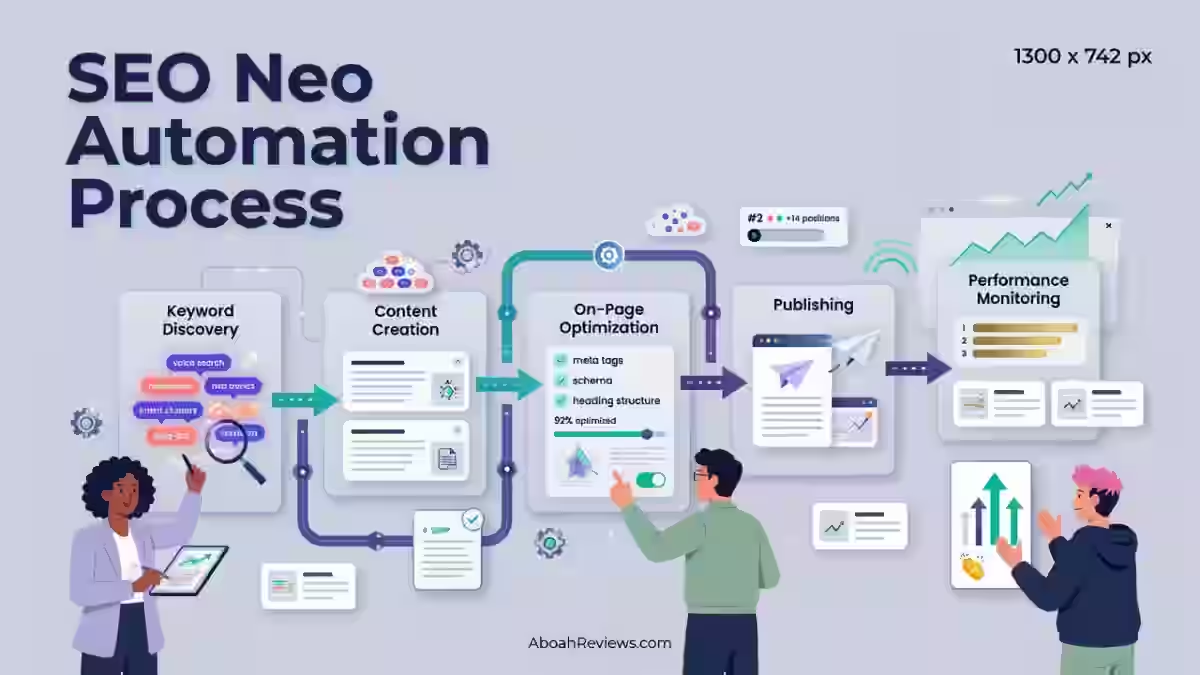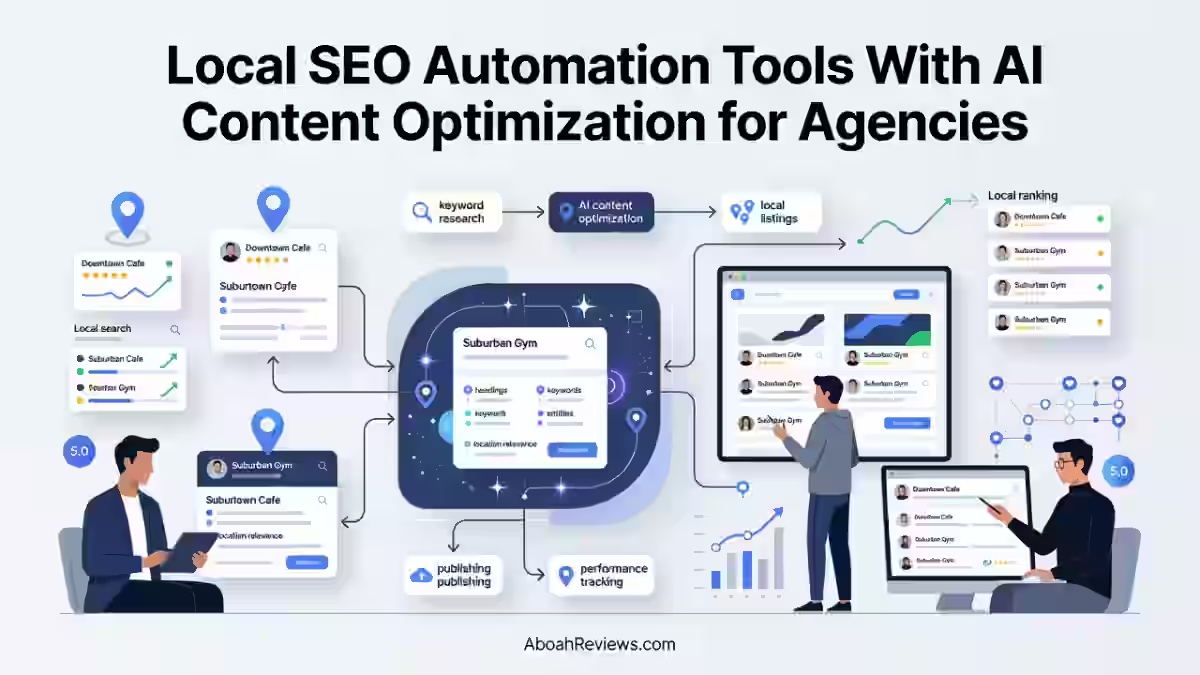
TL;DR: The best local SEO automation tools with AI content optimization for agencies combine Google Business Profile management, rank tracking, citations, and AI-assisted writing in one workflow. This guide reviews 11 tools including Localo, Okara, Merchynt Paige, BrightLocal, and Local Falcon, compares them by agency use case, and explains how to build a real automation workflow instead of just buying software.
Core Answer: The Best Local SEO Automation Tools for Agencies Right Now
If you only read one section, read this one. Based on hands-on testing and agency feedback, here’s the short list:
- Localo – best for guided GBP automation with a low learning curve for non-SEO staff.
- Okara – best for agencies that want SEO, GEO, and content bundled into one AI agent system.
- Merchynt Paige – best for hands-off, fully automated GBP management per location.
- BrightLocal – best for mature agency infrastructure: citations, reporting, and reviews at scale.
- Local Falcon – best for precise geo-grid rank tracking and AI-search visibility measurement.
- LocalRank – best for agencies wanting combined local rank and AI/LLM visibility reporting.
- Semrush Local – best for agencies already inside the Semrush ecosystem.
- Whitespark – best for citation building and cleanup depth.
- Moz Local – best for straightforward listings and NAP distribution.
- Synup – best for multi-location content scheduling at enterprise scale.
- Vendasta – best for white-label agencies reselling local marketing as a full-service package.
None of these replace a strategist. They replace hours of repetitive manual work, which is a different and more honest promise.
Why I Wrote This Guide
If you run an agency that handles local SEO for multiple clients, you already know the problem.
You are managing Google Business Profiles, tracking local rankings, chasing citations, fielding review alerts, and trying to produce location-specific content, all at the same time, often with a small team.
The question is not whether to use local SEO automation tools with AI content optimization for agencies. The question is which ones actually work, what they automate well, and where they still need a human in the loop.
I have tested a lot of these tools. Some impressed me and others wasted money. And a few I wish I had found earlier.
This guide covers 11 of the best options in 2026, with consistent editorial breakdowns, a full comparison table, workflow guidance, pricing models, and a set of honest answers to the questions agencies actually ask before signing up.
What Are Local SEO Automation Tools With AI Content Optimization?

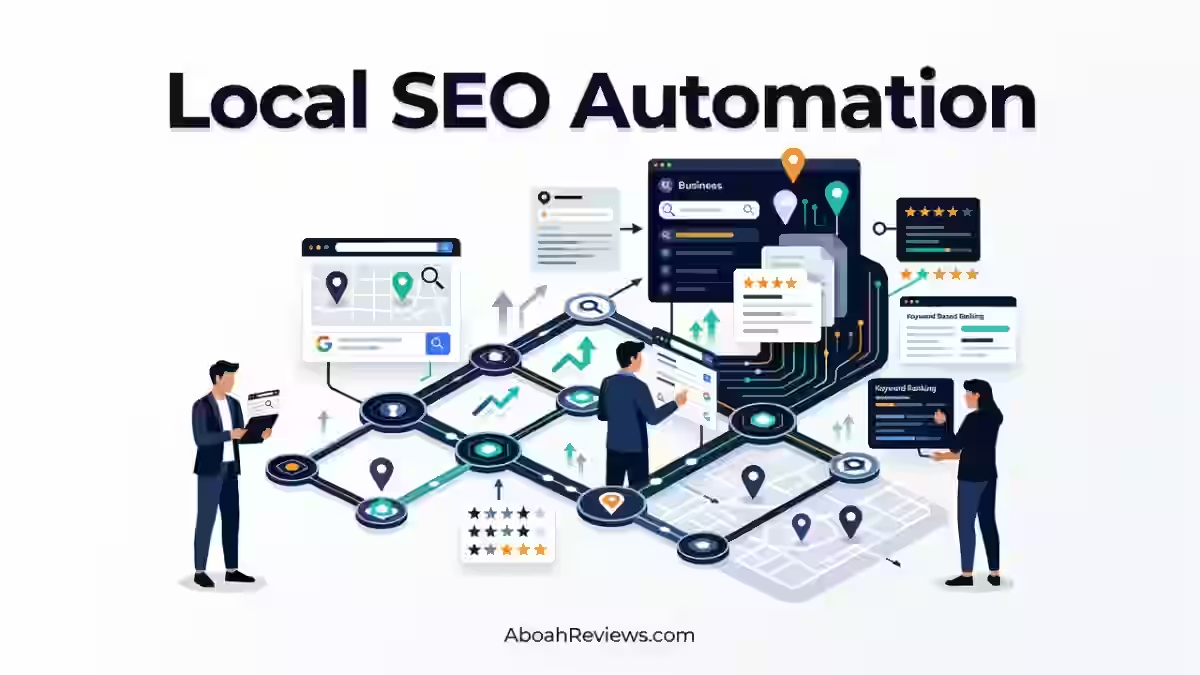
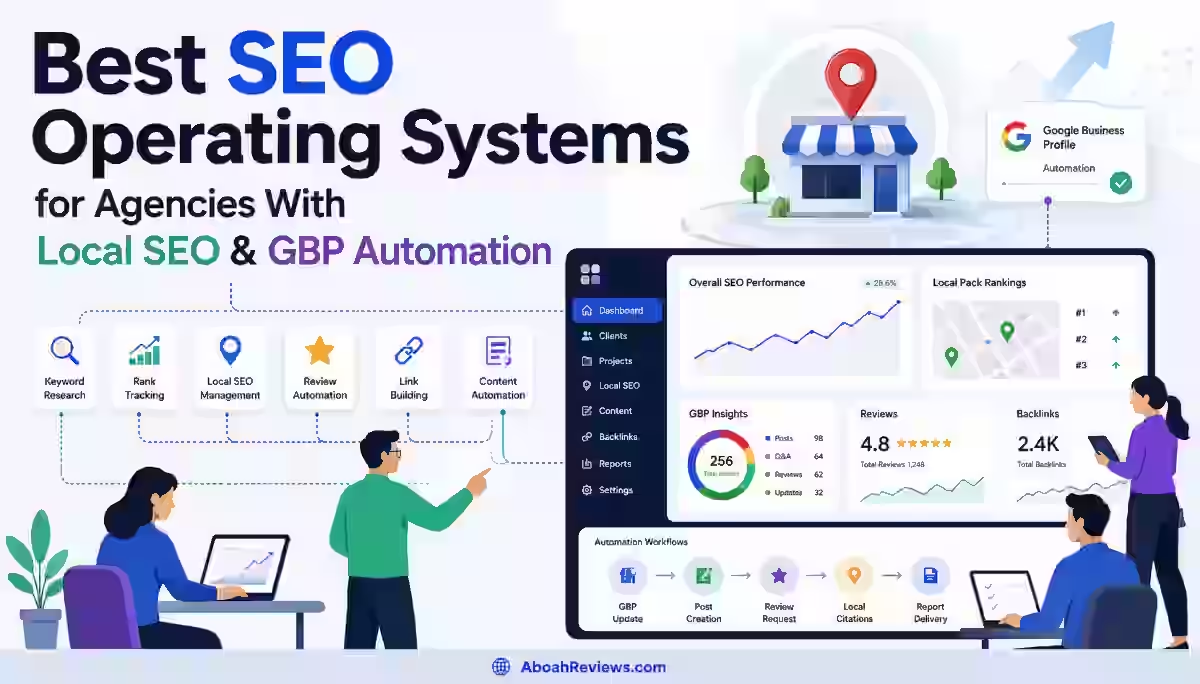
Local SEO automation tools with AI content optimization are software platforms that combine local search tasks (Google Business Profile management, citations, review replies, rank tracking) with AI writing features that draft or optimize content tied to a specific location or service area.
Here’s what that actually means in practice:
- They connect to Google Business Profile and can audit, post, or update listings automatically or semi-automatically.
- They track rankings by geography, often using a grid of map points rather than a single city-wide position.
- They generate or suggest AI content for GBP posts, service pages, FAQs, or location landing pages.
- They manage citations across directories to keep name, address, and phone number (NAP) data consistent.
- They handle reviews, either by drafting responses, flagging new reviews, or automating simple replies.
- They report performance back to agencies or clients, usually with white-label branding.
No tool on this list does all six perfectly. That’s the part vendors don’t lead with.
Local SEO Automation Tools With AI Content Optimization for Agencies Compared

1. Localo
Best for: Agencies and freelancers managing 5 to 30 Google Business Profiles who want a guided task list instead of a blank dashboard.
Local SEO automation capabilities: The Smart Tasks engine turns a GBP audit into a ranked, specific task list covering missing services, image gaps, and underused attributes that map directly to GBP fields. It’s automation with a human still clicking approve, not a set-and-forget system.
AI content capabilities: The content publisher learns a business’s authentic voice and generates Google Business Profile posts that match it, while the review manager suggests personalized responses to each customer review rather than using generic templates.
GBP capabilities: The AI Agent audits your GBP, business category, industry, competition, and market trends to recommend the exact Google Business Profile changes to improve rankings in your local area.
Rank tracking: Instead of checking rankings manually, Localo tracks keyword positions across a grid of geographic points, revealing how visibility varies at the street level, not just the city average.
Reviews: AI drafts responses per review rather than pulling from a generic template bank.
Citations: Limited compared to citation-first tools; for an agency where citation building across directories is a core deliverable, Whitespark or BrightLocal has deeper citation networks.
Reporting: The platform auto-generates branded, white-label performance reports covering ranking trends, review metrics, citation health, and optimization progress. That said, the white-label reporting limitations are real. If you are expecting Localo to replace a fully customisable reporting platform, it is not there yet.
Agency features: Client acquisition tools and multi-profile dashboards exist, but whitelabel is minimal, though future improvements could make this a stronger agency toolset.
Multi-location support: Works well up to moderate scale; for a freelancer managing 5 to 30 GBP clients, this is likely the strongest tool available at this price point.
Integrations: Localo’s integration library is limited for teams with a complex existing workflow that depends on tight third-party tools.
Pricing: Plans start at $39 per month and scale to a custom Enterprise tier. The AI Agent has been included in every paid plan since October 2024 with no upcharge.
Automation level: Guided, not autonomous. It surfaces what to do and drafts the content, but a human still approves each Smart Task.
Key limitation: Citation depth and white-label reporting flexibility trail agency-first competitors.
Verdict: If your bottleneck is knowing what to fix on 15 client GBPs without hiring a specialist, Localo earns its subscription. If your agency’s core deliverable is citation building, look elsewhere first.
2. Okara
Best for: Small agencies or in-house teams that want SEO, GEO (generative engine optimization), and content production handled by one coordinated AI system rather than five separate logins.
Local SEO automation capabilities: Okara isn’t a local-SEO specialist. It’s a broader marketing automation platform where local visibility is one slice of a bigger system. The agent lineup includes an SEO Agent for search optimization, an AI Writer for content creation, and a GEO Agent for generative engine optimization, making your brand visible in AI-generated answers.
AI content capabilities: Okara writes a marketing strategy and runs a roster of more than ten specialized agents, including SEO, GEO, an AI content writer, Reddit, X, LinkedIn, and Hacker News, that draft the actual work for you to approve.
GBP capabilities: Not a core feature; Okara focuses on website content and off-site visibility rather than Google Business Profile management directly.
Rank tracking: Tracks organic and AI-search visibility rather than geo-grid map rankings. The GEO Agent monitors how AI systems like ChatGPT and Perplexity describe brands.
Reviews: No native review management feature.
Citations: No dedicated citation-building module.
Reporting: Strategy documents and agent activity logs rather than white-label client reports built for local SEO delivery.
Agency features: Built more for founders and small teams than multi-client agency operations; it is a closed app with no public API, no MCP server, and no Zapier or Make hooks, so you cannot wire it into your own stack.
Multi-location support: Not designed for multi-location businesses.
Integrations: Connects to your website, Google Search Console, and GA4 so the agents have real data to work from.
Pricing: Okara runs a genuine free plan with 20 one-time credits, no card required, and a paid AI CMO tier at $129 per month.
Automation level: Draft-and-approve. Okara drafts SEO posts, Reddit replies, X and LinkedIn content, and more, but nothing publishes without approval, so you stay in control of your brand voice.
Key limitation: No local SEO infrastructure like GBP management, citations, or geo-grid tracking.
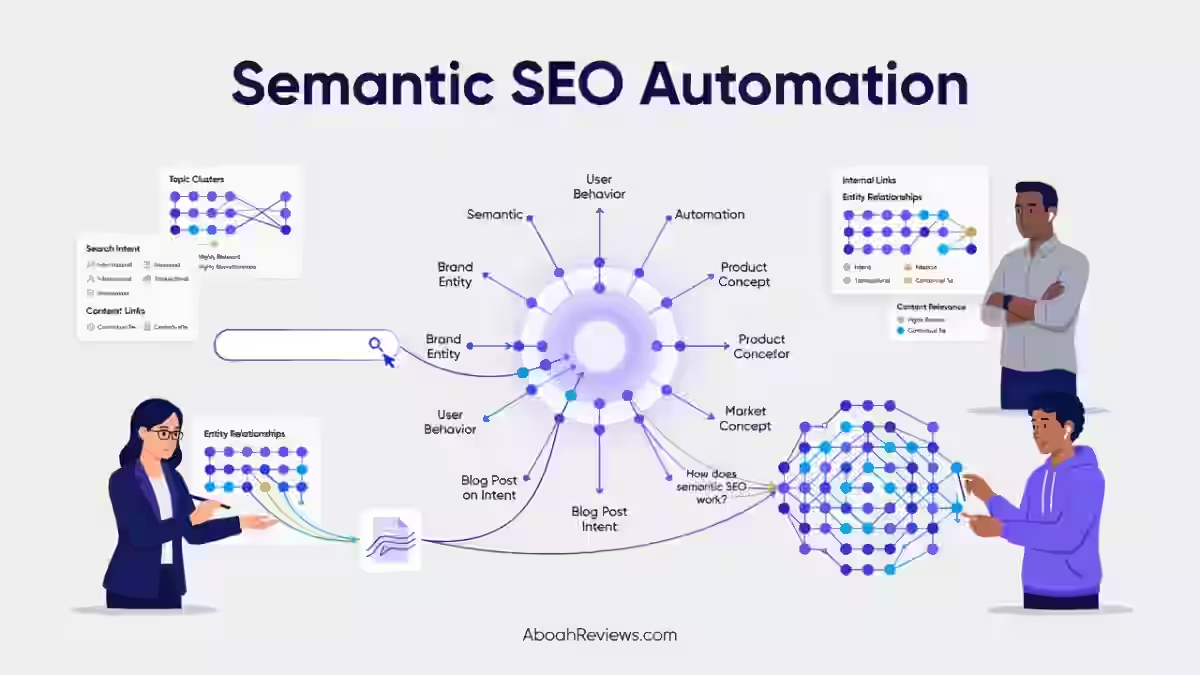
Verdict: Good fit for a solo consultant covering general SEO and content for a client. A poor substitute for actual local SEO delivery. Pair it with a specialist tool if local rankings are the deliverable, similar to how you’d approach semantic SEO automation as a layer on top of core local infrastructure.
3. Merchynt Paige
Best for: Agencies or business owners who want a single Google Business Profile fully managed on autopilot with minimal weekly check-ins.
Local SEO automation capabilities: Paige writes and publishes GBP posts continuously, replies to every review automatically with keyword-optimized AI responses, builds and syncs citations across 62 directories, creates and publishes YouTube videos, cross-posts to social media, generates website FAQs and schema, and tracks rankings with monthly reports.
AI content capabilities: Paige analyzes what the highest-ranking Google Business Profiles are doing in your category and location, then applies those strategies automatically, tracking what it does and measuring what works.
GBP capabilities: Paige fully optimizes and manages your Google Business Profile including services, descriptions, publishing posts, uploading images, and everything else that helps a profile rank higher.
Rank tracking: Included in the core plan with monthly reporting rather than daily geo-grid scans.
Reviews: Fully automated replies by default, which is powerful but risky if left completely unchecked (more on that in the mistakes section below).
Citations: Citation building is an added cost of $40 per month per GBP, dropping to $20 per month per GBP for Agency Partner Program members.
Reporting: Automated monthly reports sent per profile.
Agency features: Merchynt offers a partner program for agencies where volume pricing is negotiated rather than published.
Multi-location support: Works, but pricing is flat per profile, which changes the math at scale (see below).
Integrations: Limited beyond the Merchynt ecosystem itself.
Pricing: Paige starts at $99 per month per location. For a 10-location agency, that comes to $990 per month for the full automation suite.
Automation level: The highest on this list. Paige isn’t a tool you log into and use AI to do your SEO work better in. It’s an AI Agent you set up once, then leave alone to do its thing fully automated.
Key limitation: The main limitation is the per-business pricing model, which makes it expensive for agencies managing many clients. Full automation also means less room for brand-voice nuance without checking in.
Verdict: If your client wants “set it and forget it,” Paige delivers that better than anything else here. If you’re managing 20+ locations on tight margins, the flat per-location fee adds up fast.
4. BrightLocal
Best for: Agencies that need mature, proven infrastructure for citations, rank tracking, and client reporting across dozens of locations.
Local SEO automation capabilities: Unlike general SEO tools that treat local search as a feature set, BrightLocal was designed from the ground up for the mechanics of local rankings: citations, Google Business Profile tracking, reputation management, and local rank reporting.
AI content capabilities: Limited compared to newer AI-first tools. BrightLocal focuses on data and monitoring rather than content generation. It does not do keyword research or backlink tracking; for that you’d need a separate tool like Ahrefs or Semrush.
GBP capabilities: Active listing management, GBP post scheduling, and edit suppression controls are available starting at the Manage tier.
Rank tracking: The Local Rank Tracker tracks your rankings in Google’s local pack and organic search results for specific keywords across specific locations.
Reviews: The Reputation Manager monitors and requests reviews across Google, Facebook, Yelp, and industry-specific platforms, including automation via email and text.
Citations: BrightLocal offers both manual citation building where their team submits your business to directories, and a Citation Tracker that audits existing citations to identify inconsistent or missing NAP data, with cleanup that corrects wrong listings at the source.
Reporting: Long-standing white-label reporting, though some users note a key con involves slow reporting speeds and the need for extra tools to support broader SEO.
Agency features: BrightLocal offers white-labelling, an Agency Lead Generator widget, and per-location pricing that scales to managing up to 250+ locations.
Multi-location support: Strong; this is the core use case BrightLocal was built for.
Integrations: BrightLocal launched an MCP server in January 2026 that connects to ChatGPT, Claude, or Mistral, letting you query and act on your local SEO data from inside those AI tools.
Pricing: BrightLocal is priced per location from $39 per month to $59 per month, built around rank tracking, listings and citations, and review management.
Automation level: Monitoring-heavy, execution-moderate. The Track tier is close to pure reporting; Manage and Grow add active control.
Key limitation: Users report a steep learning curve due to a non-intuitive interface for beginners, plus manual updates needed for some citation directories.
Verdict: The safest choice for an agency that’s been burned by flashy AI tools before and wants proven local SEO infrastructure, even if it’s less exciting to demo.
5. Local Falcon
Best for: Agencies that need precise, visual proof of map-pack rankings and AI-search visibility for client reporting.
Local SEO automation capabilities: Local Falcon is an agentic AI search and local SEO platform that tracks and improves brand visibility across generative AI answer engines and local search, showing how ChatGPT, Gemini, Perplexity, Grok, Copilot, Google AI Overviews, and AI Mode mention your brand.
AI content capabilities: Falcon AI Analysis pinpoints what to fix with prioritized recommendations, and Falcon Agent acts on it by running scans, auditing Google Business Profiles, responding to reviews, and suggesting website changes through 89+ connected tools.
GBP capabilities: Falcon Guard monitors profiles; it stops unauthorized edits to business hours, categories, and 20+ critical fields, and alerts you when anyone changes your Google Business Profile.
Rank tracking: This is the core strength. Geo-grid local rank tracking runs from the real GPS points where customers search, so you see exactly where you land in the local rankings across any number of locations.
Reviews: Basic response automation via Falcon Agent, not a dedicated review platform.
Citations: A citation finder exists but is not the core product.
Reporting: Reporting is well detailed, with a campaign generating reports every month showing SEO growth and suggestions to keep growing, giving clients a clear view of what is and isn’t working.
Agency features: Public share links and white-label style outputs for client-facing reports.
Multi-location support: Strong, built for franchise and multi-location scans.
Integrations: 89+ connected tools through Falcon Agent workflows.
Pricing: Credit-based, from Starter at $24.99 up to Enterprise at $199.99 per month, with unlimited keywords and locations. An 11×11 grid scan costs approximately $0.40.
Automation level: Strong on measurement and alerts, lighter on hands-off execution. Its deliberate limit is that it’s a tracker, not a manager, with no review responses, posting or profile optimization by default beyond Falcon Agent add-ons.
Key limitation: The credit-based pricing can take some getting used to when planning larger scans.
Verdict: Pair this with an execution tool like Localo or Paige. Local Falcon proves the ranking; it doesn’t replace the optimization work itself.
6. LocalRank
Best for: Agencies that want local rank tracking combined with AI/LLM visibility reporting in one dashboard, without paying for a full citation-building suite they don’t need.
Local SEO automation capabilities: LocalRank-style tools focus on combining traditional map-pack tracking with newer AI answer engine visibility, since clients now ask about ChatGPT mentions as often as Google rankings.
AI content capabilities: Typically includes content brief generation and landing page suggestions tied to tracked keywords, rather than full article drafting.
GBP capabilities: Basic profile monitoring and post scheduling; not built as a deep GBP management suite like Paige or Localo.
Rank tracking: Combines local pack position with AI/LLM citation tracking, showing where a business shows up in both Google Maps and AI-generated answers.
Reviews: Monitoring and alerts rather than full response automation.
Citations: Basic tracking, limited building.
Reporting: Dashboard-style reporting aimed at showing both classic and AI-search visibility trends side by side.
Agency features: Client-facing dashboards designed for combined SEO and GEO reporting conversations.
Multi-location support: Moderate, best suited to small to mid-size location counts.
Integrations: Varies by provider; confirm API access before committing to a multi-client rollout.
Pricing: Expect a range between $29 and $99 per month depending on location count and AI-visibility tracking depth.
Automation level: Monitoring and alerting first, execution second.
Key limitation: Less mature than BrightLocal or Whitespark on the citation side.
Verdict: A reasonable middle ground if your clients are starting to ask “do I show up in ChatGPT” questions and your current stack has no answer for that.
7. Semrush Local
Best for: Agencies already paying for Semrush’s core SEO suite who want listings and local rank data without adding another vendor.
Local SEO automation capabilities: Semrush Local bundles GBP management, listing distribution, and local rank tracking directly into the broader Semrush platform agencies already use for keyword research and site audits.
AI content capabilities: Semrush’s AI writing and content tools (SEO Writing Assistant, ContentShake AI) sit alongside Local, so briefs and drafts can pull from the same keyword data used for local tracking.
GBP capabilities: Profile management and post scheduling from within the same dashboard used for broader SEO campaigns.
Rank tracking: Local rank tracking ties into Semrush’s Position Tracking tool, giving city-level and sometimes grid-level visibility.
Reviews: Review monitoring across major platforms, aggregated into the client dashboard.
Citations: Listing management across major directories with NAP consistency checks.
Reporting: Semrush’s reporting suite covers local metrics alongside organic, paid, and backlink data in one client-facing report.
Agency features: White-label reporting and multi-client management are mature since they’re shared with the rest of the Semrush platform.
Multi-location support: Solid for mid-size multi-location brands already inside the Semrush ecosystem.
Integrations: Deep integration with the rest of Semrush’s toolset (keyword research, site audit, backlink analysis).
Pricing: Local listing management is typically add-on pricing on top of a core Semrush subscription, which itself starts around $139.95 per month for the Pro plan.
Automation level: Moderate. Strong on monitoring and reporting, more manual on execution.
Key limitation: Local features feel like an add-on to a broader suite rather than a specialist product, so depth on GBP-specific tasks trails Localo or Paige.
Verdict: Makes sense if you’re already paying for Semrush and don’t want a sixth login. Not the tool to switch to just for local SEO alone.
8. Whitespark
Best for: Agencies where citation building and cleanup is the actual deliverable clients are paying for.
Local SEO automation capabilities: Whitespark has built its reputation almost entirely around citation discovery, building, and cleanup, longer than most tools on this list have existed.
AI content capabilities: Limited; this isn’t a content generation platform, and that’s by design.
GBP capabilities: Basic profile auditing rather than full management or posting automation.
Rank tracking: Local rank tracking is included and reliable, though it’s a secondary feature next to citations.
Reviews: Review monitoring exists but isn’t the core strength.
Citations: This is the strongest citation discovery and building service among tools reviewed here, with deep directory coverage built from over a decade of local SEO focus.
Reporting: Agency-friendly reports focused on citation health and rank movement.
Agency features: Built with agency workflows in mind from early on, including bulk citation audits across client rosters.
Multi-location support: Strong for multi-location citation campaigns specifically.
Integrations: Works well as a companion tool alongside broader platforms rather than a full replacement.
Pricing: Typically ranges from $30 to $100+ per month depending on citation volume and rank tracking add-ons.
Automation level: Execution-focused for citations specifically; less automated elsewhere.
Key limitation: Narrow scope. You’ll likely need a second tool for GBP posting, AI content, or review automation.
Verdict: Add this to your stack specifically for citation work, not as your only local SEO tool.
9. Moz Local
Best for: Agencies or businesses that mainly need clean, consistent listings distribution without a lot of extra complexity.
Local SEO automation capabilities: Moz Local focuses on distributing and correcting business listing data across a network of directories and data aggregators.
AI content capabilities: Minimal; Moz’s AI writing tools live in its broader Moz Pro suite, not specifically inside Moz Local.
GBP capabilities: Basic profile syncing rather than deep optimization or posting automation.
Rank tracking: Limited local-specific rank tracking compared to specialist tools like Local Falcon.
Reviews: Basic review monitoring across a few major platforms.
Citations: Strong core strength: automated distribution and correction of NAP data across directories.
Reporting: Straightforward listing status reports rather than deep local SEO performance reporting.
Agency features: Multi-location dashboards for managing listings across many locations from one account.
Multi-location support: This is a core use case; Moz Local was built with multi-location businesses in mind.
Integrations: Connects with the broader Moz Pro toolset for teams already using Moz for organic SEO.
Pricing: Typically starts around $14 to $20 per location per month depending on volume.
Automation level: High for listing syncing, low for content or GBP management beyond basics.
Key limitation: Doesn’t cover AI content, deep rank tracking, or review response automation well.
Verdict: Good as a lightweight listings layer, especially for businesses with many locations and simple needs. Not enough on its own for an agency selling full local SEO packages.
10. Synup
Best for: Enterprise brands and agencies managing content scheduling and listings across dozens or hundreds of locations at once.
Local SEO automation capabilities: Synup is built around bulk operations: pushing listing updates, content, and offers across large location networks simultaneously.
AI content capabilities: Includes AI-assisted content generation for location pages and social posts, aimed at reducing the manual work of customizing content per location.
GBP capabilities: Bulk GBP updates and post scheduling across large location sets.
Rank tracking: Local rank visibility tracking included, generally reported at an aggregate multi-location level.
Reviews: Review monitoring and response tools built for scale, including sentiment tracking across large review volumes.
Citations: Listing accuracy and distribution across directories, similar in scope to Moz Local but with more enterprise workflow tooling.
Reporting: Dashboard reporting built for enterprise and franchise stakeholders managing many locations.
Agency features: Role-based access and bulk management tools designed for large teams.
Multi-location support: This is Synup’s core strength and differentiator.
Integrations: API access for enterprise customers managing location data across other internal systems.
Pricing: Typically enterprise-quoted based on location count, often starting in the low hundreds per month for smaller multi-location accounts.
Automation level: High for bulk execution across locations, moderate for AI content depth per individual page.
Key limitation: Content depth per location can feel templated at very large scale unless someone reviews outputs individually.
Verdict: Strong choice once you’re managing 50+ locations and need bulk actions more than deep single-location optimization.
11. Vendasta
Best for: White-label agencies that want to resell a full local marketing stack under their own brand without building the infrastructure themselves.
Local SEO automation capabilities: Vendasta bundles local SEO, listings, reviews, and reporting into a platform built specifically for agencies to resell to their own clients.
AI content capabilities: Includes AI assistants (sometimes branded as “AI employees”) that help draft content, respond to reviews, and manage routine client communication tasks.
GBP capabilities: Profile management tools bundled with the broader marketing automation suite.
Rank tracking: Local and organic rank tracking included as part of the client-facing reporting package.
Reviews: Review monitoring and response tools, often with AI-assisted drafting for replies.
Citations: Listing management bundled into the core local SEO product line.
Reporting: This is a major strength: fully white-label reporting built for agencies reselling under their own brand name.
Agency features: Client management, billing, and fulfillment tools designed for agencies running local marketing as a service line, not just a single product.
Multi-location support: Strong, especially for agencies managing many small business clients rather than one large multi-location brand.
Integrations: Marketplace of add-on products and third-party integrations built for agency fulfillment workflows.
Pricing: Typically starts in the range of $79 to $300+ per month depending on the products bundled and client volume.
Automation level: Moderate to high depending on which products in the suite are activated.
Key limitation: The breadth of the platform means individual local SEO features can feel less specialized than dedicated tools like BrightLocal or Whitespark.
Verdict: Built for agencies whose business model is reselling local marketing services under their own brand, not for a single in-house local SEO team.
Comparing the Best Local SEO Automation Tools With AI Content Optimization for Agencies
Tool | AI Content | GBP Automation | Rank Tracking | Reviews | Citations | Agency Features | Multi-Location | Automation Depth |
|---|---|---|---|---|---|---|---|---|
Localo | AI generation (posts, replies) | Guided execution via Smart Tasks | Geo-grid | AI-drafted replies | Basic | Client dashboards, limited white-label | Moderate (5-30 locations) | Guided, approval-based |
Okara | AI generation (broad marketing) | None | AI-search visibility only | None | None | Limited, solo/small team focus | None | Draft-and-approve |
Merchynt Paige | AI generation, autonomous | Full automatic execution | Monthly reports | Automatic replies | Add-on ($20-40/mo) | Partner program, negotiated pricing | Per-location, costly at scale | Fully autonomous |
BrightLocal | Suggestions, monitoring | Manual to semi-automatic | Local pack + organic | Monitoring + request automation | Manual build + tracking | Mature white-label, 250+ locations | Strong | Monitoring-heavy |
Local Falcon | Suggestions via Falcon AI | Monitoring (Falcon Guard) | Geo-grid, gold standard | Basic response automation | Basic finder | Public share reports | Strong | Measurement-first |
LocalRank | AI briefs | Basic monitoring | Local + AI/LLM combined | Monitoring | Basic | Combined SEO/GEO dashboards | Moderate | Monitoring, alerting |
Semrush Local | AI generation (suite-wide) | Semi-automatic | City + grid level | Monitoring | Directory sync | Mature, suite-wide | Solid | Moderate |
Whitespark | Minimal | Basic audit | Included, secondary | Basic | Deepest in category | Agency-built workflows | Strong (citations) | Execution-focused (citations) |
Moz Local | Minimal | Basic syncing | Limited | Basic | Automatic distribution | Multi-location dashboards | Strong | High (listings only) |
Synup | AI generation (templated) | Bulk automatic | Aggregate level | Scale-built monitoring | Distribution | Role-based, enterprise | Strongest (50-500+) | High (bulk) |
Vendasta | AI-assisted drafting | Semi-automatic | Included | AI-assisted replies | Bundled | Full white-label resale | Strong (many small clients) | Moderate to high |
Local SEO Automation Tools by Agency Use Case
Best for AI content optimization
Okara and Localo lead here, but for different reasons. Okara is built for content briefs, semantic optimization, and drafting across broader marketing channels.
Localo focuses AI content specifically around GBP posts and review replies tied to local intent.
If your agency also needs full blog-style local landing pages at scale, that’s closer to what tools reviewed in my AI SEO automation guide are built for, not a local-only platform.
Best for Google Business Profile automation
Merchynt Paige wins on raw automation depth, handling posts, replies, and images with minimal human input.
Localo is the better choice if your agency wants a guided task list instead of full autopilot, since it is the most operationally complete GBP management tool at this price point, reducing per-client management overhead.
Best for local rank tracking
Local Falcon is the clear leader for precision. It’s the gold standard for geo-grid rank tracking, offering precise, street-level Google Maps visibility maps with competitor overlays.
BrightLocal is a strong second choice if you want rank tracking bundled with citations and reviews in one subscription.
Best for citations and listings
Whitespark and Moz Local both specialize here. Whitespark wins on directory depth and cleanup accuracy.
Moz Local wins on simplicity for straightforward multi-location distribution.
Best for review management
BrightLocal and Merchynt Paige both automate heavily here, but in different ways.
BrightLocal gives you monitoring plus request automation with a human in the loop.
Paige replies automatically by default, which saves time but needs a review cadence to avoid tone mistakes at scale.
Best for AI search/GEO visibility
Local Falcon and Okara both track how brands show up in AI answers, though for different audiences.
Local Falcon ties GEO tracking to local rank data specifically, while Okara treats GEO as one channel inside a broader marketing agent system.
This is worth pairing with a dedicated look at generative engine automation if AI visibility is becoming a client deliverable.
Best for white-label agencies
Vendasta is purpose-built for this. It’s the only tool on this list designed primarily around agency resale rather than direct local SEO execution.
Best for multi-location businesses
Synup, built for bulk actions across dozens or hundreds of locations, edges out BrightLocal for pure scale, though BrightLocal remains stronger on reporting depth per location.
Best for agencies with small budgets
Localo at $39/month and Local Falcon’s $24.99 Starter tier both give small agencies real functionality without enterprise pricing.
Best for enterprise local SEO
Synup and Semrush Local both fit larger operations, with Semrush offering the advantage of a unified reporting dashboard across organic, local, and paid channels.
How Agencies Can Automate the Local SEO Content Workflow
Most guides stop at “which tool should I buy.” That’s the wrong question. The right question is how the tools fit into a repeatable workflow. Here’s the process I actually use.
Step 1: Map clients, locations, services and search intent
Build a simple spreadsheet or database: Client → Location → Service → Search intent → Content asset.
This sounds basic, but I’ve seen agencies skip it and end up with duplicate content across ten “near me” pages because nobody mapped which location owns which keyword.
Step 2: Find local content opportunities
Pull from local keyword data, competitor gaps, actual customer questions, GBP Insights, Search Console queries, and the language customers use in reviews.
Reviews are an underused source; customers describe problems in their own words, which often maps directly to long-tail local search intent.
Step 3: Generate an AI content brief
A useful brief includes the primary topic, local intent signal, relevant entities (neighborhood names, landmarks, service terms), supporting questions, internal links, schema type, and a clear conversion goal.
Skipping the brief and going straight to AI drafting is the fastest way to get generic output.
Step 4: Optimize or generate the content
AI can draft a first pass fast, but it shouldn’t publish without a human checking facts, local specifics, and tone.
If anything, it’s riskier to fully automate because wrong local details (hours, service areas, phone numbers) hurt trust faster than a generic blog typo.
Step 5: Connect content with GBP
Repurpose the same content into Google Posts, FAQ sections, service descriptions, and even review-response talking points.
A well-researched blog post about “emergency plumber pricing in [city]” can become three GBP posts and a FAQ entry without extra research.
Step 6: Publish and distribute
Push content through your CMS with proper internal linking back to service and location pages.
Most of the tools above (Localo, Synup, Vendasta) offer scheduling, but few handle true cross-CMS publishing without a plugin or Zapier-style connector.
Step 7: Monitor rankings and conversions
Track Map Pack visibility, organic rankings, calls, website clicks, direction requests, and actual leads.
Ranking without conversion tracking is a vanity metric agencies keep reporting because it’s easy, not because it proves value.
Step 8: Automatically identify optimization opportunities
Build the loop: publish, measure, detect a gap, optimize, republish, measure again. This is the difference between “AI writes local content” and an actual system.
Most tools stop at step 4. Few close the loop back to step 8, which is exactly where a human strategist still earns their fee.
How to Build an Automated Local SEO Workflow for 10, 50, or 100+ Clients
Workflow for 1-10 clients
Keep it simple. One or two tools (say, Localo plus a spreadsheet-based content tracker) is enough.
Adding five tools at this scale creates more admin overhead than it saves.
Workflow for 10-50 clients
Introduce templates for content briefs, bulk GBP task actions, standardized onboarding checklists, automated report generation, and a client approval step before anything publishes.
This is the stage where tool sprawl starts if you’re not careful, since each new client type tempts you to add “just one more tool.”
Workflow for 50+ clients
At this scale, you need API access, bulk management dashboards, role-based access for staff, location grouping (by region, franchise, or account manager), white-label reporting, and automation rules that trigger based on performance thresholds rather than manual checks.
Synup, Vendasta, and BrightLocal’s higher tiers are built for this level; Localo and Local Falcon start to feel undersized here without heavy customization.
Local SEO Automation Stack vs. All-in-One Platform
When to use a single platform
Choose one platform (BrightLocal, Vendasta, or Semrush Local) when your team is small, your reporting needs are straightforward.
You’d rather pay a bit more for one login than manage five subscriptions and five sets of client credentials.
When to build a specialist stack
Build a stack (content optimization tool, then GBP tool, then rank tracker, then citation builder, then review manager, then reporting layer) when your agency has specific deliverables that need best-in-class execution, like a citation-heavy package that needs Whitespark’s directory depth specifically.
The hidden cost of tool sprawl
Five tools at $50/month each is $250/month, but that’s not the real cost.
Add duplicated functionality (two tools both claiming to track reviews), data synchronization headaches (NAP data drifting out of sync between two citation tools), staff time re-entering the same client data, manual exports for client reports, and ongoing maintenance across five vendor relationships instead of one.
Google Maps rankings changes daily and AI Overviews reshaping how customers find local businesses, the operational drag of stitching together disconnected tools compounds faster than most agencies budget for.
In my experience, the real cost of a five-tool stack is usually double the subscription total once labor is factored in.
Can AI Fully Automate Local SEO?
No. AI can automate a meaningful share of repetitive local SEO execution, but strategy, fact-checking, brand judgment, reputation management, and client decisions still need a human involved.
Tasks AI can automate well
Drafting GBP posts, generating first-pass review replies, flagging citation inconsistencies, building content briefs from keyword data, and scheduling bulk content pushes across many locations.
Tasks AI can assist with
Writing local landing pages (with a human editing pass), suggesting internal links, identifying content gaps from competitor analysis, and summarizing performance data for client reports.
Tasks that should remain human-controlled
Responding to negative or complex reviews, making claims about pricing, licensing, or guarantees, approving anything published under a client’s brand name, and any decision that touches legal or reputational risk.
How to Measure the ROI of Local SEO Automation
Local visibility metrics
Track Map Pack visibility, geo-grid performance across service areas, local organic rankings, and share of local search compared to named competitors.
AI-search visibility
Track brand mentions inside AI answers, recommendation frequency, and citation or source visibility across tools like ChatGPT, Perplexity, and Google AI Overviews.
Be careful here: AI visibility metrics can vary considerably between platforms and even between nearly identical prompts, so treat this as a directional signal, not a precise score.
Business outcomes
Calls, direction requests, website visits, leads, booked appointments, and revenue. These are the numbers clients actually care about, more than a ranking screenshot.
Operational efficiency
This matters most for agencies specifically: hours saved per client, clients managed per employee, content assets produced per month, turnaround time on requests, time spent building reports, and cost per location.
If a tool doesn’t move at least one of these numbers, it’s not earning its subscription.
Common Mistakes When Automating Local SEO
- Confusing AI-generated content with optimized content: A draft isn’t optimized just because AI wrote it fast. It needs local specifics, internal links, and a human check before it’s actually useful.
- Publishing generic location pages at scale: Swapping only the city name across ten pages reads as thin content to both readers and Google.
- Automating every review response: Fully automated replies work fine for five-star reviews. Complaints, refund requests, and anything reputational need a person.
- Creating duplicate content across locations: I lost an affiliate site’s rankings after publishing 42 auto-generated posts without internal linking or keyword filtering. The content cannibalized itself. The same risk applies to location pages that share 90% identical wording.
- Ignoring NAP inconsistencies: A citation tool that flags issues is useless if nobody fixes them. This is a common gap between tools like Local Falcon (which measures) and execution tools (which fix).
- Automating without approval workflows: Every fully automated tool needs a checkpoint, even a light one, before content or replies go live under a client’s name.
- Measuring rankings instead of leads: A #1 map pack position that generates zero calls isn’t a win worth reporting on its own.
- Using too many disconnected tools: As covered above, tool sprawl quietly eats the labor savings automation was supposed to deliver.
- Assuming AI visibility equals Google ranking: Showing up in a ChatGPT answer doesn’t mean a business ranks in Google’s local pack. These are separate, only loosely correlated metrics.
- Letting AI make unsupported local claims: Hours, pricing, service areas, and licensing details need verification. An AI tool confidently stating wrong business hours is worse than publishing nothing.
Final Takeaway
There’s no universal winner among local SEO automation tools with AI content optimization for agencies, because the right platform depends entirely on where your agency’s actual bottleneck sits.
Before picking a tool, evaluate five things: automation depth (guided versus fully autonomous), AI content optimization quality, local SEO coverage (GBP, citations, reviews, rank tracking), agency scalability, and total cost of ownership once labor and tool sprawl are factored in.
If your bottleneck is content production, look at Okara or a dedicated content brief workflow layered on top of a specialist local tool.
If it’s GBP management, Localo or Merchynt Paige will save the most hours. If it’s rankings or citations, Local Falcon, BrightLocal, and Whitespark each specialize in a different piece of that puzzle.
If it’s reporting or multi-client operations at real scale, Synup and Vendasta are built for that specifically.
Whatever you pick, keep a human checkpoint somewhere in the workflow, especially around reviews, pricing claims, and anything published under a client’s name.
Automation should remove the repetitive hours, not the judgment.

- HighSoftware99 Review 2026: Is It Legit or a Risk to Your Website? - October 21, 2026
- SEO Instant Appear HighSoftware99.com: Full Breakdown - October 18, 2026
- SEO by HighSoftware99.com: My Honest Independent Fact-Check for 2026 - October 18, 2026