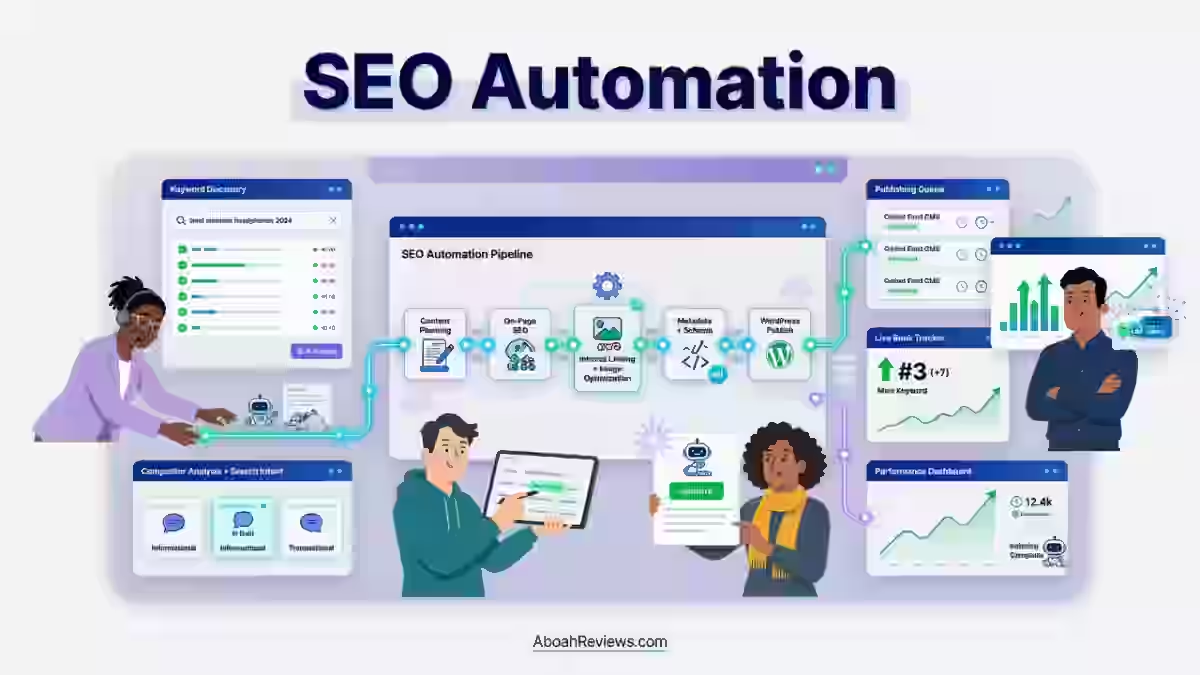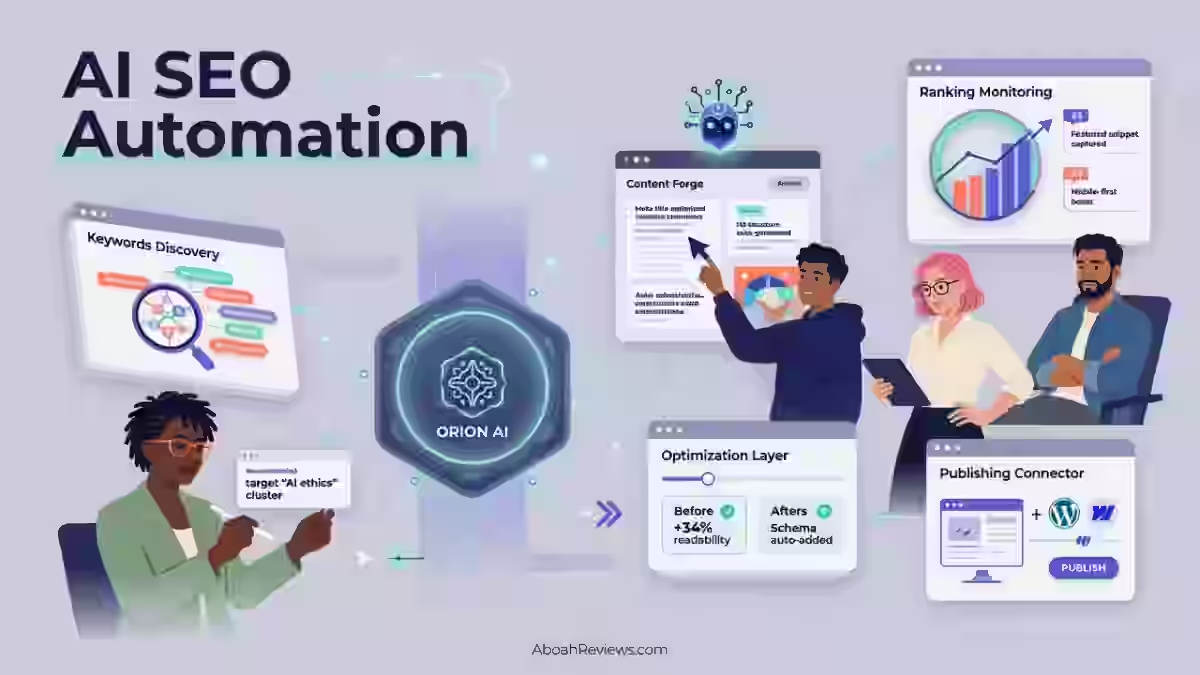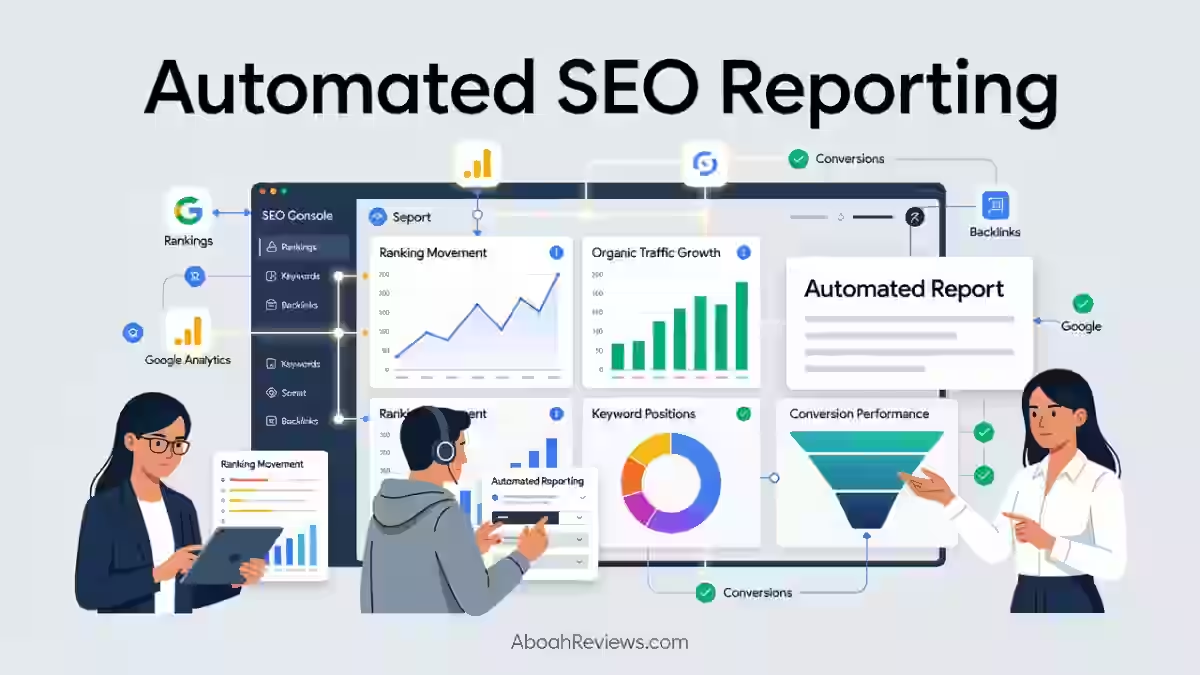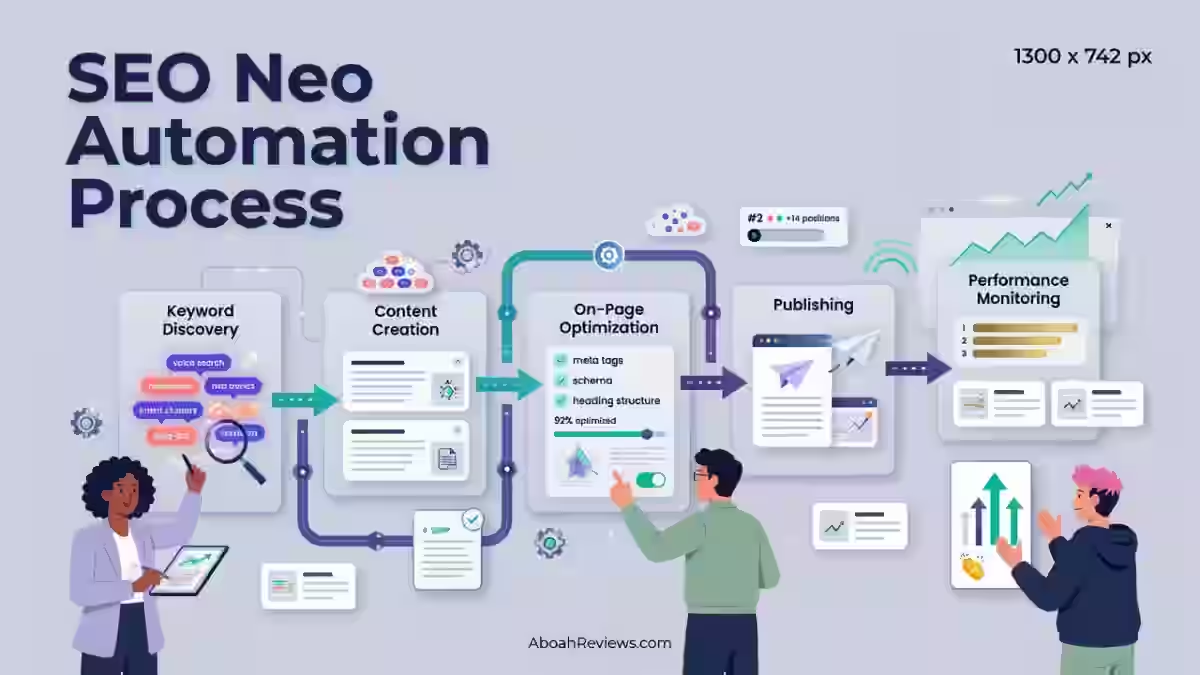
TL;DR: Semantic SEO automation uses AI and workflow tools to research topics, cluster keywords, map entities and build internal links based on meaning and intent, not just keyword matching. The main takeaway: automation should improve your decisions and content structure, not just increase your output.
Introduction
I’ve spent the last 4+ years building and breaking content systems for autoblogging and SEO clients, and if there’s one thing I keep relearning the hard way, it’s this: semantic SEO automation only works when you automate the thinking process, not just the publishing button.
This article explains what semantic SEO automation actually is, which parts of it you can safely hand off to AI and workflow tools, and which parts still need a human sitting in the chair.
I’ll walk through a step-by-step framework I use on real sites, show you a worked example of turning a keyword list into a topic cluster, and point out the mistakes that cost me traffic before I figured this out.
What Is Semantic SEO Automation?

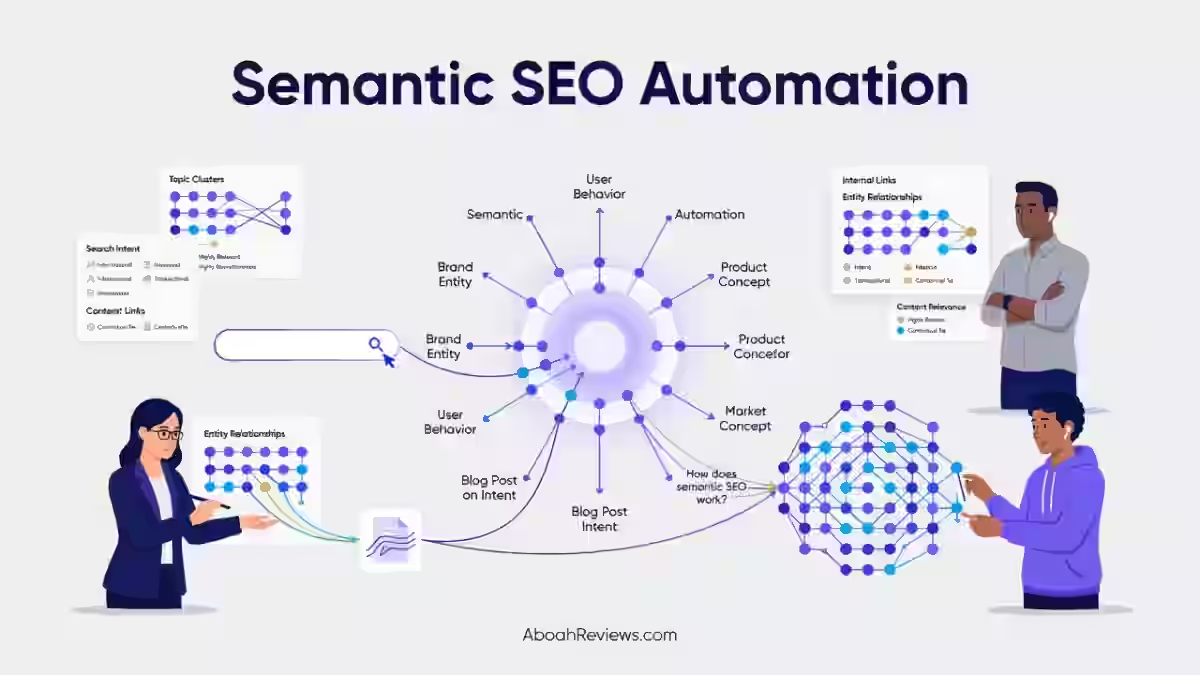
Semantic SEO automation is the practice of using AI tools and workflow software to research, organize, and optimize content based on topics, entities, and search intent instead of individual keywords.
It combines two ideas: semantic SEO (writing and structuring content around meaning and relationships between concepts) and SEO automation (using software to handle repetitive research and optimization tasks).
When you put them together, you get systems that can cluster keywords, map entities, and flag content gaps without someone manually copying data into spreadsheets all day.
The difference between old-school keyword automation and semantic automation is basically the difference between counting words and understanding context.
A keyword tool tells you “autoblogging” gets 2,400 searches a month. A semantic system tells you that “autoblogging” connects to “AI blog automation,” “RSS feed aggregation,” and “content workflow,” and that a searcher typing that term probably wants to compare tools, not read a dictionary definition.
Semantic search seeks to improve search accuracy by understanding a searcher’s intent through contextual meaning, and that’s really the foundation this whole approach is built on.
AI agents and natural language processing models are what make it possible to do this at scale, since they can read hundreds of SERP results and pull out entities, questions, and intent patterns faster than any human team could.
If you’re new to the broader concept, my SEO automation guide covers the basics before you get into the semantic layer.
Semantic SEO vs Traditional Keyword-Based SEO
Traditional keyword SEO optimizes one page for one exact phrase, while semantic SEO builds a network of pages around a full topic and its related entities. Here’s how the two approaches actually differ in practice:
Traditional Approach | Semantic Approach |
|---|---|
One keyword per page | Topic/entity ecosystem across pages |
Individual, standalone articles | Connected clusters with shared context |
Exact-match optimization | Intent and context matching |
Keyword density counting | Comprehensive topic coverage |
Manual, one-off linking | Relationship-based internal linking |
I learned this distinction the expensive way. My first autoblog treated every post like its own island, optimized for one keyword phrase with no connection to anything else on the site. It read fine to a bot counting keyword density. It didn’t read like a site that actually knew what it was talking about.
What Semantic SEO Automation Does
Semantic SEO automation handles the repetitive research and structuring work across nine areas: research, clustering, entity extraction, intent classification, content briefing, optimization, internal linking, monitoring, and reporting.
Each of these used to take hours of manual spreadsheet work. Now a workflow tool or AI script can do a first pass in minutes, leaving the strategic decisions for a human.
- Research – pulling keywords, questions, and competitor data automatically
- Clustering – grouping related keywords by shared search intent
- Entity extraction – identifying people, products, and concepts tied to a topic
- Intent classification – sorting keywords into informational, commercial, or transactional buckets
- Content briefing – turning cluster data into a writer-ready outline
- Optimization – checking drafts for entity coverage and topic completeness
- Internal linking – suggesting contextual links between related pages
- Monitoring – tracking ranking and visibility shifts
- Reporting – summarizing performance across a cluster, not just one URL
Why Semantic SEO Automation Matters in 2026
Semantic SEO automation matters now because content teams are managing more pages, more SERP data, and more AI-driven search results than they can track by hand.
A five-person content team publishing 40 posts a month simply can’t manually map every entity relationship across a 500-page site.
Automation reduces the repetitive research work so people can spend time on strategy and quality checks instead.
Search visibility has also stopped being just blue links. AI Overviews, chatbot answers, and featured snippets all pull from content that’s structured clearly around topics and entities.
Content clarity and topical connections are more important than ever, and to be visible in the era of AI search requires content that is well-structured, so that relationships between topics are clear.
That’s not something you can fake with keyword stuffing, and it’s not something an automation tool can fully judge without a human checking the output.
Automation Does Not Mean Publishing More Content
Automating semantic SEO does not mean pumping out more articles, it means making better decisions with the content you already have or plan to build. The goal is better coverage and better workflows, not more URLs sitting on your sitemap with no readers.
I’ve seen sites publish 100+ auto-generated posts in a month and lose visibility, while a competitor with 20 well-clustered pages outranked them for the same topic.
This is the single biggest misunderstanding I run into with clients who ask about autoblogging. They think “automation” is a volume lever. In reality, the sites that do this well use automation to reduce the busywork around research and structure, then apply the same or fewer publishing hours to content that’s actually connected.
My piece on common autoblogging mistakes to avoid covers a few more examples of this volume trap.
Which Parts of Semantic SEO Can You Automate?
You can automate the data collection and pattern-recognition tasks in semantic SEO, including keyword clustering, entity extraction, and intent classification, but strategic decisions still need a person.
Here’s a practical map of what’s safe to hand off and what needs a human check:
- Keyword collection – pulling raw keyword lists from tools like Semrush or Ahrefs
- Keyword clustering – grouping keywords by SERP overlap and shared intent
- Search-intent classification – tagging keywords as informational, commercial, or transactional
- Entity extraction – pulling named entities from top-ranking pages
- Topic expansion – finding subtopics you haven’t covered yet
- Competitor content-gap analysis – comparing your coverage to competitors
- Content brief generation – turning cluster data into an outline
- Internal-link recommendations – suggesting contextual links between pages
- Semantic content audits – flagging pages missing key entities or subtopics
- FAQ discovery – pulling “People Also Ask” and forum questions
- SERP monitoring – tracking ranking and feature changes
- Performance reporting – summarizing cluster-level traffic and rankings
- Content-refresh recommendations – flagging pages that need updates
What Should Stay Human?
Strategic positioning, intent interpretation, and final editorial approval should never be fully automated, because these require judgment that AI tools don’t have.
A clustering tool can tell you that ten keywords share SERP overlap. It can’t tell you whether targeting that cluster actually fits your business model or your audience’s buying stage.
Here’s what I keep firmly in human hands on every project:
- Strategic positioning – deciding which topics are worth the investment
- Search-intent interpretation – understanding nuance a tool might miss
- Brand voice – making sure content sounds like your company, not a template
- Original insights – the stuff that comes from actually using a product or service
- Fact verification – checking anything a model might have gotten wrong
- Expert opinions – quotes, experience, and judgment calls
- Final editorial approval – the last read before anything goes live
- High-stakes claims – pricing, legal, medical, or financial statements
Google’s own guidance backs this up. Automated, AI-generated, and AI-assisted content can be part of a helpful page, but sharing details about the processes involved can help readers understand any unique and useful role automation may have served.
In other words, automation is fine, hiding it from your quality process isn’t.
How to Build a Semantic SEO Automation Workflow

Building a semantic SEO automation workflow means moving through ten repeatable steps:
- start with a topic
- cluster keywords
- map intent
- map entities
- find gaps
- brief content
- write and optimize
- link internally
- run quality control
- monitor for refreshes
I’ve used a version of this exact sequence on autoblogging sites, affiliate sites and client SaaS blogs and the order matters more than people think.
Step 1: Start With a Topic
Starting with a topic instead of a giant keyword list gives you a cluster that actually holds together, because you’re building outward from one concept instead of trying to force unrelated keywords into a shape.
Say your primary topic is “autoblogging.” Instead of grabbing 500 random keywords, you branch into subtopics that naturally relate:
- What is autoblogging?
- Autoblogging tools
- AI autoblogging
- Autoblogging software
- Autoblogging workflow
- Autoblogging vs AI writing
- Autoblogging SEO
- Autoblogging mistakes
Each of these can become a page, and each page can link back to a central hub. This is exactly how I structured our own autoblogging guide before branching into tool reviews and comparisons.
Step 2: Collect and Cluster Keywords
Collecting and clustering keywords means pulling every related term you can find, then grouping them by SERP similarity and shared intent rather than by exact match.
Tools can automate the collection and even suggest clusters based on how much the top 10 results overlap for each term. What they can’t always catch is keyword cannibalization, where two of your own pages are quietly competing for the same query.
I lost real rankings to this exact problem. I published 42 auto-generated posts on an affiliate site without checking for internal linking or keyword filtering first, and the content ended up cannibalizing itself, with multiple pages competing for the same parent topic and diluting rankings across all of them.
A clustering step at the start would have caught this before publishing, not after.
Step 3: Map Search Intent
Mapping search intent means labeling each keyword by what the searcher actually wants: informational, commercial investigation, transactional, or navigational.
“What is autoblogging” is informational. “Best autoblogging tools” is commercial investigation. “RightBlogger pricing” is transactional. Get this wrong and you’ll write a 3,000-word explainer for someone who just wanted a buy button.
Mixed intent is the tricky part. A query like “autoblogging tools” might need a comparison table for people ready to buy and a short explainer paragraph for people still researching.
That’s often why one keyword ends up needing two content formats instead of one page trying to do everything.
Step 4: Build an Entity Map
Building an entity map means listing the people, products, organizations, and concepts connected to your topic so your content can reference them naturally instead of in isolation. For “autoblogging,” that includes:
- Primary entity: Autoblogging
- Related entities: RSS feeds, WordPress, AI writing tools, content automation
- Products: Emplibot, Junia AI, RightBlogger, WordRocket
- Concepts: Thin content, editorial oversight, content velocity
- Problems: Google penalties, duplicate content, low engagement
- Solutions: Human editing, internal linking, content refresh cycles
This map becomes the backbone of your content briefs later. It also helps AI writing tools produce drafts that reference real, relevant entities instead of generic filler.
Step 5: Identify Content Gaps
Identifying content gaps means comparing what you’ve already published against what competitors and the SERP cover, then listing what’s missing.
Pull the top 10 ranking pages for your target topic and check them against your entity map and subtopic list. If five competitors cover “autoblogging legality” and you don’t, that’s a gap worth closing, and my is autoblogging legal piece exists for exactly that reason.
Step 6: Generate Content Briefs
Generating a content brief means turning all your cluster, intent, and entity data into a single document a writer or AI tool can work from. A solid brief includes:
- Search intent for the target keyword
- Primary and secondary topics
- Required entities to mention
- Common questions to answer
- Recommended heading structure
- Suggested internal links
- Notable SERP observations
- Word count and format requirements
This is the step where automation saves the most time. What used to take an hour of manual research per article can be compressed into a template that pulls from your cluster data automatically.
Step 7: Create and Optimize Content
Creating and optimizing content means using AI to draft and expand sections while a human checks entity coverage, accuracy, and voice before anything publishes.
AI tools are genuinely good at drafting, expanding thin sections, and generating FAQ blocks based on your brief. They are not good at knowing whether a claim is actually true, or whether your brand would ever phrase something a certain way.
The mistake isn’t using automation, it is skipping the human review step entirely.
Step 8: Automate Internal Linking
Automating internal linking means using workflow tools or plugins to suggest contextual links between related pages based on shared entities and topics, then having a human approve the placement.
Good internal linking follows a hub-and-spoke pattern: hub pages point to cluster pages, and cluster pages link back and sideways to each other where it makes sense.
Keeping it intentional, 3–5 contextual links per article is a good starting point, rather than stuffing every page with dozens of links.
Automated tools are useful for two specific things here: finding orphan pages that have no internal links pointing to them, and flagging over-linking where a page links to the same destination five times.
But choosing the actual anchor text and making sure it reads naturally in a sentence still needs a person, or you end up with links that feel bolted on.
Step 9: Run Semantic Quality Control
Running semantic quality control means checking finished content against your original brief for intent alignment, entity coverage, accuracy, and readability before it goes live.
This is the checkpoint most automated systems skip entirely, and it’s the one that separates sites that hold their rankings from sites that get flagged. Check for:
- Does the content match the original search intent?
- Are the required entities actually mentioned?
- Is the topic covered completely, not just superficially?
- Are the facts accurate and verifiable?
- Is anything duplicated from another page on your site?
- Do internal links make sense in context?
- Is it easy to read, or does it sound like a template?
- Does it actually match what’s ranking in the SERP?
Step 10: Monitor and Refresh
Monitoring and refreshing means tracking ranking, impression, and traffic data over time, then triggering updates automatically when a page starts losing ground.
Track rankings, impressions, CTR, organic traffic, conversions, and signs of cannibalization on a regular schedule, weekly or monthly depending on your site size.
When a page’s numbers slide, automation can flag it, but a person decides the fix: refresh the content, rewrite it entirely, add missing internal links, expand the surrounding cluster, or consolidate it with another page.
10 Semantic SEO Automation Workflows You Can Implement
These are the specific workflows I’ve actually built or tested, organized by input, process, and output so you can adapt them to whatever stack you’re using.
- Keyword-to-topic cluster workflow: Input a keyword database, cluster by intent and SERP overlap, output a topic map ready for content planning.
- Search intent classification workflow: Automatically tag keywords by intent category and flag anything ambiguous for a human to review manually.
- Entity extraction workflow: Pull entities from top SERPs, competitor pages, and your own existing content to build a running entity list.
- Content gap detection workflow: Compare your published pages against competitor coverage to surface topics you haven’t touched yet.
- Automated content brief workflow: Convert cluster and entity data directly into a structured brief template for writers or AI drafting tools.
- Internal linking workflow: Scan your site for contextually relevant linking opportunities between pages that share entities or subtopics.
- Semantic content audit workflow: Analyze existing pages for missing entities, thin subtopic coverage, and intent mismatches against current SERPs.
- Content refresh workflow: Trigger a review automatically when rankings decline, impressions drop, or a competitor publishes new coverage on the same topic.
- SERP monitoring workflow: Track meaningful SERP changes, like new featured snippets or shifting intent, rather than just daily rank position.
- SEO reporting workflow: Generate a weekly summary covering cluster performance, new content, ranking movement, traffic, CTR, and pages that need action.
My guide to automated SEO reporting goes deeper into building that last workflow if reporting is your biggest time sink right now.
Best Tools for Semantic SEO Automation
The right tools for semantic SEO automation depend on which function you’re automating, since no single platform handles keyword research, clustering, drafting, and reporting equally well.
Here’s how I’d organize a stack by function rather than by brand hype:
Function | Example Tools |
|---|---|
Keyword research | Semrush, Ahrefs |
Content optimization | Surfer, Clearscope |
AI analysis and drafting | ChatGPT, Perplexity |
Workflow automation | Make, Zapier, n8n |
CMS | WordPress |
Data management | Google Sheets |
Reporting | Looker Studio, Google Search Console |
Rank tracking | Semrush, Ahrefs, SE Ranking |
If you’re specifically looking at autoblogging-style tools that bundle several of these functions together, my best autoblogging software roundup compares pricing and output quality across the ones I’ve actually tested.
How to Choose a Semantic SEO Automation Stack
Choosing a stack depends on your site size, content volume, technical skill, and budget, not on which tool has the flashiest homepage.
A solo blogger publishing four posts a month doesn’t need the same setup as an agency managing 15 client sites. Before picking tools, answer these questions:
- How many pages or clusters are you managing right now?
- Do you already use a CMS like WordPress, or something custom?
- Does your team have someone comfortable setting up Zapier or Make workflows?
- What’s your monthly budget, realistically, between 50 and 500?
- Do you already have an SEO platform like Semrush or Ahrefs, or are you starting from scratch?
- How much of the process do you actually want automated versus hands-on?
My how to choose the best autoblogging tool guide walks through a similar decision framework if you’re picking a single all-in-one platform instead of stitching tools together.
Semantic SEO Automation Example: From Keyword List to Topic Cluster
Let me show you what this actually looks like with a real working example, using “autoblogging” as the seed topic.
Starting Dataset
Here’s a realistic starting list of related keywords you might pull from a tool:
autoblogging, what is autoblogging, autoblogging tools, best autoblogging software, autoblogging WordPress plugin, is autoblogging legal, autoblogging vs blogging, autoblogging for affiliate marketing, free autoblogging tools, autoblogging SEO, RSS autoblogging, autoblogging mistakes, does autoblogging still work, autoblogging income, AI autoblogging tools
Clustering the Keywords
Grouped by intent and topic overlap, these 15 keywords collapse into about five content pieces instead of fifteen separate pages:
- Pillar: What is autoblogging (definition, overview)
- Cluster: Autoblogging tools and software comparisons
- Cluster: Autoblogging legality and Google policy
- Cluster: Autoblogging vs traditional/AI blogging
- Cluster: Autoblogging mistakes and whether it still works
Mapping Entities
Across this cluster, the recurring entities are WordPress, RSS feeds, AI writing tools, specific software names like RightBlogger and Emplibot, Google’s helpful content guidelines, and affiliate marketing as a use case.
Every cluster page should reference the entities relevant to its specific subtopic, not force all of them into every page.
Creating the Content Architecture
The architecture flows from one pillar page down to supporting pages and out to related articles:
“What Is Autoblogging” sits at the top, linking down to “Best Autoblogging Software,” “Is Autoblogging Legal,” and “Autoblogging vs Traditional Blogging,” each of which links sideways to related comparisons and reviews.
Automating Internal Links
Once the architecture exists, an automated internal linking scan can suggest that the “autoblogging mistakes” page links to the “does autoblogging still work” page, since they share the entity “content quality” and both discuss ranking drops.
A human then checks that the suggested anchor text, something like “common reasons autoblogs lose rankings,” reads naturally in context before it goes live.
How to Automate Semantic SEO Without Creating Low-Quality AI Content
You avoid low-quality AI content by treating automation as a research and structuring tool, not a publishing shortcut, and by keeping fact-checking and editorial review as mandatory steps.
AI-generated content is not automatically semantically complete just because it mentions a lot of related terms.
More entities crammed into a page do not mean better content, they can just mean a bloated page that never answers the actual question clearly.
Automation can also amplify bad decisions at scale. If your keyword clustering logic is wrong, an automated brief generator will produce dozens of briefs built on that same wrong assumption before anyone notices.
That’s why human review checkpoints need to exist at specific stages: after clustering, after brief generation, and before publishing, not just at the very end.
Common SEO Automation Failure Modes
These are the failure patterns I’ve either caused myself or watched happen on client sites:
- Wrong search intent – targeting a commercial keyword with a purely informational page
- Incorrect entity relationships – connecting concepts that don’t actually belong together
- Keyword cannibalization – multiple pages competing for the same query
- Generic AI content – drafts that mention entities without saying anything useful about them
- Hallucinated facts – AI tools inventing statistics or pricing that isn’t real
- Excessive internal links – so many links that none of them carry real weight
- Duplicate pages – two articles covering the exact same subtopic
- Thin supporting content – cluster pages that exist but don’t add real depth
- Automated publishing without QA – the mistake that started my whole learning curve
How to Measure Semantic SEO Automation
You measure semantic SEO automation across three layers: standard SEO performance metrics, semantic coverage metrics, and automation efficiency metrics.
Most guides only talk about the first layer, which is why teams end up automating a lot of work without knowing if it’s actually helping.
SEO Performance Metrics
Track impressions, clicks, CTR, rankings, organic sessions, and conversions the same way you would for any SEO campaign, but roll them up by cluster instead of by individual URL.
A cluster-level view tells you whether your topic as a whole is gaining visibility, even if one specific page is lagging.
Semantic Coverage Metrics
Track cluster coverage, supporting-page coverage, entity coverage, orphan pages, internal-link coverage, and cannibalization across your site.
These metrics answer a different question than rankings: not “are we ranking,” but “is our topic structure actually complete and connected.”
Automation Metrics
Measure time saved, workflow completion rate, error rate, human-review rate, and how long your content production cycle actually takes from brief to publish.
If your automated workflow is saving five hours a week but your human-review rate is only 20%, that’s a red flag, not a win.
Semantic SEO Automation for AI Search and Google AI Overviews
Semantic SEO automation supports AI search visibility by helping you build clear entity relationships and well-structured content, but it doesn’t guarantee citations or AI Overview placement.
AI Overviews and answer engines rely on parsing entities, relationships, and structured information rather than counting keywords.
Large language models scan content for specific, unambiguous entity references and how those entities connect to each other, which is exactly what a good entity map and cluster structure produce.
Structured data plays a supporting role here too. A study by BrightEdge found that schema markup improved brand presence in Google’s AI Overviews, with higher citation rates on pages using more thorough schema.
That said, schema and clustering are reinforcement, not a guarantee. Source credibility, comprehensiveness, and clear writing still matter more than any technical trick.
Does Semantic SEO Help With AI Search?
Semantic SEO can make your content easier for AI systems to interpret and reference, but it doesn’t promise a citation or a spot in an AI Overview.
Clear entities, logical relationships between topics, and well-organized structure make it easier for answer engines to pull accurate information from your pages.
What it can’t do is override weak content, thin coverage, or a topic your site has no real authority on.
My generative engine automation guide covers this relationship in more depth if you’re building specifically for AI search visibility.
Common Semantic SEO Automation Mistakes to Avoid in 2026
I’ve made most of these myself, so consider this a shortcut past the expensive part:
- Automating strategy instead of repetitive tasks – letting a tool decide what to target, not just how to research it
- Treating keywords as the whole strategy – ignoring entities and intent
- Creating too many overlapping pages – splitting one topic into five thin pages
- Ignoring search intent – matching keywords without matching what people actually want
- Automating publishing without quality control – the mistake that cost me 40+ rewritten posts
- Using AI-generated facts without verification – publishing numbers nobody checked
- Building clusters without internal-link architecture – pages that exist in isolation
- Measuring only keyword rankings – ignoring cluster-level and conversion data
- Ignoring conversions – chasing traffic that never turns into revenue
- Failing to refresh outdated clusters – letting good content quietly decay
Semantic SEO Automation vs Traditional SEO Automation
Semantic SEO automation tracks topics and relationships across a content system, while traditional SEO automation mostly tracks individual keywords and rankings on a page-by-page basis.
Traditional Automation | Semantic Automation |
|---|---|
Keyword tracking | Topic and cluster tracking |
Rank monitoring | Cluster performance monitoring |
Basic on-page optimization | Entity and intent coverage |
Individual page focus | Connected content systems |
Manual link discovery | Relationship-based link recommendations |
Keyword reports | Topic-level insights |
It’s worth being clear that semantic SEO automation isn’t a replacement for technical SEO, backlinks, or basic on-page fundamentals. It’s a layer on top of those fundamentals, not a substitute for them.
If your site has crawlability issues or no backlink profile, no amount of entity mapping will fix that on its own.
Final Takeaway
If you remember one thing from this guide, remember the sequence: research, cluster, map intent, map entities, build content, link, validate, publish, measure, refresh.
That loop is what separates a semantic SEO automation system from a content firehose that happens to use AI. The goal was never to publish more, it’s to build a site where every page knows how it connects to the next one.
Scale this to your team size. A solo blogger might run this loop manually with a spreadsheet and ChatGPT.
An agency managing multiple client sites might wire it together with Make or n8n and a shared entity database.
Either way, keep a human at the review checkpoints, because the tools I’ve tested, and the mistakes I’ve made, all point to the same lesson: automation speeds up the process, but it doesn’t replace the judgment call at the end.

- HighSoftware99 Review 2026: Is It Legit or a Risk to Your Website? - October 21, 2026
- SEO Instant Appear HighSoftware99.com: Full Breakdown - October 18, 2026
- SEO by HighSoftware99.com: My Honest Independent Fact-Check for 2026 - October 18, 2026