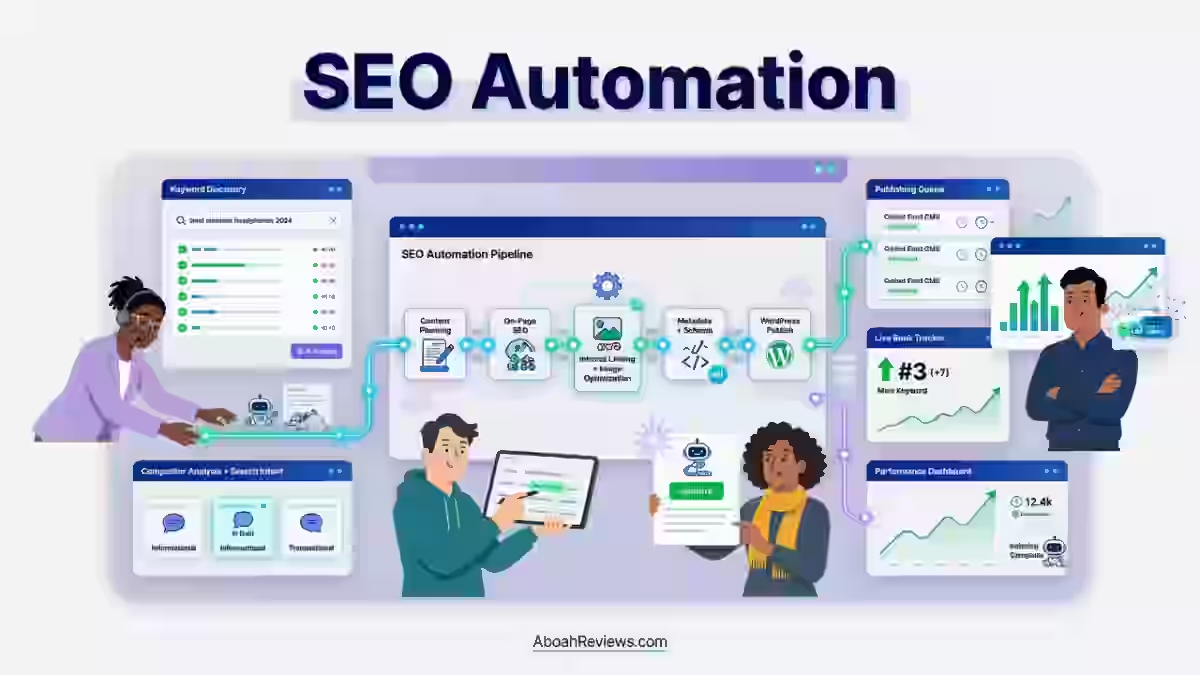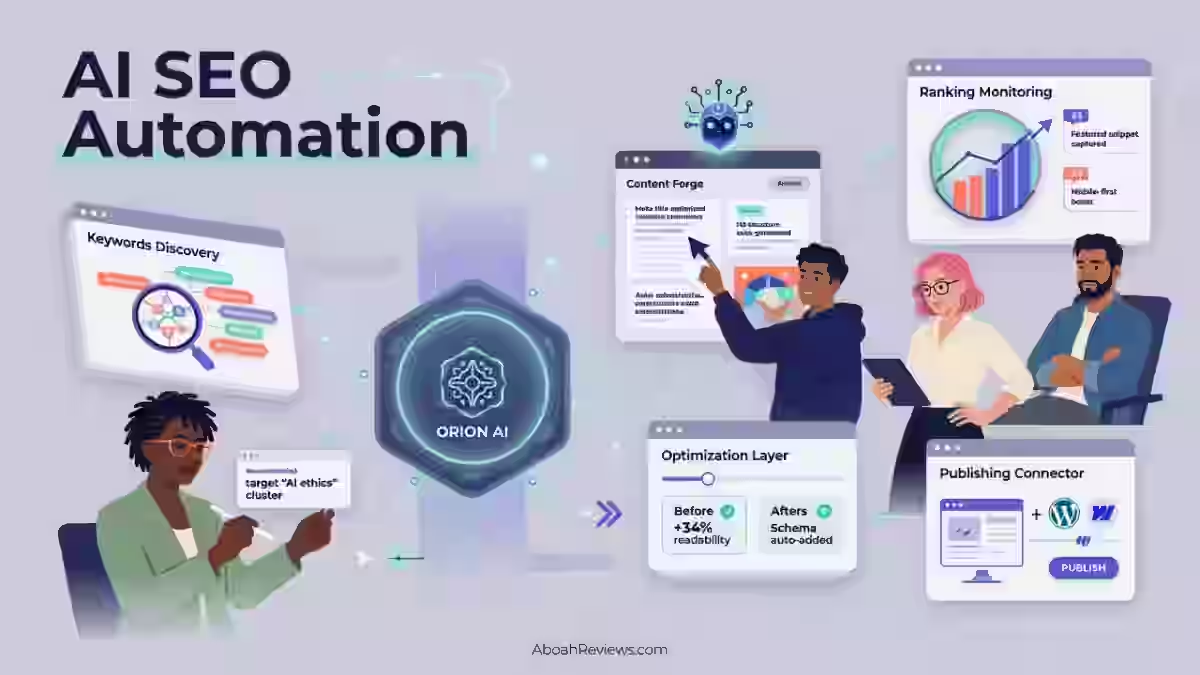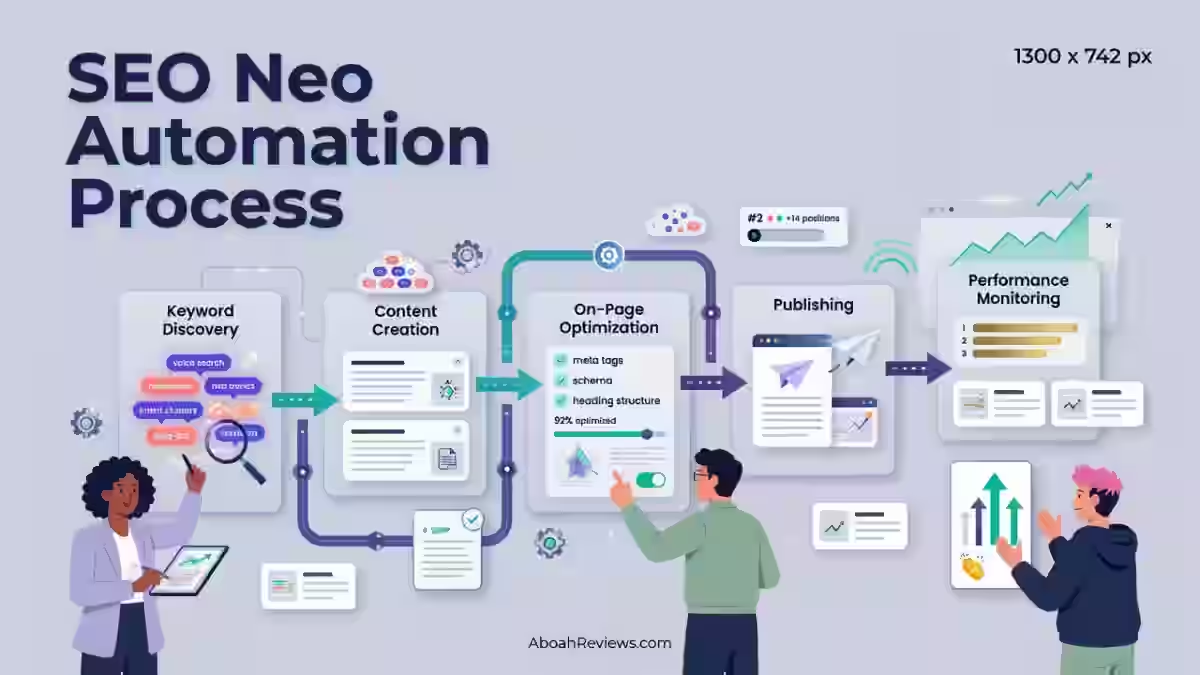
TL;DR: This guide breaks down the best SEO operating systems for agencies with local SEO & GBP automation, comparing 7 platforms (Paige, BrightLocal, SOCi, Localo, GrowthPro AI, Localith, Aldus Local) by automation level, pricing, and agency fit. It’s for agencies managing multiple local clients or locations who are tired of switching five tools to do one job. Main takeaway: the “best” platform depends on how much execution you want automated versus how much control you want to keep.
Quick Answer: The 7 Platforms at a Glance
Here’s the short version before we get into the details. If you manage local clients or multiple business locations, these are the platforms worth putting on your shortlist right now.
- Paige by Merchynt – runs as a fully autonomous AI agent that manages GBP, reviews, citations, and social posting with almost no manual input. Best for agencies that want execution done for them, not just flagged.
- BrightLocal – the most established name in local SEO reporting and citation tracking. Best for agencies that want deep audits, geo-grid rank tracking, and client-ready reports, with humans doing the actual fixes.
- SOCi – an enterprise-grade platform built for franchises and multi-location brands with hundreds or thousands of locations. Best for large brands, not solo agencies.
- Localo – an AI-assisted GBP management tool built for small agencies and single-to-few-location businesses. Best for teams that want automation help without an enterprise price tag.
- GrowthPro AI – positions itself as a full-automation alternative to reporting-only tools, running GBP posts, review replies, and content publishing on a continuous schedule. Best for agencies scaling delivery without adding headcount.
- Localith – a low-cost, GBP-focused dashboard for bulk profile management. Best for agencies just starting to consolidate scattered GBP logins.
- Aldus Local – a smaller, newer entrant worth watching for boutique agencies that want a lighter-weight alternative to the bigger suites.
Introduction to SEO Operating Systems for Agencies With Local SEO & GBP Automation
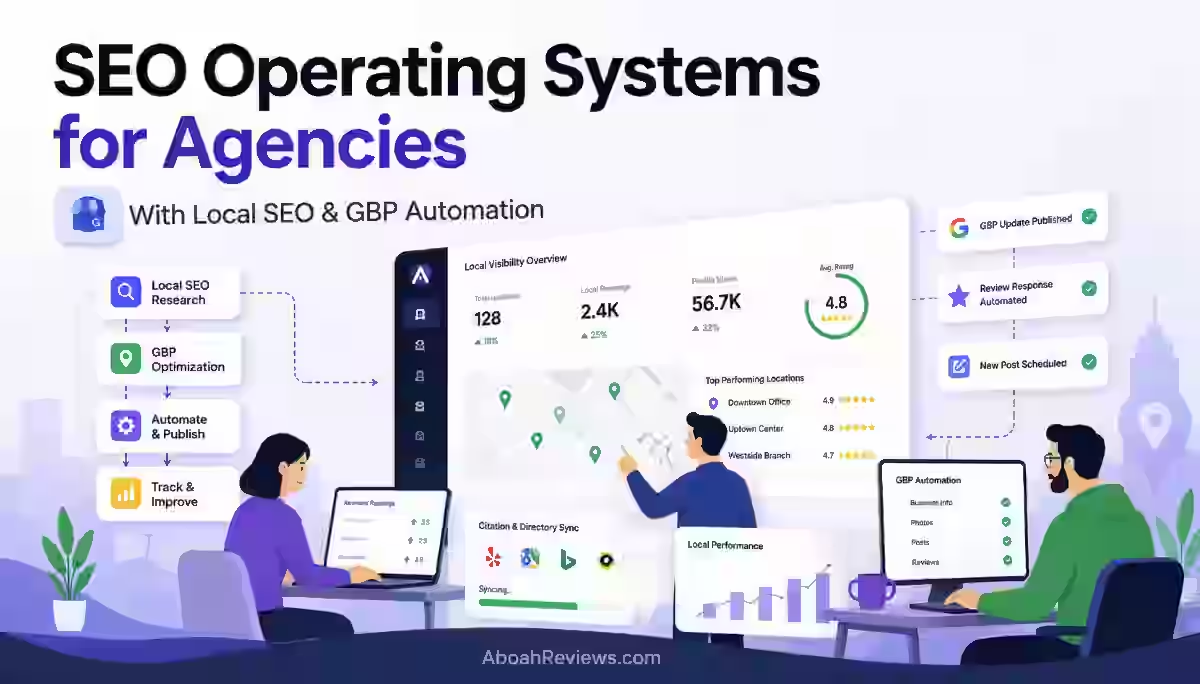
If you’re running local SEO for more than five clients right now, you’ve probably felt the moment when the tool stack stops working for you and starts working against you.
Rank tracker over here. GBP post scheduler over there. Review management in a third tab. Citation builder on a separate login. Reports stitched together in a Google Sheet. I’ve experienced this before and it’s not sustainable at scale.
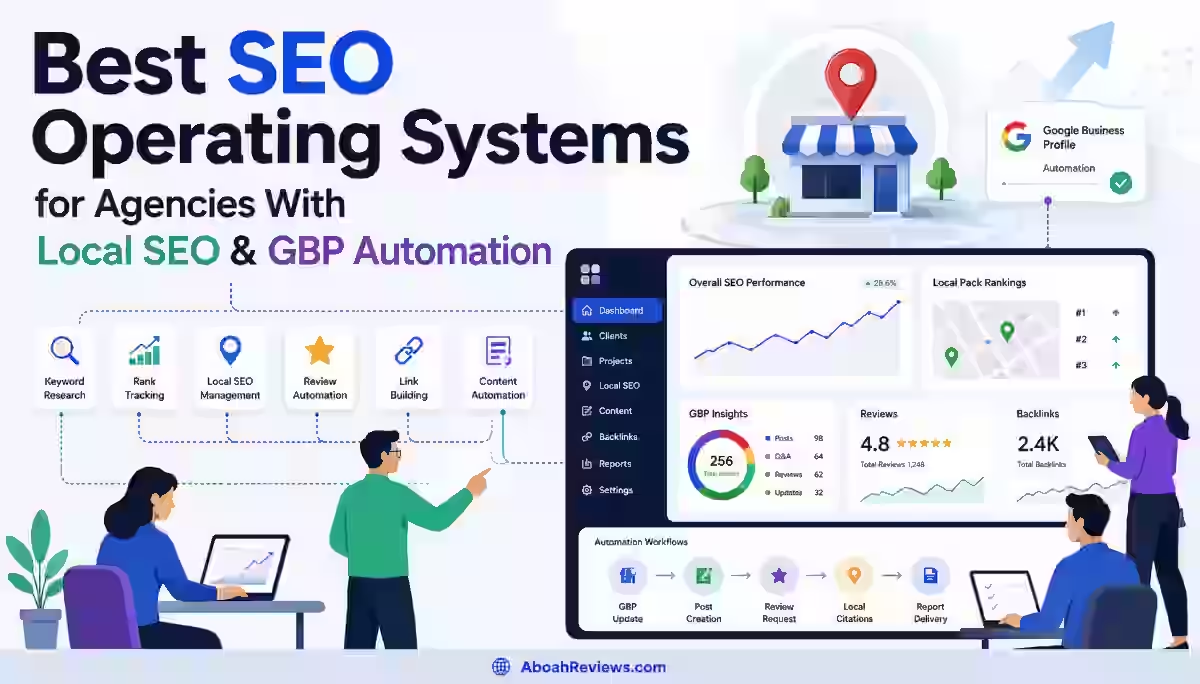
That’s the exact problem SEO operating systems for agencies with local SEO & GBP automation are built to fix. Instead of managing six disconnected platforms, you get one system that handles ranking data, Google Business Profile management, content publishing, review responses, citations, and client reporting from a single workspace.
This guide covers seven platforms doing this in 2026, how their automation depth compares, what they still need humans for, and which one makes sense for your specific agency setup. I’ll be direct about where each platform falls short, because that’s what actually helps you make a decision.
The 7 Platforms Compared
Before going deep, here’s where each platform sits at a high level:
| Platform | Primary Use Case | Strongest Capability | Automation Model | Best Agency Fit |
|---|---|---|---|---|
| Paige by Merchynt | GBP-first local SEO | Fully automated GBP execution | Full automation (AI runs tasks) | Agencies wanting hands-off per-client delivery |
| BrightLocal | Agency reporting + audit | Geo-grid rank tracking + white-label reports | Monitoring + manual execution | Data-led agencies, up to ~50 locations |
| SOCi | Enterprise multi-location | AI-assisted local search at scale | AI recommendations + team execution | Franchise systems, enterprise brands |
| Localo | GBP optimization + task lists | AI-generated optimization task lists | Semi-automated (AI suggests, team acts) | SMB-focused agencies, GBP-centric |
| GrowthPro AI | White-label agency delivery | Full GBP + review + AI visibility automation | Full automation under agency brand | White-label agencies, multi-location clients |
| Localith | Multi-location GBP management | Bulk GBP publishing + AI review replies | Mixed (automation + human QA) | Franchise operators, multi-location brands |
| Aldus Local | GBP management for specialists | DriveTime geo-grid mapping + GBP automation | Semi-automated (scheduling + AI assist) | Local SEO specialists and small agencies |
What Is an SEO Operating System for an Agency?
An SEO operating system is a single platform that replaces a fragmented tool stack by handling monitoring, recommendations, execution, and reporting together, at scale, across multiple client accounts.
It’s not a rank tracker or a GBP scheduler. It’s the system that coordinates all of those tasks so your team isn’t the connective tissue between tools.
SEO Software vs Local SEO Tool vs SEO Operating System
These three categories are often confused, and the confusion usually costs agencies money.
- SEO software (Semrush, Ahrefs, Moz) gives you data. Keyword research, backlinks, audits. You still do the work.
- Local SEO tools (Whitespark, Moz Local) solve one or two specific problems: citation building, rank tracking, or GBP posting.
- SEO operating systems coordinate strategy, execution, automation, and reporting in one place, designed for agency workflows across multiple clients.
The practical difference: SEO software tells you what to do. A local SEO tool helps you do one thing. An SEO operating system does multiple things together and then tells your client what happened.
Monitoring vs Recommendations vs Execution vs Automation
These four levels matter when you’re evaluating any platform:
- Monitoring: tracks rankings, reviews, and profile health. Tells you what changed.
- Recommendations: analyzes the data and suggests what to fix. Still needs a human to act.
- Execution: your team carries out the work inside the platform (posting, responding, updating).
- Automation: the platform carries out the work without human input between triggers and completion.
Most tools marketed as “automated” are actually recommendation tools. True automation means the post goes out, the review gets a response, and the citation updates without your team touching it.
What Makes a Platform a True SEO OS?
A platform earns the “operating system” label when it does at least five of the following without requiring your team to switch tools:
- GBP posting and profile management
- Local rank tracking (including geo-grid)
- Citation monitoring and/or building
- Review monitoring and response
- Competitor tracking
- White-label client reporting
- Multi-client dashboard with role-based access
If it only does two or three of those, it’s a good tool. Not an operating system.
Why Agencies Are Moving From Tool Stacks to SEO Operating Systems
The tool stack problem is a scalability problem dressed up as a workflow problem. I’ve managed local SEO campaigns using a stack of five separate platforms, and the overhead is real: different logins, different data formats, different billing cycles, and a reporting process that takes half a day per client.
Here’s what fragmented stacks actually cost agencies:
- Subscription bloat: A typical local SEO stack in 2026 might include a rank tracker ($49–$99/month), a GBP scheduler ($29–$59/month), a reputation management tool ($59–$149/month), a citation tool ($30–$79/month), and a reporting platform ($49–$99/month). That’s $216–$485/month before you count team time.
- Labor overhead: For an agency with 30 profiles, review checkpoints across posts, review responses, and profile alerts can consume several hours per week. If your effective team cost is $50/hour, five hours a week is roughly $1,000/month of labor sitting on top of the software bill.
- Data fragmentation: When your rank data lives in one tool and your GBP data lives in another, you can’t see the relationship between posting frequency and ranking movement. That insight gap is where agencies lose the ability to optimize intelligently.
- Workflow standardization: The wrong tool wastes hours on manual tasks that should be automated. The right one gives you accurate local rank tracking, citation management, and reporting that clients can actually understand, all without duct-taping five different platforms together.
The shift to SEO operating systems is a response to all four of those problems at once. You trade tool flexibility for operational efficiency and for most agencies past the 10-client mark, that trade makes sense.
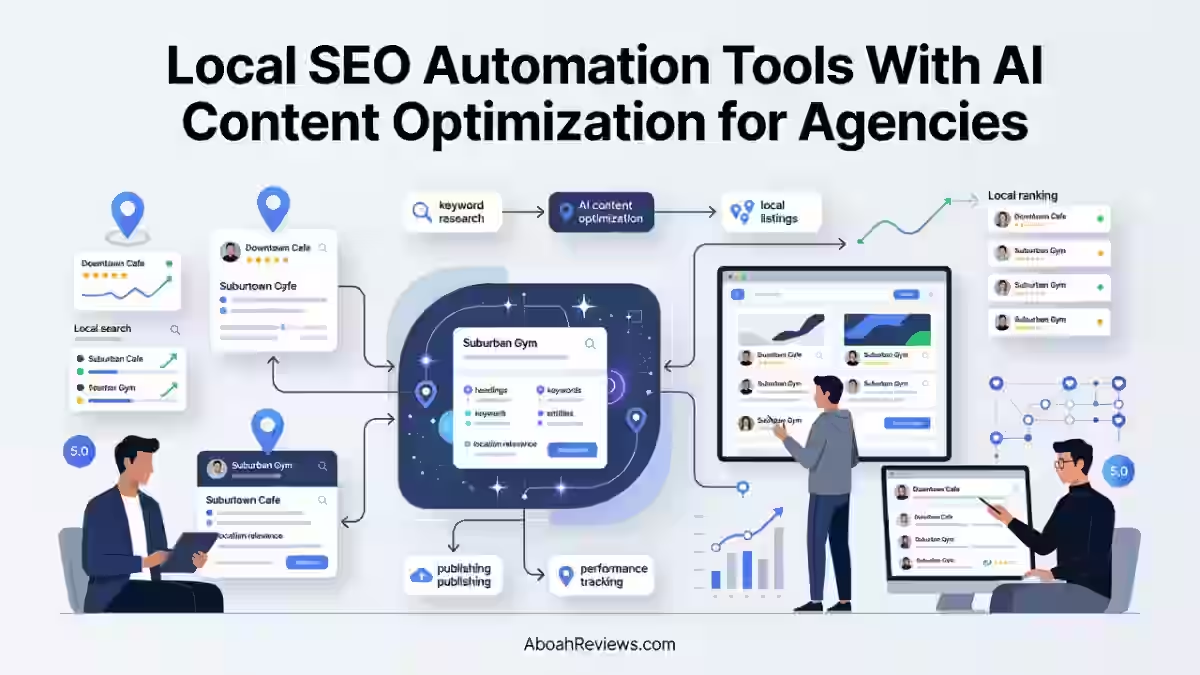
For a broader look at how automation fits into a modern agency’s SEO workflows, this guide on local SEO automation tools with AI content optimization for agencies covers the wider stack conversation well.
What Should an Agency SEO Operating System Automate?
Not everything should be automated. But knowing which tasks should be is what separates profitable local SEO agencies from ones burning team time on repetitive work.
GBP and Local Presence
Automating GBP means posts go out on schedule, photos get uploaded, services stay updated, and Q&A is monitored without a human scheduling each task individually. The best platforms in this category do all of that without constant input.
Local Rankings and Geo-Grids
Geo-grid rank tracking (sometimes called Local Search Grid) shows where a GBP ranks across a physical area, not just one search. This should be tracked automatically on a regular cadence, weekly at minimum, and the data should feed into reporting without a manual export.
Website SEO
Most local SEO OS platforms focus heavily on GBP and listings, but website SEO still matters. On-page audit alerts, structured data monitoring, and local landing page performance tracking should either live inside the platform or feed into it via integration.
Content
GBP posts, service updates, photo captions, and event posts should be schedulable or auto-generated from templates. Full automation means the platform writes and publishes based on business context.
Semi-automation means your team approves before publishing. Both have their place depending on the client.
Reviews and Reputation
Review requests, monitoring across Google/Yelp/Facebook, and response drafts or automated responses are table-stakes at this point.
AI-powered duplicate detection, automated review responses, and structured data optimization for AI search engines are becoming standard features in 2026. Any platform that doesn’t handle this is already behind.
Competitor Intelligence
Tracking how competitor GBPs are posting, what keywords they’re appearing for, and where they rank on the geo-grid gives agencies a strategic edge that is genuinely hard to replicate manually across 20+ clients.
Reporting and Client Management
White-label PDF or live dashboard reports, auto-generated on a monthly cadence, are what separate agencies that retain clients from those that lose them to “we couldn’t see what was happening.” Reporting should require zero manual layout time per client.
Multi-Location Operations
Bulk actions, location grouping, and permission levels matter enormously when you’re managing 20, 50, or 150 locations.
For 30 to 150 locations, leaning toward platforms like SOCi for central control makes sense, as approvals, reporting, and profile governance get harder to manage in spreadsheets and scattered tools.
7 SEO Operating Systems for Agencies With Local SEO & GBP Automation Reviewed & Ranked
1. Paige by Merchynt
Paige is a fully automated AI agent that manages Google Business Profiles on behalf of agencies and businesses.
The positioning is that Paige replaces both a human local SEO specialist and the patchwork of separate tools most businesses use, bundling citation management, reputation management, image optimization, video creation, and reporting into a single automated system.
What it automates:
Paige AI learns from outcomes across 20,000+ GBPs and applies winning strategies to each profile automatically. It can also manage YouTube channels, social media profiles, and how a business appears in online directories including ChatGPT.
What requires human input:
Post review (if the agency uses the “approval” autonomy setting), responding to review edge cases, and strategy adjustments when the business category or service area changes significantly. Paige is built to run in the background, but the autonomy setting keeps you in control when you want to review and tweak things.
Agency capabilities:
White-label option, agency partner program for volume pricing, and a GBP audit tool that surfaces optimization gaps across client profiles.
Differentiators:
Paige is an AI agent that manages Google Business Profiles automatically and improves its own strategy by learning from what works across thousands of businesses it manages. At $99/month per business, it requires almost no ongoing input.
Limitations:
If you’re a single-location business owner, the price is in line with the category. If you’re an agency or multi-location operator, the flat per-profile model deserves your attention, because it compounds quickly. At 15 locations, that’s $1,485/month. Citation building is a paid add-on at $40/month per profile ($20 for agency partners).
Best fit:
Agencies that want fully automated, hands-off GBP delivery per client location and are willing to pay for execution rather than manage it themselves.
2. BrightLocal
BrightLocal is a local SEO platform built specifically for agencies, covering rank tracking, citation monitoring, reputation management, and white-label client reporting.
What it automates:
BrightLocal’s reporting features enable fully tailored and automated updates, helping agencies and businesses communicate progress and results efficiently to clients. Rank tracking updates daily or weekly depending on plan, and the Citation Tracker monitors 108+ citation sources automatically.
What requires human input:
No auto-posting, no automated review replies, no profile optimization executed for you. BrightLocal tells you and reports on it; the work stays with your team. It’s a monitoring and reporting platform, not a GBP execution platform.
Agency capabilities:
Purpose-built for local SEO agencies, client management UX is best-in-category. White-label reports on the Grow tier are agency-ready. Local Search Grid geo-grid tracker is among the best in the industry. Reputation Manager aggregates reviews across Google, Yelp, and Facebook in one inbox.
Differentiators:
The 14-day free trial with no credit card required is one of the most honest evaluation offers in the category. BrightLocal launched an MCP server in January 2026 that connects to ChatGPT, Claude, or Mistral, letting you query and act on local SEO data from inside those AI tools.
Limitations:
BrightLocal doesn’t scale smoothly past around 50 locations. The Citation Builder costs extra, and there’s no social media module. Review monitoring and response are exclusive to the Grow tier. Citation Builder is charged separately at around $2 per citation on a credit basis.
Pricing:
Track starts at $39/month ($29/month billed annually), Manage is $49/month ($37/month billed annually), and Grow is $59/month ($44/month billed annually), all per location. At 41–50 locations, the Grow plan scales to $449/month.
Best fit:
Data-led agencies managing up to 50 locations that need best-in-class rank tracking and reporting but have team capacity for manual execution.
3. SOCi
SOCi is built for multi-location brands that need local search, social, reputation, pages, and chat working together. Its Genius Local Search Agent uses AI to review listing data, recommend updates, and help teams manage local SEO work across large location networks.
What it automates:
AI-assisted listing recommendations, content scheduling at scale, social publishing across locations, and review monitoring with response workflows.
What requires human input:
SOCi is strongest for enterprise teams that want AI assistance with local search decisions and guardrails. Execution still requires human review at the enterprise governance level. Content approvals go through a workflow before publishing.
Agency capabilities:
Multi-location brand management, social and reputation in one platform, franchise-friendly governance structures.
Differentiators:
SOCi’s 2026 Local Visibility Index spans 350,000+ locations and gives enterprise clients data on AI search visibility across Google, Gemini, Perplexity, and ChatGPT.
Limitations:
SOCi pricing is quote-based. Buyers should expect enterprise sales, custom scope, and pricing that depends on modules, locations, and brand needs. There’s no self-serve entry point for smaller agencies.
Best fit:
Franchise systems and enterprise brands that need AI-assisted local search across many locations and teams. Not practical for agencies under 50 managed locations.
4. Localo
Localo is a Google Business Profile management platform built around helping agencies optimize and track client GBP listings with less manual effort. The platform uses AI-assisted recommendations to surface specific actions your team can take to improve each client’s local visibility.
What it automates:
GBP optimization task lists generated automatically from profile performance data, rank tracking with map-based visibility reporting, post scheduling, and photo management across client profiles.
What requires human input:
The platform identifies gaps in profile completeness, photo frequency, and post activity, then tells you exactly what to fix. Your team still carries out the fixes. Review responses are not automated.
Agency capabilities:
Localo is built with white-label tools, bulk actions, shared workspaces, and auto-generated branded reports. An AI agent already knows each client’s business, rankings, and competition, so new team members receive optimization tips without manual setup or tool-hopping.
Differentiators:
Task-based interface is genuinely useful for onboarding junior team members. Localo’s task-based interface gives newer team members a clear action list for each client account, which reduces the training time required to onboard staff.
Limitations:
Localo does not cover citation building or backlink analysis, so agencies running full-scope local campaigns will need additional platforms to fill those gaps.
Pricing:
Localo costs $39/month billed annually for one GBP and includes keyword tracking, reviews, a content publisher, and an AI agent, with a 14-day trial and 30-day money-back guarantee.
Best fit:
Agencies whose primary local SEO deliverable revolves around Google Business Profile performance rather than broader citation or keyword work.
5. GrowthPro AI
GrowthPro AI is the white-label local SEO platform agencies use to automate client delivery, covering GBP posts, reviews, rank tracking, citations, and AI search visibility across every client location.
What it automates:
GrowthPro AI runs GBP posting, review responses, rank tracking, citation monitoring, and AI search visibility across every client location automatically, under the agency’s brand.
What requires human input:
Strategy-level decisions, unusual review situations, and client communication. The platform runs the recurring execution layer but your agency still owns the client relationship.
Agency capabilities:
Full white-label, agency pricing based on location count, and AI search visibility tracking as a differentiator for client reporting.
Differentiators:
GrowthPro AI is one of the only local SEO platforms that covers all areas, including GBP management, reviews, content, leads, and AI search visibility, in one system.
Limitations:
Pricing is available on request (agency tier), which makes budget planning harder without a sales call. The platform is newer than BrightLocal or SOCi, so the track record across diverse agency workflows is still building.
Best fit:
White-label agencies that want full automation under their own brand, particularly those serving clients who care about AI search visibility alongside traditional local rankings.
6. Localith
Localith is a Google Business Profile management platform designed to centralize listings, reviews, local SEO, and publishing operations.
What it automates:
The AI Reply Agent generates brand-aligned responses to reviews, while the AI SEO Agent analyzes local search performance and surfaces optimization opportunities. Bulk management features allow teams to update business information, publish posts, and monitor profile health across multiple locations from a single dashboard.
What requires human input:
Post content creation for non-templated campaigns, strategy-level category and keyword decisions, and handling review escalations that go beyond templated responses.
Agency capabilities:
The platform includes automated workflows for repetitive tasks, geo-based ranking heatmaps, and profile health audits that detect missing data, duplicates, and outdated content.
Differentiators:
Localith’s pricing model is genuinely accessible for agencies starting out. Localith starts at $9/month for the Base Plan, which covers 2 locations and includes 100 AI credits. Each additional location beyond the first 2 costs $6.60/month, and extra AI credits cost $0.15 per credit.
Limitations:
It lacks the depth of citation building found in BrightLocal or Whitespark. The AI credit model means high-volume agencies need to track usage carefully to avoid cost surprises.
Best fit:
Multi-location brands, franchise networks, local SEO teams, agencies, and operators that manage Google Business Profiles. Best suited for organizations handling local presence across several locations, rather than single-location small businesses.
7. Aldus Local
Aldus Local is a local SEO automation platform designed for agencies and specialists to streamline Google Business Profile management. The tool uses AI-driven automation to optimize client visibility in the Map Pack, offering features such as DriveTime mapping and automated reporting.
What it automates:
The $39/month fee provides complete access to Aldus Local’s suite of features for one client, including automated Google Business Profile management, trade area geo-grid mapping, competitor analysis, keyword planning, and automated posting and response tools.
What requires human input:
Aldus Local is designed to make GBP management more structured and efficient. The content, however, still comes from you: your team writes the posts and replies to reviews.
Agency capabilities:
Aldus Local is designed to allow agencies to manage multiple clients from a single dashboard, centralizing local SEO efforts and making management more scalable as the client base grows.
Differentiators:
DriveTime geo-grid mapping is a genuinely differentiated feature. Rather than showing a simple radius grid, it maps visibility across actual drive-time zones, which better reflects how local customers actually search.
Limitations:
Citation building is outside Aldus Local’s scope. Agencies needing automated citation distribution will need a separate tool like Whitespark or Yext alongside it.
Pricing:
Drive-time trade area mapping, GBP automation, and full SEO execution for $59/location/month. The range across plans sits between $29 and $69/month per location depending on what’s being verified.
Best fit:
Local SEO specialists and small agencies who want structured GBP automation with advanced geo-grid visualization and are comfortable handling content creation in-house.
SEO Operating Systems Comparison Table
Here’s how the seven platforms compare across the dimensions that matter most for agency decisions:
| Platform | Starting Price | Automation Level | GBP Posting | Review Automation | Geo-Grid Tracking | White-Label | Citation Building | Best For |
|---|---|---|---|---|---|---|---|---|
| Paige by Merchynt | $99/location/mo | Full (AI executes) | Yes (automated) | Yes (auto-response) | Yes | Yes | Add-on ($40/mo) | Hands-off GBP agencies |
| BrightLocal | $39/location/mo | Low (monitoring + recommendations) | No | Grow tier only | Yes (Local Search Grid) | Grow tier | Credit-based ($2/citation) | Data-led agencies |
| SOCi | Quote-based | Medium (AI-assisted) | Yes (with approval) | Yes (workflow-based) | Yes | Yes | Yes | Enterprise / franchise |
| Localo | $39/location/mo (annual) | Medium (AI suggests, team acts) | Scheduling only | No | Yes | Yes | No | GBP-focused agencies |
| GrowthPro AI | Agency pricing (quote) | Full (automated) | Yes (automated) | Yes (auto-response) | Yes | Yes | Yes | White-label agencies |
| Localith | $9/mo (2 locations) | Medium (AI assist + bulk) | Yes (bulk + scheduled) | AI Reply Agent | Yes (geo heatmap) | Yes | No | Multi-location operators |
| Aldus Local | $39–$59/location/mo | Medium (AI scheduling + audit) | Yes (scheduled) | Partial | Yes (DriveTime grid) | Yes | No | Local SEO specialists |
Which SEO Operating System Fits Your Agency?
Rather than picking a single winner, here’s where each platform actually fits by use case.
For Local SEO Automation
If full automation is the goal and you want the platform to handle GBP posting, review responses, and citation updates without your team touching it, Paige by Merchynt and GrowthPro AI are the two options to evaluate seriously.
Both run in the background. The key difference is pricing model: Paige is flat at $99/location/month, while GrowthPro AI uses agency-tier pricing that scales with location count.
For GBP-Centric Agencies
Localo and Aldus Local are both built around GBP as the primary deliverable. Localo is stronger on task management and team onboarding. Aldus Local is stronger on geo-grid visualization (DriveTime mapping) and automated audits.
If you manage a team of junior specialists who need clear action lists, Localo wins. If you’re a solo specialist or small team that wants sophisticated geo-grid data, Aldus Local is worth testing.
For Enterprise Multi-Location Brands
SOCi is the realistic option here. It’s the only platform in this list with the governance structures, approval workflows, and enterprise support model that brands with 100+ locations actually need.
For 30 to 150 locations, SOCi’s central control is worth evaluating seriously, as approvals, reporting, and profile governance get harder to manage in spreadsheets and scattered tools at that scale.
For Local SEO Reporting and Measurement
BrightLocal wins this category cleanly. The Local Search Grid, white-label reporting, and agency dashboard are the best combination for data-led agencies that need to show clients evidence of work done.
If your client relationships run on monthly reports and ranking accountability, BrightLocal’s reporting is worth the gap in automation depth.
For AI-Assisted Local SEO Workflows
Localith’s AI Reply Agent and AI SEO Agent, combined with its low entry price, make it a practical choice for agencies that want to add AI assistance to their workflow without rebuilding their entire delivery model. It’s not full automation, but it’s a genuine step up from manual-only workflows.
SEO Operating System vs Traditional Local SEO Tool Stack
When an Integrated Platform Makes Sense
An integrated platform makes sense when your agency manages 10+ client locations, your team spends more than 15 hours/week on local SEO execution tasks, or you’re losing clients because reporting is inconsistent or delayed. The operational savings from consolidation typically offset the platform cost within 2 to 3 months at that scale.
When a Tool Stack Is Better
A tool stack is better when you need best-in-class depth in multiple categories.
For example, if you need Whitespark for citation building (which remains the strongest in the category), BrightLocal for geo-grid tracking, and a separate reputation tool, a stack can outperform an OS on raw feature depth.
The tradeoff is the time cost of managing multiple platforms and stitching together reporting.
How to Calculate the Real Cost
To compare a platform vs a stack honestly, total:
- Monthly subscription cost of all current tools
- Hours/month spent on manual execution tasks × your effective hourly team rate
- Hours/month on report creation × hourly rate
- Any per-citation, per-review, or per-action fees in current tools
Compare that total against the OS platform’s monthly cost plus any remaining manual labor hours. Most agencies past 10 clients find the OS wins on total cost. Fewer than 10 clients, the stack often wins on flexibility.
How to Choose an SEO Operating System
Client and Location Count
Under 10 clients: most platforms work, cost matters more than features. 10–50 clients: automation depth and reporting quality drive the decision. Over 50 clients: governance, approval workflows, and per-location pricing become the primary filters.
Automation Requirements
Be specific about what you want automated vs what your team should still touch. GBP posts written and published automatically is a very different product from “GBP post scheduling tool.” Paige and GrowthPro AI automate writing and publishing. Most others automate scheduling only.
Execution Depth
Does the platform fix issues it finds, or does it flag them for your team? Monitoring tools flag. OS platforms with execution depth fix. Know which you’re buying.
Cost Per Client/Location
Calculate cost per managed location, not just headline price. At 20 locations, Paige at $99/location = $1,980/month. BrightLocal Grow at the 11–20 location bracket runs between $200 and $299/month, but your team handles all execution. Factor in the labor cost difference.
Agency Workflow
If you’re running a white-label operation, check that the platform’s reports and client portal carry your brand, not the platform’s. BrightLocal, Localo, GrowthPro AI, and Aldus Local all offer white-label reporting. Confirm depth before committing.
Client Experience
Does the platform give clients a portal they can log into? Does the reporting make sense to a non-SEO reader? Client-facing clarity is often underweighted in platform evaluations and overweighted as a churn driver after the fact.
How to Build a Scalable Local SEO Workflow
Onboarding
Collect business information (NAP, categories, service area, services, hours, photos) in a standardized intake form before touching any platform. Getting this right at onboarding saves hours of correction later. Build a template that maps directly to GBP fields.
Baseline Audit
Before automating anything, run a full GBP audit, rank snapshot, and citation consistency check. You need a before-state to measure against. Most platforms in this list include an audit tool. Use it before configuring automation.
Recurring Automation
Set automation rules for: GBP post frequency (minimum 2 per month, ideally 4–8), review request triggers (post-purchase or post-service), and rank tracking cadence (weekly minimum for competitive clients). Document what’s automated so your team doesn’t duplicate work.
Human QA
Automate the production. Keep humans in the review loop, especially for review responses that go to real customers.
Automation isn’t a signup-and-work-is-done-for-you situation. You still have to put in the work and use it as a tool to be more efficient. A monthly 30-minute QA pass per client catches problems before clients do.
Monthly Optimization
Review ranking movement, GBP insights (views, calls, direction requests), and review sentiment trends. Use that data to adjust post topics, add new services to GBP, and update photos. Automation handles volume. Humans handle strategy.
For a detailed framework on building local SEO automation workflows, that guide covers the recurring execution model in more depth.
How Much Local SEO Should You Automate?
This is the question most platform vendors won’t answer honestly, so I will.
Good Candidates for Automation
- GBP post publishing (templated, location-specific content)
- Review request triggers
- Review response drafts (with human approval before sending, for sensitive industries)
- Rank tracking and geo-grid reporting
- Citation monitoring
- Monthly report generation
- Profile health alerts
Tasks Requiring Human Oversight
- Review responses for negative or complex reviews
- GBP category selection and recategorization
- Service area changes for clients with compliance implications (healthcare, legal)
- Content for new campaigns or promotions that require strategic input
- Competitor analysis interpretation
- Client strategy conversations
The Human + Automation Model
The model that holds up in practice: let automation handle frequency and consistency. Let humans handle judgment and strategy.
I’ve seen agencies try to automate everything and end up with published content that embarrassed their clients. I’ve also seen agencies refuse to automate anything and burn out their teams on tasks a platform could handle in seconds.
The balance I’ve landed on: automate the repetitive, QA the published, own the strategic. That’s roughly 70% automation by task volume, 30% human judgment by value to the client.
For more on where automation fits in the content and SEO workflow, this AI SEO automation guide covers the broader picture beyond local SEO.
How to Measure SEO Automation ROI
Operational KPIs
- Hours/month saved on execution tasks vs pre-platform baseline
- Number of clients managed per team member (target: 15–25 with good automation)
- Onboarding time per new client (target: under 4 hours from intake to first automated post)
SEO KPIs
- GBP ranking movement on geo-grid (month 1 vs month 3 vs month 6)
- GBP profile views, calls, and direction requests (tracked in platform reporting)
- Citation consistency score across directories (target: 90%+ NAP accuracy)
- Review velocity (reviews per month per client location)
Business KPIs
- Client retention rate (automation-managed clients vs manually-managed)
- Client lifetime value
- Revenue per managed location
Agency Profitability
The number that actually matters: gross margin per client.
If a client pays $500/month for local SEO and your team spends 8 hours on them at $40/hour effective cost, that’s $320 in labor plus $99 for Paige or $59 for Aldus Local. Your margin on that client is either $81 or $141, before any other overhead.
At the same client paying $500/month using BrightLocal at $59/month but 6 hours of team time: $240 labor + $59 platform = $299. Margin: $201. The lower-automation tool wins on margin for that client IF the team executes efficiently.
Run this math for your actual client mix. The platform with the best ROI depends entirely on your labor cost, client pricing, and how much execution you’re actually automating.
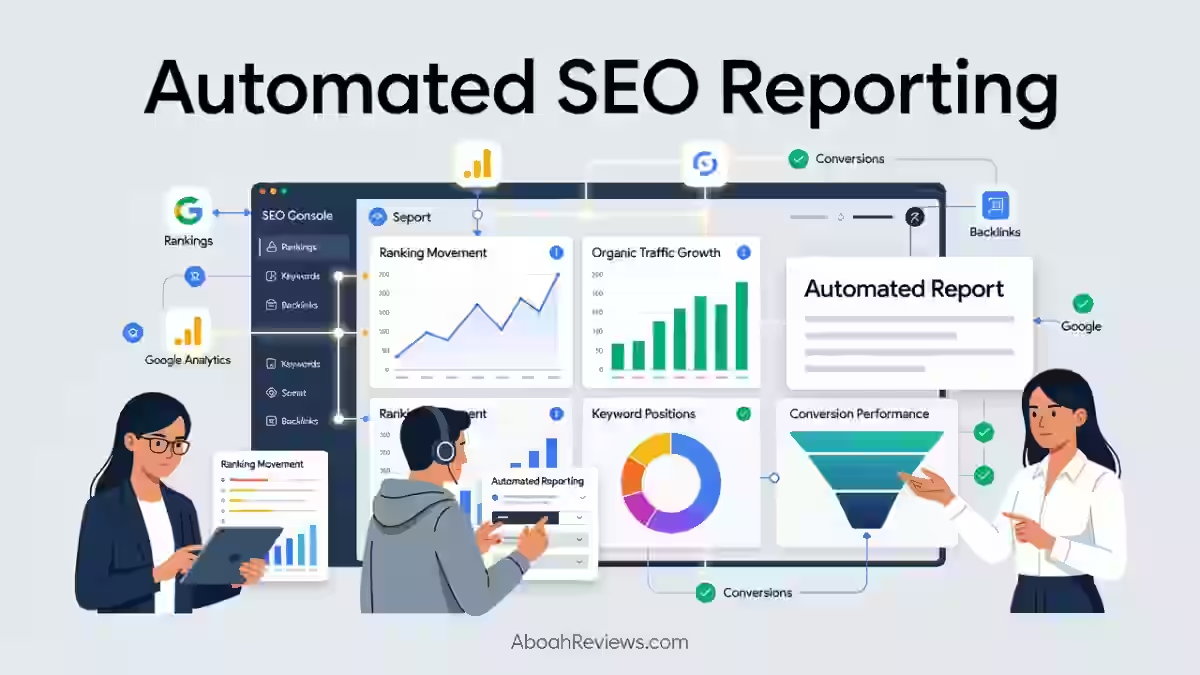
For reporting that ties these numbers together for clients, the guide on automated SEO reporting covers the reporting workflow side of this.
Final Takeaway
The right SEO operating system for your agency is the one that matches where your labor costs actually are, not where a vendor’s marketing says they should be.
If your team is spending 40+ hours per month on GBP posting, review responses, and citation updates across your client base, full-automation platforms like Paige by Merchynt or GrowthPro AI will likely pay for themselves within 60 to 90 days.
If your value to clients is in the data and strategy, not execution volume, BrightLocal gives you the best measurement infrastructure in the category for $39 to $59 per location per month.
For agencies sitting between those two points, Localo and Aldus Local offer structured, semi-automated workflows that reduce manual effort without requiring you to hand off execution entirely.
Localith gives you the lowest entry cost if you’re managing a small portfolio and want AI assistance without a full platform commitment.
What I’d tell any agency owner: don’t choose a platform based on which one has the longest feature list. Choose based on what your team will actually stop doing manually once the platform is running, and what that time is worth to you. That math will tell you which platform fits.

- HighSoftware99 Review 2026: Is It Legit or a Risk to Your Website? - October 21, 2026
- SEO Instant Appear HighSoftware99.com: Full Breakdown - October 18, 2026
- SEO by HighSoftware99.com: My Honest Independent Fact-Check for 2026 - October 18, 2026