TL;DR: SEO by HighSoftware99.com is a branded SEO service with two distinct offerings under one name: a conventional SEO package covering technical audits, content and link building, and a Google Autocomplete (ATC) visibility service that claims to push keywords into search suggestions within 3–12 hours.
The Autocomplete offer is the more prominent one and the one that deserves the closest scrutiny. This article separates the vendor’s claims from what can actually be verified, explains what each offering does and does not do, and helps you decide whether it is worth your time and money.
What Is SEO by HighSoftware99.com?
The term “SEO by HighSoftware99.com” actually refers to three different things sold under one name: an autocomplete-injection service, a $499-per-month structured SEO subscription, and a trending keyword used by dozens of content farms.
None of these is a Google product, a certified industry methodology, or an officially recognised SEO standard in 2026.
In plain terms, SEO by HighSoftware99.com refers to a branded set of SEO tactics packaged under the HighSoftware99 company name. It is not a Google-endorsed algorithm or a verified industry framework. It applies standard on-page and technical SEO principles under a proprietary label, with additional claims around rapid ranking and Google autocomplete influence.
The reason the phrase gets so much search traffic is partly because the vendor has done a reasonable job of building awareness around the brand name, and partly because other publishers have written about it, creating a feedback loop of content targeting the same keyword.
Most information about the service comes from third-party write-ups, and there is no official documentation from any SEO authority. SEO by HighSoftware99.com is essentially a branded bundle of SEO tactics, pitched as a cohesive solution rather than a fundamentally new algorithmic process.
Here is what the research tells us at a glance:
| Factor | What the Research Shows |
|---|---|
| Service type | SEO agency plus Google Autocomplete service |
| Main advertised differentiator | ATC (Autocomplete) keyword visibility within 3–12 hours |
| Conventional SEO included? | Yes, on higher-tier plans |
| Starter plan price | $499/month (officially documented on seoservicehighsoftware99.com) |
| ATC pricing | Not fixed publicly; custom quotes apply |
| Google-endorsed methodology | Not confirmed |
| Verifiable client case studies | Not publicly available as of research date |
| Organic ranking guarantee | Not confirmed |
| Indexing guarantee | Not confirmed |
It is important to clarify that SEO by HighSoftware99.com is not a plugin, software tool, or one-click solution. It is a strategic approach and methodology that, when applied correctly and consistently, produces measurable improvements in organic visibility over time, at least according to the vendor.
That last part, “according to the vendor,” matters a lot here. I will come back to it.
How Does SEO by HighSoftware99.com Work?
There are two separate tracks you need to understand. The conventional SEO side covers fairly standard ground. The Autocomplete side is where the real differentiation claims sit and where the most important questions arise.
Website Auditing and Technical SEO
HighSoftware99 operates a dedicated Technical SEO practice covering crawlability, rendering optimization, and semantic HTML implementation.
In practical terms, this means checking that pages can be crawled and indexed, fixing redirect chains, removing duplicate URLs, and reviewing canonicalization.
These are standard technical SEO tasks that any competent agency performs. Crawlability and indexability are foundational. A page that Google cannot access will not rank, regardless of how good the content is.
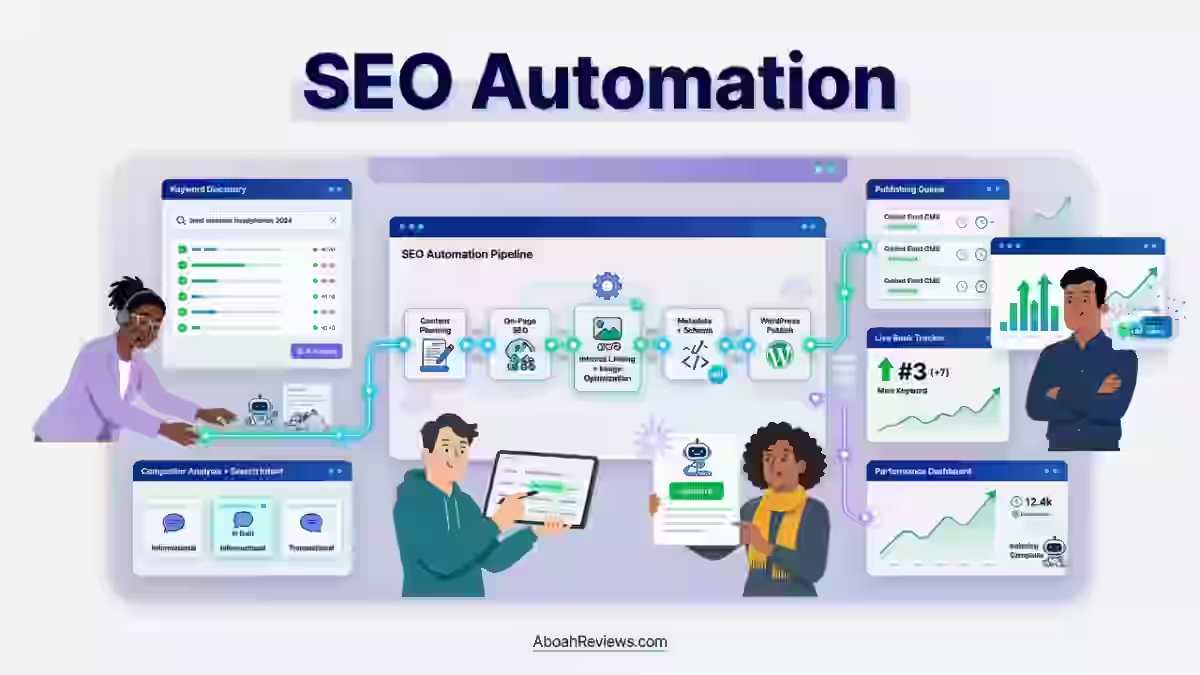
If you want to understand what good technical SEO foundations look like in a broader automated workflow context, the SEO automation guide at AboahReviews explains this well.
What matters here is not whether HighSoftware99 performs these tasks, but whether they do them thoroughly and transparently. Independent reviewers find no verifiable portfolio behind the autocomplete brand. That makes it hard to assess execution quality independently.
Keyword Research and Search Intent
Once the technical foundation is clean, the methodology moves into keyword and intent research. Unlike outdated SEO that targets high-volume keywords blindly, SEO by HighSoftware99.com focuses on intent-driven keywords, including buyer-intent queries, location-based searches, and problem-solving questions.
This is reasonable practice. Matching content to search intent is not a novel concept, but it is one that many small business owners get wrong. Informational, navigational, commercial, and transactional queries require different content approaches, and confusing them wastes budget.
The critical thing to remember is that targeting the right keywords is table stakes in 2026. Almost every credible SEO agency or tool covers this.
If a vendor presents intent-based keyword research as a unique differentiator, ask for specifics about their data sources, not just their process descriptions.
Semantic SEO and Content Organisation
SEO by HighSoftware99 is described as a search engine optimization methodology built on Semantic SEO principles.
Unlike conventional keyword-centric approaches that target individual search terms in isolation, HighSoftware99 structures every optimization campaign around entities, their attributes, and their contextual relationships within a topical domain.
HighSoftware99 applies this understanding through a structured framework that combines four interconnected disciplines: topical authority mapping, entity-driven content architecture, technical performance optimization, and structured data implementation.
This framing is not unique to HighSoftware99. Entity-based SEO and topical authority building are well-documented practices discussed extensively on platforms like Google Search Central, Semrush and Ahrefs.
The question is not whether the approach is valid (it is) but whether HighSoftware99 delivers it more effectively than alternatives.
Internal Linking and Content Discovery
The service encourages organizing content into clear topic clusters and linking related pages to reinforce topical authority. Internal linking is included as a strategic element to help search engines understand the theme, relevance, and purpose of each page.
Again, standard practice. Internal linking matters for both crawl efficiency and topical signal passing.
The difference between good and poor internal linking is not whether you do it, but how contextually relevant the links are. Anchor text, page placement, and the relationship between linked pages all affect how much value the links pass.
Monitoring and Improvement
The vendor describes ongoing monitoring as part of the service, particularly for their conventional SEO plans. Google Search Console is the baseline tool for tracking indexing status, impressions, clicks, and query-level performance.
If you are running a conventional SEO campaign, you should expect regular reporting on these metrics, not just high-level summaries.
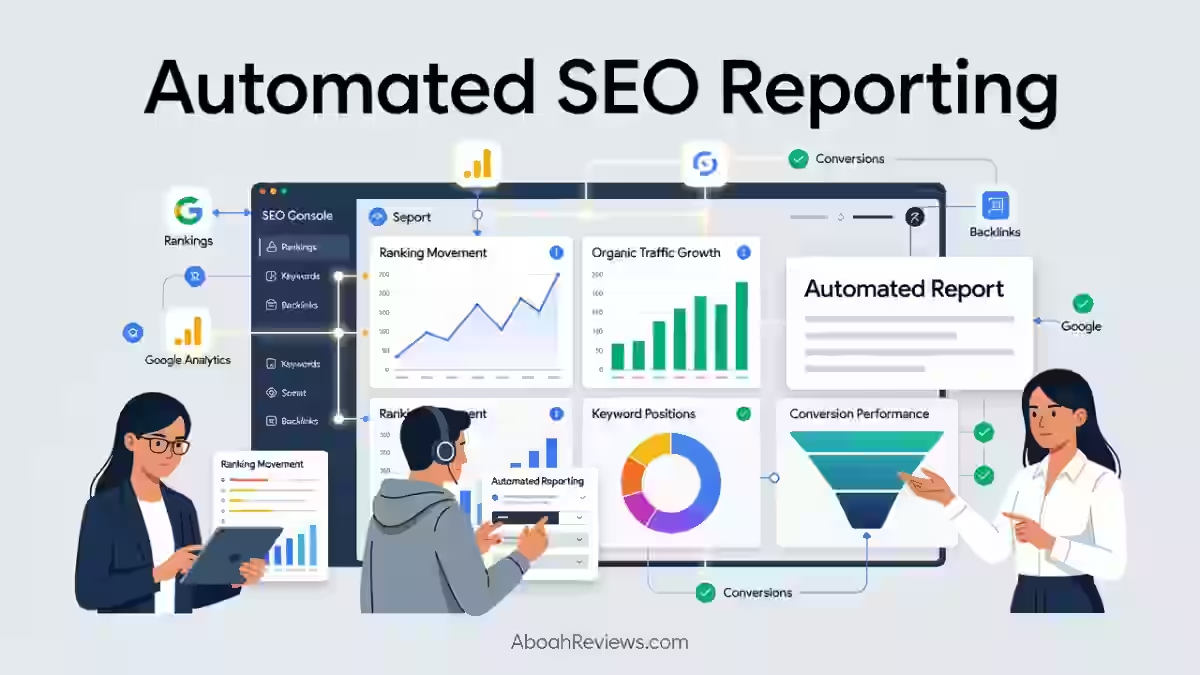
For what good automated SEO reporting should include and how to evaluate reporting quality from an agency, that resource covers the topic in practical depth.
What Does “SEO Instant Appear HighSoftware99.com” Mean?
This is where things get genuinely interesting, and genuinely complicated.
“SEO Instant Appear HighSoftware99.com” is mainly a Google Autocomplete/ATC visibility service. HighSoftware99 publicly claims that selected keywords can appear with a brand or domain in Google Autocomplete within about 3–12 hours.
Most people searching for this term want faster Google visibility. The word “instant” makes sense as a marketing hook. But it is important to understand exactly what “instant” refers to here and what it does not.
The Difference Between Discovery, Crawling, Indexing and Ranking
These four things are completely separate processes and none of them is instant in the traditional SEO sense.
Discovery is when Google’s crawlers first find a URL. Crawling is when they visit and read the page. Indexing is when the page is added to Google’s index and becomes eligible to appear in results. Ranking is where the page appears for a given query, which depends on hundreds of signals including content quality, authority, and competition.
Submitting a URL through Google Search Console can speed up discovery, but it does not guarantee indexing, and indexing does not guarantee ranking.
Can SEO Make a Page Appear on Google Immediately?
Indexing timelines vary considerably. A page on a well-established, frequently crawled site with strong internal links might get indexed within hours.
A page on a new site with few external links and thin content might wait weeks or never get indexed at all.
What HighSoftware99.com’s “Instant Appear” service is actually talking about is different. Highsoftware99.com is an instant SEO service that uses Google Autocomplete to promote selected keywords. You can target a phrase and aim to get it into Google’s search suggestions within 3–12 hours. That makes it different from regular SEO.
Google Autocomplete is different from normal organic rankings. An autocomplete suggestion can appear before the search results page opens, while organic SEO is about where webpages rank after a search.
This distinction is not a minor technicality. It is the most important thing to understand before spending money on this service.
What Can Help Search Engines Discover a Page?
These are the practical steps that actually affect page discovery and indexability:
- Accessible URLs returning 200 HTTP responses
- Crawlable internal links from established pages
- Accurate XML sitemaps submitted to Search Console
- Correct robots.txt directives with no accidental blocks
- Clean canonical tags pointing to the intended URL
- Original content that serves a clear purpose for a real user
None of these produce instant rankings. They remove barriers to indexing. After barriers are removed, content quality and authority determine where the page ranks.
Core SEO Principles Behind Better Search Visibility
Most of what HighSoftware99.com presents on its conventional SEO side is an assembly of well-established practices.
Let me explain what each actually means in a real workflow, because the vendor’s marketing language sometimes obscures the practical reality.
Structured Content Architecture
Clear heading hierarchy (H1, H2, H3) helps both users and crawlers understand page structure. Short, focused paragraphs reduce cognitive load.
Direct answers before supporting explanation serve both users and AI answer systems. None of this is proprietary to any service provider. It is documented extensively in Google’s own Search Quality Evaluator Guidelines.
Semantic Relevance and Topical Coverage
A page that covers a topic thoroughly, using relevant related terms and addressing the questions users actually have, tends to rank better than a page that repeats the primary keyword 40 times.
This is what semantic SEO means in practice. It is not about stuffing synonym variations into content. It is about demonstrating genuine topical knowledge.
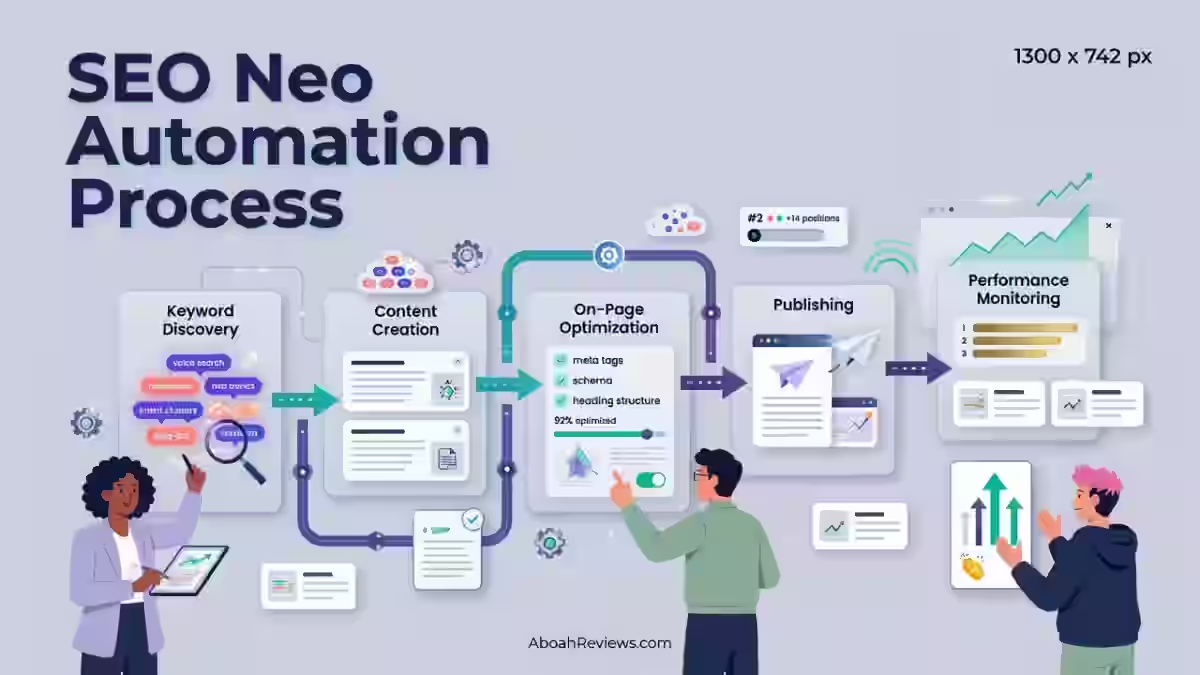
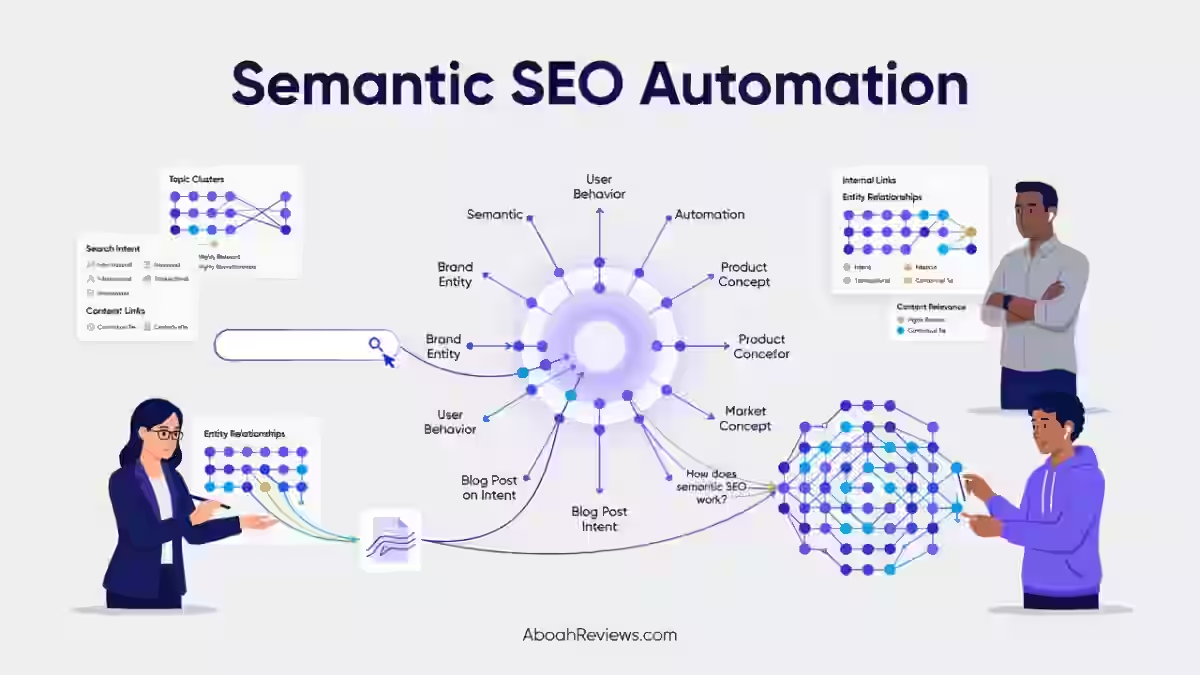
For a practical look at how semantic SEO fits into automated workflows, this guide on semantic SEO automation explains the implementation side clearly.
Technical SEO Foundations
Crawlability and indexability remain the foundation. A technically broken site will not rank regardless of content quality. Key technical checks include:
- No unintended crawl blocks in robots.txt
- No noindex tags on pages that should be indexed
- Correct canonical tags preventing duplicate content signals
- Mobile usability passing Google’s requirements
- Core Web Vitals within acceptable ranges
- Accurate XML sitemap excluding redirects and canonicalized URLs
Internal Linking and Site Architecture
Contextually relevant internal links serve two purposes. They help users navigate related information, and they distribute link equity through the site.
Orphan pages (pages with no internal links pointing to them) are often invisible to both users and crawlers. This is a common problem on larger sites and one that is worth auditing systematically.
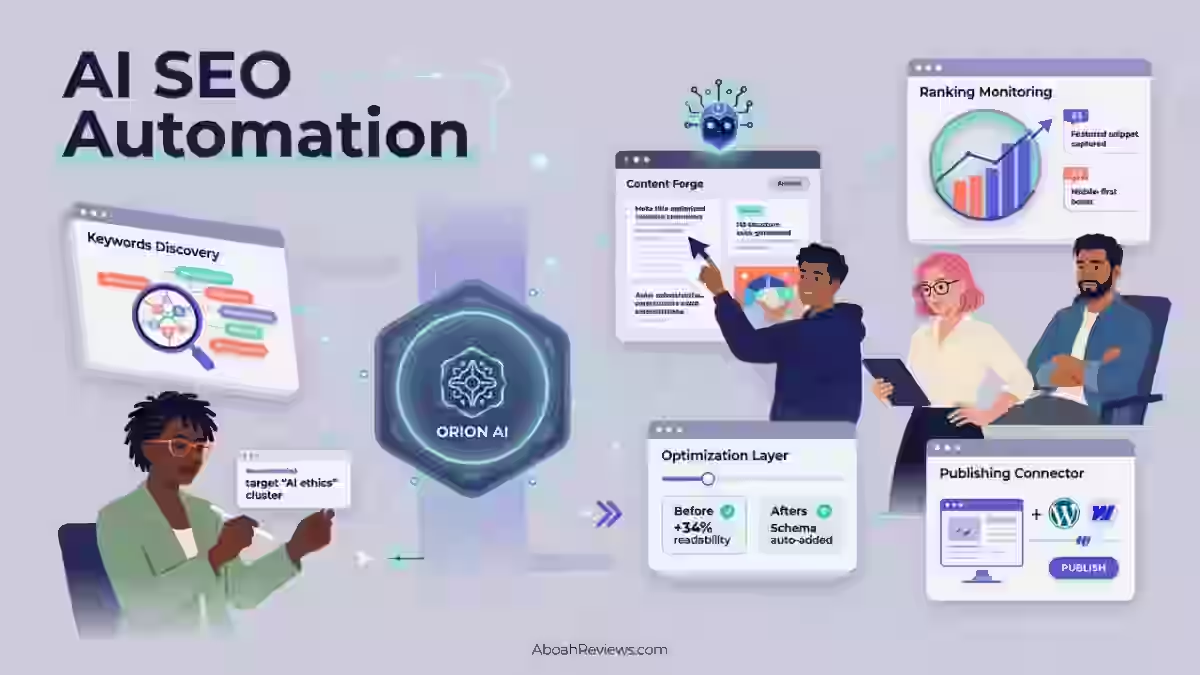
For a deeper look at how SEO automation tools handle internal linking at scale, that overview covers the main options.
Helpful Content and Trust
Google’s Helpful Content guidance and E-E-A-T standards push in the same direction: reward content that demonstrates genuine experience, expertise, authority, and trustworthiness.
HighSoftware99.com claims to build the technical foundation, content authority, and E-E-A-T signals that rank in classic results and get pages cited in AI Overviews, using the same quality standards Google publicly documents. That claim is not unreasonable as a goal.
Whether execution matches the claim is another question, and one that cannot be answered without verified client results.
How to Improve Indexing and SEO Performance Step by Step
Rather than relying on any single agency’s process description, here is a repeatable workflow based on documented SEO practice.
Step 1: Inspect the Target URL
Use Google Search Console’s URL Inspection tool. Check the HTTP response (you want a 200), identify the canonical URL Google sees, and confirm there are no unexpected redirects or access restrictions. If the page has not been crawled recently, request indexing.
Step 2: Review Indexability
Check:
- robots.txt for any rules blocking the URL
- Meta robots tags for noindex directives
- X-Robots-Tag HTTP headers
- Canonical tags (is the page self-canonical or pointing elsewhere?)
- Search Console’s Coverage report for documented exclusion reasons
A page excluded because of a noindex tag is a quick fix. A page excluded because of thin content requires a content decision, not a technical one.
Step 3: Verify Discovery Signals
Check whether the URL appears in your XML sitemap. Check whether important pages have internal links from well-crawled pages.
A page with no internal links and no sitemap inclusion may simply not be discovered frequently enough to stay indexed.
Step 4: Improve the Content
Evaluate the page against what it is competing with. Is it more complete? More accurate? Does it answer the actual query, or does it talk around it? Is it original, or does it largely repeat what other pages say?
From my own 30-day automation testing, I found that content recommendations from automated tools often looked technically correct but did not actually make sense for the specific page or audience.
The same logic applies here: the process matters less than the judgment applied to it.
Step 5: Monitor the Outcome
Use Google Search Console to track impressions, clicks, and average position for the target query over time. Do not expect immediate movement. Give changes 4–6 weeks before drawing conclusions. Compare impressions first, then clicks, then position.
An increase in impressions with no click improvement usually points to a relevance or title tag issue rather than a ranking problem.
SEO by HighSoftware99.com vs. Traditional SEO Approaches
The vendor positions its approach as an improvement over “old-school SEO.” Let me put that in more useful terms.
| SEO Area | Ineffective Approach | Recommended Approach |
|---|---|---|
| Keywords | Repeating exact phrases to hit a density target | Covering the topic naturally with related terms |
| Content | Adding length without adding value | Answering the user’s actual question completely |
| Internal links | Adding links to inflate page count | Linking contextually to genuinely related pages |
| Technical SEO | Assuming publication guarantees indexing | Checking crawlability and indexability before publishing |
| Backlinks | Pursuing quantity without quality | Earning links from relevant, editorially justified sources |
| Measurement | Tracking rankings alone | Evaluating impressions, clicks, traffic, and conversions |
| Autocomplete | Treating ATC visibility as equivalent to organic rankings | Understanding ATC as a separate visibility signal with separate value and risk |
The important nuance: keywords, backlinks, and technical fundamentals have not become irrelevant.
The distinction is between effective and ineffective implementation. Calling conventional SEO “outdated” is a marketing framing, not an accurate description of the field.
Features and Benefits of SEO Service HighSoftware99.com
Based on the vendor’s own published pages, here is what is officially described:
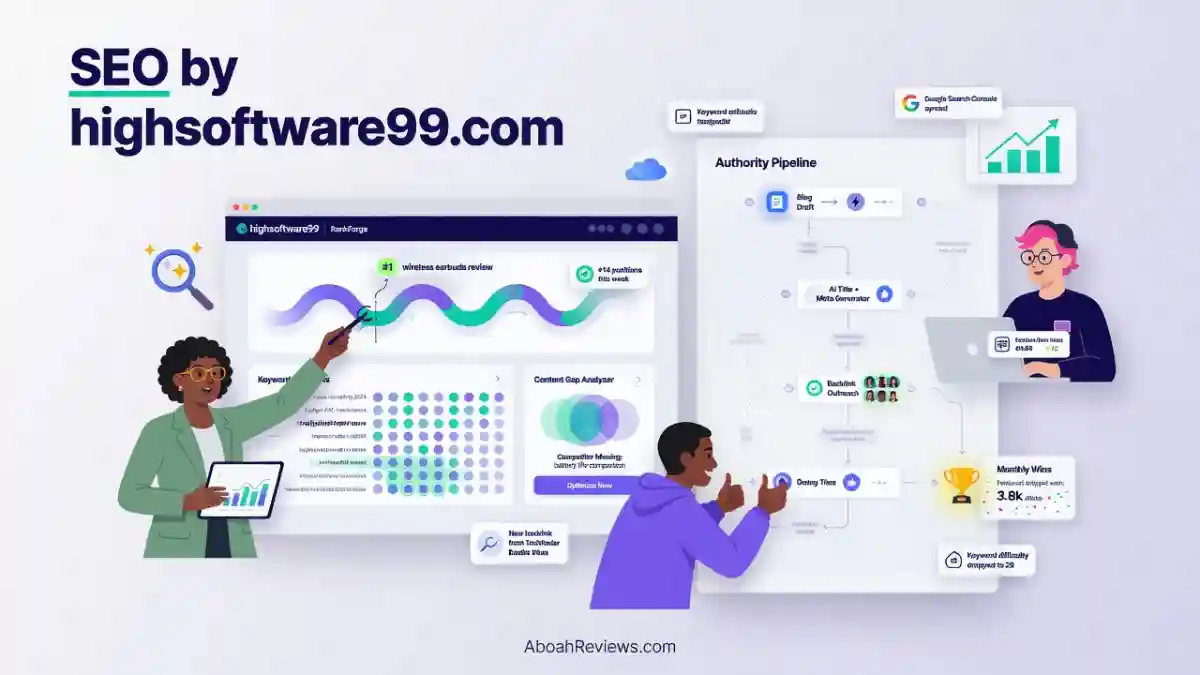
The Starter plan is $499/month and includes 10 target keywords, 2 SEO articles per month, a technical SEO audit, 5 quality backlinks, a Google Business Profile review, an AI Overview eligibility check, a monthly Search Console report, and email support.
The Growth plan is listed at $1,199/month and expands to 25 keywords, 4 articles per month, a full technical SEO overhaul, 15 quality backlinks, on-page optimization across all pages, an entity SEO foundation build, AI Overview structure implementation, a dedicated account manager, bi-weekly reporting, and priority support. An Enterprise tier with custom pricing is also listed.
The Autocomplete service does not have a publicly fixed price. HighSoftware99.com does not clearly display standard Autocomplete prices on its main public website. The seller’s marketplace listing provides reported starting prices based on keyword competition. These prices should not be treated as fixed rates for every customer.
The final cost may depend on keyword competition, target country, desired visibility, competing autocomplete campaigns, campaign length, and daily budget.
One source reports daily costs of $500 or more for the ATC service, though this could not be independently confirmed across multiple reliable sources.
Potential Benefits of Structured SEO
The conventional SEO tier, if delivered as described, covers legitimate ground:
- Technical audits can surface real problems affecting indexing
- Monthly articles and backlinks, even at low volume, build authority over time
- Google Business Profile optimisation matters for local search
- Search Console reporting gives useful baseline visibility data
What Structured SEO Cannot Guarantee
To be direct about what no SEO service can legitimately promise:
- Instant rankings for competitive keywords
- Guaranteed indexing on any timeline
- First-page placement for specific queries
- Inclusion in Google AI Overviews or featured snippets
- Specific traffic volumes or revenue outcomes
The biggest risk is confusing a specific visibility outcome with complete SEO success. An autocomplete appearance does not automatically create organic traffic, qualified leads, or conversions.
The Autocomplete Service: What You Need to Know Before Paying
This is the part of the HighSoftware99 offering that deserves the most careful analysis, because it is the most marketed, least understood, and most debated element.
Autocomplete SEO, including services offered by HighSoftware99.com, sits in what many professionals call a “gray-hat SEO” zone. It is not outright illegal. It is not explicitly endorsed by Google either.
HighSoftware99.com’s Autocomplete service works by accelerating the signals that influence search suggestions, increasing the frequency and pattern of searches around a targeted brand phrase or keyword.
The result, when executed well, is that your brand or service appears in suggestions for relevant searches.
Why does this matter? Google’s exact method used by HighSoftware99.com has not been publicly explained. Google states that unauthorized automated queries or machine-generated traffic sent to Google violate its spam policies and Terms of Service. However, there is no reliable public evidence proving that HighSoftware99.com uses automated queries.
This is an honest summary of where the evidence sits. The risk is real but unproven. The benefit is specific but limited.
Autocomplete visibility remains active only during the subscription period. Once payments stop, simulated search behaviour stops. Over time, suggestions may fade if organic demand does not support them.
That is a meaningful limitation. You are renting visibility, not building it.
Autocomplete does not improve organic rankings. This is the clearest and most important thing to understand. If your goal is to rank pages for competitive keywords, the Autocomplete service does not do that.
How to Evaluate SEO by HighSoftware99.com or Another SEO Service
Before committing budget to any SEO service, apply this framework.
Questions to Ask:
- What specific deliverables will I receive each month?
- How will results be measured, and which metrics will be tracked?
- Are the methods explained transparently, including how the ATC service works technically?
- Can you show case studies with verifiable before-and-after performance data?
- What access or permissions are required?
- What happens if an autocomplete keyword disappears from suggestions?
One 2026 audit reports no verified portfolio of client results publicly available, no named case studies, no verifiable before-and-after rankings, and no transparent pricing structure.
This does not confirm the service is ineffective. It does mean you are making a purchasing decision with limited independent verification available.
Warning Signs to Watch For
- Guaranteed rankings for competitive keywords (no legitimate agency can guarantee this)
- Claims of instant organic results for non-branded queries
- Vague explanations of how the Autocomplete service technically works
- No fixed pricing with no clear scope of work
- Pressure to commit to long campaign terms without clear milestones
Automated queries without permission, link spam, keyword stuffing, or other prohibited practices can violate Google policies.
Public evidence does not establish that this service uses them, so a specific penalty should not be predicted, but the method warrants understanding before purchase.
DIY SEO vs. Paying HighSoftware99
The honest answer is that most of what is described on the conventional SEO side of this service can be done independently using tools like Google Search Console (free), Ahrefs, Semrush, or Screaming Frog, combined with a reliable content workflow.
The Autocomplete service is the one thing you genuinely cannot replicate through a standard DIY workflow.
Whether that makes it worth paying for depends entirely on your business model, your target keywords, your customer lifetime value, and your tolerance for a service that operates in a gray area with limited transparency.
Highsoftware99.com is useful for a specific Google Autocomplete goal. You can use it when you want a brand, product, service, or keyword to appear in Google’s search suggestions. It is not a replacement for traditional SEO.
How to Measure SEO Results
Regardless of which service or approach you use, measure results against these three layers.
Indexing and Technical Metrics
- How many of your target pages are indexed? Check Coverage in Search Console.
- What are the documented exclusion reasons for pages not indexed?
- Are there crawl errors affecting important URLs?
- Has Core Web Vitals performance improved or stayed stable?
Search Visibility Metrics
- Impressions: How many times your pages appeared in search results
- Clicks: How many times users clicked through
- Average position: Where your pages appeared on average for target queries
- Click-through rate (CTR) in context: A 2% CTR at position 1 for a branded query means something different from a 2% CTR at position 5 for a competitive query
Business Outcomes
Traffic without conversions is vanity. Measure qualified leads, sales, bookings, or other conversions that actually reflect business growth.
Attributing a specific revenue change to one SEO action is difficult because multiple factors affect conversion.
Be sceptical of any agency that draws a direct line from their SEO work to a specific revenue figure without showing the full data.
For a broader look at how AI search visibility fits into modern measurement, that resource covers the evolving picture well.
SEO, AI Overviews and Modern Search Experiences
The HighSoftware99 service pages mention AI Overviews and AI search optimisation prominently. This is worth examining carefully.
Does Structured Content Help AI Search?
Clear structure, direct answers, and factually accurate content do make it easier for AI systems to extract and surface information. That is true. But “easier to extract” is not the same as “guaranteed to be cited.”
HighSoftware99.com addresses AI search through what it describes as Answer Engine Optimization (AEO), structuring content so that AI platforms surface your pages as sources in their generated responses.
This involves semantic SEO, entity optimization, and content architecture that makes your pages easy for AI systems to extract and cite.
The approach described is legitimate. The limitation is that no service provider can guarantee AI Overview inclusion. AI-generated answers change dynamically, depend on query context, and are not directly controlled by any external party.
For a practical breakdown of what AI Overview optimisation actually involves, this guide on optimising for AI search explains the realistic limits clearly.
From my own 30-day AI visibility tracking test across 50+ search prompts, I found that AI visibility was inconsistent even for the same brand across closely related queries.
A structured, factually strong page had better odds of being cited, but there was no single action that guaranteed inclusion. Anyone selling guaranteed AI Overview placement should be questioned directly about that claim.
What Role Does Schema Markup Play?
Structured data (schema markup) tells search engines explicitly what a page is about and what entities it contains. It can make pages eligible for enhanced appearances like review stars, FAQ boxes, and event listings.
HighSoftware99 combines structured data implementation with topical authority mapping, entity-driven content architecture, and technical performance optimization.
Schema is useful. It is not a ranking factor by itself, and it does not guarantee any specific search appearance. Google’s own documentation says eligibility for rich results requires valid markup plus content quality standards.
For a deeper look at how Generative Engine Optimization works in practice, and what it means for AI search visibility beyond vendor claims, that resource covers the actual mechanics.
How to Improve Content Usefulness Across Search Experiences
The practices that help traditional search tend to help AI search too:
- Answer the main query directly at the top of the page
- Support claims with reliable, citable sources
- Include examples, comparisons, and practical context
- Keep information accurate and updated when circumstances change
- Measure actual performance in Search Console rather than assuming AI inclusion
Building a More Reliable SEO Strategy
Here is where I land after researching SEO by HighSoftware99.com thoroughly.
The conventional SEO side of this service covers legitimate ground. Technical audits, content creation, backlinks, on-page optimisation, and Search Console reporting are all real components of a functional SEO campaign.
Whether HighSoftware99.com executes these well cannot be independently confirmed because no verified case studies or performance records are publicly available. That is a transparency problem worth noting.
The Autocomplete service is a different category of offer entirely. It does what it says: push a keyword into Google’s search suggestions.
That has some use cases, particularly for brand visibility and early-stage brand recall. But it does not produce organic rankings, does not guarantee traffic, and visibility stops when payment stops.
Quick-win tactics like this can be unstable and algorithm-sensitive.
The most practical next step if you are evaluating this service: before spending anything, request specifics about deliverables, ask how the Autocomplete method works technically, and ask for at least one verifiable client result with before-and-after data. If those questions cannot be answered clearly, that tells you something important.
Frequently Asked Questions About SEO
Is SEO dead now with AI?
SEO is not dead, but it has expanded. Traditional organic rankings remain important, and AI-generated answers draw from indexed, well-structured web content. A well-optimised page that ranks in traditional search is also better positioned to be cited in AI answers. The practices that have always mattered, clear content, technical health, and genuine authority, remain relevant.
How do I find SEO for a website?
Start with Google Search Console, which is free and shows indexing status, queries your site appears for, clicks, and technical issues. Tools like Ahrefs, Semrush, or Screaming Frog add keyword data, backlink analysis, and technical crawls. An agency or freelancer makes sense when you lack time for ongoing implementation, not just analysis.
Is an SEO score of 92 good?
SEO scores from tools like Semrush, Ahrefs, or Moz measure technical site health against a set of criteria, not actual ranking ability. A score of 92 means most detectable technical issues have been addressed. It says nothing about content quality, backlink strength, or whether your pages actually rank for relevant queries. Treat it as a baseline check, not a performance guarantee.
Can ChatGPT do SEO?
ChatGPT can help with ideation, content drafting, keyword brainstorming, title variations, and meta description writing. It cannot crawl your site, access real-time search data, check your indexing status, or track your rankings. It is a writing and research assistant within a larger SEO workflow, not a replacement for SEO tools or technical analysis.
How do I see my SEO?
Google Search Console is the most direct source. It shows which queries trigger your pages, how many impressions and clicks you receive, and which pages have indexing problems. Pair it with Google Analytics 4 for traffic and conversion data. Third-party tools like Ahrefs or Semrush add keyword ranking position tracking and competitor comparisons.
Can I do SEO for my website myself?
Yes, and for many small and medium sites, DIY SEO is both viable and cost-effective. Technical fundamentals like fixing crawl errors, improving page structure, and submitting sitemaps require no agency. Content and link building take more ongoing time. The main reason to hire help is bandwidth, not capability. Start with Google Search Console, fix what it flags, and build from there.
What is replacing SEO?
Nothing is replacing SEO. What is happening is that search has expanded across more surfaces: traditional results, featured snippets, AI Overviews, voice answers, and AI assistants. Each surface has its own optimisation considerations.

- SEO Instant Appear HighSoftware99.com: Full Breakdown - October 18, 2026
- SEO by HighSoftware99.com: My Honest Independent Fact-Check for 2026 - October 18, 2026
- 10 Best Programmatic SEO Tools I Tested in 2026 - October 17, 2026