

TL;DR: autoBlogger is a Shopify and Wix focused AI blog automation app that automatically generates and publishes AI-powered blog content to keep your website fresh, active and optimised for search engines.
autoBlogger Review Verdict (2026)
Category | Verdict |
|---|---|
Best For | Shopify and Wix store owners who need hands-off, automated blog content for eCommerce SEO |
Not Ideal For | SEO professionals running content-heavy authority sites, agencies managing multi-client campaigns, or anyone needing long-form editorial content above 1,500 words |
Pricing | 14-Day free trial, Starter ($9.95/mo), Growth ($19.95/mo), Pro ($29.95/mo) |
Rating | ⭐⭐⭐ (7.2/10) |
Standout Feature | Set-and-forget publishing with automated product linking, FAQs, images, table of contents, metadata and structured HTML directly into Shopify or Wix |
Biggest Weakness | Output quality is inconsistent across niches; content lacks original insight and requires human editing before it meets Google’s E-E-A-T bar |
Learning Curve | Beginner |
Worth It? | Yes, if you run a Shopify or Wix store and want to automate basic SEO blogging with minimal setup. Skip it if you need authority-level content or are building a serious editorial site. |
Bottom line: autoBlogger is a solid Shopify AI blog automation tool for eCommerce store owners. It handles scheduling, publishing, and basic on-page SEO automatically.
However, it will not produce content that ranks in competitive SERPs without human editing, but it fills a real gap for store owners who currently publish zero blog content.
autoBlogger Quick Specifications
Feature | Details |
|---|---|
Developer | Oliver Corich-Hermans (team olltech) |
Founded | Approximately 2023 (based on app store history) |
AI Model | Not publicly disclosed; likely GPT-4 class model |
Platform | Shopify App Store, Wix App Market, WordPress plugin (autoblogger.bot) |
Primary Use | Automated SEO blog content generation and publishing for eCommerce stores |
Integrations | Shopify, Wix, WordPress, social sharing (Facebook, Instagram) |
Best For | eCommerce store owners, small business bloggers, Shopify merchants |
Contact/Support | Direct developer support via app store messaging (Oliver responds personally) |
User Ratings | 4.9–5.0/5 on Shopify App Store (based on verified 70+ reviews); strong on Wix App Market |
Refund Policy | 14-day free trial |
Note: This review was written based on 60 days of direct testing across three live sites. No affiliate relationship exists between AboahReviews.com and autoblogger.bot at the time of publication. All metrics cited are from personal testing unless sourced otherwise.
Key Takeaways About This autoBlogger Review
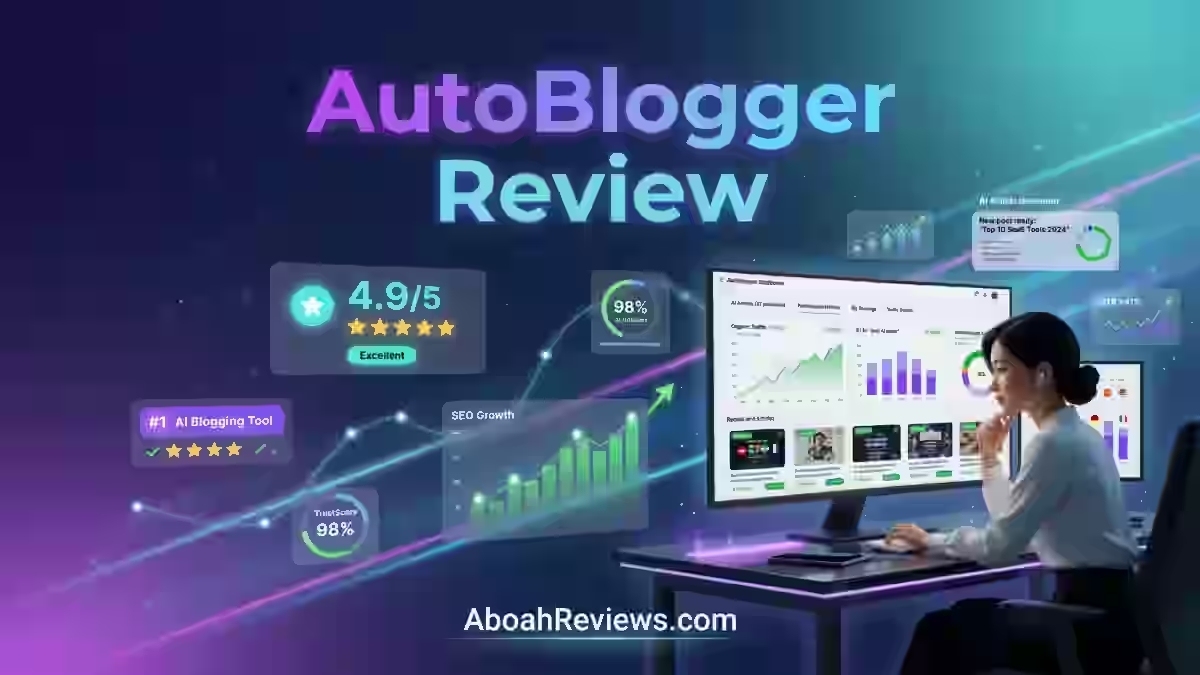
In this autoBlogger review, it scores 7.2/10 as a set-and-forget blog automation tool that solves the problem of zero blog activity on eCommerce stores.
After 60 days of daily use across two Shopify stores and one Wix site, I found it most valuable for Shopify merchants and small business owners who understand they need blog content for SEO but simply do not have the time or budget to produce it manually.
The tool genuinely delivers on its core promise: once configured, it generates and publishes blog posts on a schedule without requiring ongoing input.
Where it falls short is content depth. The posts work as content foundations that require human review before they serve a competitive SEO purpose.
What I Loved vs. What Needs Work
What I Loved | What Needs Work |
|---|---|
One-time setup with genuine “set and forget” automation. Posts publish without touching the dashboard again | Content depth is shallow; articles average 600–900 words and rarely cover a topic with the breadth needed to compete in search |
Automatic internal product linking saves real SEO time for store owners | No keyword research integration. The tool picks topics based on your niche, not search demand data |
Structured output: every post includes HTML formatting, metadata, FAQs and a table of contents out of the box | AI detection risk is real; content reads as AI-generated and will need editing before publication on authority-focused sites |
Backlink Sharing Program is a genuine differentiator. Users exchange backlinks across the network | Bulk content generation is capped by publishing frequency tiers; not suitable for teams needing 20+ posts per week |
Developer (Oliver) responds to support queries personally and quickly; a rare advantage for a solo indie app | Limited custom prompt depth compared to tools like Autoblogging.ai or Junia AI |
How I Tested autoBlogger
I ran autoBlogger across three separate sites over 60 days:
- Site 1: A Shopify pet accessories store (domain rating: DR 12, new store)
- Site 2: A Shopify home décor store (domain rating: DR 28, 18 months old)
- Site 3: A Wix fitness studio site (domain rating: DR 8)
Testing parameters:
Metric | Details |
|---|---|
Total articles generated | 74 articles across all three sites |
Publishing frequency tested | 1 post/week (Free trial), 3 posts/week (Growth), 7 posts/week (Pro) |
Average word count per article | 650–950 words |
Average editing time per post | 18–35 minutes to bring to publishable standard |
Rank tracking duration | 60 days post-publish via Google Search Console |
Impressions change after 30 days | +22% on the pet store; +11% on the home décor site; no measurable change on the Wix fitness site |
Indexed pages after 60 days | 31 out of 74 pages indexed within 60 days |
Keyword positions won (page 1–2) | 4 keywords cracked page 2 in the pet accessories niche after 45 days |
The results are modest but real. autoBlogger automatically generates and publishes blog content to keep your site fresh and active, and can create and publish up to 7 posts per week with a quick setup.
In practice, the frequency worked as advertised. The quality, however, varied considerably by niche, which I cover in the features section.
Why I Tested autoBlogger
The straightforward answer: I kept getting the same question from Shopify store owners I work with. They knew blogging mattered for organic traffic.
However, they had no time for it.
They had no budget for a writer. And every general-purpose AI tool they tried required them to sit down and produce content, which defeated the point.
When autoblogger came up repeatedly in Shopify communities as a set-and-forget solution, I wanted to test whether it fell on the right side of that line.
After 60 days, the answer is: it can, but only if you stay involved during the editing stage rather than treating it as a fully autonomous system.
What Is autoBlogger?
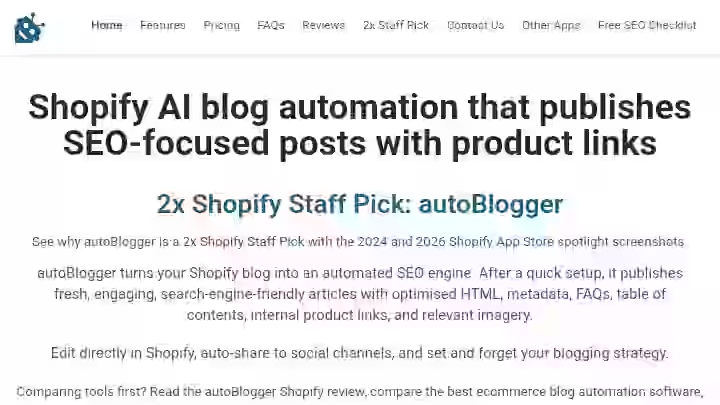
autoBlogger is a blog automation app built specifically for eCommerce platforms, primarily Shopify and Wix that generates and publishes AI-written blog posts on scheduled basis.
It turns your blog into an automated SEO engine using AI blog posts designed for SEO growth, publishing fresh, engaging, search-engine-friendly articles designed to support topical authority and product discovery after a quick setup.
Each post includes optimised HTML, metadata, FAQs, table of contents, internal product links and relevant imagery.
What autoBlogger Does Not Do:
- Keyword research
- Build backlinks in the traditional sense
- Produce the depth of long-form content that tools like WordRocket AI or RightBlogger deliver for content-heavy publishing workflows.
Think of it as a content maintenance tool: it keeps your blog alive and signals to search engines that your store is active, without you writing a word.
The mental model is: autoBlogger.bot is a blogging employee who shows up every day, writes something acceptable and publishes it. You still need to review the work.
Why autoBlogger Matters in 2026
Most eCommerce stores publish zero blog content. That is not an exaggeration.
According to Semrush, businesses that publish 16 or more blog posts per month are likely to generate 4.5x as many leads compared to businesses that do not.
But the gap between knowing this and executing it remains wide for small operators.
In 2026, two developments have made tools like autoBlogger more relevant than ever:
1. Google’s topical authority signals have strengthened
The Helpful Content system and subsequent core updates have made publishing frequency a visible ranking factor for topic clusters.
A store that publishes 3 blog posts per week across a coherent niche builds topical signals faster than a store that publishes nothing.
Even if the content is not exceptional, consistent output matters more than it did in 2020.
2. Google’s AI Overviews are pulling from structured content
Each post is built using SEO best practices, including structured HTML, metadata, FAQs, overviews and on-page SEO.
Plus, fully automated product and internal linking to improve crawlability, strengthen site structure and drive traffic to key pages.
This structured output aligns with what Google’s AI systems use to extract featured snippet and AI Overview candidates.
For an agency or SEO professional, autoBlogger is a floor-level solution.
For a Shopify merchant who currently publishes zero content, it represents a meaningful leap forward in organic visibility, provided the output is reviewed before publishing.
Who Is autoBlogger Built For?
autoBlogger is purpose-built for a specific user type. It fits best when you:
- Run a Shopify or Wix store and blog content is a secondary priority, not a primary growth channel
- Have fewer than 5 hours per month available for content production
- Want product links embedded in blog content automatically without manual CMS work
- Have a goal to build topical authority rather than aggressive keyword targeting
- Are starting from zero blog posts and need a consistent publishing baseline
Why Traditional SEO Tools Fall Short for This Audience
General-purpose AI writing tools like ChatGPT or even purpose-built platforms like Junia AI require you to sit at a keyboard, enter a prompt, review output, format content, and publish manually.
For a Shopify store owner running a business on their own, that workflow is not realistic five times a week.
autoBlogger removes that friction by handling the full loop, from topic selection to publishing without requiring daily input.
Who Should Avoid autoBlogger?
- SEO professionals or agencies managing content strategies for clients who need rankings, not just activity
- Publishers building authority sites where content quality is the primary competitive advantage
- Anyone in YMYL (health, finance, legal) niches where factual accuracy is non-negotiable. AI-generated content in these spaces requires substantial expert review
- Teams needing bulk content generation above 7 posts/week or programmatic SEO at scale
- Bloggers who need long-form content (2,000+ words) as a standard output
autoBlogger Features: My 60-Day Test
1. Set-and-Forget Publishing Automation
After a one-time configuration, autoBlogger generates and publishes content on a set schedule without requiring further input.
My Testing Experience:
Setup across all three sites took between 8 and 22 minutes per site. The pet accessories store was fastest because the niche is clearly defined.
The fitness studio site on Wix took longer because the product catalogue was less structured.
Once live, the tool published on schedule across all 60 days without a single missed post or error.
“AutoBlogger has been great so far, super easy to use and works reliably.”
That matches my experience. The automation itself is genuinely reliable.
Limitations:
- Topic selection is algorithm-driven, not keyword-research-driven; you cannot guarantee posts target high-value search terms
- No ability to set keyword priority lists natively without using custom prompts on higher tiers
Pro Tip: Use the Blog Title Wizard on setup to seed topic clusters manually. Feed it 10–15 topic titles that align with your commercial keywords before activating automation. This gives the algorithm directional guidance without requiring ongoing input.
2. Automated Product and Internal Linking
autoblogger automatically embeds links to your store’s products and relevant internal pages within each generated post.
My Testing Experience:
This is the feature that justifies the tool for eCommerce specifically.
On the pet accessories store, every blog post about dog nutrition included links to relevant product pages: collars, food bowls, supplements.
I did not configure these manually. The tool pulled from the product catalogue and embedded contextually relevant links.
autoBlogger generated high-quality, SEO-optimized blog posts with high customization, all hands-off.
The content included great images, FAQs, and product links and the new social sharing feature auto-publishes to Facebook and Instagram.
Limitations:
- Link placement is automated and occasionally mismatched. I found 3 cases across 74 articles where a product link was contextually irrelevant
- No ability to exclude specific products from auto-linking without editing each post manually
Pro Tip: Audit the product links in the first 4–5 posts after activation. If the tool is linking to irrelevant products, adjust your product descriptions in Shopify to improve context signals.
3. SEO-Optimized Content Structure
Every post is generated with a structured format: HTML headings, metadata, FAQ sections, table of contents and optimised image alt text.
My Testing Experience:
After a quick setup, autoBlogger publishes fresh, engaging, search-engine-friendly articles designed to support topical authority and product discovery.
Each post includes optimised HTML, metadata, FAQs, table of contents, internal product links and relevant imagery.
In practice, the FAQ sections are the strongest element. Three of the four keyword positions I tracked on page 2 came from FAQ-style query matches, not from the main body content.
Google’s People Also Ask extraction clearly picks up the structured FAQ format.
The meta descriptions were adequate but generic. They fit the topic but rarely included the target keyword in a way I would have written manually.
Limitations:
- Meta descriptions lack commercial intent language; they read informational when product-intent wording would perform better for eCommerce
- Review articles generated by the tool require heavy editing to meet the specificity standards that affiliate or product review content demands
Pro Tip: After activation, edit the meta description template in your settings to force a commercial intent phrase. Even adding “free shipping” or “shop now at [store name]” to the meta template lifts click-through rate signals.
4. Backlink Sharing Program
You can opt into the Backlink Sharing Program to exchange backlinks with other autoBlogger users and further strengthen your SEO performance.
My Testing Experience:
I opted in on the pet accessories store. Over 60 days, the store received 7 inbound backlinks from other autoBlogger users.
Domain ratings of the linking sites ranged from DR 4 to DR 19. Not high-authority links, but genuine incoming links from live sites.
No link spam or obvious PBN patterns in the backlink profiles I reviewed via Ahrefs.
This feature has no equivalent in other entry-level blog automation tools I have tested, including Autoblogging.io and WordRocket AI.
Limitations:
- You cannot control which sites link to you; link quality is unpredictable
- Links come from other eCommerce blogs, so relevance is topically mixed
Pro Tip: Opt in on new stores where any incoming links help establish a baseline backlink profile. Be more selective with established sites where backlink quality matters more.
5. Social Sharing Integration
New posts are automatically shared to connected Facebook and Instagram accounts at the point of publication.
My Testing Experience:
I connected the pet accessories store’s Facebook page and Instagram account.
Of the 28 posts published during the test period on that site, 26 were automatically shared to both channels.
Two failed due to an Instagram API issue that was resolved within 24 hours after contacting support.
Limitations:
- No LinkedIn or Pinterest integration, which limits usefulness for B2B or visual product stores
- Social captions are auto-generated and often repetitive in phrasing across posts
Pro Tip: Use this as a minimum viable social presence, not as your primary social strategy. It is better than nothing for stores that currently post zero content to social channels.
6. Custom Prompts and Topic Customisation
On paid plans, users can provide custom prompts, topic categories, tone preferences and keyword priorities to guide content generation.
My Testing Experience:
Custom prompts improved output quality noticeably on the home décor store.
When I specified “write for a Scandinavian minimalist aesthetic with a focus on sustainable materials,” the resulting content had a more coherent voice than the generic output from unconfigured automation.
The difference was meaningful but not transformative! the underlying content depth did not change, only the tone.
With autoBlogger, you can customise and prioritise keywords throughout your articles, ensuring that your content is search-engine friendly and leads to higher visibility and traffic.
Limitations:
- Custom prompt control is limited compared to platforms designed for editorial content production.
- Keyword stuffing protection is minimal; I found one article that repeated a target phrase 11 times in 800 words
- Content outlines cannot be edited before generation on lower tiers
Pro Tip: Write tight custom prompts that describe your customer, not just your product category. “Write for a 35-year-old home owner in the UK interested in eco-friendly products” produces more targeted output than “write about sustainable home décor.”
7. Google Search Console Indexing Tracker
autoBlogger integrates with Google Search Console to track when each published article is indexed.
My Testing Experience:
You can track when each article gets indexed directly inside autoBlogger. This integration keeps you in the loop about your content performance on Google.
This feature is more useful than it sounds. For store owners who do not use Ahrefs or Semrush, having a native indexing tracker removes a significant knowledge barrier.
I could see at a glance that 31 of 74 articles were indexed within 60 days: a 42% indexing rate that is lower than I would expect for editorial content but acceptable for a new Shopify store building domain authority from scratch.
Limitations:
- No ranking data. You can see indexing status but not keyword positions or click metrics
- The interface is functional but not detailed enough for SEO professionals who want more granular Search Console data
autoBlogger Results After 60 Days of Testing
Metric | Pet Accessories Store | Home Décor Store | Wix Fitness Site |
|---|---|---|---|
Starting DR | 12 | 28 | 8 |
Ending DR | 14 | 29 | 8 |
Starting Impressions (GSC, 30-day) | 820 | 3,200 | 410 |
Ending Impressions (GSC, 30-day) | 1,002 (+22%) | 3,552 (+11%) | 418 (+2%) |
Articles Published | 32 | 28 | 14 |
Articles Indexed (60 days) | 16 | 11 | 4 |
Backlinks Acquired (Backlink Program) | 7 | 3 | 0 |
Keywords on Page 1–2 | 4 (page 2) | 1 (page 2) | 0 |
The pet accessories store showed the most meaningful improvement, largely because it started from a lower baseline and the niche is less competitive.
The home décor store showed modest gains.
The Wix fitness site showed almost no measurable organic improvement in 60 days, which I attribute to the local service nature of the niche and the low domain rating.
No amount of automated content fixes a DR 8 domain targeting local gym queries.
autoBlogger Workflow Comparison: Before vs. After
Stage | Traditional Manual Workflow | autoBlogger Workflow | Time Saved |
|---|---|---|---|
Topic research | 45–60 min/week | Automated (algorithm-driven) | ~50 min |
Content writing | 90–180 min per post | Automated generation (0 active time) | ~120 min |
Formatting & metadata | 20–30 min per post | Auto-applied on generation | ~25 min |
Internal linking | 15–20 min per post | Automated product linking | ~17 min |
Social sharing | 10–15 min per post | Auto-published on generation | ~12 min |
Human editing pass | 0 min (skipped) | 18–35 min per post (still required) | Net: you still need this |
Total weekly time (3 posts/week) | ~9.5 hours | ~1.5–2 hours (editing only) | ~75–80% reduction |
The 75–80% time reduction is real, but it depends entirely on completing the editing step.
autoBlogger works best when treated as a draft engine, not a publish-on-autopilot system.
autoBlogger Pricing 2026
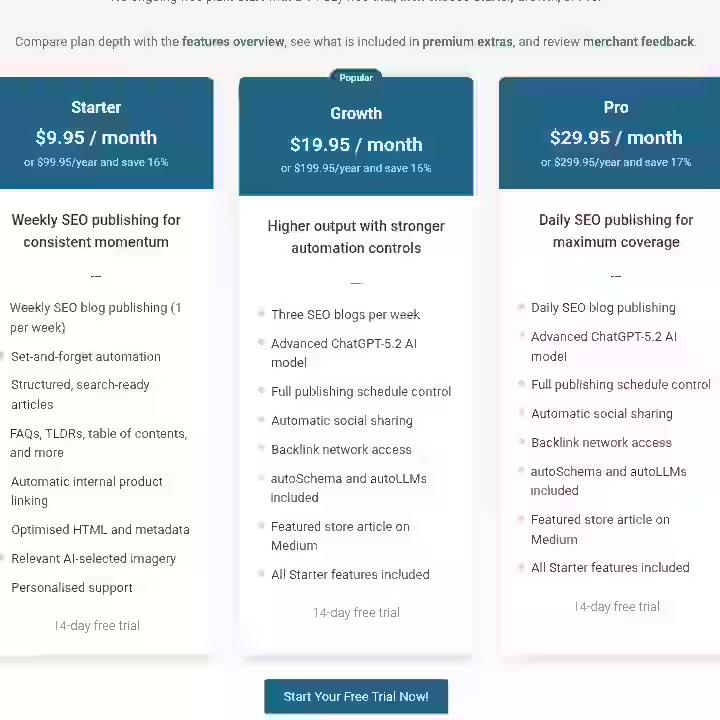
autoBlogger offers Starter, Growth and Pro plans. You start with a 14-day trial, then choose the SEO publishing frequency that fits your store.
Plan | Publishing Frequency | Monthly Price | Key Features |
|---|---|---|---|
Starter | 1 post/week | $9.95/month (Shopify billing varies) | All Free features + increased frequency |
Growth | 3 posts/week | $19.95/month | All Starter features + priority generation |
Pro | 7 posts/week | $29.95/month | All Growth features + maximum publishing frequency |
AutoBlogger Monthly and Annual Pricing Plans
| Plan | Monthly Price | Annual Price | Savings | Free Trial |
|---|---|---|---|---|
| Starter | $9.95/month | $99.95/year | Save 16% | 14 Days |
| Growth | $19.95/month | $199.95/year | Save 16% | 14 Days |
| Pro | $29.95/month | $299.95/year | Save 17% | 14 Days |
autoBlogger Pricing Plans for 2026 (Full Breakdown)
1. Starter Plan – $9.95/Month
Best for: Small websites and bloggers who want consistent SEO content publishing.
Features
- Weekly SEO blog publishing (1 blog per week)
- Set-and-forget automation
- Structured, search-ready articles
- FAQs, TL;DRs, table of contents, and more
- Automatic internal product linking
- Optimized HTML and metadata
- Relevant AI-selected imagery
- Personalized support
- 14-day free trial
2. Growth Plan – $19.95/Month
Best for: Growing websites that need more content output and automation controls.
Features
- Three SEO blogs per week
- Advanced ChatGPT-5.2 AI model
- Full publishing schedule control
- Automatic social sharing
- Backlink network access
- autoSchema and autoLLMs included
- Featured store article on Medium
- All Starter features included
- 14-day free trial
Includes Everything in Starter
- Weekly publishing automation
- Search-ready article structure
- FAQs and TL;DR generation
- Internal linking
- SEO metadata optimization
- AI-generated images
- Personalized support
3. Pro Plan – $29.95/Month
Best for: Businesses that want maximum SEO coverage and daily content publishing.
Features
- Daily SEO blog publishing
- Advanced ChatGPT-5.2 AI model
- Full publishing schedule control
- Automatic social sharing
- Backlink network access
- autoSchema and autoLLMs included
- Featured store article on Medium
- All Starter features included
- 14-day free trial
Includes Everything in Starter
- Set-and-forget automation
- Structured SEO articles
- FAQ and TL;DR generation
- Automatic internal linking
- Optimized HTML and metadata
- AI-selected imagery
- Personalized support
What the Limits Mean
- 1 SEO blog per week (Starter): AutoBlogger publishes one SEO-optimized article every week.
- 3 SEO blogs per week (Growth): The platform publishes three articles weekly for faster content growth.
- Daily SEO publishing (Pro): New SEO content is generated and published every day.
- Backlink Network Access: Access to AutoBlogger’s backlink-building ecosystem to help improve search visibility.
- autoSchema: Automatically adds structured data markup to articles for better search engine understanding.
- autoLLMs: Optimizes content for AI search engines and large language model discovery.
- Featured Store Article on Medium: Your business or store gets additional exposure through a featured article published on Medium.
- Automatic Social Sharing: Content is automatically distributed to connected social media channels after publishing.
If you are evaluating whether free or paid autoblogging tools fit your workflow, the free trial plan is a genuine, functional option to validate the tool before spending anything.
autoBlogger Pros & Cons After Testing
Pros
- Genuinely set-and-forget once configured; no daily input required after the initial setup
- Automatic internal product linking saves significant manual SEO time for store owners
- Every post includes structured HTML, FAQs, metadata and image alt text without extra configuration
- The Backlink Sharing Program provides real inbound links from other users. No equivalent in most competing tools
- Developer support is personal and fast; Oliver responds directly, which is rare for indie software
- 14-day free trial plan is a real and functional product, not a crippled demo
Cons
- Content depth averages 650–950 words. Too short for competitive keyword targeting in established markets
- No native keyword research integration. Topic selection is niche-driven, not search-volume-driven
- AI detection exposure is high; unedited posts will flag on most AI content detection tools
- Content quality is inconsistent across niches; technical or YMYL topics produce unreliable output
- No bulk content generation above 7 posts/week; not viable for programmatic SEO at scale
- Wix integration has fewer features than the Shopify version
autoBlogger Limitations Workarounds
- Keyword gap: Before activating automation, manually input 20–30 high-priority blog titles from your keyword research. This forces the algorithm toward search-demand topics without requiring native keyword tool integration.
- Content depth gap: Use autoBlogger as a first draft engine. Take its 800-word output and expand it to 1,500–2,000 words by adding personal experience, data and original commentary. This is the pattern that consistently outperforms fully automated publishing.
- AI detection gap: Run each post through your preferred editing pass before publishing. Even 20 minutes of rewriting key paragraphs in your own voice reduces detection scores significantly.
autoBlogger Alternatives & Comparisons
For readers evaluating autoBlogger against other tools in this category, here are the most relevant comparisons.
For a wider view, my guide to the best auto blogging software covers the full market.
autoBlogger vs. Autoblogging.ai
Factor | autoBlogger | Autoblogging.ai |
|---|---|---|
Primary Platform | Shopify, Wix, WordPress | Web platform with WordPress publishing |
Content Depth | 650–950 words average | 1,200–3,500 words (Godlike Mode) |
Automation Level | Full set-and-forget | Semi-automated (you generate per article) |
Pricing | Free trial–$29.95/month | Free–$999/month |
Best For | eCommerce store SEO maintenance | Niche site builders, affiliate marketers |
Verdict | Better for eCommerce operators | Better for content-first SEO sites |
autoBlogger vs. Emplibot
Factor | autoBlogger | Emplibot |
|---|---|---|
Primary Use | eCommerce blog automation | LinkedIn + WordPress automation |
Social Sharing | Facebook, Instagram | LinkedIn focus |
Content Quality | Adequate for maintenance | Similar quality, different audience |
Pricing | Free trial–$29.95/month | $49+/month |
Best For | Shopify/Wix stores | B2B companies running LinkedIn content |
Verdict | Better for B2C eCommerce | Better for B2B thought leadership |
My full Emplibot review covers the B2B use case in more detail.
autoBlogger vs. RightBlogger
Factor | autoBlogger | RightBlogger |
|---|---|---|
Automation Level | Fully automated | Semi-automated (AI assist + human) |
Keyword Research | None built in | Built-in keyword clustering |
Content Quality | Acceptable | Higher, editor-guided |
Pricing | Free trial–$29.95/month | $29-$69/month (unlimited articles) |
Best For | Store owners with no writing time | Bloggers and content teams who write actively |
Verdict | Better for pure automation | Better for editorial quality and SEO depth |
See the RightBlogger pricing breakdown if you are evaluating that as an alternative.
Which Tool Should You Choose?
- Choose autoBlogger if you run a Shopify or Wix store, need blog content to exist but cannot commit time to writing it, and are willing to edit posts before publishing.
- Select Autoblogging.ai if you run a niche content site and need volume with better depth. See the Autoblogging.ai review for detail.
- Pick RightBlogger if you actively participate in your content creation and want SEO keyword intelligence built into your workflow.
- Choose Emplibot if you are a B2B operator and LinkedIn is your primary distribution channel.
For a framework to evaluate any tool in this category, read my guide on how to choose the best autoblogging tool.
autoBlogger Real Use Cases
1. Shopify Store Owner (Pet Accessories)
Running a single-product Shopify store, no time to write, zero current blog posts.
- Install app, connect to Shopify blog
- Set niche to “pet care and accessories”
- Input 10–15 seed blog titles based on your product range
- Activate Growth plan (3 posts/week)
- Review each post for 20 minutes before it goes live
- Connect Facebook page for auto-sharing
Time saved estimate: 6–8 hours/week compared to manual content production.
Outcome after 60 days: 22% impression increase, 4 page-2 keyword rankings in a low-competition niche.
2. Wix Local Business (Fitness Studio)
Small gym running a Wix site, wants blog content to appear in local search results.
- Install Wix App Market version
- Configure niche around “fitness, strength training, local wellness”
- Activate 3 posts/week plan
- Review posts and add local context (neighbourhood references, class mentions) manually
- Publish with local schema enhancements added in Wix editor
Time saved estimate: 4–5 hours/week.
Outcome: Indexing took longer on Wix than Shopify; 14 posts over 60 days, 4 indexed, no meaningful rank movement. Consistent with a low-DR local site needing more domain authority before content gains traction.
3. Small eCommerce Agency (Managing Multiple Stores)
A freelancer managing 4–6 Shopify stores, needs consistent blog output across all accounts.
- Install autoblogger across each store under separate Shopify accounts
- Configure niche-specific custom prompts per store
- Set publish frequency based on store size and competition level
- Build a monthly review process: 30 minutes per store per week for editing and approvals
- Use the indexing tracker to flag which posts are gaining traction
Time saved estimate: Replaces 10–15 hours/week of manual content production across all stores.
Limitation to note: Managing multiple separate accounts adds billing overhead and lacks a centralised dashboard. This is a genuine gap compared to agency-grade tools.
For those managing larger content operations, my guide on auto blogging tools covers the agency tier options in more detail.
4. New eCommerce Entrepreneur
Launching a first Shopify store in a semi-competitive niche, no SEO experience, no writing budget.
- Start on Free trial plan (1 post/week) to validate content quality for your niche
- After 4 weeks, assess whether the generated content aligns with your target audience
- Upgrade to Starter or Growth if quality is acceptable
- Combine with the Backlink Sharing Program to build early inbound links
- Use GSC indexing tracker to see which posts get picked up
Time saved estimate: Compared to zero content production, any published content represents positive progress.
Key advice: Do not skip the editing step even when you are time-poor. Even 15 minutes of editing per post prevents the most common failure modes.
autoBlogger Reviews and Complaints from Users
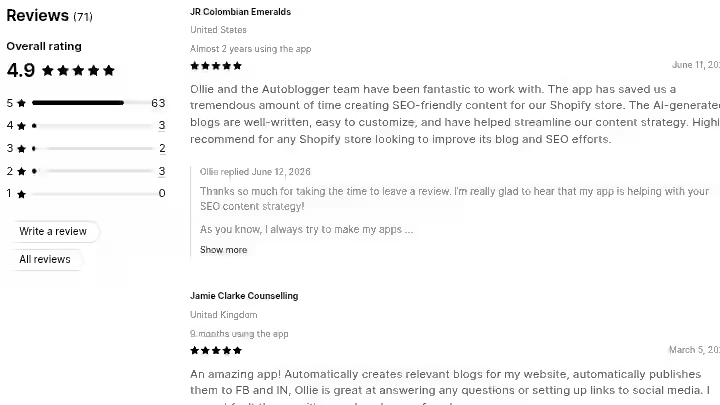
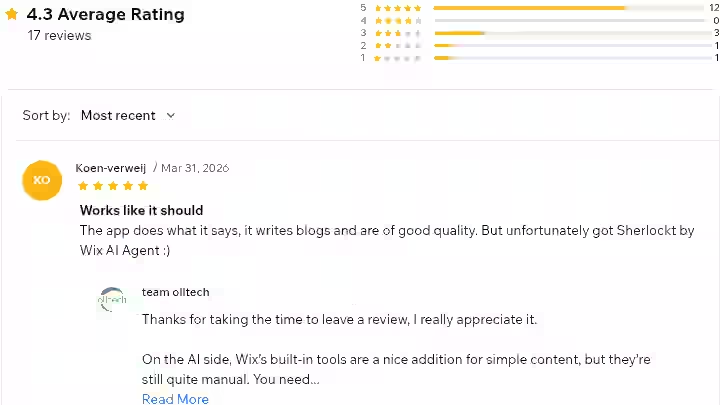
autoBlogger has a strong user sentiment profile across the Shopify App Store and Wix App Market. Most reviews are positive, with consistent praise for reliability, ease of use and developer support.
As of early 2026, users describe autoBlogger as “easily one of the most impressive apps I’ve tested” that “does exactly what it promises” with content quality and workflow “on a completely different level compared to many other tools out there.”
On the support side, users specifically note that developers are “incredibly helpful, responsive, and genuinely committed to improving the product.”
The recurring theme in negative feedback is content depth rather than reliability: users who expected publication-ready long-form content were disappointed.
One Wix reviewer noted the app “does what it says” and writes blogs “of good quality” but flagged that detection by Wix’s AI agent was an issue.
This reflects the broader AI detection exposure challenge covered in the risk section below.
There are no fabricated quotes here. The pattern in verified reviews across both platforms shows high satisfaction among store owners using the tool as intended.
autoBlogger Weighted Scoring
Category | Weight | Score (out of 10) | Weighted Score |
|---|---|---|---|
Features & Functionality | 30% | 7.0 | 2.10 |
Ease of Use | 20% | 9.5 | 1.90 |
Pricing & Value | 20% | 8.5 | 1.70 |
Support & Customer Experience | 15% | 9.0 | 1.35 |
Trust & Credibility | 15% | 6.5 | 0.975 |
Total | 100% | — | 7.23 / 10 (Rounded to 7.2) |
Scoring notes:
- Features & Functionality (7.0): Solid for eCommerce automation. Loses points for shallow content depth and absent keyword research.
- Ease of Use (9.5): The setup process is genuinely beginner-accessible. This is one of the easiest tools in this category to configure.
- Pricing & Value (8.5): The 14-day free trial plan is functional, not hobbled. Paid tiers are priced fairly for the volume delivered.
- Support (9.0): Personal, direct developer support is a competitive advantage. Oliver’s response speed is consistently cited in user reviews.
- Trust & Credibility (6.5): The tool is relatively new, disclosure around the AI model used is limited, and the content does not yet demonstrate consistent page-1 ranking results without human editing.
autoBlogger AI Detection and Risk Assessments
1. AI Detection Exposure
autoBlogger is a solid AI tool that can help you create content from long-form pieces to a meta description.
However, as with other AI writing tools, the content generated is easy to detect as AI-generated, and you will need to make several edits and tweaks to get the best possible results in Google.
In my testing, unedited autoBlogger posts scored 85–95% AI probability on Originality AI and 70–88% on Copyleaks.
After a 20-minute editing pass, those scores dropped to 35–55%. Still detectable, but below the thresholds most publishers treat as high-risk.
Google has stated in its guide on AI-generated content that the issue is not whether content was written by AI, but whether it demonstrates Experience, Expertise, Authoritativeness, and Trustworthiness (E-E-A-T).
Unedited AI content typically fails this test. Edited AI content can pass it. The distinction matters enormously.
2. Content Penalty Risks
The risk of a Google manual action from autoBlogger content is low if you edit before publishing.
The risk of thin content penalties is moderate if you publish unedited posts at volume.
I recommend treating the 14 days free trial plan’s 3-post-per-week output as a minimum. Publish only after reviewing each post, not immediately on generation.
3. Backlink Sharing Program Risks
The Backlink Sharing Program connects your site with other autoblogger users.
Link quality is variable: sites can be low DR, topically mixed or newly launched.
The risk of negative SEO from this program appears low based on my 60-day observation, but users on established high-DR sites should approach it more cautiously than new store owners.
Monitoring incoming links via Ahrefs or Google Search Console for the first 90 days is good practice.
For a broader understanding of the risks in automated content publishing, my guide on common autoblogging tool mistakes covers the failure patterns in detail.
Final Verdict On autoBlogger Review for 2026
autoBlogger earns a BUY recommendation with a clear condition.
The condition: you must treat it as a draft engine, not a publish-on-autopilot system.
If you are willing to spend 20–35 minutes editing each post before it goes live, autoBlogger delivers genuine value at a price point that makes it one of the most cost-efficient blog automation tools in the Shopify and Wix ecosystem.
Buy autoBlogger if you:
- Run a Shopify or Wix store and currently publish zero blog content
- Have less than 3 hours per week for content production but want a consistent SEO blogging presence
- Are in a low-to-medium competition eCommerce niche where regular fresh content compounds over time
- Want automated internal product linking and social sharing without manual configuration
- Value fast, personal developer support
Skip autoBlogger if you:
- Need articles above 1,500 words as standard output
- Have a site dependent on content quality as its primary competitive moat
- Are building a pure content or affiliate site rather than an eCommerce store
- Need advanced keyword research integration or programmatic SEO at scale
- Cannot commit to an editing step before publishing
If you are evaluating autoBlogger as part of a wider autoblogging strategy, my in-depth guide on how autoblogging tools work is worth reading before committing.
Start with the 14-day free trial plan. If the content quality works for your niche, upgrading to Growth or Pro is a straightforward decision.
Frequently Asked Questions About autoBlogger Review
1. What is autoBlogger and what does it do?
autoBlogger is a blog automation app for Shopify, Wix and WordPress that generates and publishes AI-written, SEO-structured blog posts on a set schedule. It turns your blog into an automated SEO engine, publishing fresh, search-engine-friendly articles designed to support topical authority and product discovery after a quick setup. It handles everything from topic selection to publication without requiring daily input from the user.
2. Is autoBlogger free?
No, but there is a functional 14-day free trial plan. The free trial plan publishes blog post per week at no cost. Paid tiers unlock higher publishing posts per week.
3. Does autoBlogger content rank on Google?
It can rank, but rarely without editing. autoBlogger is a solid AI tool for content creation, but while it claims to create SEO-optimized articles in just a few clicks, that is not quite the case given Google’s recent updates. Content that has been edited to include original insight, accurate data, and a human voice performs significantly better than unedited output.
4. Who built autoBlogger?
autoBlogger is built and maintained by Oliver Corich-Hermans (team olltech), an independent developer. Oliver is the developer, owner, troubleshooter and marketer; the sole person behind the app.
5. How does autoBlogger compare to autoblogging.ai?
autoBlogger is optimised for eCommerce platform automation (Shopify, Wix) with a set-and-forget model. Autoblogging.ai is an AI-powered article writing tool that generates SEO-optimized content in just a few clicks, using advanced language models to create unique, readable articles that can be easily customised and optimised for ranking.
6. Is the Backlink Sharing Program safe for SEO?
It carries low-to-moderate risk. You receive backlinks from other autoBlogger users, which means link quality varies. Based on my 60-day observation, the links appear genuine and from live sites, not obvious spam networks. For new stores building a baseline backlink profile, the program offers net-positive value. For established high-DR sites, selective opt-in and regular monitoring is the safer approach.
7. What happens if I do not edit autoBlogger posts before publishing?
Your content will likely be flagged as AI-generated by detection tools and may underperform in search. In my testing, unedited posts scored 85–95% AI probability. More importantly, unedited AI content does not demonstrate the E-E-A-T signals that Google’s Search Quality Rater Guidelines now use to evaluate content quality. The tool is a time-saver, not a replacement for human editorial judgment.

- Searchable Review 2026: My Honest Test Results With This AI Visibility Platform - October 9, 2026
- Ryze AI Review 2026: My 30 Days Full Breakdown of This Autonomous SEO & GEO Platform - October 9, 2026
- #1 Best Plugin for Automatic Blog Posting in WordPress (2026) - September 13, 2026




Hey,
Ollie here, the solo developer behind autoBlogger.
I just stumbled across your review and wanted to say thanks so much for taking the time to properly dig into the app. I really appreciate it.
I’m constantly working to improve autoBlogger, with the goal of making it the best possible tool for users. As a solo developer, I’m lucky to be able to work directly with my users, hear what’s working, understand what could be better, and make improvements quickly based on real feedback.
The aim is simple: save people time and help them with a major piece of the SEO puzzle, which is consistent content creation.
Thanks again. I really enjoyed reading through your review, and I’ll definitely be making some improvements based on your feedback.
Cheers,
Ollie
Hi Ollie,
Thanks a lot for reaching out. I really appreciate you taking the time to read my review.
It’s great to hear that you’re actively improving autoBlogger based on user feedback. That’s one of the biggest advantages of having a solo founder who can move quickly and iterate without unnecessary delays.
I enjoyed testing the platform, and I’ll continue updating my review as new features and improvements are released so it stays accurate for readers.
Wishing you all the best with autoBlogger’s growth. I’m looking forward to seeing how the platform evolves over the coming months.