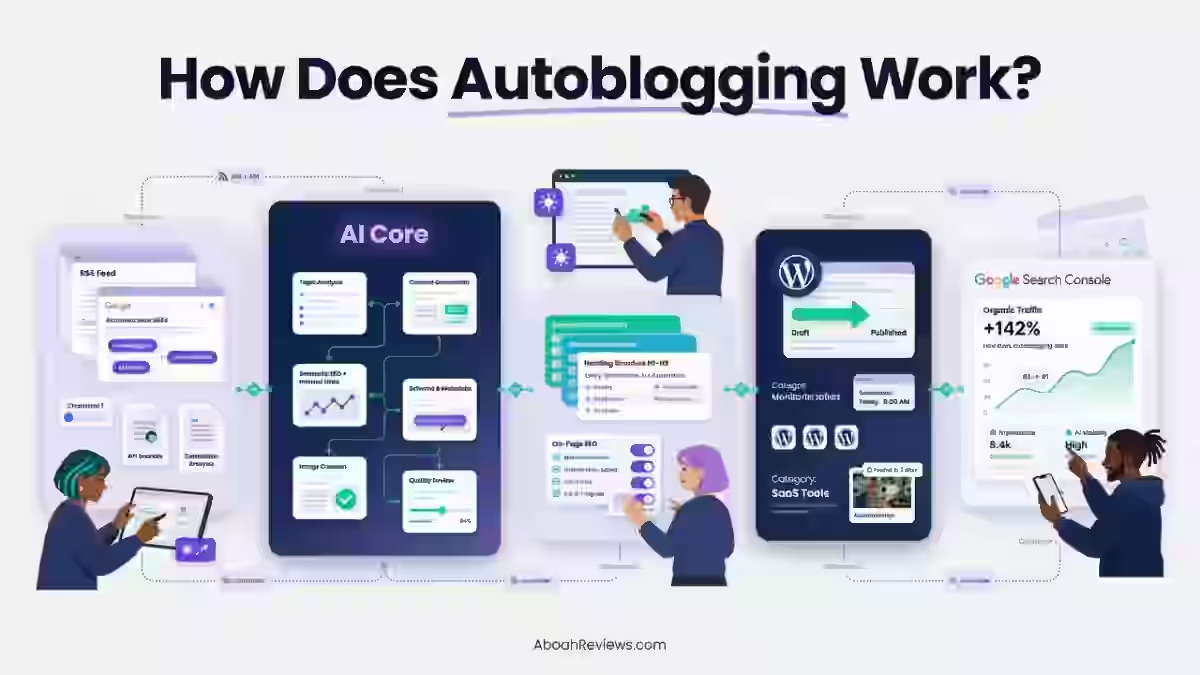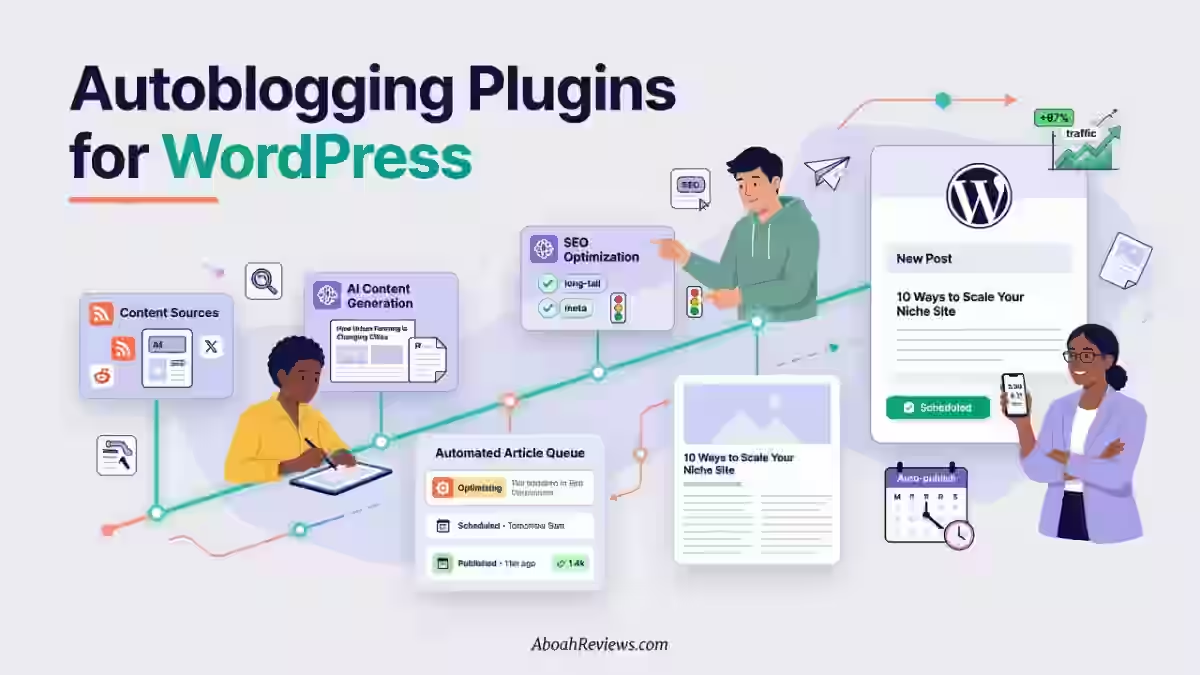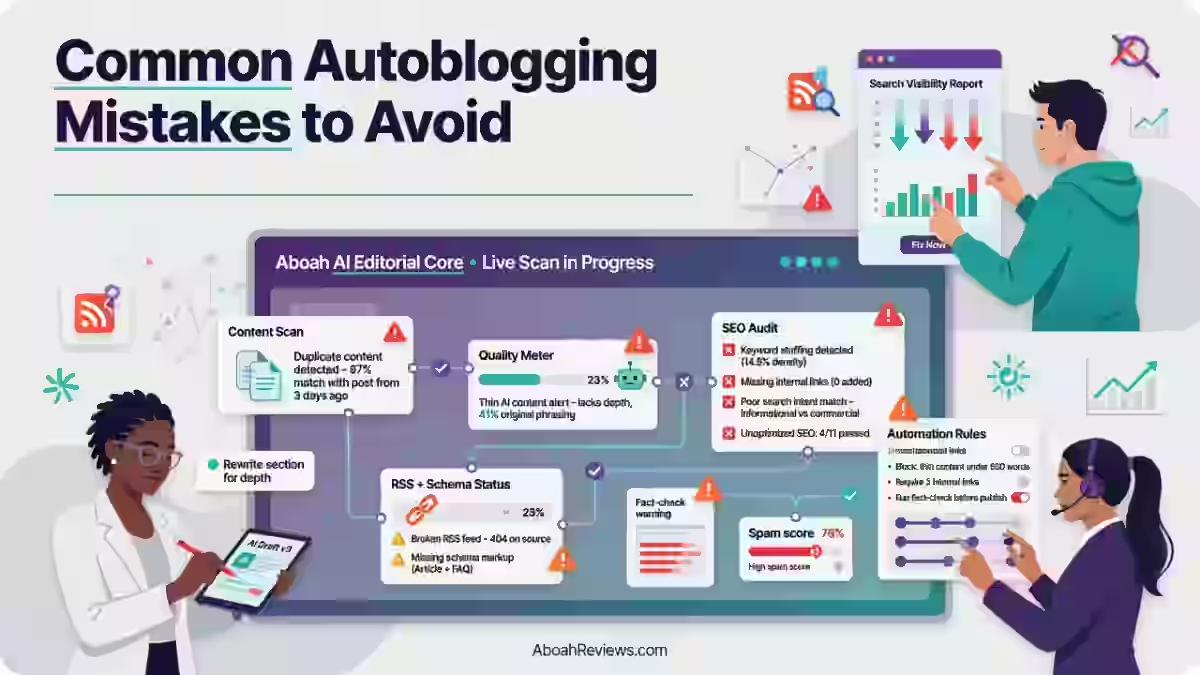
I personally test the tools I recommend and share my honest, unbiased findings. Some links are affiliate links, which help fund further testing and research. Learn more about my testing methodology, or contact me if you think I’ve missed a tool worth covering.
TL;DR: This guide reviews and ranks the 17 best autoblogging tools for 2026 based on hands-on testing across content quality, SEO output, automation depth, CMS reliability, and pricing. It’s for SEO professionals, content marketers, bloggers, agencies, and small businesses who want to make smarter tool decisions.
The main takeaway: no single tool wins for every workflow. The right pick depends on whether you prioritize quality, automation depth, SEO control, scale or price.
Quick Summary: What Are the Best Autoblogging Tools?
I’ve spent the past 4+ years testing software and helping businesses dominate different niches with autoblogs. The best autoblogging tools in 2026 cover a range of use cases. Here’s the fast version before we go deeper:
- Best overall: Keytomic
- Best for SEO automation: BabyLoveGrowth AI
- Best for agencies: Massblogger
- Best for bulk publishing: Autoblogging.ai
- Best for WordPress: Emplibot
- Best for beginners: RightBlogger
- Best for content quality: Outrank.so
- Best for affordable autoblogging: WordRocket AI
- Best for advanced SEO workflows: BabyLoveGrowth AI
These rankings come from a weighted scoring system I’ve applied consistently across all 17 tools. More on the methodology below.
Best Autoblogging Tools Compared at a Glance
| Tool | Best For | SEO | Overall Rating |
|---|---|---|---|
| Keytomic | True hands-off SEO + AI visibility | Advanced | 9.5/10 |
| BabyLoveGrowth AI | End-to-end SEO + backlink automation | Advanced | 9.2/10 |
| WordRocket AI | High-volume generation at low cost | Moderate | 9.0/10 |
| Outrank.so | SEO-focused automated content | Advanced | 8.9/10 |
| Distribb | Multi-channel SEO distribution | Moderate | 8.8/10 |
| Clearpost AI | WordPress-native AI SEO agent | Moderate | 8.7/10 |
| Byword AI | Programmatic SEO at scale | Moderate | 8.5/10 |
| BlogSEO.io | Semantic SEO blogging | Advanced | 8.3/10 |
| Massblogger | High-volume multi-site pSEO | Moderate | 8.1/10 |
| RightBlogger | Flexible hybrid AI blogging | Moderate | 8.0/10 |
| Soro SEO | Budget / Local business | Basic | 7.9/10 |
| Emplibot | Hands-off WordPress + social | Moderate | 7.8/10 |
| Frizerly | E-commerce / small business | Basic | 7.7/10 |
| RankPill | Daily automated SEO content | Moderate | 7.6/10 |
| Pressmaster AI | Thought-leadership + PR | Moderate | 7.5/10 |
| Arvow | Agency multi-CMS publishing | Moderate | 7.4/10 |
| Autoblogging.ai | Bulk volume / affiliate sites | Moderate | 7.3/10 |
How I scored these: Ratings are not pulled from review aggregators. I applied a weighted scoring framework described in the next section. No tool paid for a higher score. Ties were broken by real-world testing outcomes.
How I Tested and Ranked These Autoblogging Tools
I tested each tool personally or through structured side-by-side comparisons. For each tool, I run a full 30 to 90 days test myself, combined with documented research and public test data. I’m transparent about this distinction in each tool section.
My Autoblogging Evaluation Criteria
Every tool was scored using this weighted framework:
| Criterion | Weight |
|---|---|
| Content quality | 25% |
| SEO capabilities | 20% |
| Automation depth | 20% |
| CMS/publishing workflow | 10% |
| Reliability and consistency | 10% |
| GEO/AI-search capabilities | 5% |
| Ease of use | 5% |
| Value for money | 5% |
Content quality carries the most weight because publishing fast is meaningless if the output doesn’t satisfy search intent or hold up to human review.
SEO capabilities and automation depth are close behind because this is an autoblogging comparison, not a generic writing tool review. If a tool scores well on content but requires heavy manual editing for every post, that affects its automation score significantly.
What I Looked for in Each Tool
Across all 17 tools, I evaluated the following features where available:
- AI article generation (quality, depth, coherence)
- Keyword and topic research (built-in vs. external dependency)
- Search intent analysis (does the tool match content type to query intent?)
- Content briefs (are they structured or generic?)
- On-page SEO (title tags, headers, meta descriptions)
- Semantic/entity optimization (topical coverage, entity use)
- Internal linking (automatic or manual)
- External linking and citations
- AI-generated images (quality, relevance, alt text)
- Schema markup (article, FAQ, breadcrumb)
- CMS integrations (WordPress, Shopify, Webflow, Wix, Ghost)
- WordPress publishing (direct REST API vs. manual copy-paste)
- Automatic scheduling
- Brand voice controls
- Fact-checking mechanisms (or lack thereof)
- Human editing requirements (how much cleanup is needed?)
- Multilingual content support
- Bulk generation (CSV upload, batch keyword processing)
- Analytics and performance monitoring
- Google Search Console integration
- GEO/AI-search optimization (LLM citation tracking, AI Overview targeting)
- Pricing and usage limits
I cross-referenced tool outputs with Google’s Search Quality Rater Guidelines, which define how human evaluators assess content quality. A tool that generates thin, repetitive content at scale is not an asset regardless of how fast it publishes.
The 17 Best Autoblogging Tools (Tested and Ranked)
1. Keytomic — Best Overall for True Hands-Off SEO + AI-Visibility Autoblogging
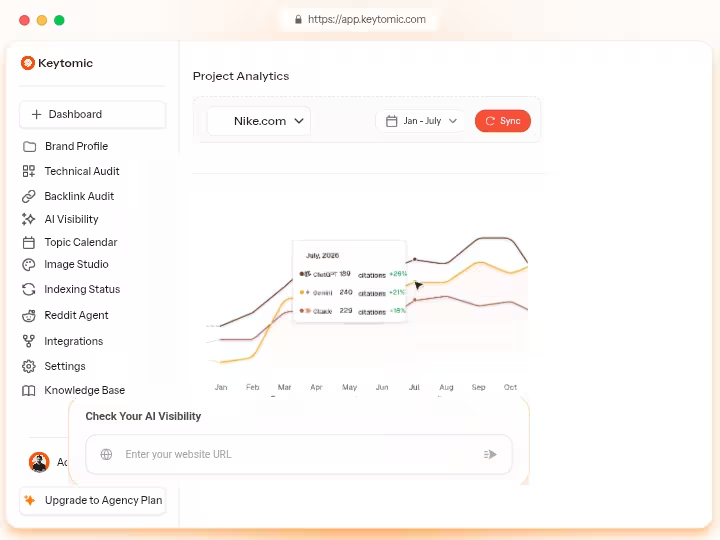
Keytomic is the most complete AI SEO autoblogging platform I’ve tested in 2026, combining keyword research, content creation, publishing, indexing, and AI citation tracking in a single subscription.
Keytomic’s automation manages the entire process from keyword discovery to content generation, with users approving a 30-day content calendar designed for search engines and AI platforms. That approval step matters. It keeps a human in the loop without requiring you to write or format anything.
It combines schema markup automation, AI Overview tracking, technical SEO audits, auto-indexing, SEO calendar management, CMS integrations, Reddit brand authority automation, and multilingual content support.
Keytomic also indexes every new page using its built-in indexing system for Google, Bing, ChatGPT, and other search engines to ensure faster discovery and improved visibility. That’s a feature most autoblogging tools don’t include at any price.
AI draft quality is consistently structured and editorial-ready with 20 to 35 minutes of human review. Reliable CMS publishing across WordPress, Shopify, Webflow, and HubSpot with no formatting failures.
Features:
- 30-day rolling content calendar with user approval
- Auto-indexing across Google, Bing, ChatGPT
- Schema markup automation
- Technical SEO audits built in
- AI Overview and LLM citation tracking
- Reddit brand authority automation
- CMS publishing: WordPress, Shopify, Webflow, HubSpot etc.
What I Liked:
- End-to-end automation that actually covers the full SEO workflow
- AI visibility tracking is native, not bolted on
- No feature gating between plan tiers
Limitations:
- Lacks deep, granular on-page NLP guidance or a robust standalone backlinks database compared to legacy enterprise tools.
- Starts at $99/month, which may be steep for tiny projects or tight budgets.
Pricing: $1 trial (3 days), $99/month (Pro), $999/month (Agency DFY).
Best for: Small teams, agencies and growth-stage businesses that want one platform to replace 4-6 separate SEO tools.
Skip if: You need white-label agency reporting or teams that need deep standalone rank tracking or backlink analysis.
2. BabyLoveGrowth AI — Best for End-to-End SEO + Backlink Automation
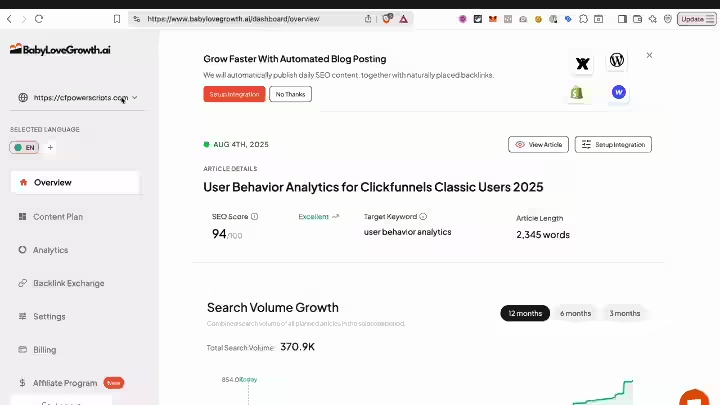
BabyLoveGrowth AI is the strongest option when you want content, publishing, and backlinks in one workflow, without stitching together separate tools for each job.
BabyLoveGrowth AI was founded in 2024 by Tilen Savnik and handles daily content publishing, automated backlink building, and AI search visibility tracking in one subscription.
The backlink feature is what separates it from most competitors at this price point. BabyLoveGrowth AI provides access to a network of 4,000+ vetted partner sites for contextual backlink building. Links are placed within relevant content on partner sites, not in footers or sidebars.
Multilingual support covers 20-plus languages and integrations include WordPress, Webflow, Shopify, and Wix.
Features:
- 30 SEO articles per month
- Automated backlink building (4,000+ partner sites)
- AI search visibility tracking (ChatGPT, Perplexity, Gemini, Google)
- Schema automation
- WordPress, Webflow, Shopify, Wix publishing
- 20+ language support
What I Liked:
- Backlinks stay even after cancellation
- LLM citation tracking is a real differentiator
- The 90-day money-back guarantee reduces subscription risk
Limitations:
- Expect 3+ months of consistent publishing before compounding SEO results become visible
- 30 articles per month may not satisfy high-volume sites
- Brand voice control is limited compared to editorial-first tools
Pricing: Offers two paid plans: Grow ($99/month) and Scale ($299/month), plus a custom reseller plan for agencies. Both plans include a 3-day free trial, 25% off annual billing and a 90-day money-back guarantee.
Best for: Agencies and content teams that want organic growth handled in the background.
Skip if: You need more than 30 articles per month or require precise brand voice consistency.
3. WordRocket AI — High-Volume Article Generation at Low Cost
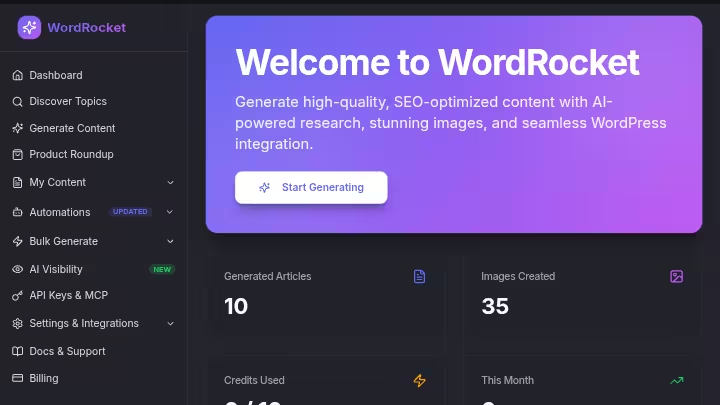
WordRocket AI is the best option if you need long-form content at scale without paying a per-article or monthly subscription fee beyond the initial purchase.
WordRocket AI’s BYOK (Bring Your Own Key) model offers more flexibility for high-volume users. Cost predictability with the BYOK model means no surprise overages or artificial word limits. Template quality reduces prompting time significantly.
Multi-model access lets you choose the right AI for each content type. WordPress integration saves meaningful time. Long-form capability maintains coherence past 3,000 words where competitors struggle. The lifetime deal option eliminates recurring costs.
That last point is underrated. Most autoblogging tools charge recurring monthly fees. WordRocket’s lifetime deal changes the cost-per-article math completely at scale.
The trade-off is setup complexity. The API configuration isn’t beginner-friendly, and there are no built-in keyword research features. You’ll need external tools like Ahrefs or Semrush to handle content strategy before WordRocket generates the articles.
Features:
- BYOK model (OpenAI, Anthropic, others)
- 90+ SEO-specific article templates
- WordPress direct publishing
- Multi-model AI selection
- Lifetime deal available
- Multi-site support
What I Liked:
- True cost efficiency at scale once the API is configured
- Long-form coherence is noticeably better than most competitors
- No artificial word or article caps
Limitations:
- API setup has a real learning curve
- Image generation quality is basic
- No team collaboration features
Pricing: Free plan ($0/month), Starter plan ($10/month), Pro ($20/month), Premium ($49.99/month).
Best for: High-volume content operations where recurring costs are a constraint. Also strong for freelancers managing multiple client sites.
Skip if: You’re a beginner, don’t want to manage API credentials, or need a better keyword research built into the same platform.
4. Outrank.so — Best for SEO-Focused Automated Content

Outrank.so is the best choice when content quality and SERP accuracy matter more than full hands-off automation.
Outrank is one of the most direct same-shape options if you want something close to daily automated article publishing and native CMS integrations, with a more established footprint in the autoblogging category.
What sets Outrank apart from fully automated tools is its editorial-quality draft output. The SERP analysis and citation integration mean articles are grounded in what’s actually ranking, not just AI-generated summaries.
It delivers strong SERP analysis, citations, and editorial-quality drafts. This makes it popular with SEO professionals who want automation speed but aren’t willing to sacrifice content depth. See the full Outrank.so review for a detailed breakdown of how it performs across content types.
Features:
- SERP-grounded content drafts
- Citations and sourced claims
- Native CMS integrations
- Keyword targeting built in
- Editorial review workflow
- Internal linking support
What I Liked:
- Best draft quality-to-editing-time ratio in this comparison
- SERP analysis grounds content in real search data
- Citation inclusion reduces factual errors significantly
Limitations:
- Requires some editorial review before publishing
- Less suitable for pure bulk or hands-off workflows
- Pricing increases meaningfully at higher article volumes
Pricing: $1 trial for 3 days, $99/month (30 articles), Enterprise (custom pricing)
Best for: SEO professionals and content marketers who want high-quality AI drafts with minimal editing.
Skip if: You want fully hands-off publishing or need to generate more than 50 articles per month without manual review.
5. Distribb (Formerly Rebelgrowth) — Best for Automated SEO Growth + Multi-Channel Distribution
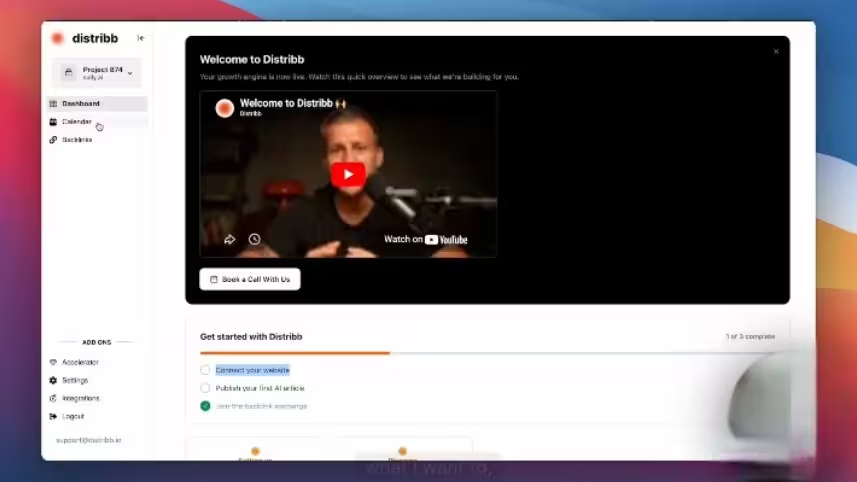
Distribb is the right tool when you want AI-generated content to reach multiple platforms simultaneously, not just your blog.
It combines AI content, publishing, and multi-platform distribution. That multi-channel angle separates it from most autoblogging tools, which stop at WordPress publishing. If your content strategy includes social media, newsletters, or syndication alongside your blog, Distribb reduces the number of separate tools needed.
Distribb is best for combining AI content generation with automated backlink building and content distribution.
The content quality is serviceable but not exceptional. Its strength is workflow efficiency across channels, not editorial depth. You’re trading some content precision for distribution reach.
Features:
- AI article generation
- Automated backlink building
- Multi-platform content distribution
- Content scheduling
- CMS integrations
What I Liked:
- Multi-channel distribution is a genuine differentiator
- Backlink automation bundled in
Limitations:
- Content quality is adequate, not exceptional
- Distribution breadth can lead to inconsistent brand voice across channels
Pricing: 3 days free trial (credit card required), then $97/month
Best for: Content teams running multi-channel content strategies who want one tool to handle blog, social, and distribution.
Skip if: Content depth and editorial precision are priorities.
6. Clearpost AI — Best WordPress-Native AI SEO Agent
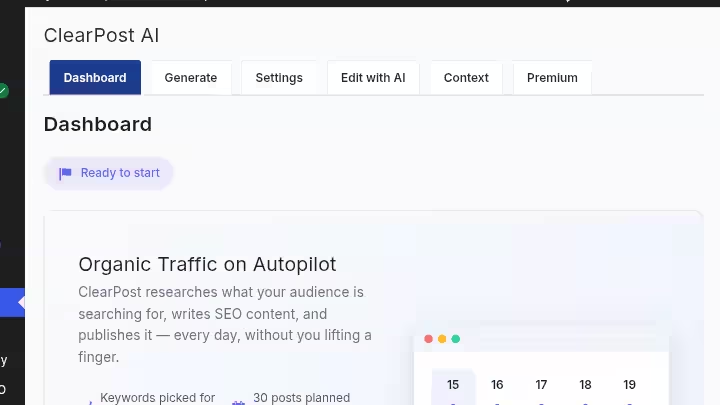
Clearpost AI is the best pick for WordPress site owners who want an AI SEO agent that operates directly within their existing workflow.
Unlike cloud-based platforms that push content to WordPress via REST API, Clearpost AI is built with WordPress as the primary environment. This means fewer formatting failures, more reliable scheduled publishing, and tighter integration with WordPress categories, tags and featured images.
Features:
- WordPress-native publishing
- AI article generation
- On-page SEO optimization
- Scheduling and categorization
- Featured image generation
What I Liked:
- WordPress-first architecture means fewer integration headaches
- Supports ChatGPT, Claude, and Gemini; you pick the model
Limitations:
- Limited CMS support outside of WordPress
- SEO capabilities are moderate compared to BabyLoveGrowth AI or Keytomic
- Not suited for multi-site operations
Pricing: Free (bring-your-own API key); Premium ($99/month), Business ($199/month). All plans come with 7-day free trial, no credit card required
Best for: WordPress site owners who want a clean, low-friction autoblogging setup without managing complex API configurations.
Skip if: You run multiple sites or need advanced SEO features like schema automation and LLM citation tracking.
7. Byword AI — Best for Programmatic SEO at Scale
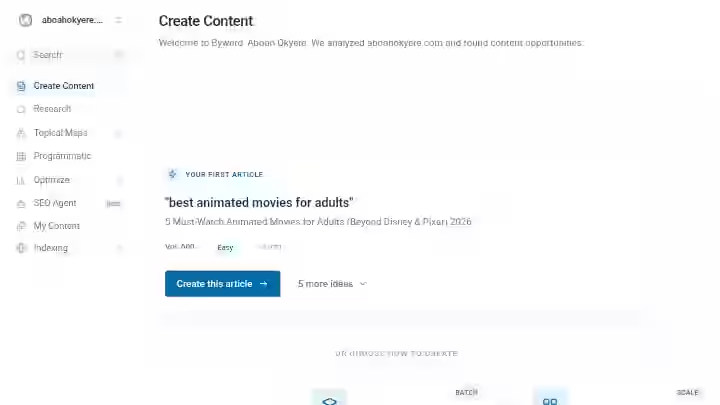
Byword AI is built for one thing: turning large keyword lists into published articles at volume, as fast as possible.
You feed Byword AI a keyword (or a list of keywords), and it generates a full article per keyword, with optional direct WordPress publishing. The output is decent for a first draft, and the bulk pricing is competitive.
Best for publishers running programmatic SEO plays or large-scale niche sites where the priority is throughput, not perfectionism.
Byword AI handles batch keyword-to-article generation for 50 to 200+ articles per month depending on plan tier.
The weakness is customization. Byword has fewer customization knobs for tone, structure, and writing style than most alternatives, and the drafts will sound generic without heavy editing.
Features:
- Bulk keyword-to-article generation
- CSV upload for batch processing
- WordPress direct publishing
- Volume-based pricing
- 50–200+ articles per month depending on tier
What I Liked:
- Best throughput-to-price ratio for programmatic SEO
- CSV-based batch input saves meaningful setup time
Limitations:
- Output sounds generic without editing
- No brand voice controls
- Limited on-page SEO depth compared to tools like Outrank.so
Pricing: Free trial (5 articles), Starter ($99/month), Standard ($299/month), Scale ($999/month), Unlimited ($1,999/month) or $5/article
Best for: Affiliate site builders and niche site operators running programmatic SEO strategies.
Skip if: Brand voice, editorial depth or content originality matter more than volume.
8. BlogSEO.io — Best Straightforward Automated SEO Blogging
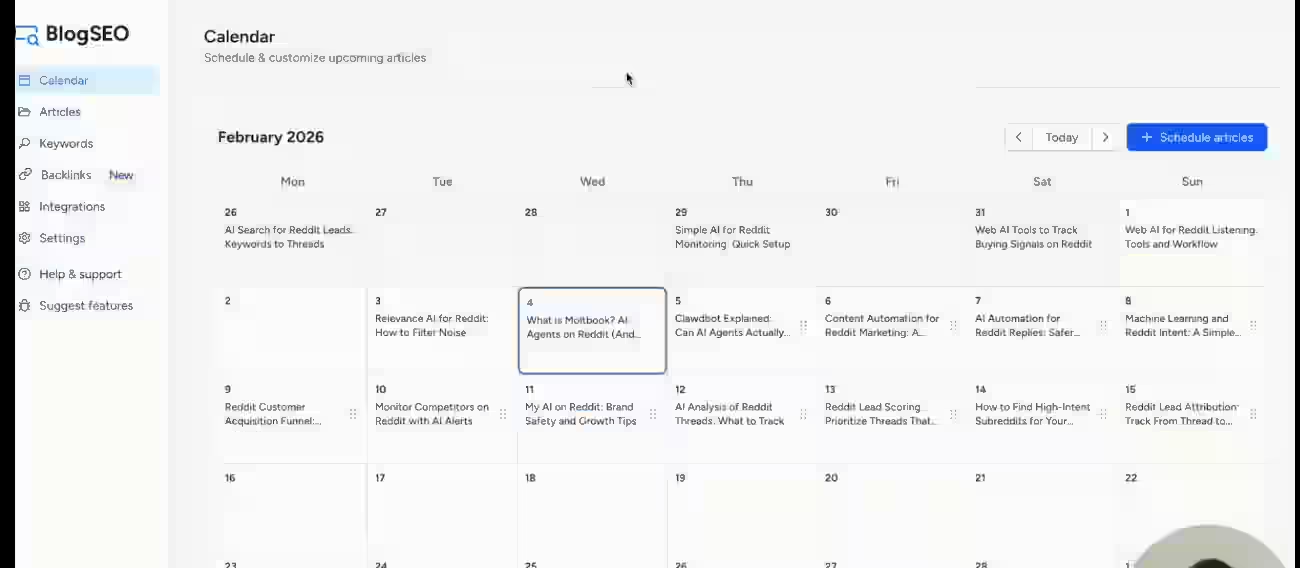
BlogSEO.io is the most SEO-focused tool in this comparison for teams that prioritize structured data, schema markup, and semantic SEO coverage.
BlogSEO emphasizes the SEO optimization part of automated blogging. Every feature ties back to search visibility.
For a deeper look at how semantic structures affect automated content, read my semantic SEO automation guide.
Features:
- Schema markup automation (article, FAQ, breadcrumb)
- Semantic entity coverage
- Keyword targeting
- Internal linking
- WordPress and Shopify integrations
What I Liked:
- Schema and structured data are first-class features, not afterthoughts
- Semantic coverage is noticeably stronger than most tools at this price point
Limitations:
- Publishing volume is moderate, not suited for bulk generation
- Less suitable for teams that need brand voice customization
Pricing: 3 days free trial. Then $97/month
Best for: SEO-first publishers and content teams that care about structured data, entity optimization, and schema-rich content output.
Skip if: Your main need is bulk content volume or multi-channel distribution.
9. Massblogger — Best for High-Volume Multi-Site / Programmatic SEO
Massblogger is the best choice for SEO teams or agencies managing multiple WordPress sites from one dashboard.
It lets you manage 1 or hundreds of WordPress sites without logging in and out of every website. No more wp-admin jumping. You can post and edit all your WordPress posts, even those not created by Massblogger, with ACF and independent analytics support.
I can personally relate to the pain this solves. Managing multiple client sites across individual WordPress dashboards is one of the most time-consuming parts of agency content operations.
Features:
- Centralized multi-WordPress management
- Programmatic SEO content generation
- Bulk article publishing
- ACF support
- Independent analytics per site
- REST API and webhook support
What I Liked:
- Multi-site dashboard is genuinely useful for agencies
- No constant wp-admin switching
Limitations:
- The AI output is serviceable but lacks the tonal consistency of tools with advanced brand voice training.
- Optimizes for SEO-driven informational and commercial content, not executive perspectives or deeply researched analysis.
Pricing: Free plan, $59/month (Discovery), $99/month (Pro)
Best for: SEO agencies and affiliate site operators managing 5+ WordPress sites who want centralized publishing without constant dashboard switching.
Skip if: You need brand-voice precision or long-form thought leadership content.
10. RightBlogger — Best for Flexible, Hybrid AI Blogging
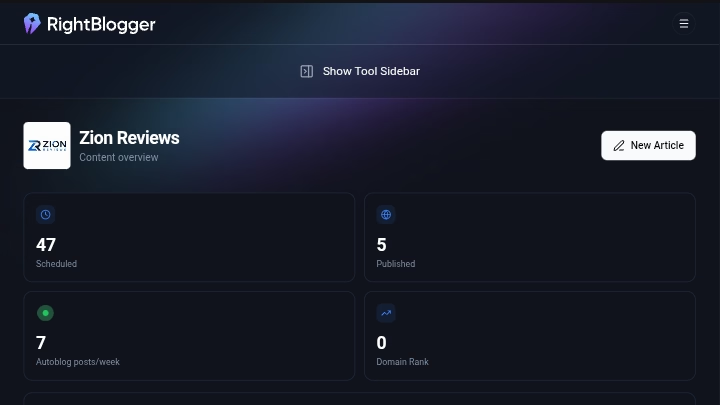
RightBlogger is the best all-in-one toolkit for bloggers who want AI assistance across the full content workflow without committing to full automation.
With 90+ tools to research keywords, generate AI SEO-optimized articles, repurpose video and podcast content into blog posts on autopilot, you can get more organic traffic from Google and earn more citations from ChatGPT.
With integrations for WordPress, Webflow, and Ghost, you can fully automate your publishing directly from RightBlogger’s AI Content Planner.
RightBlogger at $59/month is the most accessible entry point for beginners because it handles keyword research, drafting, and basic SEO structure in one dashboard without requiring technical setup.
It’s also the tool I’d recommend if you want human control over the final output before it publishes. The hybrid approach, where AI drafts and a human edits, consistently outperforms fully automated pipelines in my experience.
Features:
- 90+ blogging and SEO tools
- Keyword research built in
- AI Content Planner with scheduling
- WordPress, Webflow, Ghost publishing
- Podcast and video repurposing
- Keyword clustering and meta optimization
What I Liked:
- No article limits on any plan
- Tool breadth covers nearly every content workflow task
- Beginner-friendly without sacrificing depth for experienced users
Limitations:
- Automation depth is lower than fully automated tools like BabyLoveGrowth AI or Emplibot
- Not suitable for pure hands-off publishing workflows
Pricing: Solo at $59/month (1 site), Pro at $89/month (3 sites) and Agency at $299/month (10+ sites), with 50% off annual plan promotion.
Best for: Bloggers, freelancers, and small business owners who want AI-assisted content with human oversight.
Skip if: You want fully automated publishing or manage 5+ sites simultaneously.
11. Soro SEO — Best Budget-Friendly Local/Service-Business Autopilot

Soro SEO is a budget-accessible autoblogging platform built for local businesses and service providers who want daily content published without ongoing manual effort.
Soro’s daily automated publishing with geo-targeted keyword discovery makes it a reasonable fit for local service businesses building organic presence.
It’s not trying to compete with Keytomic or BabyLoveGrowth AI on SEO depth. Soro is for the plumber, HVAC company, or law firm that wants a consistent blog presence without hiring a content writer or managing a complex tool stack.
For more context on how local SEO automation works alongside tools like this, see my local SEO automation guide.
Soro has limited schema markup control, which is a real gap if you’re competing in markets where structured data matters.
Features:
- Daily automated publishing
- Geo-targeted keyword discovery
- WordPress publishing
- Basic on-page SEO
What I Liked:
- Accessible pricing for small, single-location businesses
- Geo-targeting is a practical differentiator for local SEO use cases
Limitations:
- Schema markup control is limited
- Not suited for content teams needing high-volume output
Pricing: Starts at $39/month. Read the Soro SEO review and the Soro SEO pricing guide for up-to-date plan details.
Best for: Local service businesses building organic presence with daily blog publishing and minimal manual involvement.
Skip if: You need schema automation, advanced SEO controls, or content for multiple locations.
12. Emplibot — Best for Fully Hands-Off WordPress Publishing + Social Sharing
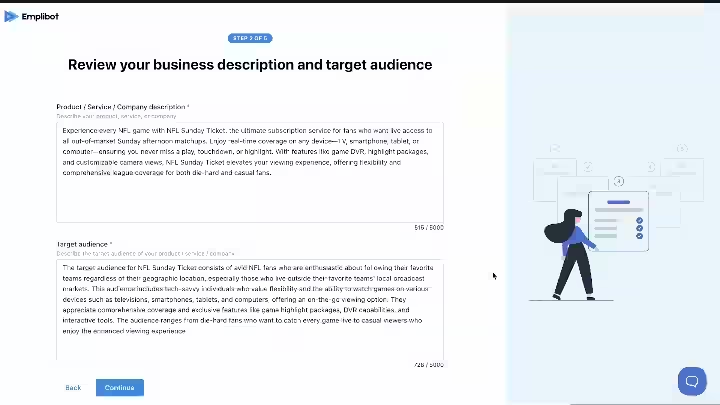
Emplibot is the closest thing to a true set-and-forget autoblogging experience for WordPress, with social media distribution built into the same workflow. It handles the full pipeline from topic research through WordPress publishing, with social distribution built in.
That social layer is where Emplibot earns its place on this list despite not having the deepest SEO feature set. If you’re a B2B brand that needs consistent blog and LinkedIn content without dedicated staff, Emplibot handles both from one dashboard.
Features:
- Full pipeline: topic research through publishing
- WordPress direct publishing
- Social media distribution (LinkedIn, Facebook, X, others)
- Automated scheduling
- Basic SEO optimization
What I Liked:
- Social distribution removes an entire separate workflow
- Genuinely hands-off once configured
Limitations:
- SEO depth is lower than dedicated SEO-first tools
- Content quality can be inconsistent across topics without editorial review
- No LLM visibility tracking
Pricing: Starter runs $69/month for 2 articles/week, Standard is $99/month for 4 articles/week, and Pro is $149/month for 7 articles/week. All plans include a 7-day free trial. Read the full Emplibot review for detailed feature testing.
Best for: B2B companies, solo founders, and bloggers who want WordPress + social media publishing automated without managing two separate tools.
Skip if: SEO precision, brand voice control, or schema automation are priorities.
13. Frizerly — Best for Automated Business/E-Commerce Blogging
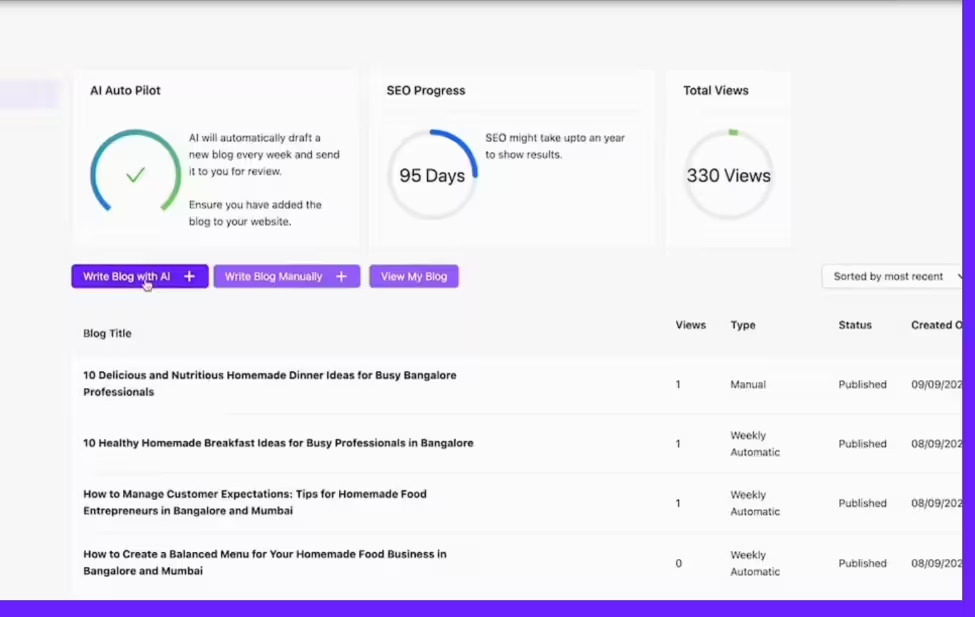
Frizerly is an AI content automation platform built for small business owners and e-commerce operators who want consistent, SEO-focused blog content published automatically without learning a complex tool.
It connects with websites, researches content opportunities, generates optimized articles, and can automatically publish content on platforms like WordPress, Shopify, Webflow, and more.
Both Frizerly and Soro have simple onboarding, minimal configuration, and clear use cases. Frizerly edges it for local business users.
If you’re running a Shopify store or a local services website and want a blog that publishes itself without hiring a writer, Frizerly handles that without much setup overhead.
Features:
- Content research and generation
- WordPress, Shopify, Webflow publishing
- Automated scheduling
- Basic keyword targeting
- Simple onboarding
What I Liked:
- Genuinely easy setup for non-technical users
- Shopify integration is practical for e-commerce blogs
Limitations:
- Best for small business owners running niche content sites who do not need advanced SEO automation.
- Not suited for competitive keyword targeting or agency-scale operations
Pricing: Standard at $49/month ($29/month billed annually). Pro at $149/month ($99/month billed annually). Pro SEO + Social at $199/month ($149/month billed annually).
Best for: Small businesses and e-commerce brands that want consistent blog publishing without managing content operations.
Skip if: You need programmatic SEO at scale, advanced schema controls, or multi-site management. Read the Frizerly review for a 30-day hands-on breakdown.
14. RankPill — Best Pure SEO-Oriented Daily Automated Content
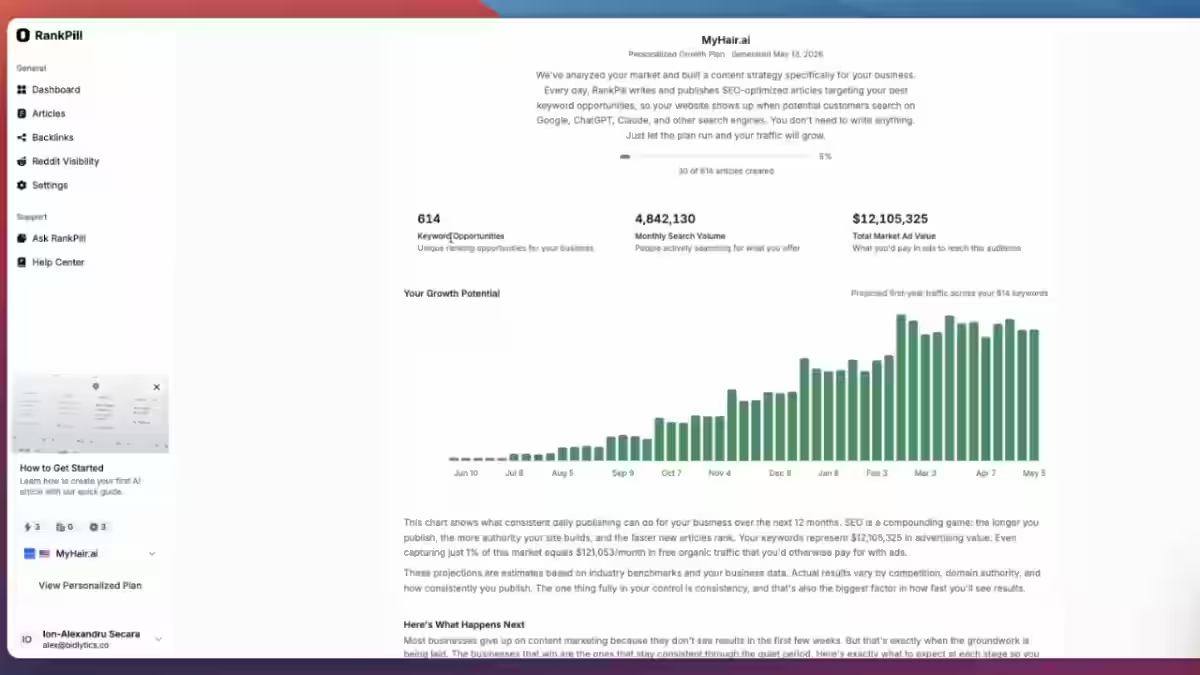
RankPill is built for publishers who want daily SEO content published across multiple CMS platforms with keyword research handled automatically.
The combination of daily publishing cadence and built-in keyword research makes RankPill practical for content teams that want consistent output without manually planning every article. The SEO orientation means meta titles, headers, and basic on-page elements are handled per article.
RankPill offers $49.5/month for 30 articles, up to 30 backlinks, HD image generation, a reasoning AI model, internal linking, and automated publishing.
Features:
- Daily automated content publishing
- Built-in keyword research
- Internal linking automation
- 30 backlink credits monthly
- HD image generation
- Multi-CMS support
What I Liked:
- All-in-one at a mid-range price
- Internal linking automation is a practical feature at this price point
Limitations:
- 30 articles per month is not suitable for high-volume sites
- Content depth can require editing for competitive topics
Pricing: $49.5 for the first month, then $99/month. You can save 10% on quarterly plan and 17% on annual subscription. Read the RankPill review for 90-day test results.
Best for: SEO-first publishers and affiliate marketers wanting daily publishing with backlinks included.
Skip if: You need more than 30 articles per month or prioritize content depth over publishing frequency.
15. Pressmaster AI — Best for Automated Thought-Leadership Content + Distribution
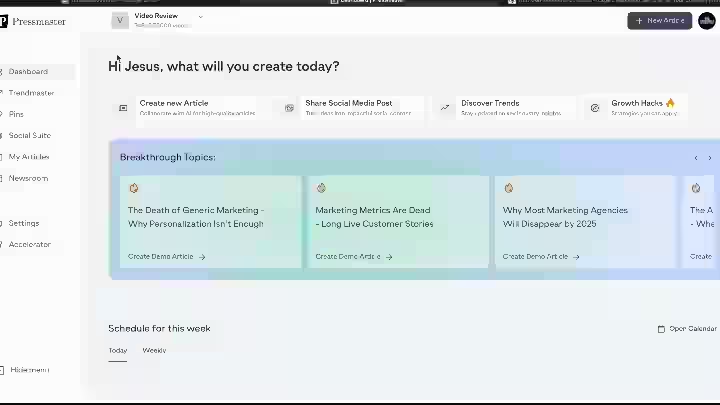
Pressmaster AI is the right tool for brands and PR teams that need a consistent stream of press releases, thought-leadership articles, and social content published automatically across multiple channels.
Pressmaster AI is positioned primarily for PR and news content automation, with SEO built around press release and news article formats. Unlike traditional AI writers, it uses an AI Twin and autonomous AI agents to learn your voice, research topics, generate content, and publish across multiple channels.
The AI interview, Trendmaster, Social Suite, and press distribution cover more of the content lifecycle than any single competitor I’ve tested.
Features:
- AI Twin voice learning
- Autonomous content agents
- Press release and news article formats
- Social Suite (LinkedIn, Twitter, others)
- Trendmaster for topic research
- Multi-channel distribution
What I Liked:
- Brand voice learning through AI Twin is more developed than most tools
- Distribution breadth is impressive for thought-leadership use cases
Limitations:
- Onboarding is weak, and browser glitches disrupt momentum.
- Not suited for high-volume SEO content generation or affiliate site workflows
Pricing: Starter at $29/month, Pro at $59/month, Leader at $96/month, Agency Starter at $199/month. See the full Pressmaster AI review for feature-by-feature testing.
Best for: PR teams, e-commerce brands, and news websites that need automated content for announcements and updates.
Skip if: Your primary goal is SEO-driven blog content at scale or affiliate publishing.
16. Arvow (Formerly Journalist AI) — Best for Flexible Automated AI Publishing Across Modern CMS

Arvow is the best option for agencies and multi-site operators who need automated content publishing across a wide range of modern CMS platforms, not just WordPress.
Arvow was formerly known as Journalist AI before rebranding and has built out SEO scoring integration directly into the writing workflow.
Arvow supports RSS feed automation to monitor competitor blogs and auto-generate articles, keyword-based automation from input lists, and auto-publish to WordPress, Shopify, Webflow, Wix, Ghost, Blogger, and more.
Human editing and involvement in the content creation process still matters for voice, accuracy, including real examples, and establishing trust with your audience.
AI can do most of the heavy lifting with drafting your blog content and auto-posting, but all website owners should review the content any automated blogging tools create on their behalf.
Features:
- RSS feed automation
- Keyword-list-based content campaigns
- WordPress, Shopify, Webflow, Wix, Ghost, Blogger publishing
- SEO scoring integration
- Brand voice controls
- Agency-tier plans with sub-accounts
What I Liked:
- CMS breadth is wider than most tools in this list
- Brand voice handling is above average for automated tools
Limitations:
- The automation is powerful enough that you can over-publish if you’re not careful. You still need an editorial eye for quality, fact-checking, and brand safety.
- Pricing at higher tiers (Ultimate at $449/month) is significant
Pricing: Arvow offers three AI SEO tiers: Solo at $99/month (1,000 credits, 1 site), Business at $149/month (2,000 credits, 5 sites) and Ultimate at $449/month (8,000 credits, unlimited sites), alongside a bespoke Human + AI managed service starting at $2,000/month.
Best for: Agencies managing multiple client CMS platforms, niche site builders with non-WordPress stacks, and brands needing brand-consistent automated content.
Skip if: You’re a solo blogger on a budget or need deep SEO automation like schema markup and LLM tracking.
17. Autoblogging.ai — Best Dedicated High-Volume Autoblogging Platform
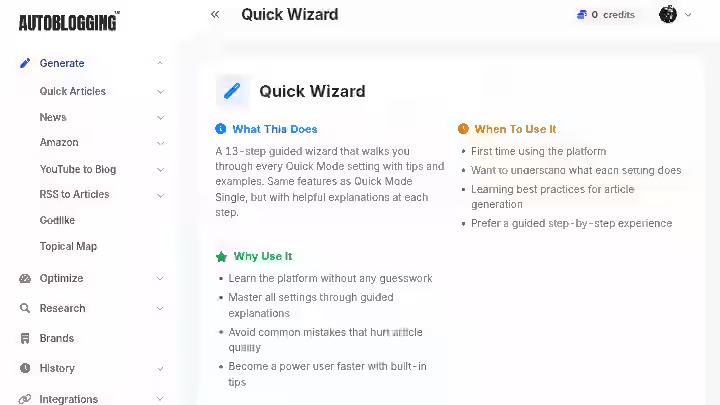
Autoblogging.ai is the best tool when raw publishing volume is the priority and editorial precision is secondary.
Autoblogging AI is built for low-cost, high-volume article generation for affiliate sites. It allows you to generate up to 500 articles at once via CSV upload. That’s the headline feature. No other tool on this list matches that throughput for entry-level pricing.
The trade-off is quality. At this volume and price point, the output requires meaningful editorial review before publication. Publishing 500 articles without review is how you end up with thin content at scale, which Google’s quality systems are specifically designed to flag.
Features:
- Bulk CSV keyword upload (up to 500 articles)
- WordPress publishing
- One-click article generation
- Multiple content modes (standard, bulk, godlike)
- Affiliate article templates
What I Liked:
- Best raw throughput in this comparison
- Pricing is accessible for affiliate site builders
Limitations:
- Content quality is inconsistent at volume
- Limited SEO depth compared to competitors
Pricing: Free (10 credits/month), $19/month Starter, $49/month Regular, $99/month Standard, $179/month Gold, $249/month Premium, $999/month Enterprise
Read the full Autoblogging.ai review for test results and content quality analysis.
Best for: Affiliate marketers and niche site builders needing large content batches at low cost.
Skip if: Content depth, brand voice, or SEO accuracy matter more than publication volume.
Which Autoblogging Tool Should You Choose?
Best Autoblogging Tool Overall
Keytomic wins the overall category because it covers more of the full SEO workflow than any other tool tested at a comparable price.
Keytomic consolidates keyword research, content creation, publishing, indexing, and AI visibility tracking into one platform. For teams that want genuine automation without stitching together multiple tools, that breadth matters.
Best Autoblogging Tool for SEO
BabyLoveGrowth AI is the strongest option specifically for SEO automation, combining content publishing, backlink building, schema automation, and LLM citation tracking.
BabyLoveGrowth AI is the best autoblogging software in 2026 for teams that want organic traffic growth from a single platform. It wins on the full pipeline: content generation, backlinks, and AI visibility tracking in one subscription.
If you want to understand how generative engine optimization fits into this picture, my GEO guide for automated content explains the AI search visibility layer in detail.
Best for Fully Automated Blogging
Emplibot requires the least manual intervention for WordPress + social media publishing. Once configured, the pipeline runs without daily input. The trade-off is SEO depth, but for brands that value publishing consistency over search precision, it delivers.
Best for Agencies
Massblogger handles multi-site WordPress management better than any other tool here. For agencies billing on content delivery across multiple client sites, the centralized dashboard and bulk publishing capabilities directly reduce operational overhead.
Best for WordPress
Emplibot and Clearpost AI are both strong here. Emplibot for full pipeline automation including social. Clearpost AI for WordPress-native simplicity on a single site. For plugin-based approaches, see my guide to AI blog automation WordPress plugins.
Best for High-Volume Content
Autoblogging.ai for raw volume (up to 500 articles via CSV), Byword AI for programmatic keyword batches (50–200+/month), and WordRocket AI for cost efficiency at high volume via the BYOK model.
Best for Beginners
RightBlogger. Accessible pricing, no API configuration, built-in keyword research, and a tool set wide enough to handle the full blogging workflow without external dependencies.
If you’re new to autoblogging, start with my autoblogging guide for beginners before committing to any tool.
Best for Content Quality
Outrank.so produces the most editorial-ready drafts in this comparison. The SERP analysis and citation inclusion mean you’re working with grounded content, not generic AI summaries. It requires some editing, but less than most tools at this level.
Best Budget Autoblogging Tool
WordRocket AI via the lifetime deal is the most cost-efficient option for high output over time once you account for the absence of recurring monthly fees. For true monthly budget options, Rankburst starts at $29/month and is worth considering for basic autoblogging needs.
What Features Should the Best Autoblogging Tool Have?
Not every tool in this list has every feature. Here’s what matters and why.
AI Content Generation
The best autoblogging tools generate coherent, search-intent-matched articles without requiring you to prompt-engineer every post.
Look for tools that understand whether a query needs a listicle, a comparison, a how-to, or an opinion piece, and structure the output accordingly.
Keyword and Topic Research
Tools that require you to supply keywords from an external tool (WordRocket AI, Byword AI) add a workflow step that matters at scale.
Tools with built-in keyword research (RightBlogger, BabyLoveGrowth AI, Keytomic) reduce that dependency, though the depth of built-in research varies significantly.
Search Intent Optimization
This is where most fully automated tools fail. Search intent isn’t just about matching a keyword. It’s about understanding whether the searcher wants to buy, compare, learn, or navigate, and producing content structured for that purpose.
Semantic SEO and Entity Coverage
Strong autoblogging tools don’t just insert keywords. They cover related topics, entities, and concepts that Google uses to understand topical authority. BlogSEO.io and Keytomic handle this better than most.
Internal Linking
This is one of the most overlooked features in autoblogging tool comparisons. Publishing 40 articles with zero internal linking is a ranking problem waiting to happen. I know from experience. I lost an affiliate site’s rankings after publishing 42 auto-generated posts without internal linking or keyword filtering, and the content cannibalized itself.
AI-Generated Images
Most tools include image generation, but quality and relevance vary. Look for tools that generate contextually relevant images with proper alt text, not generic stock-style illustrations.
Schema Markup
Schema markup (Article, FAQ, HowTo, BreadcrumbList) helps both Google and AI systems parse your content correctly. It’s a meaningful differentiator between basic and advanced autoblogging platforms. Keytomic, BabyLoveGrowth AI, and BlogSEO.io handle this better than most.
CMS Publishing
Direct REST API publishing to WordPress is the standard. But support for Shopify, Webflow, Wix, Ghost, and HubSpot separates tools built for modern content stacks from WordPress-only solutions. Arvow has the broadest CMS support in this comparison.
Content Scheduling
Consistent publishing cadence matters for SEO. Look for tools that let you set a weekly or daily schedule, not just publish on demand.
Brand Voice
This is where fully automated tools often fall short. Tools like Pressmaster AI (AI Twin), Arvow, and RightBlogger put more thought into brand voice than bulk publishers like Autoblogging.ai or Byword AI.
Google Search Console Integration
A handful of tools in this list connect with Google Search Console to track which articles are ranking, indexing, and generating clicks. This feedback loop is valuable for adjusting content strategy. Keytomic includes this; most tools don’t.
GEO and AI Search Optimization
This is the newest feature category in autoblogging. Generative Engine Optimization (GEO) refers to optimizing content for AI answer engines: ChatGPT, Perplexity, Google AI Overviews. Both Keytomic and BabyLoveGrowth AI track AI search visibility across ChatGPT, Perplexity, and Gemini. If AI search optimization is a priority, these two are ahead of the rest of this list.
Bulk Content Generation
For affiliate sites and programmatic SEO plays, bulk generation (50–500+ articles at once) is a core requirement, not a nice-to-have. Autoblogging.ai and Byword AI lead here.
Multi-Site Support
Massblogger is the clear leader for multi-site WordPress management. Arvow handles multi-CMS at scale. Most other tools on this list are primarily single-site or require separate accounts per site.
Analytics and Performance Monitoring
Most autoblogging tools publish and move on. A smaller group track what happens after publishing. Keytomic, BabyLoveGrowth AI, and RightBlogger have the most developed performance monitoring in this comparison. See my automated SEO reporting guide for how to build tracking around any autoblogging workflow.
Are Autoblogging Tools Safe for SEO?
Autoblogging tools are safe for SEO when used with editorial judgment. They are a risk when used to publish high volumes of unreviewed, thin content automatically.
Google does not penalize AI-generated content by default, but it does penalize low-quality content that provides no added value over what’s already ranking.
Publishing fully automated posts at scale without any editorial review is the real risk. A light editing pass, a plagiarism check, and proper internal linking before publishing dramatically reduce that risk.
Autoblogging is effective in 2026 when it is paired with a content strategy, editorial review, and proper SEO setup. Fully automated publishing with no human oversight still produces thin content at scale, which Google’s quality systems are well calibrated to flag.
More articles do not automatically mean more organic traffic. A well-edited article targeting a specific search intent will outperform five thin automated posts on the same topic in most niches.
Autoblogging Tools vs. AI Writing Tools
People often conflate these two categories. They overlap, but they serve different purposes.
Tools like ChatGPT or Gemini are AI writing assistants. They help you write. Tools like BabyLoveGrowth AI or Emplibot are content systems. They publish. The distinction matters when you are budgeting and planning your content workflow.
Here’s a direct comparison of what each category typically handles:
| Capability | AI Writing Tool | Autoblogging Platform |
|---|---|---|
| Article generation | Yes | Yes |
| Keyword research | Sometimes | Usually |
| SEO optimization | Varies | Core feature |
| Internal linking | Limited/varies | Often included |
| AI-generated images | Varies | Often included |
| WordPress publishing | Sometimes | Common |
| Content scheduling | Limited | Common |
| Bulk publishing | Limited | Stronger |
| Content monitoring | Rare | Some platforms |
| Schema markup | Rare | Some platforms |
| LLM citation tracking | No | BabyLoveGrowth AI, Keytomic |
| End-to-end automation | Limited | Primary purpose |
Key takeaway: An AI writer generates content. An autoblogging platform automates the workflow around content production and publishing. If you’re comparing these two categories more directly, see my AI writing tools vs. autoblogging tools breakdown.
How to Choose the Right Autoblogging Tool for Your Workflow
Here’s the decision framework I use when a client or colleague asks me which tool to try.
Step 1: Define Your Publishing Goal
Before looking at tools, decide what you’re actually trying to accomplish. Are you:
- Building topical authority on a niche blog?
- Running an affiliate site that needs volume?
- Managing multiple client sites for an agency?
- Building brand awareness through thought leadership?
- Growing a local service business with consistent blog content?
Each answer points to a different part of this list. Mixing up goals and tools is one of the most common and expensive mistakes in this space.
Step 2: Decide How Much Automation You Want
There’s a spectrum here:
- Full automation (Emplibot, BabyLoveGrowth AI, Autoblogging.ai): Publishes without your input after setup.
- Semi-automated (RightBlogger, Outrank.so, Arvow): AI drafts, human reviews, then publishes.
- AI-assisted (WordRocket AI, ChatGPT): You drive the workflow, AI accelerates parts of it.
Full automation trades control for speed. Semi-automated trades some speed for quality and oversight. Neither is universally better. The right choice depends on your content standards and how much editorial risk you’re willing to carry.
Read my autoblogging vs. hybrid blogging comparison for a deeper look at these trade-offs.
Step 3: Evaluate Content Quality
Every tool’s output quality varies by topic, niche, and writing mode. Before committing to any tool:
- Run 3–5 test articles on your exact target keywords.
- Score them against your top-ranking competitors for depth, accuracy, and structure.
- Time how long editing takes per article.
That editing time is your real cost, not just the subscription price.
Step 4: Check SEO Controls
Look specifically for:
- Keyword targeting per article (not just blog-level)
- Internal linking automation or prompts
- Schema markup generation
- Meta title and description controls
- Search intent matching
Score tools across content quality, automation completeness, CMS integration reliability, pricing and value, and SEO output including internal linking, meta descriptions, schema, and keyword clustering.
Step 5: Check CMS Integrations
If you’re on WordPress, almost every tool on this list works. If you’re on Shopify, Webflow, Ghost, or Wix, your options narrow quickly. Confirm integrations before subscribing. Arvow has the widest CMS support. Most others are WordPress-first.
Step 6: Calculate Cost Per Usable Article
This is the metric that actually matters.
Don’t calculate: $X per article generated.
Do calculate: (Monthly subscription ÷ articles you can publish after acceptable editing)
If a $49/month tool generates 30 articles but 20 need 45 minutes of editing each to be publishable, your real cost is different than a $99/month tool generating 30 articles that need 15 minutes each. Factor your hourly rate into that math.
Step 7: Test Before Scaling
Start with a small batch (10–15 articles) before turning on automated publishing at scale. Review the output, check for:
- Factual errors
- Keyword cannibalization
- Missing internal links
- Generic phrasing that adds no value
Only scale after you’ve confirmed the output meets your minimum standard. No autoblogging platform has reliable fact-checking built in as of 2026. Some tools flag potential inaccuracies; none of them eliminate them. Build a fact-checking step into every content workflow that uses AI drafts.
Final Verdict: Which Autoblogging Tool Should You Choose?
Here’s where the rankings land after applying my scoring framework across all 17 tools:
| Goal | Best Tool |
|---|---|
| Best overall | Keytomic |
| Best for SEO automation | BabyLoveGrowth AI |
| Best for hands-off publishing | Emplibot |
| Best for agencies | Massblogger |
| Best for high-volume publishing | Autoblogging.ai |
| Best for WordPress | Clearpost AI |
| Best for content quality | Outrank.so |
| Best value / budget | WordRocket AI (lifetime deal) |
| Best for beginners | RightBlogger |
| Best for thought leadership | Pressmaster AI |
| Best for local businesses | Soro SEO / Frizerly |
| Best for multi-CMS | Arvow |
| Best for GEO/AI search | Keytomic / BabyLoveGrowth AI |
There isn’t a universal winner here. I’d be doing you a disservice by pretending there is.
The best autoblogging tools in this list are also moving targets. Products get updated, rebranded, and repriced regularly. The notes on Arvow’s rebranding from Journalist AI and Distribb’s rebrand from Rebelgrowth are good reminders to verify current product details before subscribing.
Whatever tool you choose, treat it as a starting point, not a finished system. The real differentiator is how you build editorial judgment and content quality controls around whichever platform you use. That’s what separates autoblogging setups that rank from ones that don’t.
Share your own experience in the comments below. Which tool are you using? What worked, and what didn’t?
Frequently Asked Questions
What is the best autoblogging tool in 2026?
Keytomic is the best overall autoblogging tool in 2026 based on end-to-end automation, SEO depth, auto-indexing and AI visibility tracking combined in one platform. The right tool depends on whether you prioritize SEO depth, automation level, content quality, or price.
Can autoblogging tools replace human writers?
Autoblogging tools reduce the time human writers spend on drafting, formatting, and publishing, but they do not replace human judgment on content strategy, factual accuracy, brand voice, and editorial quality.
What autoblogging tool is best for beginners?
RightBlogger is the best starting point for beginners at $59/month because it includes keyword research, AI article generation, and WordPress publishing without requiring API setup or technical configuration. The learning curve is low, and the tool set is broad enough to handle the full blogging workflow as your skills develop.
Does autoblogging still work in 2026?
Yes, autoblogging works in 2026 when paired with a content strategy, keyword research, editorial oversight, and proper internal linking. Fully automated publishing with no human review still produces thin content at scale, which Google’s quality systems flag. The approach that consistently performs is semi-automated: AI handles drafting, a human handles editing and quality control, and the tool handles publishing and scheduling.

- HighSoftware99 Review 2026: Is It Legit or a Risk to Your Website? - October 21, 2026
- SEO Instant Appear HighSoftware99.com: Full Breakdown - October 18, 2026
- SEO by HighSoftware99.com: My Honest Independent Fact-Check for 2026 - October 18, 2026