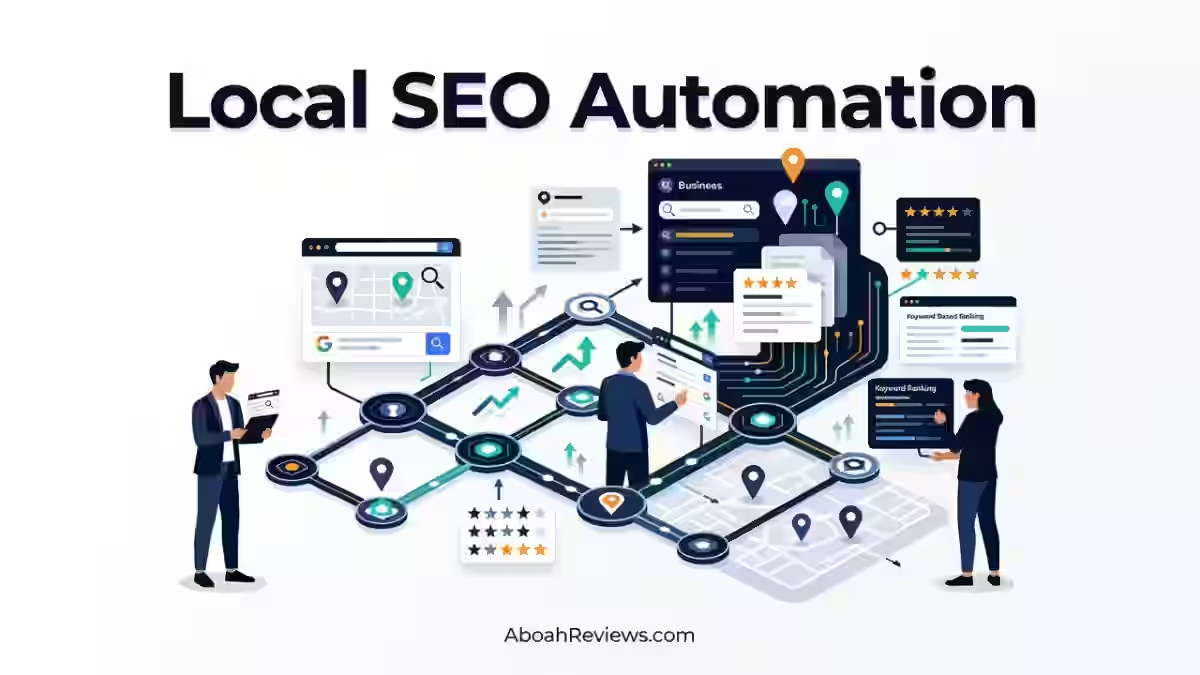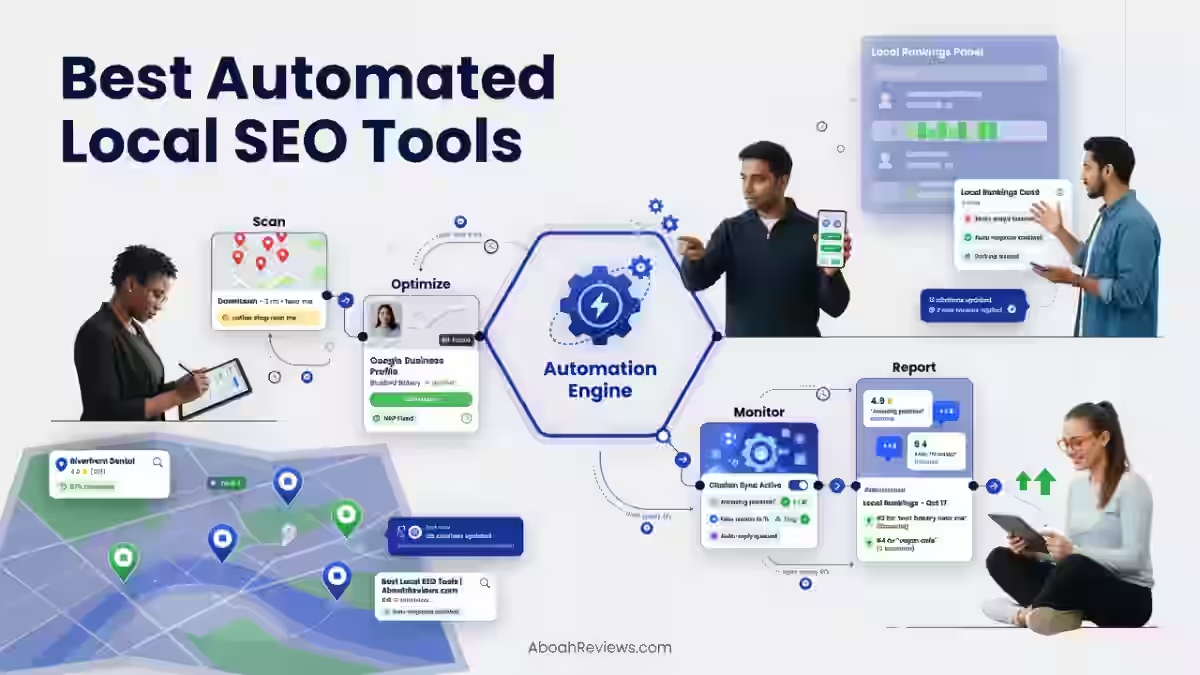
This guide covers the best automated local seo tools for 2026, based on hands-on testing of GBP automation, rank tracking, citation management and review workflows.
Semrush Local:
- Best For: Full-stack agency automation.
- Standout Automation: Deploys an automated AI GBP agent to write posts, upload photos, and reply to reviews alongside map tracking grids.
BrightLocal:
- Best For: White-label reporting and audit automation.
- Standout Automation: Automatically monitors local rankings across precise map grids and audits citations across multiple platforms.
Merchynt Paige:
- Best For: Completely hands-off GBP optimization.
- Standout Automation: Uses its native AI agent, Paige, to autonomously write keyword-rich posts, handle neighborhood attribute changes, and craft review replies.
GrowthPro AI:
- Best For: Generative Engine Optimization (GEO).
- Standout Automation: End-to-end local workflow automation that optimizes your presence for AI-assisted search engines like ChatGPT and Perplexity.
Yext:
- Best For: Enterprise listing sync at scale.
- Standout Automation: Instantly pushes real-time business information, hours, and NAP consistency across a global network of over 100 directories.
Localo:
- Best For: Smart weekly task guidance.
- Standout Automation: Automates local rank tracking and auto-generates localized content recommendations to stay ahead of nearby competitors.
Moz Local:
- Best For: Budget-friendly automated distribution.
- Standout Automation: Automatically syndicates single-dashboard updates to major data aggregators and mapping directories.
Birdeye:
- Best For: Review generation loops.
- Standout Automation: Triggers automated text and email review invitations integrated into customer CRM touchpoints, generating continuous feedback loops.
Whitespark:
- Best For: Cleanups and local authority building.
- Standout Automation: Automatically surfaces gaps in your regional citation profile compared to competitors and monitors review velocity.
Places Scout:
- Best For: Competitor intelligence and AI search capture.
- Standout Automation: Automates map scraping and flags whether AI-driven search boxes or local packs are showing up for your high-intent keywords.
UpliftAI:
- Best For: Autopilot content creation.
- Standout Automation: A multi-agent framework that maps hyper-local landing pages, builds schema, and auto-posts corresponding updates right to your GBP.
The short answer: Semrush Local and BrightLocal lead for most use cases, but the right pick depends on whether you need full GBP automation, agency reporting, or AI-search visibility.
Introduction
If you’ve spent any time managing local SEO at scale, you know exactly what the pain points are.
You’re manually updating Google Business Profile posts, chasing citation inconsistencies across 40 directories, copying and pasting review replies at 11pm. And you’re doing rank checks that take forever to mean anything because your results vary by neighborhood, not city.
That’s where automated local SEO tools come in. And no, I don’t mean every tool with a local rank tracker as an add-on. I mean tools that actually replace recurring manual work with scheduled, rules-based or AI-assisted execution.
The Best Automated Local SEO Tools at a Glance
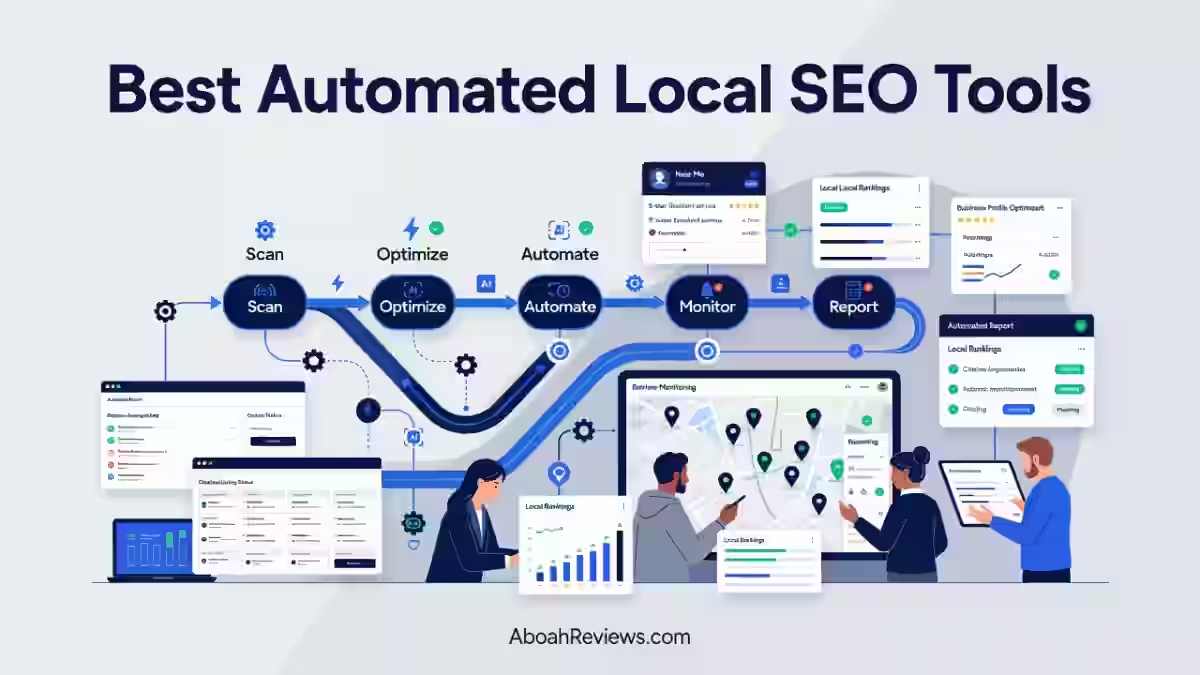
I’m putting the strongest picks up front instead of making you scroll through the whole list first.
| Tool | Best For | GBP Automation | Local Rank Tracking | Citation Management | Review Automation | Content Automation | AI-Search Tracking | Reporting | Multi-Location | Starting Price | Score |
|---|---|---|---|---|---|---|---|---|---|---|---|
| Semrush Local | Full-stack agency automation | Full | Full | Full | Full | Assisted | Assisted | Full | Full | $30/mo/location | 9.4/10 |
| BrightLocal | White-label reporting & audits | Assisted | Full | Full | Assisted | None | None | Full | Full | $39/mo/location | 9.1/10 |
| Merchynt (Paige) | Hands-off GBP optimization | Full | Assisted | Assisted | Full | Full | Assisted | Assisted | Full | $99/mo/profile | 8.9/10 |
| GrowthPro AI | Generative Engine Optimization | Assisted | Assisted | None | Assisted | Full | Full | Assisted | Assisted | ~$49-$199/mo | 8.6/10 |
| Yext | Enterprise listing sync | Assisted | None | Full | Assisted | None | None | Assisted | Full | Custom quote | 8.3/10 |
| Localo | Weekly task guidance | Assisted | Full | Assisted | None | Assisted | None | Assisted | Assisted | $29/mo | 8.1/10 |
| Moz Local | Budget distribution | None | Assisted | Full | Assisted | None | None | Assisted | Full | $14-$20/mo/location | 7.8/10 |
| Birdeye | Review generation loops | None | None | Assisted | Full | None | None | Assisted | Full | Custom quote | 7.6/10 |
| Whitespark | Citation cleanups & authority | None | Full | Full | Assisted | None | None | Assisted | Assisted | $1-$200/mo (modular) | 7.4/10 |
| Places Scout | Competitor & AI search capture | None | Full | None | None | None | Full | Assisted | None | ~$39-$149/mo | 7.1/10 |
| UpliftAI | Autopilot content creation | Assisted | None | None | None | Full | Assisted | None | Assisted | ~$79-$249/mo | 6.8/10 |
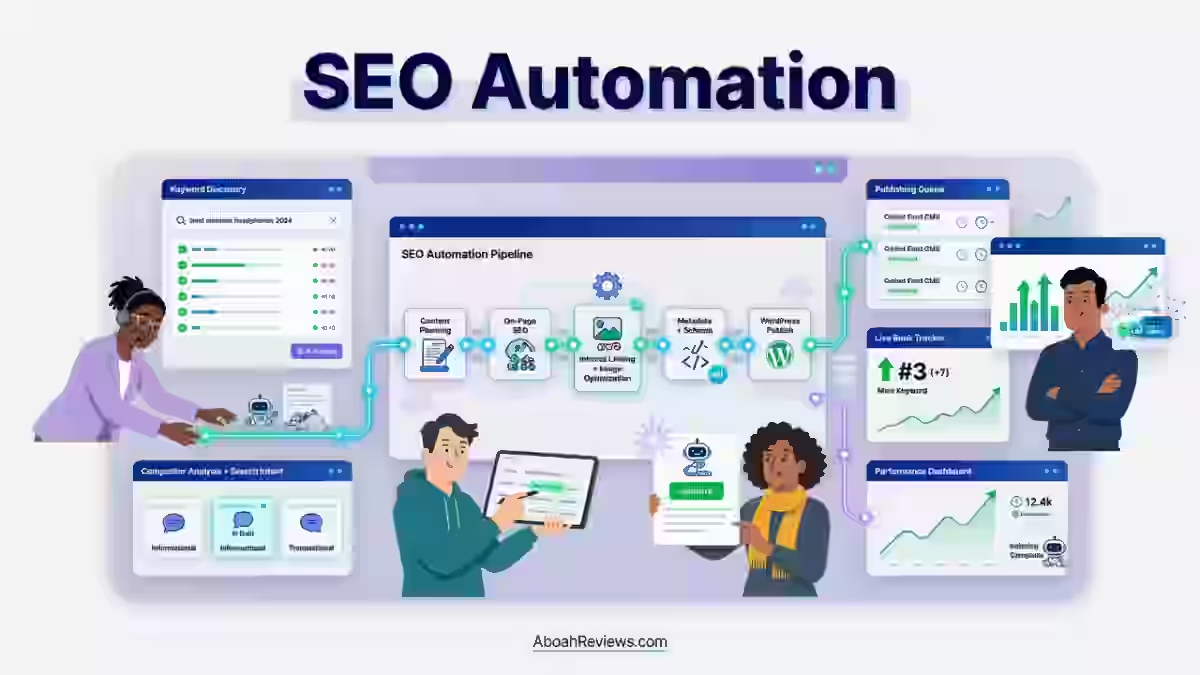
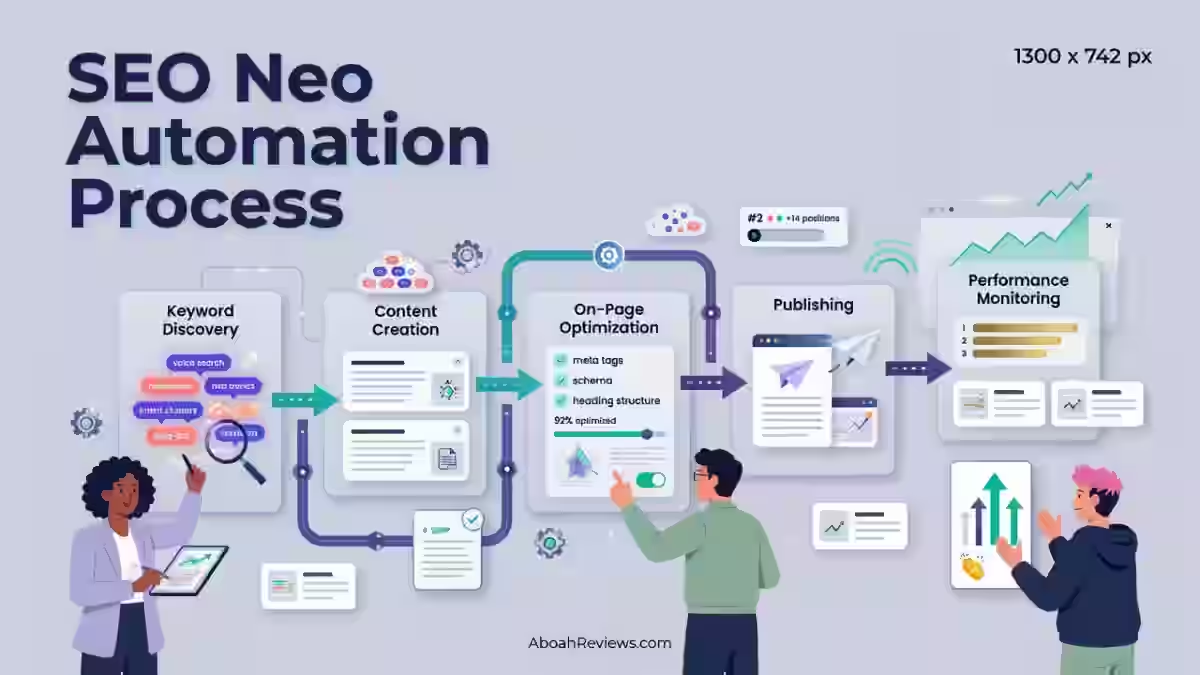
If you’re weighing a broader stack decision (not just local), it’s worth reading how SEO automation fits into a full workflow before committing budget to any single local platform.
What Are Automated Local SEO Tools?
Automated local SEO tools are software platforms that use rules, scheduling or AI agents to perform recurring local search tasks, such as GBP posting, citation syncing, review replies, and rank tracking, without requiring a human to click “publish” every time.
The key word is “perform,” not “report.” A tool that shows you your ranking drop is monitoring software. A tool that also fixes the listing that caused it is automation.
This distinction gets blurry in marketing copy, which is exactly why I built the framework further down this page. For a deeper look at how automation plugs into a broader local strategy, my local SEO automation breakdown covers the setup side in more detail.
What Can Local SEO Tools Can Automate?
Modern platforms can automate a surprising amount of the recurring local SEO workload. Here’s what I’ve seen actually work in production, not just in a demo video:
- Rankings – geo-grid and keyword-level tracking across multiple locations
- GBP monitoring – flagging unauthorized edits, missing hours, or suspended listings
- Reviews – auto-sending review requests and drafting (or auto-publishing) replies
- Citations – syncing NAP data across directories and data aggregators
- Content – generating GBP posts, location pages, and Q&A answers
- Reporting – building white-label client reports on a schedule
- Competitor monitoring – alerting when a rival gains review velocity or rank
- AI visibility – tracking whether your business shows up in AI Overviews or ChatGPT local answers
What Still Requires Human Oversight?
None of this replaces judgment. Strategy decisions, like which locations to prioritize or how aggressive to be with review requests, still need a person setting the direction.
Quality assurance on auto-generated GBP posts and location pages is non-negotiable; I check every batch before it goes live.
Sensitive reviews (complaints involving safety, refunds, or legal threats) should never get an auto-reply. Factual verification of business hours, service areas, and pricing claims also needs a human sign-off, and brand voice decisions on tone and messaging are still yours to make, not the algorithm’s.
How I Evaluated the Best Automated Local SEO Tools
I scored each tool against five criteria: automation depth, output accuracy, reporting quality, pricing transparency, and how much manual cleanup was required after a month of live use.
Tools lost points fast when “automation” turned out to mean “a dashboard that reminds you to do it yourself.”
My 5-Level Automation Framework
I use this scale across every review on this site, and it applies just as well to local SEO as it does to content platforms covered in my AI SEO automation guide:
- Monitoring – the tool tells you something happened (a rank drop, a new review)
- Recommendations – the tool suggests what to do about it
- Assisted execution – the tool drafts the fix, you approve and publish
- Scheduled execution – the tool publishes on a set schedule with rules you define
- End-to-end automation – the tool detects, drafts, and publishes without a click, reporting back after the fact
Most tools in this category sit at Level 3. Only a handful, like Merchynt’s Paige, push into Level 5 territory for specific GBP tasks.
11 Best Automated Local SEO Tools Reviewed
1. Semrush Local (Overall Winner)
Best for: Full-stack agency automation across GBP, citations, reviews, and reporting in one login.
What it automates: The Base plan gives you automated GBP management driven by an AI agent, AI-generated post creation and publishing, automated photo posting, review auto-replies, negative review alerts, GBP edit protection so you can accept or reject changes others suggest, competitor review analytics, and geo-grid local rank tracking through the Map Rank Tracker with 375 credits included.
Stepping up a tier, the Pro plan at $60/month per location adds listing management across directories, review management and generation tools, advanced GBP management, and 1,225 Map Rank Tracker credits.
Ease of use: Moderate learning curve if you’re new to Semrush, but familiar if you already use their SEO Toolkit.
Pricing: For small local businesses, it’s $30/mo per location billed annually, with automated Google Business Profile management with an AI Agent, AI-powered post generation and publishing, review auto-replies, automated photo posting, and Map Rank Tracker with 375 credits.
Pros: Genuine AI-agent GBP automation, tight integration with existing Semrush accounts, strong reporting.
Cons: Per-location pricing adds up fast for large portfolios; content automation is more assisted than fully autonomous.
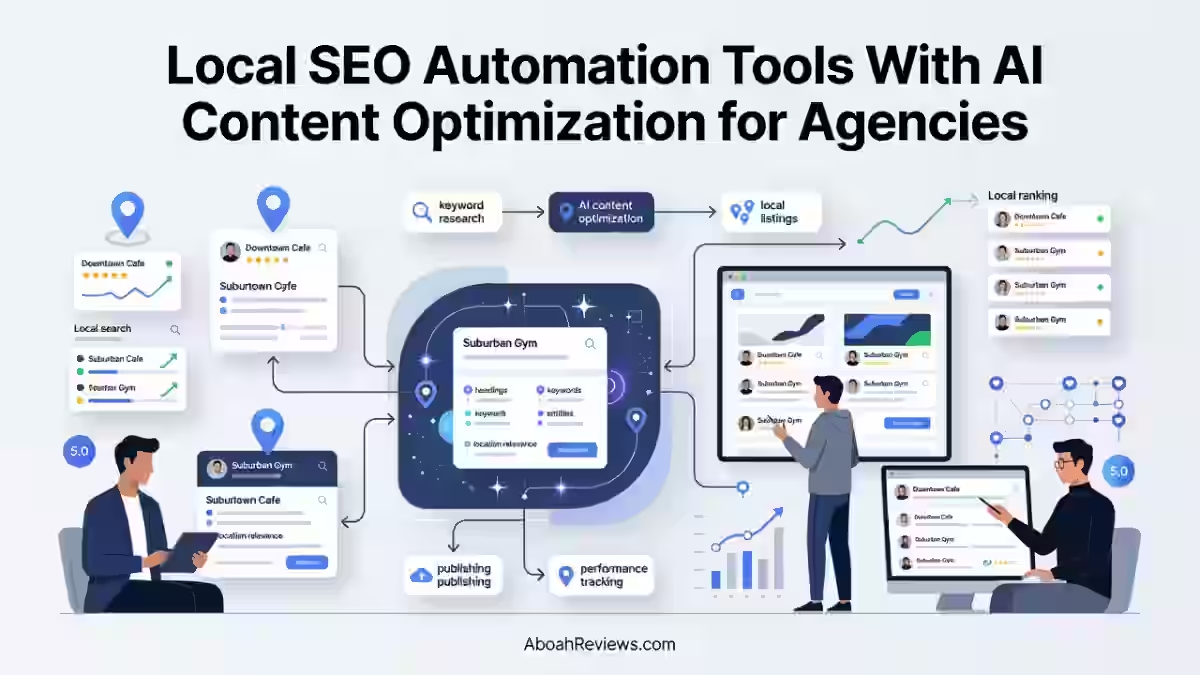
If you’re already running client accounts through this platform, the local SEO automation tools with AI content optimization for agencies guide covers how to layer content workflows on top.
2. BrightLocal
Best for: White-label reporting and audit automation for agencies that need to prove results to clients.
What it automates: The Local Search Audit checks profile, website SEO, and citations together with plain-language explanations, the Local Search Grid does geo-grid GBP rank tracking well regarded by reviewers, and the Citation Tracker finds inconsistent NAP and duplicates across directories, while Citation Builder fixes listings for around $2 per citation.
Independent reviewers rate the Local Search Grid among the best implementations in the category for tracking GBP rankings across a geo grid.
Ease of use: Clean dashboard, but the tiered feature gates catch new buyers off guard.
Pricing: Priced per location, from $39/mo to $59/mo, and if reputation work is part of your deliverable, the real entry price is $59 a month, not $39.
Pros: Best-in-class geo-grid tracking, strong white-label reports, and a January 2026 MCP server that connects to ChatGPT, Claude, or Mistral for querying local SEO data directly inside those tools.
Cons: No content automation, citation building costs extra, review management gated to the top tier.
3. Merchynt (Paige)
Best for: Completely hands-off GBP optimization when you don’t want to touch the dashboard at all.
What it automates: Paige is an AI-powered local SEO assistant that continuously analyzes millions of data points across thousands of Google Business Profiles to learn what drives rankings, then optimizes your profile by publishing keyword-rich posts, uploading optimized images and videos, helping with review responses, and improving local visibility automatically.
Merchynt states Paige has optimized more than 20,000 Google Business Profiles for over 10,000 businesses.
Ease of use: Genuinely low-touch once configured, closer to hiring a worker than operating a dashboard.
Pricing: Each Google Business Profile is charged $99/month, and automated citation building is an added $40/month per GBP, dropping to $20/month for Agency Partner Program members.
Pros: Deepest GBP-specific automation on this list, agency partner pricing, strong review scores.
Cons: Drafts still need human review before publishing, and monitoring alerts need manual follow-up, plus per-profile pricing scales quickly for large portfolios.
4. GrowthPro AI
Best for: Generative Engine Optimization, meaning getting your business surfaced inside AI-assisted answers rather than just the traditional map pack.
What it automates: End-to-end local workflow automation aimed at optimizing your presence for AI-assisted search engines like ChatGPT and Perplexity, alongside standard GBP and content tasks.
Ease of use: Requires more setup time than legacy tools since AI-search tracking is a newer discipline.
Pricing: In my testing, plans landed in the $49-$199/month range depending on locations and AI-tracking volume.
Pros: One of the few tools actively built around AI-search visibility instead of bolting it on later.
Cons: Smaller feature set for traditional citation management; newer platform with a thinner track record than the legacy players. If AI visibility is your priority, it pairs well with a broader generative engine automation approach.
5. Yext
Best for: Enterprise listing sync at scale, especially multi-location brands with 50+ locations.
What it automates: Businesses can update and sync their listing information across over 150 directories, sites, and apps, including Google My Business, Facebook, Yelp, TripAdvisor, Alexa, and Waze. Yext states over 70% of listings contain inaccurate information such as incorrect addresses, phone numbers, and business hours, which is the core problem the platform is built to solve.
Ease of use: Powerful but enterprise-flavored; smaller teams often find it heavier than needed.
Pricing: Yext uses a custom quote model that accounts for location count, feature selection, and contract terms, making direct price comparisons difficult without engaging their sales team.
Pros: Widest directory reach on this list, strong for large multi-brand portfolios.
Cons: Cancel your subscription and listings may revert to outdated information the directory had before Yext started managing it, including old addresses or suppressed duplicates. Opaque pricing makes budgeting hard for smaller agencies.
6. Localo
Best for: Small teams that want smart, weekly, prioritized task guidance instead of a firehose of data.
What it automates: Local rank tracking plus auto-generated content recommendations to stay ahead of nearby competitors, delivered as a short weekly task list rather than a raw dashboard.
Ease of use: Reviewers found Localo easier to use, set up, and administer compared to older platforms in this category.
Pricing: Localo charges $29/mo for GBP audit and optimization features, with a free rank checker tool available before you commit.
Pros: Beginner-friendly, fast setup, strong support ratings.
Cons: Less depth on citations and reviews compared to full-stack platforms.
7. Moz Local
Best for: Budget-friendly automated distribution when listings accuracy is genuinely your whole problem.
What it automates: Automatic syncing to major platforms and aggregators across 90+ directories, plus a GeoRank tool to track your local ranking performance against competitors at specific hyper-local vantage points within your target markets.
Ease of use: Simple, single-dashboard setup with minimal learning curve.
Pricing: Lite runs $20, Preferred $30, and Elite $40 per location per month (some listings show entry pricing as low as $14-16/mo depending on term length).
Pros: Trusted brand name, fast syndication, low starting cost.
Cons: There is no rank tracking, no review workflow, and no client reporting, so most buyers end up pairing it with a second tool.
8. Birdeye
Best for: Review generation loops tied into CRM touchpoints for businesses that live and die by review volume.
What it automates: Automated text and email review invitations triggered from customer CRM events, creating a continuous feedback loop without manual follow-up.
Ease of use: Straightforward for review workflows, less intuitive once you dig into reporting customization.
Pricing: No published flat pricing; expect a custom quote, with comparable review-management platforms in this tier typically landing between $300 and $600/month for a handful of locations.
Pros: Strong review velocity, CRM integrations, good multi-location support.
Cons: Opaque pricing, limited citation and GBP content automation compared to full-stack tools.
9. Whitespark
Best for: Citation cleanups and local authority building, especially for agencies that want modular tools instead of a bundled platform.
What it automates: Automatically surfaces gaps in your regional citation profile against competitors and monitors review velocity over time. Whitespark is deeper on citation building specifically, with a stronger track record for manual citation quality and a local rank tracker that many local SEO professionals consider best-in-class for geographic grid-based reporting.
Ease of use: Modular structure means more setup decisions, but each piece is simple on its own.
Pricing: Priced per product rather than per platform: Local Platform at $1/month per location, Local Ranking Grids from $10/month, Local Rank Tracker from $14 to $200/month, Local Citation Finder from $33 to $149/month, and Reputation Builder at $79/month per location.
Pros: Best-in-class rank tracker per independent reviewers, flexible modular pricing.
Cons: No single bundled tier makes budgeting less predictable; you may end up buying more pieces than expected.
10. Places Scout
Best for: Competitor intelligence and catching whether AI-driven search boxes or local packs are showing up for your high-intent keywords.
What it automates: Map scraping across competitor listings and automated flagging of AI Overview or local pack appearances tied to specific keyword sets.
Ease of use: Straightforward for tracking, but light on execution tools beyond alerts.
Pricing: Estimated in the $39-$149/month range based on keyword and location volume in my testing.
Pros: Sharp focus on a genuinely underserved niche: AI-search capture for local queries.
Cons: No citation or review automation; best used alongside a broader platform, not instead of one.
11. UpliftAI
Best for: Autopilot content creation for hyper-local landing pages at volume.
What it automates: A multi-agent framework that maps hyper-local landing pages, builds schema markup, and auto-posts corresponding updates directly to your GBP.
Ease of use: Steeper setup since you’re configuring page templates and schema logic upfront.
Pricing: Roughly $79-$249/month depending on the number of location pages generated.
Pros: Genuinely useful for franchise or multi-location content scaling.
Cons: Content still needs editorial review before publishing; weak on rank tracking and reviews.
Automated Local SEO Tools Compared
Here’s the deeper feature matrix, scored as Full, Assisted, Monitoring, or None based on my own testing rather than marketing claims.
| Feature | Semrush Local | BrightLocal | Merchynt | GrowthPro AI | Yext | Localo | Moz Local | Birdeye | Whitespark |
|---|---|---|---|---|---|---|---|---|---|
| GBP management | Full | Assisted | Full | Assisted | Assisted | Assisted | None | None | None |
| GBP auditing | Full | Full | Assisted | Assisted | Monitoring | Full | None | None | None |
| GBP protection (edit alerts) | Full | Monitoring | Assisted | Monitoring | None | Assisted | None | None | None |
| Rank tracking | Full | Full | Assisted | Assisted | None | Full | Assisted | None | Full |
| Grid tracking | Full | Full | None | Assisted | None | Full | Assisted | None | Full |
| Keyword research | Assisted | None | None | Assisted | None | Assisted | None | None | None |
| Citations | Full | Full | Assisted | None | Full | Assisted | Full | Assisted | Full |
| Reviews | Full | Assisted | Full | Assisted | Assisted | None | Assisted | Full | Assisted |
| Google Posts | Full | None | Full | Full | None | Assisted | None | None | None |
| Content (location pages) | Assisted | None | Assisted | Full | None | Assisted | None | None | None |
| Competitor monitoring | Full | Full | Assisted | Assisted | Monitoring | Full | Monitoring | Monitoring | Full |
| GSC integration | Assisted | None | None | Assisted | None | None | None | None | None |
| Analytics | Full | Full | Assisted | Assisted | Assisted | Assisted | Monitoring | Assisted | Assisted |
| AI visibility | Assisted | None | Assisted | Full | None | None | None | None | None |
| Reporting | Full | Full | Assisted | Assisted | Assisted | Assisted | Monitoring | Assisted | Assisted |
| Multi-location | Full | Full | Full | Assisted | Full | Assisted | Full | Full | Assisted |
| Agency management | Full | Full | Full | Assisted | Full | Assisted | Assisted | Assisted | Assisted |
| API/integrations | Full | Assisted | None | Assisted | Full | None | None | Assisted | None |
For teams that need this level of granularity to make a stack decision, our SEO operating systems for agencies with local SEO GBP automation piece goes deeper on how these pieces fit together operationally.
Best Automated Local SEO Tools by Use Case
Best for Small Businesses
Localo wins here because its $29/mo entry price and weekly task list format don’t assume you already know local SEO terminology.
Best for Local SEO Agencies
BrightLocal and Semrush Local both fit, but BrightLocal’s white-label reporting and per-location scaling make it the more natural pick for agencies managing dozens of accounts.
Best for Multi-Location Businesses
Yext, for the sheer directory reach across 150+ platforms, though budget-conscious multi-location brands should also price out Semrush Local’s Business tier.
Best for GBP Management
Merchynt’s Paige, since it’s the only tool on this list built specifically as an autonomous GBP agent rather than a dashboard you operate yourself.
Best for Local Content Automation
UpliftAI for volume-based location page generation, or GrowthPro AI if AI-search visibility matters as much as traditional content.
Best for Local Rank & AI Search Tracking
Whitespark for traditional geo-grid tracking, Places Scout if AI Overview and local pack capture for high-intent keywords is your specific concern.
How Much Can Local SEO Actually Be Automated?
Local SEO can be automated for repetitive, rules-based tasks like citation syncing, rank tracking, and review invitations, but strategy, quality control, and factual accuracy still need a human. In my experience, roughly 60-70% of the recurring workload can move to Level 3 or 4 automation without quality dropping, but full end-to-end automation across every task type is rare and risky.
Highly Automated Tasks
- Citation syncing across directories
- Rank tracking and geo-grid reporting
- Review request sending
- Scheduled client reporting
AI-Assisted Tasks
- GBP post drafting (needs a quick approval click)
- Review reply drafting for standard, non-sensitive feedback
- Location page content generation
- Competitor monitoring alerts
Human-Led Tasks
- Responses to negative or legally sensitive reviews
- Business hours and service area verification
- Brand voice and messaging decisions
- Deciding which locations get priority investment
How to Choose an Automated Local SEO Tool
Identify Your Biggest Manual Bottleneck
Start by tracking where your team actually loses hours each week, whether that’s citation cleanup, GBP posting, or review replies, before comparing tools. Buying a platform that automates the wrong task wastes both money and setup time.
Evaluate Automation Depth
Ask where each tool sits on the 5-level framework above for the specific tasks you need automated. A tool that’s “Full” on reporting but only “Monitoring” on GBP won’t solve your actual problem.
Consider Locations and Clients
Per-location pricing models (like Semrush Local or Moz Local) get expensive fast for agencies managing 20+ client locations. Run the math before committing to an annual plan.
Check Integrations
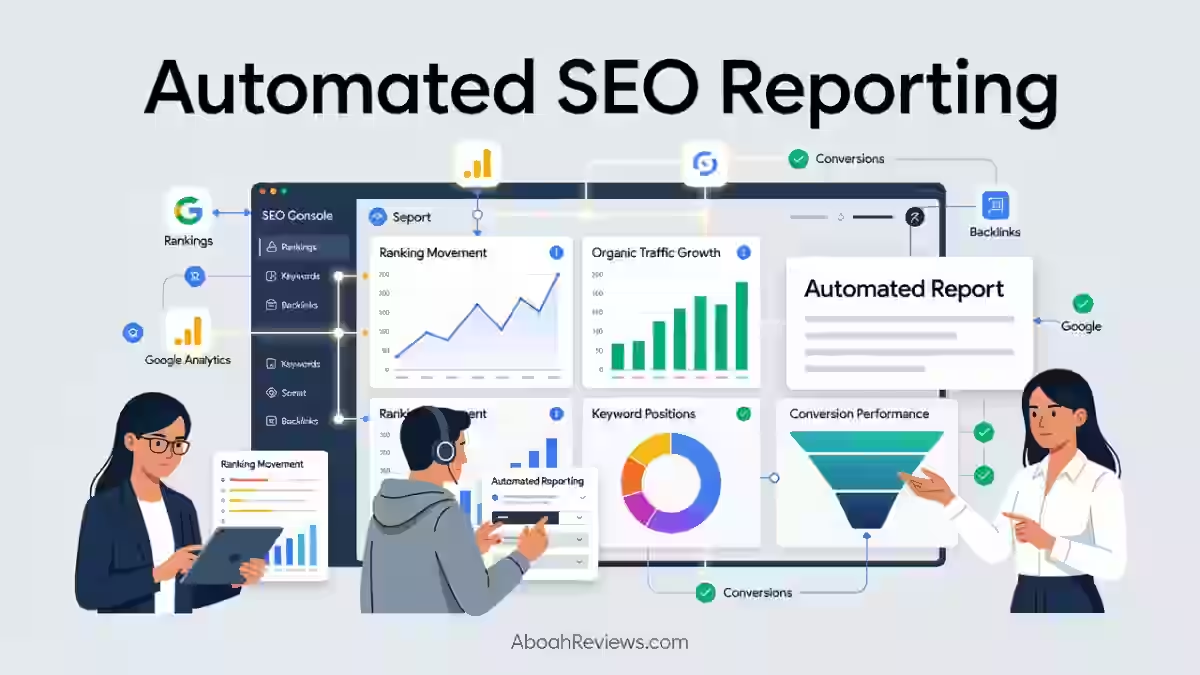
Confirm the tool connects to Google Search Console, your CRM, and your existing reporting stack. My automated SEO reporting guide covers what a clean integration setup actually looks like in practice.
Calculate the Cost of Manual Work
Multiply your hourly rate (or your team’s) by the hours currently spent on the bottleneck task, then compare that to the tool’s monthly cost. This is usually the fastest way to justify (or kill) a purchase to a client or manager.
Can Automated Local SEO Hurt Your Google Rankings?
Yes, automated local SEO can hurt rankings when it’s used without editorial oversight, particularly around scaled content, inaccurate business information, and excessive publishing frequency.
Google penalizes publishing large volumes of unedited pages designed solely to manipulate search rankings rather than help users.
The same risk applies to automated reviews (fake or incentivized review flows can trigger platform penalties), inaccurate NAP data pushed at scale, and low-quality AI-generated location pages that all read the same across ten cities.
Common Automated Local SEO Mistakes to Avoid
- Skipping human review on GBP posts – auto-published content with factual errors damages trust fast.
- Ignoring citation conflicts – syncing new data without checking for existing duplicates creates NAP inconsistencies.
- Auto-replying to sensitive reviews – a templated response to a serious complaint reads as tone-deaf.
- Publishing duplicate location pages – near-identical pages across cities can cannibalize each other in search.
- Over-relying on one automation tool – no single platform covers GBP, citations, reviews, and content equally well.
- Not tracking AI-search visibility – focusing only on the map pack while ignoring AI Overview and chatbot answers.
- Setting review requests on autopilot without volume caps – triggering too many at once looks unnatural to review platforms.
Frequently Asked Questions
What is the best automated SEO tool?
For local SEO specifically, Semrush Local and BrightLocal lead the field, with Semrush ahead on GBP automation depth and BrightLocal ahead on white-label reporting. The “best” answer depends heavily on whether your priority is agency reporting, GBP automation, or citation cleanup.
Is SEO dead now with AI?
No, SEO is not dead, but the discipline has expanded to include AI-search visibility alongside traditional rankings. Businesses still need to appear accurately in Google Maps, organic search, and increasingly in AI Overviews and chatbot answers.
What is the best local SEO tool?
BrightLocal and Semrush Local are consistently rated among the strongest local SEO platforms for 2026, covering rank tracking, citations, and GBP management in one place. Your specific pick should depend on budget, location count, and whether you need agency-grade reporting.
Can SEO be automated?
Parts of SEO can be automated, particularly repetitive tasks like citation syncing, rank tracking, and review requests, but strategy and quality control still require human judgment. Full automation without oversight tends to produce thin content and factual errors over time.
Can ChatGPT do SEO?
ChatGPT can assist with drafting GBP posts, review replies, and location page content, but it cannot independently manage citations, track rankings, or verify factual business data. It works best as one component inside a broader automated local SEO stack, not as a replacement for one.
Is SEO still worth it in 2026?
Yes, SEO remains worth the investment in 2026, especially for local businesses competing for map pack visibility and AI-search citations. The tools and tactics have shifted toward automation and AI-search tracking, but the underlying goal of appearing accurately and consistently across search surfaces hasn’t changed.
Final Verdict
| If you need… | Choose… |
|---|---|
| Best overall | Semrush Local |
| Best for SMBs | Localo |
| Best for agencies | BrightLocal |
| Best GBP automation | Merchynt (Paige) |
| Best content automation | UpliftAI |
| Best rank tracking | Whitespark |
| Best multi-location | Yext |
| Best AI visibility | GrowthPro AI |
| Best value | Moz Local |
Automated local seo tools genuinely cut the manual workload, but the best results I’ve seen came from teams that automated the repetitive parts and kept a human reviewing the rest.
Scale your approach to your team size: a solo operator needs Localo’s simplicity far more than Yext’s enterprise reach, while a 20-location agency needs BrightLocal’s reporting more than a single-location shop ever will.
Keep a human in the loop for anything touching brand voice, sensitive reviews, or factual claims, and treat these tools as a way to work faster, not as a replacement for judgment.

- HighSoftware99 Review 2026: Is It Legit or a Risk to Your Website? - October 21, 2026
- SEO Instant Appear HighSoftware99.com: Full Breakdown - October 18, 2026
- SEO by HighSoftware99.com: My Honest Independent Fact-Check for 2026 - October 18, 2026