TL;DR: How does autoblogging work? It uses a three-step pipeline: collecting data sources, creating text via AI or RSS feeds and publishing directly to a Content Management System (CMS) like WordPress on a set schedule.
Quick Answer: How Does Autoblogging Work?
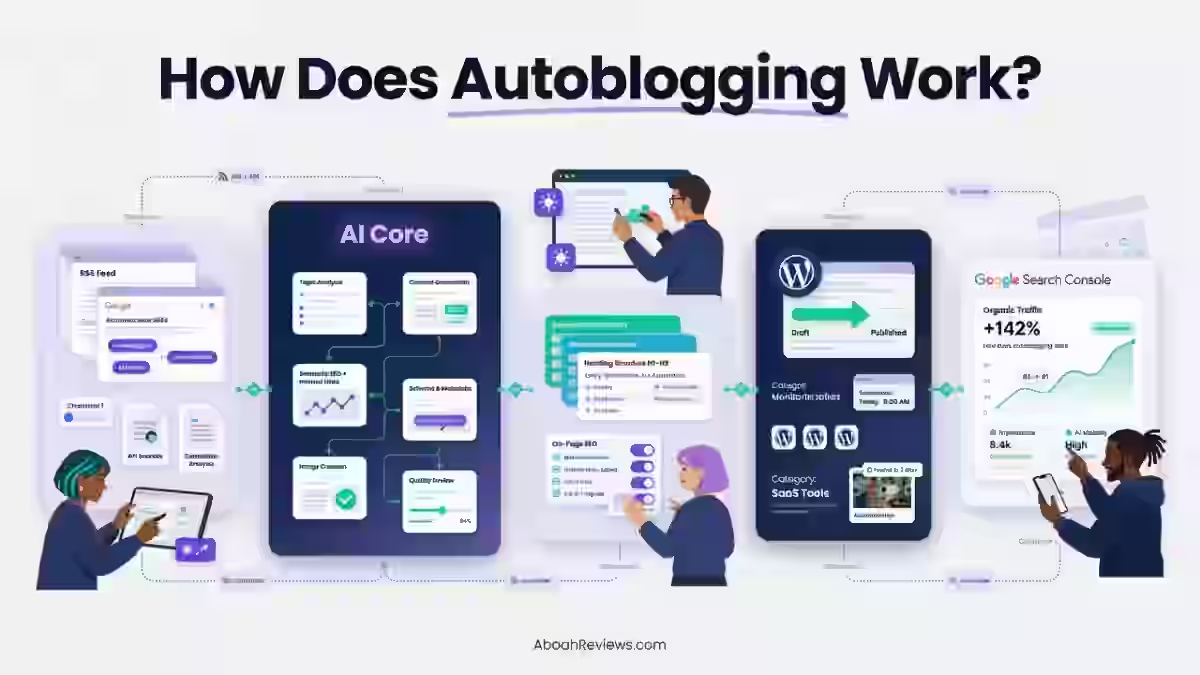
Autoblogging is a content production system that uses AI models, RSS feeds, APIs and WordPress integrations to research topics, generate articles, optimize for SEO and publish content automatically.
In practice, that means a connected system pulls topic signals from a source, passes them through an AI model to generate a draft, runs the draft through SEO and quality checks, and pushes it to a WordPress blog or other content management system on a schedule.
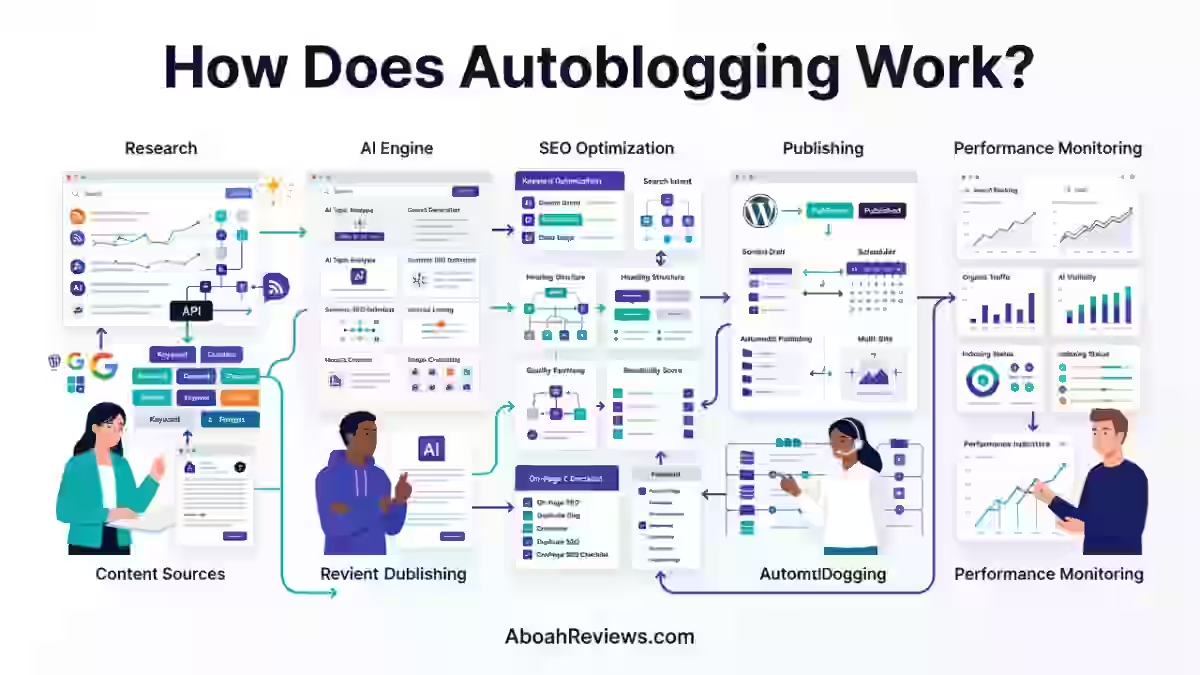
The complete autoblogging process runs across 7 stages:
- Content source selection: choosing where topic signals come from (keywords, RSS feeds, APIs, YouTube, product feeds).
- Topic discovery: identifying what to write using search intent analysis, SERP analysis, keyword research and competitor gaps.
- AI article generation: using large language models (LLMs) like ChatGPT, Claude or Gemini to draft the article.
- SEO optimization: automating on-page SEO elements including meta descriptions, schema markup, headers, and internal linking.
- Media and linking: generating featured images, inserting alt text, and building internal links.
- Publishing: sending the final draft to WordPress or another CMS via API or WordPress plugins.
- Performance monitoring: tracking rankings, organic traffic, impressions, and CTR through Google Search Console and analytics platforms.
That’s the core loop. Everything else is how well each stage is executed.
Introduction to How Autoblogging Works in 2026
If you asked me in 2021 “how does autoblogging work”, I would have said “you point an RSS feed at WordPress and let it run.” That answer was lazy then; it’s completely wrong now.
Autoblogging in 2026 is not about scraping and republishing anymore. Modern autoblogging tools use AI to generate original content, publish it automatically to your CMS and optimize it for SEO.
The whole workflow, from topic discovery to performance tracking, can run with minimal human intervention.
But I want to be clear about what this guide covers. This is not a review of tools, a pricing breakdown or a monetization playbook. This is a workflow guide.
I’m going to walk through exactly how autoblogging works: the pipeline stages, the technologies involved, what gets automated and where human judgment still matters.
I’ve tested enough autoblogging setups to know that most failures come from misunderstanding the workflow, not from picking the wrong tool.
Autoblogging still works in 2026, but only when paired with quality control, a content strategy and at least one human review checkpoint before publishing. The days of mass publishing unedited AI content and ranking are over.
If you want to understand what autoblogging actually is before digging into the mechanics, start there. Otherwise, let’s get into the workflow.
Autoblogging Workflow at a Glance
Stage | What Happens | Technologies Used |
|---|---|---|
Content Discovery | Finds topics and keyword opportunities | Ahrefs, Semrush, Google Search |
Research | Analyzes search intent and competition | SERPs, People Also Ask, SERP analysis |
Writing | Creates article drafts | ChatGPT, Claude, Gemini |
SEO Optimization | Structures content for search engines | NLP, schema markup, metadata |
Media | Generates images, adds alt text | AI image tools, stock APIs |
Publishing | Sends content to CMS | WordPress API, XML-RPC, RSS feeds |
Monitoring | Tracks results and triggers updates | Google Search Console, GA4 |
The 7-Step Autoblogging Workflow
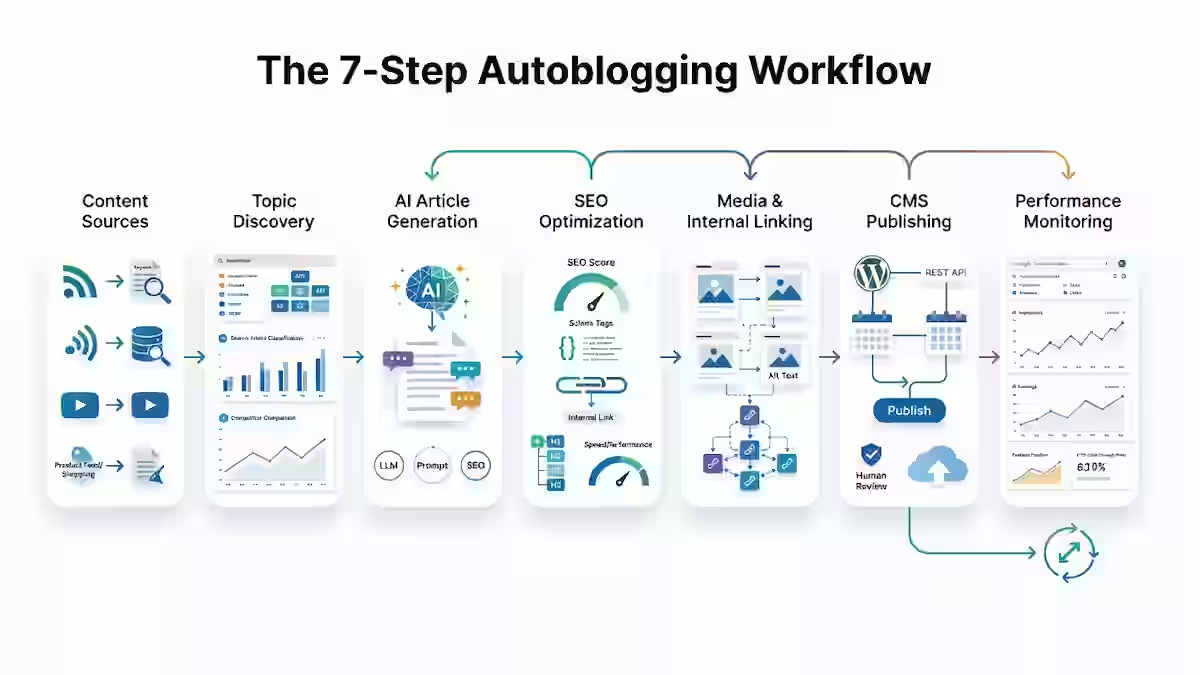
Every modern autoblogging system follows a similar pipeline, whether you are running a solo WordPress blog or managing 20 client sites.
Whether it’s a $19/month plugin or a $500/month enterprise platform, it follows roughly the same pipeline: input, processing, optimization, publishing, and a feedback loop.
The tools differ in how well each step is executed, not in the steps themselves.
The difference between setups that rank and setups that fail is almost always the quality of each stage, not the speed.
Step 1: Choosing the Content Source
The content source determines everything that follows. If the input is poor quality or unfocused, no amount of AI writing ability will fix the output.
Modern autoblogging systems pull topic signals from several source types:
- Keywords: a list of target terms fed manually or imported from Ahrefs or Semrush
- RSS feeds: pulling headlines and summaries from news sites, competitor blogs, or industry publications
- YouTube: transcripts from video content repurposed into written articles
- Podcasts: audio-to-text conversion used as source material
- Product feeds: especially common in affiliate marketing setups
- APIs: live data sources from news aggregators, databases or e-commerce platforms
- Existing content: older posts that need refreshing or expanding
The best autoblogging tools in 2026 can generate dozens of articles per week from keyword lists or RSS feeds and support multiple source types including scheduled campaigns.
Choosing the right source for your niche is a strategic decision, not a technical one.
A niche news site pulling from RSS feeds has a completely different workflow than an affiliate site building content clusters from long-tail keywords.
For a deeper look at how RSS feeds function as a content source, see this guide on how RSS feeds work in autoblogging setups.
Step 2: Topic Discovery
Modern autoblogging tools discover topics by analyzing keyword clusters, search intent signals, and competitor content gaps rather than just pulling raw keywords.
This is where autoblogging started pulling away from old-school RSS scraping. Early systems published whatever came through the feed.
Current systems evaluate whether a topic is worth writing about before generating a single word.
Topic discovery in a modern autoblogging workflow typically covers:
- Keyword clustering: grouping related terms so articles cover a topic comprehensively rather than targeting isolated phrases
- Search intent analysis: determining whether a keyword is informational, commercial, transactional, or navigational
- People Also Ask (PAA) expansion: pulling related questions from SERPs to add depth to outlines
- Competitor gap analysis: identifying content gap areas where competitors rank but you do not
- Keyword difficulty scoring: filtering out targets that are too competitive for a new or low-authority site
The difference between manual and automated research here is volume and speed.
A human researcher might evaluate 20 keyword opportunities per hour. An automated system connected to a keyword research API can process thousands in minutes.
The catch is that automated research still needs a human to set the targeting parameters, define the niche, and review topic lists before they go into production.
Content gap analysis is a repeatable task; editorial judgment about what fits your site is not.
Step 3: AI Generates the Article
The AI article generation stage takes a topic brief or keyword input and produces a full draft using a large language model.
This is where tools like ChatGPT (GPT-4o), Anthropic’s Claude, and Google’s Gemini come into the picture. Most autoblogging platforms do not let users interact with these models directly.
Instead, they run structured prompts behind the scenes: the tool sends the topic, target keyword, article length, tone, and structural requirements to the LLM, and the model returns a formatted draft.
What those prompts look like matters more than most people realize. A well-engineered prompt instructs the model to:
- Target a specific primary keyword and related semantic keywords naturally
- Structure the article with a clear introduction, subheadings, and a logical flow
- Insert topical entities (people, brands, concepts) to support semantic SEO
- Avoid generic filler, AI buzzwords, and obvious padding
- Match a defined tone and brand voice
Prompt engineering is the part of the autoblogging workflow that most beginners skip. They accept the tool’s default output without adjusting the prompt parameters. That is almost always where thin content problems start.
Content should be unique and provide an original perspective beyond schematic, AI-generated answers to common questions.
Case studies, real-life examples, research, and analyses are highly recommended. No LLM can add those without input from a human who has actual subject matter experience.
For a comparison of how different AI writing tools perform as drafting engines, see the Soro SEO vs BabyLoveGrowth AI comparison.
Step 4: SEO Optimization Happens Automatically
Modern autoblogging platforms run SEO optimization in the background before any content is published, covering on-page, semantic, and technical elements.
This stage is what separates autoblogging tools from basic AI writing assistants.
Quality autoblogging tools handle internal linking, meta descriptions, schema markup, and keyword optimization automatically.
Here is what that looks like in practice across four layers:
On-Page SEO
- Title tag generation with primary keyword placement
- Meta description writing within 150–160 character limits
- Header hierarchy (H1, H2, H3) structured around keyword clusters
- Keyword placement in the first 100 words, subheadings, and conclusion
- URL structure generated from target keyword
Semantic SEO
- Entity insertion: adding brand names, product names, industry concepts, and related terms that signal topical depth
- Related concept coverage so the article addresses the full topic, not just the exact keyword
- Natural language optimization using NLP signals to avoid keyword stuffing
Technical SEO Elements
- Schema markup: Article, FAQ, HowTo, and BreadcrumbList schema applied automatically
- Image optimization: compressed file sizes, descriptive file names, alt text
- Canonical tags to prevent duplicate content issues
Content Quality Checks
- Readability scoring (Flesch-Kincaid or similar)
- Plagiarism check against existing web content using tools like Copyscape
- AI content review to flag hallucinations or factually suspect claims
- Brand guideline compliance if a style profile has been set
FAQ and HowTo schema help Google trust AI-assisted pages.
Google Search Central documentation explains that structured data helps search engines understand the literal meaning and context of a page, making content eligible for specific rich results.
Getting schema in place automatically is one of the clearest production advantages autoblogging tools offer over a manual publishing workflow.
Step 5: Internal Linking and Images
Internal linking in automated workflows is handled by matching content topics to existing pages on the site and inserting contextually relevant anchor text links.
This is one of the most underrated steps in the entire autoblogging workflow. I’ve seen sites publish hundreds of articles with zero internal structure and wonder why their topical authority never develops.
Good internal linking connects content clusters, passes link equity, and helps both users and search engines understand your site architecture.
Most autoblogging platforms approach internal linking one of two ways:
- Rule-based linking: the tool scans for keyword matches across existing posts and inserts links automatically
- Semantic linking: more advanced tools identify topically related pages even when exact keywords don’t match
For images, modern systems can:
- Generate original featured images using AI image tools
- Pull royalty-free stock images from sources like Unsplash or Pexels via API
- Write descriptive alt text automatically based on the article topic
- Compress images for page speed compliance and core web vitals performance
One thing to watch: automatically generated images are often generic.
For content clusters where visual originality matters, such as product reviews or tutorials, a human still needs to supply real screenshots or custom graphics.
Step 6: Publishing to WordPress
Publishing happens through a direct API connection between the autoblogging platform and your WordPress blog, triggered either manually or on a set schedule.
Most autoblogging tools can schedule AI-generated blog posts and publish them automatically to WordPress, Shopify, Ghost, Webflow, and more.
The technical layer underneath this is WordPress’s REST API or the older XML-RPC protocol, both of which allow external applications to create, schedule, and update posts without touching the WordPress admin dashboard.
Here is what the typical publishing workflow looks like:
AI Draft
↓
Automated SEO Review
↓
Human Approval (Optional but Recommended)
↓
WordPress Upload via API
↓
Scheduled Publishing
The “human approval” step is optional in fully automated setups. It is not optional if you care about content quality. I’ll get into why in the experience section below.
WordPress plugins like WPAutoblog and WP Robot can extend this workflow with additional controls: category assignment, post status rules, custom field mapping, and featured image handling.
For a detailed look at how these integrations work, read the guide to the best WordPress plugins for autoblogging.
The publishing schedule is usually set by a content calendar inside the autoblogging platform.
Tools like Junia AI allow you to set a publishing frequency, say 3 posts per week, and the system queues and publishes on that schedule.
Managing the entire blog automation workflow from one place means you can see scheduled posts, track published content, and control your autoblogging cadence.
Step 7: Performance Monitoring and Content Updates
Performance monitoring in an autoblogging workflow means tracking rankings, indexing status, impressions, and CTR through Google Search Console and analytics.
Then feeding that data back into the content update cycle. Publishing is not the end of the workflow. It is the beginning of the feedback loop.
Most mature autoblogging setups monitor performance across these signals:
- Search rankings: tracking where each published article appears on search engine results pages for its target keyword
- Indexing status: confirming Google has discovered and indexed new posts (Google Search Console)
- Organic traffic: measuring actual visitors arriving from search
- Impressions and CTR: identifying posts that appear in SERPs but aren’t getting clicks (usually a title or meta description problem)
- Engagement signals: time on page, bounce rate, scroll depth as user experience indicators
Automated Content Refreshing
This is where modern autoblogging tools are adding real value. Automated posts become outdated quickly.
A “best AI writing tools for 2025” article sitting on your site in 2026 hurts credibility. Build content update schedules into your workflow.
Some platforms can flag underperforming content automatically and trigger a refresh. That refresh might involve:
- Updating statistics, prices, or dates
- Adding new sections based on current SERPs
- Improving headers and meta descriptions based on CTR data
- Strengthening internal linking as more related content is published
What Happens Behind the Scenes?
Behind the autoblogging interface, a set of APIs, AI models, and automation triggers are passing data between systems in a structured sequence.
Here is the technical picture:
- Keyword API call: the tool queries Semrush, Ahrefs, or a proprietary database to retrieve topic data
- SERP analysis: the system fetches live SERP data to analyze what’s currently ranking for the target keyword
- Prompt construction: the tool assembles a structured prompt using the keyword, SERP data, content brief, and any brand voice parameters
- LLM API call: the prompt is sent to an LLM (via OpenAI’s API, Anthropic’s API, or Google’s Vertex AI)
- Token processing: the model processes the input tokens and returns the article in markdown or HTML format
- Post-processing: the platform applies SEO formatting, schema injection, internal link insertion, and image attachment
- CMS API call: the formatted post is sent to WordPress (or another CMS) via REST API, creating a draft or scheduled post
- Monitoring loop: GSC and analytics data are pulled periodically and matched against published posts for performance review
In 2026, AI tools have evolved far beyond simple text generation. Today’s platforms understand context, maintain brand voice, optimize for SEO, generate visuals, and automate publishing.
The whole chain can run without a human touching it at any stage. Whether it should is a different question entirely.
Types of Autoblogging Models
1. RSS-to-Blog Autoblogging
RSS-to-blog autoblogging pulls content summaries or full-text feeds from external sources and publishes them to a site, sometimes with light rewriting.
It works best for niche news aggregation sites where timeliness matters more than original analysis.
The main risks are copyright infringement if full articles are scraped without permission, duplicate content issues since the source material exists elsewhere, and thin content penalties if posts add no editorial value.
FTC guidelines also require disclosure when content is syndicated or commercially motivated.
2. AI-Generated Autoblogging
AI-generated autoblogging means automatically publishing blog content based on triggers like RSS feeds, keyword lists, or scheduled campaigns.
In 2026, this means AI-generated content that’s original and SEO-optimized, with automatic publishing to WordPress, Shopify, Webflow, and other CMSs.
Tools like AutoBlogging.ai and Byword AI operate in this space. Full automation (zero human review) carries the highest content risk.
Semi-automated workflows where a human edits AI drafts before publishing produce better outcomes.
3. Curated Content Autoblogging
Curated autoblogging involves a human selecting source material and summarizing or adding commentary, with the publishing process automated.
Platforms like Flipboard and Scoop.it helped popularize this model. The editorial workflow is manual; the content scheduling and distribution is automated.
This is the lowest-risk autoblogging model from a Google penalty standpoint, but also the most labor-intensive. It is content curation with automated publishing, not true automated content creation.
4. Hybrid Autoblogging
Hybrid autoblogging combines RSS feeds, keyword-driven AI drafts, and human editing into a single workflow.
With the right blog automation tools, you still control the ideas, the voice, and the final edits. This is the model I recommend.
The AI handles volume and structure; the human handles accuracy, voice, and judgment.
For more on how these approaches compare, check autoblogging vs hybrid blogging.
Traditional Autoblogging vs. Modern AI Autoblogging Workflow
Stage | Old RSS Autoblogging | Modern AI Autoblogging |
|---|---|---|
Content Source | RSS feeds only | Keywords, RSS, APIs, YouTube, product feeds |
Writing | Copy/paste or basic spinning | AI generation (ChatGPT, Claude, Gemini) |
SEO | None or manual | Automated on-page, semantic, technical SEO |
Images | Manual upload | AI-generated or API-sourced with auto alt text |
Internal Linking | None | Automated semantic linking |
Publishing | Basic WordPress import | Full CMS API integration with scheduling |
Content Quality | Duplicate or near-duplicate | Original AI draft (still needs human review) |
Performance Tracking | None | GSC + analytics integration with refresh triggers |
Google Risk Level | High (duplicate content, copyright) | Lower, but not zero (thin content, hallucinations) |
The old model failed because it produced duplicate content at scale. Google updated its guidance, shifting from content “written by people” to content “created for people.”
This is an acknowledgement that AI-generated material can be helpful when it provides original value and isn’t used for large-scale content manipulation.
My First Failed Autoblogging Setup
In early 2023, I created my initial autoblog by leveraging RSS feed aggregation through a WordPress plugin.
Since the site focused on broad technology news without any editorial curation or quality control, it performed poorly.
This attracted minimal visitors, offering shallow content, and ultimately experiencing a decline in its search engine rankings..
Google penalized the site for thin content because I was posting unedited, fully automated articles without any human review or curation. I had to manually rewrite over 40 posts before the site’s search rankings recovered.
That experience taught me three things that still apply in 2026:
- Volume without quality is faster than volume with quality at failing: Publishing 10 well-edited posts beats publishing 100 unedited ones in every metric that matters.
- Automation exposes your workflow’s weakest point: If your prompts are weak, bad content scales. If your internal linking strategy is underdeveloped, automated linking makes it worse.
- Recovery takes longer than setup: Getting a Google penalty from thin content is a slow, painful process to reverse. Fact-checking and human review before publishing costs a fraction of the time it takes to recover from a content quality penalty.
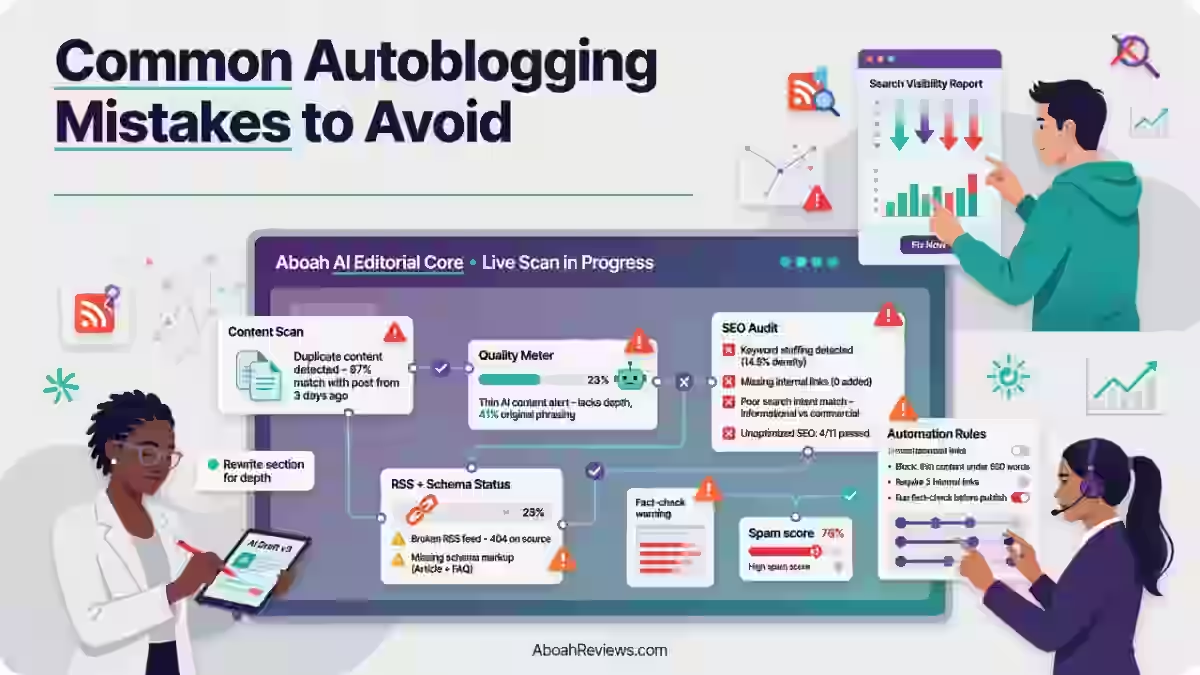
Publishing AI content without editing is risky. AI tools can invent statistics, create fake product names, and cite studies that don’t exist. Always fact-check.
For a full breakdown of what goes wrong in automated publishing workflows, see the common autoblogging mistakes guide.
What Can Be Automated and What Cannot?
Can Be Automated | Needs Human Input |
|---|---|
Keyword research and clustering | Strategic niche and topic selection |
AI article drafting | Fact-checking and accuracy review |
Meta tags and schema markup | Opinions, analysis, and original insight |
Featured image generation | Real product testing and screenshots |
Content scheduling | Final editing and brand voice enforcement |
Internal link insertion | Building genuine topical authority over time |
Performance tracking and alerts | Strategic decisions about content updates |
Duplicate content detection | Deciding whether to rewrite, redirect, or delete |
AI can increase efficiency and help scale content production, but human involvement is essential to guarantee that the content remains valuable.
Google doesn’t penalize because AI-generated content exists. Google focuses on the quality of the content, not on who wrote it.
Problems arise when people generate content with the primary goal of manipulating ranking.
Key Takeaways
- Modern autoblogging is a complete content production workflow, not a single plugin or button.
- AI handles research, drafting, SEO structuring, and publishing tasks across connected systems.
- APIs connect keyword tools, AI models, and your CMS into a single automated pipeline.
- WordPress automation allows content to scale beyond what any human team can manually produce.
- Human expertise remains the most important quality signal. It cannot be automated.
- Successful autoblogging focuses on delivering value per article, not hitting volume targets.
What Happens if You Skip Human Review?
Having low-quality or “thin” pages on a website can drag down overall search rankings. Search engines like Google evaluate a site’s overall quality and trustworthiness, meaning a large amount of weak, outdated, or empty content can hurt the site’s collective signals.
Skipping human review creates compounding problems:
- Hallucinated facts get published and indexed, damaging trust and E-E-A-T signals
- Duplicate structure across dozens of posts creates content cannibalization where multiple articles compete for the same keyword
- Missing context means articles answer the technical query but fail the human user intent test
- Brand voice breaks down as the AI defaults to generic phrasing across every post
The human QA layer justifies the time investment. After an article generates, it should go through a review process before publishing. The reviewer checks for factual accuracy, brand voice consistency, and SEO optimization.
For a detailed look at how to pick a tool that fits your team’s editorial workflow, see the guide on how to choose the right autoblogging tool.
How Autoblogging Works Across Different Use Cases
Understanding how autoblogging works in theory is one thing. Seeing how it plays out across different use cases is where the practical lessons come from.
1. Affiliate Marketing Sites
Keyword-driven autoblogging is common in affiliate marketing.
A site targeting product review keywords across a niche uses long-tail keyword lists as content sources, generates comparison and review articles via AI, and monetizes through display ads and affiliate links.
The content calendar is structured around keyword difficulty tiers: low-competition long-tail keywords first to build topical authority.
Then broader commercial terms as domain authority grows.
For more on this approach, see how to make money with autoblogs.
2. Niche News Aggregation
RSS feed aggregation into a curated news site still works when the editorial layer adds genuine value.
Pull RSS feeds from 5–10 industry sources, filter by relevance, generate a short AI summary with editorial commentary, and publish daily.
The key differentiator from pure scraping is the added context and the explicit source attribution.
Copyright infringement risk is real here: always link to the original source, never republish full articles, and review your feed sources’ terms of service.
3. Agency Content Production
Agency use of autoblogging has grown as client budgets often don’t support weekly blog posts written by human writers.
Autoblogging lets agencies maintain consistent publishing schedules, target long-tail keywords, and demonstrate ongoing value without ballooning labor costs.
Most agency setups use a hybrid model: AI drafts the content, an editor reviews and refines, and the tool handles publishing and scheduling across multiple client WordPress sites.
For a comparison of how autoblogging differs from traditional blogging, that guide breaks down the time, cost, and quality trade-offs in detail.
SEO Automation and the Helpful Content System
This is where autoblogging and broader SEO automation strategy intersect, and it matters if you want your automated content to rank.
Google’s Helpful Content system has marked a significant shift in how content is ranked.
This initiative prioritizes the user experience, rewarding content that is deemed genuinely useful to readers while penalizing shallow or misleading information.
According to Google’s guidelines, trust remains a cornerstone of E-E-A-T (Experience, Expertise, Authoritativeness, and Trustworthiness).
Autoblogging workflows that produce content without demonstrating first-hand experience will consistently underperform against content that does, regardless of how technically optimized the posts are.
According to Google Search Central’s guidance on AI-generated content, the focus must always be on accuracy, quality, and relevance, particularly with automated content pipelines.
Practical steps to keep autoblogging aligned with the helpful content system:
- Add a human author byline with a genuine bio to every post
- Include at least one original observation, test result, or data point per article that the AI could not have invented
- Run a plagiarism check on every AI draft before publishing
- Build a content audit schedule to review automated posts every 6–12 months
- Use Google Search Console to monitor for impression drops that indicate quality-related ranking suppression
For a broader look at how SEO automation fits into a content strategy, see the AI SEO automation guide.
Autoblogging Workflow: Final Process Diagram
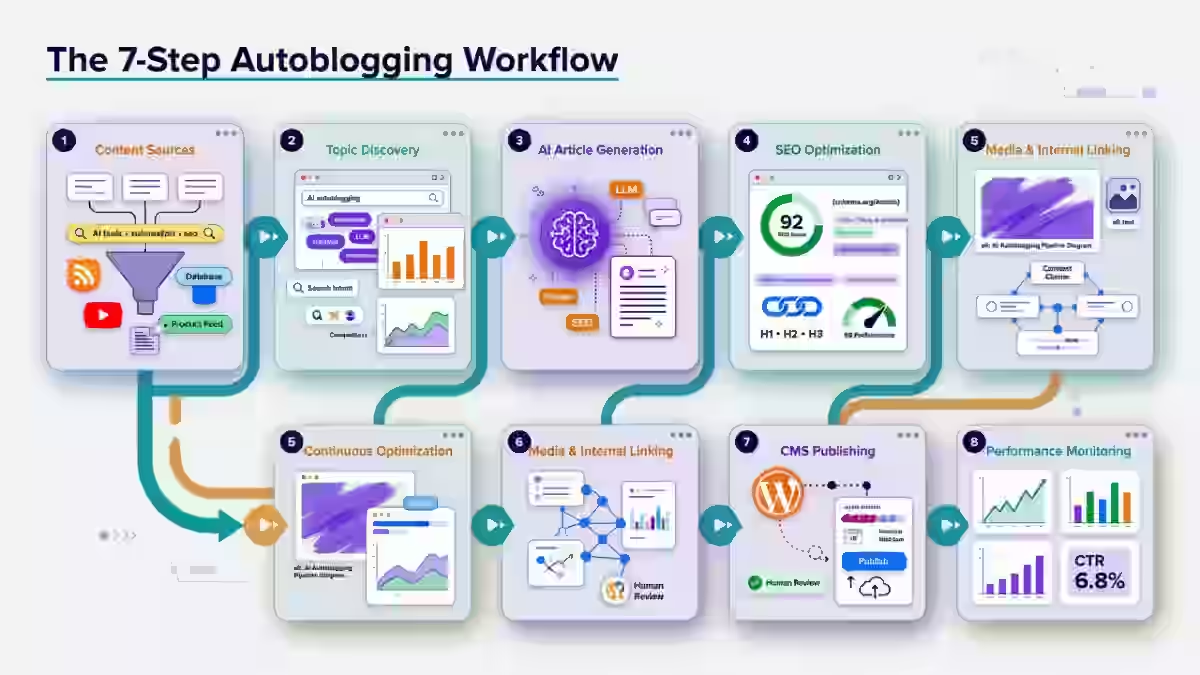
Content Sources
(Keywords, RSS, APIs, YouTube, Product Feeds)
             ↓
Topic Discovery
(Search Intent + Keyword Clustering + SERP Analysis)
             ↓
AI Content Generation
(LLMs + Structured Prompts + Semantic SEO)
             ↓
SEO Optimization
(On-Page + Schema Markup + Meta Tags + Canonical)
             ↓
Media + Internal Linking
(AI Images + Alt Text + Contextual Links)
             ↓
Human Review Checkpoint
(Fact-checking + Brand Voice + Quality Check)
             ↓
WordPress Publishing
(REST API + Scheduled Publishing)
             ↓
Performance Monitoring
(GSC + Analytics + Refresh Triggers)
Final Thoughts On How Autoblogging Works
Modern autoblogging combines AI writing models, SEO automation, APIs, and CMS integrations into a connected publishing workflow.
What used to require a full content team, a project manager, and a publishing schedule now runs with significantly less manual input.
That does not mean it runs without human input. The best autoblogging operations in 2026 still have a person in the loop:
- At the research stage (setting targeting parameters)
- The drafting stage (reviewing AI output for accuracy)
- The monitoring stage (making strategic decisions about what to update or remove).
If you are a solo blogger, that person is you, spending 20–30 minutes per post instead of 3–4 hours.
If you are running an agency, it is a single editor handling a review queue rather than a team of writers starting from scratch.
The workflow scales, but the judgment does not get automated away.
The workflow explained here applies whether you publish 5 posts a month or 500. The stages are the same.
What changes is how much of each stage runs automatically, and how much human time you choose to invest in quality control.
If you are just getting started, the complete autoblogging guide is a good next step before committing to any specific tool or setup.
If you have run an autoblogging workflow of your own, I would genuinely like to hear what stage caused you the most problems.
Drop a comment below. The failures are usually more useful than the success stories.
Frequently Asked Questions
1. Is Autoblogging Legal?
Yes, autoblogging is legal when the content is original, properly sourced, and does not infringe on third-party copyrights. Publishing AI-generated content is not illegal. Scraping and republishing copyrighted articles without permission is. Sites using affiliate marketing or display advertising must also comply with FTC disclosure guidelines. For a detailed breakdown, see is autoblogging legal.
2. How Can You Make Money with Autoblogging?
Autoblogging sites generate revenue through display ads, affiliate marketing programs, sponsored content, and digital product sales. Profitability depends on niche selection, organic traffic volume, keyword commercial intent, and content quality. A high-traffic niche site with strong monetization strategies can generate meaningful passive income, but it requires months of consistent publishing before organic traffic reaches monetizable levels.
3. What Are the Best Autoblogging Tools for Beginners?
For beginners, RightBlogger at $59/month is a strong starting point. For budget-constrained users at high volume, WordRocket AI offers a different trade-off. Tools that combine AI drafting with built-in publishing integrations require the least technical setup.
4. How Much Does Autoblogging Cost?
Entry-level autoblogging setups cost between $10 and $50/month when using basic WordPress plugins plus shared hosting. Mid-tier setups using dedicated AI autoblogging platforms run between $49 and $149/month. High-volume agency setups using premium tools, dedicated hosting, and editorial resources run between $200 and $500/month or more.
5. Is Autoblogging Dead in 2026?
No, autoblogging is not dead in 2026, but the version that worked in 2014 is gone. Autoblogging still works in 2026, but only when paired with quality control, a content strategy, and at least one human review checkpoint before publishing. High-effort, strategically planned autoblogging that produces genuinely helpful content continues to drive organic traffic. Low-effort, fully automated spam publishing continues to get penalized.
6. How Do I Avoid Google Penalties with Autoblogging?
Avoiding Google penalties with autoblogging means prioritizing content quality, original insight, and E-E-A-T signals over publishing volume. Google targets keyword stuffing that compromises readability, and content designed primarily for search engines rather than human readers. The practical answer: add a human review step before publishing, fact-check every AI draft, run a plagiarism check, and build a content update schedule so posts do not age into irrelevance.
7. What Is the Difference Between Autoblogging and Programmatic SEO?
Autoblogging typically targets editorial content: articles, guides, news, and reviews published to a blog. Programmatic SEO generates large volumes of structured landing pages from database templates, often targeting location or attribute-based keywords.

- #1 Best Plugin for Automatic Blog Posting in WordPress (2026) - September 13, 2026
- 13 Best WordPress Autoblogging Plugins I Tested & Ranked for 2026 - September 13, 2026
- 13 Best Google AI Overview Checking Tools in 2026 (Tested & Ranked) - September 9, 2026