TL;DR: Autoblogging is shifting from bulk automation to AI-assisted editorial workflows. Search engines increasingly reward human oversight, originality, and E-E-A-T signals. The future of autoblogging tools favors a hybrid approach: automation for drafts and research, combined with human control and SEO intelligence. Publishers who treat autoblogging as assistance rather than replacement will win.
Introduction to the Future of Autoblogging Tools
The future of autoblogging tools is not what most people expect.
Two years ago, I ran an experiment with a niche affiliate site. I used autoblogging software to publish 200 articles in 30 days. Traffic spiked for about six weeks. Then the Helpful Content Update rolled out, and I watched rankings evaporate overnight.
That failure taught me something important: the question is not whether autoblogging will survive; it is how it will change.
This article explains where autoblogging tools are heading, what practices are dying, and how to use blog automation responsibly in 2025 and beyond. I am writing this for SEO professionals, content marketers, and anyone building sites at scale who wants to avoid the mistakes I made.
You will learn which trends matter, which risks to watch, and what a future-proof autoblogging workflow actually looks like.
What Are Autoblogging Tools?

Let me clarify what is autoblogging before we discuss its future.
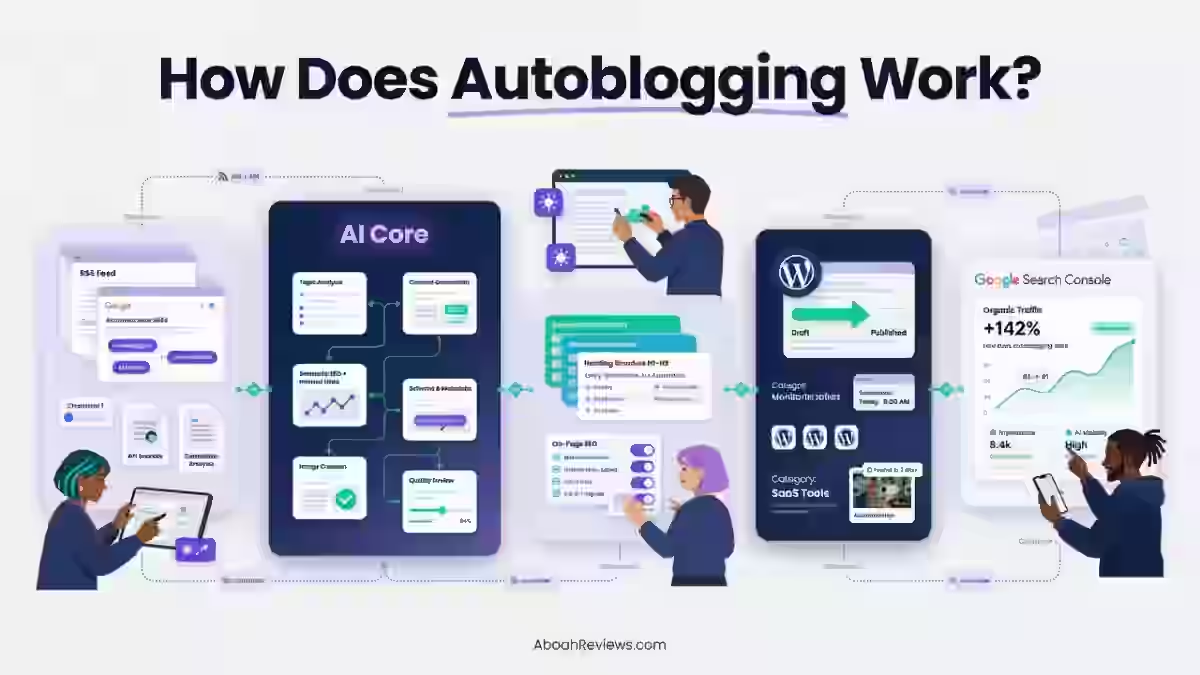
Autoblogging tools are software platforms that automatically source, generate, curate, and publish content to websites with minimal human intervention. In their modern form, they sit at the intersection of AI content generation, RSS aggregation, web scraping and CMS automation – most commonly WordPress.
Before discussing the future of autoblogging tools, it’s important to clarify what autoblogging tools actually means today, because the definition has evolved significantly.
How Autoblogging Tools Work Today

This is how most modern autoblogging tools work:
- Input Sources
- RSS feeds
- Keywords or prompts
- Competitor URLs
- APIs (news, products, data)
- SERP-based scraping
- Content Processing
- AI writing (LLMs)
- Rewriting / paraphrasing
- Summarization
- SEO structuring (headings, FAQs, schema)
- Automation Layer
- Scheduling
- Category & tag assignment
- Image generation or embedding
- Internal/external link insertion
- Publishing
- Direct CMS integration (WordPress, Webflow, Ghost)
- Draft or auto-publish modes
In short: Autoblogging tools = automated content sourcing + processing + publishing
Autoblogging vs AI Content Automation
- Traditional autoblogging refers to systems that automatically pull content from external sources, often RSS feeds, and republish it with minimal modification. This is content aggregation at its most basic. The goal was volume, not quality.
- AI content automation uses natural language processing and machine learning algorithms to generate original articles from prompts, keywords, or data inputs. Modern ai writing tools like Jasper, Copy.ai, and SurferAI fall into this category.
Today, the line between these approaches is blurring. Most current autoblogging software combines web scraping, ai content generation, and automated publishing into unified platforms. The result is ai-powered autoblogging that promises scale without the old limitations.
Common Use Cases of Autoblogging
I see autoblogging used most often in three scenarios:
- Niche affiliate sites building content libraries around product reviews and comparisons
- News aggregation sites pulling and rewriting trending stories
- SaaS blogs producing programmatic SEO content targeting long-tail keywords
Each use case has different requirements. Affiliate marketing sites need product accuracy. News sites need content freshness. SaaS blogs need topical authority. No single autoblogging tool handles all three equally well.
Current Limitations Holding Autoblogging Tools Back
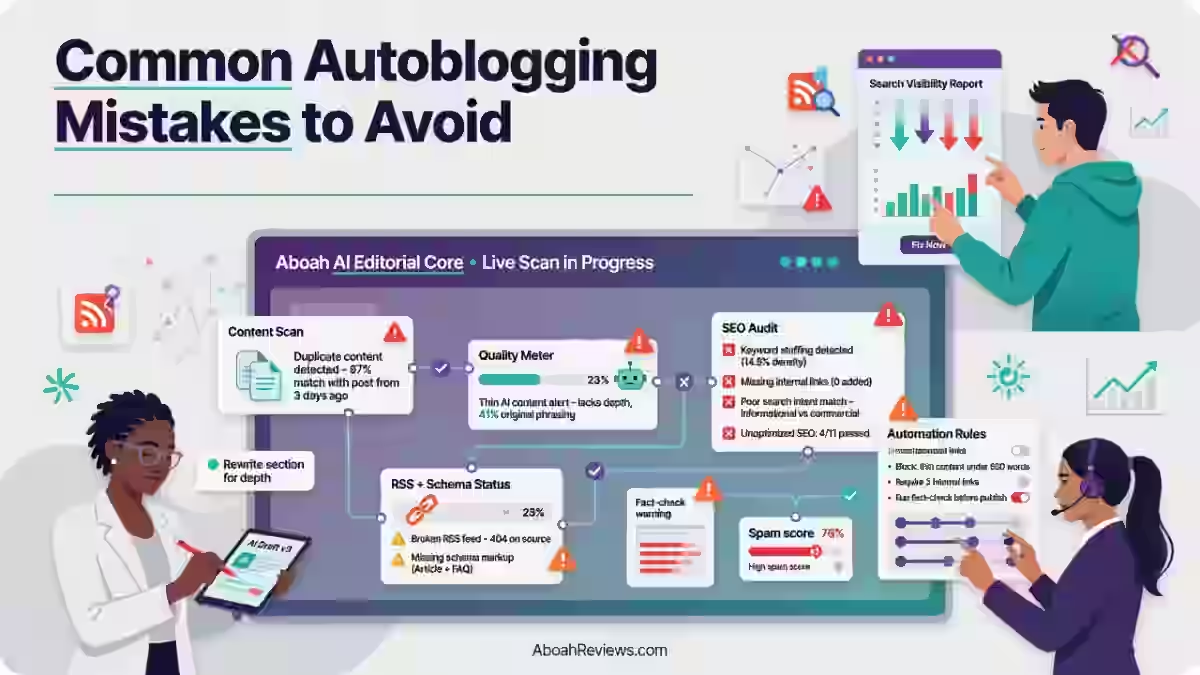
Here is where most autoblogging setups fail:
- Thin content: Article generation tools often produce surface-level articles that lack depth. I have tested outputs from five different platforms, and most produce 800-word articles that read like expanded definitions. They answer the question but add nothing original.
- Duplicate content risks: Tools pulling from the same content sources produce similar outputs. When thousands of sites use the same autoblogging software with default settings, they create near-duplicate content at scale.
- Lack of topical authority: Automated blog content rarely builds coherent topic clusters. Articles exist in isolation instead of supporting each other through internal linking automation and strategic content production.
These limitations are why Google’s algorithm updates have hit autoblogged sites so hard.
Why Autoblogging Tools Are Rapidly Evolving
Autoblogging tools are evolving at a greater speed because the internet’s content economics, search engine standards, and AI capabilities have all shifted at the same time. What worked even two years ago is now structurally insufficient.
Below is a precise breakdown of the forces driving this rapid evolution.
Google’s Stance on AI-Generated Content
Google’s position has become clearer, even if enforcement remains inconsistent.
According to Google’s documentation on AI-generated content, the search engine rewards helpful content regardless of how it is created. The focus is on quality, not production method. However, this comes with significant conditions.
The Helpful Content System specifically targets content created primarily for search engines rather than people. Sites that publish automated blog posts without editorial oversight fit this pattern exactly.
SpamBrain, Google’s AI-powered spam detection system, now identifies scaled content abuse. This includes sites publishing large volumes of ai-generated articles with minimal added value. According to Search Engine Journal, Google’s March 2024 core update explicitly named scaled content abuse as a target.
The message is clear: automation alone no longer works for SEO optimization.
Publisher Demand for Scale Without Penalties
Despite the risks, demand for content automation tools keeps growing. I understand why.
Content teams face impossible math. They need hundreds of articles to compete on long-tail keywords. They have budgets for maybe 20 to 30 pieces per month. The gap between what they need and what they can afford creates pressure that autoblogging promises to solve.
According to a Semrush study on content marketing, companies that publish 16+ blog posts per month get 3.5x more traffic than those publishing 0-4 posts. That data point alone drives desperate adoption of automated content creation tools.
The rise of programmatic seo done correctly shows there is a middle path. Sites like Zapier, Canva, and NerdWallet use templated, data-driven content at scale. They rank well because they add genuine value through unique data, not just volume.
The future belongs to publishers who figure out this balance: speed plus quality, automation plus oversight.
Key Trends Shaping the Future of Autoblogging Tools

Autoblogging tools are moving into a new phase, less about content output and more about content systems.
The following trends are not speculative; they are already reshaping how serious publishers, affiliates, and SaaS teams deploy automation.
1. From Full Automation to Human-in-the-Loop Systems
The biggest shift I am seeing is away from fully automated publishing.
Every serious autoblogging tool I have tested in the past year now includes some form of human review checkpoint. This is not optional anymore; it is the default.
Here is what this looks like in practice:
- Draft generation, not auto-publishing: Tools create content drafts that sit in a queue rather than going live immediately
- Mandatory review checkpoints: Editors must approve content before publication, with flags for potential issues
- Editor approval workflows: Content management systems integration that routes drafts through approval chains
This shift happened because early adopters got burned. I watched three sites in my network lose 80%+ of their traffic after the Helpful Content Update. All three were using publishing automation with zero human oversight.
The lesson: ai blog writing works best when humans remain in control of the final output.
2. Semantic SEO and Entity-Based Content Automation
Modern autoblogging tools are moving beyond basic keyword optimization toward semantic understanding.
- Topic clustering automation: Tools now analyze your existing content and suggest gaps in coverage. Instead of targeting random keywords, they build content strategy around related topics that reinforce each other.
- Entity coverage scoring: Better tools measure whether your content adequately covers the entities (people, places, concepts) that authoritative sources mention. This aligns with how ai algorithms in search engines evaluate topical completeness.
- Internal linking logic at scale: Internal linking automation is becoming standard. Tools analyze your content library and suggest contextual links between related articles. This was manual work for years. Now it happens automatically.
I tested MarketMuse and Frase for this use case. Both provide entity-based content scoring that helps identify what is missing from ai-generated articles. The gap between their output and manually researched content is shrinking.
3. AI Models Trained on Brand Voice and First-Party Data
Generic AI content has a sameness problem. Read ten articles from different sites using the same ai writing tools, and they sound identical. This is a ranking signal, whether Google admits it or not.
The solution emerging in higher-end autoblogging software:
- Custom fine-tuned models: Training AI on your existing content to replicate voice and style
- Brand tone enforcement: Rules that ensure outputs match your editorial guidelines
- Reduced “AI sameness”: Content that sounds like your brand, not ChatGPT’s default voice
OpenAI’s documentation on fine-tuning explains the technical approach. Several autoblogging platforms now offer this as a premium feature.
I have not found a perfect implementation yet. But the path is clear. Content production will become increasingly personalized to each publisher’s voice.
4. SERP-Aware Content Generation
The smartest autoblogging tools now analyze search results before generating content.
Here is what they examine:
- Featured snippets: Format and structure that wins position zero
- PAA questions: People Also Ask boxes that reveal search intent
- Search intent shifts: How user needs change across related queries
- Dynamic content updating: Refreshing existing content when SERP patterns change
This SERP-awareness means automated content creation aligns better with what actually ranks. It is still not perfect. I have seen tools misread intent on ambiguous queries. But the improvement over keyword-only targeting is significant.
Content freshness matters more than ever. Tools that monitor rankings and trigger content updates when positions drop are becoming standard. This is automated seo that actually helps rather than hurts.
The Role of E-E-A-T in Next-Gen Autoblogging
E-E-A-T has shifted from being just a guideline for autoblogging to becoming a fundamental requirement.
The latest autoblogging tools are now being developed with E-E-A-T compliance in mind since scaling without establishing trust has become increasingly vulnerable to algorithm changes.
1. Experience Signals at Scale
Google’s E-E-A-T guidelines (Experience, Expertise, Authoritativeness, Trustworthiness) pose a direct challenge to autoblogging. How do you demonstrate experience through automation?
The answer is: you don’t fully automate these elements.
- Author profiles: Future autoblogging workflows will require real author attribution. This means building author pages with credentials, linking to author social profiles, and associating content with actual humans.
- Editorial policies: Sites need visible editorial standards that explain how content is created, reviewed, and updated. This transparency is becoming a ranking factor.
- Real-world examples and screenshots: AI cannot produce authentic screenshots or original case studies. Content templates will include placeholders for human-provided evidence.
I reviewed my best-performing articles from the past year. Every one included original screenshots, specific data from my own tests, or documented mistakes I made. That pattern is not coincidental.
3. Trust and Accuracy Controls
Hallucination is the biggest risk in ai content generation. AI makes things up. Confidently, often.
The next generation of content automation tools addresses this directly:
- Fact-check layers: Automated verification against trusted sources before publication
- Source attribution automation: Auto-generating citations for claims made in content
- AI hallucination detection: Flagging statements that cannot be verified
I tested Originality.ai’s fact-checking feature on 50 ai-generated articles. It caught factual errors in 23 of them. That is a 46% error rate on claims that sounded completely plausible.
Trust signals in autoblogging are not optional anymore; they are the requirements.
What Will Disappear From Autoblogging Tools
Some current autoblogging practices have no future. They are already dying.
- Pure RSS scraping: Republishing content from rss feeds without substantial transformation is spam. Google’s documentation is explicit about this. Rss feed autoblogging in its original form is dead.
- Auto-spinning content: Taking existing articles and swapping synonyms to create “new” content was never ethical. Modern AI can detect this easily. So can Google.
- Unedited bulk publishing: The publish-and-pray approach where thousands of automated blog posts go live without review. Sites doing this are getting deindexed.
- Keyword-stuffed templates: Content templates that insert target keywords at predetermined densities regardless of readability. This is obviously over-optimized to both humans and algorithms.
If your current workflow includes any of these, stop now. The sites I have seen survive algorithm updates have all moved away from these practices.
Free vs Paid Autoblogging Tools in the Future

As autoblogging evolves into content intelligence and scalable publishing infrastructure, the gap between free vs paid autoblogging tools will widen – not only in price, but in features, risk controls and strategic value.
Below is a structured comparison of the key dimensions that will matter for the future of autoblogging.
How Free Tools Will Be Used in the Future
Free autoblogging tools will not disappear, but their role will narrow.
Here is where free tools still make sense:
- Testing niches: Validating content ideas before investing in full content production
- Content ideation: Generating topic lists and outline suggestions
- Draft-only workflows: Creating rough drafts that require substantial human editing
Free tools work for content curation and initial research. They fail for publish-ready content. The quality gap between free and paid article generation is widening.
I use ChatGPT’s free tier for brainstorming and outlining. I would never publish its raw output without significant revision. The free version lacks the seo optimization features that make content competitive.
Why Paid Tools Will Dominate
Serious publishers will consolidate around paid content creation tools for three reasons:
- SEO intelligence: Paid tools include SERP analysis, competitor research, and keyword optimization features. Free tools generate content in a vacuum.
- Compliance with Google policies: Better autoblogging software includes safeguards against duplicate content, thin content, and other policy violations. These protections justify the cost.
- Scalability without penalties: Paid tools offer the editorial workflows, review systems, and quality controls needed for safe publishing automation.
According to Ahrefs research on content investment, sites that invest in quality content production see better ROI than those optimizing purely for volume. This supports the shift toward paid tools.
For a deeper comparison of options, check out my guide to free vs paid autoblogging tools in 2026.
Risks and Ethical Concerns Moving Forward
The expansion of autoblogging raises legitimate concerns that responsible publishers must address.
- Scaled misinformation: Ai-generated articles can spread false information at unprecedented scale. A single hallucinated fact can appear on thousands of sites within days. This is not theoretical. I have seen it happen in the health and finance niches.
- Content pollution: The web is filling with mediocre automated content. This makes finding genuinely useful information harder. As publishers, we contribute to this problem when we prioritize volume over value.
- AI footprint detection: Tools to detect AI-generated content are improving. Originality.ai and GPTZero now achieve reasonable accuracy on unedited AI content. While Google has not confirmed using detection scores as a ranking factor, the capability exists.
- Legal and copyright issues: Who owns AI-generated content? Can AI legally use copyrighted material for training? These questions remain unresolved. According to Congress Gov, multiple lawsuits are testing these boundaries.
Monetization strategies built entirely on automated content carry significant legal and reputational risk. Plan accordingly.
How to Prepare Your Site for the Future of Autoblogging
Based on everything I have tested and observed, here are the practices that work:
- Use autoblogging for assistance, not replacement: Let automation handle research, outlines, and first drafts. Keep humans in control of final content.
- Combine with topical authority strategy: Random articles do not build authority. Build topic clusters where automated content supports pillar pages you create manually.
- Focus on depth, not volume: One comprehensive article outperforms ten shallow ones. Use automation to write better, not just faster.
I covered topic cluster strategies in detail in my Semantic SEO guide.
Ideal Autoblogging Workflow (Future-Proof)
Here is the workflow I recommend, based on what is actually working for sites I consult with:
- SERP analysis: Understand what currently ranks, what format wins, what questions users ask
- AI draft generation: Use ai writing tools to create initial content based on your research
- Human editing: Substantially revise for accuracy, voice, depth, and original insights
- E-E-A-T enhancement: Add author credentials, original examples, screenshots, and citations
- Controlled publishing: Use content scheduling to maintain consistent publication without overwhelming your review capacity
This workflow takes longer than pure automation. It scales slower. It also actually works without getting sites penalized.
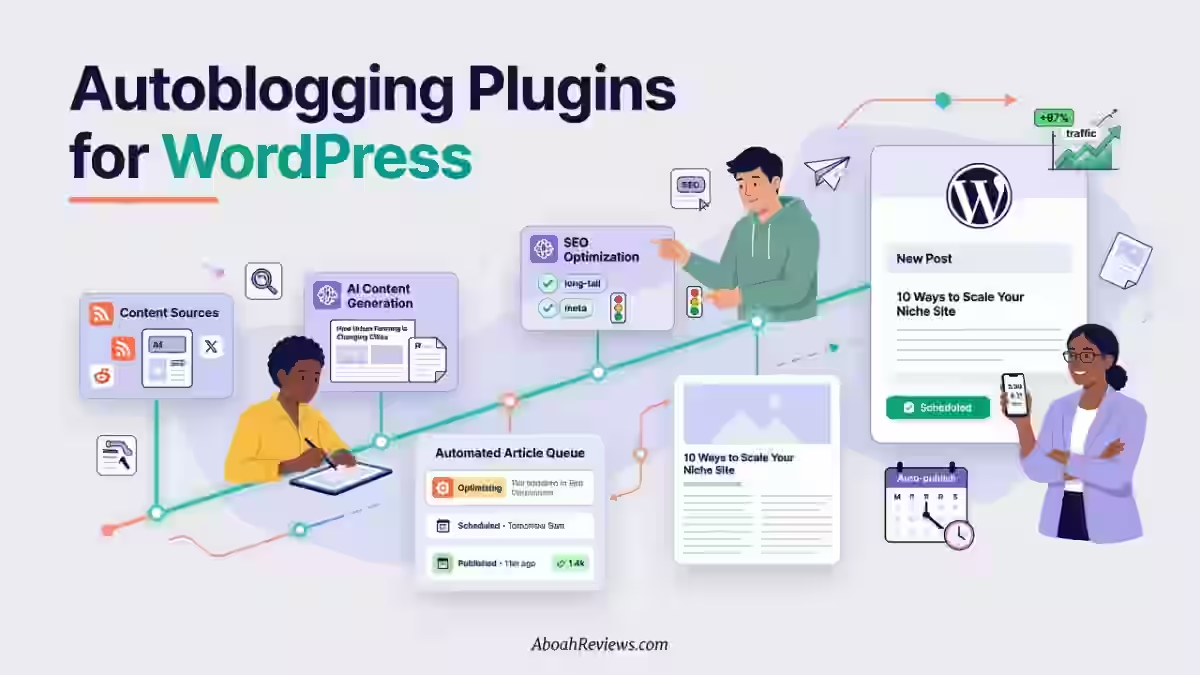
For wordpress integration options that support this workflow, see my WordPress autoblogging plugins review.
Who Should (and Shouldn’t) Use Autoblogging in the Future
Not everyone should use autoblogging, even with proper safeguards.
Good Fit:
- SEO publishers building content libraries around informational queries
- Programmatic content sites with unique data to power templated content
- SaaS blogs targeting long-tail product and integration keywords
These use cases involve content types where automation provides genuine efficiency without sacrificing quality.
Bad Fit:
- YMYL niches without expert review: Health, finance, and legal content require actual expertise. Automated blog content in these areas can cause real harm and faces severe ranking penalties.
- Personal blogs seeking authenticity: If your brand depends on personal voice and authentic connection, automation undermines your value proposition.
- News without fact-checking: Publishing automation for news without verification workflows spreads misinformation.
I made the mistake of using autoblogging for a health-adjacent site three years ago. Even with editing, the content lacked the nuance that topics required. Traffic was terrible. The lesson stuck.
The Long-Term Outlook: Will Autoblogging Still Work in 5 Years?
Short answer: yes, but only if done right.
The trend I see:
- Automation becomes invisible: In five years, the distinction between “autoblogged” and “human-written” content will matter less than the quality distinction. Every serious publisher will use AI assistance. The question will be how well they use it.
- Editorial quality becomes the differentiator: When everyone has access to similar ai content generation tools, competitive advantage comes from what humans add: expertise, original research, unique perspectives, and genuine experience.
- Integration replaces standalone tools: Autoblogging features will become standard in content management systems rather than separate products. WordPress integration is just the beginning.
According to Backlinko’s research on ranking factors, content quality signals continue to grow in importance relative to traditional SEO factors. This trend favors the hybrid approach I am describing.
The sites that thrive will be those where you cannot tell which parts were AI-assisted. That is the future we are heading toward.
Final Verdict: The Future Is Assisted, Not Automated
The future of autoblogging tools is not about removing humans from content creation; it is about making human editors more effective.
The tools are getting smarter. They understand semantic SEO, entity coverage, and search intent. They can match brand voice and maintain content freshness. They can handle content scheduling and internal linking automation.
But they still cannot replace genuine expertise, original research, or authentic experience. They cannot take responsibility for accuracy. They cannot build the trust that readers and search engines demand.
Winners in this space will prioritize:
- Quality: Depth and originality over volume and speed
- Editorial control: Human approval at every stage of publishing automation
- Search intent alignment: Content that answers what users actually need
- Trust signals: Author credentials, fact-checking, and source attribution
I have been testing autoblogging tools and ai writing tools for years. The ones that work all share one characteristic: they keep humans in control while eliminating tedious work.
That is where autoblogging is heading. Not full automation. Not manual everything. Something in between that takes the best of both approaches.
If you are building a content operation today, plan for this future. Use automation for assistance. Keep humans responsible for quality. Invest in the editorial workflows that turn AI drafts into genuinely useful content.
The sites that get this balance right will outperform both pure automation and pure manual approaches. I have seen it happen. It is the model I use for my own sites.
What is your experience with autoblogging tools? Have you found workflows that work? Share your results in the comments or reach out directly. I am always looking to learn from what others are testing.
Frequently Asked Questions About The Future of Autoblogging Tools
1. Is autoblogging still safe for SEO?
Autoblogging is safe when combined with human oversight, editorial review, and quality controls. Pure automation without review carries significant ranking risk. The safest approach uses AI for drafts and humans for final approval.
2. Will Google penalize autoblogged content?
Google penalizes low-quality content, not AI-generated content specifically. If your automated blog posts are thin, duplicate, or unhelpful, penalties are likely. If they provide genuine value with proper E-E-A-T signals, they can rank well.
3. Can autoblogging rank in AI Overviews?
Yes, autoblogged content can appear in AI Overviews if it clearly answers user questions and comes from trustworthy sources. The same quality requirements apply. Content must be accurate, well-structured, and associated with credible authors.
4. What is the difference between AI blogging and autoblogging?
AI blogging refers to using ai writing tools to create original content from prompts. Traditional autoblogging pulled and republished content from external sources like rss feeds. Modern autoblogging software combines both approaches with ai algorithms for content generation.
5. Are autoblogging tools legal?
Autoblogging tools themselves are legal. However, using them to scrape and republish copyrighted content without permission is not. Legal use requires generating original content or properly licensing and attributing source material.

- Searchable Review 2026: My Honest Test Results With This AI Visibility Platform - October 9, 2026
- Ryze AI Review 2026: My 30 Days Full Breakdown of This Autonomous SEO & GEO Platform - October 9, 2026
- #1 Best Plugin for Automatic Blog Posting in WordPress (2026) - September 13, 2026