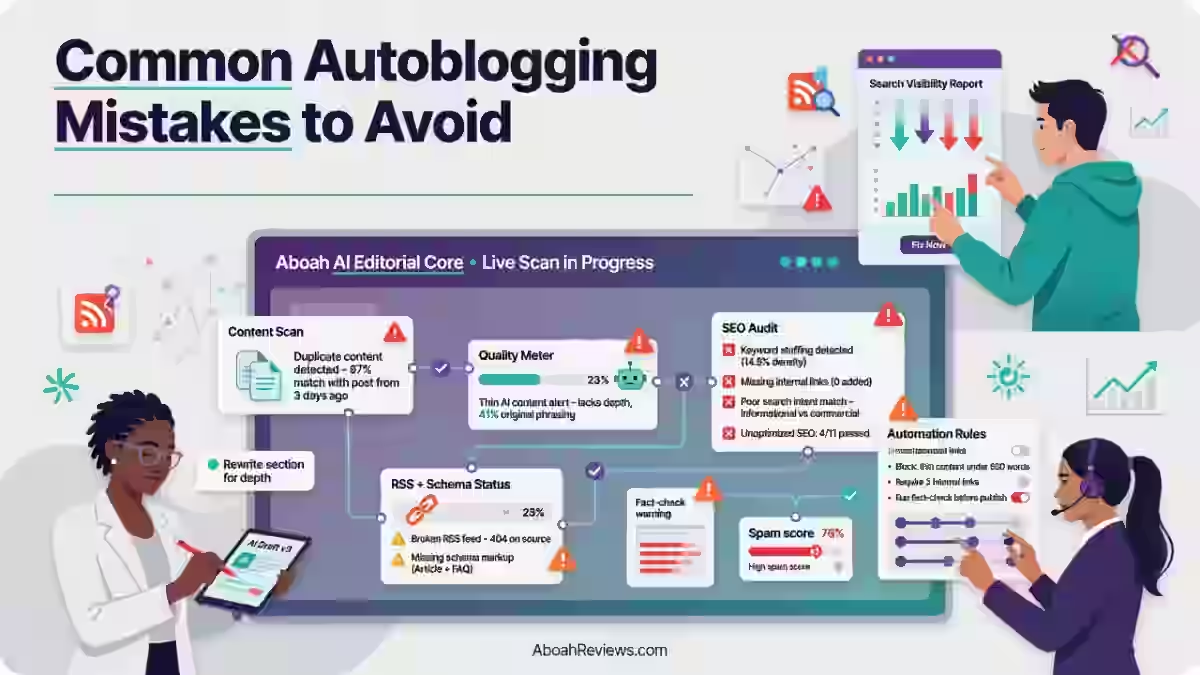
TL;DR: Autoblogging is legal when you publish original AI-generated content, properly licensed material, or public domain works. It becomes illegal when you scrape or republish copyrighted content without permission. This guide covers copyright law, Google’s policies, fair use limits and a step-by-step process to run a compliant autoblog in 2026.
Introduction to the Legality of Autoblogging
The question “is autoblogging legal?” takes me back when I launched my first automated blog in early 2023.
I set it up using RSS feed aggregation and a WordPress plugin, publishing general tech news with zero editorial oversight.
It got exactly what it deserved: poor traffic, thin content, and a drop in search rankings after Google flagged the site. I had to manually rewrite 40+ posts before the site recovered.
That experience taught me something important: autoblogging itself is not illegal, but the way you source and publish content determines whether you are operating within the law or walking into a copyright infringement claim.
This guide explains everything you need to know about the legality of autoblogging in 2026. I will cover copyright law, fair use limits, Google’s actual policies on automated content, DMCA takedowns, FTC disclosure requirements and a practical step-by-step process for running a compliant autoblog.
Whether you are an SEO professional, content marketer, freelancer or agency operator, this article will give you the full picture based on real testing, not marketing claims.
If you are new to this space, start with my complete autoblogging guide for the foundational concepts.
Quick Answer: Is Autoblogging Legal?
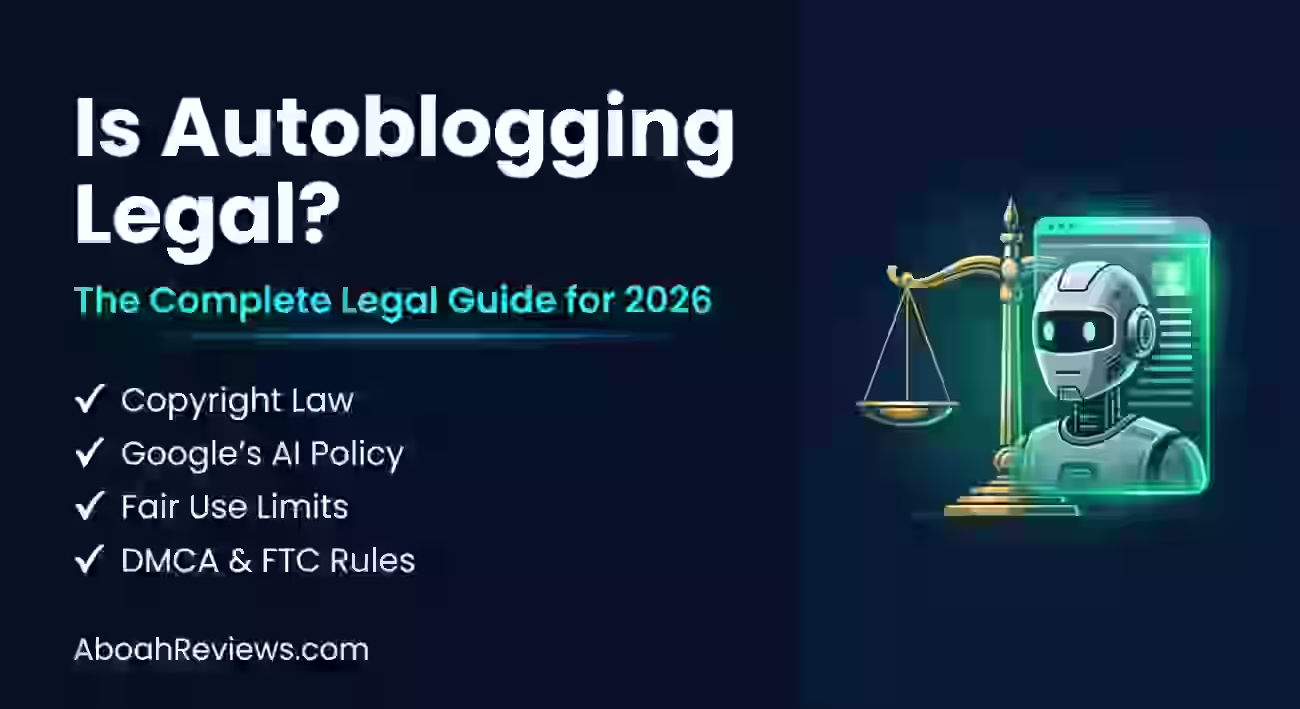
Yes, autoblogging is legal when it publishes original AI-generated content, properly licensed material or public domain works.
Autoblogging becomes illegal when it involves reproducing copyrighted content without permission, whether through RSS scraping, content spinning or unauthorized image use.
The legality depends entirely on how content is sourced, generated and published, not on the use of automation itself.
Legal vs. Illegal Content
Legal Content | Illegal Content |
|---|---|
AI-generated original content | Scraped or republished copyrighted content |
Public domain content or Creative Commons-licensed material | Spun variations of existing protected content |
Syndicated content with canonical tags | Unlicensed images pulled by automated systems |
Curated excerpts with transformative commentary (potential fair use) | Violating RSS feed terms of service |
Google’s own documentation supports this distinction. Their spam policies state:
“Automation, including AI generation, is not against our guidelines as long as it is not used to generate content primarily to manipulate search rankings.”
The focus is on quality and user value, not the method of production.
What Is Autoblogging? (Context for Beginners)
Autoblogging is the practice of using automated systems, including AI writing tools, RSS aggregators or custom scripts to generate and publish content to a blog with minimal manual input per post.
If you are evaluating tools for this, my breakdown of how autoblogging tools work covers the technical side in detail.
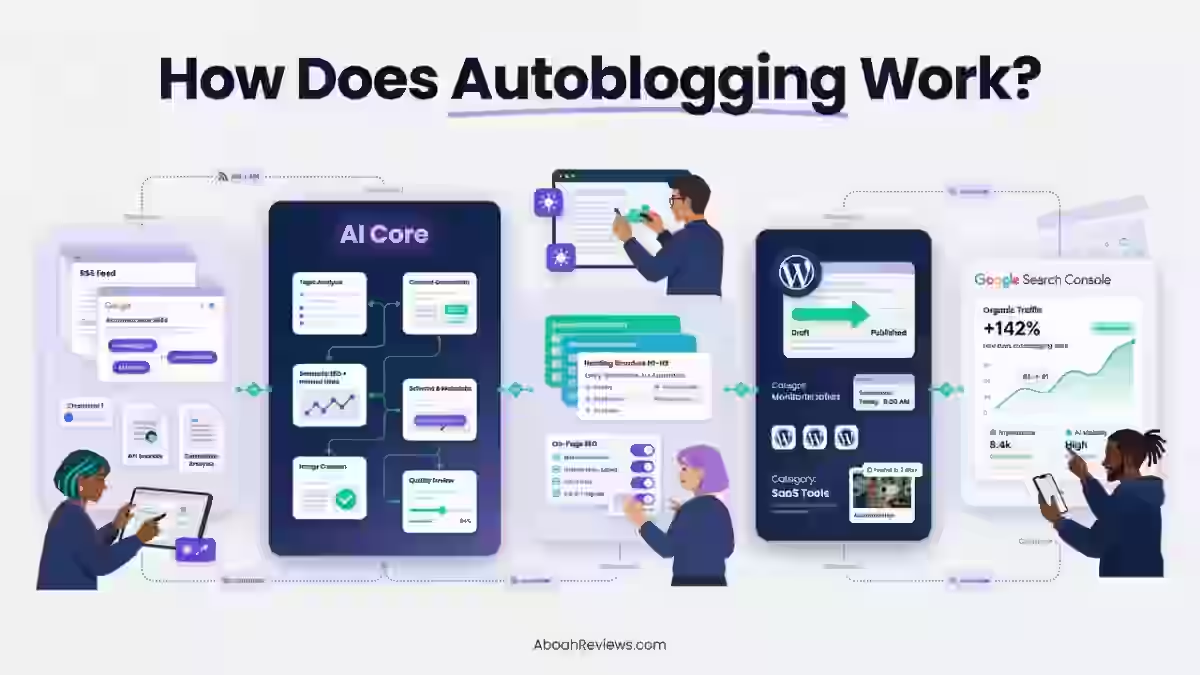
How Does Autoblogging Work?
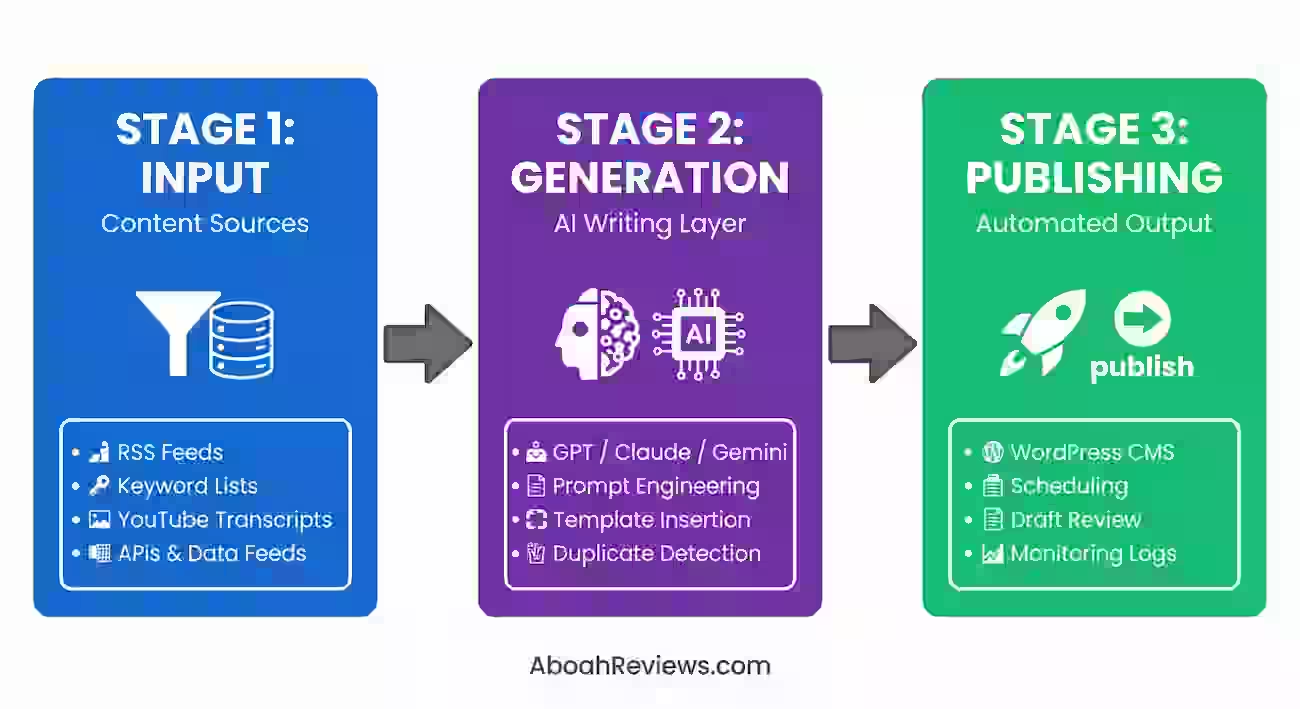
Autoblogging follows a three-stage workflow:
- Content sourcing: AI content generation, RSS feeds, licensed content APIs, or public domain databases
- Generation: Formatting, summarizing, or generating original text using AI writing tools
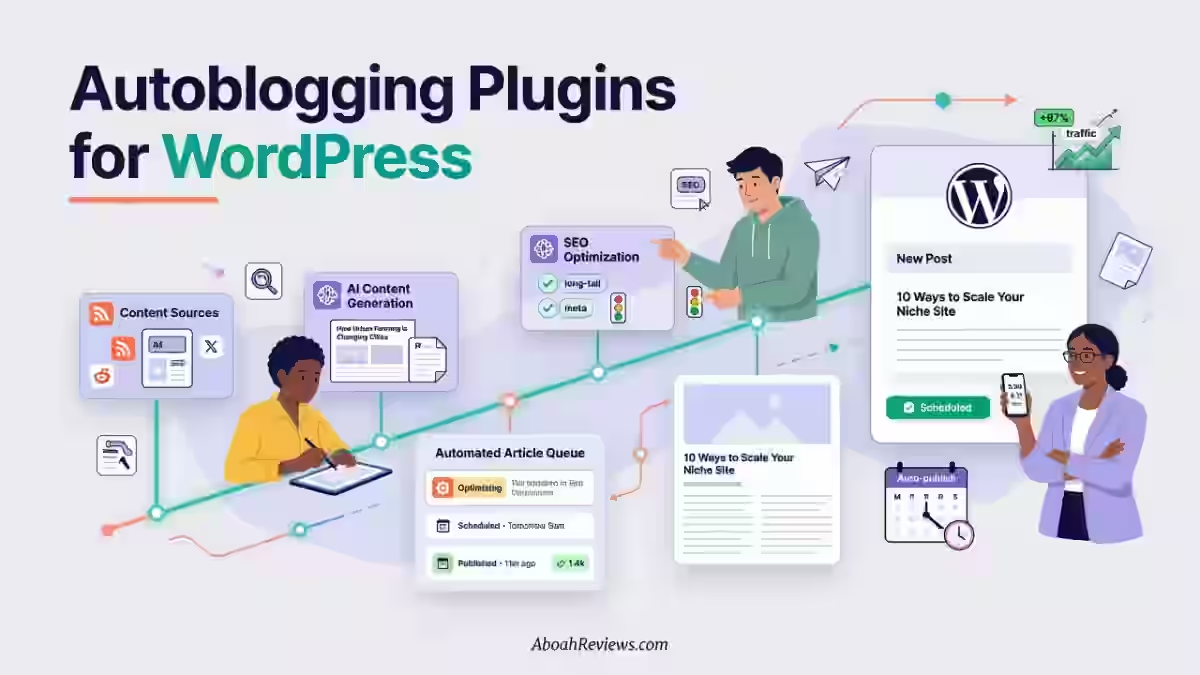
- Publishing: Automated scheduling via a content management system (e.g., WordPress + autoblogging plugins like WP All Import, Make, or Zapier)
The specific tools and methods vary widely. Some autobloggers rely on full AI article generation platforms like Autoblogging.ai or Emplibot, while others build custom workflows using RSS feed aggregation and content scheduling tools.
What Autoblogging Is Not
Autoblogging is not:
- Inherently a spam practice: Spam is about output quality, not method.
- The same as content scraping: This is a common misconception that shapes reader fear. Content scraping is one method used in autoblogging, but autoblogging also includes original AI content generation, which is a completely different legal category.
- Banned by Google by method: Google penalizes by outcome quality, not by whether you used automation.
The Core Legal Issue: Copyright
Copyright is a type of intellectual property that protects original works of authorship (including blog posts, articles, images and multimedia) as soon as an author fixes the work in a tangible form of expression.
Works are original when they are independently created by a human author and have a minimal degree of creativity.
Key point for autobloggers: When you write a blog post, you instantly create a copyrighted work.
According to the U.S. Copyright Office, your original work receives copyright protection “the moment it is created and fixed in a tangible form.”
This means that every article your autoblog might scrape or republish is almost certainly already protected by copyright. No registration is required by the original author.
Blog posts are copyrighted just like other original works of authorship, like articles, songs and images.
What Copyright Law Covers and Doesn’t
Copyright law does not protect ideas, nor does it protect facts. A blogger is free to write a story about the same subject as another writer.
Copyright does protect the specific original expression of those ideas, meaning the actual text, structure, and creative choices in an article.
Ideas, facts, and news cannot be copyrighted, but the specific expression of those ideas can be.
Practical autoblogging implication: You can write about the same topic as any published article. You cannot copy how they wrote about it.
This distinction matters for anyone using RSS feeds or content curation strategies. Analyzing and paraphrasing information from other sources, such as news RSS feeds, is perfectly legal.
The freedom to access and share information ensures that information itself cannot be copyrighted. But the original expression of that information belongs to its author.
Fair Use: The Exception With Strict Limits
Your use of others’ work is limited by the concept of “fair use” as defined by copyright law. There are fair uses and unfair ones, and the determination is decided on a case-by-case basis.
Fair use factors include:
- Purpose and character of use (commercial vs. educational)
- Nature of the work being used
- Amount used relative to the whole
- Market impact on the original work
Fair use may allow limited use, but autoblogging often exceeds these limits.
Republishing entire articles through RSS scraping almost never qualifies as fair use, regardless of automation level.
You are free to take a small excerpt from a piece of content as a quote to promote it and this is fair use. But you should not reproduce the entire post on your own site.
Bottom line for autobloggers: Fair use is a legal defense, not a blanket permission. Do not treat it as a content sourcing strategy.
When Is Autoblogging Legal? The Four Safe Methods
1. AI-Generated Original Content
AI tools can legally produce original content.
When you prompt an AI tool to write about a topic, the resulting content is original, even though the AI learned from existing materials during training.
This mirrors how human writers create original work informed by their knowledge and experience.
However, the legal picture is nuanced and recent.
The U.S. Copyright Office released Part 2 of its Artificial Intelligence Report, concluding that the outputs of generative AI can be protected by copyright only where a human author has determined sufficient expressive elements.
This can include situations where a human-authored work is perceptible in an AI output or a human makes creative arrangements or modifications of the output, but not the mere provision of prompts.
What this means for autobloggers:
- The U.S. Copyright Office concluded that under existing law, purely AI-generated material created by entering prompts alone is not copyrightable.
- Using AI in the creative process does not disqualify a work from copyright protection.
- AI can assist with editing and refining text, generating drafts or preliminary ideas for human creators to shape and acting as a creative assistant while the human determines the final expression.
- As long as human authorship remains a core part of the final work, copyright protection can still apply.
If the content contains both human and AI-generated elements, then the sections created by a human are eligible for copyright protection.
Practical takeaway: Pure prompt-to-publish autoblogging produces content that is legally unprotectable and potentially risky if the AI reproduced training data.
Adding meaningful human editing both improves legal standing and content quality. This is one of the reasons I always recommend a semi-automated approach over full automation.
My guide on common autoblogging tool mistakes covers more pitfalls like this.
2. Public Domain Content
Works enter the public domain after copyright expiration. Under current law, works created on or after January 1, 1978, have a copyright term of life of the author plus seventy years after the author’s death.
Safe sources include:
- U.S. government publications
- Pre-1928 works (now public domain)
- Project Gutenberg
Important: Public domain status must be verified per work. Do not assume age alone determines status.
Some works have had their copyrights renewed or may be subject to international copyright differences.
3. Creative Commons (CC) Licensed Content
Creative Commons is not the same as public domain. With a Creative Commons license, a creator can choose their level of protection, including whether to allow commercial use and/or modifications to their work.
Attachment of this license lets anyone who sees it know immediately their rights regarding the use and copying of that work.
CC licenses come in several types:
- Some prohibit commercial use
- Others require attribution
- Some prohibit derivative works
Autobloggers must read and comply with the specific license terms of every piece of CC content used.
Just because a photo is uploaded to Wikimedia Commons under a Creative Commons License does not mean it is actually a Creative Commons photo.
Be careful, and verify the license on a per-item basis.
4. Content Syndication With Canonical Tags
Syndication is the legal, widely practiced republishing of content with the original publisher’s permission. Major media networks use this approach daily.
The canonical tag tells Google which URL is the original source, preventing duplicate content penalties. This method directly addresses the duplicate content concern that worries many autobloggers.
Requirements:
- Written permission from the original publisher
- Proper canonical tag implementation pointing to the original URL
This is the safest path for anyone who wants to republish existing content rather than generate new material.
When Autoblogging Becomes Illegal
Copyright Infringement: The Only Real Legal Risk
Note: Plagiarism is an ethical and academic concept. It is not a law and cannot make you legally liable on its own. Copyright infringement is the legal issue.
Illegal autoblogging practices include:
- Scraping and republishing full articles without permission
- Publishing full RSS feed content beyond excerpt/summary limits
- Using article spinning tools on copyrighted source material. Spinning the expression of copyrighted text does not remove the underlying infringement.
- Using copyrighted images without proper licensing verification. Automated systems often pull images from search results or stock photo sites without verifying licenses, creating liability regardless of whether humans or algorithms selected them.
Autobloggers sometimes unknowingly use protected content, leading to lawsuits from original content creators.
When copyrighted material is identified on autoblogs, DMCA takedown notices are often issued, requiring removal of the content.
Since RSS plugins copy content from other articles, those feeds might not have permission to access or redistribute the content. This could cause significant problems.
DMCA Takedowns and Safe Harbor
DMCA Takedowns:
- Any copyright holder can issue a takedown notice requiring a host to remove infringing content
- Hosts must comply or lose safe harbor protection
DMCA Safe Harbor (Section 512):
- Hosting platforms are not liable for user-uploaded infringing content if they respond promptly to takedown notices
- This protection does not extend to you as the autoblog publisher if you knowingly post infringing content
Computer Fraud and Abuse Act (CFAA): The Scraping Law
The CFAA can apply to unauthorized web scraping beyond just Terms of Service violations.
Violating a website’s robots.txt or scraping behind login walls carries potential CFAA exposure. Legal risk here extends beyond civil copyright claims into federal computer law.
This is particularly relevant for autobloggers who use content scraping tools to pull data from websites that have explicitly restricted automated access.
Terms of Service Violations
Most platforms (Twitter/X, Reddit, news sites) explicitly prohibit automated scraping.
ToS violations can result in IP bans, account termination, and in some cases, legal action under the CFAA.
If your automated content strategy involves pulling content from social media platforms or news aggregation, review each platform’s ToS before building your workflow.
FTC Disclosure Requirements
This is a legal requirement, not optional guidance.
If your autoblog uses affiliate links, sponsored content, or receives compensation for promotion, the FTC requires clear disclosure.
This applies regardless of whether content was manually or automatically published. Non-compliance can result in FTC enforcement action and fines.
According to the FTC’s endorsement guides, every material connection between an advertiser and endorser must be clearly and conspicuously disclosed.
Automation does not exempt you from this obligation.
Google AdSense and Ad Network Policies
Google AdSense explicitly restricts autogenerated content from monetization.
Running ads on a scraped or purely AI-generated autoblog risks AdSense account suspension or termination.
This is a compliance risk that directly affects revenue, separate from copyright law. If you plan to monetize through ads, review your ad network’s content policies before publishing.
Mediavine and Raptive also have their own quality thresholds for automated content.
International Jurisdiction Differences
Jurisdiction | Approach to AI Content |
|---|---|
EU | All providers of general-purpose AI models must implement a policy complying with EU copyright law, including respecting opt-outs under the EU Copyright Directive’s text and data mining exception |
Japan | The most permissive among major economies. Copyrighted works can generally be used for AI training provided the material is not from infringing sources, and the use does not unreasonably harm the copyright holder’s interests |
UK | Has its own framework post-Brexit. Autobloggers operating across borders need jurisdiction-specific guidance |
US | Applies DMCA frameworks, and the Copyright Office has clarified that purely AI-generated content is not copyrightable |
If you operate autoblogs targeting audiences in multiple countries, consult a local attorney for jurisdiction-specific guidance.
Does Google Penalize Autoblogging Sites?
Google’s AI content policy, as stated in its official Search Central documentation, does not prohibit AI-generated content.
What Google penalizes is content that is created primarily to manipulate search rankings rather than to help users, whether that content was written by a human or an AI.
The key criteria are quality, helpfulness and originality.
Directly from Google’s own guidelines:
“If you use automation, including AI generation, to produce content for the primary purpose of manipulating search rankings, that’s a violation of their spam policies.”
The September 2023 update to the Helpful Content system revised the original mention of prioritizing content written “by people, for people,” leaving only the “for people” part in their guidelines.
What this means is that machine-generated content will not be penalized solely for being machine-generated if it brings real value to readers.
Google’s 2026 spam policies still target scaled content abuse, including automated pages that exist mainly to rank without adding real value.
E-E-A-T and What It Actually Means for Autobloggers
Google’s systems identify a mix of factors that can help determine which content demonstrates aspects of Experience, Expertise, Authoritativeness and Trustworthiness, what they call E-E-A-T. Of these aspects, trust is most important.
According to Google’s Search Quality Rater Guidelines, content created by individuals who have real-world knowledge of a subject, whether through usage, observation or lived experience, receives preference in rankings.
The autoblogging problem: Fully automated content has no named author, no demonstrable experience, no original perspective. These are structural E-E-A-T deficiencies that go beyond content quality.
Scaled Content Abuse: Google’s Specific Policy
A site could publish hundreds of AI-generated articles, use templates or even hire an army of writers. None of those methods automatically violate the policy.
What matters is whether those pages genuinely serve users or exist primarily to capture search traffic through sheer volume.
The more significant risk for most businesses is algorithmic demotion through Google’s helpful content system.
“This is a site-wide signal that can suppress an entire domain’s rankings if a large proportion of its pages are deemed unhelpful.”
What Gets Autoblogs Deindexed
- Thin content with no original perspective
- Scraped or near-duplicate content
- No identifiable author or expertise signals
- Thin, auto-generated, or spammy AI content
These issues will result in demotion or removal from the index. In my experience, the site-wide nature of the helpful content signal is what makes this especially dangerous.
Even a few unhelpful pages mixed into an otherwise solid site can drag everything down.
How to Run a Legal, SEO-Compliant Autoblog in 2026
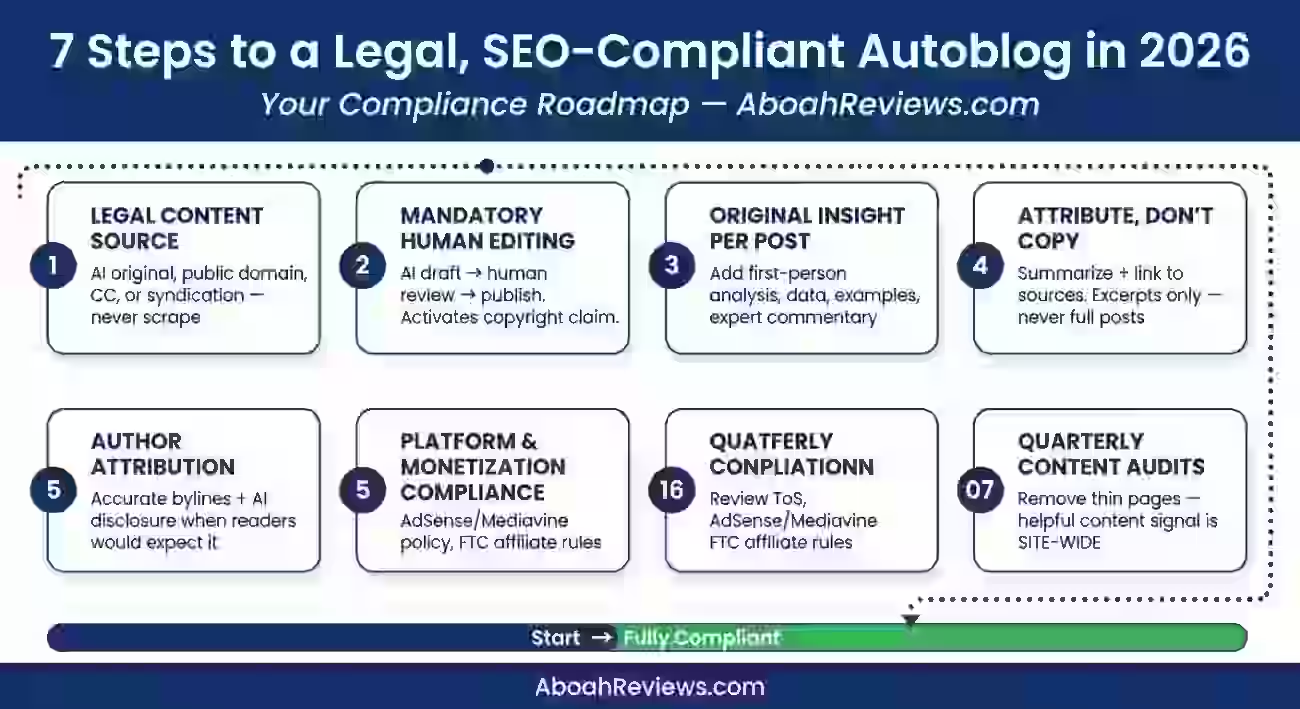
Step 1: Choose a Legal Content Source
Use one of the four legal methods: original AI content, public domain, properly licensed CC content, or syndication agreements. Do not scrape.
If you are building an autoblog from scratch, my guide on how to do autoblogging walks through the full setup process.
Step 2: Add Mandatory Human Editing
Google’s ranking system no longer penalizes content just because it is AI-generated. Instead, it focuses on the overall quality of the content using the E-E-A-T framework.
AI-generated content can be helpful, but the raw output is rarely ready to publish. It may include awkward phrasing, unclear ideas, or missing details.
The best results come from human editing to improve readability, structure, and to ensure the facts are accurate.
Human editing also activates your copyright claim over the final content. Without it, pure AI output may be unprotectable under current U.S. Copyright Office guidance.
I tested three autoblogging tools side by side over 90 days: Emplibot, Junia AI, and RightBlogger. The semi-automated approach (AI draft + human editing) outperformed fully automated posts by roughly 3x in organic traffic after 6 months.
That gap tells you everything about why human editing matters for both SEO and legal protection.
Step 3: Add Original Insight Per Post
Include first-person analysis, original examples, updated data, or expert commentary.
Content should be unique and provide an original perspective beyond schematic, AI-generated answers to common questions.
Case studies, real-life examples, research and analyses are highly recommended. This is where your content moves from “legally safe” to “actually competitive.”
Step 4: Attribute and Link, Do Not Copy
Summarize and link to sources rather than republishing them. For RSS-based autoblogging, use excerpts plus a link. Never republish full articles.
When automated content references external sources, implement systematic attribution practices. Include author names, publication dates, and direct links to original sources.
Step 5: Implement Proper Author Attribution
Consider having accurate author bylines when readers would reasonably expect it. Add AI or automation disclosures when it would be reasonably expected.
According to a Moz study on E-E-A-T factors, pages with clear author attribution and credentials consistently outperform anonymous pages in competitive search verticals.
This applies doubly to autoblogged content.
Step 6: Comply With Platform and Monetization Rules
- Review and comply with your hosting provider’s ToS
- Verify compliance with any ad network policies (AdSense, Mediavine, Raptive) before monetizing
- Ensure FTC disclosure requirements are met if affiliate content is auto-published
For a detailed look at what each tool offers and costs, see my comparison of free vs. paid autoblogging tools.
Step 7: Conduct Regular Content Audits
Remove or substantially upgrade thin pages. The helpful content update is a site-wide signal, which means even a few unhelpful pages can affect your entire domain’s visibility.
I recommend running a content audit at least quarterly. Use Google Search Console to identify pages with high impressions but low CTR, which often signals content that Google is testing but finding insufficient.
Tools like Screaming Frog or Ahrefs can help you flag thin pages and duplicate content across your site.
Autoblogging vs. Manual Blogging: Which One Is Legal?
Factor | Autoblogging (Compliant) | Manual Blogging |
|---|---|---|
Legal Risk | Low to Medium (method-dependent) | Low |
Copyright Exposure | Medium without oversight | Low |
Scalability | High | Low |
E-E-A-T Signals | Weak by default, improvable | Strong |
SEO Stability | Variable | Stable |
Content Ownership | Uncertain without human editing | Clear |
Monetization Risk | Medium (ad network policies) | Low |
Initial Setup Cost | Medium to High | Low |
The honest takeaway: autoblogging trades manual effort for higher compliance complexity. If you skip the oversight, you lose both the legal protection and the SEO benefits.
If you invest in human editing and original insight, the scalability advantage becomes real.
For a deeper look at what you get from automated tools, read our benefits of autoblogging tools breakdown.
Most Common Autoblogging Myths
1. “Autoblogging is illegal”
False. Automation is not illegal. Infringing content is illegal regardless of how it was published.
Generating original content with AI tools is legal. The key is to avoid using other people’s content without authorization.
2. “AI-generated content is always legally safe to publish”
False and nuanced. Some outputs of AI programs might infringe copyrights in other works they resemble that were used to train the AI.
If the AI program both had access to copyrighted works and created “substantially similar” outputs, copyright owners may be able to establish infringement.
Additionally, purely AI-generated content without human editing holds no copyright protection.
3. “Google bans all autoblogs”
False. A site could publish hundreds of AI-generated articles, use templates, or even hire an army of writers.
None of those methods automatically violate Google’s policy. What matters is whether those pages genuinely serve users.
4. “Duplicate content is illegal”
False. Duplicate content is an SEO problem, not a legal one. Syndication with canonical tags is legal and widely used.
Only unauthorized reproduction of copyrighted material triggers legal risk.
5. “Citing the source makes it legal to republish”
False. Attribution does not replace permission. Copyright laws protect original works of authorship.
When it comes to autoblogging, these laws mean you cannot use someone else’s content without permission, even if you credit them.
Final Verdict: Should You Use Autoblogging in 2026?
Autoblogging is a viable, legal automated content strategy when built on the right foundation. The legal risk is real but entirely method-dependent, not inherent to automation itself.
Approach | Legal Status | SEO Viability | Recommendation |
|---|---|---|---|
Scrape-and-publish | Illegal | Deindexed | Avoid entirely |
Pure prompt-to-publish AI | Legal gray area | Penalized | Not recommended |
AI + human editing + original insight | Legal | Viable | Recommended approach |
The best approach in 2026 is a hybrid model. AI handles the heavy drafting, a human editor adds expertise, original perspective, and proper attribution.
This satisfies copyright law, U.S. Copyright Office guidance on AI content ownership, Google’s E-E-A-T framework, and ad network policies simultaneously.
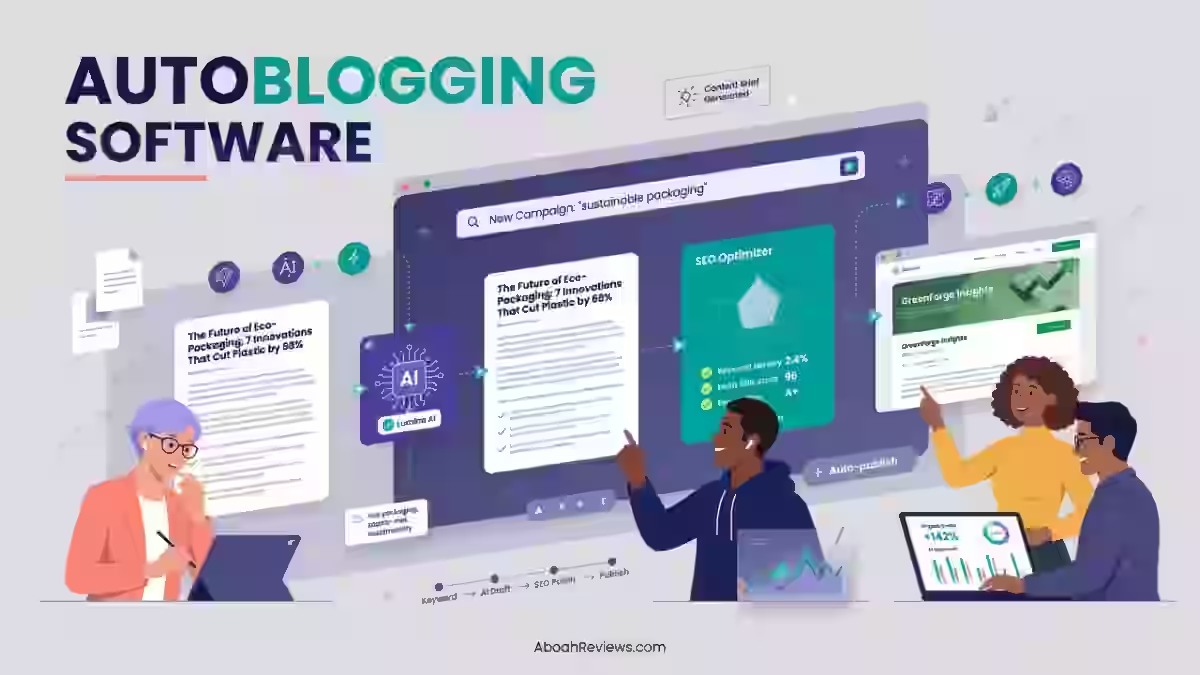
If you are ready to choose a platform, my best autoblogging software guide compares the top options by pricing, output quality and compliance features.
The tools keep getting better. The legal and SEO requirements are not going away.
Build your automated content workflow with both in mind, and you will be in a strong position while others cut corners and lose rankings.
I would love to hear about your experience with autoblogging compliance. If you have run into DMCA issues, Google penalties, or found a workflow that works well, share it in the comments below.
Frequently Asked Questions About Is Autoblogging Legal
1. Is autoblogging legal in all countries?
Autoblogging legality depends on your content sourcing method in all jurisdictions, but copyright law and AI content regulations vary significantly. The EU has stricter AI transparency requirements, the U.S. applies DMCA frameworks, and Japan has more permissive AI training rules. Consult a local attorney for jurisdiction-specific guidance.
2. Can I use RSS feeds legally for autoblogging?
You can legally use RSS feeds only if you publish excerpts (not full articles) and link to the original source. Publishing full RSS feed content without explicit permission from the publisher is copyright infringement, regardless of whether the feed is publicly accessible.
3. Is AI-generated content copyrightable?
The outputs of generative AI can be protected by copyright only where a human author has determined sufficient expressive elements. This can include situations where a human-authored work is perceptible in an AI output, or a human makes creative arrangements or modifications of the output, but not the mere provision of prompts.
4. Can autoblogging get me sued?
Yes, autobloggers sometimes unknowingly use protected content, leading to lawsuits from original content creators. The risk is real but entirely avoidable by using legal content sourcing methods and implementing proper compliance checks before publication.
5. Does Google penalize AI autoblogs?
Google’s AI content policy does not prohibit AI-generated content. What Google penalizes is content created primarily to manipulate search rankings rather than to help users, whether that content was written by a human or an AI.
6. Do I need FTC disclosures on an autoblog?
Yes. If your autoblog contains affiliate links, sponsored content or any form of paid promotion, FTC disclosure rules apply regardless of how the content was produced or published. Automation does not exempt you from disclosure obligations.
7. What is the best autoblogging tool for legal compliance?
Tools that support human editing workflows, such as RightBlogger and Junia AI, are better for compliance than fully automated platforms because they build in review steps before publishing. The best tool depends on your content volume, budget, and how much editorial control you want.

- Searchable Review 2026: My Honest Test Results With This AI Visibility Platform - October 9, 2026
- Ryze AI Review 2026: My 30 Days Full Breakdown of This Autonomous SEO & GEO Platform - October 9, 2026
- #1 Best Plugin for Automatic Blog Posting in WordPress (2026) - September 13, 2026