How Do You Make Money with Autoblogs? 8 Proven Methods + Execution Plan

how-do-you-make-money-with-autoblogs

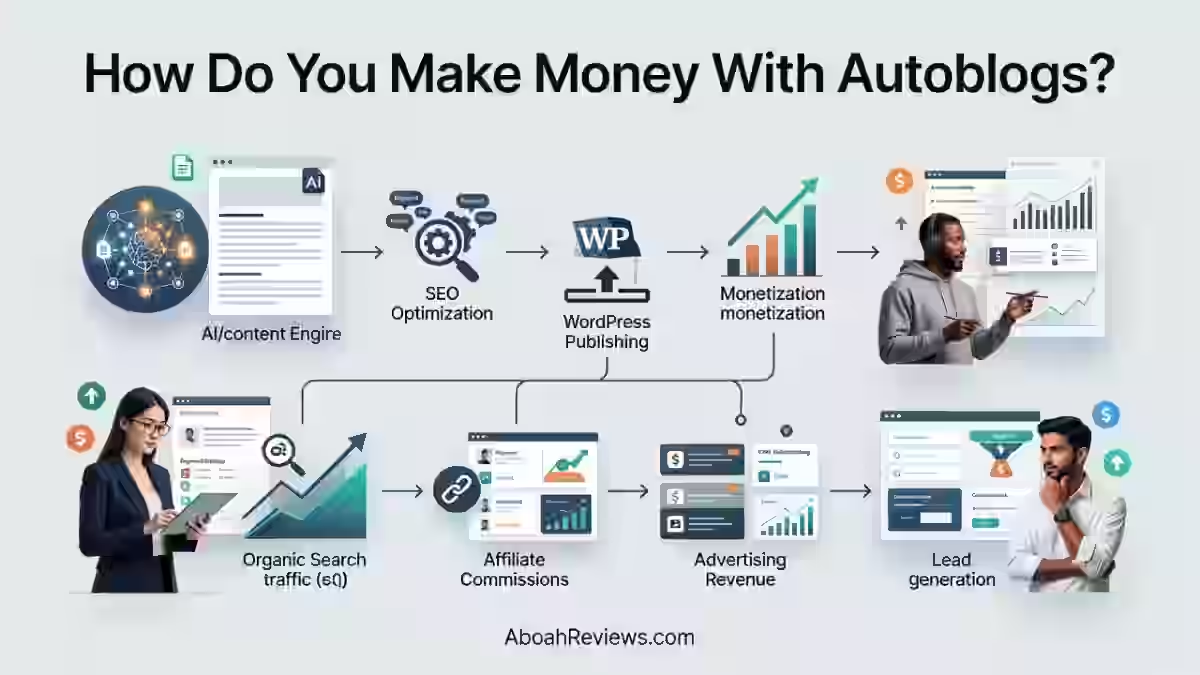
TL;DR: Autoblogs make money through display advertising, affiliate marketing, lead generation, digital product sales, sponsored content and brand partnerships, email list building and newsletter monetization, content-as-a-service and site flipping (building and selling autoblogs as assets).

The sites that actually profit combine AI-assisted publishing with human editing, keyword strategy and layered monetization. Fully automated spam sites no longer rank.

Realistic income ranges from ($0-$50/month) in months 1-3, scaling to ($1k-$10k+/month) with 100K+ monthly visitors.


Introduction to Making Money With Autoblogs

So, how do you make money with autoblogs in 2026? The short answer: the same way any content site makes money, but with AI doing the heavy lifting on content generation so you can focus on strategy, editing and monetization.
I still remember my first autoblog in early 2023 using RSS feed aggregation and a WordPress plugin. It was a tech news site with zero editing.

Google flagged my site because of thin content and I had to manually rewrite more than 40 posts before the site was able to recover.

That experience taught me what separates autoblogs that make money from the ones that quietly die.

I’ve also learnt that autoblogging is profitable in 2026, but only when you treat it like a real SEO business with actual strategy behind it.

This guide covers 8 proven monetization methods, a step-by-step setup plan, realistic income timelines, the legal and technical traps that take most autobloggers out before they ever make a dollar.

Are you an SEO professional, a content marketer or someone exploring passive income online? Everything here comes from real testing, not theory.

Is Autoblogging a Good Way to Make Money in 2026?

how-do-you-make-money-with-autoblogs-8-proven-monetization-methods-and-execution-plan
How do you make money with autoblogs in 2026? Autobloggers use ad display, affiliate marketing, email list building, selling digital products, lead generation and site flipping to make money online.

Yes, but the model has fundamentally changed from what it was even two years ago.

The old approach of scraping RSS feeds and auto-publishing without any human involvement is dead.

What works now is a hybrid system that uses artificial intelligence for speed and human judgment for quality.

What Killed Old-school Autoblogging

1. Google’s Helpful Content System (HCU) updates

Google’s helpful content system became fully integrated into its core ranking algorithm in March 2024, marking a significant shift in how websites get ranked.

Now, it’s a permanent part of how Google decides which websites to show to people searching online.

2. AI spam detection at scale

Some sites showed an AI detection score of 100%, which could be why they had some of their pages, site sections or entire sites deindexed.

3. Thin content deindexing

The March 2024 core update and spam policies confirm manual actions and algorithmic drops for low-quality automation.

Which Autoblogging Approach Works in 2026?

  • AI-assisted content + a human editing layer on every post
  • Intent-driven keyword targeting built around topical clusters
  • A real monetization strategy, not just Google AdSense placed on scraped posts

According to Google’s Search Quality Rater Guidelines, content must demonstrate Experience, Expertise, Authoritativeness and Trustworthiness (E-E-A-T).

Autoblogs that ignore this get filtered out of search results regardless of how much content they publish.

The key takeaway: autoblogging in 2026 is a scalable SEO business, not a passive shortcut.

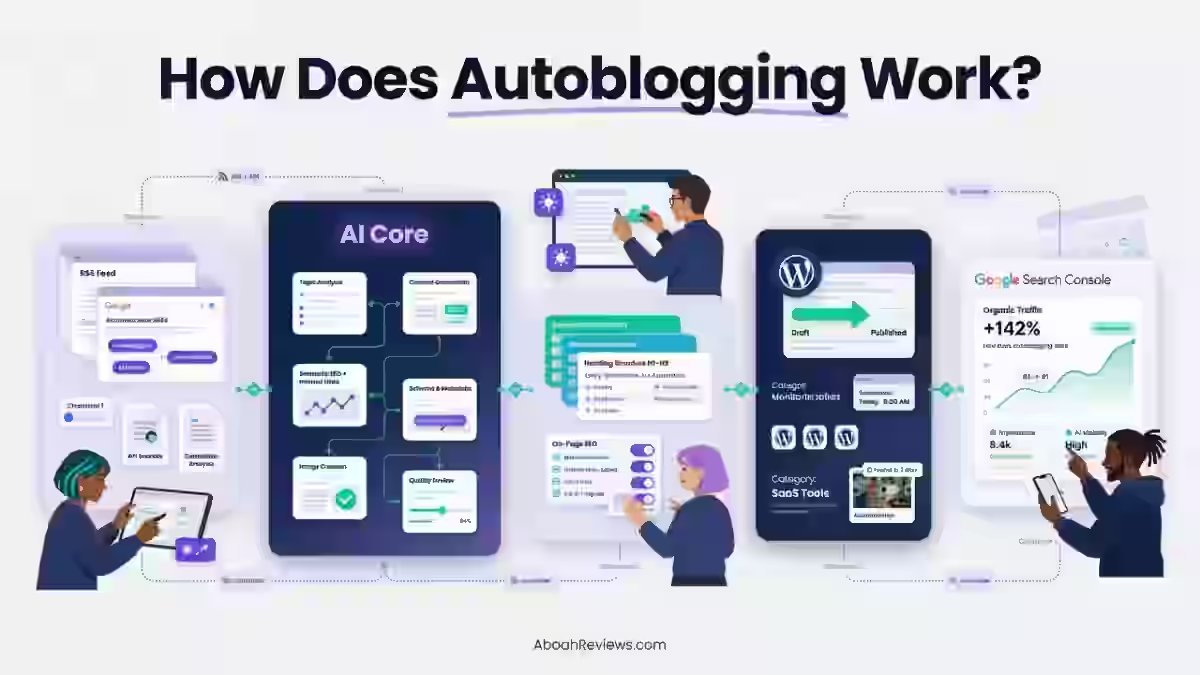
If you want a deeper primer on the fundamentals, I wrote a complete guide to autoblogging that covers how the model works from the ground up.

How Autoblogs Actually Make Money (The Revenue Model Explained)

autoblog-revenue-model-diagram-showing-the-three-stage-flow-from-SEO-traffic-to-monetization-layer-to-profit
Autoblog revenue model diagram showing the three-stage flow from SEO traffic to monetization layer to profit

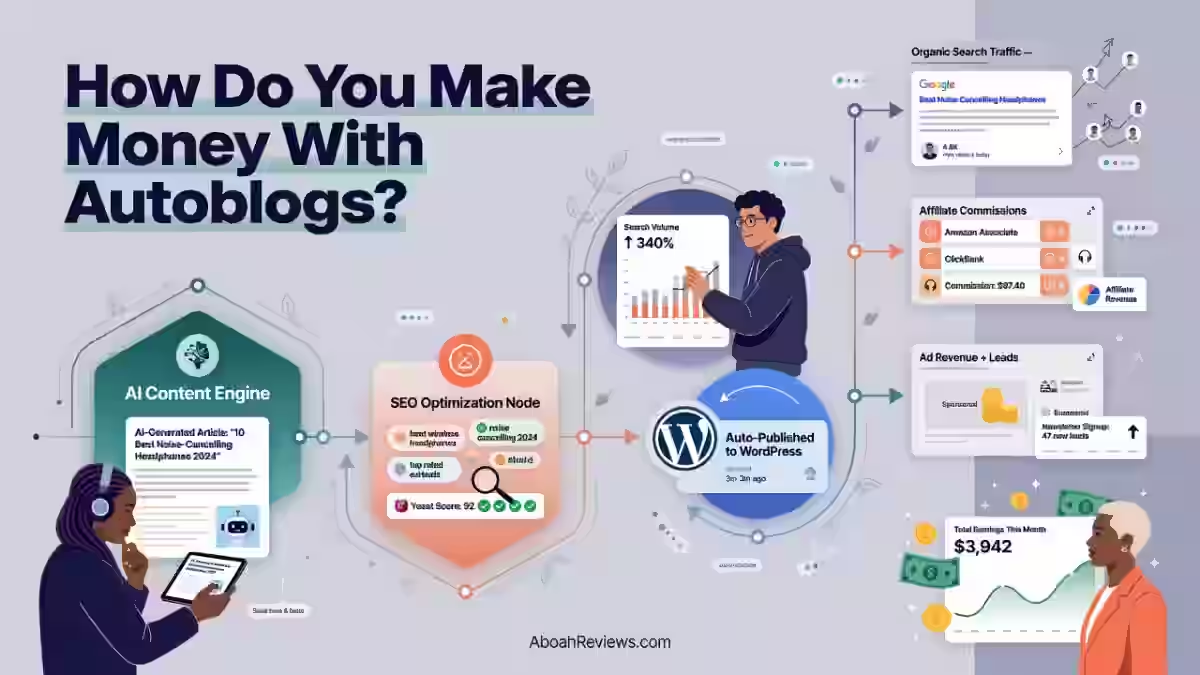
An autoblog is a website that uses AI, RSS feeds, custom script and APIs to publish content at scale with minimal manual input. The revenue model is straightforward:

  1. Traffic: SEO brings visitors to the site through organic traffic
  2. Monetization layer: Ads, affiliate links, lead forms or digital products convert that traffic into revenue
  3. Profit: Revenue minus operating costs (hosting, tools, editing time)

Why it works at scale: More posts equal more keyword coverage, which equals more organic traffic, which equals more revenue touchpoints. Each published article is a potential entry point from search engines.

Why it fails without strategy: Volume alone doesn’t rank. Google rewards helpfulness, not quantity.

I learned this when I lost an affiliate site’s rankings after publishing 42 auto-generated posts without internal linking or keyword filtering.

Even automated websites need a content strategy and editorial calendar behind them.

Cost Reality Check

Expense

Monthly Cost

Hosting (VPS or managed WordPress)

$10-$50

Tools (AI + autoblogging platform)

$30-$150

Total operating cost

$50-$200

Break-even point

10,000-25,000 monthly visits (varies by niche and RPM)

If you’re wondering which platforms fit different budgets, I compared free vs. paid autoblogging tools with real cost breakdowns.

8 Proven Ways to Make Money with Autoblogs

8-autoblog-monetization-methods-illustrated-display-ads-affiliate-marketing-lead-generation-digital-products-sponsored-content-email-list-content-agency-and-site-flipping
Eight proven ways to make money with autoblogs in 2026 including display ads, affiliate marketing, lead generation, digital products, sponsored content, email lists, content-as-a-service and site flipping

1. Display Advertising (Easiest to Set Up, Lowest Ceiling)

Display ads are the simplest monetization method, but they require high traffic volume before they generate meaningful ad revenue.

This model works best for informational content sites pulling 100K+ visits per month.

How it works: You earn per 1,000 impressions (the RPM model). Advertising networks place ads on your pages, and you get paid based on how many people see them.

Ad Network

Minimum Traffic

Typical RPM

Best For

Google AdSense

No minimum

$1-$5

New sites

Ezoic

No official minimum

$5-$15

Growing sites (requires Google compliance)

Mediavine

50,000+ sessions/month

$15-40

Established sites

Raptive (AdThrive)

100,000+ pageviews/month

$20-50

Premium sites

Niche RPM benchmarks:

  • Finance/insurance: $15-$30
  • SaaS/Tech: $8-$20
  • Health: $10-$25
  • General/lifestyle: $2-$8

Execution:

  1. Target long-tail informational keywords with high volume and low competition
  2. Publish 100-500+ posts targeting keyword clusters
  3. Optimize ad placement: above the fold, mid-content, and sticky sidebar
  4. Start with AdSense, then transition to Ezoic or Mediavine as traffic grows

Honest limitation: Display ads alone rarely justify autoblogging costs until you hit 50K+ visits per month.

Google AdSense approval is also harder for new autoblogs because Google reviews content quality and a site full of unedited AI content will likely get rejected.

Build up 20 to 30 quality posts before applying. Always layer ads with affiliate marketing.


2. Affiliate Marketing (Highest ROI, Best Long-Term Model)

Affiliate marketing is the most profitable monetization method for autoblogs and remains the highest-ROI approach for buyer-intent content.

You earn a commission when a reader clicks your link and makes a purchase.

Top affiliate platforms:

Platform

Commission Range

Best For

Amazon Associates

2-10%

Physical products, massive catalog

ShareASale

Varies by merchant

Mid-market, diverse niches

ClickBank

30-75%

Digital products, high commissions

Impact / CJ Affiliate

Varies

Brand-direct programs, higher payouts

Highest-converting content types:

  • “Best [Product] for [Use Case]” roundups
  • Tool A vs. Tool B comparisons
  • “[Product] Review: Is It Worth It?” posts
  • “Alternatives to [Popular Tool]” articles

Execution:

  1. Map buyer-intent keywords to affiliate content templates
  2. Automate the first draft, then add human edits for accuracy and trust
  3. Insert contextual links within the content, not just buttons
  4. Disclose affiliate relationships clearly at the top of every post (this is an FTC requirement and non-negotiable)

Example funnel:

  • Keyword: “best AI writing tools for beginners”
  • Post: Roundup with 7 tools reviewed
  • Links: Affiliate links to each tool
  • Commission: $10-$100 per signup depending on the program

This is exactly the kind of content I build on aboahreviews.com.

If you want to see how this plays out with a specific tool, check out my guide on how to make money with RightBlogger, which walks through the affiliate angle in detail.

According to Ahrefs data, buyer-intent keywords like “best [product] 2026” consistently show higher conversion rates than informational queries, making them ideal targets for affiliate-driven autoblogs.


3. Programmatic SEO + Lead Generation (Highest Earning Potential Per Lead)

Lead generation autoblogs can earn $5-$200+ per lead, making this the highest per-conversion model on this list. This approach works best for local service niches, SaaS and B2B audiences.

How it works:

  1. Create thousands of pages targeting location + service variations (e.g., “Best plumbers in [City],” “Affordable web design for [Industry] in [State]”)
  2. Capture leads via embedded forms
  3. Sell leads to local businesses or service providers

Monetization models:

  • Pay-per-lead: $5-$200+ per lead depending on the industry
  • Monthly retainer: Charge businesses a flat fee for a consistent lead pipeline
  • Rank + Rent: Build the site, rank it, then rent it to a local business for a monthly fee

Execution:

  1. Use a spreadsheet or database of cities/services as variables
  2. Auto-generate pages using a content template + dynamic data insertion
  3. Add a contact form or click-to-call on every page

Best niches for lead gen autoblogs:

  • Legal services (high cost-per-lead)
  • Roofing / HVAC
  • Dentists / medical practices
  • Financial advisors

This model combines the automated publishing efficiency of autoblogging with high-value local business partnerships.


4. Digital Products (Highest Margin, Platform-Independent)

Digital products offer the highest profit margins because there are no third-party commissions, no ad network approvals, and no dependency on affiliate program changes.

This method works best for autoblogs that build topical authority in a defined niche.

Products that work:

  • eBooks and PDF guides ($9-$49)
  • Templates and swipe files ($15-$99)
  • Mini-courses or video training ($49-$299)
  • Prompt packs and AI tool kits (an emerging category)

Why it works with autoblogs:

  • High-volume organic traffic feeds the top of your funnel
  • Email capture converts readers into buyers
  • No reliance on third-party ad platforms or affiliate approvals

Execution:

  1. Drive informational traffic via your autoblog content
  2. Capture emails via content upgrades or lead magnets
  3. Pitch your digital product via an email sequence
  4. Sell through Gumroad, Lemon Squeezy, or your own checkout

ChatGPT agents and other AI writing tools can even help create the lead magnets themselves, like guides, cheat sheets and templates, which then feed your sales funnel.


5. Sponsored Content and Brand Partnerships

Sponsored posts become viable once your autoblog has established, niche-consistent traffic of 20K+ visits per month. Brands pay between $100-$2,000+ per sponsored post depending on your domain authority and traffic volume.

What brands pay for:

  • Sponsored blog posts
  • Product mentions in existing roundups
  • Newsletter sponsorships (if you’ve built an email list)

How to attract sponsors:

  1. Build a media kit with traffic stats, audience demographics, and niche focus
  2. List on sponsorship marketplaces like Cooperatize or IZEA
  3. Reach out directly to brands whose products you already mention

Disclosure requirement: All sponsored content must be clearly labeled per FTC guidelines. This is not optional. Skipping disclosures puts your entire site at risk.


6. Email List Building and Newsletter Monetization

An email list is a business asset that operates independently of Google’s algorithm changes. Even a small list of 1,000-5,000 subscribers creates a revenue channel that protects you from traffic volatility.

Execution:

  1. Add newsletter signup forms to every article
  2. Use AI to create lead magnets (guides, cheat sheets, templates)
  3. Nurture subscribers with automated sequences via ConvertKit or MailerLite

Monetization paths:

  • Sponsored newsletter placements
  • Affiliate promotions to your subscriber list
  • Premium paid newsletter subscriptions
  • Digital product sales to warm leads

Tool integration: Platforms like beehiiv’s Ad Network and SparkLoop’s referral model let you monetize free newsletters without charging subscribers directly.

This is a strong fit for autoblog operators who want online income beyond search traffic.


7. Content-as-a-Service (Agency Model)

Instead of only building your own autoblogs, you can sell autoblogging as a service to clients who need content at scale. This B2B model often commands higher prices than consumer-facing content.

Who needs this:

  • Marketing agencies
  • E-commerce store owners (Shopify, WooCommerce) needing product descriptions and buying guides
  • Local businesses needing regular blog updates
  • Companies requiring SEO content at scale or multi-language content expansion

Execution: Manage multiple client blogs from a single dashboard using tools like CyberSEO Pro plugin or other autoblogging platforms. Revenue comes through monthly retainers or per-article pricing.

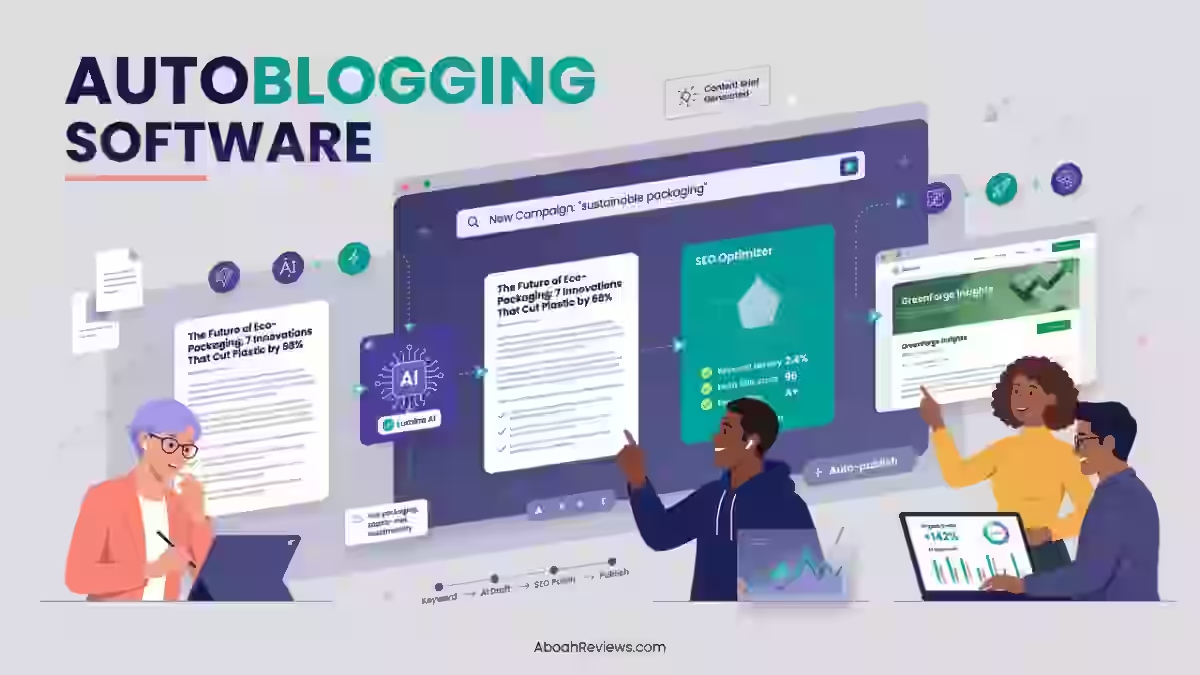
If you’re evaluating which tools can handle this workload, I reviewed the best auto blogging software with a focus on multi-site management.


8. Site Flipping (Build and Sell Autoblogs as Assets)

Autoblogs are digital assets, and profitable ones sell for 30-45x their monthly net profit on content site marketplaces. This is an often-overlooked monetization method that treats each autoblog as digital property to be built and sold.

How it works:

  1. Build an autoblog to a consistent revenue level
  2. Sell it through a content site broker
  3. Typical multiple: 30-45x monthly net profit

Platforms:

Marketplace

Best For

Typical Sale Range

Flippa

Entry-level sites

Under $10K

Motion Invest

Mid-tier content sites

$10K-$50K

Quiet Light / Empire Flippers

Premium sites

$50K+

Example: A site earning $1,000/month net could sell for $30,000-$45,000.

Autoblogs Owned

Average Monthly Profit

Estimated Valuation (35x)

1

$500

$17,500

3

$1,200 each

$126,000 total

5

$2,000 each

$350,000+


The Autoblog Network Strategy (Why One Site Isn’t Enough)

A single autoblog rarely generates meaningful income on its own. The proven model is building a network of multiple autoblogs across related or diverse niches.

This is the part most guides skip.

According to the Pareto Principle applied to autoblogging, roughly 20% of your autoblogs will gain real traction, while the remaining 80% simply won’t take off.

That’s not a failure, it’s the math. You account for it by building enough sites that the winners carry the portfolio.

Only networks with a lot of autoblogs can generate steady 4-figure monthly income. The good news: once you’ve built one profitable autoblog, you can replicate the entire setup into a new niche.

Scaling Path

Phase

Goal

Focus

Month 1

Launch first autoblog

Learn automation basics

Month 2

Optimize for SEO + income

Refine prompts and content quality

Month 3+

Clone setup to 2nd and 3rd sites

Multiply niches and revenue streams

Cross-Promotion Tactics

  • Interlink articles between related sites within your blog network
  • Use one blog’s email list to promote another site’s content
  • Repurpose content across formats (blog post to YouTube script to newsletter)

Your AI tools blog can link to your finance blog’s post on “How AI Creates Passive Income.” This cross-pollination between digital properties builds authority across your entire network.

Just avoid creating private blog networks purely for link manipulation, as Google penalizes that approach.


The Autoblog Revenue Stack (How to Layer Monetization Correctly)

The most profitable autoblogs don’t rely on a single revenue stream. They stack monetization across the entire content funnel.

Funnel Stage

Content Type

Monetization Method

Avg. Conversion Rate

Top of Funnel

Informational posts

Display ads

N/A (impression-based)

Middle of Funnel

Comparisons, listicles

Affiliate links

1-3%

Bottom of Funnel

Reviews, “Best X” posts

Affiliate (high-intent)

3-8%

Backend

Email sequences

Digital products / courses

1-5%

A site running all four stages simultaneously multiplies revenue without multiplying traffic. Most beginners only run stage 1 (display ads) and wonder why earnings are low.

I’ve seen this pattern repeatedly in my own testing.

A site earning $80/month from AdSense alone jumped to $340/month after I added affiliate links to existing comparison posts and set up a basic email capture.

Same traffic, 4x the income.


Step-by-Step Setup Guide for a Profitable Autoblog

6-step-autoblog-setup-guide
6-step autoblog setup roadmap infographic covering niche selection, tech stack, keyword architecture, content quality layer, monetization installation, and traffic strategy

Step 1: Choose a Profitable Niche With Low Competition

Start with niches that have both high CPC (for ad revenue) and active affiliate programs.

Finance, insurance, investing, SaaS, health, legal services and home improvement consistently deliver the highest returns.

Validation checklist before committing:

  • Are there at least 3-5 affiliate programs in this niche?
  • Do keyword tools show 50+ long-tail keywords with under 30 KD (keyword difficulty)?
  • Is monthly search volume high enough to support 10,000+ visits within 6-12 months?
  • Can you realistically add editorial value, or is this a YMYL niche that requires genuine expertise?

Avoid: Niches with no affiliate programs, micro-niches with near-zero search volume, and YMYL niches (health, finance, legal) without a clear plan for E-E-A-T signals.


Step 2: Build Your Autoblog Tech Stack

Your tech stack determines how efficiently your autoblog setup runs day to day. Here’s what I recommend based on testing:

Component

Recommended Options

CMS

WordPress (self-hosted on VPS or managed host)

Autoblogging platform

Emplibot, WordRocket, Autoblogging.ai

Keyword research

Ahrefs, Semrush, or LowFruits (for long-tail)

Content inputs

RSS feeds (for news/aggregation), keyword lists (for programmatic SEO), AI content generation (GPT-4o, Claude, or platform-native AI)

On-page SEO

Rank Math or Yoast

Site speed

WP Rocket + Cloudflare (CDN + security) or LiteSpeed

If you want to understand how auto blogging tools work under the hood, that guide covers the technical side.

For connecting your content sources to WordPress through APIs, tools like Zapier handle the automation without code.

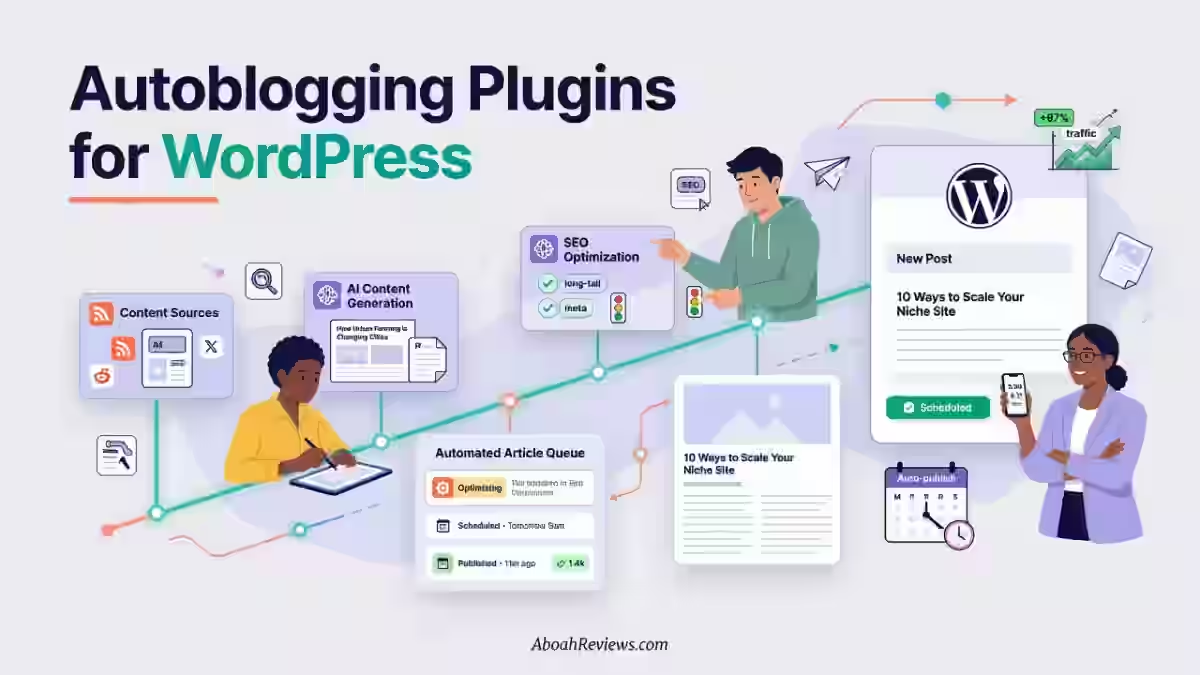
The CyberSEO Pro plugin is another option for managing RSS feeds and AI content generation directly inside WordPress.


Step 3: Build a Keyword Architecture (Not Just a List)

Don’t target random keywords. Build topical clusters that signal to Google you cover a subject comprehensively.

Cluster structure:

  • 1 Pillar post: Broad, high-volume keyword (2,000+ words)
  • 10-30 Supporting posts: Long-tail variations, questions, comparisons
  • Internal links connecting all cluster posts to the pillar and to each other

Example cluster: “AI Writing Tools”

  • Pillar: “Best AI Writing Tools (2026)”
  • Supporting: “AI writing tools for beginners,” “AI writer vs. human writer,” “RightBlogger vs. ChatGPT,” “best free AI writing tools”

Why clusters beat isolated posts:

  1. Topical authority signals to Google that you cover the subject comprehensively
  2. Entire clusters rank, not just individual pages
  3. Internal links distribute page authority across the cluster

According to a Semrush study on content strategy, pages within well-structured topic clusters rank higher on average than standalone pages targeting similar keywords.

A well-structured autoblog with 50 interlinked articles will outperform 200 random posts every time.


Step 4: Implement a Content Quality Layer

Pure AI output without editing equals thin content, which equals no rankings in 2026. This is where most autoblogging businesses fail.

Minimum quality requirements:

  1. Factual accuracy check on all AI-generated claims
  2. Add unique data, examples, or opinions that AI can’t generate on its own
  3. Include tables, comparison charts, FAQs, and structured lists
  4. Add an author byline with credentials or an author page
  5. Internal links to related cluster content

Optional but recommended:

  • Subject matter expert review for YMYL content
  • Original images or custom graphics
  • Video embeds (increases time on page)

If you’ve made the mistake of publishing unedited AI content before, you know the recovery process is painful.

I’ve documented the most common autoblogging tool mistakes so you can avoid the same traps.


Step 5: Install Monetization Strategically

Phase your monetization. Don’t force everything on day one.

Timeline:

  1. Weeks 1-3: Apply for Google AdSense (after publishing 20-30 high-quality blog posts)
  2. Weeks 1-4: Sign up for 2-3 affiliate programs relevant to your niche
  3. Ongoing: Add affiliate links contextually during content creation
  4. Week 1: Install an email capture (Mailchimp, ConvertKit, or beehiiv all have free tiers)

Placement that converts:

  • Affiliate links: Within the first 300 words, inside comparison tables, and as a CTA at end of post
  • Ad units: Above the fold, after the intro paragraph, between H2 sections
  • Email opt-in: After intro, as a mid-content content upgrade, and as an exit intent popup

Native ads that match your site’s look and feel tend to perform better than aggressive display placements. The goal is a user experience that doesn’t feel like a billboard.


Step 6: Drive Traffic (SEO + Diversification)

Organic SEO is the primary traffic channel, but it takes 3-6 months to gain real traction. During that ramp-up period, diversify your content sources.

Traffic diversification strategies:

  • Pinterest: Visual content drives significant traffic in lifestyle, food and DIY niches
  • Reddit: Participate authentically in relevant subreddits. Link sparingly and only where genuinely useful
  • Email list: Even 500 subscribers can drive meaningful traffic to new posts
  • YouTube: Repurpose your top posts into short videos with a blog link in the description

What to avoid:

  • Buying traffic from low-quality sources (advertising networks detect this, and it can get your ad accounts banned)
  • Black-hat backlink schemes that trigger manual penalties
  • Using platforms like Medium or LinkedIn as pure traffic funnels with thin reposts

Moz’s research on link building confirms that natural, editorially placed backlinks remain the strongest ranking signal for new sites.

Focus on building genuine connections with other creators in your niche rather than gaming the system.


Realistic Earnings Timeline and Expectations for Autoblogs

Stage

Traffic

Monthly Revenue

Typical Timeline

Launch

0-5K visits

$0-$50

Months 1-3

Growth

10K-50K visits

$100-$1k

Months 3-9

Scale

50K-100K visits

$1k-$5k

Months 9-18

Authority (network)

100K+ visits across sites

$5k-10k+

12-24 months

Factors that affect earnings:

  • Niche CPC/RPM
  • Number of sites in your autoblog network
  • Affiliate program commission rates
  • Email list size
  • Content quality and E-E-A-T signals
  • Keyword targeting accuracy and SEO optimization

Key principle: Reinvest early revenue into better tools and human editing.

The autobloggers earning $5,000-$20,000/month aren’t automating everything. They’re automating the right things and investing in quality where it matters.


Advanced Tactics to Increase Autoblog Profit

1. Content Refreshing

Refreshing older content is one of the highest-ROI activities for an established autoblog. Set up automated workflows to flag posts older than 6 months for review.

  1. Prioritize refreshing posts ranking in positions 5-15 (these have the easiest ranking gains)
  2. Update statistics, pricing, product links, and year references on a rolling basis
  3. Freshness signals can recover declining rankings without publishing new content

According to Search Engine Journal, updating existing content with current information and improved structure can result in ranking improvements within weeks, often faster than publishing brand-new pages.

2. Building Topical Authority

Pick one niche and cover it thoroughly with 50-200 interlinked posts before expanding to adjacent topics.

For example, build an “AI Writing Tools” cluster, rank for 50+ related keywords, then expand into “AI Productivity Tools.”

Internal linking between cluster posts distributes authority and accelerates rankings across the entire cluster.

This is how you build real domain authority, not through link schemes or private blog networks, but through comprehensive topical coverage.

3. Content Syndication

Content syndication works when you provide real value on the platform you’re publishing to.

Repurposing summarized versions of your posts on Medium, LinkedIn, or Substack with a canonical link back to your original is effective content curation.

What doesn’t work: using Medium or LinkedIn as pure traffic funnels with thin reposts and aggressive outbound links. That gets accounts suspended.

4. Build and Monetize an Email List

Even a small list of 1,000-5,000 subscribers creates a revenue channel independent of Google.

Use a free lead magnet relevant to your niche (checklist, template, mini guide) to capture emails.

Monetize through sponsored newsletter placements, affiliate promotions, or digital product pitches.

Your email list is your insurance policy against algorithm updates killing your traffic overnight.


5. Expanding Your Autoblog Into Multiple Languages

Yes. Translate existing content into other languages to capture international traffic.

Each language version gets indexed separately by search engines, effectively multiplying your search footprint without creating entirely new content.

This is especially effective for niches with global appeal: tech reviews, software tools, health information.

6. Repurposing Blog Content Across Formats

Convert blog posts into YouTube scripts, podcast episodes, social media threads, or newsletter content to maximize ROI per article.

A single well-researched blog post can become 5-10 pieces of content across different platforms.

This is where chatgpt agents and AI writing tools add real value.

You can feed an existing blog post into an AI tool and get a video script, a Twitter thread, and an email newsletter draft in minutes.


Legal and Copyright Risks of Autoblogging

1. Copyright Infringement via RSS Scraping

Republishing full article content from RSS feeds without permission is a copyright violation.

Fix: Use RSS for content curation only. Summarize and link back to the original, but never republish in full.

2. AI-Generated Content and Plagiarism

AI models can reproduce training data in ways that create plagiarism exposure.

Fix: Run all AI output through a plagiarism checker (Copyscape, Grammarly) before publishing.

3. FTC Affiliate Disclosure Violations

Failure to disclose affiliate relationships is a federal violation in the US.

Fix: Add a clear disclosure at the top of every post containing affiliate links.

4. GDPR/Privacy Compliance

Email capture and ad tracking require a compliant cookie consent mechanism in the EU.

Fix: Use a consent management platform like CookieYes or Complianz.

5. Google Manual Penalty

Scraped, spun, or low-quality mass-published content can trigger a manual spam action.

Fix: Review Google’s spam policies and maintain a quality editorial standard.

For a full breakdown of what’s allowed and what isn’t, read my guide on whether autoblogging is legal.


Google’s Helpful Content System: What Autobloggers Must Know

The Helpful Content System is a Google algorithm layer that evaluates whether content is created primarily for people or primarily for search engines.

Content that get deindexed:

  • Mass-published AI content with no editing or original value
  • Scraped content reposted without meaningful transformation
  • Sites with no clear authorship or E-E-A-T signals

What survives:

  • AI-assisted content with human editing and factual verification
  • Clear author attribution with relevant credentials
  • Content that satisfies search intent better than competing pages

E-E-A-T signals every autoblog needs:

  1. Author pages with bio and relevant expertise
  2. About page with site mission and ownership transparency
  3. Privacy policy and affiliate disclosure pages
  4. Cited sources for factual claims
  5. Real product experience, not just AI summaries of spec sheets

Google’s Search Central documentation explicitly states that AI-generated content is not inherently against guidelines, but content must be helpful, reliable and people-first regardless of how it was produced.


Common Mistakes That Kill Autoblog Revenue

1. Ignoring Costs Until They Exceed Revenue

Many autobloggers overspend on tools and hosting before earning a single dollar. Start lean at $50-$100/month total overhead. Scale tool spend only when revenue justifies it.

2. Publishing Unedited AI Content

Google reviews content quality. Sites full of raw AI output get rejected from AdSense and risk deindexing. Add a human editing layer to every post before publishing.

3. No Keyword Strategy

Random content generation does not equal traffic. Autoblogging without keyword research is wasted compute. Build topic clusters around validated, intent-driven keywords.

4. Relying Solely on Google for Traffic

Algorithm updates can wipe out traffic overnight. Diversify with Pinterest, LinkedIn, YouTube and email newsletters.

5. Ignoring E-E-A-T Signals

No trust signals means no rankings in competitive niches. Create author pages, add editorial policies, and include real experience where possible.

6. Relying on a Single Revenue Stream

Ad-only or affiliate-only models are fragile. Stack 2-3 monetization methods from the start and add more as traffic grows.


Final Verdict: Is an Autoblog Worth Building in 2026?

Yes, if: You treat it as an SEO business with a real content strategy, a monetization stack, and editorial standards.

The autoblogging business model works when you combine AI speed with human quality control, keyword strategy and layered monetization.

No, if: You expect a fully automated site to generate passive income without ongoing investment in quality. Those days are over.

The winning formula:

AI speed + human quality control + layered monetization + keyword strategy = sustainable autoblog income

  • Start small
  • Validate your niche
  • Build a keyword cluster
  • Layer monetization after 1 to 3 weeks
  • The people earning $5k-20k/month from autoblogs aren’t automating everything.
  • They’re automating content generation and spending their time on strategy, editing, and monetization optimization.

If you’re ready to pick a platform and get started, my comparison of the top autoblogging tools can help you find the right fit for your budget and workflow.

Whatever you build, keep a human in the loop. The sites that last are the ones that respect both the reader and the search engine.

I’d love to hear what’s working for you. Drop your questions or share your autoblogging experience in the comments.


Frequently Asked Questions About How Do You Make Money With Autoblogs

1. Is autoblogging still profitable?

Yes, but only with quality control, a real SEO strategy, and layered monetization. Fully automated spam sites without human oversight are being deindexed by Google’s Helpful Content System. The autoblogs that make money today use AI for drafting and speed, then add human editing and strategic keyword targeting before publishing.

2. How long does it take to make money with autoblogs?

Typically 3-6 months with consistent publishing and proper keyword targeting. Revenue accelerates significantly once you pass ad network thresholds like Mediavine’s 50,000 sessions/month requirement. Most sites earn $0-$50/month during the first 3 months, with meaningful income starting around months 6-9.

3. Do I need coding skills to start an autoblog?

No. WordPress combined with autoblogging plugins and AI tools handles the technical setup. Automation platforms like Zapier connect content generation, publishing, and tracking without any code. The learning curve is more about understanding SEO and content strategy than technical skills.

4. Can you get banned for autoblogging?

Yes, if you violate copyright, publish duplicate or scraped content without transformation, or flood your site with thin AI content. The fix is adding editorial quality and original value to every post. Google’s spam policies specifically target mass-produced content that doesn’t provide unique value to users.

5. What is the best niche for autoblog monetization?

Finance, software/SaaS, insurance, and health consistently deliver the highest RPMs and affiliate commissions due to strong commercial intent. These niches have CPCs of 5-50+ and active affiliate programs with recurring commissions. However, they also require stronger E-E-A-T signals, so factor in the editorial investment.

6. Should I build one autoblog or multiple?

Build multiple. The autoblog network model is more resilient and profitable because not every site will succeed. The Pareto Principle applies directly: expect roughly 20% of your sites to generate most of your revenue. Start with one site, master the workflow, then clone it into new niches.

7. Is autoblogging legal?

Autoblogging is legal when you create or properly license original content, comply with FTC affiliate disclosure rules, respect copyright (no scraping or republishing others’ work without permission) and follow platform terms of service. Autoblogging that relies on scraped or plagiarized content is both illegal and ineffective.

Aboah Okyere
Follow Me

Leave a Comment

Your email address will not be published. Required fields are marked *

Scroll to Top