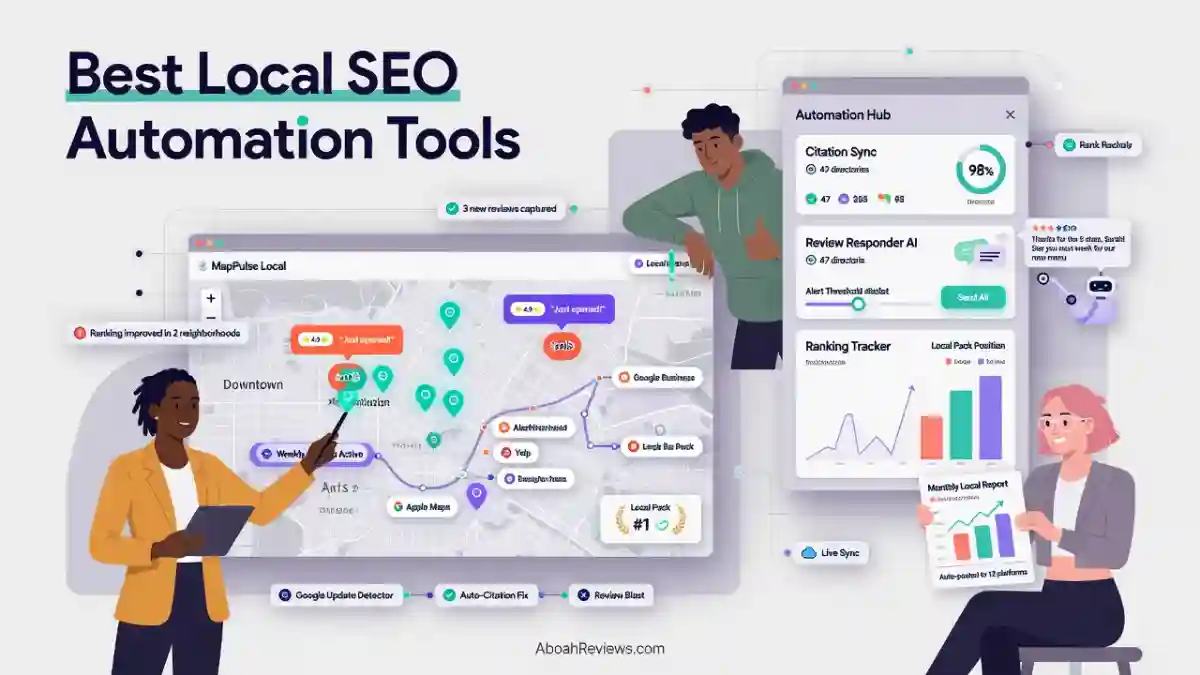
TL;DR: The best local SEO automation tools in 2026 are BrightLocal for all-in-one management, Local Falcon for geo-grid rank tracking, Semrush Local for businesses already on Semrush, and Moz Local for affordable listing consistency. No single tool covers every local SEO task, and the right choice depends on whether your priority is citations, content, rankings, reviews or reporting.
Introduction
Local SEO involves a lot of repetitive work. Checking Google Business Profiles, fixing citation inconsistencies, monitoring reviews, tracking rankings across different neighborhoods, and sending client reports, all of that adds up fast.
The best local SEO automation tools help businesses, agencies, and multi-location brands take care of those recurring tasks without doing them manually every week.
This article covers 11 tools that handle different parts of the local SEO workflow. Some focus on Google Business Profile management. Others handle citations, geo-grid rank tracking, review monitoring, or local content production.
I have personally tested automated SEO workflows and know where automation genuinely saves time and where it creates more cleanup work than it prevents.
Quick Comparison of the Best Local SEO Automation Tools
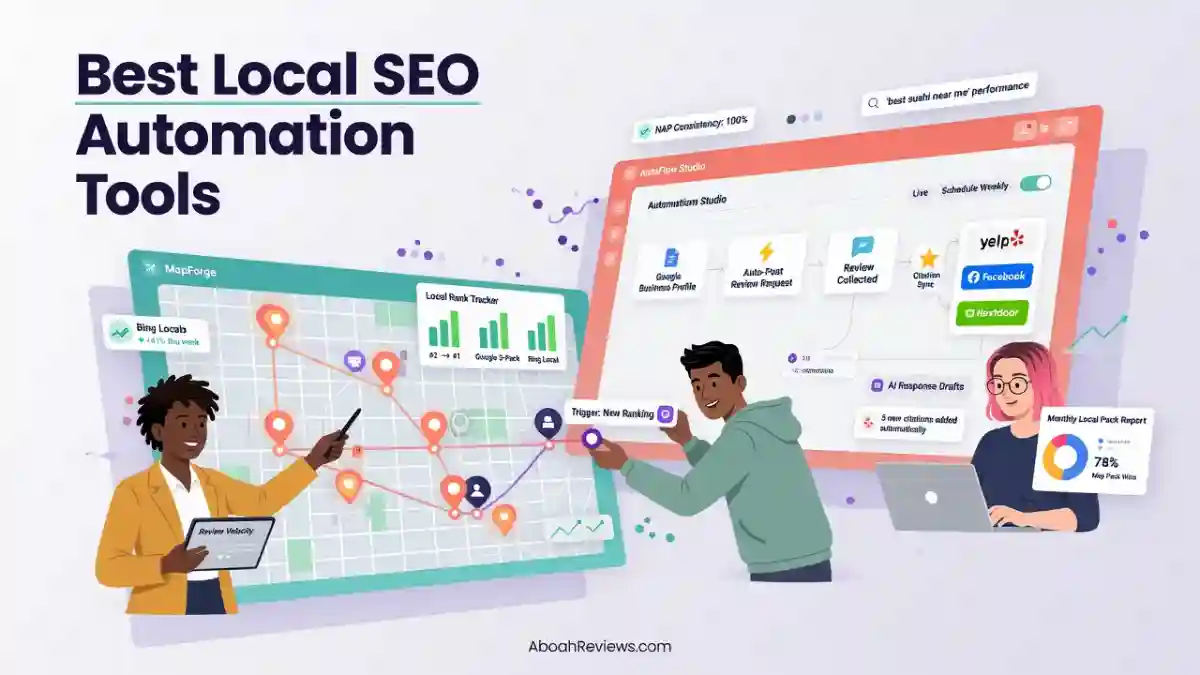
Here is how the 11 tools compare at a glance, based on their primary automation capabilities and publicly verified pricing:
Tool | Best For | Key Automation Capabilities | Starting Price |
|---|---|---|---|
Local SEO content automation | Content generation, auto-publishing, backlink exchange, GBP posts, AI visibility tracking, social repurposing | $97/month (Pro) | |
BrightLocal | All-in-one local SEO management | Rank tracking, citation monitoring, GBP audits, review monitoring | $39/month |
Google Business Profile | Free local SEO foundation | Profile management, posts, Q&A, free insights | Free |
Semrush Local | Listings and local search visibility | GBP optimization, map rank tracking, review management (Pro) | $30/month per location (Base) |
Localo | GBP optimization guidance | Task-based optimization, GBP post scheduling, competitor tracking | From ~19–39/month |
Local Falcon | Geo-grid local rank tracking | Geographic grid scanning, competitor visibility heatmaps | From $24.99/month |
Search Atlas | AI SEO workflows | OTTO AI automation, keyword research, content briefs, rank tracking | Verify current pricing |
Synup | Multi-location local SEO management | Listing distribution to 60+ directories, review monitoring, social posts | From ~$30-$49/month per location |
Birdeye | Review and reputation automation | Multi-channel review collection, AI review responses, messaging | Custom pricing (est. from $299/month) |
Yext | Enterprise listings management | Real-time listing sync across 200+ publishers, structured data | Custom pricing (est. $30+/month per location) |
Moz Local | Business listing consistency | Automated NAP sync across 90+ directories, duplicate suppression | From 14–16/month per location |
Note: Pricing is subject to changes. Always verify current pricing directly on each vendor’s official website before purchasing.
How I Evaluated the Best Local SEO Automation Tools
Evaluating the best local SEO tools is not as simple as reading the feature list. A tool can claim to automate your entire local SEO workflow and still require significant manual oversight before any of those automations are worth trusting.
My evaluation criteria came from 30 days of testing automated SEO workflows across 3 websites. During that period, I found that the biggest time savings came from repetitive data collection, reporting, and scheduling.
The tasks that still required human review were recommendations involving search intent, content quality, and accuracy of business information. That experience shapes how I judge any automation tool today.
Local SEO Automation Capabilities
The most useful automation in local SEO removes repetitive steps without creating cleanup work. Tools that automate citation syncing, GBP post scheduling, rank tracking, and review monitoring genuinely save time.
Tools that automate content or review responses without allowing editorial review can create problems that take longer to fix than the original manual task.
Google Business Profile Management
A Google Business Profile is the single most visible piece of local SEO for most businesses. I looked at whether each tool could schedule and publish GBP posts, monitor profile changes, flag unauthorized edits, and provide optimization recommendations.
Not every tool on this list covers all of these. Some do one part well and nothing else.
Local Rank Tracking and Google Maps Visibility
Standard keyword rank tracking tells you a position in organic search. Local rank tracking needs to go further. A business that ranks number one directly in front of its store may rank number eight two miles away.
I weighted tools that offer geo-grid or map-based tracking because a single ranking point is not a reliable indicator of local visibility.
Citation and Business Listing Management
NAP consistency, meaning Name, Address, and Phone number, matters for local search.
I looked at how many directories each tool distributes to, how quickly updates propagate, whether the tool suppresses duplicates, and whether canceling the subscription reverses the changes. That last point matters more than most reviews acknowledge.
Review Monitoring and Reputation Management
Review automation ranges from monitoring to drafting responses to actively requesting reviews from customers.
I evaluated whether the tool monitors reviews across multiple platforms, whether the response drafts are usable without heavy editing, and whether review request workflows are genuinely automated or just templated emails that still require manual sending.
Pricing, Usability and Reporting
I checked whether pricing scales reasonably with the number of locations, whether the interface is practical for an SEO professional to use without a training course, and whether reports are white-label ready for agencies.
Transparency of Testing and Product Claims
Where I have personally tested a tool or where its features are confirmed through official vendor documentation, I say so. Where pricing or feature claims come from third-party sources and could not be independently verified against the vendor’s current website, I note that.
11 Best Local SEO Automation Tools Reviewed
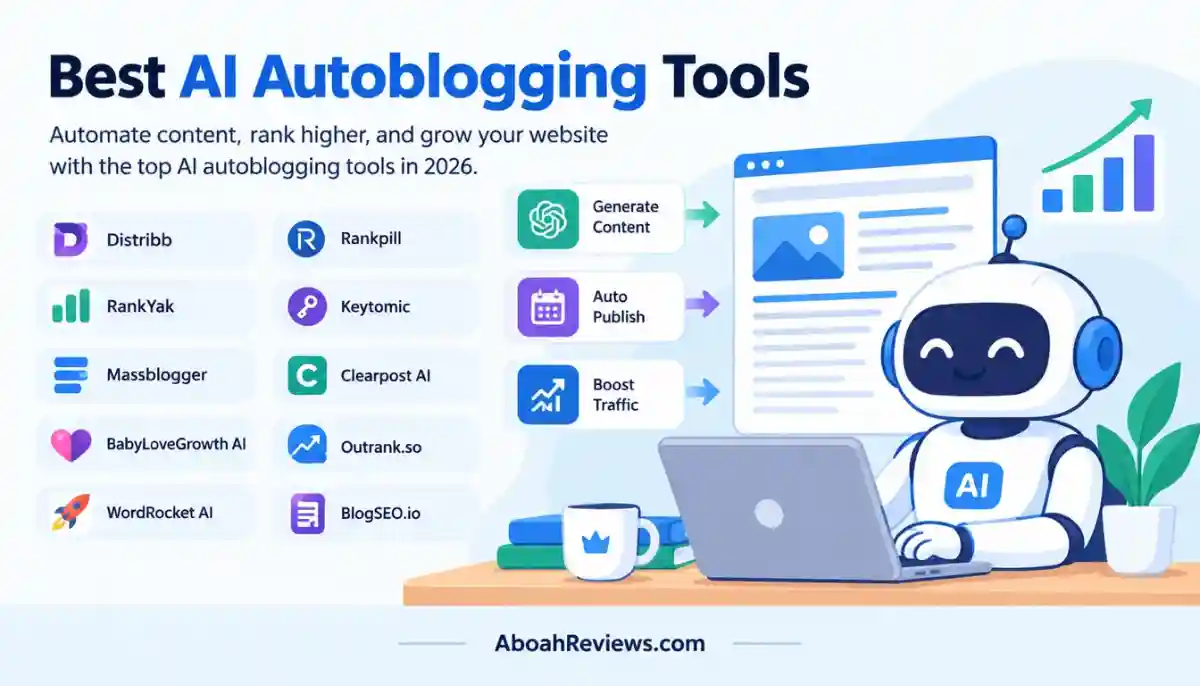
1. Distribb – Best for Local SEO Content Automation
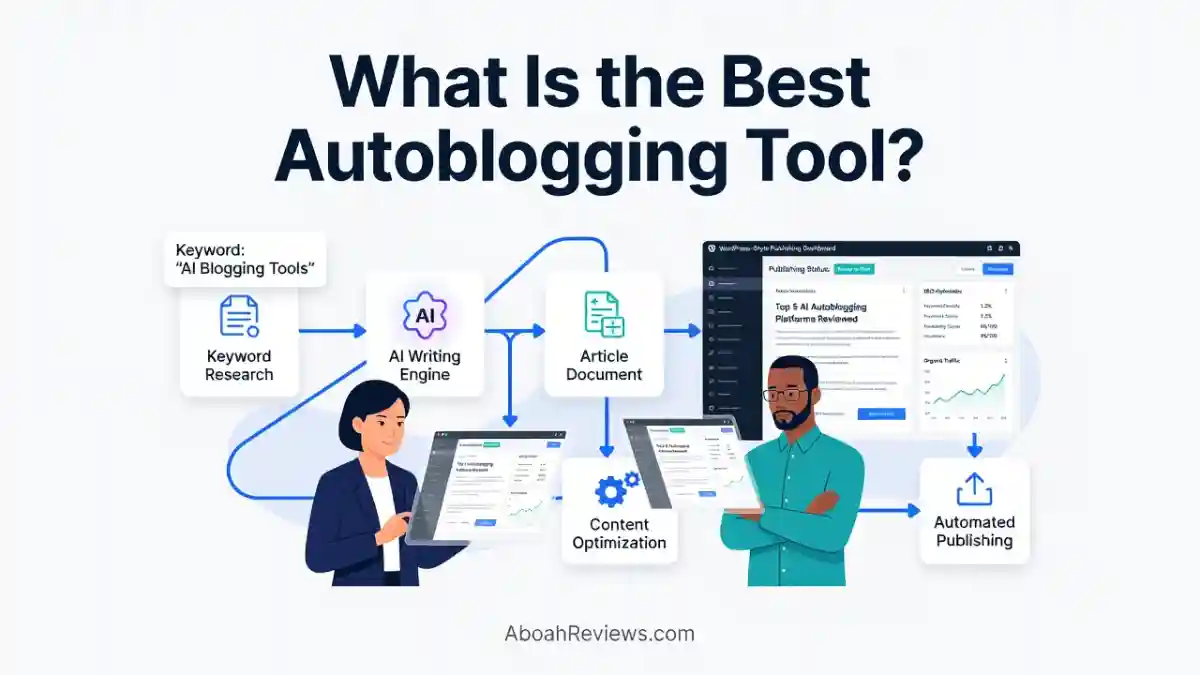
Distribb is an SEO content automation platform that handles article generation, publishing, backlink exchange and social repurposing. It is not a traditional local SEO management tool. It does not manage citations or track geo-grid rankings.
What it does is automate the content side of local SEO: producing location-specific articles, publishing them to your CMS, building contextual backlinks, and helping your business appear in AI search results.
Distribb is a legitimate, actively developed SEO automation platform that delivers real time savings for content-led SEO workflows.
Key Features
- Distribb promises SEO on autopilot: long-form articles generated and published daily to your CMS
- Contextual backlinks from a network of real client sites
- Reddit engagement
- Social repurposing
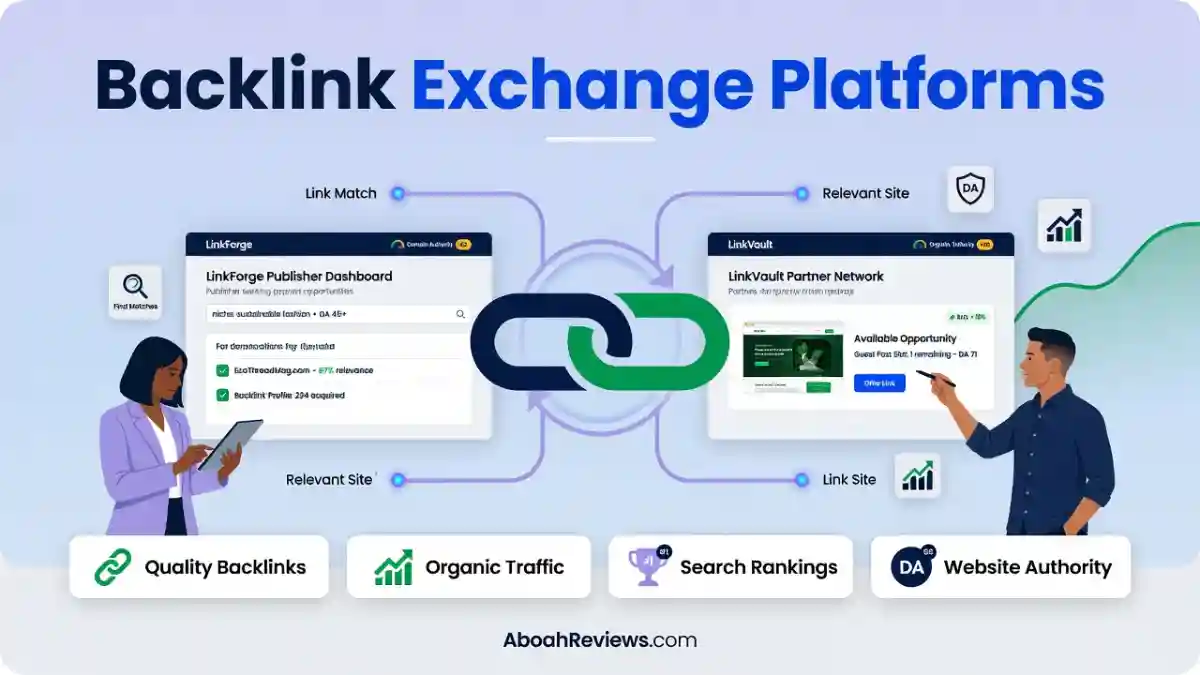
- The standout feature is an automated ABC backlink exchange network that builds contextual links across real business sites with zero manual outreach
- The Optimizations scanner re-reads your Google Search Console data weekly and proposes rewrites for pages losing clicks or impressions
I personally tested Distribb for 90 days on the Accelerator plan. The content calendar solves a real problem for agencies that need to maintain a steady publishing schedule for local clients.
Pros
- It is worth it at $97/month for sites that need steady publishing volume and passive link building
- Content, backlinks, and social distribution in one platform
- Integrates with WordPress, Webflow, Shopify, and Wix
- 7-day free trial at low risk
- Useful for agencies producing local content at scale
- AI search visibility tracking included (ChatGPT and Perplexity)
Cons
- The backlink exchange carries policy-level risk
- Brand voice calibration takes 3 to 5 article cycles to get right
- Social auto-posting is still on the roadmap
- The $495/month Accelerator is harder to justify unless content volume and social distribution are active priorities.
Pricing
Distribb offers a 7-day free trial, a Pro plan at $97/month (30 articles), and an Accelerator plan at $495/month (90 articles plus videos and managed outreach).
Buy If: You are an agency or SaaS founder who needs location-specific content produced and published consistently without assembling a five-tool workflow.
Skip If: You need citation management, geo-grid rank tracking, or review management. Distribb does not cover those. You would need to pair it with BrightLocal or Local Falcon for a complete local SEO stack.
2. BrightLocal – Best for All-in-One Local SEO Management
BrightLocal is the most complete all-in-one local SEO platform for agencies and multi-location businesses that need rank tracking, citation management, GBP audits, and review monitoring in one place.
It is not the cheapest option and not the flashiest tool, but it covers more of the local SEO workflow than most competitors at a reasonable price.
Key Features
- The main features of BrightLocal include Citation Builder, Review Monitoring, and Local Search Grid, all designed to improve local visibility
- The Track and Manage plans include no review monitoring, no review campaigns, and no review widgets. That detail catches a lot of buyers off guard. If reputation management is part of your deliverable, you need the Grow plan.
- The Local Search Grid shows how a business ranks across a geographic area, similar to Local Falcon’s geo-grid approach, though the two tools differ in depth and granularity.
Pros
- Covers rank tracking, citations, audits, GBP monitoring, and reviews in one platform
- White-label reporting for agencies
- 14-day free trial with no credit card required
- Scales pricing by location count
Cons
- Review management is locked to the Grow tier only
- Pricing jumps at bracket edges, so adding one more location can significantly increase monthly cost
- Citation building is a separate pay-as-you-go service
Pricing
BrightLocal now starts at $41 a month for one location on the Track plan. For one location: Track at $41, Manage at $54, and Grow at $65 a month. Annual billing is about 25% cheaper. The 14-day free trial requires no card.
The citation-building service is separate, billed per package or per location, with prices starting around $2 to $3 per individual citation.
Buy If: You are an agency managing local SEO for multiple clients who need a single platform for rank tracking, citations, audits, and reporting.
Skip If: You only need one of these features. There are cheaper single-purpose tools that handle citation management or rank tracking better at lower cost.
3. Google Business Profile – Best Free Local SEO Foundation
Google Business Profile (GBP) is the free tool Google provides for managing how a business appears in Google Search and Google Maps.
It is not a third-party automation platform, but it is the most important piece of local SEO infrastructure any business can have. Every paid tool on this list either connects to, reads from, or publishes to GBP.
Key Features
- Business information management (name, address, phone, hours, categories)
- Google Posts for promotions, events, and updates
- Q&A management
- Customer review responses
- Photo and video uploads
- Basic insights and performance data
- Support for multiple locations through Business Profile Manager
Pros
- Free
- Direct Google data with no intermediary
- Google Maps integration is automatic
- Performance insights directly from Google
- AI Overview visibility is influenced by GBP completeness and accuracy
Cons
- Interface is not built for agencies managing many locations
- No automated scheduling for posts
- Review management requires manual responses or a third-party tool
- Spam listing and unauthorized edits require manual monitoring
- Bulk management tools are limited
Pricing:
Free. Google does not charge for Google Business Profile access.
Buy If: Every business with a physical location or service area should claim and fully optimize their GBP before spending money on any paid tool. This is not optional, it is the foundation everything else is built on.
Skip If: You need bulk management across 10+ locations or automated scheduling. That is where paid tools like BrightLocal, Localo, or Semrush Local add value on top of the free GBP foundation.
4. Semrush Local – Best for Listings and Local Search Visibility
Semrush Local is a local SEO add-on to the main Semrush platform.
If you already subscribe to Semrush for keyword research and technical SEO, adding the Local toolkit is the most cost-efficient way to get GBP optimization, map rank tracking, and review management without switching to a separate tool.
Key Features
- Features include Google Business Profile optimization, GBP review management with AI assistance, and Map Rank Tracker with 375 credits on the Base plan.
- The Pro plan includes all Base features plus listing management tools, review management functionality, API access, and Map Rank Tracker with 1,225 credits.
Pros
- Integrates directly with Semrush’s keyword and competitor research tools
- Covers GBP, map rank tracking, and review management in one add-on
- AI-assisted review responses included
- Competitive with BrightLocal for businesses already on Semrush
Cons
- Requires a paid Semrush base subscription to get full value
- Pricing is per location, so costs scale quickly for multi-location businesses
- Does not replace a dedicated citation management tool like Moz Local for directory breadth
- Map rank tracker credits are consumed per scan, which can limit tracking frequency
Pricing
The Local toolkit is priced per location, with Base at $30 per month per location and Pro at $60 per month per location.
A realistic SMB setup on Semrush Starter stacks up to $393 a month when you add a seat, social toolkit, AI visibility toolkit, and local toolkit together.
Buy If: You already use Semrush and want to add local SEO capability without managing a second platform.
Skip If: You do not use Semrush. At $139.95/month for a base plan plus $30 to $60/month per location for Local, the combined cost is significantly higher than BrightLocal or Moz Local on their own.
5. Localo – Best for Google Business Profile Optimization
Localo is a GBP-focused local SEO tool that guides users through optimization with task-based recommendations. It is built for businesses and freelancers managing one or a small number of Google Business Profiles who want clear weekly actions to improve their local visibility.
Key Features
- AI-powered optimization suggestions that tell you exactly what to fix
- Competitor tracking with alerts when rivals make changes
- Google Posts scheduling to keep your profile active
- Task-based interface that guides you through improvements step by step
Localo includes keyword tracking, reviews, a content publisher, and an AI Agent, with a 14-day trial and 30-day money-back guarantee. The Single Business plan stops at one profile.
Pros
- Clear, actionable optimization suggestions rather than a raw data dump
- GBP post scheduling built in
- Competitor monitoring included
- Good for beginners and businesses new to local SEO
- Free tier available for basic features
Cons
- Not built for agencies managing many client profiles
- Single Business plan is limited to one GBP
- Does not cover citation management, link building, or broader technical SEO
- Less useful for experienced SEOs who already know what to fix
Pricing
Localo starts from $32.42/month billed annually, with a 14-day free trial available. Verify current pricing directly at Localo’s website.
Buy If: You are a small business owner or freelancer managing one or two GBP listings who wants guided optimization without needing to interpret raw data yourself.
Skip If: You are an agency managing multiple clients or need citation management alongside GBP work.
6. Local Falcon – Best for Geo-Grid Local Rank Tracking
Local Falcon is the most widely used geo-grid rank tracking tool for local SEO. It shows you where a business ranks on Google Maps across a defined geographic grid, not just a single position.
That distinction matters because a business that ranks well near its physical address may rank poorly two miles away, and a single-point tracker would never reveal that gap.
Key Features
- A single-point rank tracker might show you’re #3, but Local Falcon reveals you’re #1 in the north side and #8 in the south.
- The credit-based scanning system lets you choose the grid size and scanning frequency.
- Larger grids and more frequent scans consume more credits.
- The credit-based system lets you scale usage to your needs, with plans ranging from Starter to Enterprise with API access.
- Credits get consumed based on grid size and scan frequency.
- Local Falcon also tracks AI visibility, not just geographic rank data. This makes it more useful than a pure rank tracker for businesses trying to understand their visibility across both traditional Maps results and AI-generated answers.
Pros
- Visual heatmap display makes it easy to spot geographic ranking gaps
- Credit-based model is flexible for agencies scanning at different frequencies
- AI visibility tracking included alongside geo-grid data
- Useful for reporting local ranking improvements to clients
Cons
- Credits can run out faster than expected if grid sizes are large
- It is a tracking tool, not a management platform. It shows you the problem but does not fix it
- No citation management, GBP posting, or review features
Pricing
Local Falcon standard plans range from $24.99 to 199.99 per month. A credits-based model charges $25 for 1,000 credits, $100 for 5,000 credits, and $300 for 20,000 credits. Each scan of a 7×7 grid for one keyword costs approximately 50 credits.
Buy If: You need to understand the geographic distribution of your local rankings, particularly for multi-location businesses or competitive markets where proximity to the searcher matters.
Skip If: You only need one tracking data point per keyword and geo-grid detail is not part of your reporting or strategy.
7. Search Atlas – Best for AI-Powered SEO Workflows
Search Atlas is an all-in-one SEO platform that includes a local SEO component alongside its broader keyword research, content optimization, and technical SEO tools.
Its standout feature is OTTO, an AI automation layer that handles SEO tasks across projects. For local SEO specifically, Search Atlas covers GBP management, local rank tracking, and automated workflows for agencies.
Note: I have not personally tested Search Atlas. The information here is based on publicly documented features and third-party reviews.
Key Features
- OTTO AI automation for SEO task management
- Local rank tracking and GBP optimization tools
- Content briefs and keyword research
- Site audits and technical SEO automation
- Agency reporting and white-label options
Pros
- Broad SEO platform with local capability built in
- OTTO automation handles repetitive SEO tasks
- Suitable for agencies needing one platform across multiple services
- Active development and frequent feature updates
Cons
- Can feel overwhelming for users who only need local SEO tools
- Pricing is not always straightforward and may require a demo
- Less specialized for local SEO than BrightLocal or Local Falcon
Pricing
The full pricing for Search Atlas across all standard tiers includes the Starter plan at $99/month, the Growth plan at $199/month, the Pro plan at $399/month, and the Agency plan starting at $999/month.
Buy If: You are an agency that wants a single platform covering technical SEO, content, and local SEO with AI automation across all of them.
Skip If: You only need local SEO management and do not need a full SEO suite. Simpler tools at lower cost will serve you better.
8. Synup – Best for Multi-Location Local SEO Management
Synup is a listing management and reputation platform designed for agencies and multi-location businesses. It handles listing distribution, review monitoring, social post publishing, and reporting in one place.
Key Features
- Synup provides listing distribution to 60+ directories
- Social media management and AI-powered post generation
- Review monitoring and AI response suggestions
- Affordable per-location pricing
- White-label options for agencies
- The AI-powered automation handles review responses and content creation
- Team members can collaborate on client accounts, and reporting works well for client communication
Pros
- Broad listing distribution network
- White-label reporting for agencies
- Review monitoring and AI-drafted responses
- Social media management included
- Per-location pricing scales for agencies with growing client counts
Cons
- The interface can overwhelm new users
- Some integrations are finicky, and reporting customization has limits
- Synup charges a plan fee and per-location modules, so those costs stack
Pricing
Synup’s Solo plan costs $49/month for one location, Premium $299/month for up to 10, Pro $499/month for up to 25, and Scale $899/month for up to 50.
Buy If: You are an agency managing listings, reviews, and social presence for multiple local clients who needs white-label reporting.
Skip If: You are a single-location business. The pricing structure is designed for volume, not one-location use cases.
9. Birdeye – Best for Review and Reputation Automation
Birdeye is a reputation management and review automation platform.
It is most useful for businesses and multi-location brands with high review volume across many platforms, such as healthcare, hospitality, automotive, and retail.
It goes beyond monitoring and enables multi-channel review collection, automated response drafting, and customer messaging.
Key Features
- Birdeye combines review generation
- Listings monitoring across 200+ sites
- AI-drafted review responses
- Messaging in a single platform, with per-location pricing built for multi-location reporting
Pros
- Strongest review collection and management toolset on this list
- Covers 200+ review platforms
- AI-drafted review responses reduce manual work
- Customer messaging and survey tools included
- Purpose-built for high-volume review environments
Cons
- Pricing is custom and requires a sales conversation
- If listing management is your primary need and reviews are secondary, Birdeye’s pricing is hard to justify.
- Birdeye is built and priced for operations much larger than single-location small businesses.
Pricing
As of a February 2026 pricing update, plans run Starter at $299/location/month, Growth at $349, and Dominate at $449, with a custom Premium tier for four or more locations.
Buy If: You manage reviews for a multi-location business with high review volume and need automated collection, monitoring, and response across multiple platforms.
Skip If: You are a small or single-location business. The pricing is designed for enterprise and multi-location operations, and cheaper alternatives will handle basic review monitoring adequately.
10. Yext – Best for Enterprise Listings Management
Yext is the most widely recognized enterprise listing management platform.
It pushes business information to a large network of publishers in real time and is used by franchise brands, large retailers, and healthcare networks to maintain listing accuracy at scale.
Key Features
- Yext pushes verified listing data to a large directory network in real time
- One of the more enterprise-oriented platforms on this list, with review management and local pages layered in.
Pros
- Large publisher network with real-time sync
- Structured data management for AI search visibility
- Review management and local pages included in higher tiers
- Designed for franchise-level location counts
Cons
- The moment you cancel Yext, listings may revert to their previous state because Yext “holds” listings in its network. This is a well-documented limitation: your data is effectively locked into Yext’s publisher relationships.
- Yext is expensive at small scale. A single-location business can get equivalent or better citation management from Moz Local or BrightLocal at lower cost.
Pricing
Annual pricing starts at $199/year for Emerging, $449/year for Essential, and $999/year for Complete per location. Expect $499+/month for mid-size deployments. Enterprise contracts are annual.
Buy If: You are managing listings for a franchise brand, national retailer, or enterprise with 50+ locations and need real-time sync with a large publisher network.
Skip If: You have fewer than 10 locations or a limited budget. The listing lock-in risk and cost structure do not make sense at small scale.
11. Moz Local – Best for Business Listing Consistency
Moz Local is the most straightforward and affordable automated listing management tool on this list.
It distributes business information to a curated set of major directories and data aggregators, suppresses duplicates, and monitors for listing changes.
It is not a full local SEO platform, but for businesses whose main problem is inconsistent NAP data across the web, it solves that problem cleanly.
Key Features
- Moz Local focuses on syncing and monitoring NAP data across a curated set of roughly 90+ directories, positioned as a lighter, more affordable option than full enterprise suites.
- Excellent duplicate suppression
- Automatic distribution to major directories
- Integration with the broader Moz ecosystem
- A simple setup process
Pros
- Lowest entry price on this list for listing management
- Simple interface with minimal learning curve
- Duplicate suppression is reliable
- Good for small businesses and single-location brands
Cons
- Does not include rank tracking or GBP optimization
- Review management is basic compared to Birdeye or BrightLocal
- Fewer directory integrations than Yext or Synup
- Less suitable for agencies managing many clients
Pricing
Three pricing tiers: Lite at $16/month, Preferred at $24/month, and Elite at $33/month per location. Moz Local focuses on syncing and monitoring NAP data across a curated set of roughly 90+ directories.
Buy If: You are a small business or single-location brand whose main problem is inconsistent business listings across the web.
Skip If: You need rank tracking, review management, or GBP optimization alongside listings. You will quickly outgrow what Moz Local offers.
Which Local SEO Automation Tool Is Best for Your Needs?
Best Overall Local SEO Automation Tool
BrightLocal is the best all-in-one choice for most SEO professionals and agencies. It covers rank tracking, citations, GBP audits, and review monitoring in one platform at a price that scales with location count. It is not perfect for every use case, but no single tool on this list is.
Best Free Local SEO Tool
Google Business Profile is free and is the most important local SEO asset any business can have. No paid tool on this list replaces it. They all build on top of it.
Best Tool for Google Business Profile Optimization
Localo is designed specifically around GBP improvement for businesses managing one or two profiles. Semrush Local is the better choice if you already pay for Semrush.
Best Tool for Local Rank Tracking
Local Falcon’s geo-grid approach is the clearest way to understand where a business actually ranks across a geographic area. For agencies reporting local rankings to clients, the visual heatmap format is easy to explain without needing to interpret raw position data.
Best Tool for Citation and Listings Management
Moz Local is the most affordable option for businesses that primarily need NAP consistency across major directories.
BrightLocal’s Citation Builder is the better option for agencies that need to build citations on demand. Yext makes sense at enterprise scale when real-time sync and a large publisher network are needed.
Best Tool for Review Management
Birdeye is the strongest tool specifically for review automation at multi-location scale. For agencies that need review monitoring without Birdeye’s price tag, BrightLocal’s Grow tier covers the basics starting at $65/month for one location.
Best Tool for Agencies
BrightLocal covers the most ground at an agency-friendly price with white-label reporting. Synup is a strong alternative for agencies that want per-location pricing across a large client base with social media management included.
Best Tool for Businesses With Multiple Locations
Synup and Yext are both built for multi-location management. Synup is more affordable and transparent on pricing. Yext has a larger publisher network but significant listing lock-in risk when you cancel.
Essential Features to Look for in Local SEO Automation Software
Google Business Profile Management
Look for tools that can schedule GBP posts, monitor for unauthorized edits, flag profile changes, and provide optimization recommendations. Not every tool on this list covers all of these. BrightLocal and Localo handle this well. Local Falcon does not.
Local Keyword Research and Rank Tracking
Standard rank tracking is not enough for local SEO. You need to know how a business ranks across a geographic area, not just a single data point. Local keyword research should include search volume filtered to a specific city or region, not just national volume.
Geo-Grid Ranking Analysis
Local Falcon is the clearest example of this. A geo-grid scan shows ranking position across dozens of geographic points simultaneously, which is far more useful than a single reported rank position for a local business.
Citation Management and NAP Consistency
Inconsistent business information across directories can hurt local search visibility. Look for tools that distribute to major aggregators and data sources, suppress duplicate listings, and monitor for unauthorized changes. The number of directories matters less than whether those directories feed data to the sources Google actually uses.
Review Monitoring and Response Workflows
The minimum useful feature is monitoring reviews across Google, Yelp, and any platform relevant to your industry. More advanced tools provide AI-drafted responses and review request workflows. Check whether the AI-drafted responses are actually usable without heavy editing before paying for that feature.
Local Landing Page Optimization
For businesses with multiple locations, location-specific landing pages need to target local search intent without becoming thin duplicate pages.
Tools like Distribb help produce location-specific content at scale. The editorial review question matters here: automated content still requires human review before it goes live.
For a deeper look at how this fits into an overall workflow, see the full guide on local SEO automation tools with AI content optimization.
Automated Reporting and Integrations
Agencies need reports that save time, not reports that need to be rebuilt every month. Look for white-label reporting, scheduled delivery, and integration with Google Search Console and Google Analytics 4. BrightLocal and Synup both handle this reasonably well.
Multi-Location Management and Access Controls
Managing 50 locations is a different problem from managing 5. Look for bulk editing, location-level permissions, and the ability to assign different access levels to team members or clients.
Benefits and Limitations of Local SEO Automation
Benefits of Automating Local SEO
- Reduce repetitive tasks: Scheduling GBP posts, syncing listing updates, monitoring review platforms, and generating weekly reports are all tasks that follow a repeatable pattern. Automation removes the manual steps from each of those without reducing the quality of the output, provided the tool is set up correctly.
- Improve listing consistency: Manually checking and correcting business information across 50+ directories is not practical. Tools like Moz Local, Synup, and Yext automate that distribution and flag inconsistencies before they cause problems.
- Monitor local search visibility more efficiently: A tool like Local Falcon runs geo-grid scans on a schedule and sends you the results. Without automation, you would need to manually check rankings across multiple geographic points for every keyword. That is not realistic at any kind of scale.
- Standardize reporting across clients and locations: White-label automated reports mean your clients receive consistent, professional reporting without your team rebuilding the same document every month.
Limitations and Risks
- Software cannot guarantee rankings: Every tool on this list helps with the inputs to local SEO. None of them guarantee a specific ranking outcome. Be skeptical of any tool that implies otherwise.
- Automated content requires editorial review: From my 30-day testing of automated SEO workflows, I found that accepting automation recommendations without reviewing them first created additional cleanup work. Distribb produces content on autopilot, but a review pass noticeably improves the output before it reaches a local audience.
- Incorrect business data can propagate across listings: If you sync incorrect information to 60+ directories at once, you have created 60+ problems to fix. Always audit your data before pushing it through a listing management tool.
- Generic review responses can damage customer trust: AI-drafted review responses save time, but templated or generic responses are often worse than no response at all. Use them as a starting point, not a finished output.
- Multiple subscriptions may be necessary to cover every workflow: Distribb at $97 a month plus Local Falcon at $24.99 a month covers the profile, content, links, and a geo-grid for about $122 a month. Many local SEO workflows require combining two or three tools to cover the full picture.
For more on how automation affects the broader SEO process, see the list on SEO automation workflow tools.
How to Automate Your Local SEO Workflow
Step 1: Audit Your Website and Google Business Profile
Before automating anything, confirm that your baseline data is accurate. Run a GBP audit through BrightLocal or Semrush Local to identify missing categories, outdated information, and profile gaps. Check your website for location pages, NAP consistency in the footer, and structured data markup.
Step 2: Research Local Keywords and Competitors
Use Semrush, Ahrefs, or the keyword tools inside your chosen local SEO platform to identify the terms local customers actually search for.
Look at what your top-ranked local competitors are targeting. Local keyword research requires filtering by city, metro area, or ZIP code. National search volume numbers are not relevant for a business targeting a single service area.
Step 3: Correct Listing Inconsistencies
Use Moz Local, Synup, or BrightLocal’s Citation Builder to audit your existing listings. Identify mismatches in your business name, address, and phone number. Correct the source data first, then push the corrected information through your listing management tool. Do not automate distribution before the data is correct.
Step 4: Optimize Service-Area and Location Pages
For businesses with multiple locations, each location needs its own dedicated page targeting local search intent.
These pages need to cover the specific location, the services available there, and local context that differentiates them from each other. Distribb can help produce location-specific content at scale. Review each page before it goes live.
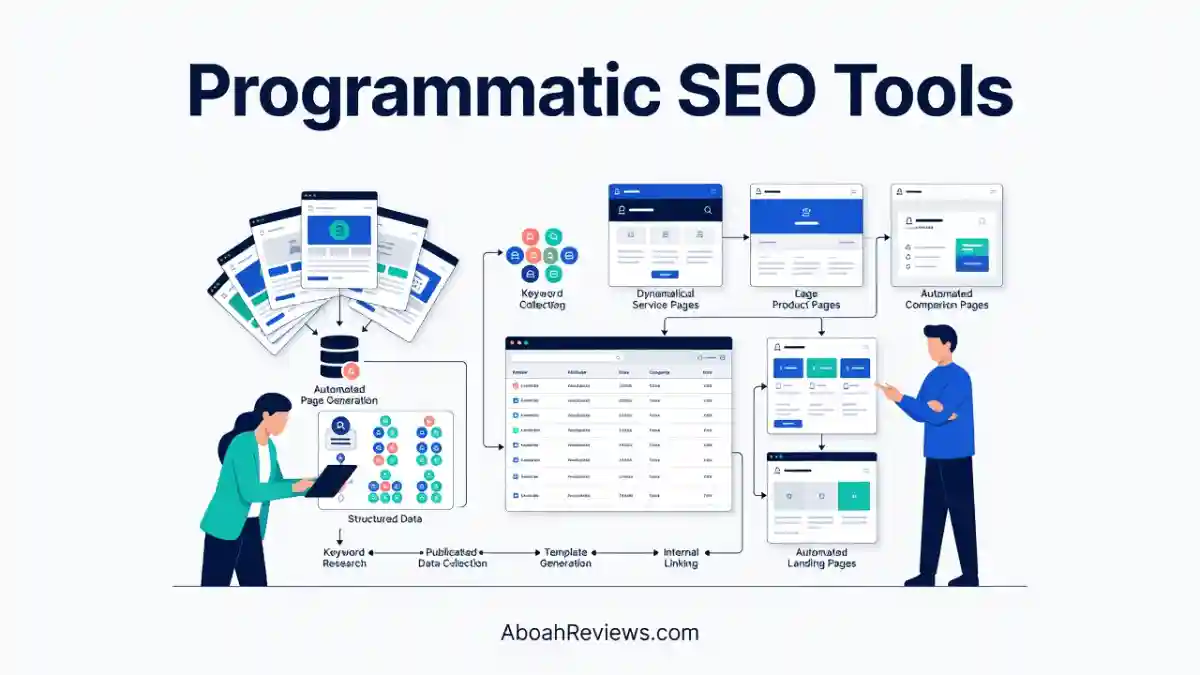
For a practical look at how programmatic approaches fit into this, see the guide on programmatic SEO tools.
Step 5: Monitor and Respond to Customer Reviews
Set up review monitoring through BrightLocal, Synup, or Birdeye depending on your scale. Automate alerts when new reviews appear.
Use AI-drafted response templates as a starting point, then personalize before posting. Review response time affects how Google weighs engagement signals on your GBP.
Step 6: Track Google Maps Rankings Across Locations
Set up geo-grid scans in Local Falcon for your most important keywords across each location’s service area. Run baseline scans before making optimization changes so you have a reference point to measure improvement against.
Step 7: Automate Reporting and Measure Leads
Set up automated weekly or monthly reports in BrightLocal or your chosen platform. Include rank tracking, citation count, review volume, and GBP insights. Connect Google Search Console and GA4 to show local traffic and conversion data alongside SEO metrics.
For more on how to build efficient SEO reporting workflows, see the guide on automated SEO reporting.
Common Local SEO Automation Mistakes to Avoid
Publishing Duplicate or Low-Value Location Pages
Creating a location page for every city in a state by simply swapping the city name in a template produces thin, near-duplicate pages that Google does not reward.
Each location page needs enough unique, locally relevant content to justify its existence. Automation can help produce that content at scale, but quality control still requires human review.
Ignoring Inaccurate Business Listings
Automating listing distribution with incorrect data spreads the problem rather than fixing it. Audit your NAP data manually before activating any listing management tool.
Automating Reviews Without Appropriate Oversight
AI-drafted review responses are a starting point, not a finished product. A generic response to a negative review can make a problem worse. Build a review workflow where the automation flags and drafts, and a human approves before posting.
Relying on a Single Geographic Ranking Point
A rank tracking tool that reports one position per keyword does not give you a complete picture of local visibility.
If a business serves a 10-mile radius, its rankings at the edge of that radius are just as important as its rankings at the center. Use geo-grid tools like Local Falcon to see the full geographic distribution.
Tracking Rankings Without Measuring Conversions
Rankings are an input metric. What matters for a local business is whether those rankings are driving phone calls, direction requests, and website visits that turn into customers.
Connect your rank tracking to GBP insights and GA4 data so you can see whether ranking improvements are actually translating to business outcomes.
For a broader look at how AI affects local search visibility, see the guide on how AI Overviews are changing SEO.
Final Verdict: Which Local SEO Automation Tool Should You Choose?
The right local SEO automation tool depends on which part of the workflow you need to fix first.
If you need a complete platform for agency use, start with BrightLocal. It covers more of the local SEO workflow than any other tool at a reasonable price, and its white-label reporting is practical for client-facing work.
If geo-grid ranking data is your primary need, Local Falcon is the clearest choice. It does one thing well and the visual output is easy to use in client reports.
If listing consistency is the main problem, Moz Local is the most affordable and straightforward tool for getting your NAP data accurate across major directories.
If you already use Semrush, adding Semrush Local at 30 to 60/month per location is more efficient than paying for a second platform.
If review management at scale is your priority, Birdeye is the most capable tool, though the pricing is only justifiable for multi-location operations with high review volume.
If local content production is the gap, Distribb handles content creation, publishing, backlink exchange, and GBP posting in one automated workflow. It does not replace a citation management or geo-grid tracking tool, but paired with Local Falcon, it covers a useful part of the local SEO stack.
No single tool covers every local SEO task. A practical stack for most agencies combines two or three tools: one for listing management and auditing, one for rank tracking, and one for content or review management.
Before committing to any tool, map your actual local SEO workflow and identify which steps are taking the most time. The best tools are the ones that remove repetitive steps from your specific process, not the ones with the longest feature list.
Frequently Asked Questions About Local SEO Automation Software
Does local SEO still work in 2026?
Yes. Local search is one of the most commercially valuable categories of search intent because it connects people to nearby businesses at the exact moment they are ready to act. Google Business Profile visibility, local map rankings, and citation consistency all continue to influence which businesses appear for location-based queries. AI search results have added another layer, but they have not replaced local pack results.
What are the best local SEO tools?
The best overall option depends on what you need. BrightLocal is the most complete all-in-one platform for agencies. Local Falcon is the best for geo-grid rank tracking. Moz Local is the most affordable for listing management. Semrush Local makes sense if you already subscribe to Semrush. Google Business Profile is free and is the foundation everything else builds on.
Is local SEO dead?
No. Local SEO remains active and effective for businesses with a physical location or a defined service area. The channels have expanded, with AI Overviews and AI-generated answers now appearing alongside traditional local map results, but the fundamentals of accurate business information, strong GBP profiles, and relevant local content still drive visibility.
What is the best local SEO automation tool?
There is no single best tool for every situation. BrightLocal is the best all-in-one platform for agencies. Local Falcon is the best for geographic rank tracking. Distribb is the best for automated local content production. Moz Local is the best affordable option for small businesses who mainly need listing consistency.
What will local SEO look like in 2026?
Local SEO in 2026 is more complex than it was three years ago. Google AI Overviews are appearing for more local queries, which means businesses need to think about AI search visibility alongside traditional map rankings. Citation consistency, GBP completeness, review volume, and locally relevant content all feed into both traditional and AI-driven local results. Tools that provide AI visibility tracking alongside traditional rank data, like Local Falcon’s AI visibility layer, are becoming more useful as a result.

- Localo Review 2026: My 30 Days Honest Verdict on This Local SEO Tool - October 28, 2026
- 15 Best Local SEO Tools in 2026 (Tested, Compared and Ranked) - October 27, 2026
- 11 Best Local SEO Automation Tools I Tested and Researched in 2026 - October 25, 2026