TL;DR: This guide explains how to create an autoblog from scratch using AI writing tools, proper SEO structure and human editing so it can rank on Google and earn real income. It is written for bloggers, affiliate marketers and SEO professionals who want a repeatable system.
The main takeaway: autoblogs that rank in 2026 use semi-automated workflows with human oversight, not fully automated content publishing.
What Modern Autoblogging Actually Looks Like
Learning how to create an autoblog that actually ranks requires more than installing a plugin and pressing publish.
My first attempt at an autoblog was around the beginning of 2023, created by using RSS feed aggregation and a WordPress plugin.
It was a general tech news site without any editorial control and that’s exactly what it got: almost no visitors, very little content and in the end, a fall in search engine rankings.
Google even pointed out the site as having thin content. The error was in putting out completely automated posts without any human check. I had to personally rewrite 40+ posts before the site got better.
That experience taught me what separates autoblogs that earn from autoblogs that get deindexed.
The difference is not the tool you pick. It is whether you treat autoblogging as a content workflow accelerator or a replacement for content strategy.
The model has changed completely and if you approach it the way people did in 2012, you will get 2012 results in a 2026 search environment.
This guide walks you through every step of how to create an autoblog:
- Niche selection and domain setup
- Keyword research
- Content templates
- AI drafting
- Human editing
- SEO optimization
- Automated content publishing and monetization.
By the end of this guide, you will have a complete autoblogging system built to rank, monetize and scale.
What to Realistically Expect From an Autoblog

Most autoblogs fail because the person behind them expects results in week two. That is not how organic search works, regardless of whether you write every word yourself or use AI tools.
Here is what a realistic timeline looks like:
Timeline | What Happens |
|---|---|
Months 1 to 3 | Content indexing phase. Low to zero traffic. Google is crawling and evaluating your site. |
Months 4 to 6 | First rankings appear. Early affiliate clicks begin. Some posts reach page 2 or 3. |
Months 6 to 12 | Compounding traffic. Stable income becomes possible if publishing is consistent. |
Month 12+ | Scale phase. Multiple income streams. Higher-competition keywords become reachable. |
A few things to understand upfront:
- Autoblogging is not passive income from day one. It requires active management for at least the first 6 months.
- Realistic income at month 6 for a well-run autoblog in a monetizable niche: $100-$500/month from affiliate marketing and display ads combined.
- Minimum publishing volume to gain traction: 5 to 10 optimized posts per week during the first 3 months.
- Most autoblogs fail in the first 90 days because the operator publishes low-quality, unedited content and expects Google to reward volume alone.
If you want a broader overview of how this model works, I wrote a detailed breakdown of how autoblogging tools work that covers the technical side.
Step 1: Understand How Autoblogging Works in 2026
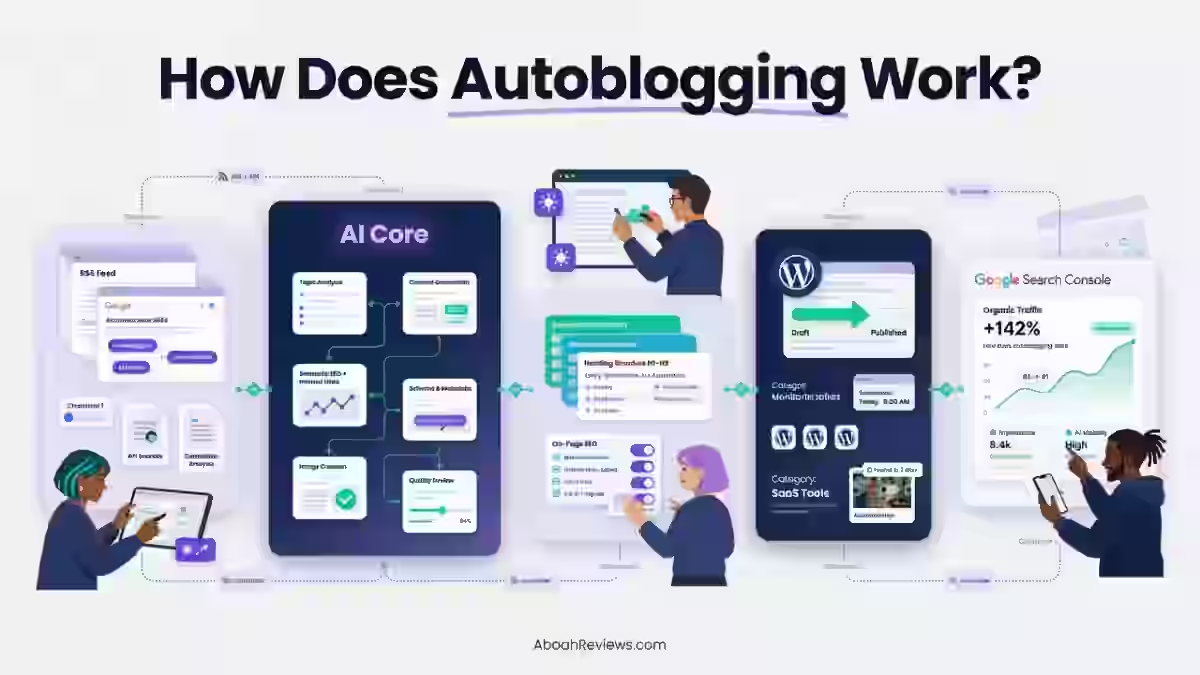
Autoblogging is the practice of using AI tools, RSS feeds, APIs or automation software to research, generate, optimize and publish blog content with minimal manual effort.
It replaces parts of the traditional content workflow with automated content creation, not all of it.
The 4 Autoblogging Models
Model | How It Works | Risk Level |
|---|---|---|
AI Writing | AI generates articles from keyword prompts | Low (with editing) |
RSS Autoblogging | Imports and rewrites RSS feed content | Medium |
API-Based Content | Pulls structured data from APIs (Amazon, news, YouTube) | Low |
Scraping | Copies raw content from other websites | High. Avoid this entirely. |
Most successful autoblogs in 2026 use a hybrid approach: AI-generated first drafts edited by humans, published through automated workflows with content scheduling and social media automation built in.
What Google Actually Penalizes
Google does not penalize AI content by default. According to Google’s Search Central documentation on AI-generated content, the focus is on content quality regardless of how it was produced.
What Google does penalize:
- Thin content with no added value
- Duplicate content or near-duplicate pages across the same site
- Low-quality, spam-level automation with no editorial layer
- Pages that fail to satisfy search intent
The Winning Formula in 2026
Modern autoblogging that ranks combines five things:
- Keyword research at scale targeting long-tail, low-competition queries
- AI-generated first drafts from tools built for SEO content
- Human editing that adds original insights, real data and first-hand experience
- On-page SEO optimization including schema, internal links and structured headings
- Consistent, scheduled publishing through automated blog posting workflows
For a full explanation of this model, see my guide on how to do autoblogging the right way.
Step 2: Choose a Profitable Niche With Low Competition
Niche selection determines whether your autoblog can rank at all. A broad niche means competing against sites with 10+ years of domain authority.
A micro-niche means you can build topical authority with 50 to 100 tightly focused articles.
What Makes a Good Autoblog Niche
Avoid broad topics. Focus on niches with:
- Long-tail search demand (many subtopics with 100 to 1,000 monthly searches)
- Evergreen topics that do not expire in days
- Low-to-medium keyword difficulty (KD under 30 on Ahrefs or Semrush)
- High publishing velocity (hundreds of possible article angles)
- Clear monetization potential through affiliate marketing, display ads, or digital products
Good Autoblog Niches for 2026
- AI tools and software reviews
- Smartphone troubleshooting (by model and OS)
- SaaS product comparisons
- Finance calculators and explainers
- Gaming updates and patch notes
- Local business directories
- Travel deals and destination guides
- Home improvement how-tos
- Crypto and Web3 news
- Celebrity net worth
Niche Selection Framework
Example | Quality |
|---|---|
“Tech Blog” | Too broad. Competing against CNET, The Verge, TechRadar. |
“Software Reviews” | Still competitive. Major publications own this space. |
“AI Video Generator Reviews” | Micro-niche. Rankable. Clear buyer intent. |
“Samsung One UI Tips” | High intent. Low competition. Large content library possible. |
Best strategy: dominate one micro-niche first. Expand into related content clusters only after establishing topical authority with 50+ interlinked posts.
If you want to learn how different tools support niche content creation, my comparison of free vs. paid autoblogging tools covers what each tier can handle.
Step 3: Register a Domain and Set Up Hosting
Your domain and hosting choices affect crawlability, page speed and trust signals from day one.
Domain Name Guidelines
- Keep it short and brandable (under 15 characters if possible)
- Avoid exact-match spam domains (e.g., bestfreelaptops2026.com)
- Use .com where possible
- Avoid hyphens and numbers
- Choose something that could grow beyond a single niche
Recommended Tech Stack
Component | Recommendation | Why |
|---|---|---|
CMS | WordPress (self-hosted) | Plugin flexibility, SEO control, autoblogging tool compatibility |
Hosting | LiteSpeed-based (Hostinger, Cloudways, or WPX) | Server-level caching, faster TTFB, better Core Web Vitals |
CDN | Cloudflare (free tier) | Global caching, DDoS protection, faster asset delivery |
Theme | GeneratePress, Astra, or Kadence | Lightweight, fast, minimal bloat |
WordPress remains the best CMS for autoblogging because nearly every automated tool integrates with it natively.
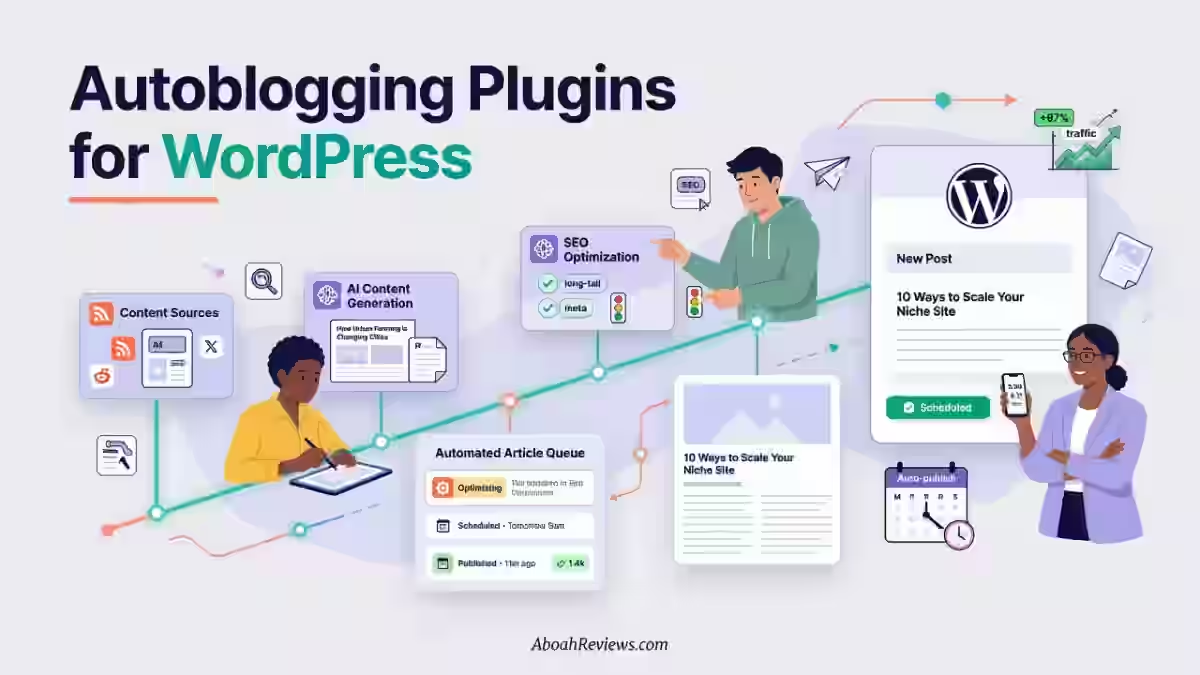
If you want to explore which WordPress plugins support automated blogging, I compared the top options in a separate guide.
Site Architecture Setup
This step is commonly skipped, and it directly hurts rankings on high-volume autoblogs.
Configure before publishing any content:
- URL structure: Set to /post-name/ in WordPress settings. Avoid dates in URLs.
- Category structure: Plan 3 to 5 top-level categories maximum. These become your content clusters.
- Tag strategy: Use tags sparingly. Noindex tag archive pages to prevent thin pages from being crawled.
- Robots.txt: Block low-value pages (author archives, paginated pages) from crawling.
- XML Sitemap: Enable via your SEO plugin and submit to Google Search Console immediately.
- Crawl budget management: On autoblogs publishing 10+ posts per week, noindex paginated archives, attachment pages, and duplicate tag pages.
Clean branding matters too. Spammy-looking designs reduce click-through rates from search results and lower user trust signals.
Step 4: Install the Right Plugins
Your plugin stack determines how much of the content workflow you can automate and how well your pages perform.
SEO Plugins (Choose One)
- Rank Math (recommended): Best schema markup options, AI Overview optimization features, and built-in internal link suggestions. Free tier covers most needs.
- Yoast SEO: Reliable alternative. Slightly more limited schema support.
Automation and Content Creation Plugins
- RSS Aggregator by Feedzy (RSS-based content aggregation)
- WP RSS Aggregator (content curation from RSS feeds)
- CyberSEO Pro (advanced API and RSS content syndication)
- WPeMatico RSS Feed Fetcher (lightweight RSS autoblogging)
Performance Plugins
- LiteSpeed Cache (if on LiteSpeed hosting, this is the fastest option)
- Perfmatters (script management, database cleanup)
- WP Rocket (general caching if not on LiteSpeed)
Internal Linking
- Link Whisper ($77/year for a single site license): Automates internal link suggestions across your entire post library. On a 200+ post autoblog, this saves hours per week.
Security
- Wordfence or Solid Security (pick one, not both)
Schema and Structured Data
- Rank Math handles most schema needs (Article, FAQ, HowTo, Review)
- Schema Pro for advanced configurations if you need custom review schema
Step 5: Understand the Legal and Compliance Requirements

Most autoblogging guides skip this section entirely. That creates legal risk, ad network violations and potential ranking damage.
Affiliate Disclosure
FTC rules require clear disclosure on any page that earns affiliate commissions. The disclosure must appear before affiliate links, not buried in a footer.
Example: “This post contains affiliate links. We may earn a commission at no cost to you.”
RSS Content and Copyright
You cannot republish full RSS feed articles without permission. Legal RSS autoblogging requires:
- Excerpt-only republishing with a link back to the original source
- Or a licensing agreement with the original publisher
Tools like Feedzy handle this with excerpt length settings. Configure them to pull 1 to 2 sentences maximum, then add your own original content around the excerpt.
AI Content Disclosure
Some ad networks are beginning to require AI content labeling. Google does not currently require disclosure, but transparency builds trust.
If you run a site on Mediavine or Raptive, check their current policies on AI-generated content before scaling.
DMCA Compliance
Add a DMCA takedown policy page to your site. This protects you if someone scrapes your content and gives you a process for handling complaints.
For a deeper look at these issues, read my article on whether autoblogging is legal and what you need to stay compliant.
Step 6: Choose Your Content Sources and Autoblogging Tools
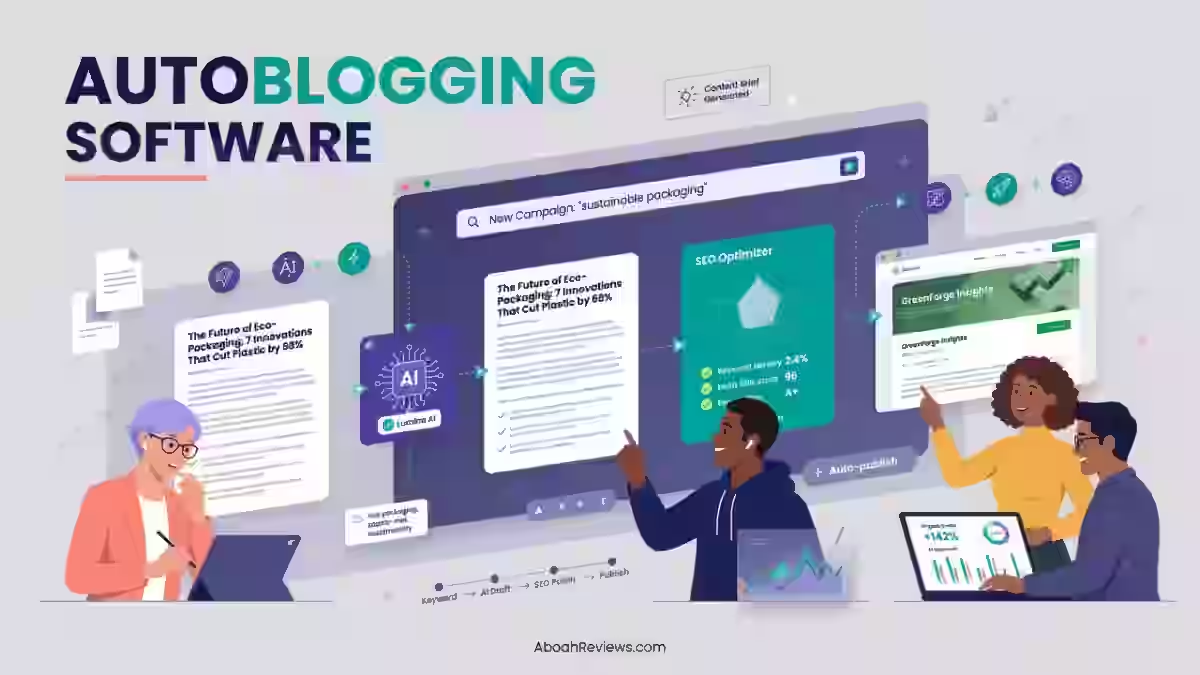
The tool you choose depends on your autoblogging model: AI writing, RSS aggregation or API-based content creation.
Autoblogging Platforms (AI Writing Model)
Tool | Best For | Starting Price |
|---|---|---|
Emplibot | Fully automated blog content pipelines with images and internal links | $49/mo |
Junia AI | Long-form SEO-optimized content with brand voice training | $19/mo |
Autoblogging.ai | Bulk article generation across 35+ languages | $49/mo |
RightBlogger | Content planning, auto-scheduling, and WordPress publishing for solo bloggers | $29.99/mo |
Arvow | WordPress-native AI publishing with keyword monitoring | $29/mo |
Outrank.so | Competitor-gap content targeting based on SERP analysis | $19/mo |
Pressmaster AI | Press release and news-style autoblogging | $29/mo |
I tested three of these tools side by side over 90 days: Emplibot, Junia AI, and RightBlogger.
The semi-automated approach (AI draft + human editing) outperformed fully automated posts by roughly 3x in organic traffic after 6 months.
The tools that worked best were the ones that made editing easy, not the ones that promised zero human involvement.
For detailed breakdowns of each platform, see my Emplibot review, Junia AI review and RightBlogger review.
RSS and API-Based Tools
- WP RSS Aggregator: Best for content curation sites that aggregate news from multiple sources
- Feedzy: Lightweight RSS plugin with excerpt control and auto-publishing
- CyberSEO Pro: Advanced option for API-driven content from YouTube, Amazon, and news APIs
Social Distribution Tools
- Postly: Schedule and distribute published posts across social platforms automatically
- Buffer: Connect RSS feeds and auto-share new posts to X, LinkedIn, and Facebook
- Zapier workflows: Custom automation between your CMS and any social platform
Note: Postly is a social media scheduling tool for content distribution, not a content generation platform. Do not confuse it with the AI writing tools listed above. I covered its features in my Postly review.
Step 7: Find Keywords at Scale
Autoblogs depend on publishing volume. You need hundreds of rankable keywords mapped out before you begin publishing.
Without keyword research, you are publishing blind and hoping Google rewards random content. It will not.
Keyword Criteria
Target keywords that meet all four of these conditions:
- Informational or commercial intent (someone searching wants to learn or buy)
- Low-to-medium keyword difficulty (KD under 30 on Ahrefs or under 40 on Semrush)
- Long-tail format (3 to 6 words minimum)
- Minimum 50 to 100 monthly search volume (enough to be worth the effort)
Keyword Sources
- Google Autocomplete suggestions
- People Also Ask boxes (gold mine for FAQ content)
- Reddit and Quora threads (real questions people ask)
- Competitor content gaps (use Ahrefs Content Gap tool)
- LowFruits (shows weak spots where forums and thin pages currently rank)
- Semrush or Ahrefs for volume and difficulty data
According to Ahrefs data on SEO statistics for 2024, 94.74% of all keywords in their U.S. database generate 10 or fewer searches per month, but they collectively make up a massive share of total search traffic. This is where autoblogs win.
Long-Tail Keyword Examples
Avoid | Target Instead |
|---|---|
“Best laptops” | “Best laptops for real estate agents” |
“AI tools” | “Best AI tools for solopreneurs 2026” |
“VPN” | “Best VPN for streaming Netflix in Japan” |
“Crypto news” | “Why is Bitcoin dropping today” |
Long-tail keywords rank faster, convert better, and are harder for large authority sites to fully cover with dedicated pages.
Step 8: Create Scalable Content Templates
Templates reduce production time, maintain content quality consistency, and make AI output more predictable.
When you feed an AI tool a structured template, the output is closer to publish-ready on the first draft.
Review Article Template
H1: Best [Product Type] for [Specific Audience] in [Year]
H2: Quick Comparison Table
H2: How We Evaluated These Tools
H2: Best Overall — [Product Name]
  H3: Key Features
  H3: Pros and Cons
  H3: Pricing
H2: Best Budget Option — [Product Name]
H2: Best for [Use Case] — [Product Name]
H2: Side-by-Side Comparison
H2: Who Should Use These Tools
H2: Final Verdict
H2: FAQ
How-To Article Template
H1: How to [Task] in [Year] — Step-by-Step Guide
H2: What You Need Before You Start
H2: Step 1: [First Action]
H2: Step 2: [Second Action]
H2: Step 3: [Third Action]
H2: Common Mistakes to Avoid
H2: Pro Tips
H2: FAQ
Troubleshooting Article Template
H1: [Device/Software] [Problem] — How to Fix It
H2: Why This Happens
H2: Quick Fix (Try This First)
H2: Fix 1: [Solution Name]
H2: Fix 2: [Solution Name]
H2: Fix 3: [Solution Name]
H2: When to Contact Support
H2: FAQ
Templates improve four things at once: publishing speed, content quality, AI output structure, and internal linking opportunities (because every template includes predictable sections you can link to from other posts).
Step 9: Generate and Edit Content (The Most Important Step)
This is where most autoblogs fail. Publishing raw AI output without editing creates generic, low-value pages that rarely rank and damage domain trust over time.
The Content Production Workflow
- Pull keyword from your research spreadsheet
- Run keyword through your chosen AI writing tool with your template
- Human editor reviews the full draft
- Add original insights, data, screenshots, or product comparisons
- Optimize headings and keyword placement
- Add 2 to 3 internal links to existing posts
- Add schema markup (FAQ, Review, or HowTo depending on content type)
- Schedule for publishing through your content management system
What Human Editing Must Fix in Every AI Draft
- Remove generic filler sentences that add no information
- Add real product pricing and feature accuracy (AI often hallucinates pricing)
- Insert original screenshots or product images
- Add personal commentary or first-hand perspective
- Verify all factual claims and statistics
- Strengthen the introduction and conclusion
- Add or improve the FAQ section with questions real people ask
E-E-A-T Signals to Add
Google’s Search Quality Rater Guidelines emphasize Experience, Expertise, Authoritativeness, and Trustworthiness. On an autoblog, you demonstrate these by:
- Author bylines with real credentials
- “Last updated” timestamps on every post
- Original data, tables, or tool comparisons
- Links to authoritative external sources
- First-person experience language (“I tested,” “In my experience,” “After 90 days of use”)
I lost the rankings of an affiliate site after making 42 posts with auto-generated content without doing any internal linking or keyword filtering.
Differently pages competed against each other because the same keywords were targeted without any clear hierarchy.
The solution involved 3 weeks of manual consolidation: merging thin pages, adding 301 redirects and rebuilding the internal link structure.
The lesson: never skip the editing layer and never publish without checking your existing content for overlap first.
For more on what goes wrong when you skip this step, read my breakdown of common autoblogging tool mistakes.
Step 10: Configure Automated Publishing Workflows
Once your editing process is solid, you can automate everything around it: scheduling, internal linking, image generation, and content distribution.
What You Can Automate
Task | Tool | Notes |
|---|---|---|
Keyword research | LowFruits, Ahrefs | Batch export hundreds of keywords at once |
Article generation | Emplibot, Junia AI, RightBlogger | AI draft as starting point only |
Content scheduling | WordPress editorial calendar, RightBlogger Content Planner | Auto-publish at set intervals |
Internal linking | Link Whisper | Scans full site and suggests contextual links |
Featured image creation | Canva, Midjourney | Batch-create based on templates |
Social distribution | Postly, Buffer | Auto-share via RSS feed triggers |
RSS content import | Feedzy, WP RSS Aggregator | For content curation models |
Publishing Frequency Guidelines
Site Age | Recommended Frequency |
|---|---|
Months 1 to 3 | 5 to 10 posts per week (quality over volume) |
Months 4 to 6 | 10 to 20 posts per week |
Months 6 to 12 | Scale based on traffic data and what performs |
Do not publish 500 posts in the first 30 days. A sudden spike of thin pages triggers spam signals in Google’s quality systems. Ramp up gradually while maintaining your editing standards.
Step 11: Set Up Analytics and Search Console
You cannot improve what you do not measure. Skipping this step means you will not see indexing failures, ranking drops or content cannibalization until it is too late.
What to Install Immediately
- Google Search Console: Monitors indexing, keyword rankings, crawl errors, and manual penalties. Submit your XML sitemap here on day one.
- Google Analytics 4: Tracks traffic, user behavior and conversion events (affiliate clicks, email signups).
What to Monitor Weekly
- Index coverage: Are new pages being indexed within 3 to 7 days?
- Top performing queries: Which keywords are actually driving clicks?
- Pages with impressions but no clicks: These need better titles and meta descriptions.
- Core Web Vitals: Page speed and UX scores.
- Manual action alerts (check under Security & Manual Actions in GSC).
What to Monitor Monthly
- Ranking movements for your top 50 target keywords
- Pages that dropped in position (candidates for content freshness updates)
- New keyword opportunities surfacing in GSC data
- Crawl stats: Is Googlebot crawling your site efficiently or wasting budget on low-value pages?
Step 12: Optimize for SEO and AI Overviews
Search engine optimization in 2026 means optimizing for two systems: traditional Google search results and AI Overviews (the AI-generated summaries that now appear on a large percentage of informational queries).
On-Page SEO Checklist
For every post before publishing:
- Primary keyword in the title, H1, first 100 words, and one H2
- Meta description written to earn clicks (under 155 characters)
- URL slug is short and keyword-focused
- Images have descriptive alt text
- At least 2 to 3 internal links pointing to related posts
- At least 1 to 2 external links to authoritative sources
- FAQ section with 3 to 5 questions using FAQPage schema
- Content length matches or exceeds the top-ranking competitors for that keyword
AI Overview Optimization
AI Overviews now appear on over 25% of informational searches, according to a Semrush study on AI Overview prevalence. To get your content cited:
Structure content so Google can extract:
- One-sentence definitions at the start of each section
- Numbered step-by-step instructions
- Comparison tables with clearly labeled columns
- FAQ sections with direct question-and-answer format
- Short, declarative answers in the first 100 words of each section
Schema types that improve AI Overview visibility:
- FAQPage schema
- HowTo schema
- Article schema with author entity markup
This is not optional in 2026. If your content is not structured for extraction, AI systems will cite your competitor instead.
Step 13: Monetize the Autoblog
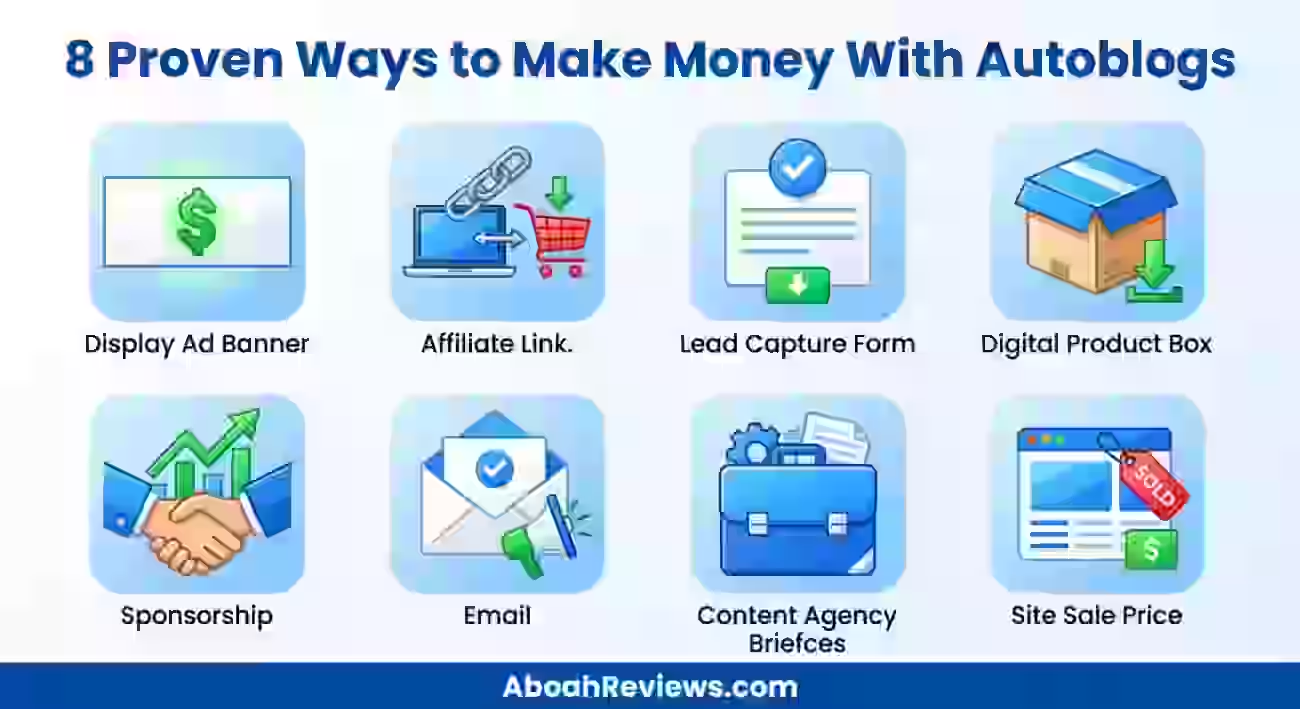
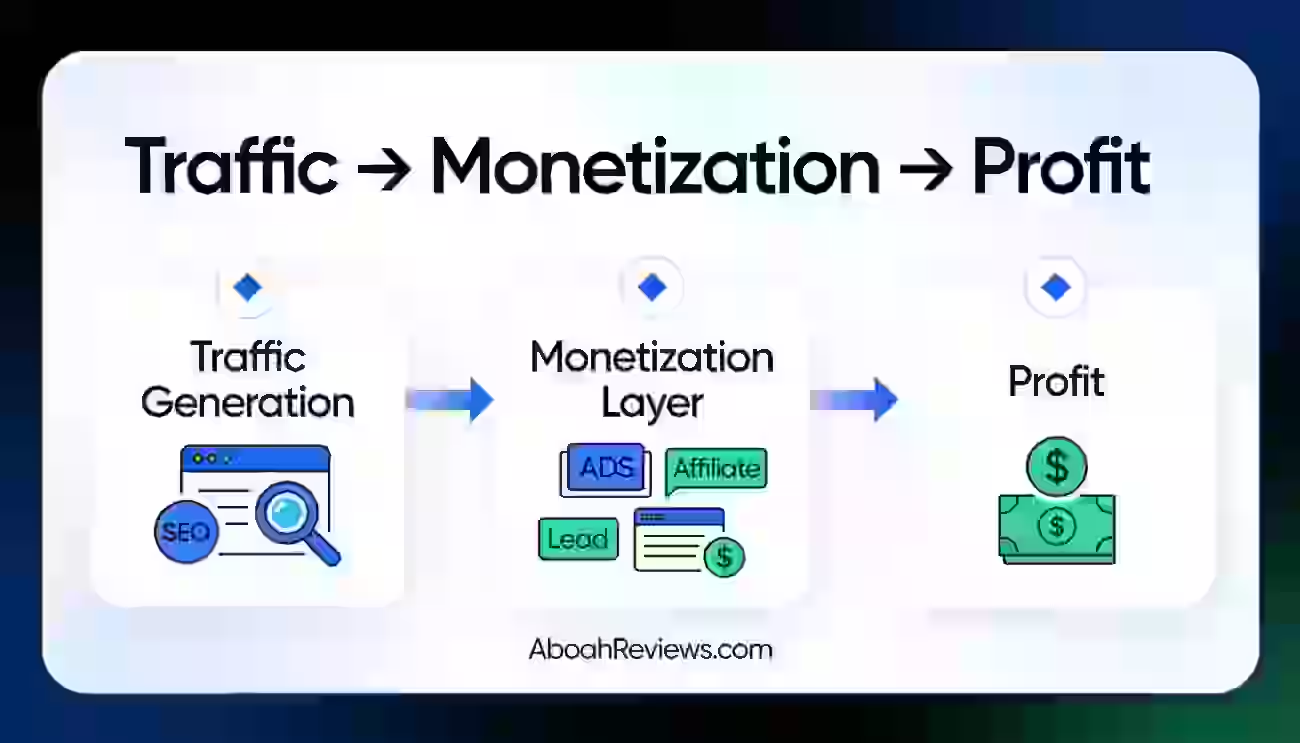
Monetization strategies for autoblogs fall into four categories. Most successful autoblogs use two or three simultaneously.
Display Advertising
Network | Traffic Requirement | Typical RPM |
|---|---|---|
Google AdSense | None | 2 to 8 RPM |
Mediavine | 50,000 sessions/month | 15 to 30 RPM |
Raptive (formerly AdThrive) | 100,000 pageviews/month | 20 to 40 RPM |
Do not apply to Mediavine or Raptive before hitting their traffic thresholds. Focus on AdSense in the early months and switch when eligible.
The RPM difference between AdSense and Mediavine alone can 3x to 5x your ad revenue overnight.
Affiliate Marketing
High-converting affiliate categories for autoblogs:
- Web hosting (commissions: 50 to 200 per sale)
- VPN services (commissions: 30 to 100 per sale)
- AI tools and SaaS products (commissions: 20% to 40% recurring)
- Finance and investing platforms (commissions: 50 to 300 per lead)
- Amazon Associates (commissions: 1% to 10% depending on category)
For a detailed walkthrough of affiliate monetization on autoblogs, see my guide on how to make money with autoblogs.
Digital Products
Once you have traffic, sell:
- Templates and prompt packs (9 to 49)
- Mini-courses (29 to 99)
- Premium newsletters (paid tier via Beehiiv or ConvertKit)
- eBooks and PDF guides (9 to 29)
Email List and Newsletter Monetization
Build an email list from day one using lead magnets (free tools, calculators, checklists). Monetize via:
- Sponsored newsletter placements
- Affiliate promotions to your list
- Product launches
- Tools: ConvertKit ($15/mo starting), MailerLite (free up to 1,000 subscribers), Beehiiv (free tier available)
Step 14: Build Backlinks and Topical Authority
Topical Authority First
Before chasing backlinks, build internal authority:
- Publish 30 to 50 tightly related articles in your niche
- Interlink them in logical clusters (pillar post + supporting articles)
- Cover the topic more comprehensively than any single competitor
- Use content aggregation from your own internal posts to create hub pages
According to Moz’s research on topical authority, sites that cover a topic comprehensively tend to rank individual pages higher than sites that publish scattered, unrelated content.
Backlink Strategies for Autoblogs
- HARO / Connectively: Get cited as a source in journalist articles
- Digital PR: Publish original data, surveys, or statistics that others link to
- Guest posting on niche-relevant sites
- Niche edits and link insertions (outreach to existing articles)
- Build free tools or calculators that attract natural links
Do not buy cheap PBN links. On an autoblog that already relies on AI content, adding low-quality links is a fast path to a manual penalty.
Step 15: Scale the Autoblog
Once you have consistent traffic (1,000+ monthly visitors from organic search), you can begin scaling.
Scaling Actions
- Publish content clusters around new sub-topics within your niche
- Refresh and expand underperforming posts (update outdated info, add new sections)
- Build comparison and “vs.” articles for commercial keywords
- Add video content or embed relevant YouTube videos for engagement
- Launch a newsletter from existing traffic to build owned audience
- Begin targeting higher-competition keywords using your earned domain authority
Scaling Strategy
Approach | Recommendation |
|---|---|
Build 10 weak autoblogs across random niches | Dilutes focus, budget, and authority. Most will fail. |
Build 1 authority autoblog in a focused niche | Compounds rankings over time. Easier to monetize. |
Dominate one niche first. Then expand horizontally into adjacent clusters. This is how content marketing compounds.
For a look at where this industry is heading, read my article on the future of autoblogging tools.
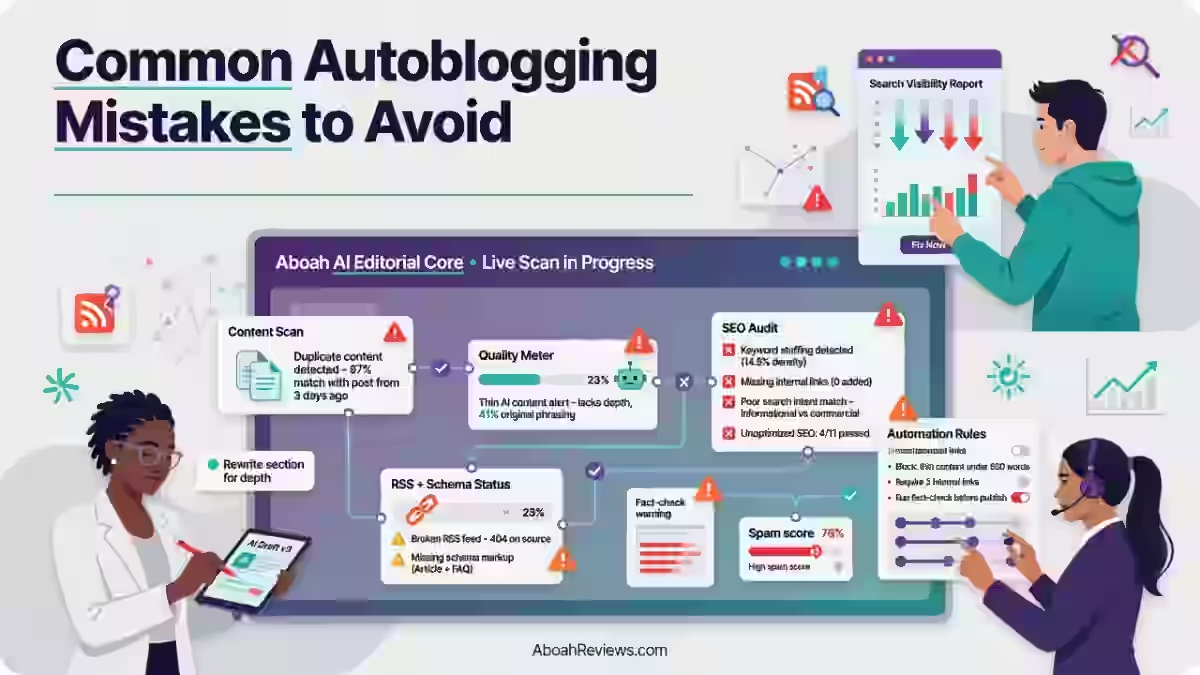
Common Autoblogging Mistakes to Avoid
Mistake | Why It Hurts |
|---|---|
Publishing unedited AI content | Generic pages that never rank. Damages domain trust over time. |
Targeting high-competition keywords too early | Established sites with backlinks will always outrank a 2-month-old domain. |
Ignoring internal linking | Topical authority requires a strong internal link graph. Without it, Google cannot understand your site structure. |
Publishing full RSS content without permission | Copyright violation and duplicate content penalty risk. |
Spiking with thousands of thin pages in week one | Triggers spam signals in Google’s quality systems. |
Skipping Search Console setup | You will not see indexing failures until traffic flatlines. |
Ignoring affiliate disclosure rules | FTC violation risk. Ad networks may suspend your account. |
No content strategy or keyword filtering | Content cannibalization. Multiple pages compete for the same keyword. |
Recommended Beginner Stack (Summary)
This table summarizes the tools recommended throughout this guide for someone starting their first autoblog:
Category | Tool | Starting Cost |
|---|---|---|
CMS | WordPress (self-hosted) | Free (hosting cost only) |
Hosting | Hostinger or Cloudways (LiteSpeed) | 3 to 14/mo |
CDN | Cloudflare | Free tier |
Theme | Astra or Kadence | Free (Pro from $59/year) |
SEO Plugin | Rank Math | Free tier sufficient |
AI Writer | Emplibot or Junia AI | 19 to 49/mo |
Keyword Research | LowFruits | $29/mo |
Internal Links | Link Whisper | $77/year |
Images | Canva | Free tier available |
Analytics | Google Analytics 4 | Free |
Search Console | Google Search Console | Free |
Social Distribution | Postly or Buffer | Free to $15/mo |
Email List | MailerLite or ConvertKit | Free to $15/mo |
For help choosing between these options, my guide on how to choose the best autoblogging tool breaks down the decision criteria in detail.
Final Thoughts On How to Create an Autoblog in 2026
Autoblogging in 2026 is not what it was a decade ago. The “set and forget” model is dead. What works now is a structured system:
- Pick a micro-niche
- Set up WordPress with proper architecture
- Research hundreds of long-tail keywords
- Create content templates
- Generate AI drafts
- Edit every post with human oversight
- Optimize for both traditional search and AI Overviews
- Publish on a consistent schedule and monetize through multiple income streams as traffic compounds.
The autoblogs that rank and earn treat AI as a workflow accelerator, not a replacement for editorial judgment. The ones that get penalized treat it as a shortcut around quality standards.
The window for building autoblog authority is still open. Every month, more AI content floods the internet without any content strategy behind it.
That actually makes well-structured, human-edited autoblogs more valuable by comparison, not less.
- Start with the niche selection step
- Get your domain and hosting live
- Map your first 100 keywords.
- Publish your first 20 posts with full human editing.
- Then build from there
If you want to see the full landscape of tools available to you, browse my complete list of auto blogging tools to find what fits your workflow and budget.
What niche are you building in? What tools have worked or failed for you? Share your experience in the comments.
Frequently Asked Questions About How to Create an Autoblog
1. What is auto-blogging?
Auto-blogging is the practice of using AI tools, RSS feeds, APIs or automation software to publish website content with minimal human effort. It covers everything from automated content creation and content scheduling to content syndication across platforms.
2. Is autoblogging still profitable in 2026?
Yes, but only when combined with human editing, search engine optimization, and genuine value for readers. Pure automation without quality control rarely ranks in Google today. Profitable autoblogs use AI drafts as a starting point and add original content before publishing.
3. Does Google penalize AI-generated content?
Google does not penalize AI content by default. It penalizes thin content, duplicate content, and low-value pages regardless of how they were produced. An AI-written article that satisfies search intent, includes original insights, and follows SEO best practices can rank just as well as a manually written one.
4. How long does it take for an autoblog to make money?
Most autoblogs begin seeing affiliate clicks between months 4 to 6, with stable income becoming possible between months 6 to 12. The timeline depends on niche competition, publishing volume, content quality, and whether you are building backlinks.
5. How many articles does an autoblog need to rank?
There is no fixed number, but 50 to 100 tightly clustered, well-optimized articles in a micro-niche is a strong foundation. Topical authority requires depth, not just breadth. Ten high-quality articles on a focused topic outperform 100 thin articles spread across unrelated subjects.
6. What is the best autoblogging tool in 2026?
The best tool depends on your model. For fully automated AI writing with WordPress integration: Emplibot. For long-form SEO content with brand voice control: Junia AI. For content planning and scheduling: RightBlogger. For RSS-based content curation: Feedzy or WP RSS Aggregator. For keyword research: LowFruits.
7. Can I run an autoblog without WordPress?
WordPress is the most supported option because nearly every autoblogging tool integrates with it natively. However, tools like RightBlogger also support Webflow, Ghost, Wix and Duda. If you use a non-WordPress CMS, confirm your chosen AI writing tool has a direct integration before committing.

- Searchable Review 2026: My Honest Test Results With This AI Visibility Platform - October 9, 2026
- Ryze AI Review 2026: My 30 Days Full Breakdown of This Autonomous SEO & GEO Platform - October 9, 2026
- #1 Best Plugin for Automatic Blog Posting in WordPress (2026) - September 13, 2026