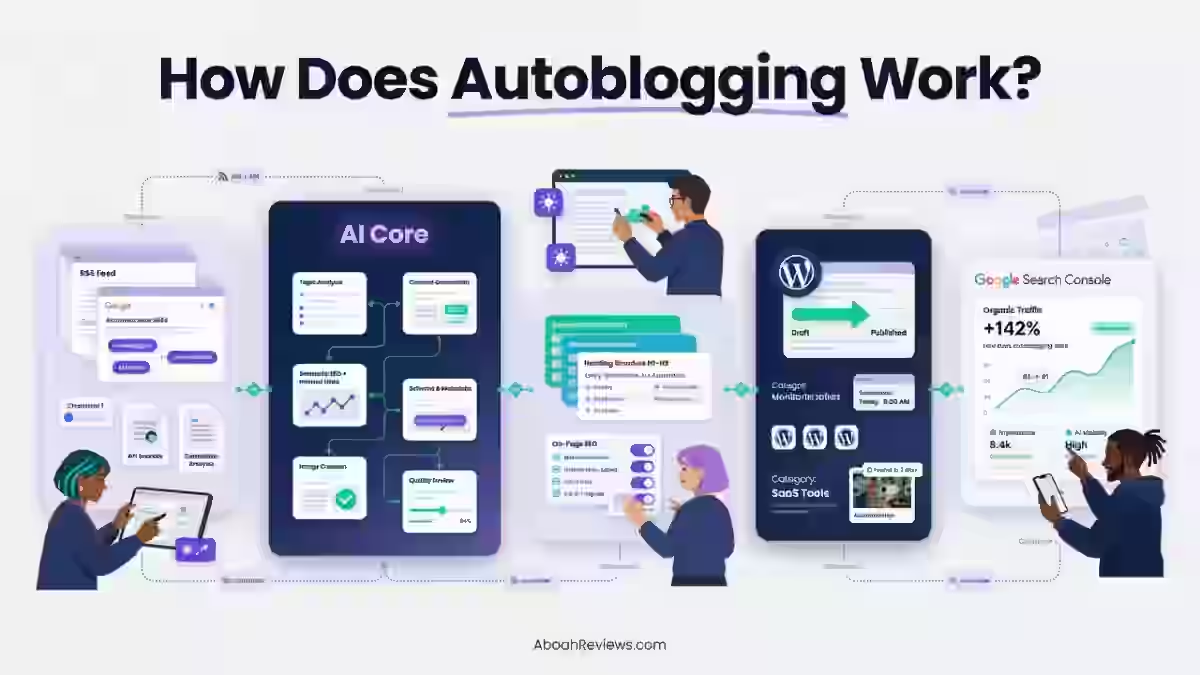
Every tool I recommend has been personally tested and evaluated. My reviews reflect genuine, unbiased opinions. Some links on this page are affiliate links, which help support continued testing and research. Feel free to check my testing methodology, or reach out if you believe there’s a tool I should cover.
TL;DR: This guide reviews and ranks 11 best autoblogging tools tested across real websites and real keywords in 2026. It is for SEO professionals, bloggers, agencies, and content marketers who want honest, outcome-based comparisons. The main takeaway: the best autoblogging tool depends on your workflow, budget and how much human oversight you are willing to maintain.
Introduction
I have tested, broken and rebuilt more autoblogging workflows than I care to count.
When I first started using autoblogging tools in 2023, I thought automation meant hands-free organic traffic. What I got instead was a Google slap, a content audit headache, and 40+ posts I had to rewrite manually. That experience taught me more about autoblogging tools than any product demo ever could.
This guide is the result of months of real, hands-on testing across 11 tools. I will walk you through what each autoblogging tool actually does, who it is built for, what it costs, and where it falls short.
Whether you are scaling a niche site, running an agency or just trying to produce consistent content without hiring writers, this guide will help you make the right call.
Best Autoblogging Tools at a Glance
| Tool | Best For | Monthly Starting Price | Posts/Month | Human Editing Needed | Free Trial |
|---|---|---|---|---|---|
| Keytomic | Best Overall | $99 | 30 (calendar-based) | Minimal | No (3-day trial) |
| BabyLoveGrowth AI | Content + Backlinks | $99 | 30 | Yes | Yes (3-day, card req.) |
| Distribb | Content Distribution | $97 | Varies | Yes | Yes |
| WordRocket AI | Budget Option | $10 | Varies | Yes | Yes |
| Outrank.so | Research-Driven SEO conten | $99 | Varies | Minimal | Yes |
| RightBlogger | Beginners | $59 | Unlimited words | Yes | Yes (7-day) |
| Emplibot | WordPress Publishing | $69 | Varies | Minimal | No |
| Byword AI | Programmatic SEO | $99 | 25+ | Yes | No |
| Frizerly | Small Businesses | $49 | Weekly/Daily | Minimal | Yes |
| Autoblogging.ai | Bulk Publishing | $19 | Bulk batches | Yes | Yes |
| Arvow | Agencies | $99 | Credit-based | Yes | Yes |
Which Autoblogging Tool Is Best?
The best autoblogging tool for most users in 2026 is Keytomic because it replaces an entire stack of separate tools with one platform. That said, here are the right picks by use case:
- Best overall SEO automation: Keytomic ($99/month)
- Best for content + backlinks bundled: BabyLoveGrowth AI ($99/month)
- Best for beginners: RightBlogger ($49/month annual)
- Best for WordPress hands-off publishing: Emplibot ($69/month)
- Best for programmatic SEO at scale: Byword AI ($99/month)
- Best budget option: WordRocket AI (from $10/month)
- Best for agencies managing multiple clients: Arvow (from $39/month)
- Best for small business local content: Frizerly (~$29–$49/month)
- Best for research-driven drafts: Outrank.so (from $39/month)
- Best for content distribution: Distribb ($97/month)
How I Tested and Ranked These Autoblogging Tools
I did not read sales pages and call it a review. Every tool in this list was either run on a live site, trialed across a real content workflow or tested using a dedicated test domain. Here is exactly what I looked at.
My Scoring System
I scored each tool across six areas, weighted by how much they actually impact real-world SEO outcomes:
- Content quality (30%): Does the output require heavy editing before it could rank?
- Publishing reliability (20%): Does it push to WordPress or other CMS consistently without manual steps?
- SEO structure out of the box (20%): Does it handle meta tags, heading structure, schema markup, and internal linking?
- Keyword research integration (15%): Can it find and target the right keywords, or do you have to feed it everything?
- Pricing relative to output (10%): What is the actual cost per published, usable article?
- Editorial control (5%): Can you review content before it goes live?
No tool scored perfectly across all six. Every tool in this guide has a clear weakness. That is not a flaw in the testing; it is the reality of the category.
How I Calculate Real Cost Per Article
Subscription price divided by posts per month is not the real cost. The real cost includes your editing time. If you earn $50/hour as a freelancer and a tool produces content that needs 45 minutes of editing per post, that is an extra $37.50 per article added to the subscription cost.
If the content quality in your specific niche requires heavy editing, your true cost per article is higher than the sticker price. You need to factor in editing time before calculating ROI.
I calculate it this way: (subscription price ÷ monthly posts) + (editing time in hours × your hourly rate) = real cost per article.
What Is Autoblogging Software?
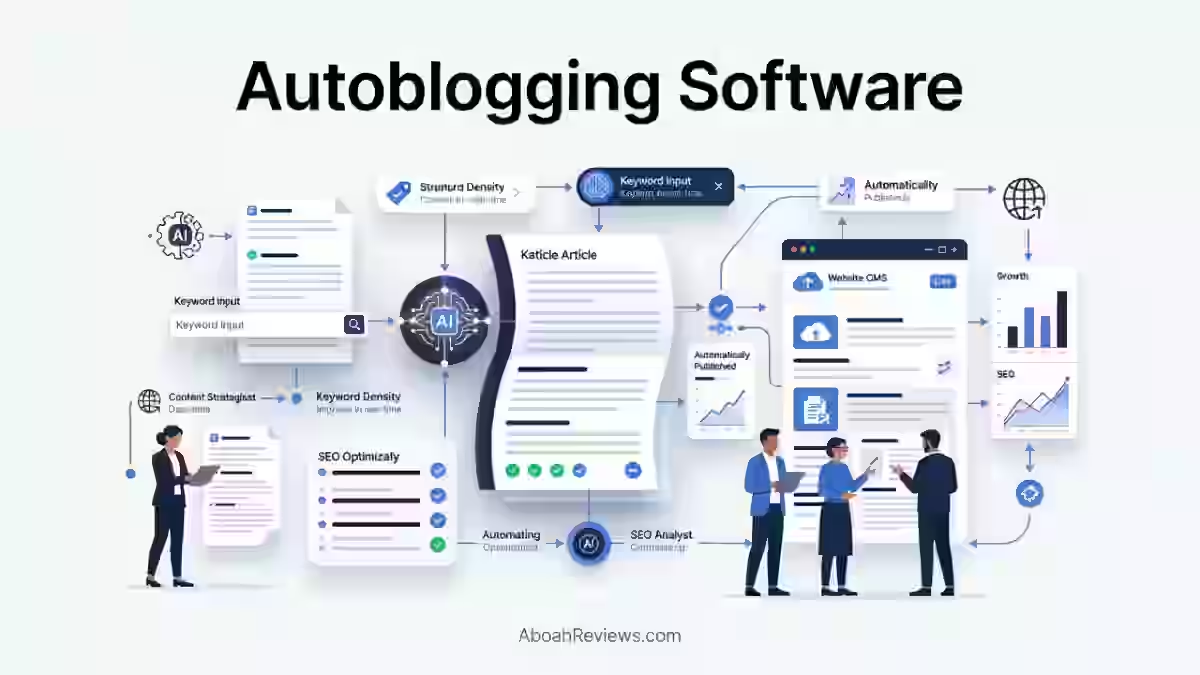
Autoblogging software is a tool that handles part or all of the blog publishing workflow automatically, from finding keywords to writing drafts to pushing content live on your site. The goal is consistent content output without manually doing every step yourself.
Autoblogging in 2026 is not about scraping and republishing anymore. Modern autoblogging tools use AI to generate original content, publish it automatically to your CMS, and optimize it for SEO, all on autopilot.
If you want a deeper explanation of how this category works from the ground up, the complete autoblogging guide covers the mechanics well.
What Modern Autoblogging Tools Automate
Most tools in 2026 handle some or all of the following steps:
- Keyword discovery: Finding low-competition, high-intent search queries
- Content brief creation: Building an article structure based on competing pages
- AI draft generation: Writing a full article from that brief
- On-page SEO: Adding meta titles, meta descriptions, heading structure, and schema markup
- CMS publishing: Pushing the finished article to WordPress, Shopify, Webflow, or another platform
- Indexing: Submitting new URLs to Google, Bing, and AI platforms for faster discovery
Not every tool does all six. Some do 3 to 4 well and skip the rest. That gap is often where content quality problems start.
Autoblogging Tools vs AI Writing Tools
Autoblogging tools and AI writing tools are not the same thing, even though both use AI to produce content.
Autoblogging tools handle the full pipeline: keyword research, writing, optimization, and publishing without manual work. AI writing assistants like Jasper Al, Rytr or Writesonic help you write faster but still require you to research topics, edit drafts, format content, and publish.
The distinction is “done for you” versus “done with you.” If you want a side-by-side breakdown, my AI writing tools vs autoblogging tools comparison covers this clearly.
11 Best Autoblogging Tools: Tested & Ranked
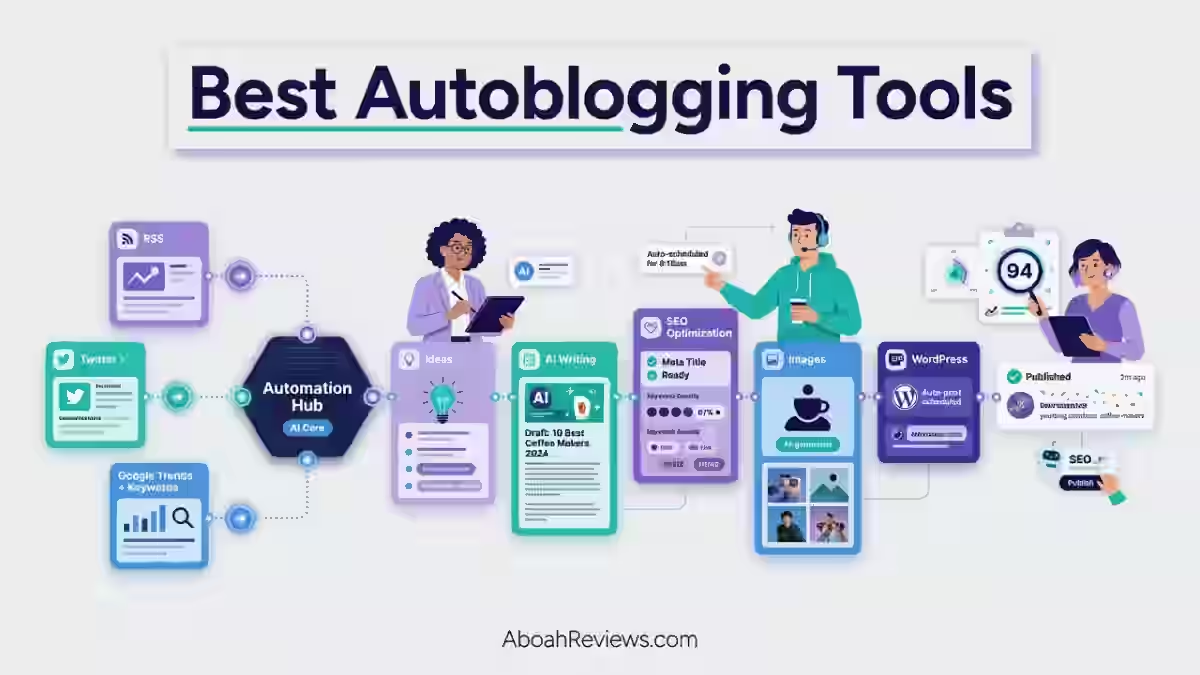
1. Keytomic – Best Overall Autoblogging Tool
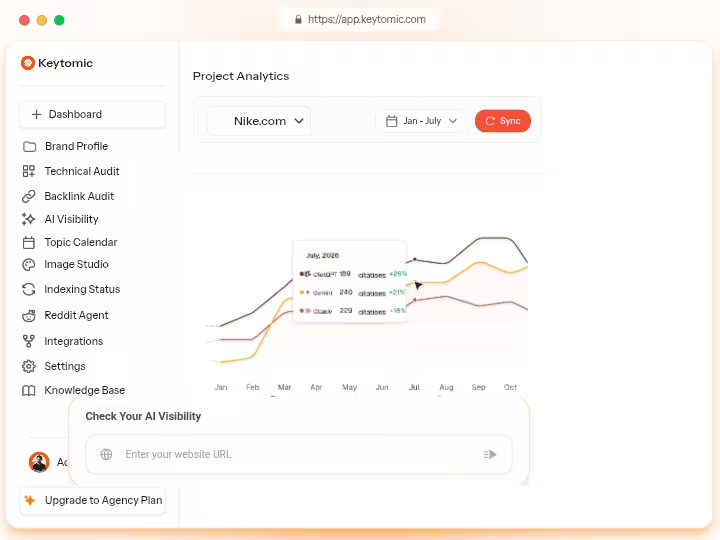
Keytomic is the strongest hands-off SEO automation platform I tested in 2026 because it covers more of the real SEO workflow in a single subscription than anything else at this price.
It handles keyword research, content creation, CMS publishing, auto-indexing, schema markup, backlink building, daily Reddit AI brand authority automation and AI search visibility tracking, all from one dashboard.
Most competing tools cover two or three of those layers. Keytomic covers six or seven simultaneously.
The platform is built around a rolling 30-day content calendar. You approve the plan, and the tool executes it. The auto-indexing layer is genuinely useful for content operations because it reduces the lag between publishing and first Google discovery without manual submission.
The AI visibility tracking covers ChatGPT, Perplexity, and Gemini, which matters if you’re thinking ahead about how generative engine optimization fits into your content strategy.
Pros
- True end-to-end automation from keyword research to published and indexed content
- AI citation tracking in one workflow
- Auto-indexing reduces the time between publishing and first search appearance
- Strong AI search visibility tracking built in at no extra cost
Cons
- Backlink community is limited
- Rank tracking and manual keyword research tools are less developed than standalone platforms like Semrush or Ahrefs
- Not the right fit if you need white-label reporting for client delivery
Pricing: Keytomic starts at $1 trial (3 days), $99/month (Pro), $999/month (Agency DFY).
Best for: Small to mid-sized teams, SaaS businesses and boutique SEO agencies that want a single platform to run a full content operation without managing multiple subscriptions.
Not ideal for: White-label agency reporting or teams that need deep standalone rank tracking.
Read the Keytomic review for a full feature walkthrough.
2. BabyLoveGrowth AI – Best for Content + Backlinks
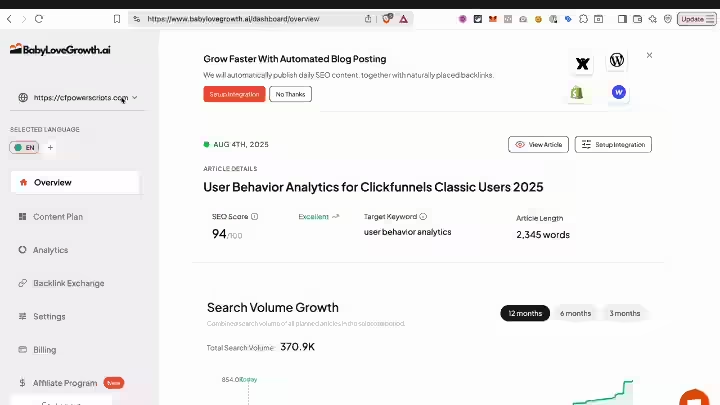
BabyLoveGrowth AI is the best option when you want automated backlink building included in the same subscription as your content workflow.
Most autoblogging tools stop at publishing. BabyLoveGrowth AI continues through a backlink exchange network of 4,000+ sites, AI search citation tracking, a Reddit brand authority module, and a technical GEO audit. That’s a wide stack for $99/month.
The content output covers 30 articles per month with internal links, citations, infographics, and YouTube video embeds included. The multilingual support across 20+ languages also makes it one of the stronger options for international content operations.
One honest caveat: content quality in highly technical or regulated niches sometimes needs a review pass before publishing. The 90-day money-back guarantee reduces the risk of discovering this too late.
Pros
- The breadth of the automation, including content generation, CMS publishing, backlink exchange, schema generation, GEO audit, LLM tracking and Reddit agent, is genuinely wider
- AI search visibility feature is genuinely unusual at this price point. Most competing SEO automation platforms either don’t offer AI visibility tracking at all or charge separately for it
- 90-day money-back guarantee reduces subscription risk
- Strong value for volume: 30 articles per month plus backlinks at $99/month
Cons
- Content quality in highly technical or regulated niches may require editing before publishing
- The real risk is paying upfront. If the content quality in your specific niche requires heavy editing, your true cost per article is higher than the sticker price.
- Expect 3+ months of consistent publishing before compounding SEO results become visible
- Not suitable for editorial-heavy brands requiring full creative control
Pricing: BabyLoveGrowth AI offers two paid plans: Grow ($99/month) and Scale ($299/month), plus a custom reseller plan for agencies.
Both plans include a 3-day free trial, 25% off annual billing and a 90-day money-back guarantee.
For the full plan breakdown, see the BabyLoveGrowth AI pricing guide.
Best for: Small businesses, affiliate site operators, and agencies that want hands-off SEO content plus automatic backlink building.
Not ideal for: Editorial-heavy brands that require full creative control over voice and tone.
Read the full BabyLoveGrowth AI review for my 45-day test results.
3. Distribb – Best for Content Distribution
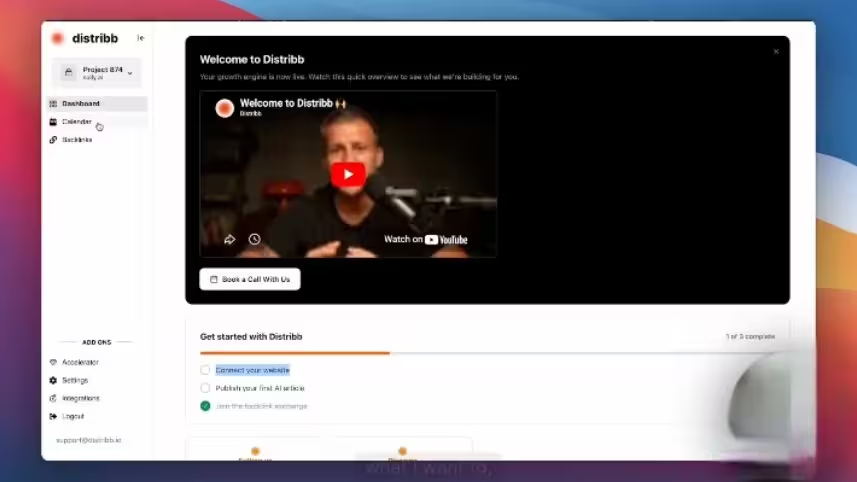
Distribb is the best option when you want automated content publishing paired with backlink distribution and AI search visibility, not just article generation.
Where most autoblogging tools stop at the publish button, Distribb continues through a credit-based backlink exchange and multi-channel distribution layer.
The semantic cocoon content architecture is also worth noting: it structures articles around topical clusters rather than isolated posts, which helps build domain authority faster.
The 3-day free trial (credit card required) lowers the risk of testing it.
The $97/month price point is on the higher end for solo operators, but the post-publish distribution layer justifies it for users who need both content, distribution and link-building.
Pros
- Combines content generation, publishing, backlinks, and distribution in one tool
- Semantic cocoon architecture helps build topical authority faster than isolated articles
- Distribb’s backlink network operates on a credit model. Both Distribb and competing tools eliminate cold outreach, which typically costs 5 to 10 hours per quality backlink when done manually.
- 3-day trial lowers entry risk
Cons
- $97/month base price is at the higher end for solo operators
- Distribution features are most valuable on higher tiers
- Content quality in niche technical areas may still need review
- Trial period of 3 days is short for evaluating content strategy fit
Pricing: $97/month (Pro plan) after a 3-day free trial and is designed as a full AI SEO automation platform, not just a content distribution tool.
Annual billing reduces the effective monthly rate. Review the Distribb review for full plan details.
Best for: Content publishers and affiliate marketers who want automated publishing paired with backlink distribution.
Not ideal for: Users whose primary need is content generation alone, where lower-cost tools make more sense.
4. WordRocket AI – Best Budget Option
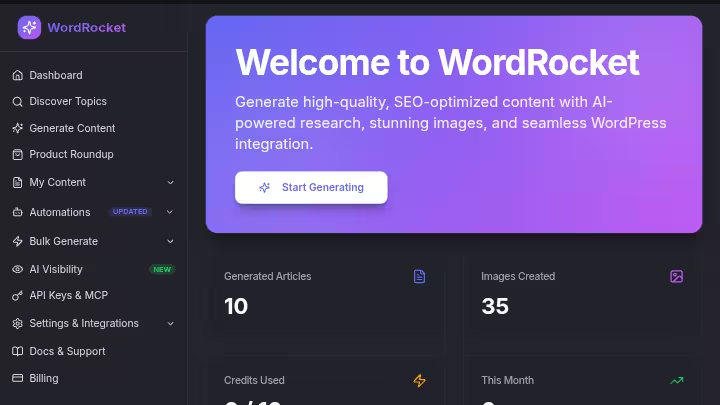
WordRocket AI is the best option for high-volume content production when you want to control AI API costs directly through a bring-your-own-key (BYOK) model.
The BYOK setup means you’re not paying a fixed per-article fee that gets expensive at scale. You connect your own OpenRouter API key and choose which AI model runs your content, whether that’s GPT-4, Claude or Gemini.
Your cost per article drops significantly as volume increases.
I tested WordRocket over 45 days and found it particularly strong for affiliate marketers who need to generate product comparison and review content across dozens of long-tail keywords at once.
The long-form coherence past 3,000 words is noticeably better than most subscription-based tools at this price.
The BYOK setup does have a learning curve, though. If you’re not comfortable with API keys and model configuration, this tool will take some setup time before it’s running smoothly.
Pros
- WordRocket’s BYOK model offers more flexibility for high-volume users. Cost predictability with the BYOK model means no surprise overages or artificial word limits.
- Template quality reduces prompting time significantly for recurring content types
- Lifetime deal eliminates ongoing monthly costs
- Strong long-form coherence compared to many subscription-based generators
Cons
- Built-in keyword research is limited
- API setup has a learning curve and is not beginner-friendly
- Image generation quality is basic, usable but not professional
- No collaboration tools or workflow management for teams
- No automated backlink building
Pricing: Free plan ($0/month), Starter plan ($10/month), Pro ($20/month), Premium ($49.99/month).
A lifetime deal starts at $199 + API usage. See the WordRocket pricing page for the full breakdown.
Best for: Solo bloggers, affiliate marketers, and small agencies comfortable managing their own API costs.
Not ideal for: Beginners who need an all-in-one system or teams needing collaboration tools.
Read the full WordRocket AI review.
5. Outrank.so – Best Research-Driven SEO Content

Outrank.so produces the most research-backed, editorially defensible content of any tool in this comparison, which is why it scores highest for content quality despite ranking 5th overall.
The platform pulls SERP analysis, competitor content gaps and source citations into each article before generating. That workflow produces content you can actually defend, which matters for competitive informational queries where thin AI content gets filtered out quickly.
The tradeoff is that Outrank.so requires more human involvement per article than tools like Keytomic or BabyLoveGrowth AI.
It is not a set-and-walk-away platform. However, it’s better suited to SEO teams that want a strong AI-assisted drafting process rather than full publishing automation.
Pros
- Research-first approach produces more defensible, citation-ready content
- Strong SERP analysis, citations, and editorial-quality drafts make it a solid choice for SEO professionals
- High authority backlinks that boost your domain authority
- Solid option for teams that need to defend content quality to clients
Cons
- Requires more manual setup and review than pure autopilot tools
- Less suitable for bulk publishing workflows
- Higher involvement per article than Keytomic or BabyLoveGrowth AI
Pricing: $1 for a 3-day trial, then $99/month for 30 auto-published articles ($3.30/article). See the Outrank.so pricing plans for 2026 for current tier details.
Best for: SEO professionals and content teams who prioritize article quality and SERP-defensible content.
Not ideal for: Users who want maximum hands-off automation or bulk publishing.
Read the Outrank.so review for a hands-on breakdown.
6. RightBlogger – Best for Beginners
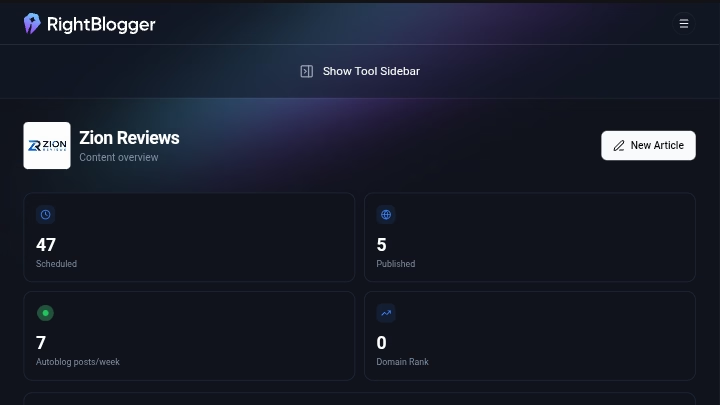
RightBlogger is the best-value option for solo bloggers who want unlimited AI content tools, a built-in keyword research workflow, and a brand voice configuration all in one $59/month subscription.
It’s not primarily an autoblogging platform in the traditional sense. It’s a comprehensive blogging toolkit that includes autoblogging capabilities alongside 90+ writing tools, keyword research, social media automation, and a Site Agent that surfaces ongoing SEO maintenance suggestions.
RightBlogger fits beginners and solo creators who want simple automation. It offers a broad set of blog-focused content tools with a fast learning curve and less setup friction. The appeal is practical utilities without enterprise complexity.
Publishing still requires user initiation per batch, which is a real limitation for users who want a fully automated workflow.
Pros
- For individual affiliate sites with lower volume needs, RightBlogger’s toolkit covers product review templates, comparison formats, and SEO scoring in one subscription
- Unlimited article generation removes per-article cost anxiety for active bloggers
- MyTone brand voice configuration reduces editing time significantly
- Site Agent provides ongoing SEO maintenance without manual audits
Cons
- Not a true hands-off autopilot system; publishing still requires user initiation per batch
- Less suitable for agencies managing multiple client sites at scale
- Backlink exchange is newer and less proven than BabyLoveGrowth AI’s network
- Not built for bulk programmatic content at the scale of Byword AI or WordRocket AI
Pricing: Solo at $59/month (1 site), Pro at $89/month (3 sites) and Agency at $299/month (10+ sites), all with unlimited AI words and a current 50% off annual plan promotion.
Best for: Individual bloggers, freelancers, and small teams who want a broad content toolkit rather than hands-off autopilot.
Not ideal for: Agencies or bulk programmatic content operations.
If you want a comparison, read RightBlogger review for a feature-level contrast.
7. Emplibot – Best for Hands-off WordPress Publishing
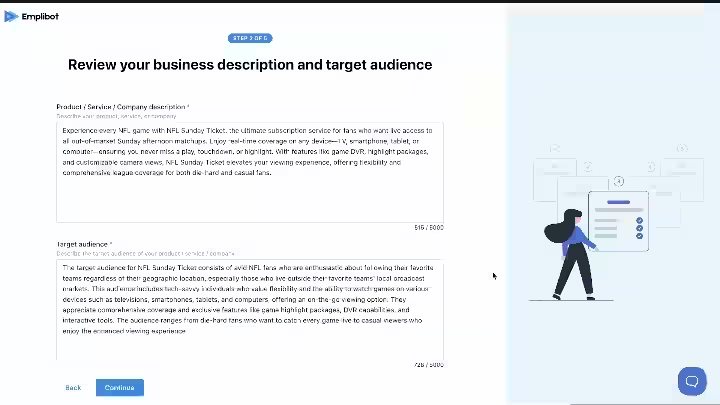
Emplibot is the closest thing to a hands-off autoblogging experience for WordPress, handling the full pipeline from topic research through WordPress publishing, with social distribution built in.
Emplibot conducts keyword research, performs topic research, creates visuals, adds links, and publishes content on your blog automatically.
Pros:
- Distributes published posts to LinkedIn, Facebook, and X in addition to WordPress
- Also publishes to Google Business Profile automatically
- Offers a review mode where you approve content before it goes live, if you don’t want full automation
Cons:
- Auto-publishing only works with WordPress, so Webflow, Shopify, or Ghost users are out of luck
- Content generation is limited to English and German
- No free tier, and pricing tiers are based on a fixed weekly cadence rather than flexible bulk generation
Pricing: Starter runs $69/month for 2 articles/week, Standard is $99/month for 4 articles/week, and Pro is $149/month for 7 articles/week. All plans include a 7-day free trial.
Best for: WordPress site owners and agencies who want fully automated blogging with social distribution included.
Skip if: You manage sites outside WordPress or need more than English/German content.
Read my full Emplibot review for the complete testing breakdown, including how it compares to running RSS-based autoblogging manually.
8. Byword AI – Best for Programmatic SEO at Scale
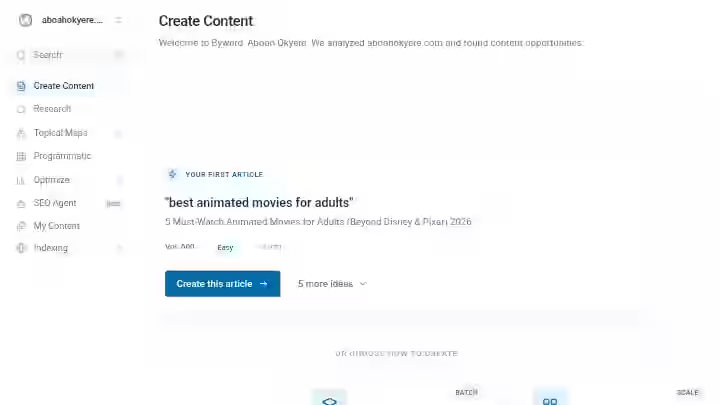
Byword AI is built specifically for affiliate marketers and programmatic SEO operators who need to generate high volumes of topically relevant content from keyword lists at a low per-article cost.
The $5/article pay-as-you-go model makes the cost calculation simple for high-volume campaigns. CSV keyword upload lets you queue 50 to 200+ articles at once, which removes the need for manual topic entry at scale.
The internal linking and meta tag generation runs automatically as part of each article job.
The tradeoff is content depth. Bulk generation is exactly where quality risk rises. Without strong review, templated or repetitive content can become a liability. Treat volume as a starting point, not a finished product.
Pros
- Low per-article cost at $5/article on pay-as-you-go
- Efficient bulk generation workflow for programmatic content operations
- Bulk generation across hundreds of affiliate-intent keywords is where Byword is specifically built to work
- Simple, fast setup with no complex onboarding
Cons
- Content quality at high volumes requires spot-checking before bulk publishing
- Less suitable for brand-led, thought leadership, or YMYL content
- No built-in backlink building or AI search visibility tracking
- Research depth does not match Outrank.so for competitive informational queries
Pricing: Byword AI offers three plans: Starter at $99/month (25 articles), Standard at $299/month (80 articles), and Scale at $999/month (300 articles), with 17% savings on annual billing and 5 free articles to start.
A pay-as-you-go option is also available at $5/article for users who don’t want a fixed monthly commitment.
Best for: Affiliate marketers and programmatic SEO operators running long-tail keyword campaigns.
Not ideal for: Brands needing editorial control, YMYL content or AI search visibility features.
Read the Byword AI review for the full breakdown.
9. Frizerly – Best for Small Businesses
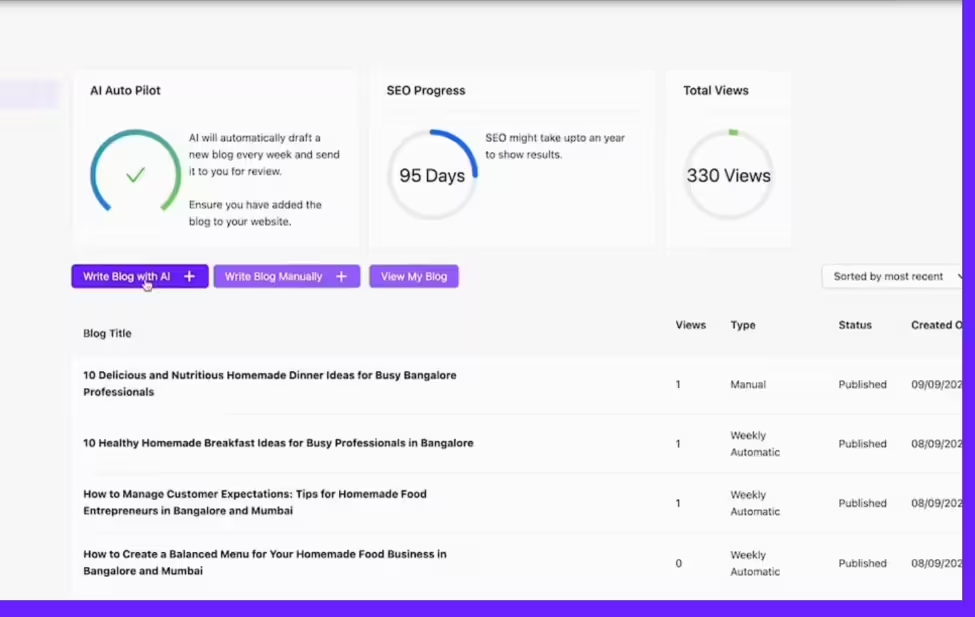
Frizerly is the simplest setup on this list and the best entry point for small business owners who want automated blogging without a technical learning curve.
It connects to your website, researches content opportunities, generates SEO-optimized articles, and publishes them automatically to WordPress, Shopify, Webflow, and other major platforms.
The Google Search Console OAuth integration pulls impressions, clicks, and position data into the dashboard within 48 hours of connecting.
Frizerly ranks 9th not because it’s a poor product, but because its feature set is deliberately lightweight. It doesn’t include backlink building, advanced technical SEO audits, or the kind of scalability that agencies need.
For a small business owner running one site, those missing features probably don’t matter.
Pros
- Fast, low-friction setup suited to non-technical users
- Daily auto-publishing on Pro plan keeps content cadence consistent
- Google Search Console integration provides basic performance tracking
- Good value for small businesses that do not need advanced workflow features
Cons
- Not suited for high-authority publishers needing deeply cited, original research articles or for agencies running technical SEO audits for enterprise clients
- No built-in backlink building
- Content depth may not hold up in highly competitive niches
- Less scalable for agencies managing multiple domains simultaneously
Pricing: Standard at $49/month ($29/month billed annually). Pro at $149/month ($99/month billed annually). Pro SEO + Social at $199/month ($149/month billed annually).
Best for: Small business owners and niche bloggers who want consistent blogging without setup complexity.
Not ideal for: Competitive niches needing deep citation-backed content or agencies managing multiple domains.
Read the full Frizerly review for all features and plan details.
10. Autoblogging.ai – Best for Bulk Publishing
Autoblogging.ai is the most direct answer to “I need a lot of articles published fast.”
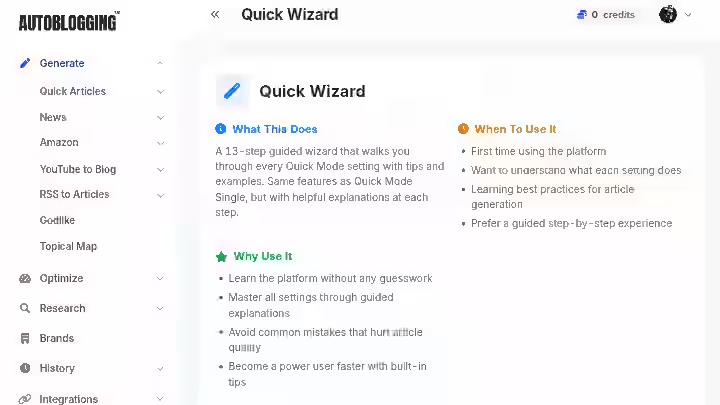
Autoblogging.ai offers multiple modes including Quick, Pro, Godlike, and Amazon Review Writer to provide users more control and flexibility over content. Each mode caters to different content needs.
The platform makes it easy to produce hundreds of articles or reviews in hours through bulk generation and WordPress autoposting. This enables scaling content production.
Autoblogging.ai offers bulk article creation, automatic WordPress posting, and the ability to generate articles optimized to rank in just one click. It also allows users to generate AI articles in over 30 different languages.
Pros:
- Multiple generation modes give flexibility
- 30+ language support
- Bulk CSV uploads for large-scale campaigns
- Low entry price makes it accessible for solo bloggers testing autoblogging for the first time
- Tiered generation modes let you trade speed for quality depending on the article’s importance
Cons:
- Content quality in quick modes often needs significant editing
- Bulk-generated content at this scale risks internal link and keyword overlap if you don’t manage it manually
- No backlink acquisition feature
Pricing: Free (10 credits/month), $19/month Starter, $49/month Regular, $99/month Standard, $179/month Gold, $249/month Premium, $999/month Enterprise.
Best for: Affiliate marketers, niche site builders, and anyone running high-volume content operations where speed matters more than depth.
Skip if: You’re targeting competitive keywords where content quality is the ranking differentiator. Read the Autoblogging.ai review for more.
11. Arvow – Best for Agencies
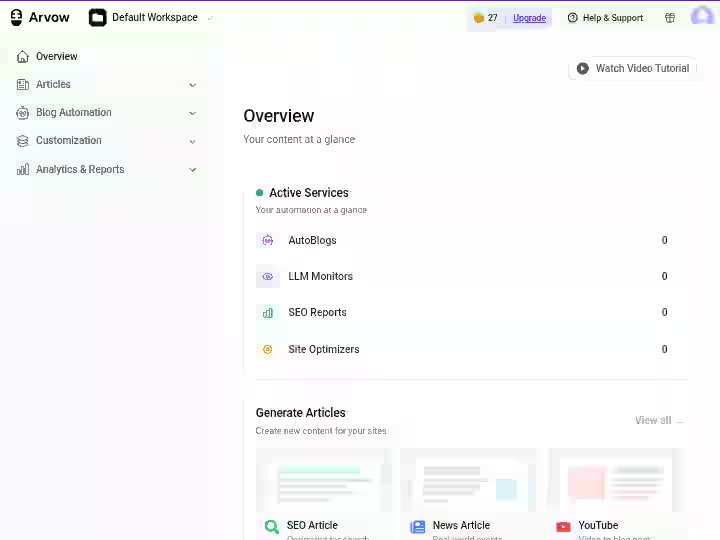
Arvow (formerly Journalist AI) is the tool for hands-off publishing across several sites at a time, and it stands out as a top contender among leading autoblogging tools.
It supports different automation modes, including content pulled from RSS and YouTube sources, multilingual publishing, SEO add-ons, and agency-style reporting you can share with clients.
Arvow Ultimate at $449/month offers unlimited sub-accounts, white-label reports, API access, and a dedicated Slack channel. No other tool in this list offers that complete an agency infrastructure.
Pros:
- Strongest multi-CMS support of any tool tested
- Agency-level reporting built into higher tiers
- RSS, YouTube, and keyword-based content triggers
- 100+ languages supported
Cons:
- Support quality issues reported by multiple users
- Content tone can feel generic across high-volume outputs
- Business-tier backlink features carry the same link spam policy risk as other automated exchange tools
Pricing: Arvow offers three AI SEO tiers: Solo at $99/month (1,000 credits, 1 site), Business at $149/month (2,000 credits, 5 sites) and Ultimate at $449/month (8,000 credits, unlimited sites), alongside a bespoke Human + AI managed service starting at $2,000/month.
Best for: Agencies managing content across 5+ client sites who need white-label reporting and multi-CMS publishing in one platform.
Skip if: You want a simple tool with responsive support and straightforward single-site publishing. Read the Arvow review for more.
How I Choose the Best Autoblogging Tool for My Content Workflow
I pick an autoblogging tool by matching it to my editorial capacity first, not the other way around. Here’s the actual process I use before subscribing to anything:
- Check the CMS fit first: If a tool only publishes to WordPress and I’m running a Shopify or Webflow site, it’s disqualified immediately, no matter how good the writing sample looks.
- Estimate real editing time per article, not just generation time. A tool that “writes in 30 seconds” but needs 45 minutes of fact-checking isn’t actually saving me time.
- Run a small pilot before committing monthly: I publish 3-5 articles, wait two to three weeks, and check Search Console for indexing and early ranking signals before scaling up.
- Map keywords before bulk generation. I lost an affiliate site’s rankings after publishing 42 auto-generated posts without internal linking or keyword filtering, and the content cannibalized itself. Now I never run a bulk batch without a keyword map done first.
- Budget for editing time, not just the subscription fee. The real cost of any autoblogging tool is subscription price plus editing hours, and that second number matters more long term.
If you want a deeper walkthrough of common failure points, my article on common autoblogging mistakes to avoid covers several I haven’t touched on here, including the cannibalization issue above in more detail.
Autoblogging Tools and AI Search Visibility: Why This Now Matters
Something that didn’t exist as a consideration 3 years ago now affects how you evaluate autoblogging tools: AI search visibility.
Google AI Overviews, ChatGPT search, Claude and Perplexity are increasingly the first place users encounter answers to their questions.
If your content isn’t structured to be cited by AI engines, you’re missing a growing portion of organic discovery.
The most effective platforms for automated blogging combine deep integration with your website, advanced SEO practices and unique features such as AI citation optimization.
As brands increasingly compete to be recognized by AI answer engines like ChatGPT, Gemini, and Perplexity, using tools with built-in visibility enhancements is vital.
Keytomic and BabyLoveGrowth AI both include AI citation tracking in their base plans. Outrank.so structures content to improve visibility across AI search platforms. Frizerly includes an AEO/GEO dashboard on its Pro plan.
Frequently Asked Questions About Autoblogging Tools
What are the best autoblogging tools?
The best autoblogging tools in 2026 are Keytomic (best overall SEO automation), BabyLoveGrowth AI (best for content + backlinks), and WordRocket AI (best for high-volume, low-cost scaling). The right tool depends on your publishing volume, automation preference, and budget.
What is the best autoblogging tool?
Keytomic is the best autoblogging tool overall based on its end-to-end SEO automation, which covers keyword research, content generation, auto-publishing, auto-indexing, schema markup, and AI search visibility tracking in one $99/month subscription.
Are autoblogging tools good for SEO?
Autoblogging tools are good for SEO when used within a structured content strategy with human editorial oversight. They accelerate content production, maintain publishing consistency, and can improve crawl frequency signals. Autoblogging is effective in 2026 when it is paired with a content strategy, editorial review, and proper SEO setup.
Can autoblogging tools create original content?
Autoblogging tools generate text that is not plagiarized, but it is not genuinely original in the sense of first-hand experience, primary research, or expert insight. The content is synthesized from patterns in training data and, in some tools, live web sources. Originality in a competitive SEO context requires adding information the reader cannot find in the top 10 results and that still requires human input for most topics.
Are autoblogging tools safe to use?
Autoblogging tools can be used safely, but automation itself doesn’t guarantee SEO compliance or content quality. The main risks come from publishing inaccurate, unhelpful, repetitive or scaled content without appropriate review.
Can autoblogging tools replace human writers?
Autoblogging tools replace repetitive drafting tasks, not human editorial judgment. They can produce a usable first draft in minutes, but accuracy checking, brand voice alignment, original perspective, and quality control still require human involvement.
What is the best autoblogging tool for beginners?
For beginners, RightBlogger at $59/month is the most accessible starting point. It includes 90+ blogging tools, an intuitive interface, unlimited article generation, and a Site Agent for ongoing SEO guidance.
What is the best autoblogging tool for agencies?
BabyLoveGrowth AI’s agency tier is the strongest options for agencies managing multiple client sites. BabyLoveGrowth AI includes backlink building and AI visibility tracking at the base price, which makes the value case for clients easier to demonstrate.

- Ryze AI Review 2026: My 30 Days Full Breakdown of This Autonomous SEO & GEO Platform - October 9, 2026
- #1 Best Plugin for Automatic Blog Posting in WordPress (2026) - September 13, 2026
- 13 Best WordPress Autoblogging Plugins I Tested & Ranked for 2026 - September 13, 2026